
Tool 05
What will my cross be like?
Crosses such as a Cockapoo, Labradoodle or Cavapoo vary hugely, and a puppy can take after either parent rather than sitting neatly in the middle. Choose two parents and see the dog you would most likely live with, plus the range a single puppy can land in, which is wider than most people expect.

Trait blend
Individual puppies can land 6–8
Individual puppies can land 7–10
Individual puppies can land 2–6
Individual puppies can land 2–4
Individual puppies can land 7–10
Individual puppies can land 6–9
Genetics are not arithmetic. The bar is the likely middle; the range beneath it is where real puppies from this pairing actually fall.
What a cross-breed puppy really inherits
Some traits are simple enough to predict. Coat type and shedding follow reasonably well-understood inheritance patterns, which is why two low-shedding parents make a low-shedding outcome more likely without guaranteeing it. Adult size follows body type fairly reliably, landing between the parents rather than beyond them.
Temperament is the opposite. Energy, sociability and barking are polygenic, meaning dozens of genes each contribute a little, and the environment then does at least as much work. A puppy handled daily by many different people in its first weeks will be more confident than a genetically identical puppy raised in isolation.
Health risk does not average out neatly either. A cross inherits the possibility of conditions from both sides, so a pairing involving a breed prone to hip dysplasia or a heart condition still warrants that screening. What the wider gene pool buys is a lower probability, not exemption.
For this pairing, the practical planning numbers are grooming 6 out of ten and energy 8 out of ten, the higher parent in each case, because that is the household you must be ready for.
Predicted cross
25.5–37.0 kg
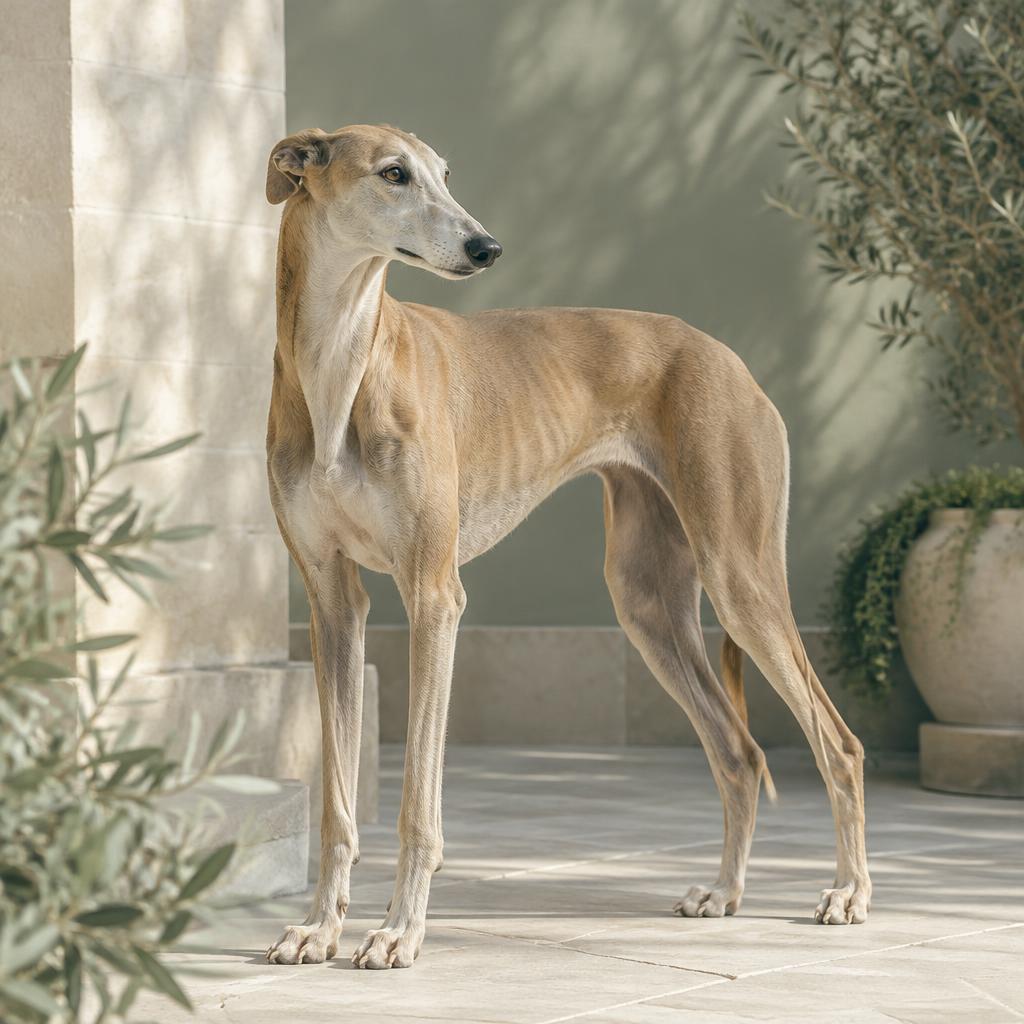
Greyhound × Golden Retriever
Lifespan
10–13 yrs
Coat
Smooth, short, fine coat in almost any colour including black, white, fawn, blue, red and brindle. / Dense, water repellent double coat with feathering
Living with this cross
Your choices stay on this device, so the page reopens where you left it.
Health to raise with your vet
- Greyhound lines: ask which inherited conditions the parents were screened for, and to see the results.
- Golden Retriever lines: the same question, separately, a cross inherits risk from both sides.
- Hip and elbow scores, if either parent is a breed where joint problems are a known concern.
- A weight and body-condition baseline at the first visit, so later changes are measurable.
How to use this prediction
- 1Plan for the more demanding parentGrooming and energy are where averages mislead. If one parent needs daily brushing, buy the comb and build the habit, a puppy that inherits that coat will not wait for you to catch up.
- 2Socialise hard in the first weeksThis window shapes temperament more than either parent's breed profile. Handling, household noise, other animals and gentle car travel now decide the adult dog's confidence.
- 3Read both health watch-listsA cross can inherit risk from either side. Open both breed pages, note the screening each recommends, and mention both to your vet at the first appointment.
- 4Budget for the higher figureFood and grooming costs blend, but insurance and grooming bills tend to follow the heavier, longer-coated parent. Use the upper end of the range when planning.
- 5Confirm parentage with a swabIf the dog is already yours and the parentage is guesswork, a DNA test settles it and usually screens for inherited disease variants at the same time.
Five mistakes to avoid
Treating the average as a prediction for one puppy
The blend describes the most likely middle across a whole litter. Crosses vary hugely, and a single puppy can take after either parent rather than sitting neatly in the middle.
Assuming two low-shedding parents give a low-shedding puppy
Coat inheritance is not guaranteed even when both parents share a trait. Two low-shedding parents make it more likely, not certain, so plan for either outcome.
Paying purebred prices for an unregistered cross
A first-generation cross, however popular the name, is not a kennel club breed with a standard. Pay for health testing, socialisation and honest paperwork, not for a coined name.
Believing crosses cannot inherit breed diseases
A wider gene pool lowers the odds, it does not remove them. A cross with a breed prone to hip or heart problems still deserves that screening.
Guessing breed from appearance
Visual identification of cross-breed dogs is unreliable even among professionals. If it matters, for health screening or curiosity, swab the dog.
Questions people actually ask
Can you predict what a cross-breed puppy will be like?
You can predict the likely middle, not the individual. Traits such as size and coat type follow relatively few genes and blend fairly predictably; temperament is polygenic and heavily shaped by early socialisation and training, so a single puppy can land close to either parent or somewhere between, and littermates in the same litter can differ noticeably.
Are cross-breed dogs healthier than purebreds?
On average, yes. A wider gene pool reduces the odds of the inherited conditions concentrated in some closed pedigree lines, such as hip dysplasia or certain heart conditions. It is a reduction in probability, not immunity, crosses still develop the same common diseases and deserve the same screening.
How do I find out what breeds my dog is?
A cheek-swab or blood DNA test is the most reliable answer; visual guesses are wrong far more often than owners expect. Most tests also screen for inherited disease variants, which is genuinely useful information for a dog of unknown parentage.
Do cross-breed dogs live longer?
Slightly, in some population data, though lifestyle explains more than genetics: a healthy weight, dental care, regular exercise and routine screening move the number far more than pedigree status does.
Which parent does a puppy take after?
Either, and often both in patches. Coat type and shedding follow their own inheritance rules, so two low-shedding parents make a low-shedding outcome more likely but never guaranteed. Size, colour and temperament follow their own patterns too, and a puppy can take strongly after one side while its littermate favours the other.
Is a popular cross, like a Cockapoo or Labradoodle, a recognised breed?
No. Kennel clubs recognise breeds with a written standard and a documented breeding programme, not first-generation crosses. A cross between two purebreds is a cross-breed dog, however established the name has become, and price should reflect health testing and care rather than a coined label.
What should I be cautious about with a deliberate cross?
Ask about the generation, which health tests both parents had, and what the puppies have been exposed to before eight weeks. Crosses vary hugely, and a puppy can take after either parent, so plan your home for the more demanding side of the pairing rather than the average.
Sources
Editorial note
Written for an international audience: costs are indicative EUR ranges and vary widely by country, and no specific testing service is recommended. Trait blending is a planning aid built on breed averages, not a genetic prediction for an individual puppy.
Next tool
Breed matchmakerStart from your household instead of the parents.Ideal weight checkerA cross has no single breed chart, use condition instead.Read alongside
 Indoor enrichment for dogsKeeping an energetic cross occupied at home.How much water dogs needA quick check whatever the mix.Signs of a senior dogWhat actually moves the number.