
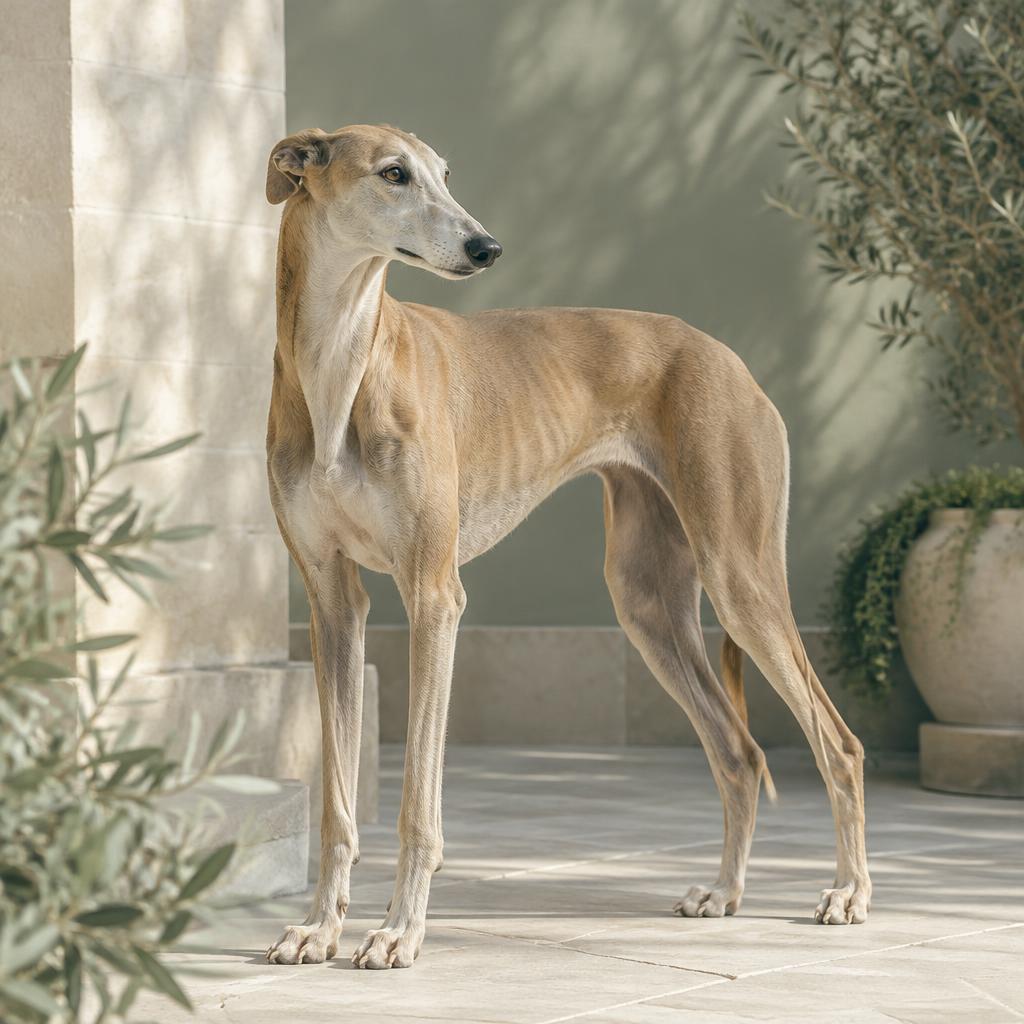
Hound group
Ancient Egyptian and Greek records depict dogs of Greyhound type, making it one of the oldest breeds in existence. Historically used for hunting by sight across open ground, the breed was refined in Britain for coursing and later track racing, leading to the high numbers of retired ex-racers now seeking homes.
Greyhound
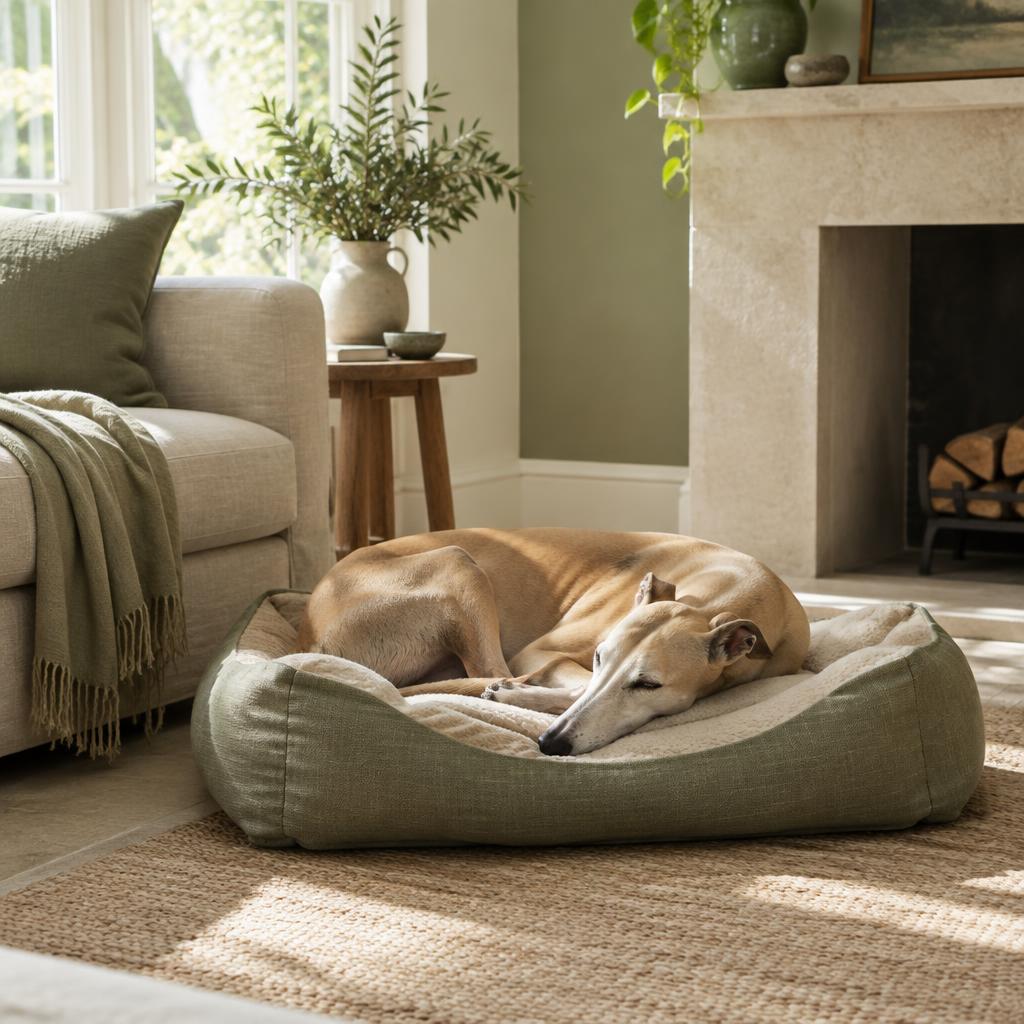
The Greyhound is a gentle, quiet giant known for explosive speed and deep naps. While they need a secure space to sprint, their calm nature makes them one of the best large breeds for flat living.
Reviewed by the SniffScroll editorial desk
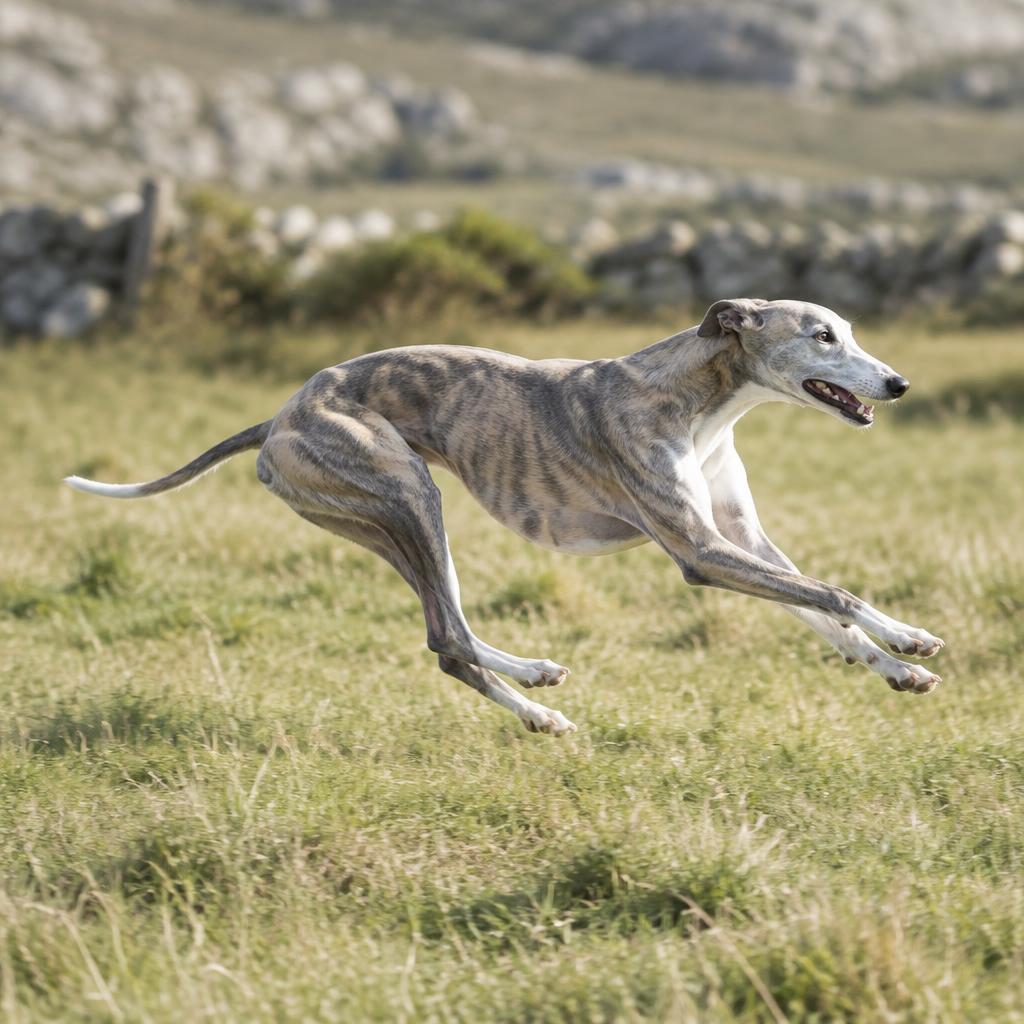
The ancient sofa sprinter: a calm, noble hound built for speed and deep naps.
The short version
- Masters of energy conservation who spend most of the day sleeping.
- High prey drive means they are rarely reliable off-lead in unfenced areas.
- Thin skin and low body fat make them sensitive to cold and hard surfaces.
- Excellent apartment dogs due to their quiet and calm indoor nature.
- Specific health needs include bloat awareness and anaesthesia sensitivity.
- Weight
- 26 to 40 kg
- Height
- 68 to 76 cm
- Lifespan
- 10 to 14 yrs
- Size
- Large
- Group
- Hound
- Coat
- Smooth, short, fine coat in almost any colour including black, white, fawn, blue, red and brindle.
- Grown male
- 27 to 40 kg
- Grown female
- 26 to 34 kg
- Years to full size
- about 1.5
- One-off setup
- €500 to 1200
Get one if…
- Flat dwellers looking for a quiet, low-energy large dog
- Owners who prefer a dog that is calm and clean indoors
- People who can provide a secure, fenced area for occasional sprints
- Households looking to adopt a retired racing dog
- Owners who appreciate a sensitive and dignified companion
Think again if…
- Owners wanting a dog that can reliably be trusted off-lead in open spaces
- Homes with very small animals where prey drive might be a constant issue
- Active owners looking for a high-intensity, all-day hiking partner
- Households that prefer a robust, hardy outdoor dog that dislikes coats
- Anyone looking for a highly obedient dog that lives for commands
Trait profile
The Greyhound is a master of energy conservation, saving its power for rare sprints while remaining a quiet, sensitive companion the rest of the time.
Space & setup. Surprisingly excellent for flats. Provided they have a comfortable sofa or thick bed, they are extremely quiet indoors and require less space than many smaller, more active breeds.
Allergies. Greyhounds have very little body fat and a very short coat, which some owners with mild allergies tolerate well, but they are not hypoallergenic and do shed fine hairs.
Living with a Greyhound
The Greyhound is the ultimate sighthound, famous for being the world's fastest dog but equally renowned for being the world's fastest couch potato. Quiet, gentle and often sensitive, these dogs excel in flats because they spend most of their time asleep, though their explosive prey drive and thin skin require careful management.
The Greyhound is a study in elegance and efficiency, a breed that has remained largely unchanged for millennia because its design is already near perfect. Often referred to as the 40mph couch potato, the Greyhound offers a unique combination of extreme athleticism and profound domestic laziness. While the public image of the breed is often tied to the racetrack, the reality of living with a Greyhound, particularly a retired racer, is one of quiet companionship, horizontal napping and surprising suitability for urban living. They are one of the most misunderstood breeds in the canine world, frequently assumed to be high energy when they are in fact the masters of energy conservation.
The defining characteristic of the greyhound temperament is a gentle, almost ethereal sensitivity. They are quiet dogs that rarely bark and tend to move through a home with a ghostly grace, despite their large size. For those considering retired greyhound adoption, the transition from the kennel to the sofa is often remarkably smooth, provided the owner understands the sighthound mindset. These dogs have been bred for centuries to hunt by sight, which means their prey drive is hardwired and intense. A Greyhound that is perfectly calm on the sofa can become a focused athlete in a split second if a squirrel or a small animal crosses its path. This is why off-lead honesty is rare in the breed: even the most well-trained Greyhound can become deaf to recall when the instinct to chase takes over. A secure, fenced area for occasional sprints is essential, as the breed should not be trusted off-lead in open, unfenced spaces.
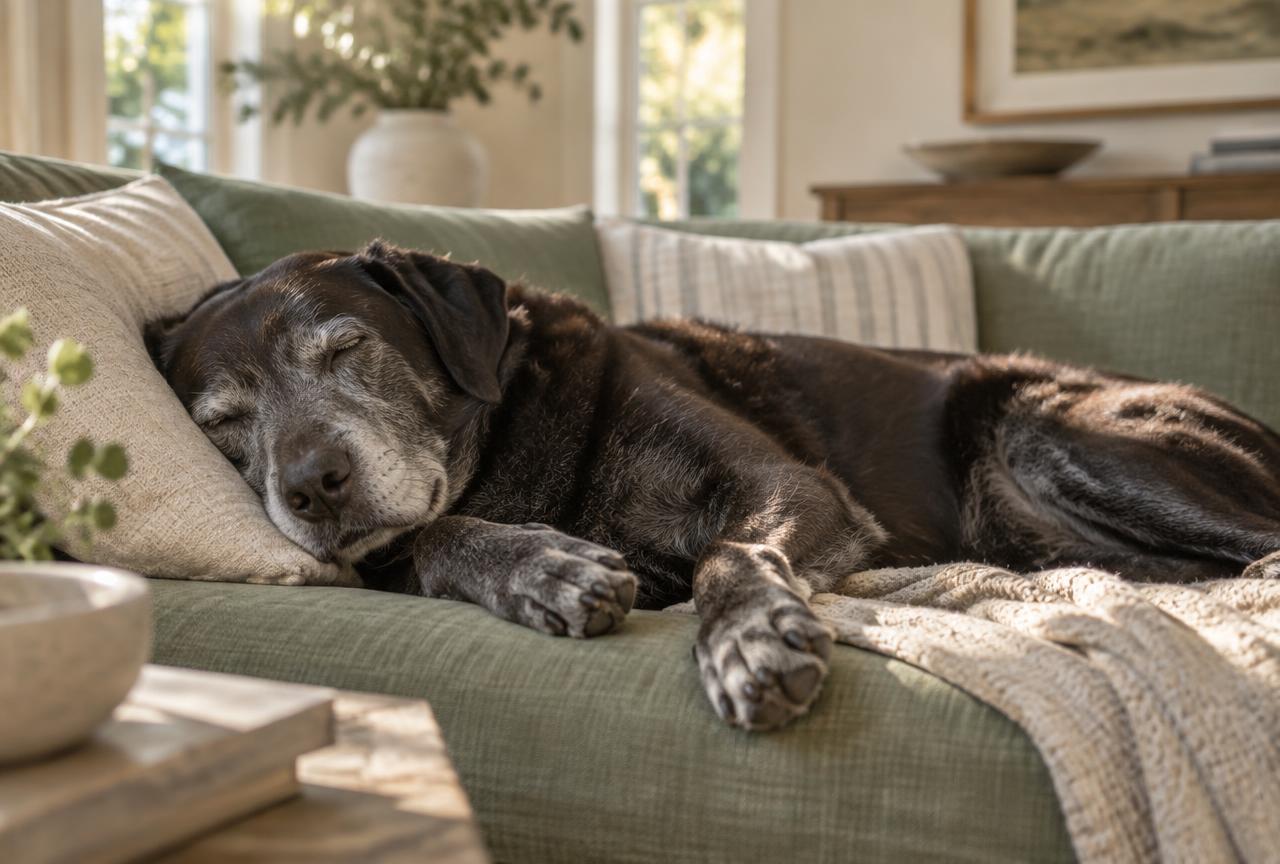
Inside the home, the Greyhound is famously low maintenance. They are often described as the best large dog for flats because they spend roughly eighteen to twenty hours a day sleeping. They do not have the frantic energy of a collie or the constant need for engagement of a retriever. Once they have had a twenty minute walk and perhaps a brief ceremonial zoom around a garden, they are usually content to curl up on the softest surface available. Because they have very little body fat and thin, delicate skin, they require soft bedding: a Greyhound will not be comfortable on a hard floor and will often develop sores if forced to sleep on thin mats. This lack of insulation also means they feel the cold acutely. A Greyhound owner quickly becomes an expert in dog coats, as these hounds need protection from the British winter as soon as the temperature drops.
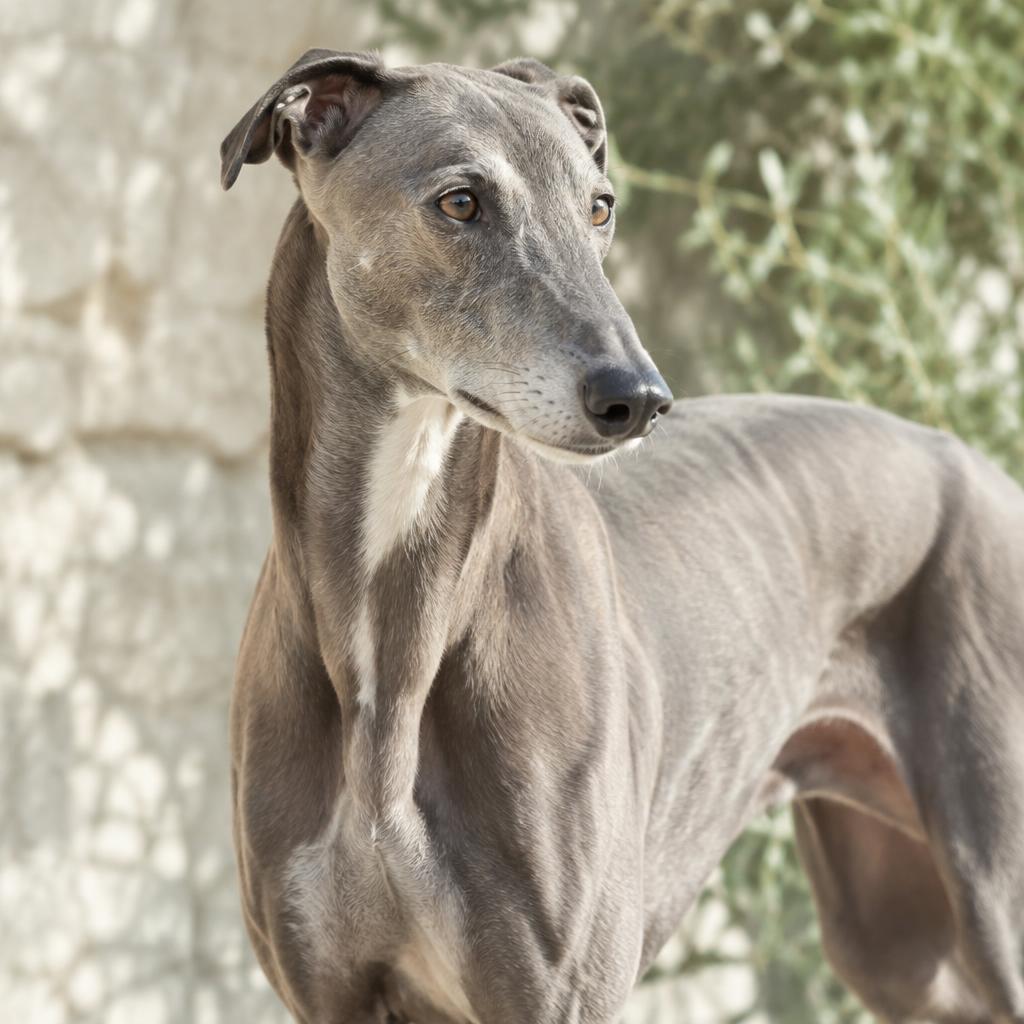
Health management is a key part of Greyhound ownership, and the breed has several specific requirements. Their deep chests make them susceptible to gastric dilatation-volvulus, commonly known as bloat. This is a life-threatening emergency where the stomach twists, and owners must be vigilant about feeding practices, such as avoiding vigorous exercise around mealtimes. Osteosarcoma, or bone cancer, is another serious concern that appears more frequently in Greyhounds than in many other breeds. Additionally, their history as athletes often leaves ex-racers with a legacy of dental disease and corns on their paw pads. Regular dental cleaning is a non-negotiable part of their routine. Perhaps most importantly, sighthounds have a unique physiology that makes them sensitive to certain types of anaesthesia. Any veterinary procedure must be handled by a professional who understands the specific metabolic needs of the breed.
Training a Greyhound requires a soft touch and realistic expectations. They are intelligent but independent, lacking the "what can I do for you" attitude of working breeds. They respond best to positive reinforcement and can be easily shut down by harsh corrections or raised voices. Patience is required, especially when teaching a retired racer how to navigate stairs or slippery floors, which they may never have encountered in a kennel environment. While they are generally sociable with other dogs, their interaction with small pets requires extreme caution and often permanent management due to their hunting heritage.
In summary, the Greyhound is a noble and rewarding companion for those who appreciate a dog that is calm, clean and dignified. They are not the right choice for someone wanting an off-lead hiking partner or a high-intensity athlete to keep up with them all day. However, for the flat dweller or the suburban homeowner who wants a large, beautiful dog that is content to spend the day as a living ornament on the sofa, there is no better match. They offer a unique window into an ancient lineage, combining the power of a sprinter with the heart of a devoted, if slightly lazy, companion.
The Greyhound is a paradox: a supreme athlete that prefers the sofa to the field. For owners who can respect their prey drive and provide a soft bed, they are among the most low-maintenance and rewarding large dogs, especially well-suited to apartment living.
Exercise, day to day
- 1Puppies: strictly limited exercise to protect long bones; five minutes per month of age.
- 2Adults: two 20 to 30 minute walks a day are usually sufficient for most individuals.
- 3Sprinting: access to a secure, fenced area for a five minute 'zoom' once or twice a week.
- 4Mental stimulation: scent games and food puzzles can provide interest without physical strain.
- 5Lead safety: keep on a lead at all times in public to manage high prey drive.
Grooming, realistically
- 1Brush once a week with a rubber curry comb to remove loose hair.
- 2Check paw pads for corns or cracks weekly, especially in ex-racers.
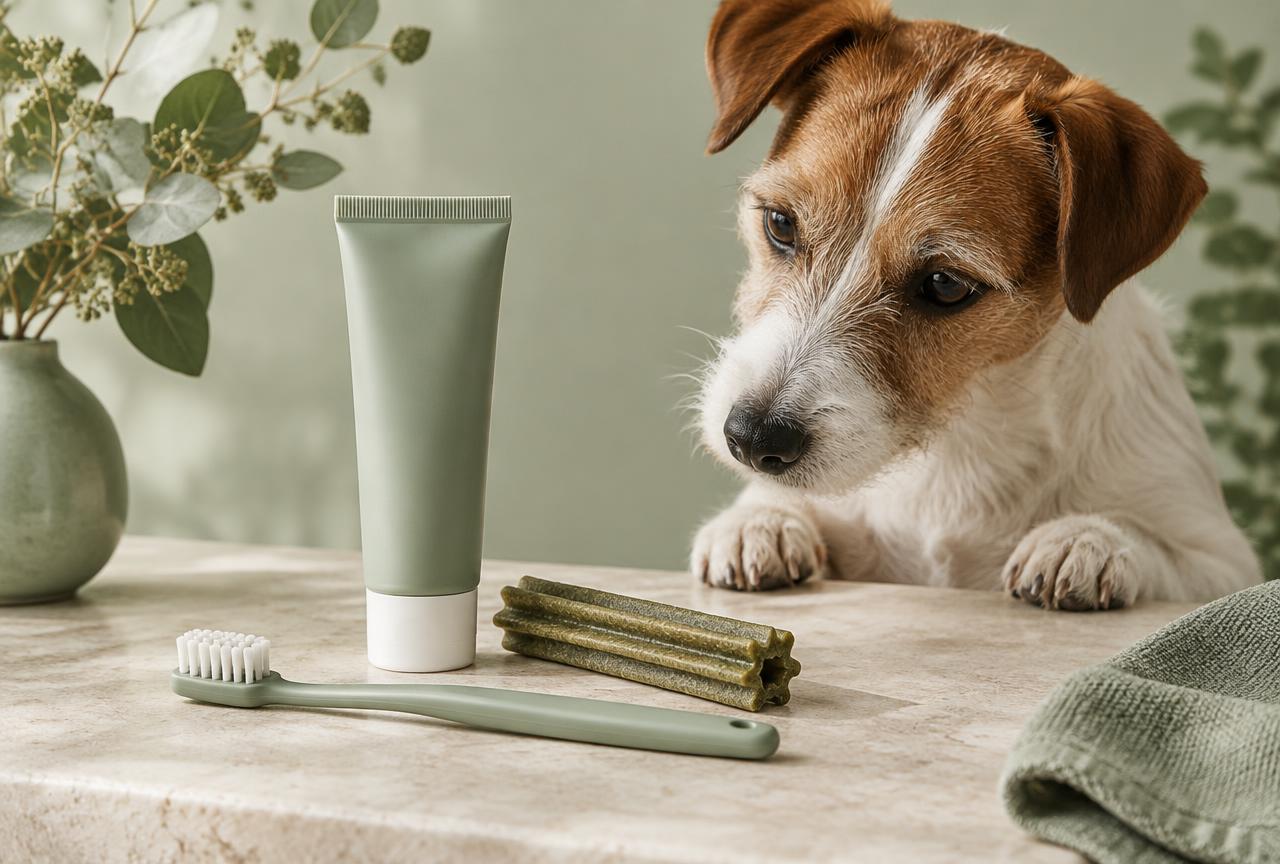
- 3Brush teeth daily; the breed is particularly prone to dental disease.
- 4Trim nails every two to three weeks to prevent them clicking on floors.
- 5Bathe only when necessary; their thin skin can dry out with frequent washing.
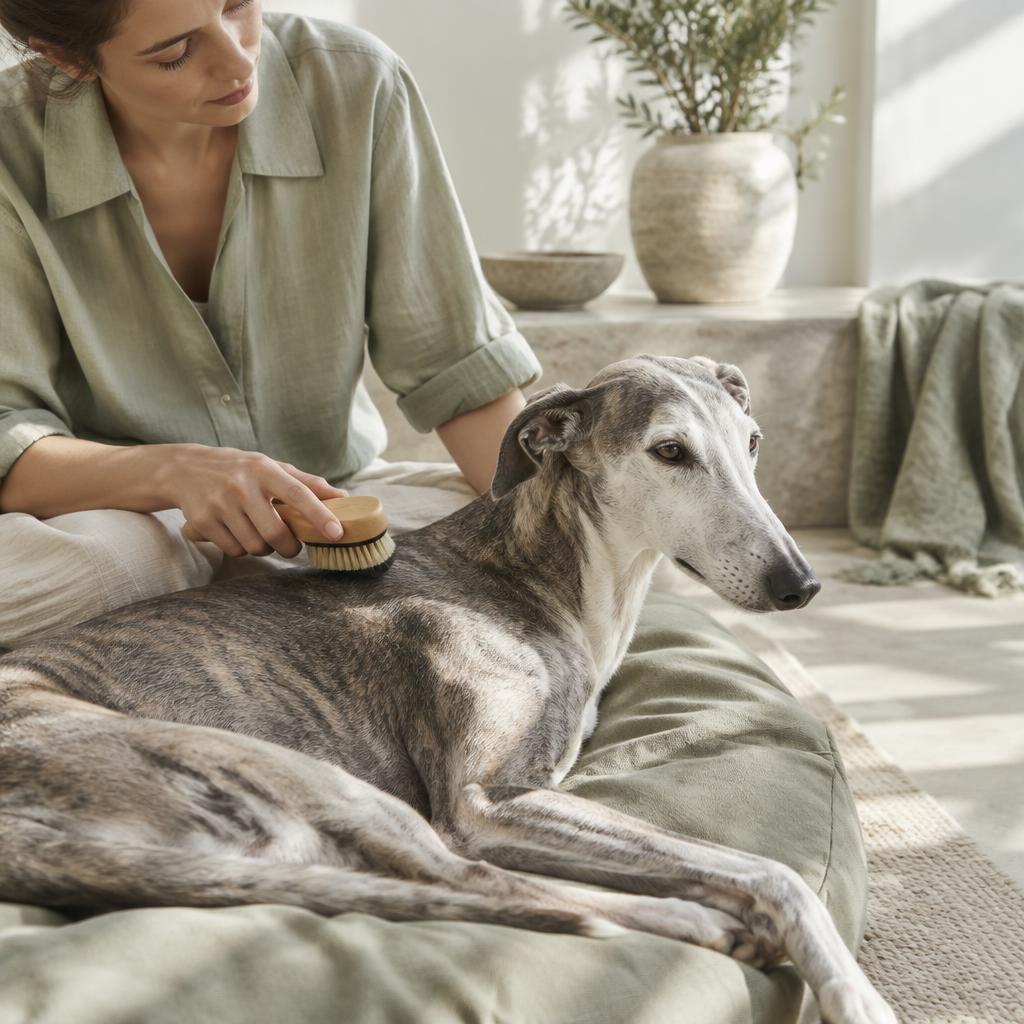
What you actually need
- Rubber curry brush
- Soft bristle brush
- Dog-safe toothpaste and toothbrush
- Nail clippers or grinder
- Moisturising paw balm
- Winter coat and rain mac
Puppy to adult
| Age | Male | Female | What is happening |
|---|---|---|---|
| 8 weeks | 5 to 7 kg | 4 to 6 kg | Leggy and awkward; ensure soft surfaces for sleeping to protect joints. |
| 3 months | 10 to 14 kg | 9 to 12 kg | Rapid growth phase; focus on gentle socialisation with other dog types. |
| 6 months | 18 to 24 kg | 16 to 20 kg | Reaching significant height; ensure they do not over-exercise during growth. |
| 9 months | 24 to 30 kg | 22 to 26 kg | Filling out slowly; maintain a lean weight to protect developing bones. |
| 12 months | 27 to 35 kg | 24 to 30 kg | Near adult height; prey drive is usually fully established by now. |
| 18 months | 30 to 40 kg | 26 to 34 kg | Fully mature; skeletal development is complete and muscles have filled out. |
Ranges are typical, not targets. Judge condition by ribs and waist, and check with the ideal weight checker.
What to ask a breeder
- Have the parents been screened for heart conditions and hip dysplasia?
- What is the history of osteosarcoma in the bloodlines?
- For ex-racers: what is the dog's history with other breeds and small animals?
- How has the dog been socialised to household environments and noises?
- What dental care has the dog received, and what is the current state of its teeth?
Health tests to ask for
Ask to see results for both parents before you put down a deposit.
- Cardiac evaluation to check for breed-specific heart murmurs
- Hip and elbow scoring for breeding stock
- Regular dental examinations throughout life
- Thyroid testing if lethargy or skin issues appear
- Verification of sighthound-safe anaesthesia protocols with your vet
Health watch-list
What to ask a breeder about, and what to watch for over a lifetime. This is orientation, not veterinary advice, anything you notice belongs in front of a vet.
Gastric dilatation-volvulus
NotableAlso known as bloat, this life-threatening stomach twisting is a risk in deep-chested breeds; feed multiple small meals and avoid exercise near feeding times.
Osteosarcoma
Common with ageA primary bone cancer that occurs more frequently in Greyhounds; early signs include persistent limping or swelling in the limbs.
Corns and pad issues
CommonHard, painful growths on the paw pads that are frequent in ex-racers; they can cause significant lameness on hard surfaces and require veterinary care.
Dental disease
CommonThe breed, particularly those from racing backgrounds, is prone to heavy tartar build-up and gum disease; daily brushing is essential.
Hypothyroidism
NotableAn underactive thyroid can lead to lethargy and skin issues; however, Greyhound baseline thyroid levels are naturally lower than other breeds, so interpretation requires care.
Racing-related injuries
CommonEx-racers may carry legacy issues like toe dislocations, hock injuries or muscle scarring that need ongoing management and soft beds.
What it costs to keep one
Realistic running cost
€170 / month
About €2,040 a year, or roughly €24,480 across a 12-year life, before purchase price, neutering and one-off vet events.
Before the puppy arrives. Budget roughly €500 to 1200 for a crate, bed, lead and harness, bowls, puppy classes, first vaccinations and grooming kit sized for this breed. Figures throughout are indicative and vary a good deal between countries.
Interactive · built for this breed
Is a Greyhound right for your home?
Seven honest questions about your space, time and household, checked against this breed's exercise need, coat, sociability and tolerance for time alone.
Fit with your routine
95%
A strong fit
Your routine suits a Greyhound well. Meet adult dogs of the line before you commit.
What to sort out first
- Needs more daily exercise than you have pencilled in.
Working in your favour
- Coat care fits the grooming time you offered.
Compare more breeds in the matchmaker, or plan meals with the portion calculator.
The verdict, by household
Good
Gentle and forgiving, but their size and prey drive require a responsible approach.
Good
Generally very patient and calm; their size means they are better for older, respectful children.
Excellent
Perfect for those who enjoy short bursts of activity followed by long periods of rest.
Excellent
One of the best large breeds for flats; they are quiet, clean and very still indoors.
When to call your vet
- Distended abdomen or unproductive retching, which could indicate bloat
- Sudden limping or swelling in a leg, worth checking for osteosarcoma
- Difficulty eating or bad breath, signalling dental pain
- Lethargy or skin changes, which could suggest hypothyroidism
- Lameness on hard ground, often caused by painful corns on the pads
Nothing here is a diagnosis. A swollen, hard belly with retching, collapse, breathing difficulty and sudden hind-leg weakness are emergencies: go straight away.
Greyhound vs the closest alternatives
| Breed | Weight | Energy | Grooming | € / month |
|---|---|---|---|---|
| Greyhound | 26 to 40 kg | 6/10 | 2/10 | €170 |
| Whippet | 11 to 20 kg | 6/10 | 2/10 | €72 |
| Rottweiler | 35 to 60 kg | 6/10 | 2/10 | €158 |
| Great Dane | 45 to 90 kg | 5/10 | 2/10 | €302 |
Greyhound questions, answered
Do greyhounds shed?
Yes, but very lightly. They have a short, single coat with no undercoat, so while they do lose fine hairs, they do not have the heavy shedding seasons of many other breeds.
Are greyhounds good pets?
They make excellent pets for those who want a calm, quiet and low-energy companion. Their clean habits and gentle nature make them particularly suited to indoor life.
How much exercise does a greyhound need?
Surprisingly little. While they are built for speed, they lack stamina. Two 20 to 30 minute walks a day, plus an occasional sprint in a secure area, is enough for most.
Are greyhounds good with small pets?
It varies. Many have a very high prey drive due to their breeding and may never be safe with small animals. Others, especially when socialised early, can live peacefully with them, but caution is always advised.
Why are greyhounds called sofa sprinters?
Because they are capable of incredible speed but spend the vast majority of their time sleeping. They are the ultimate sprinters, not marathon runners.
What are the common greyhound health problems?
Significant greyhound health problems include bloat, bone cancer, dental disease and corns. They are also famously sensitive to certain types of anaesthesia.
Do they need coats in winter?
Yes. With very little body fat and a thin coat, greyhounds feel the cold acutely and need a warm, well-fitting coat whenever the temperature drops below about 10 degrees Celsius.
Sources
Reading that goes with this

Breeds people compare with this
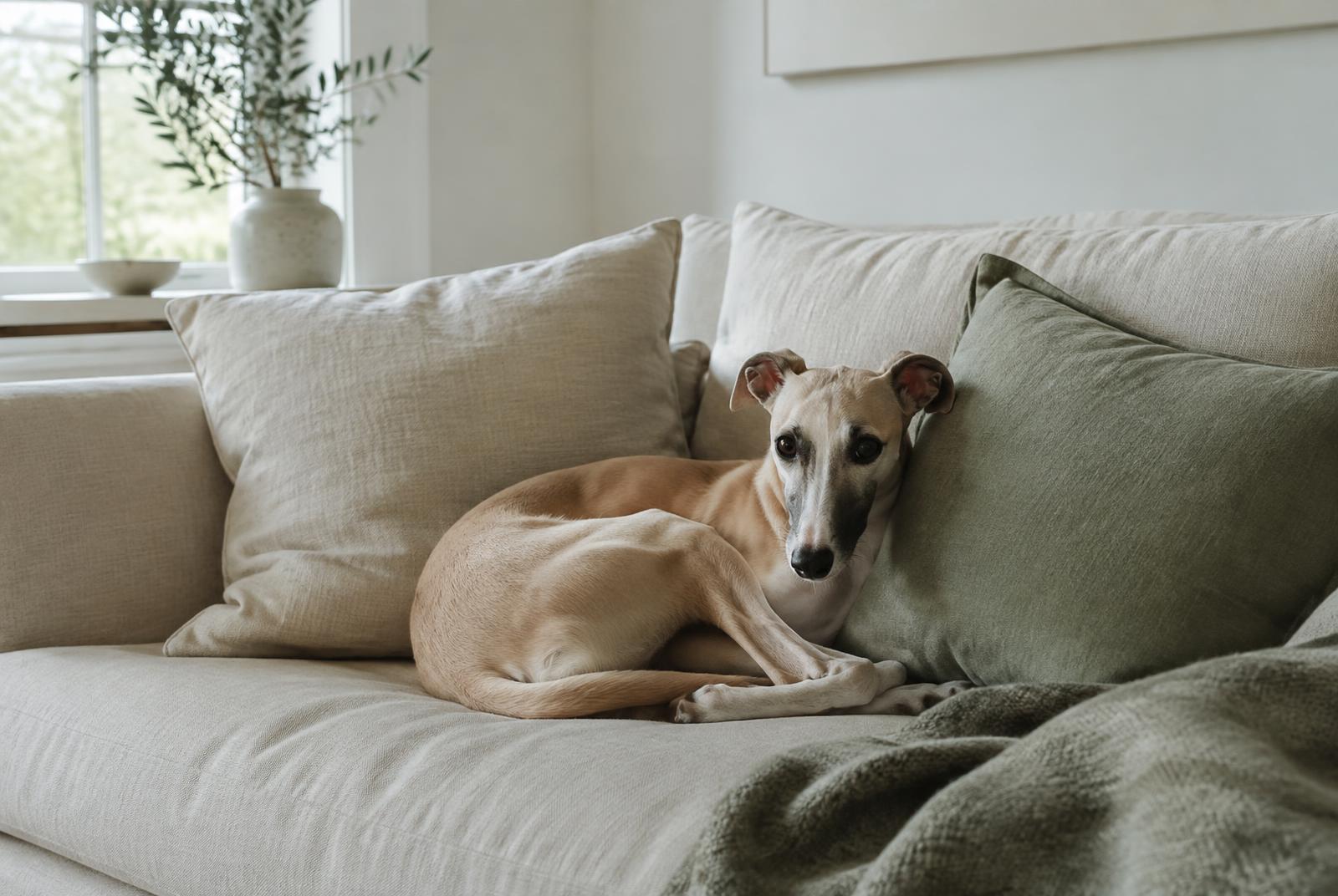
Whippet
A 35mph sprinter wrapped around a dedicated couch potato, happiest after a short burst of speed followed by hours of sleep.
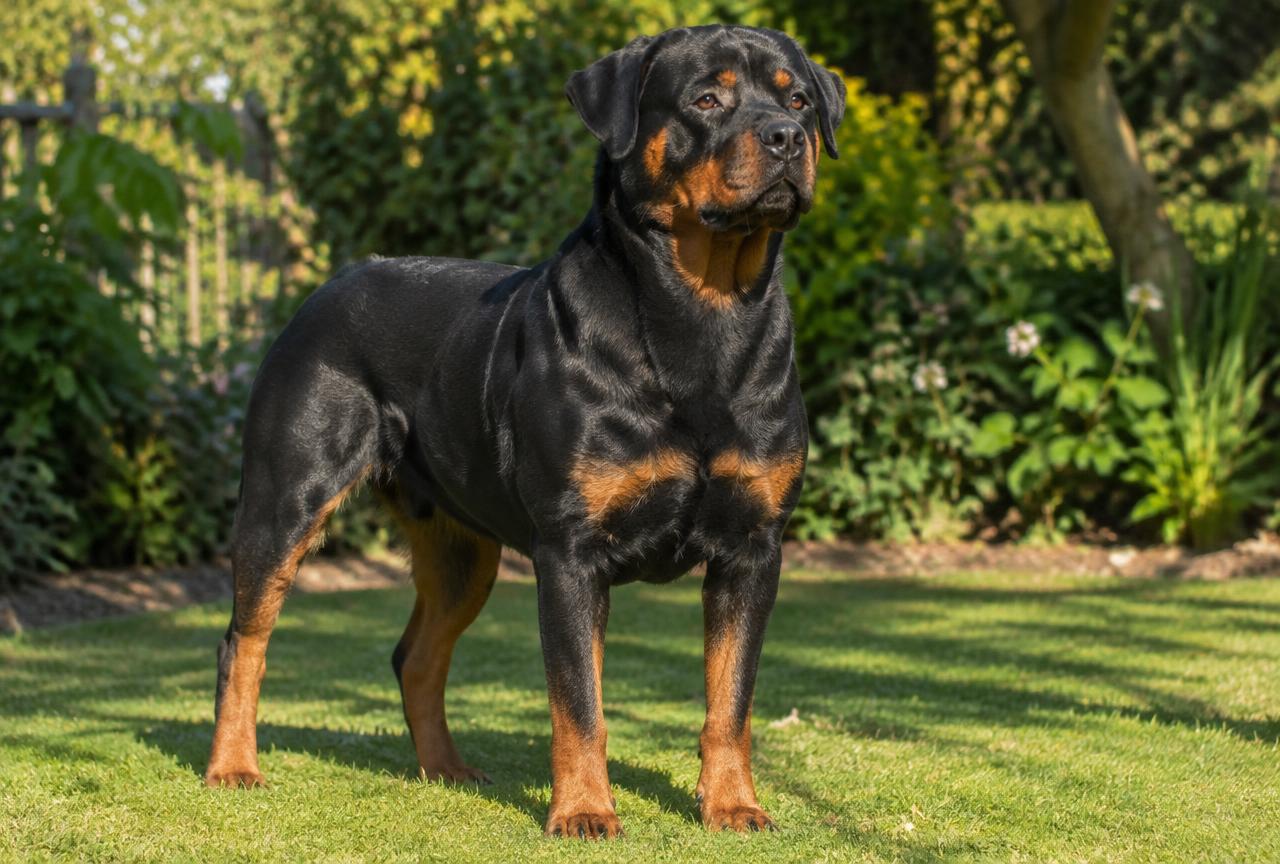
Rottweiler
A calm, powerful guardian breed that needs early socialisation and a confident, consistent owner.
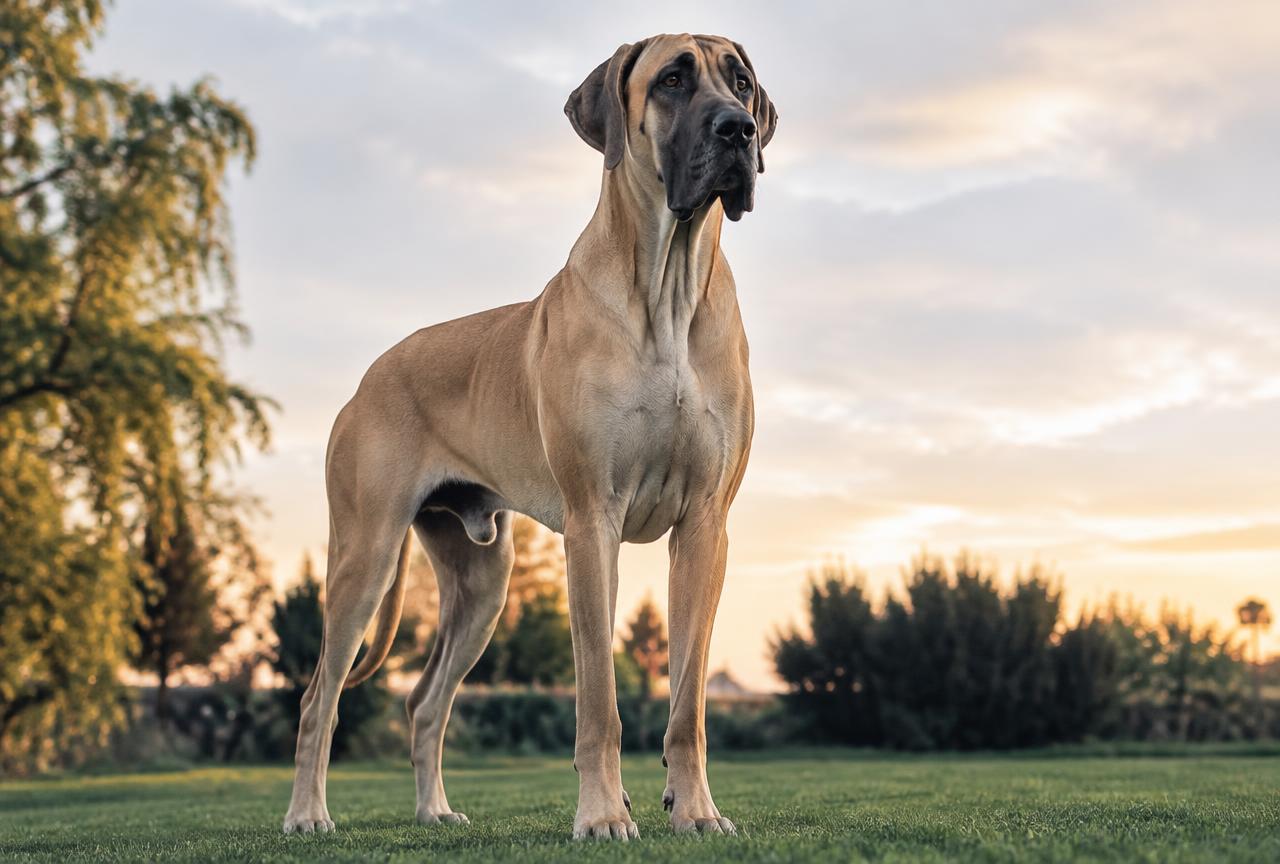
Great Dane
A gentle giant whose enormous size demands patient growth, vigilant bloat awareness and an honest look at lifespan and cost.