
Working group
Germany (Roman droving dog ancestry)
Rottweiler
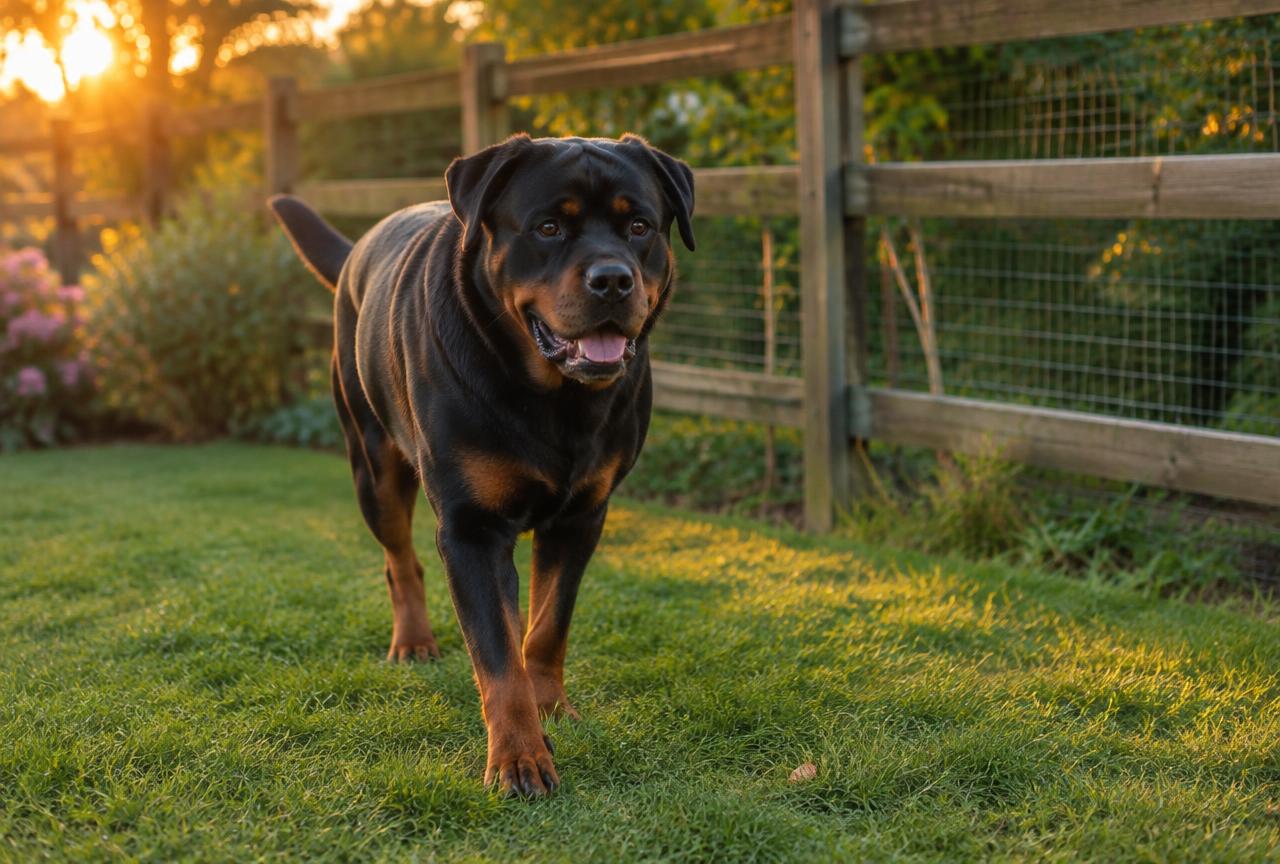
The Rottweiler is a loyal, muscular working breed from Germany, needing structured training, firm boundaries and daily exercise to thrive as a family companion.
Reviewed against Kennel Club and breed club health guidance
A calm, powerful guardian breed that needs early socialisation and a confident, consistent owner.
The short version
- Rottweilers are calm, loyal guardians that need early, extensive socialisation to prevent wariness tipping into over protectiveness.
- They are physically powerful and require firm, positive, consistent training from puppyhood.
- Daily exercise needs are moderate, around 60 to 90 minutes, but puppy exercise must be limited to protect developing joints.
- The breed is prone to hip and elbow dysplasia and some heart conditions, so health screened parents are essential.
- This is not a breed for first time or absent owners, but it is a devoted family companion in the right hands.
- Weight
- 35 to 60 kg
- Height
- 56 to 68 cm
- Lifespan
- 8 to 10 yrs
- Size
- Large
- Group
- Working
- Coat
- Short double coat
- Grown male
- 50 to 60 kg
- Grown female
- 35 to 48 kg
- Years to full size
- about 2.5
- One-off setup
- €700 to 1400
Get one if…
- Confident, experienced dog owners
- Households wanting a loyal guardian
- Families committed to early socialisation classes
- People with a securely fenced garden
- Owners who enjoy structured training
Think again if…
- First time owners unwilling to invest in training
- Households wanting a dog friendly with all strangers
- Very small flats with no outdoor space
- Owners away from home for long hours
- Homes wanting a low maintenance, easy going dog
Trait profile
Rottweilers combine a calm, low key indoor presence with genuine physical power and strong protective instincts, so training and socialisation matter more than raw exercise volume.
Space & setup. A house with a securely fenced garden suits this breed far better than a flat, both for space to move and for controlled, private territory.
Allergies. The short double coat sheds moderately year round with heavier seasonal blowouts, so it is not a good match for allergy sufferers.
Living with a Rottweiler
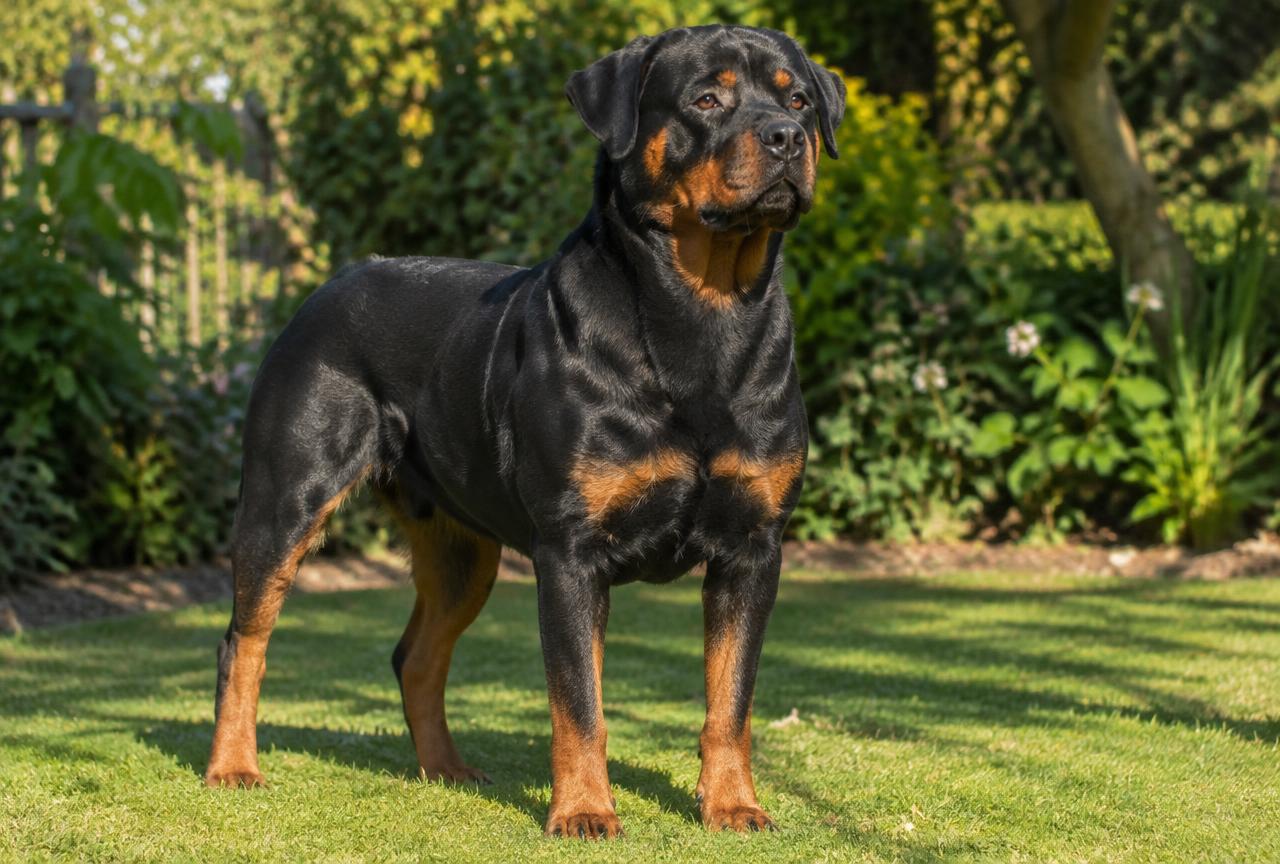
The Rottweiler is a robust, deep chested working breed descended from Roman droving dogs, prized for its calm confidence and protective instinct. Properly raised and socialised, it is a devoted, biddable family dog rather than the aggressive stereotype often portrayed.
The Rottweiler traces its roots to the Roman legions, whose cattle dogs were left behind along trade routes through southern Germany. In the town of Rottweil, these dogs were used to drive cattle to market and, later, to pull carts for butchers, earning the nickname "Rottweil butcher's dog". This working history shaped a breed that is powerful, steady under pressure and naturally protective of its family and territory, qualities that later made it a popular police, military and service dog.
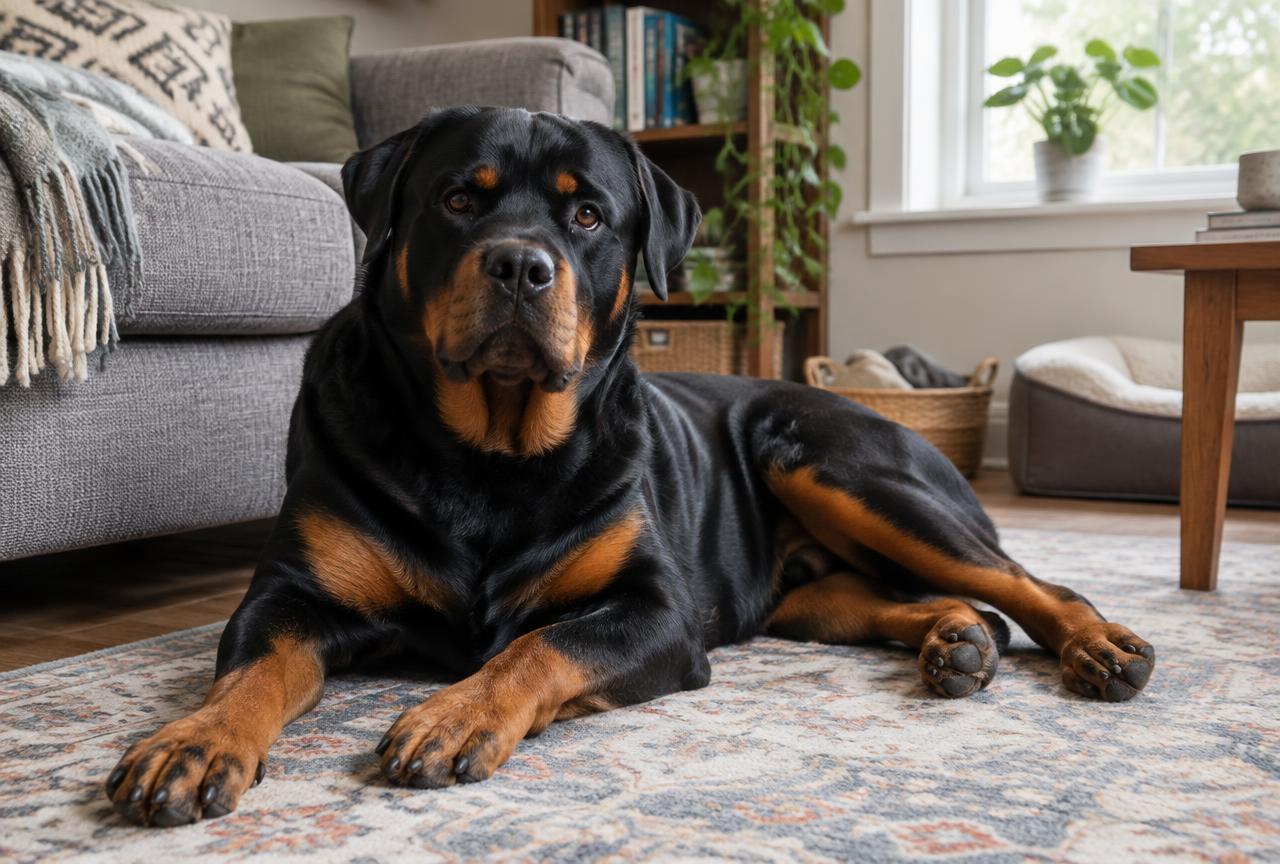
At home, a well bred and well raised Rottweiler is calm, watchful and deeply affectionate with its own family, often described as a gentle giant with those it trusts. It tends to be aloof or reserved with strangers rather than instantly friendly, and this wariness is exactly why early, extensive socialisation is non negotiable. Puppies need positive exposure to a wide range of people, dogs, sounds and situations from eight weeks onward. Without this groundwork, natural guarding instincts can tip into fearfulness or over protectiveness, which is a training and management failure rather than an inevitable breed trait.
Exercise needs are moderate but consistent: around 60 to 90 minutes a day split across walks and off lead recall work once reliable, plus scent games, tracking or weight pulling for dogs that enjoy a job. Training must start early and stay positive but firm, with clear boundaries and impulse control work, since a bored or under exercised Rottweiler of this size and strength can become a real handful. Puppies should have exercise carefully limited, as this is a large, fast growing breed prone to joint problems if over exercised too young, with little and often outings, avoiding jumping and repetitive stairs until growth plates close around 12 to 18 months.
Health is a genuine consideration with this breed. Hip and elbow dysplasia are relatively common, and screening parents through BVA/KC schemes meaningfully reduces risk in puppies. Heart conditions such as subaortic stenosis occur at above average rates, so cardiac evaluation of breeding stock matters too, alongside a rising awareness of the inherited neurological condition JLPP, for which DNA testing is now available. Like many large deep chested breeds, Rottweilers face an elevated lifetime risk of certain cancers, which contributes to a shorter than average lifespan of around 8 to 10 years.
Grooming is refreshingly straightforward: a short double coat that needs weekly brushing, rising to two or three sessions a week during spring and autumn coat changes, plus routine nail, ear and dental care. The Rottweiler suits confident, committed owners who want a loyal, biddable companion and are prepared to invest properly in training, socialisation and health screened breeding. It is a poor match for first time owners unwilling to seek support, for households wanting a dog that is instantly friendly with every stranger, or for anyone hoping for a low maintenance, low commitment pet. In the right home, however, it is an exceptionally devoted, steady and rewarding dog.
A steady, devoted guardian that rewards firm, early training with unwavering loyalty.
Exercise, day to day
- 1Puppies (8 to 20 weeks): short, gentle lead walks of 5 minutes per month of age, twice daily, no jumping or stairs.
- 2Adolescents (6 to 18 months): 30 to 45 minutes on lead exercise, building gradually, avoiding forced running or cycling.
- 3Adults: 60 to 90 minutes a day, mixing brisk walks, off lead recall in secure areas, and tracking or scent work.
- 4Mental work: obedience training, puzzle feeders and controlled impulse control games most days.
- 5Older dogs: shorter, gentler walks with joint supplements if advised by a vet.
Grooming, realistically
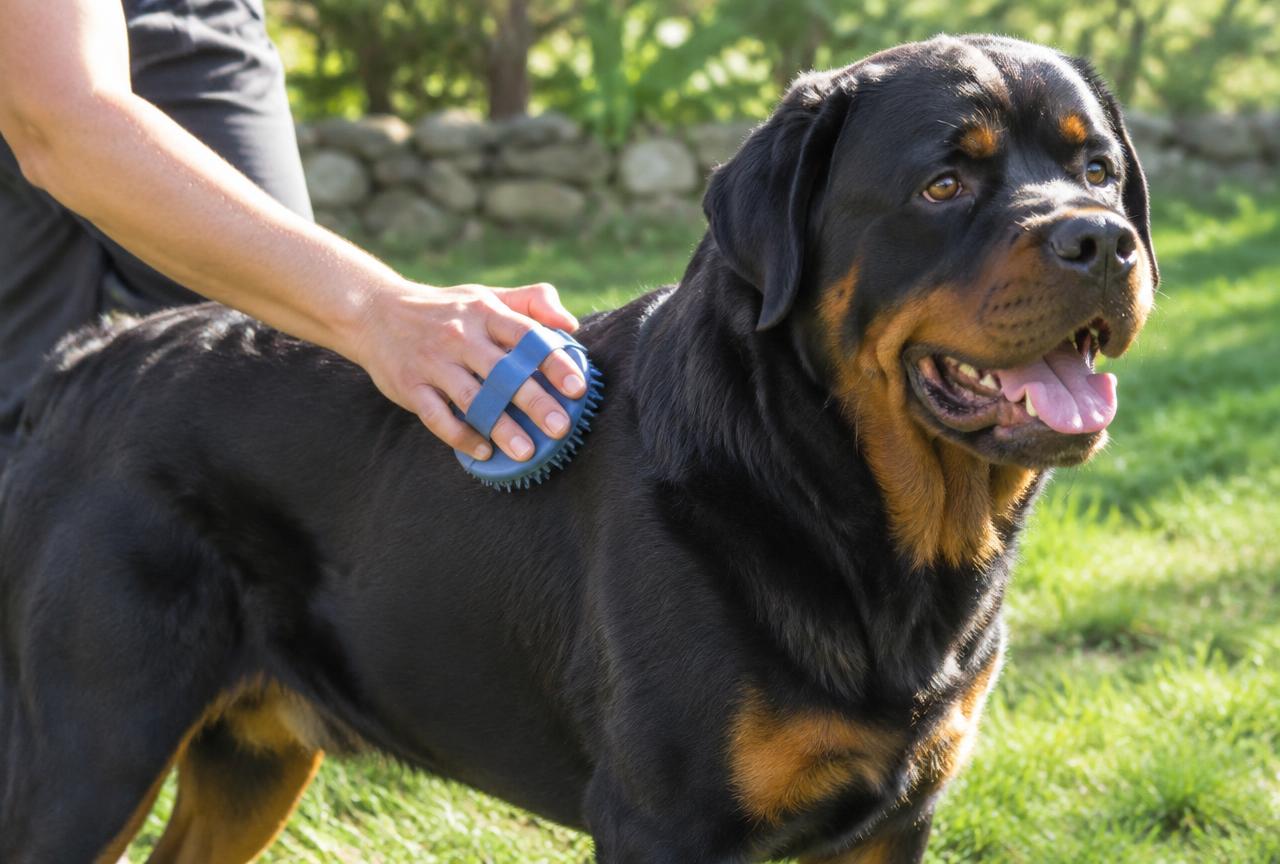
- 1Brush weekly with a rubber curry brush, increasing to two or three times a week during spring and autumn coat blowing.
- 2Bathe only every 8 to 12 weeks or when visibly dirty, to protect natural skin oils.
- 3Trim nails every 3 to 4 weeks and check ears weekly for wax or odour.
- 4Brush teeth two to three times a week with canine toothpaste to prevent tartar build up.
- 5Check skin folds and pads after outdoor activity for cuts or debris.
What you actually need
- Rubber curry brush
- Slicker brush for shedding season
- Dog nail clippers or grinder
- Enzymatic canine toothpaste and brush
- Gentle dog shampoo
- Ear cleaning solution
Puppy to adult
| Age | Male | Female | What is happening |
|---|---|---|---|
| 8 weeks | 8 to 10 kg | 7 to 9 kg | Soft, rounded puppy build; exercise strictly limited. |
| 3 months | 16 to 20 kg | 14 to 18 kg | Rapid growth phase, avoid jumping and stairs. |
| 6 months | 28 to 34 kg | 24 to 30 kg | Lanky adolescent stage with uneven proportions. |
| 9 months | 38 to 44 kg | 32 to 38 kg | Muscle mass increasing, growth plates still open. |
| 12 months | 45 to 52 kg | 34 to 42 kg | Nearing adult height, still filling out in chest and muscle. |
| 2 to 2.5 years | 50 to 60 kg | 35 to 48 kg | Full adult size and muscular development reached. |
Ranges are typical, not targets. Judge condition by ribs and waist, and check with the ideal weight checker.
What to ask a breeder
- Can I see health certificates for hip, elbow and cardiac screening on both parents?
- Have the puppies been tested or is there family history for JLPP?
- How are puppies socialised with people, noises and handling before they go home?
- What is the temperament of the parents, and can I meet the mother?
- What support do you offer for training and behaviour after purchase?
- How many litters has the mother had, and what is the breeding programme's health testing policy?
Health tests to ask for
Ask to see results for both parents before you put down a deposit.
- Hip score (BVA/KC scheme), aim below breed median
- Elbow score (BVA/KC scheme)
- Cardiac evaluation for subaortic stenosis
- DNA test for juvenile laryngeal paralysis polyneuropathy (JLPP)
- Eye examination (entropion and ectropion)
- Thyroid function testing
Health watch-list
What to ask a breeder about, and what to watch for over a lifetime. This is orientation, not veterinary advice, anything you notice belongs in front of a vet.
Hip and elbow dysplasia
CommonMalformed joints can cause pain and arthritis; screening parents through BVA/KC schemes reduces risk considerably.
Subaortic stenosis
NotableA narrowing near the heart valve that can cause fainting or sudden collapse; cardiac screening of breeding stock is recommended.
Gastric dilatation volvulus (bloat)
NotableDeep chested breeds are at higher risk; feeding smaller meals and avoiding vigorous exercise after eating helps reduce the chance.
Juvenile laryngeal paralysis polyneuropathy (JLPP)
UncommonAn inherited neurological condition causing weakness and breathing difficulty in young dogs; DNA testing identifies carriers.
Osteosarcoma (bone cancer)
NotableLarge breeds have an elevated lifetime risk; persistent limping or swelling should always be checked promptly by a vet.
Entropion and ectropion
UncommonEyelid conformation issues that can cause irritation or infection, usually corrected surgically if present.
What it costs to keep one
Realistic running cost
€158 / month
About €1,896 a year, or roughly €17,064 across a 9-year life, before purchase price, neutering and one-off vet events.
Before the puppy arrives. Budget roughly €700 to 1400 for a crate, bed, lead and harness, bowls, puppy classes, first vaccinations and grooming kit sized for this breed. Figures throughout are indicative and vary a good deal between countries.
Interactive · built for this breed
Is a Rottweiler right for your home?
Seven honest questions about your space, time and household, checked against this breed's exercise need, coat, sociability and tolerance for time alone.
Fit with your routine
96%
A strong fit
Your routine suits a Rottweiler well. Meet adult dogs of the line before you commit.
What to sort out first
- Needs more daily exercise than you have pencilled in.
Working in your favour
- Coat care fits the grooming time you offered.
Compare more breeds in the matchmaker, or plan meals with the portion calculator.
The verdict, by household
First-time owner
Only with strong support
Manageable with a good trainer and socialisation classes, but the size and instincts suit experienced hands better.
Family with children
A strong choice with supervision
Loyal and gentle with its own family when well socialised, but always supervise interactions given its size and strength.
Active single or couple
An excellent match
Rewards structured training and companionship with deep loyalty and a steady temperament.
Multi-dog household
Possible with care
Can live well with other dogs when raised together, though same sex pairings need careful introduction.
When to call your vet
- Sudden lameness or reluctance to rise, which may indicate hip or elbow dysplasia
- Exercise intolerance, fainting or a heart murmur suggesting cardiac disease
- Progressive hind limb weakness or voice change, which may point to JLPP or neurological issues
- Bloated, distended abdomen with unproductive retching, a sign of gastric dilatation volvulus needing emergency care
- Excessive thirst, weight changes or lethargy, which can signal thyroid or other metabolic issues
Nothing here is a diagnosis. A swollen, hard belly with retching, collapse, breathing difficulty and sudden hind-leg weakness are emergencies: go straight away.
Rottweiler vs the closest alternatives
| Breed | Weight | Energy | Grooming | € / month |
|---|---|---|---|---|
| Rottweiler | 35 to 60 kg | 6/10 | 2/10 | €158 |
| Whippet | 11 to 20 kg | 6/10 | 2/10 | €72 |
| Greyhound | 26 to 40 kg | 6/10 | 2/10 | €170 |
| Bullmastiff | 41 to 59 kg | 5/10 | 3/10 | €128 |
Rottweiler questions, answered
Are Rottweilers dangerous dogs?
Rottweilers are not inherently dangerous, but their size, strength and natural guarding instincts mean poor breeding, socialisation or training can lead to serious problems. With a responsible breeder, early socialisation and consistent training, most Rottweilers are stable, loyal family dogs.
Are Rottweilers good with children?
Well socialised Rottweilers are typically gentle and patient with children in their own family, often forming close bonds. Because of their size and strength, interactions with young children should always be supervised.
How much exercise does a Rottweiler need?
Adult Rottweilers generally need 60 to 90 minutes of exercise a day, including walks and mental stimulation such as training or scent work. Puppies need much less, with exercise carefully limited to protect their developing joints.
Do Rottweilers shed a lot?
Rottweilers have a short double coat that sheds moderately year round, with heavier shedding during spring and autumn coat changes. Weekly brushing, increased during these seasons, keeps loose hair manageable.
How long do Rottweilers live?
The typical Rottweiler lifespan is 8 to 10 years, somewhat shorter than many breeds of similar size, partly due to a higher incidence of certain cancers. Good breeding, weight management and regular veterinary care can support a longer, healthier life.
Is a Rottweiler a good first dog?
Rottweilers are usually better suited to owners with some previous dog experience, given their size, strength and need for early, consistent training. First time owners can succeed with strong support from a good trainer and a reputable breeder.
Sources
- Rottweiler breed standard, The Kennel Club
- Rottweiler breed information, American Kennel Club
- Hip dysplasia scheme, British Veterinary Association
- Rottweiler health testing requirements, The Kennel Club
- JLPP genetic testing, Orthopedic Foundation for Animals
Put it into practice
Breeds people compare with this
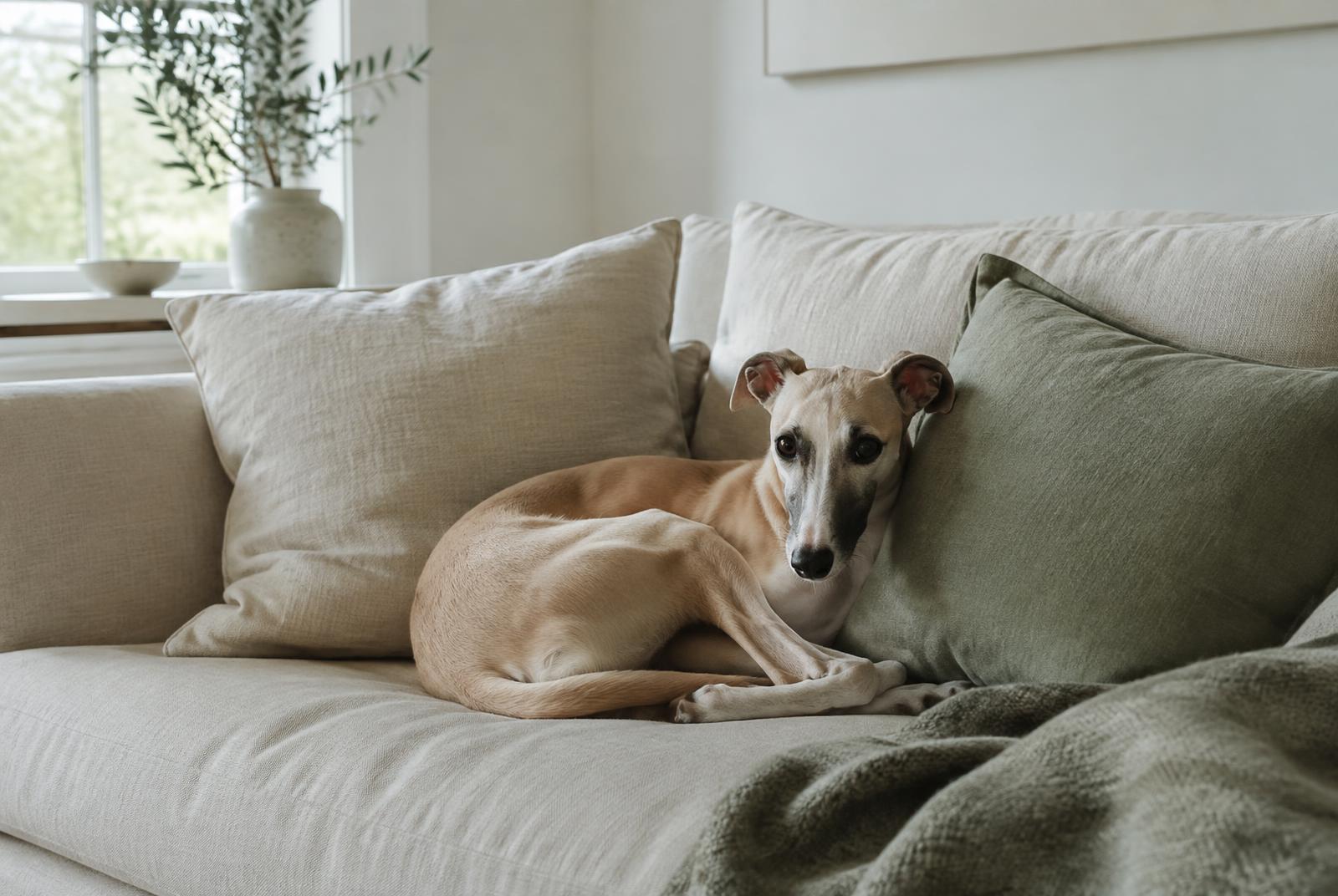
Whippet
A 35mph sprinter wrapped around a dedicated couch potato, happiest after a short burst of speed followed by hours of sleep.
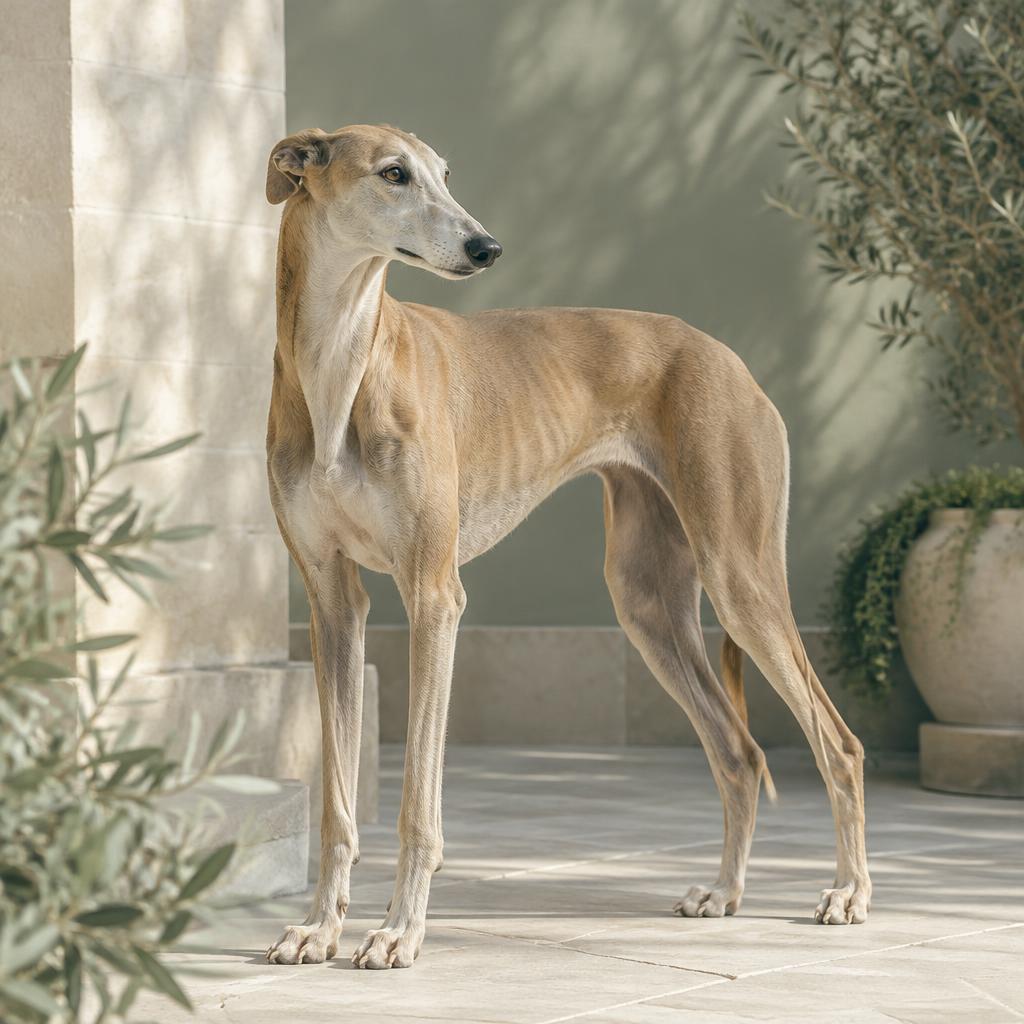
Greyhound
The ancient sofa sprinter: a calm, noble hound built for speed and deep naps.
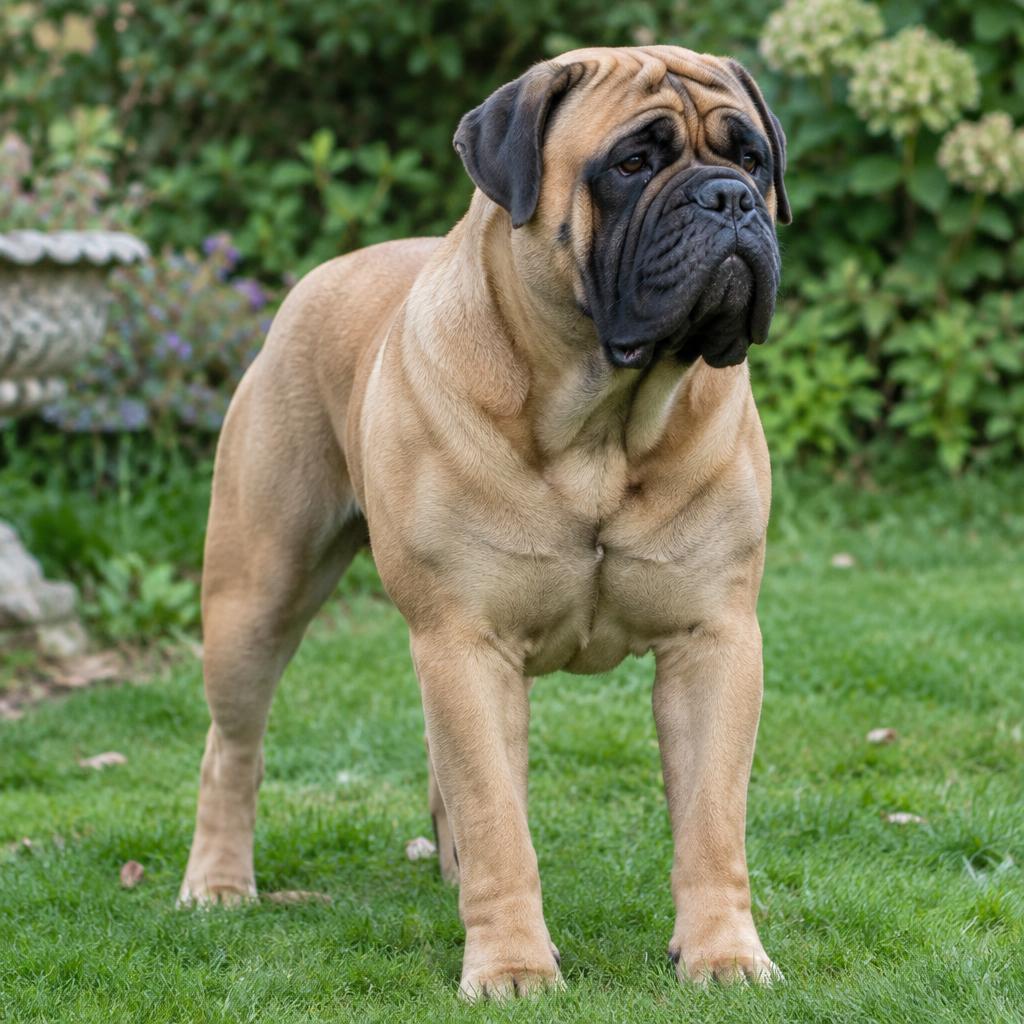
Bullmastiff
A calm, powerful English guardian bred to track and hold poachers silently, now a devoted and protective family dog.