Dog Sleeping Positions: What Each One Means
Curled donut, flat on the side, belly up, lion pose or pressed against you: every position says something about comfort, temperature and trust.
The SniffScroll desk
Published 11 October 2026

The SniffScroll editorial team
The short version
- Sleeping positions are about comfort, temperature and trust, not health diagnoses.
- Curled up conserves heat and feels secure; side sleeping signals deep relaxation.
- Belly up is the most vulnerable position and a strong sign of trust, and it also helps cooling.
- The lion pose is dozing rather than deep sleep: your dog is resting but ready to move.
- A sudden change in sleep position, amount or restlessness is more meaningful than any single position.
Dogs spend half their lives asleep, and they do it in a repertoire of positions that owners love to decode. The good news is that the decoding is mostly real: sleeping positions do reflect comfort, temperature and trust. The important caveat is that they reflect those things, not health, and no single position is a diagnosis. Here is what each of the classics actually means.
The donut: curled up tight
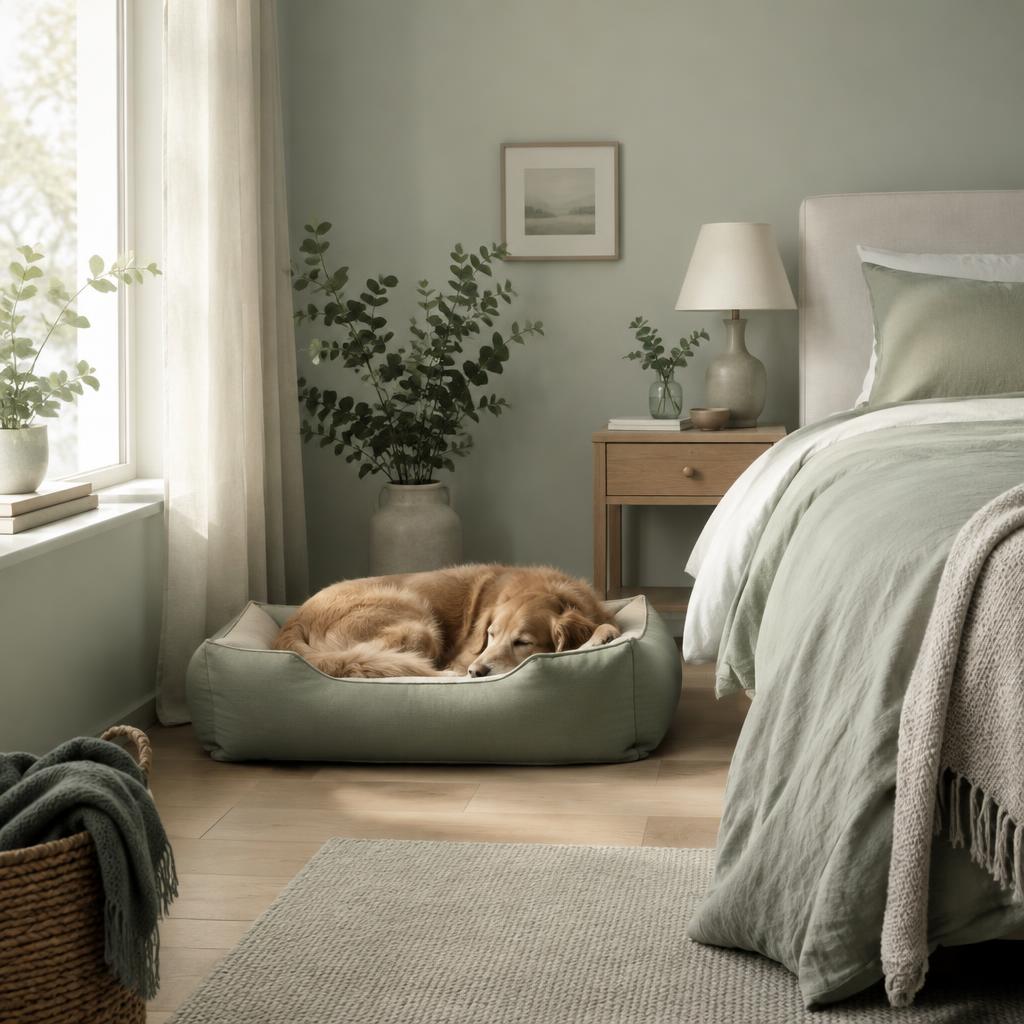
Nose tucked to tail, legs drawn in, tail over the face: the curl is the most common sleeping position in the dog world, and the logic is ancient. Curling conserves body heat and shields the belly and vital organs, which made it the default for wild canids sleeping exposed.
At home, you will see more curling in cool rooms, in new or unfamiliar places, and in dogs who simply like to feel tucked in and secure. A dog who always curls is not worried or cold by definition; many just prefer it. But if your dog suddenly starts curling tightly in a warm house where they used to sprawl, that change is worth a quiet note.
The side sleeper: flat out and relaxed
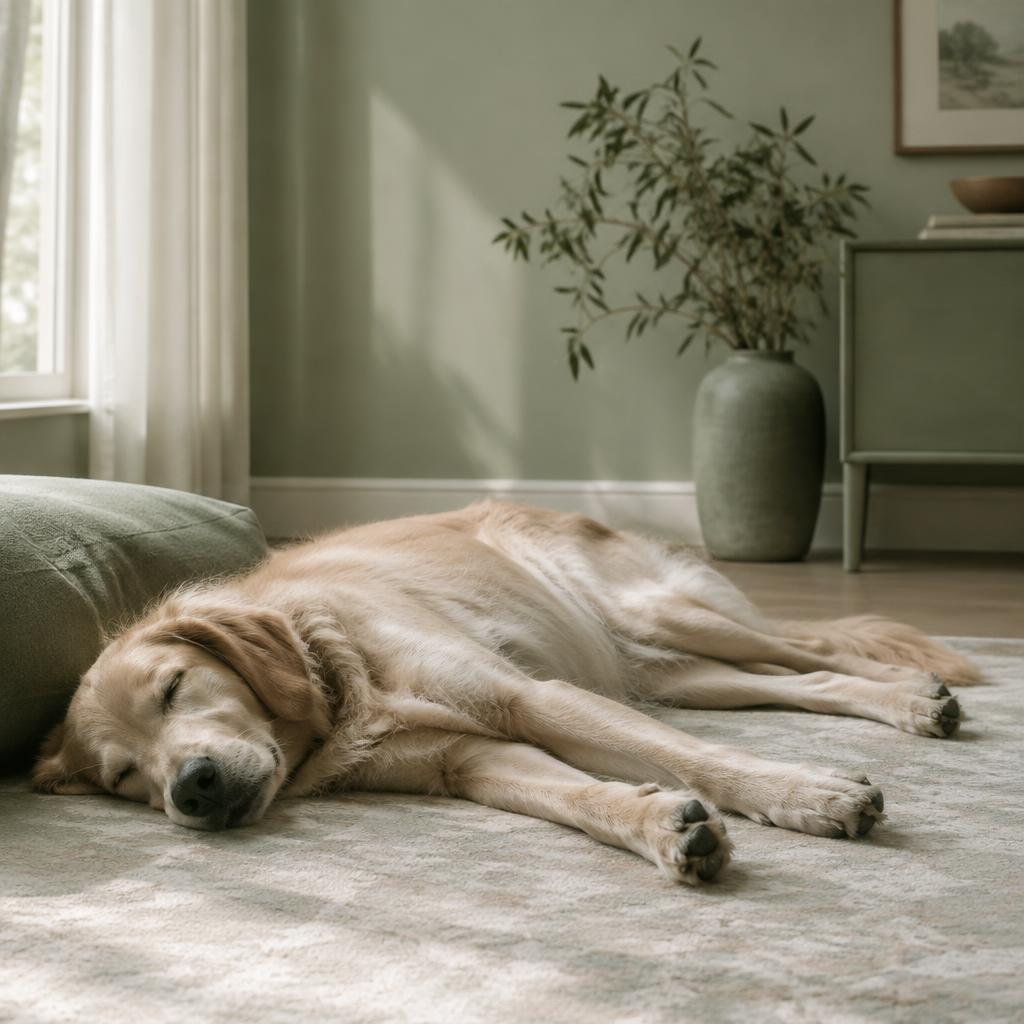
Lying flat on one side with legs extended is the position of a dog who feels completely safe. The belly is exposed, the muscles are loose, and this is the posture in which most dogs reach deep, dreaming sleep, the kind with twitching paws and soft woofs.
If your dog sleeps on their side in the middle of the room, take it as the compliment it is: they trust the space and everyone in it. Deep-sleeping dogs can be startled awake, though, so teach children to call a sleeping dog's name from a distance rather than touching them awake.
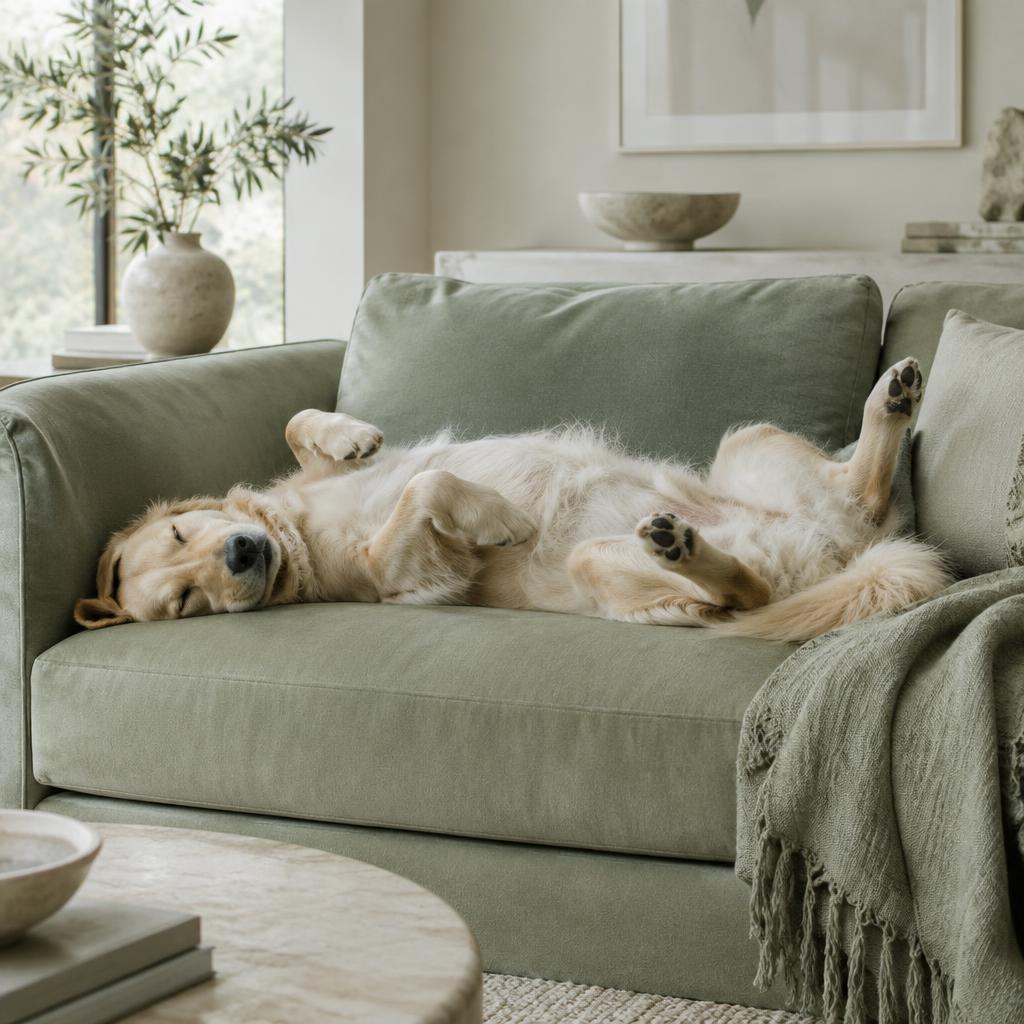
Belly up: the ultimate trust fall
Paws in the air, belly to the ceiling, head lolling to one side: it looks absurd, and it means two things at once. First, trust. The belly is the most vulnerable real estate a dog has, and exposing it in sleep is a statement that the dog feels utterly secure. Second, thermoregulation. The belly's fur is thin and the paws hold sweat glands, so belly-up sleeping dumps heat efficiently. Expect more of it in summer.
The lion pose: head on paws
The sphinx position, legs tucked, head resting on paws, is technically more rest than sleep. Dogs in the lion pose are recharging while staying ready: they can be upright and moving in a second. You will see it in dogs who do not want to miss anything, in working breeds keeping one ear on the household, and during the day rather than at night. A dog who only ever lion-sleeps and never fully relaxes may simply be vigilant by nature, but it can also hint that they do not feel able to switch off, which is worth gently exploring.
The cuddler: pressed against you
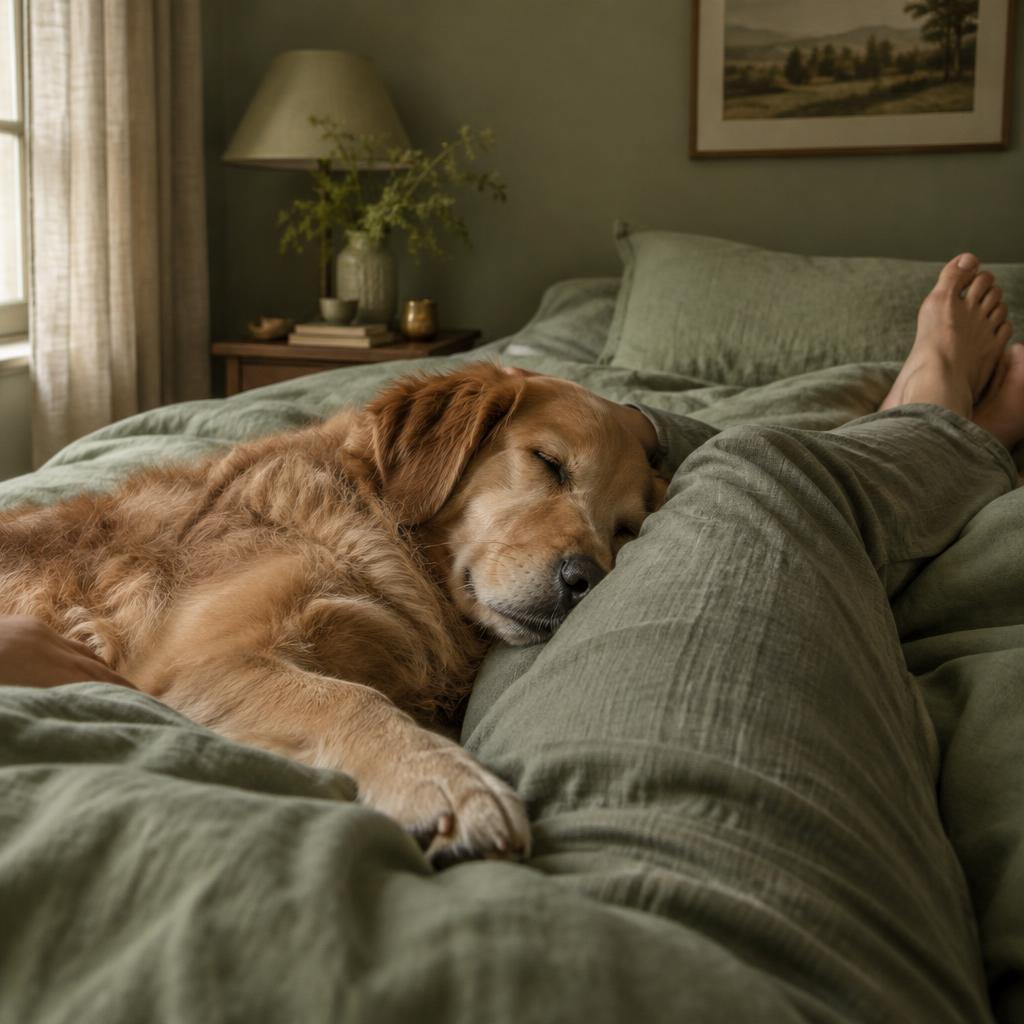
Sleeping back to back with you, draped over your feet or spooned against another pet is social sleeping, straight from the puppy pile. Dogs are group animals, and contact sleep delivers warmth, scent and the deep comfort of the group. The dog who sleeps at your feet is not being clingy; they are being a dog. If it works for your household, enjoy it. If it does not, a cosy bed beside yours, moved gradually further over weeks, is the kind way to change it.
Interactive tool
Sleep position reader
Position and recent changes in, what it suggests out.
Your plan
- Positions are mostly about temperature, comfort and trust: none of them is a health sign on its own.
- If the pattern is stable, there is nothing to do: let sleeping dogs lie.
- Make sure there is a bed option for each mood: something to curl into, something flat to stretch on, and a cool spot for warm nights.
- See the vet if sleep changes come with panting at night, pacing, stiffness getting up, or sleeping far more than usual.
The donut: cosy and conserving
Curled nose to tail conserves heat and protects the belly and vital organs. It is the most common position in cool rooms, in new places and in dogs who like to feel secure.
Puppies and seniors sleep differently
Puppies are sleep machines: 18 to 20 hours a day is normal in the first months, and it comes in sudden, deep crashes wherever they happen to be. A puppy asleep mid-toy, flat out in the corridor or curled against a shoe is not a worry; growth is exhausting work. What puppies need is protection for that sleep: a quiet crate or pen where nobody disturbs them, because broken sleep makes for an overtired, bitey, hard-to-settle pup.
Seniors drift the other way. They sleep more hours but more lightly, often preferring padded, supportive spots, and many develop a preference for warmth as their circulation and coat thin with age. An older dog who abandons a favourite sofa for the floor, or vice versa, may be telling you about joint pain: the climb up or the jump down has started to cost something. A ramp, steps or an orthopaedic bed on the floor is a kind response, and a vet conversation about pain relief is a sensible one.
Sharing your bed: the honest version
Around half of dog owners share their bed with their dog, and the research on it is reassuringly boring: for most people and most dogs it does no harm and many sleep fine. The cases where it deserves a rethink are specific. Dogs who guard resting spots should not be on the bed, full stop, until a behaviourist has worked through it. Puppies who are not yet house-trained or who might fall from a height are better in a crate beside the bed. And anyone whose sleep is genuinely broken by a sprawling, dreaming, 4am-position-changing dog is allowed to choose their own rest without guilt: a dog who sleeps in a comfy bed in the bedroom loses nothing that matters.
Whatever the household decides, consistency is the kind thing. A dog allowed up some nights and shut out on others just learns to lobby harder.
What changes the picture
Position preferences shift with three big factors, and understanding them stops over-reading:
| Factor | What you will see |
|---|---|
| --- | --- |
| Temperature | More curling in the cold, more belly-up and sprawled sleeping in the heat |
| Age | Puppies sleep anywhere, deeply and suddenly; seniors sleep more and often prefer supportive, padded spots |
| Security | New homes, house moves and changes in the household push dogs toward curled, protected positions |
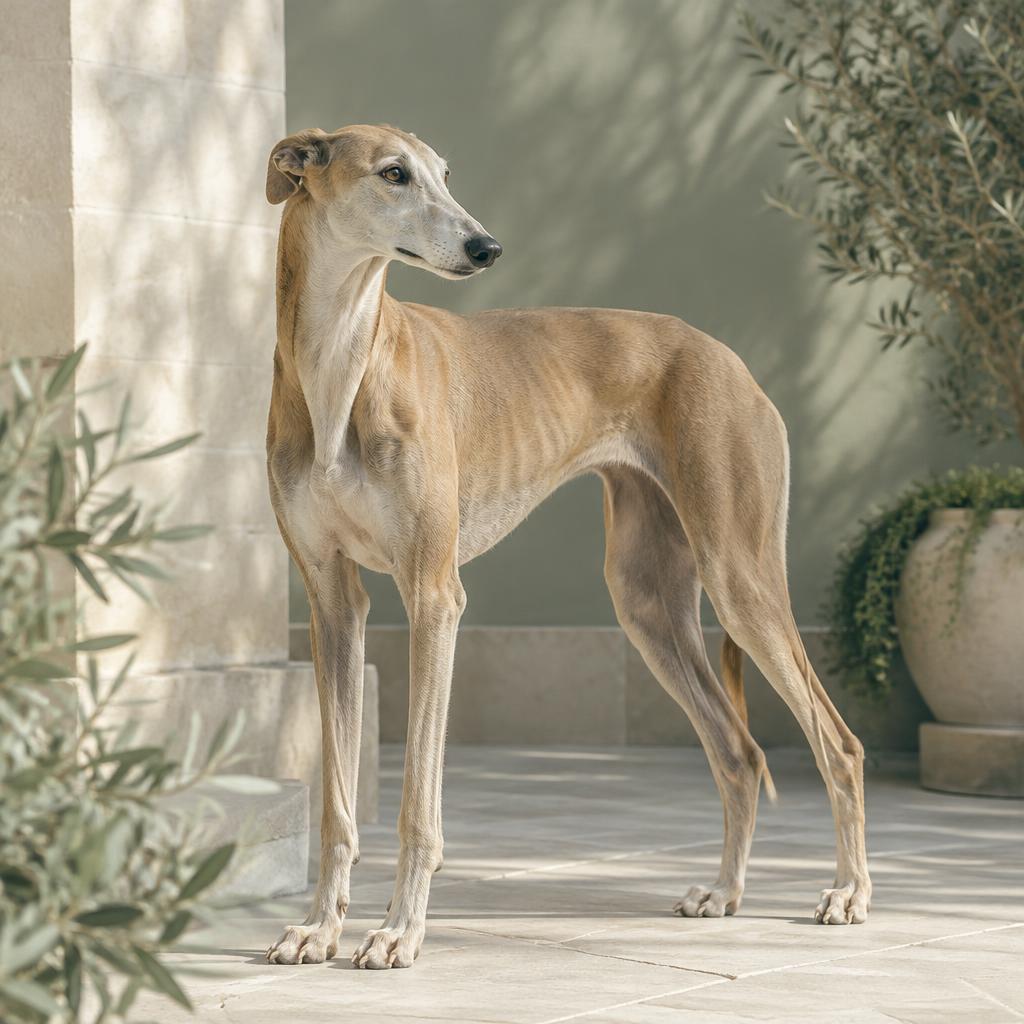
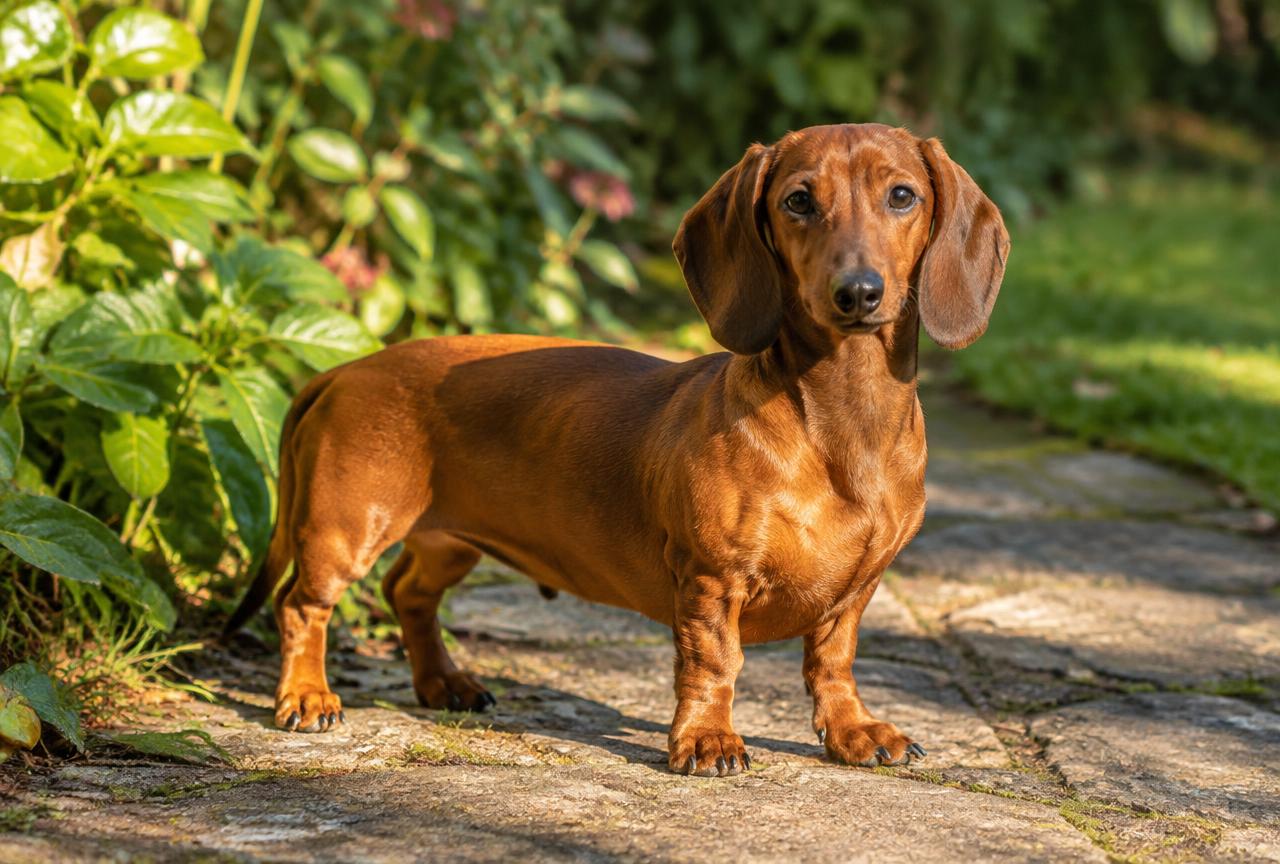
Breed plays a part too. Sighthounds like the Greyhound are famous sprawlers with their long legs, while many small breeds are committed burrowers who would rather sleep under a blanket than on one.
Setting up for good sleep
Whatever the position, a few things help every dog sleep well:
- Offer choice: something to curl into, something flat to stretch on, and a cool spot for warm nights
- Put beds in low-traffic corners where the dog can rest without being stepped over
- Keep a consistent evening routine: last walk, last toilet trip, lights down
- For seniors and stiff dogs, an orthopaedic bed makes a visible difference to morning mobility
- Let sleeping dogs lie: teach the whole household not to disturb a sleeping dog
The position is the personality; the change is the message. A dog who sleeps the same way for years is fine. A dog who suddenly sleeps differently is talking.
Twitching, running and dreaming
No article about sleeping positions is complete without the midnight leg-twitch. Dogs dream, and the paw paddling, muffled woofs and whisker flicks you see are the physical leakage of that dream sleep. Puppies and seniors twitch the most, and the going theory is that dogs, like us, replay the day: the walk, the smells, the game. It is normal, harmless and one of the great small joys of living with a dog.
The one distinction worth knowing is dreaming versus seizure activity, because owners understandably worry. A dreaming dog can be gently woken, settles immediately, and the movements are soft and rhythmic. Seizure activity is different: the dog cannot be roused, the movements are rigid or violent, there may be drooling or loss of bladder control, and the dog is disoriented afterwards. If you ever see the second pattern, video it if you safely can and call the vet. The first pattern you can simply enjoy, ideally without waking the dreamer.
How much sleep is normal?
Since position and amount get confused, the numbers are worth stating plainly. Adult dogs typically sleep 12 to 14 hours across the day and night, with much of the daytime portion being light dozing rather than deep sleep. Puppies need 18 to 20 hours, and seniors often return to 16 or more. Working and highly active dogs may sleep less but more deeply.
What is not normal is a change in the pattern: a dog who suddenly sleeps through things they used to leap up for, or one who cannot settle at night after years of sleeping soundly. Amount, like position, is a baseline-and-change game. Know your dog's normal, and the abnormal announces itself. Our dog age calculator helps you place your dog's life stage, which sets the right expectation for how much sleep is healthy.
Beds, and why the floor sometimes wins
Owners regularly buy a beautiful bed only to find the dog asleep on the hard floor beside it. Usually the explanation is temperature: beds are warm, and a hot dog seeks the coolest surface in the room, which is why tiled kitchen floors are so popular in summer. Sometimes it is texture preference, sometimes habit, and sometimes the bed is simply in the wrong place: dogs like to sleep where they can monitor the household without being in its way.
Rather than taking it personally, experiment. Move the bed to a quiet corner with a view of the room. Try a cooler mat in summer and something deeper and more nest-like in winter. Wash the cover so it smells of home rather than shop. Most dogs come round once the bed matches the season and the spot matches their idea of a good lookout. And if the floor still wins occasionally, that is fine too: choice, not the bed, is the point.
When to see a vet
Positions themselves never need a vet. Patterns sometimes do. Book a visit if your dog's sleep changes suddenly: much more or much less than usual, restlessness or pacing at night, panting while resting, difficulty getting comfortable, crying out in sleep, or stiffness when rising. In older dogs, night-time restlessness combined with vacant staring or confusion can point to cognitive dysfunction, which is worth catching early. And any sleep change alongside a shift in appetite, drinking or energy deserves a check, because sleep is often where illness shows first.
The bottom line
Dog sleeping positions are a charming window into comfort, temperature and trust: the curl for cosiness, the side sprawl for security, belly up for trust and cooling, the lion for the dog on standby, and the cuddle for the social sleeper. Read them for pleasure, not for diagnosis, and pay attention to the one thing that really matters: change.
For the bigger picture on canine sleep, see why dogs sleep so much, and if night-time restlessness is your current reality, our guide to dog pacing at night is the next read. The dog age calculator can tell you which life stage your sleeper is in, and breeds like the Golden Retriever will happily demonstrate every position in this article in a single afternoon.
Questions people actually ask
What does it mean when a dog sleeps on its back?
Belly up with paws in the air is the most vulnerable position a dog can choose, so it signals deep trust in their environment. It also serves a practical purpose: the thin fur on the belly helps a dog dump heat, so you will see it more in warm weather.
Why does my dog sleep curled up in a ball?
Curling nose to tail conserves body heat and protects the belly and vital organs. It is the most common position in cool rooms, in new or unfamiliar places, and in dogs who simply like to feel tucked in. It is normal and no cause for concern.
Why does my dog sleep at my feet?
It is social sleeping. Dogs are group animals, and sleeping against or near you is a sign of bonding and trust, a behaviour carried from puppyhood in the litter. Your feet also happen to be a warm, predictable spot that keeps them close to the action.
Do dog sleeping positions mean anything about health?
Individual positions are about comfort, not health. What matters is change: a dog who suddenly sleeps far more or less, cannot settle, pants at night, or is stiff when getting up may be telling you about pain or illness, and that pattern is worth a vet visit.
Why does my dog sleep so much?
Adult dogs sleep roughly 12 to 14 hours a day, and puppies and seniors considerably more. Dogs also sleep lightly and in bursts, so a lot of what looks like sleep is dozing. Our guide to why dogs sleep so much covers hours by age in detail.
Should I let my dog sleep on my bed?
It is a personal choice, and for most healthy, well-behaved dogs it does no harm. The exceptions are dogs with guarding or behaviour issues around resting spots, very young puppies, and anyone whose sleep is genuinely disturbed. Whatever you choose, be consistent.
Sources
Breeds mentioned

Put it into practice
Read next
Why Do Dogs Roll in Poop? The Instinct Explained
Why dogs roll in the worst smells they can find, what the behaviour is really about, and how to prevent it or at least clean up well afterwards.