Hound group
Germany
Dachshund
The Dachshund is a loyal, tenacious German hound available in Standard and Miniature sizes with Smooth, Wire and Long coats, needing lifelong spine care.
Reviewed against Kennel Club and breed club health guidance
A bold, characterful hunting breed in a long, low body, needing careful back protection for life.
The short version
- Dachshunds are bold, tenacious hounds bred to hunt underground, with a strong prey drive and confident personality.
- The long spine makes intervertebral disc disease a lifelong risk, so jumping, stairs and excess weight must be carefully managed.
- Three coat types, Smooth, Wire and Long, need different grooming routines, from a weekly wipe to regular hand stripping or brushing.
- Training needs patience and consistency, since this independent breed does not naturally aim to please the way some working breeds do.
- Both Standard and Miniature sizes share the same core temperament, with Miniatures needing especially gentle handling as puppies.
Choose a variety
The original size, bred to hunt badgers and boar, sturdier and slightly more robust than the Miniature.
- Weight
- 9 to 12 kg
- Height
- 20 to 27 cm
- Lifespan
- 12 to 16 yrs
- Size
- Small
- Group
- Hound
- Coat
- Smooth, Wire or Long, single or slightly harsh coat depending on type
- Daily exercise
- 45 to 60 minutes a day
- Years to full size
- about 1
- One-off setup
- €400 to 800
Get one if…
- Owners wanting a small but characterful dog
- Households able to fit ramps and manage weight carefully
- People who enjoy training a strong willed companion
- Flat or house dwellers with moderate exercise time
- Owners drawn to a specific coat type, Smooth, Wire or Long
Think again if…
- Households wanting a dog that never barks at visitors
- Families with toddlers likely to pick the dog up roughly
- Owners unwilling to restrict jumping and stairs
- People wanting an easily biddable, eager to please dog
- Anyone hoping for a hypoallergenic breed
Trait profile
Dachshunds pack a strong hunting drive and confident, vocal personality into a small body, so mental stimulation and firm but gentle training matter more than physical size suggests.
Space & setup. Adaptable to flats and houses alike given its small size, though stairs and jumping should always be limited to protect its long spine.
Allergies. Wire coats shed the least and are often better tolerated by mild allergy sufferers, while Smooth and Long coats shed lightly but steadily; no coat type is truly hypoallergenic.
Living with a Dachshund
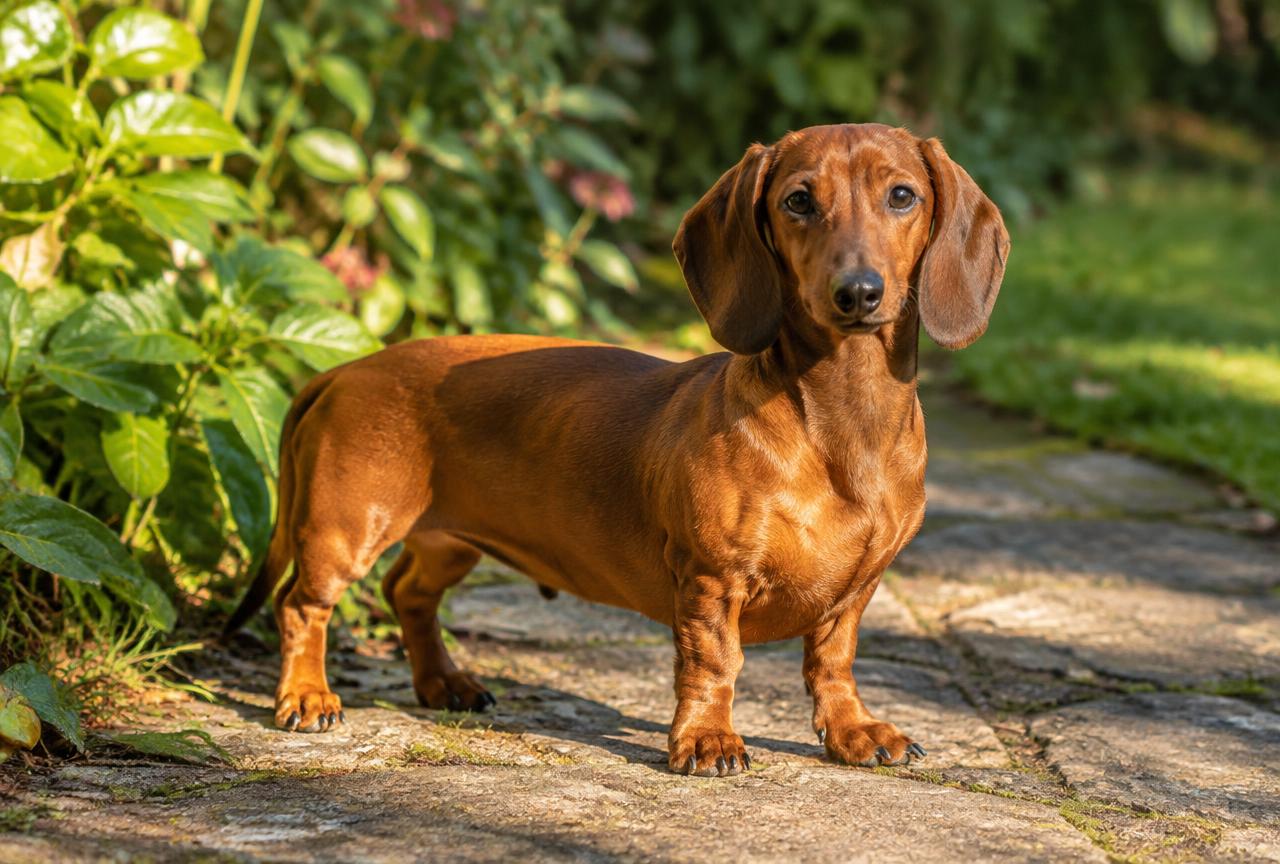
The Dachshund is a distinctive, long bodied hound bred in Germany to hunt badgers underground, combining a bold, independent hunting temperament with deep loyalty to its family. It comes in Standard and Miniature sizes and Smooth, Wire and Long coat varieties, all sharing the same characterful, tenacious nature.
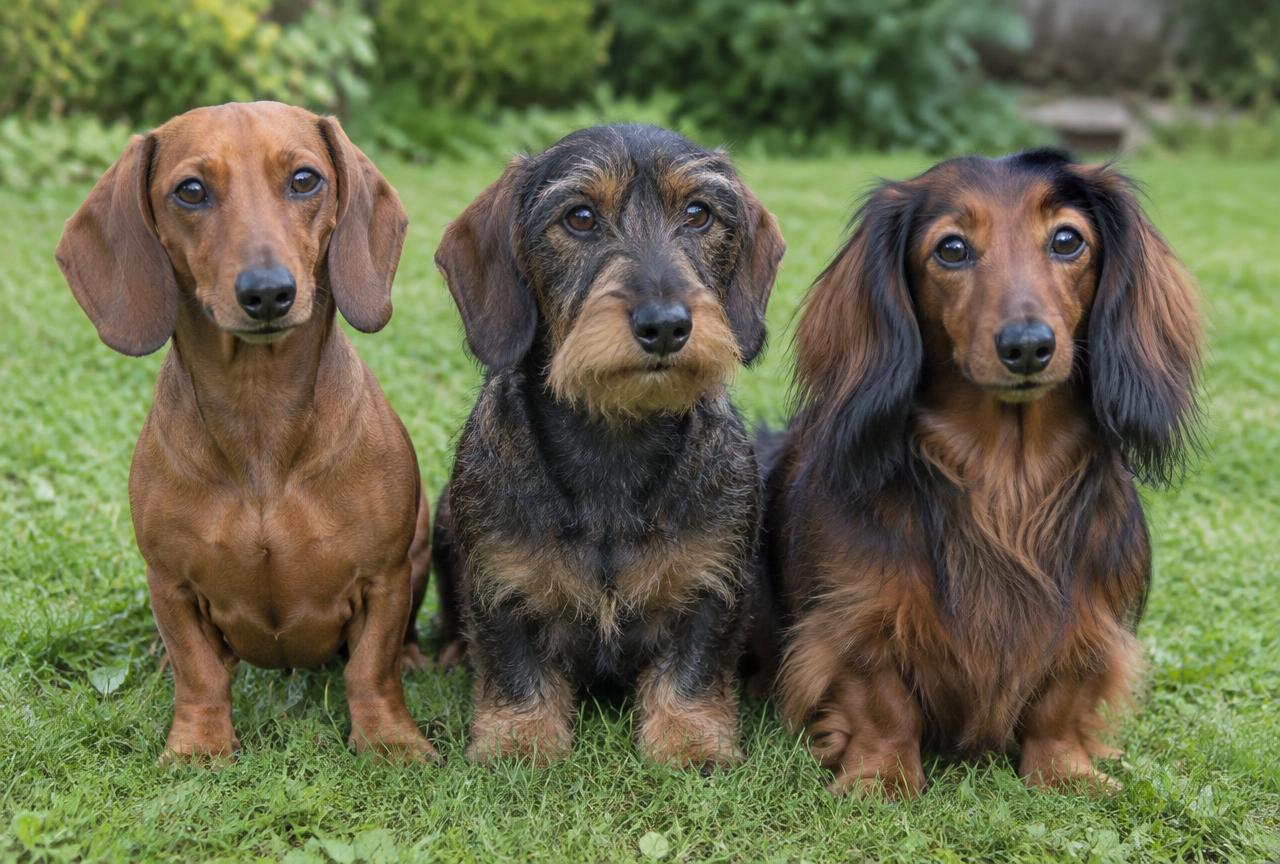
The Dachshund was developed in Germany from the 16th century onward to hunt badgers underground, its name literally meaning "badger dog". Its long, low body and powerful front paws let it dig into and turn within tight burrows, while a deep chest and loud voice helped hunters track it below ground. Three coat types, Smooth, Wire and Long, developed for different terrain and climate, and two sizes, Standard and Miniature, emerged as the breed diversified to hunt badgers, boar and, in miniature form, rabbits.
Despite its comic proportions, the Dachshund has a genuinely bold, tenacious hunting temperament packed into a small frame. It is affectionate and often deeply attached to its family, frequently choosing one person as a particular favourite, but it can be stubborn, independent minded and quick to bark at anything unfamiliar. Wire haired Dachshunds tend to be the most extroverted and terrier like, Smooths the most laid back, and Longs often the gentlest and most sensitive, though individual personality varies more than coat type.
Exercise needs are moderate, around 45 to 60 minutes a day of walking plus scenting games, but the way a Dachshund exercises matters more than how much: jumping on and off furniture, running up and down stairs repeatedly, and twisting leaps should all be minimised throughout life, not just in puppyhood, because the breed's long spine makes it highly prone to intervertebral disc disease. Ramps for sofas and cars, and steps for beds, are sensible from day one, and keeping a Dachshund lean is one of the single most protective things an owner can do for its back.
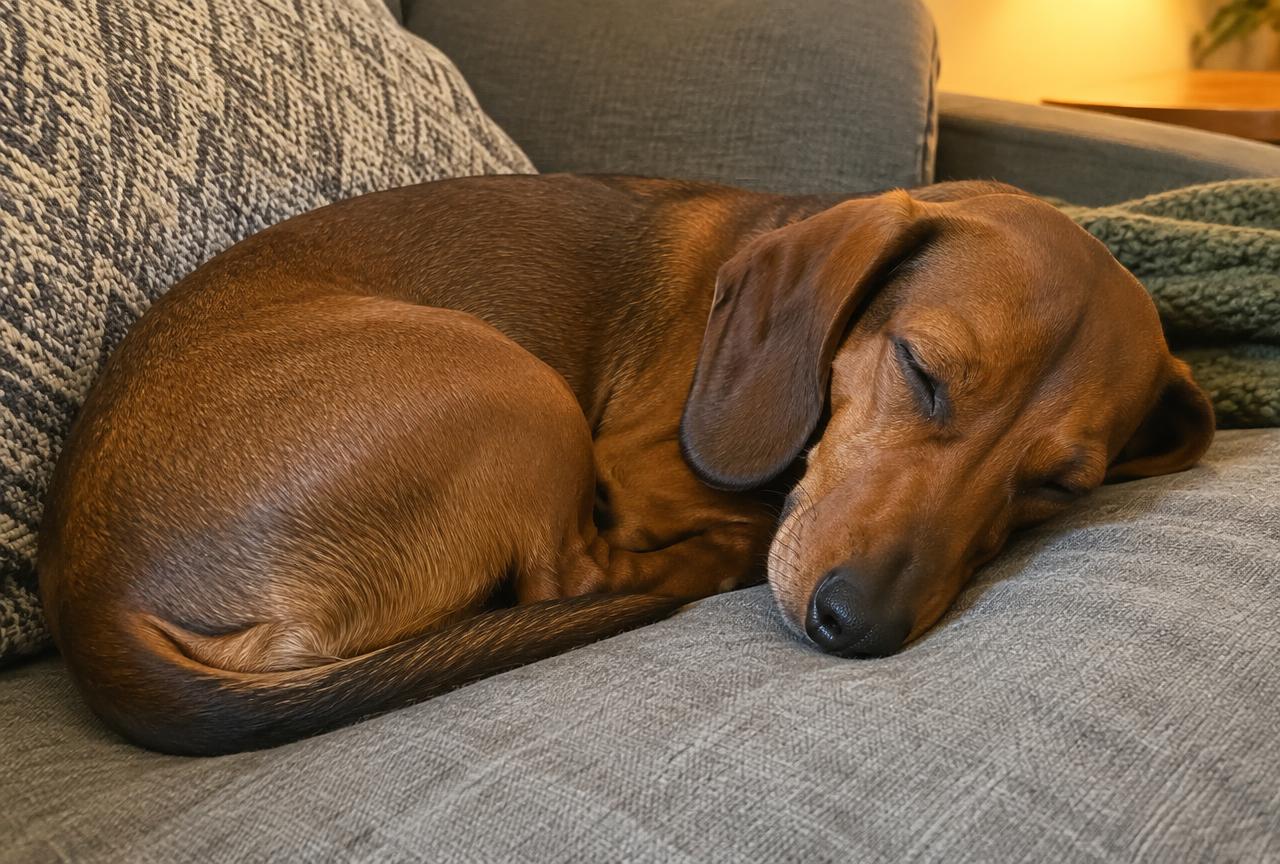
Training benefits from patience and consistency, since this is an independent breed bred to make its own decisions underground, not to take orders on demand. Positive, reward based methods work far better than corrections, and early socialisation helps curb the tendency to bark at visitors or other dogs. Miniatures and Standards are trained the same way, though Miniatures, being smaller and sometimes more highly strung, benefit from particularly gentle, confidence building handling as puppies.
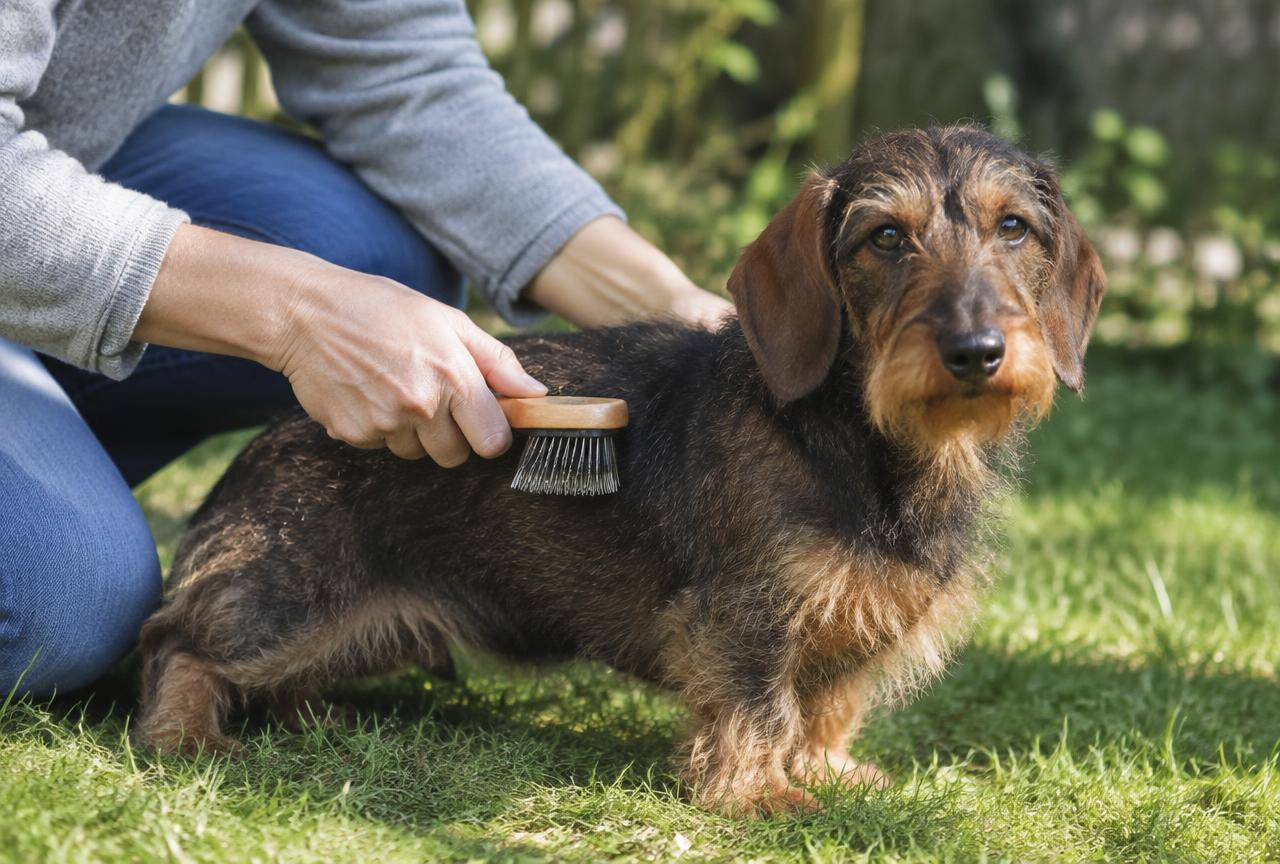
Grooming differs meaningfully by coat: Smooth coats need only a weekly wipe over and occasional bath, Wire coats need hand stripping two or three times a year plus regular brushing to maintain texture, and Long coats need brushing two or three times a week to prevent matting, especially behind the ears and on the feathering. All coat types need standard nail, ear and dental care, and Wire and Long coats in particular benefit from professional grooming visits every couple of months.
The Dachshund suits owners who want a big personality in a small, relatively low exercise dog, are prepared to manage back health proactively for the breed's whole life, and enjoy a characterful, sometimes stubborn companion. It is a poor match for households wanting a dog that never barks, families with very boisterous toddlers who might encourage rough handling, or anyone unwilling to fit ramps and manage weight carefully. In the right home, whether Standard or Miniature, Smooth, Wire or Long, it is a loyal, entertaining and surprisingly brave companion.
A brave, big hearted hound in a small package that needs careful lifelong back care.
Exercise, day to day
- 1Puppies (8 to 20 weeks): short, gentle walks of 5 to 10 minutes, twice daily, with stairs and jumping avoided.
- 2Adults: 45 to 60 minutes a day (Standard) or 30 to 45 minutes (Miniature), split across two walks plus scenting games.
- 3Use ramps for sofas, beds and cars throughout life rather than allowing jumping.
- 4Mental work: scent trails, snuffle mats and short training sessions to satisfy the hunting instinct safely.
- 5Keep exercise low impact, avoiding repeated stair use and twisting leaps at any age.
Grooming, realistically
- 1Smooth coats: wipe over weekly with a grooming mitt and bathe only when needed.
- 2Wire coats: hand strip two to three times a year and brush weekly to maintain coat texture.
- 3Long coats: brush two to three times a week, paying particular attention to ears and feathering to prevent matting.
- 4Trim nails every 3 to 4 weeks for all coat types and check ears weekly, especially on Long coated dogs.
- 5Brush teeth several times a week, as small breeds are prone to dental crowding and tartar build up.
What you actually need
- Grooming mitt (Smooth coats)
- Slicker brush and comb (Long coats)
- Stripping knife (Wire coats)
- Dog nail clippers
- Ear cleaning solution
- Enzymatic dog toothpaste and brush
Puppy to adult
| Age | Male | Female | What is happening |
|---|---|---|---|
| 8 weeks | 1.5 to 2 kg | 1.3 to 1.8 kg | Tiny, soft boned puppy; jumping and stairs should be avoided from the start. |
| 3 months | 2.5 to 4 kg | 2.2 to 3.5 kg | Steady early growth, still very delicate through the spine. |
| 6 months | 5 to 8 kg | 4.5 to 7 kg | Body lengthening noticeably, care with sofas and stairs remains essential. |
| 9 months | 7 to 10 kg | 6.5 to 9 kg | Approaching adult proportions for Standard size, smaller for Miniature. |
| 12 months | 8 to 11 kg | 7.5 to 10 kg | Close to adult weight; Miniatures reach roughly half these figures. |
| 18 months | 9 to 12 kg | 8 to 11 kg | Full adult weight and muscle tone established for Standard Dachshunds. |
Ranges are typical, not targets. Judge condition by ribs and waist, and check with the ideal weight checker.
What to ask a breeder
- Can I see results of back and spine health checks on the parents?
- Which coat type and size are the puppies, and what results has the line had for disc disease?
- Has the litter been screened for eye conditions such as progressive retinal atrophy?
- How do you introduce puppies to stairs, sofas and handling to build good habits early?
- Can I meet both parents and see how they behave around visitors?
- What weight management and back care advice do you give new owners?
Health tests to ask for
Ask to see results for both parents before you put down a deposit.
- Spinal and back examination, especially before breeding
- DNA test for intervertebral disc disease risk markers
- Eye examination for progressive retinal atrophy and cataracts
- Patella evaluation for luxating patella
- DNA test for Lafora disease (Wire coated lines particularly)
Health watch-list
What to ask a breeder about, and what to watch for over a lifetime. This is orientation, not veterinary advice, anything you notice belongs in front of a vet.
Intervertebral disc disease
Very likelyThe long spine makes disc disease a lifelong risk; controlling weight and limiting jumping and stairs meaningfully reduces the chance of injury.
Progressive retinal atrophy
UncommonAn inherited eye condition leading to gradual vision loss; DNA and eye testing of breeding stock helps reduce incidence.
Luxating patella
NotableThe kneecap can slip out of place, causing intermittent skipping or lameness; mild cases are managed conservatively, severe cases may need surgery.
Obesity
CommonExcess weight puts extra strain on the spine and joints, so careful portion control is especially important in this breed.
Lafora disease
RareA late onset neurological condition causing seizures, more common in Wire haired lines; DNA testing can identify carriers.
Dental crowding
CommonThe small jaw can lead to overcrowded teeth and faster tartar build up, so regular dental care is important.
What it costs to keep one
Realistic running cost
€87 / month
About €1,044 a year, or roughly €14,616 across a 14-year life, before purchase price, neutering and one-off vet events.
Before the puppy arrives. Budget roughly €400 to 800 for a crate, bed, lead and harness, bowls, puppy classes, first vaccinations and grooming kit sized for this breed. Figures throughout are indicative and vary a good deal between countries.
Interactive · built for this breed
Is a Dachshund right for your home?
Seven honest questions about your space, time and household, checked against this breed's exercise need, coat, sociability and tolerance for time alone.
Fit with your routine
99%
A strong fit
Your routine suits a Dachshund well. Meet adult dogs of the line before you commit.
Working in your favour
- Your daily walking comfortably covers this breed's exercise need.
- Coat care fits the grooming time you offered.
Compare more breeds in the matchmaker, or plan meals with the portion calculator.
The verdict, by household
First-time owner
A workable choice with research
Small size helps, but independent temperament and lifelong back care need real commitment from a new owner.
Family with children
Suitable with careful supervision
Affectionate with its family, but children must be taught to support its back and never pick it up carelessly.
Active single or couple
A strong match
Enjoys companionship and moderate exercise, fitting well with owners who can supervise handling closely.
Older or less mobile owner
An excellent choice
Small size and moderate exercise needs suit owners wanting a devoted companion without demanding physical activity.
When to call your vet
- Sudden reluctance to move, yelping, or dragging of the back legs, which may indicate intervertebral disc disease and needs immediate vet attention
- Scuffing of the back paws or wobbly hind end gait, an early sign of spinal compression
- Cloudy eyes or reduced night vision, which can suggest progressive retinal atrophy or cataracts
- Persistent hind leg skipping or lameness, which may point to luxating patella
- Excessive weight gain, which significantly increases strain on the spine and should be addressed promptly
Nothing here is a diagnosis. A swollen, hard belly with retching, collapse, breathing difficulty and sudden hind-leg weakness are emergencies: go straight away.
Dachshund vs the closest alternatives
| Breed | Weight | Energy | Grooming | € / month |
|---|---|---|---|---|
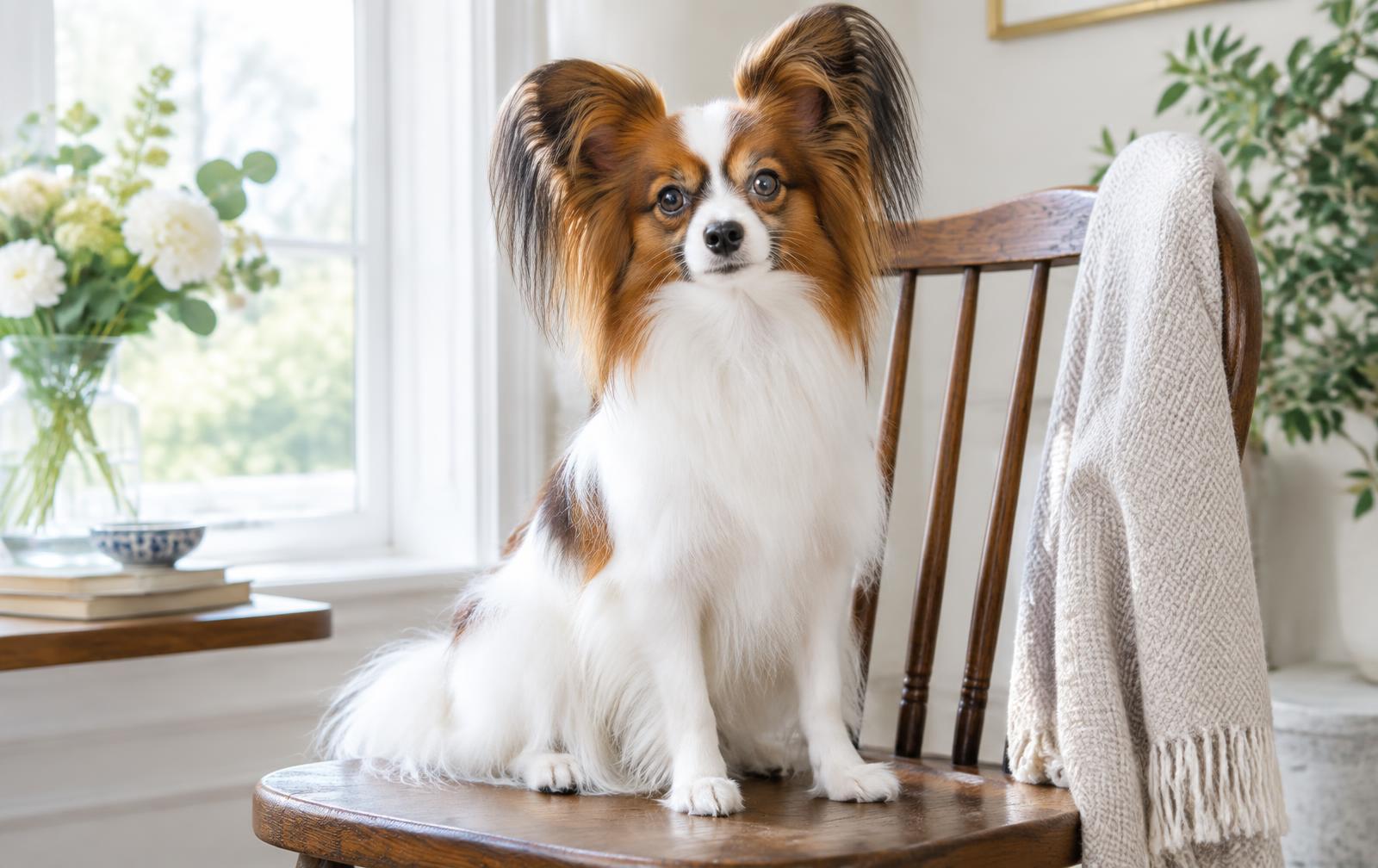
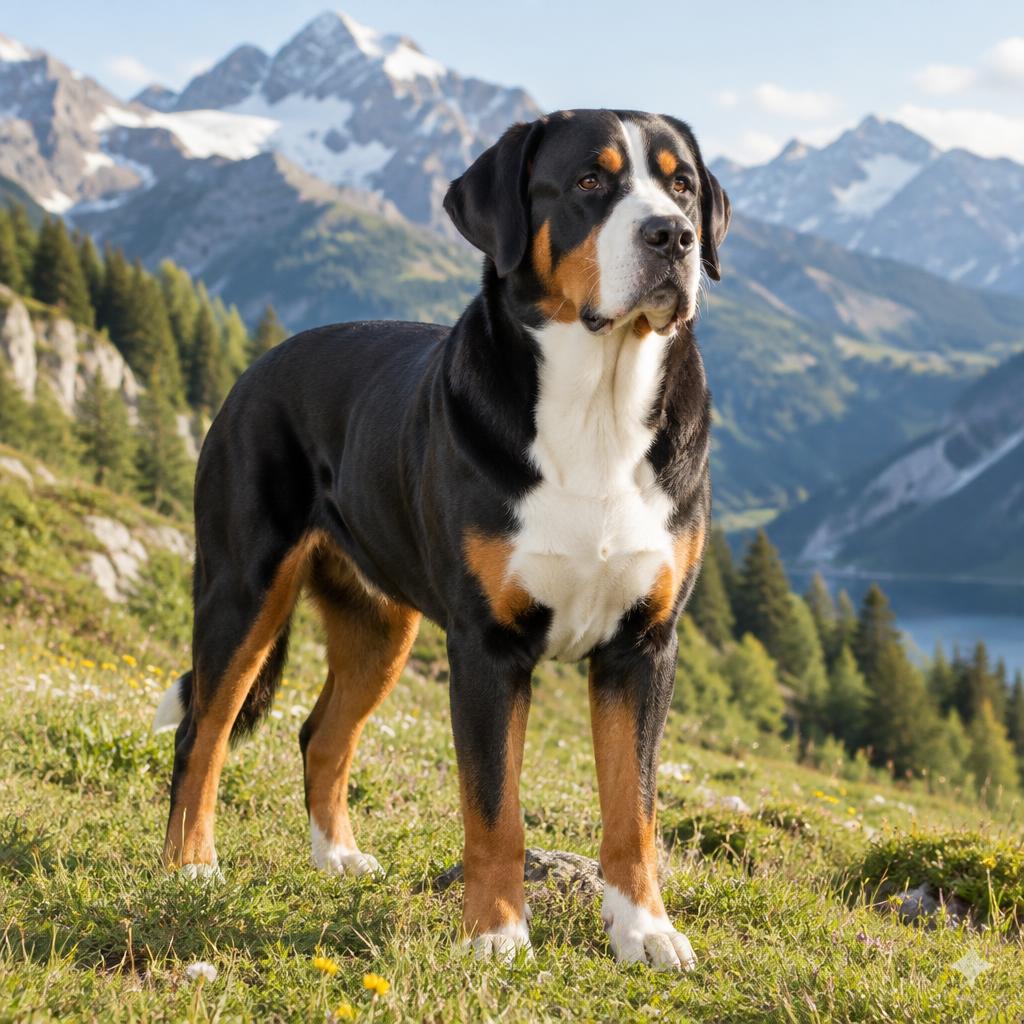
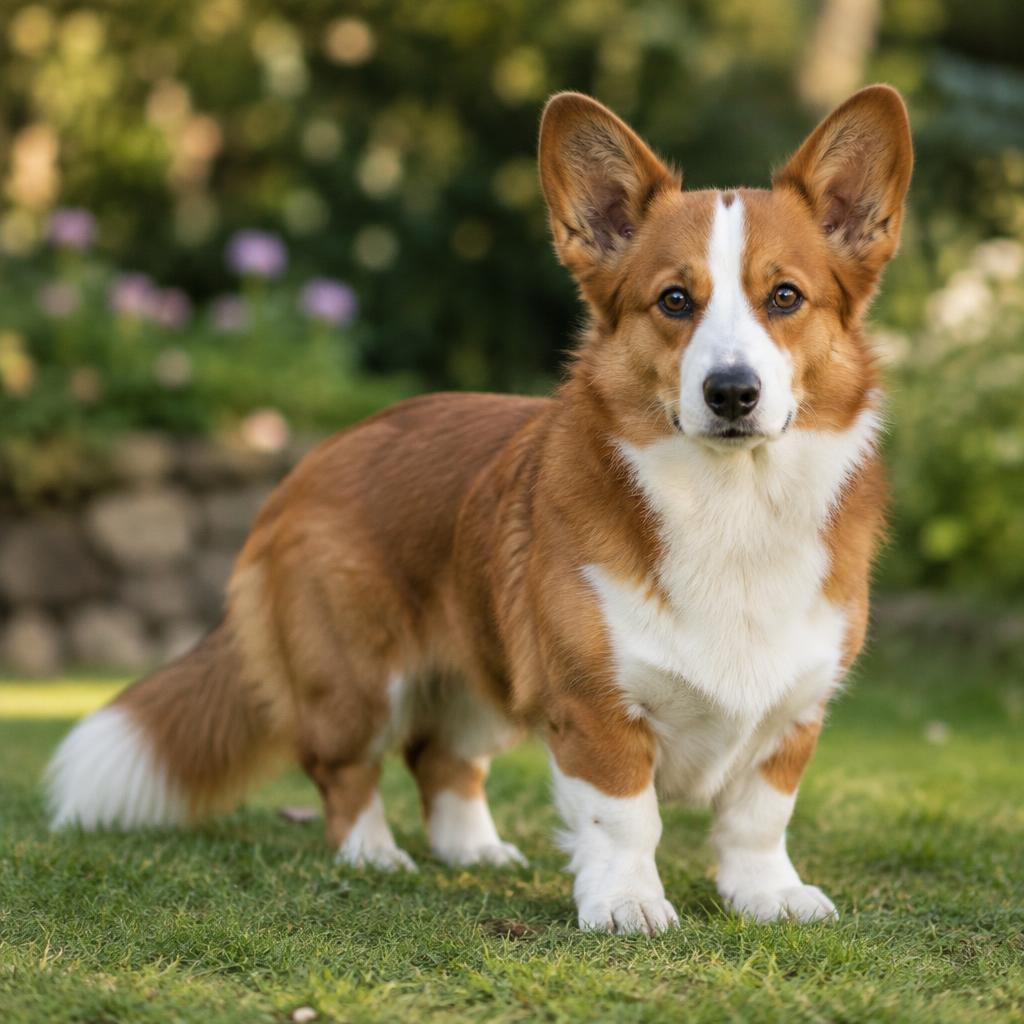
| Dachshund | 4 to 12 kg | 5/10 | 3/10 | €80 |
| Papillon | 3 to 4.5 kg | 7/10 | 4/10 | €113 |
| Greater Swiss Mountain Dog | 50 to 63 kg | 6/10 | 3/10 | €150 |
| Cardigan Welsh Corgi | 11 to 17 kg | 6/10 | 5/10 | €152 |
Dachshund questions, answered
Why do Dachshunds have back problems?
Their unusually long spine relative to leg length puts extra strain on the discs between the vertebrae, making intervertebral disc disease common in the breed. Keeping a Dachshund lean and limiting jumping and stair use significantly reduces this risk throughout its life.
What is the difference between a Standard and Miniature Dachshund?
Standard Dachshunds typically weigh 9 to 12 kg and were originally bred to hunt badgers and boar, while Miniatures weigh around 4 to 5 kg and were bred down to hunt rabbits. Both share the same core temperament, though Miniatures often need particularly gentle handling as puppies.
Which Dachshund coat sheds the least?
Wire haired Dachshunds tend to shed the least of the three coat types and are often better tolerated by people with mild allergies, though no Dachshund coat is truly non shedding. Smooth and Long coats shed lightly but consistently throughout the year.
Are Dachshunds good with children?
Dachshunds can be affectionate with children they are raised alongside, but their long back means they do not tolerate rough handling well. Young children should always be supervised and taught to support the dog properly rather than picking it up under the middle.
Do Dachshunds bark a lot?
Yes, Dachshunds were bred to alert hunters while working underground and retain a strong tendency to bark at unfamiliar sounds, people or animals. Early socialisation and consistent training can help manage, though not eliminate, this vocal tendency.
How much exercise does a Dachshund need?
Standard Dachshunds generally need 45 to 60 minutes of walking a day, while Miniatures need slightly less, around 30 to 45 minutes. Exercise should be low impact, avoiding repeated jumping, stairs or twisting movements that strain the spine.
Sources
- Dachshund breed standard, The Kennel Club
- Dachshund breed information, American Kennel Club
- Intervertebral disc disease in Dachshunds, Royal Veterinary College
- Dachshund health information, The Kennel Club
- Progressive retinal atrophy testing, Orthopedic Foundation for Animals
Put it into practice
Reading that goes with this

Health
Dog Reverse Sneezing: Causes and What to Do

Health
Why Is My Dog Shaking? Causes and When to Worry
Health
How Long Do Dogs Live? Lifespan by Size and Breed
Behaviour
Why Do Dogs Tilt Their Heads? Curiosity, Ears and One Warning Sign
Health
Foods Dogs Must Never Eat: The Toxic List

Care
Dog Years to Human Years: The Real Science
Care
How to Trim Dog Nails: A Calm Step-by-Step Guide
Health
Dog Constipation: Causes, Home Remedies and When to Worry
Nutrition
Can Dogs Eat Peanut Butter? Xylitol Checks and Safe Servings
Nutrition
Can Dogs Eat Sweet Potato? Cooked, Raw and the Skin

Behaviour
Dog Sleeping Positions: What Each One Means
Nutrition
Can Dogs Eat Pears? Core, Seeds and Portions

Nutrition
Can Dogs Eat Honey? Benefits, Risks and Serving Size