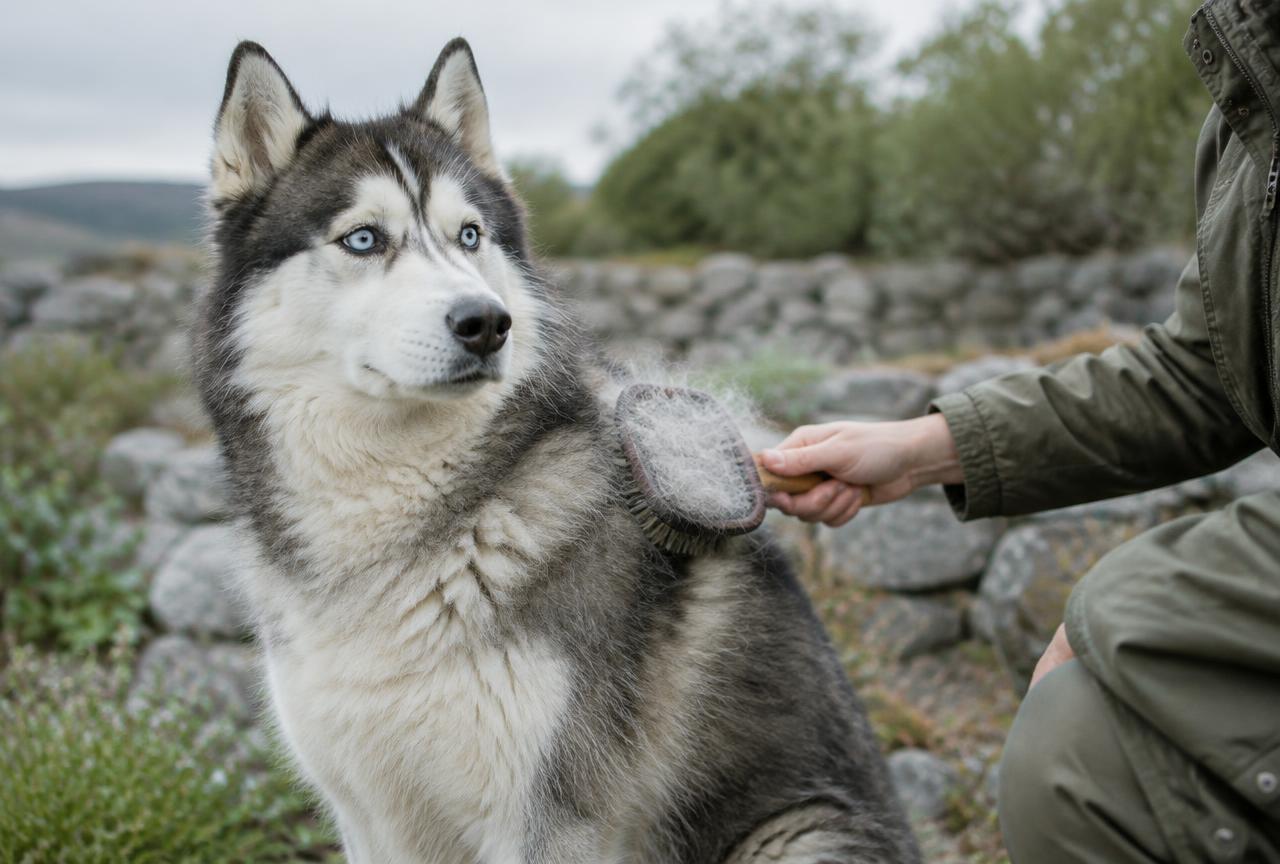
How to Trim Dog Nails: A Calm Step-by-Step Guide
Overgrown nails change how a dog stands and walks, and most dogs hate having them done. Here is the anatomy you need, the tools that work, and a desensitisation plan for dogs who would rather be anywhere else.
The SniffScroll desk
Dog care editors
Published 9 October 2026
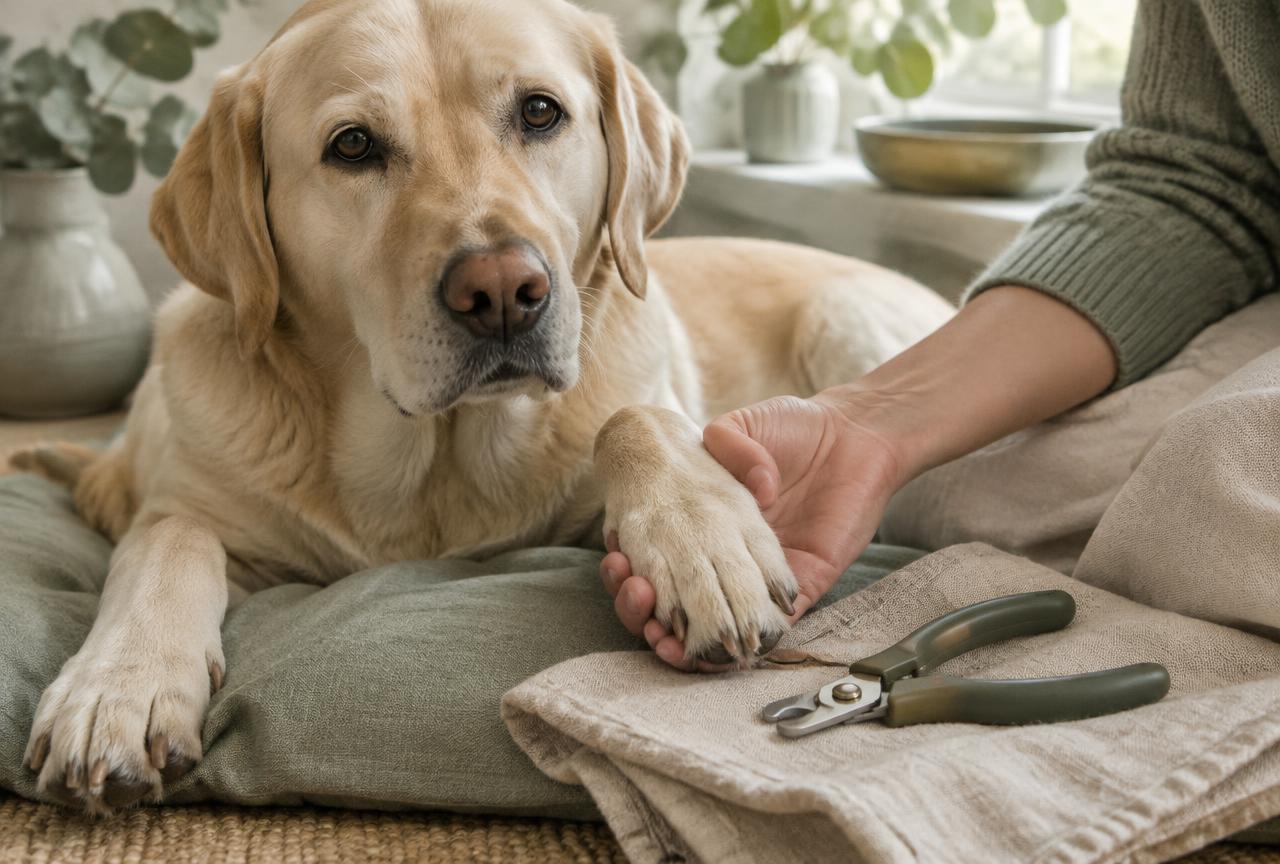
Reviewed by a practising UK veterinary nurse
The short version
- Nails should not touch the floor when your dog stands; clicking on hard floors means they are overdue.
- The quick is the blood vessel inside the nail: on dark nails, trim slivers and stop at the dark dot in the cut face.
- Little and often beats big and rare: weekly slivers let the quick recede on overgrown nails.
- A dog who fears nail trims needs a three-week desensitisation reset, not restraint.
- Dewclaws never wear down naturally and are the nails most likely to grow into the pad.
Why nail length matters more than most owners realise
Overlong nails change how a dog stands and walks, and over months and years that altered posture contributes to joint strain, splayed toes and a real reluctance to exercise.
A dog''s nails are meant to clear the ground when standing. When they grow long enough to touch the floor, every step pushes the nail back into the nail bed, which is uncomfortable, and the dog compensates by shifting weight and changing gait. It looks minor. It is not. Vets see the consequences constantly: older dogs with splayed feet and arthritic toes whose nails clearly spent years too long, and dogs labelled "lazy" or "slowing down" who simply find walking uncomfortable.
The good news is that nail care is one of the easiest parts of dog ownership to get right. It takes five minutes a week once the habit exists, it needs no professional help for most dogs, and the only real barrier is that many dogs, and many owners, are nervous about it. This guide removes both nerves: what to buy, where to cut, how to handle dark nails, and how to win over a dog who hates the whole idea.
How short is short enough
The rule is simple: when your dog stands on a hard floor, the nails should not touch it, and you should not hear clicking when they walk.
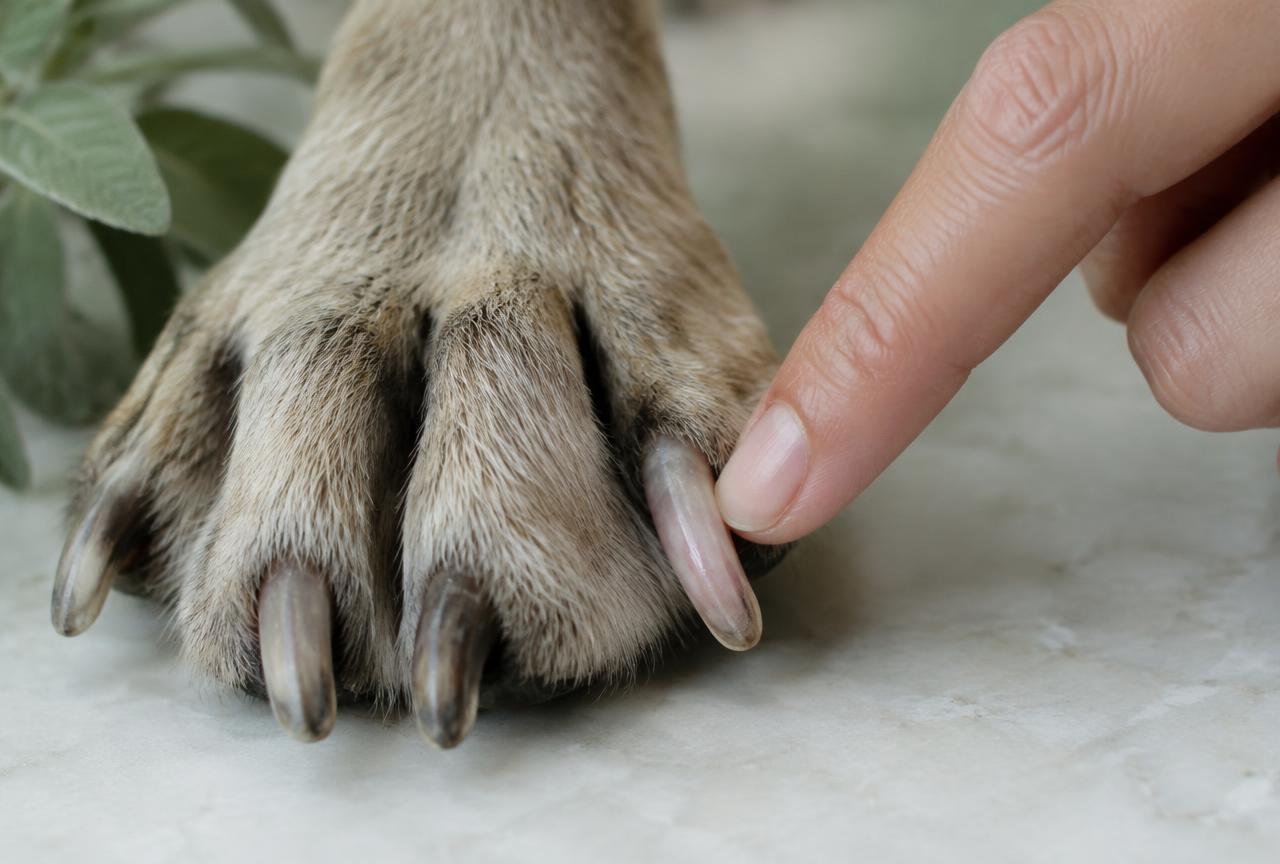
Inside every nail is the quick, a bundle of blood vessels and nerve. In pale nails you can see it as a pink core. Cutting into it hurts and bleeds, which is the accident everyone fears, and the reason the quick matters is that it grows with the nail. In a dog whose nails have been long for months, the quick has extended too, so you cannot take the nail back to ideal length in one session. The fix is little and often: trim a sliver every week, and the quick gradually recedes, letting the nail come back to a healthy length over a month or two.
The click test is your everyday gauge. Nails clicking on hard floors are overdue. Nails you can hear but not quite see touching the ground are borderline. A nail at the right length sits just above the ground when the dog stands square.
Clippers or grinder
Both work. Clippers are faster and quieter; grinders give more control on dark nails and leave a smoother finish, but the noise and vibration need their own introduction.
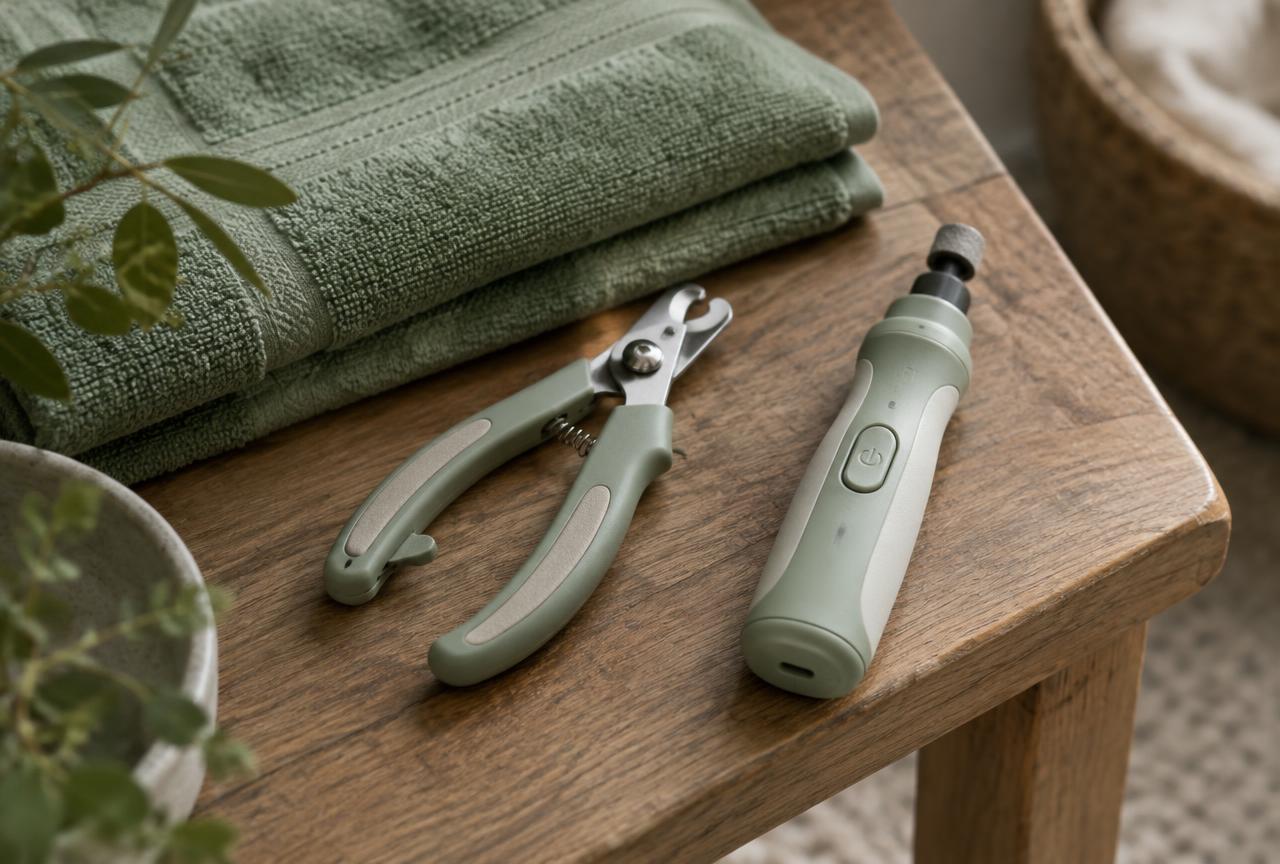
Scissor-style or plier-style clippers are the best default for medium and large dogs: they cut thick nails cleanly without crushing. Guillotine clippers suit small dogs and puppies but can crush a large dog''s nail rather than cut it. Grinders sand the nail down in small passes, which makes it almost impossible to take too much at once, and they are the kindest tool for dark nails where you cannot see the quick. The trade-offs are the noise, the vibration, and the heat if you hold the grinder on one spot too long, so work in two-second touches with breaks.
Whichever you choose, buy decent ones. Cheap clippers with dull blades crush and split nails, which hurts, and one painful session sets training back weeks. Keep styptic powder or a styptic pencil in the kit. If you do nick the quick, press the powder on, stay calm, and remember it looks far worse than it is.
The calm trimming session, step by step
Pick a settled moment, work in good light, take less than you think you need to, and finish before the dog has had enough.
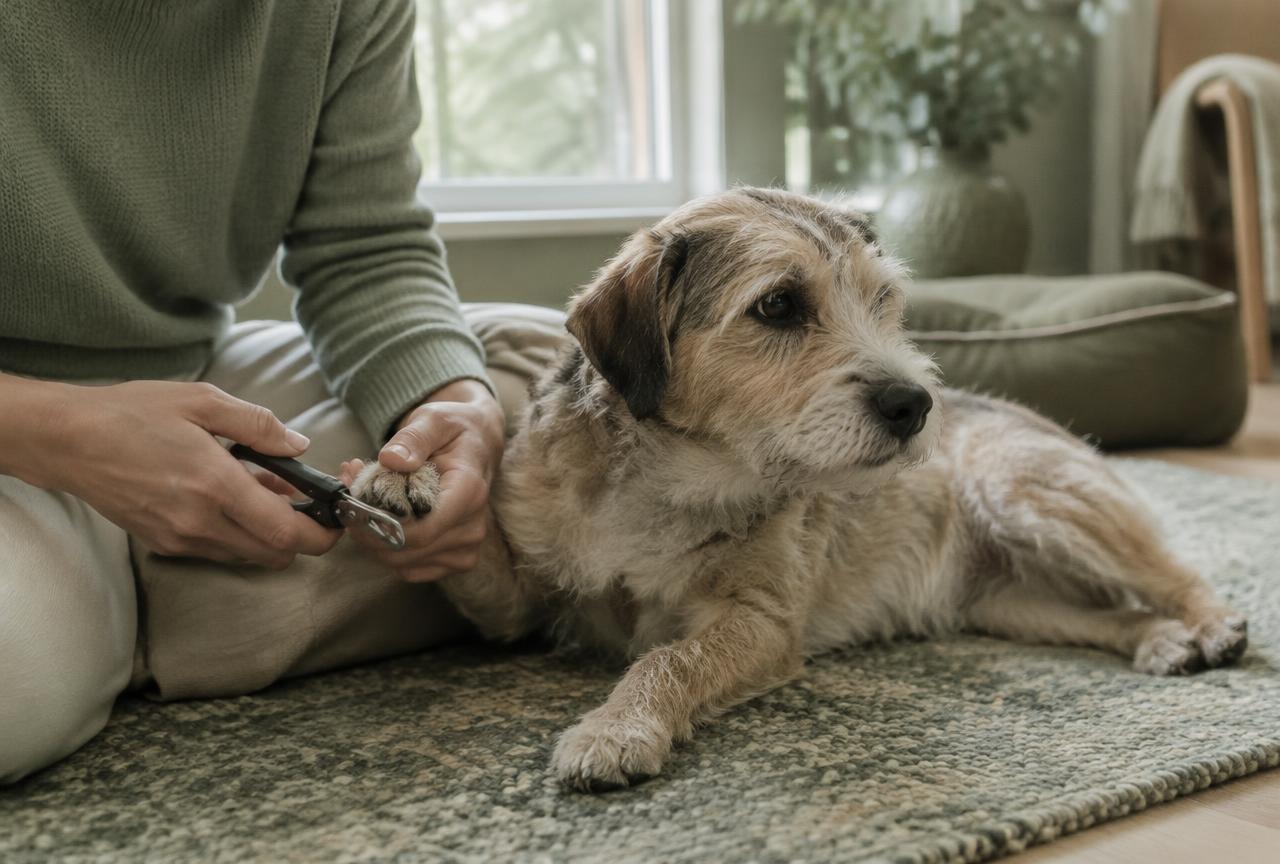
- 1Choose your moment. After a walk, when the dog is relaxed, beats mid-play every time. Good light matters: you need to see the nail clearly.
- 2Position comfortably. Small dogs on your lap or a table with a non-slip mat; large dogs lying on their side or standing, whichever they find calmest.
- 3Hold the paw firmly but gently, and isolate one toe with your fingers so the others are out of the way.
- 4Cut at roughly 45 degrees, taking the curved tip off, well short of where you estimate the quick to be. Small bites, not one big one.
- 5Check the cut face. On a pale nail you will see the pink quick approaching as you trim; stop before it. On a dark nail, look for a pale ring with a small dark dot appearing in the centre of the cut face: that dot is the quick announcing itself, and it is your stop signal.
- 6Treat after every nail at first, then after every paw, then at the end. Fade the treats as the routine becomes boring.
- 7Stop while it is going well. One calm paw today beats four wrestled paws and a dog who hides next week.
Dark nails, black nails and the fear factor
Dark nails hide the quick, so the technique changes: tiny slivers, checking the cut face after each one, and stopping the moment the dark dot appears.
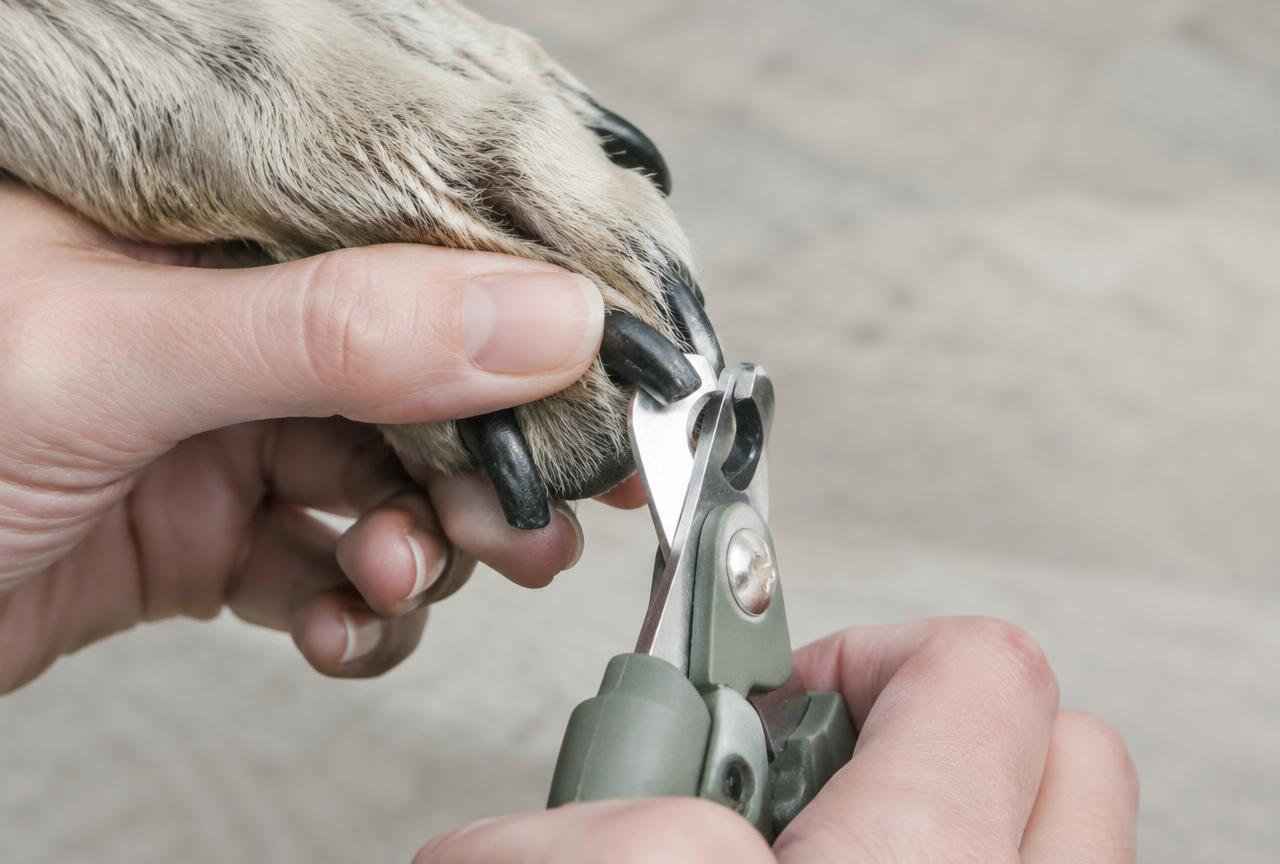
This is the scenario that makes owners nervous, reasonably so. The method is to trim two or three millimetres at a time and look at the freshly cut face head-on after each sliver. A chalky white or grey centre means you are still in dead nail. As you approach the quick, a pale ring forms and then a small dark or pinkish dot appears in the middle. That dot is the beginning of the quick. Stop there. With a grinder the same principle applies, but you can see the change gradually, which is why grinders suit dark nails so well.
If your dog has a mix of pale and dark nails, use the pale ones first to gauge how far back the quick sits, then match that length on the dark ones. And if the worst happens and you nick the quick: styptic powder, gentle pressure, a calm voice, and carry on with another paw or end the session on a treat. The dog takes its cue from you.
Don''t forget the dewclaws
The dewclaw, the thumb-like nail partway up the leg, never touches the ground, so it never wears down, and left alone it grows in a circle back into the leg.
Every trim should include the dewclaws. Because they get no wear at all, they need trimming more often than the other nails, not less, and an ingrown dewclaw is a genuinely painful problem that needs a vet to sort out. Some dogs have dewclaws on the back legs too, and some have double dewclaws, so do a full count once and then you know your dog''s map. Breeds like the Great Pyrenees have prominent doubles that are easy to overlook.
When to hand the job to a professional
If your dog is frightened, has bitten over nail trims, or the nails are severely overgrown, a groomer or vet nurse trim is money well spent, and it does not mean you have failed.
A professional nail trim in the UK typically costs ten to fifteen pounds at a groomer, and many vet practices offer nurse clinics for exactly this. For a dog with a genuine nail-trim phobia, the sensible path is often a professional trim to reset the nails to a healthy length, combined with a slow desensitisation programme at home so you can take over later. Severely overgrown nails, where the quick has grown out with the nail, also benefit from a professional first cut, sometimes under sedation if the dog is very stressed, before you maintain them yourself.
Trim little and often. A sliver every week keeps the quick short, the dog calm, and the whole job under five minutes.
Interactive · nail trim planner
Your calm nail trim plan
Answer four quick questions and we will shape a session plan that suits your dog's nails and nerves.
Your session plan
- Pick a regular slot, same place, same kit, so it becomes routine rather than an event.
- Trim little and often: a sliver weekly beats a big cut monthly.
A straightforward weekly routine
With pale nails and a calm dog, trimming is a five-minute job. Take the curved tip off each nail, just short of the quick, and finish with a treat. With regular pavement walks doing some of the work, check nails every two to three weeks and trim when they touch the floor.
How much do walks wear nails down
Regular pavement walking genuinely files nails, but it rarely does the whole job, and it never touches the dewclaws.
Dogs who walk mostly on pavement or concrete often need trimming only every three to four weeks, because the hard surface acts like a slow, gentle file. Dogs whose exercise is mostly grass, fields and soft ground may need a trim every week or two, because nothing in their life wears the nail at all. Either way, the click test on a hard floor is the honest measure, not the walk count. And even the best-walked dog still needs the dewclaws done by hand, every time.
Starting a puppy right
Handle paws daily from the first week home, and the adult dog will barely notice nail day.
Puppies accept new handling with a fraction of the effort adults need, so the investment is tiny and the payoff lifelong. Pick up each paw daily, rub between the toes, press the pads, treat, done. Let the puppy hear the clippers or grinder from a distance while eating something good. Trim the tiniest sliver off one nail every few days from about ten weeks, more for the practice than the nail. A dog raised this way grows into the five-minute weekly trim; a dog who was never handled grows into the wrestling match. If you have taken on an older dog who is already worried, the same steps work, just stretched over weeks instead of days, and the separation anxiety guide covers the same gradual desensitisation principles in another context.
When to call your vet
- A nail you have cut into the quick that will not stop bleeding after ten minutes of pressure and styptic powder.
- A torn, split or broken nail, especially if the quick is exposed: these are painful and prone to infection.
- A dewclaw that has grown in a circle and is touching or entering the skin.
- Nails that are chronically overgrown on a dog who will not tolerate handling: a vet or nurse trim, sometimes with sedation, is kinder than a battle.
- Any redness, swelling or discharge around the nail bed, which can indicate infection.
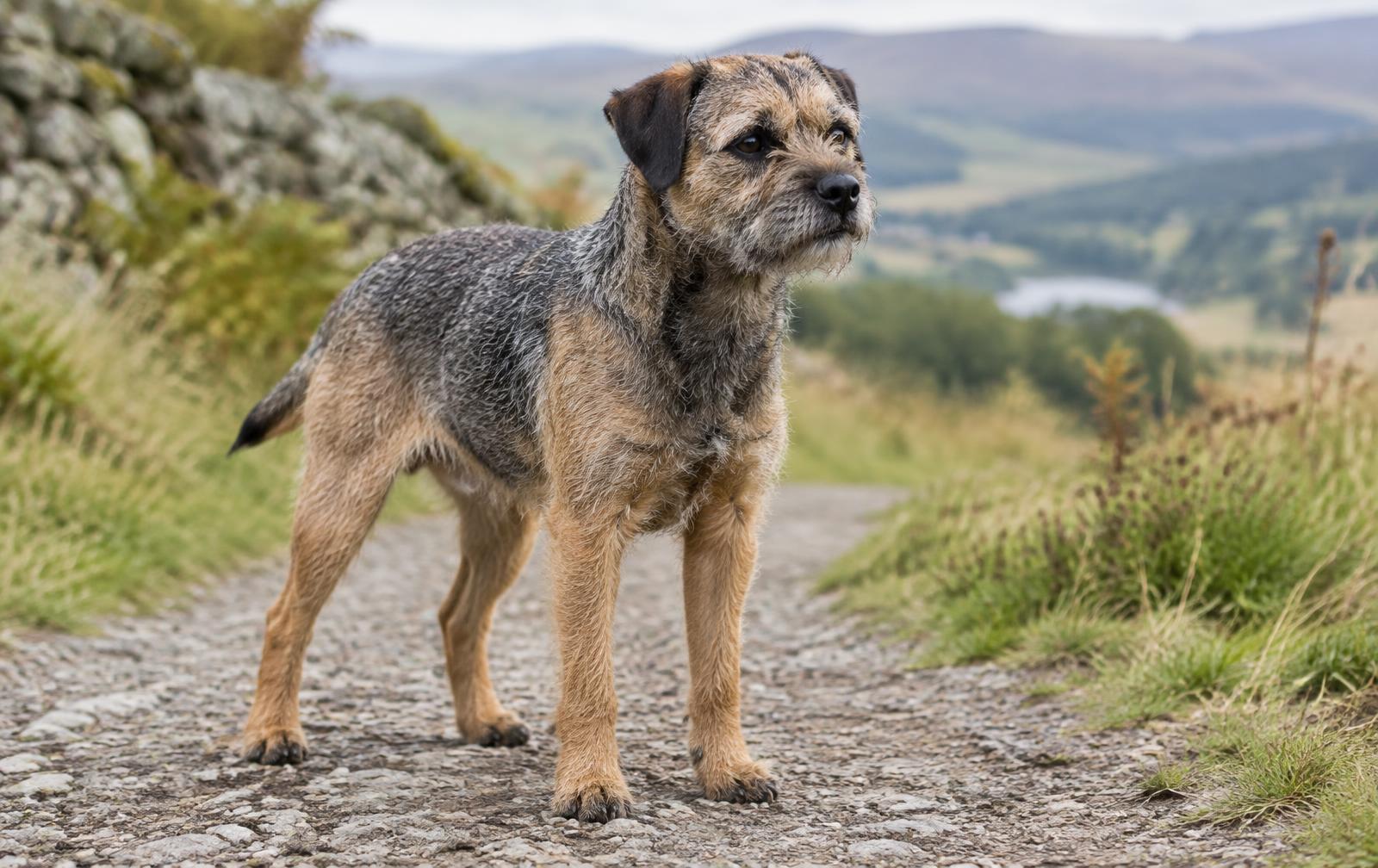
For the rest of the grooming routine, our guides to bathing frequency and shedding cover the coat side, and breed pages like the Labrador Retriever and Border Terrier include coat and nail notes specific to the breed.
Questions people actually ask
How often should I trim my dog's nails?
Most dogs need a trim every two to four weeks. Dogs walked daily on pavement can go longer because concrete files the nails naturally. The test: nails should not touch the floor when your dog stands, and you should not hear clicking on hard floors.
What happens if I cut the quick?
It bleeds a lot and hurts, but it is not an emergency. Press styptic powder or cornflour onto the end and keep the dog still for a few minutes. If bleeding continues past ten minutes, call your vet.
Is a grinder better than clippers for dog nails?
Neither is universally better. Clippers are fast and quiet; grinders give finer control, leave a smoother finish and suit dark nails, but the noise and vibration need a gradual introduction. Choose whichever your dog tolerates best.
How do I trim black dog nails when I cannot see the quick?
Take a thin sliver at a time and look at the freshly cut face. A dry, chalky ring means you can take more; a pale oval with a small dark dot in the centre means you have reached the quick and should stop.
Can I just let my dog's nails wear down naturally?
Only if your dog walks substantial daily distances on hard surfaces like pavement. Dogs exercised mainly on grass or soft ground rarely wear their nails enough, and dewclaws never touch the ground at all.
Why does my dog hate having nails trimmed?
Usually a past bad experience: a quicked nail or a forcible restraint. Paws are also naturally sensitive. A three-week desensitisation plan, pairing clippers and paw handling with treats before any cutting, rebuilds tolerance in most dogs.
Sources
Breeds mentioned


Put it into practice
Read next
How to Clean a Dog's Ears: A Calm Step-by-Step Guide
How to clean a dog's ears safely: the right solution, the right technique, how often to do it, and the signs that mean skip the cotton pad and call the vet.