
Dog Separation Anxiety: Signs, Causes and a Training Plan
Separation anxiety is panic, not naughtiness. Dogs recover by learning, very gradually, that being alone is safe, and some need a vet's help too.
The SniffScroll desk
Dog care editors
Published 9 October 2026
Reviewed against RVC, BSAVA and PDSA guidance
The short version
- Separation anxiety is a panic response to being alone, not spite or bad behaviour, and punishment makes it worse.
- Common signs include howling, destruction at doors and windows, toilet accidents and drooling only when left alone.
- Recovery comes from graded absences that always end before the dog becomes distressed.
- Long absences during training set progress back, so use sitters, daycare or friends while you build tolerance.
- Severe cases benefit from a vet check and a clinical behaviourist, and anti-anxiety medication can help.
Dog separation anxiety is one of the most distressing behaviour problems for dogs and owners alike. Coming home to a scratched door, a complaint from the neighbours or a dog who is frantic with relief is upsetting. The important thing to understand is that a dog with separation anxiety is not being naughty or spiteful: it is panicking.
This guide explains how to recognise it, what causes it, and a graded training plan that helps dogs learn that being alone is safe.
What separation anxiety looks like
Separation anxiety is a panic response that happens when a dog is left alone or separated from the person it is attached to. The signs appear only, or mostly, when the dog is alone, and often start within minutes of you leaving.
| Sign | What you might see | Could also be |
|---|---|---|
| Vocalising | Howling, barking, whining | Boredom, outside noises |
| Destruction | Chewing doors, window frames | Teething, boredom |
| Toilet accidents | Urine or faeces indoors | Incomplete house training, illness |
| Escape attempts | Damaged crates, broken claws | Confinement panic |
| Physical stress | Drooling, panting, pacing | Heat, pain |
| Not eating alone | Food and chews untouched | Normal pickiness |
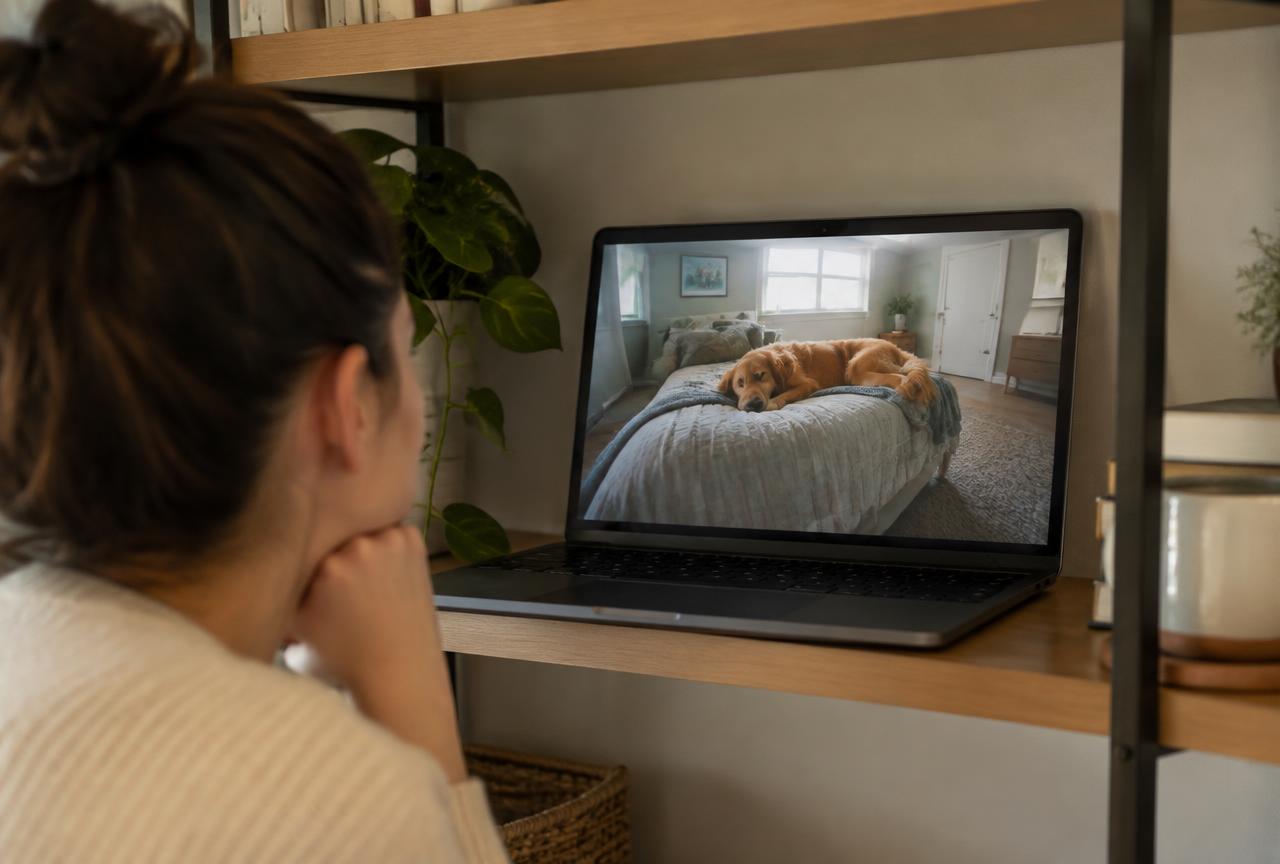
A camera recording is the most useful tool you have. It shows whether your dog is panicking or simply having a nap after a quick chew of the skirting board.
What causes separation anxiety
There is rarely a single cause, but several factors make separation anxiety more likely.
- Never learning to be alone: puppies or rescue dogs who have always had company.
- Sudden change in routine: a return to the office after months at home.
- Life changes: moving house, a death in the family, rehoming.
- Frightening events: a storm or a break-in while the dog was alone.
- Genetics and temperament: some dogs are simply more sensitive.
- Age: older dogs with cognitive decline may develop new anxiety.
Very people-focused breeds such as the Cockapoo, Cavalier King Charles Spaniel and French Bulldog are often mentioned, though any dog can be affected.
Why punishment makes it worse
Telling a dog off for damage or accidents does not help, because the dog cannot link your reaction to something it did hours earlier. What it does learn is that your return is unpredictable and sometimes frightening, which adds to its anxiety. The so-called guilty look is the dog reacting to your body language, not admitting fault.
A dog with separation anxiety is not being difficult. It is having a panic attack, and it needs help to feel safe, not a telling-off.
The graded alone-time plan
Recovery comes from teaching your dog, step by small step, that being alone is safe. The rule is simple: always return before your dog becomes distressed. Set your dog's current tolerance in the ladder below to build a six-week plan.
Interactive · alone-time ladder
Your graded alone-time plan
Set how long your dog copes alone today, and we will build a six-week ladder.
Six-week ladder
- Week 1: absences up to 3 minutes, several times a day, mixed with very short ones.
- Week 2: absences up to 4 minutes, several times a day, mixed with very short ones.
- Week 3: absences up to 5 minutes, several times a day, mixed with very short ones.
- Week 4: absences up to 8 minutes, several times a day, mixed with very short ones.
- Week 5: absences up to 10 minutes, several times a day, mixed with very short ones.
- Week 6: absences up to 15 minutes, several times a day, mixed with very short ones.
Avoid absences beyond the ladder
Every long absence that triggers panic sets training back. Use a sitter, daycare or a friend while you build tolerance.
- 1Find the starting point: using a camera, find out how long your dog can be alone before showing stress. That might be 30 seconds.
- 2Practise departure cues: pick up keys, put on a coat, then sit down again, until these no longer cause worry.
- 3Short absences: step out for less than the starting time, then come back calmly. Repeat several times a day.
- 4Increase slowly: add small amounts of time, and mix in very short absences so the dog cannot predict a long one.
- 5Drop back when needed: if your dog shows stress, go back to the previous step for a few days.
- 6Keep greetings low key: quiet departures and calm returns help make your coming and going less of an event.
Avoid absences beyond the plan
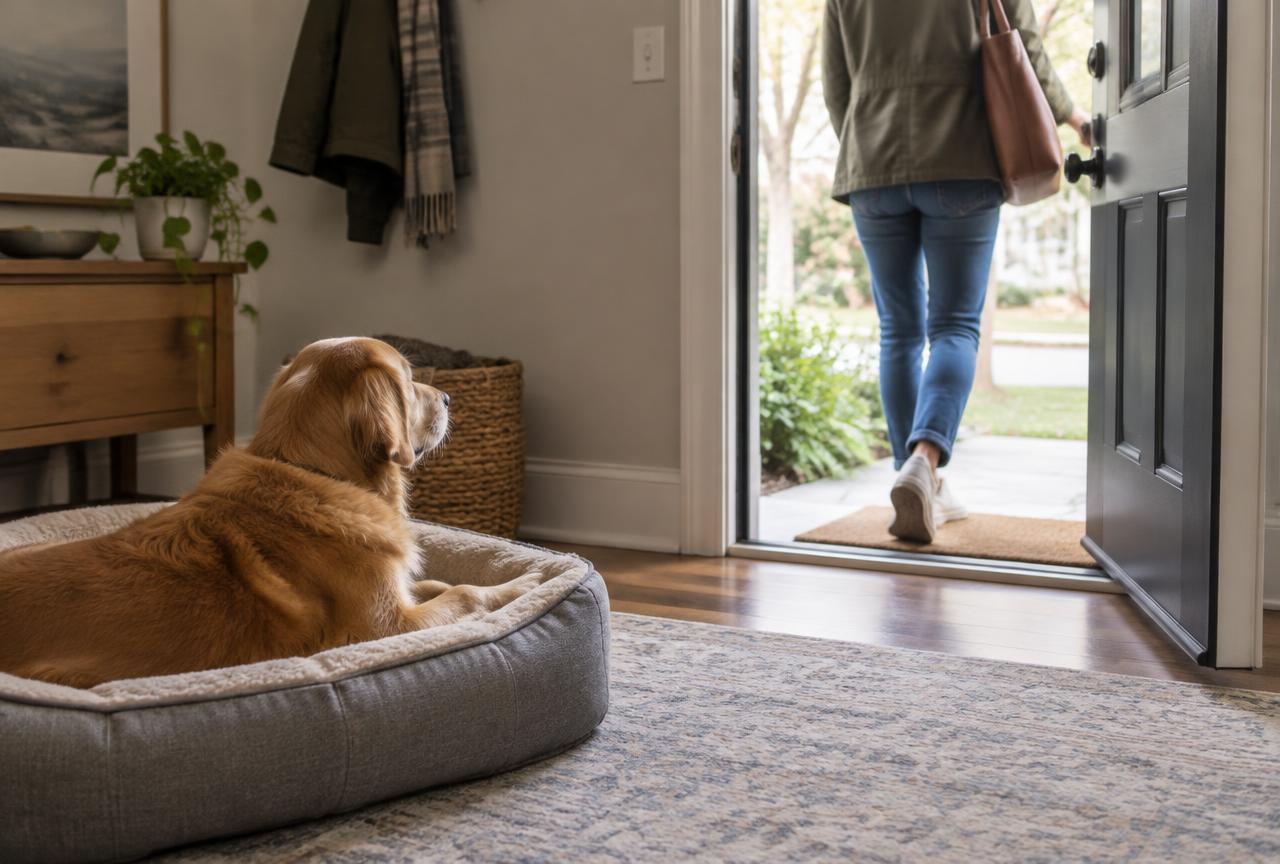
The hardest part of training is avoiding long absences while you work on the problem. Every time your dog panics, the fear of being alone is reinforced.
- Use a trusted dog sitter, friend or family member.
- Try daycare for dogs who enjoy other dogs.
- Work from home on some days if possible.
- Take your dog with you where it is welcome.
It is a big commitment, but it shortens training considerably.
Enrichment and exercise help
A well-exercised, mentally satisfied dog is more likely to rest when alone, though exercise alone will not cure separation anxiety.
- Give a good walk or sniff session before practice absences.
- Offer a stuffed food toy or lick mat as you leave. If the food is ignored, your dog is too anxious and the step is too long.
- Build a calm routine with a comfortable resting place.
Matching a dog's needs to your lifestyle matters too. Our matchmaker compares how well different breeds cope with time alone.
Is it separation anxiety, boredom or something else?
Not every dog that chews or barks when left has separation anxiety. Getting the cause right matters, because the treatments differ. A video of your dog while you are out is the single most useful diagnostic tool you have.
| Behaviour when alone | Separation-related distress | Boredom or under-exercise | Other possibilities |
|---|---|---|---|
| --- | --- | --- | --- |
| Starts within minutes of you leaving | Yes, typically | Usually later | Noise fear, if timed with a trigger |
| Destruction focused on doors and windows | Common | Less common | Barrier frustration |
| Destruction anywhere, toys and furniture | Less typical | Common | Teething in puppies |
| Constant barking or howling | Common | Possible | Territorial barking at passers-by |
| Toileting in a house-trained dog | Common | Rare | Medical cause, including urinary issues |
| Calm in your absence if another person is home | Often | Less relevant | Attachment to a specific person |
If your dog is calm within ten minutes of you leaving, you are probably dealing with boredom. If they are not, you are probably not.
How long can a dog be left alone?
UK welfare organisations, including the RSPCA, generally advise that adult dogs should not be left alone for more than about four hours at a time. Puppies need far shorter absences, building gradually from minutes. That figure is for dogs who are comfortable alone; a dog with separation anxiety should not be left beyond the length they can currently handle while you work through a training plan. Our guide to travelling with a dog explores this in more detail.
Setting up a calm departure
The minutes before you leave can make or break the absence.
- 1Exercise first. A sniff walk 30 to 60 minutes before leaving lets your dog settle. A frantic game just before the door does the opposite.
- 2Offer a long-lasting chew or stuffed toy a few minutes before you go, so attention shifts to food.
- 3Keep departures boring. No long goodbyes. Pick up keys and leave calmly.
- 4Keep returns boring too. Greet calmly once your dog is settled.
- 5Mix up departure cues. Pick up keys or put on shoes at random times during the day without leaving.
- 6Record the absence. Watch the first ten minutes. That tells you whether the plan is working.
Separation anxiety support checklist
- A camera or phone set up to record your dog while you are out
- A safe, comfortable space, such as a familiar room, rather than a crate if the dog panics in one
- Long-lasting food toys, rotated so they stay interesting
- A dog walker, daycare, friend or neighbour to cover absences beyond your dog's limit
- A log of absence lengths and outcomes to track progress
- A vet check to rule out pain or medical causes
- Contact details for an accredited behaviourist, such as ABTC-registered professionals
Breeds and separation anxiety
Any dog can develop separation-related problems. Some breeds bred to work closely with people, such as the Labrador Retriever, Border Collie and Cavalier King Charles Spaniel, are often described as very people-focused, but individual history matters more than breed. Rescue dogs and dogs who lived through big life changes are over-represented in clinical caseloads. The breed matchmaker lets you factor tolerance of being alone into a choice.
The verdict, by household
Full-time office workers: arrange daycare or a walker before training begins; do not test absences you cannot control.
Home workers: practise short absences deliberately, even when you do not need to leave.
New rescue: expect some clinginess in the first weeks; build alone time from day one, in tiny steps.
Dog already distressed: speak to your vet. Medication alongside a behaviour plan helps many dogs.
When to see a vet or behaviourist
Severe separation anxiety is a welfare problem, and professional help makes a big difference.
- Your dog injures itself trying to escape, such as broken teeth or claws.
- Distress starts within seconds of you leaving.
- Neighbours report hours of howling.
- The problem appears suddenly in an older dog.
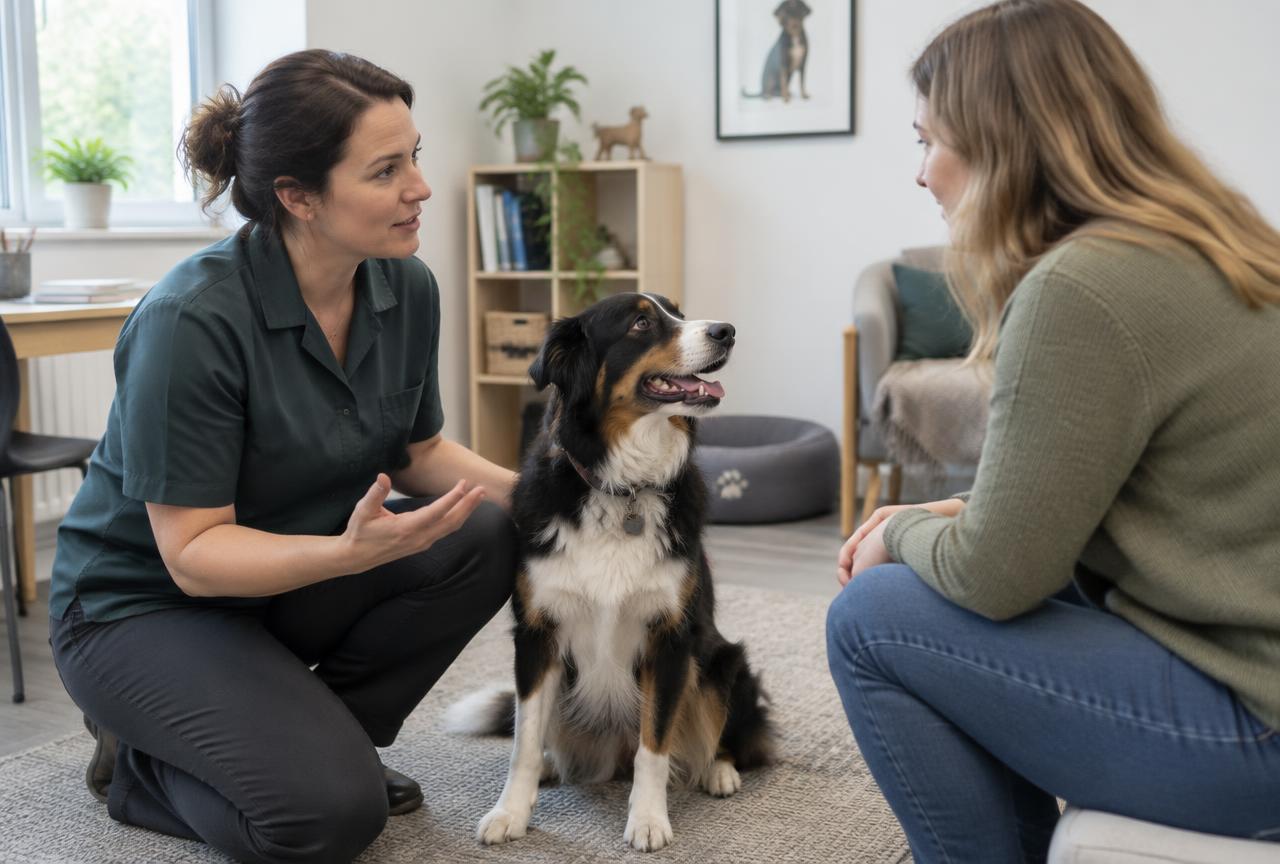
Your vet will check for pain or illness, which can lower a dog's ability to cope, and may prescribe anti-anxiety medication. Medication is not a quick fix but can make training possible for dogs who are too panicked to learn. Ask for a referral to a clinical animal behaviourist.
The short version
Separation anxiety is panic, not misbehaviour. Confirm it with a camera, build alone time in small steps that always end before your dog worries, avoid long absences during training, and speak to your vet if it is severe. Progress can be slow, but most dogs improve a great deal with patience and the right support.
Separation anxiety myths, checked
| Myth | What the evidence says |
|---|---|
| --- | --- |
| The dog is being spiteful | Distress behaviours are panic, not revenge |
| Crating always helps | Some anxious dogs panic more when confined |
| Ignoring the dog for an hour before leaving cures it | There is little evidence; calm, low-key departures matter more |
| Medication is a last resort | For some dogs it makes training possible much sooner |
Questions people actually ask
What are the signs of separation anxiety in dogs?
Common signs include howling, barking or whining after you leave, scratching or chewing at doors and windows, toilet accidents in a house-trained dog, drooling, pacing, and refusing food while alone. A camera recording is the best way to confirm what happens when you are out.
How do I help my dog with separation anxiety?
Build alone time very gradually, starting with absences short enough that your dog stays calm, and increase them in small steps. Avoid leaving your dog for longer than it can cope with during training. Keep departures and returns low key, and speak to your vet if the problem is severe.
Can separation anxiety in dogs be cured?
Most dogs improve significantly with a structured plan, and many learn to be comfortable alone for normal working periods. Progress is often slow, measured in weeks or months, and some dogs need ongoing management or medication.
Should I get another dog to help with separation anxiety?
Usually not. Most dogs with separation anxiety are attached to their people rather than simply wanting company, so a second dog rarely solves the problem and may add new challenges. Try a sitter or daycare first to see whether company helps.
Does crate training help separation anxiety?
It can help dogs who feel safe in a crate, but some anxious dogs panic when confined and may injure themselves trying to escape. Watch your dog on camera before relying on a crate, and stop if it shows distress.
How long can a dog be left alone?
UK welfare organisations generally advise that adult dogs should not be left alone for more than about four hours at a time. Puppies, seniors and dogs with separation anxiety need much shorter absences.
How long can a dog with separation anxiety be left alone?
Only as long as they can currently cope without distress, which might be a few minutes at first. Absences beyond that set training back. Use a dog walker, daycare, friends or family to cover longer absences while you build up time gradually, ideally with guidance from a qualified behaviourist.
Does getting a second dog help separation anxiety?
Sometimes, but often not. Many dogs with separation anxiety are attached to a particular person rather than simply wanting company, so another dog may not ease their distress. A second dog also adds cost and training demands. Try a trial with a friend's calm dog or daycare before deciding.
Sources
- Dogs and separation-related behaviour, RSPCA
- Separation related problems, Dogs Trust
- Separation anxiety in dogs, VCA Animal Hospitals
- Behavioral problems of dogs, Merck Veterinary Manual
- Separation anxiety in dogs, PDSA
- Behavioural medicine resources, BSAVA
Breeds mentioned
Cockapoo
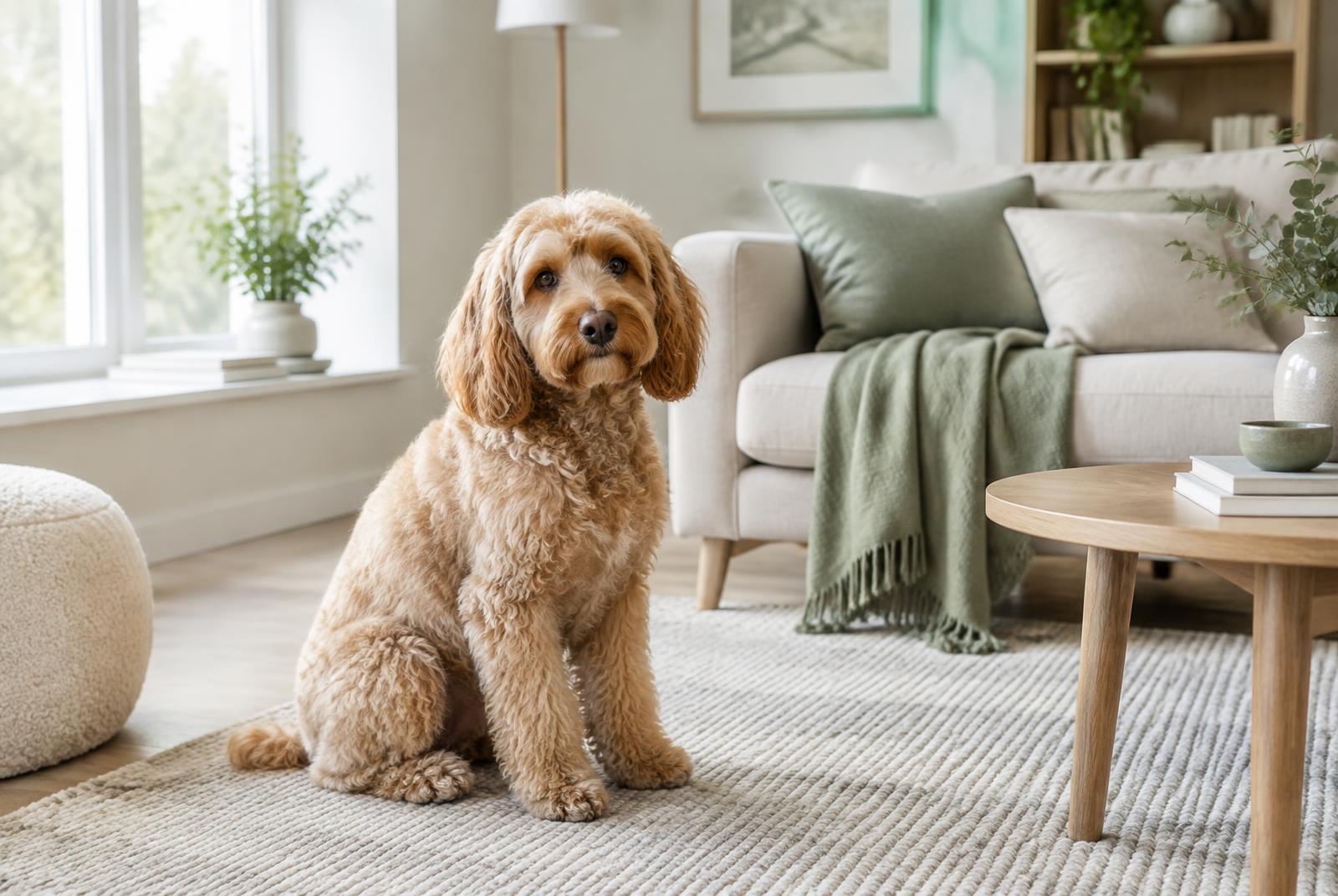
An affectionate Cocker Spaniel and Poodle cross where coat, size and energy vary litter to litter, so no two Cockapoos are quite alike.

Cavalier King Charles Spaniel
An affectionate, adaptable toy spaniel that thrives on human company above almost anything else.

Labrador Retriever
Britain's most popular family dog: biddable, food driven and built for an active household.

Border Collie
The world's most capable herding mind, needing an equally capable owner to match it.
Put it into practice
Read next
Why Do Dogs Roll in Poop? The Instinct Explained
Why dogs roll in the worst smells they can find, what the behaviour is really about, and how to prevent it or at least clean up well afterwards.


