
Travelling With a Dog: Car, Train and Plane
From the law on car travel to airline paperwork, here is how to take your dog with you safely, legally and without the stress, whatever the journey.
The SniffScroll desk
Reviewed against the Highway Code, National Rail and DEFRA pet travel guidance
Published 6 October 2026 · Updated 9 October 2026
Checked by a practising UK veterinary nurse
The short version
- UK law requires dogs to be suitably restrained in cars: crate, harness or boot guard.
- Never leave a dog alone in a parked car, even with windows open.
- Dogs travel free on UK trains, on a lead, off the seats.
- Flying takes weeks of preparation: crate training, paperwork and airline rules.
- Pack familiar food, water, bedding and documents; routine is what keeps travel calm.
A dog who travels well opens up a different life: holidays together, weekends at the coast, family visits without the kennel bill. A dog who travels badly makes every trip an ordeal for both of you. The difference is almost never the dog. It is the preparation, the kit, and knowing the rules of each kind of journey before you set off.
This guide covers travelling with a dog by car, train and plane: the law, the equipment, the paperwork, and the training that turns a reluctant passenger into a seasoned one.
Before any journey
Whatever the transport, a few foundations apply across the board. Your dog should be microchipped with your current details, and wearing a collar tag with your phone number; a lost dog in a strange place is the scenario every precaution exists to prevent. Pack more of their usual food than you need, because a food switch on top of travel is a stomach upset waiting to happen. Bring water from home or plan to buy bottled, a familiar blanket or bed that smells like home, and any medication with a copy of the prescription.
And before a long trip of any kind, exercise the dog properly. A tired dog travels; a fresh dog frets.
By car: the law and the kit
In the UK, the Highway Code is explicit: dogs must be suitably restrained in a car so they cannot distract the driver or injure themselves or you if you stop sharply. An unrestrained dog is not just dangerous; it can invalidate your insurance and earn you a fine. In practice that means one of three setups.
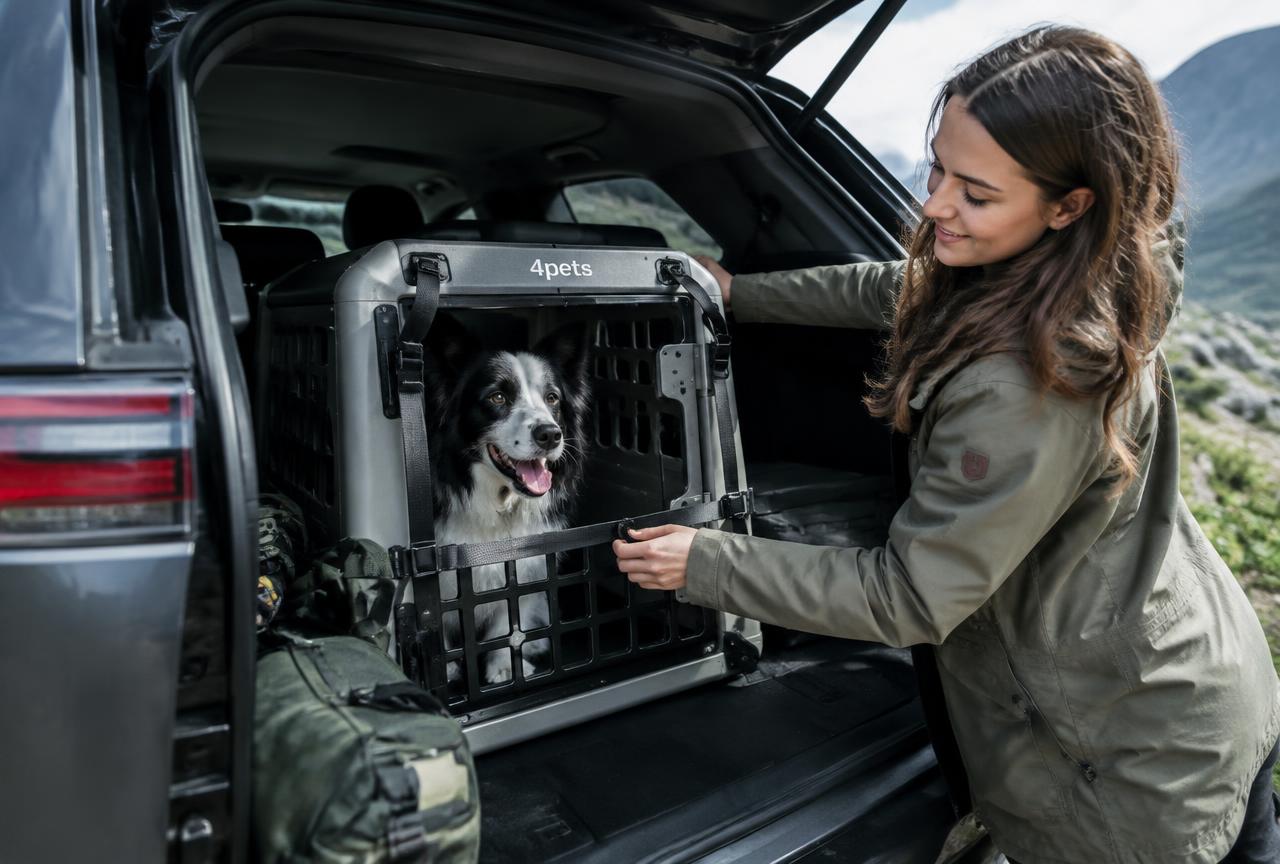
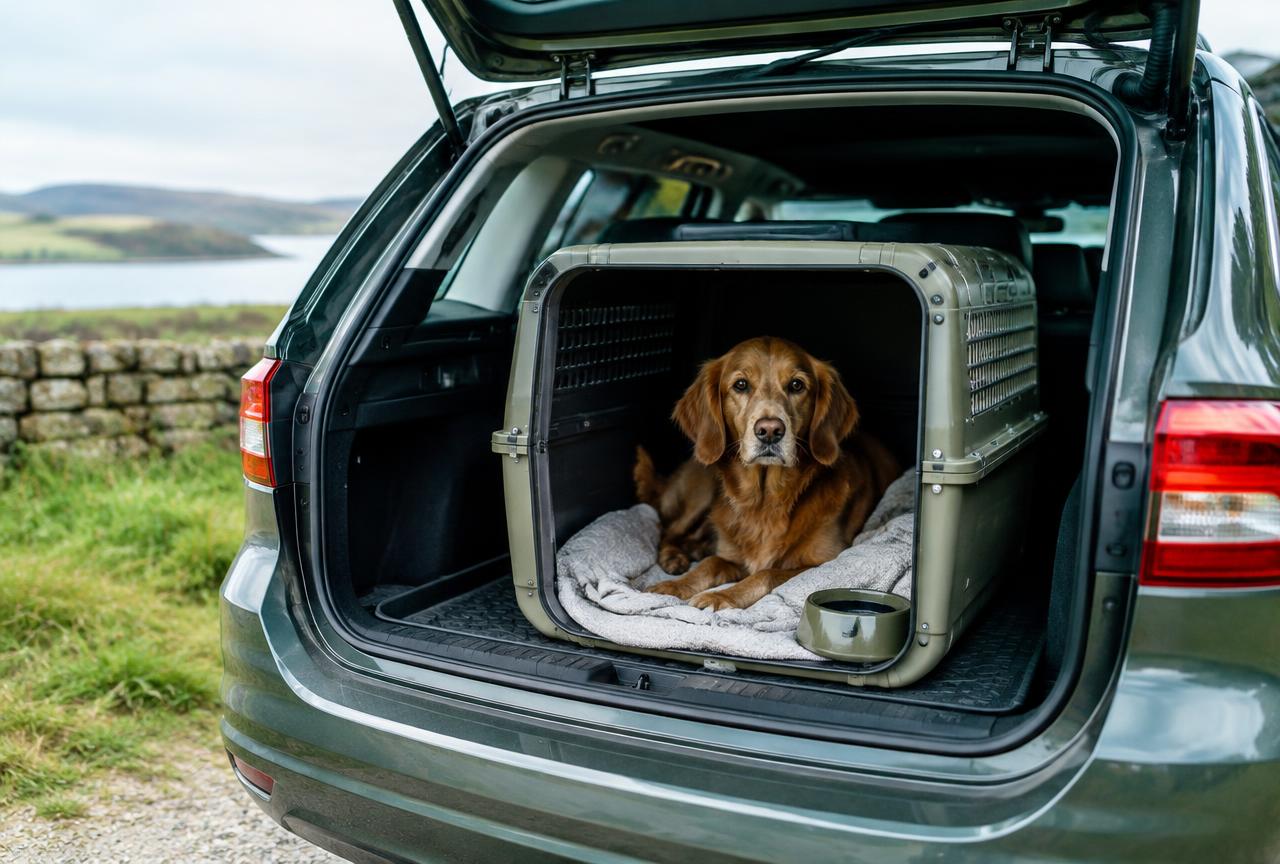
A crash-tested travel crate in the boot is the gold standard, especially for medium and large dogs. It protects the dog in a collision, contains them at service stations, and doubles as a familiar den at your destination. A harness with a seatbelt adaptor works well for smaller dogs and regular short trips; use a proper crash-tested harness, never clip a seatbelt to a collar. A boot guard behind the rear seats is the minimum acceptable option, better than nothing but offering little crash protection on its own.
Beyond restraint, the rules of happy car travel are simple. Feed at least two hours before setting off, because a full stomach and motion are unkind partners. Stop every two hours for water, a toilet break and a leg stretch. Keep the car cool and ventilated. And never, under any circumstances, leave a dog alone in a parked car: even on a mild day with the windows cracked, interior temperatures climb to dangerous levels within minutes, and it is an offence when the dog suffers.
Interactive · travel readiness checker
Is your dog ready for the journey?
Tell us how you are travelling and a little about your dog, and we will shape a preparation plan.
Your prep plan
- Use a crash-tested crate, a harness with a seatbelt adaptor, or a boot guard: an unrestrained dog is illegal and dangerous.
- Feed at least two hours before setting off to avoid car sickness, and plan a break every two hours.
- Never leave the dog alone in a parked car, even with windows open; temperatures climb dangerously fast.
A straightforward trip
Your dog's size and temperament suit this journey. The prep below keeps it that way.
Teaching a dog to love the car
If your dog is new to car travel, or already hates it, the fix is gradual and worth the fortnight it takes. Start with the car parked: doors open, engine off, treats and meals served in the boot or crate until the car reads as a good place. Then engine on, stationary, more treats. Then a five-minute drive to somewhere brilliant, a walk, a field, so the car predicts good things rather than the vet. Build the journey length over days, and keep early trips short and positive. Most car sickness in young dogs is part motion, part anxiety, and improving the anxiety improves the stomach.
By train: easier than you think
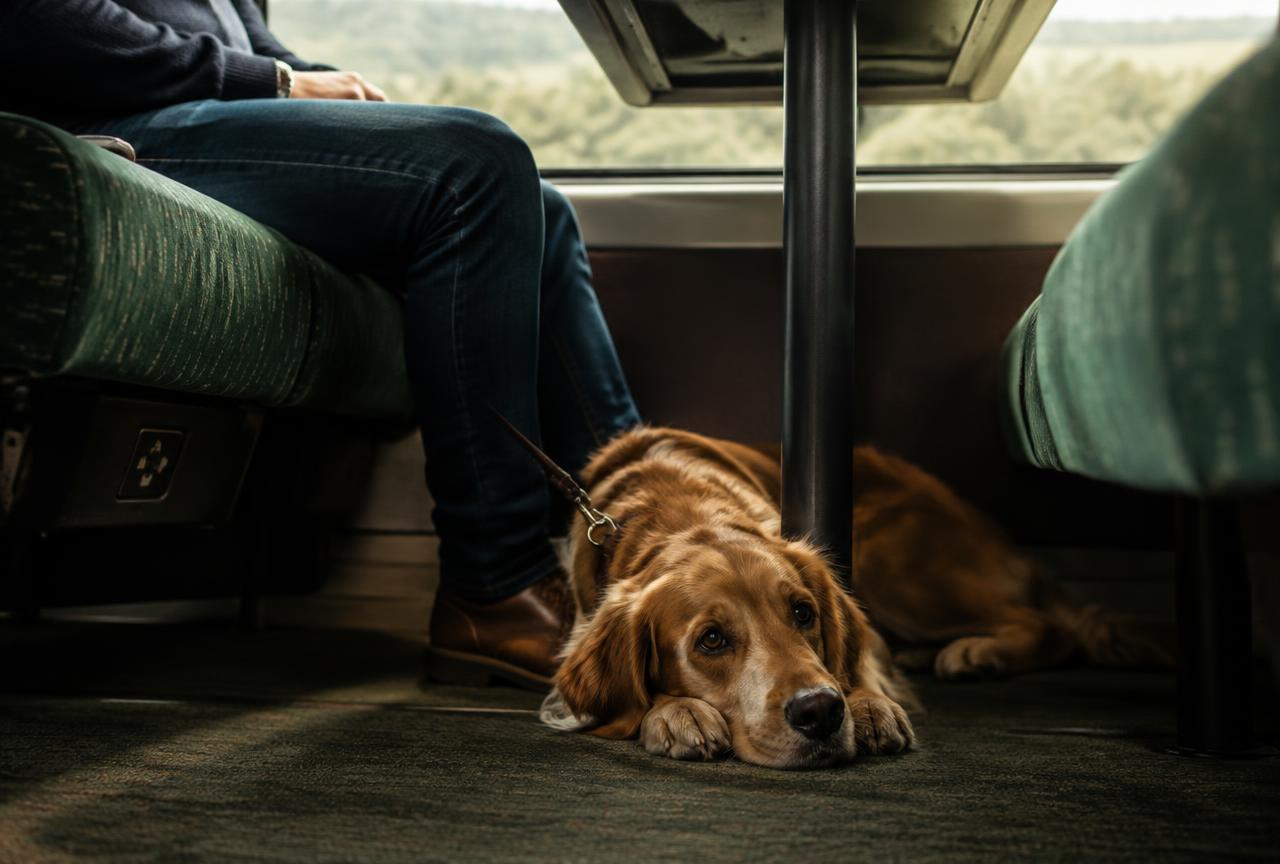
Dogs travel free on UK trains, on a lead, and they are not allowed on the seats, which in practice means they settle at your feet or under the table. For a calm dog it is one of the easiest ways to travel together. A few things make it smoother.
Travel off-peak where you can; a quiet carriage is kinder to a dog than a packed Friday evening service. Practise the station environment before the real trip if your dog is noise-sensitive: platforms, announcements and the gap between train and platform are the three things that spook dogs most. Carry water and a collapsible bowl, plan toilet opportunities around longer journeys, and bring a chew or a stuffed toy to give the dog a job while you travel.
By plane: the big undertaking
Flying with a dog is possible but it is the most demanding option, and it deserves honest assessment. Only small dogs, typically under about 8 kg including their carrier, can travel in the cabin, and only on the minority of airlines that allow it. Everyone else travels in the hold, in an airline-approved crate, as manifest cargo or checked baggage depending on the airline and route.
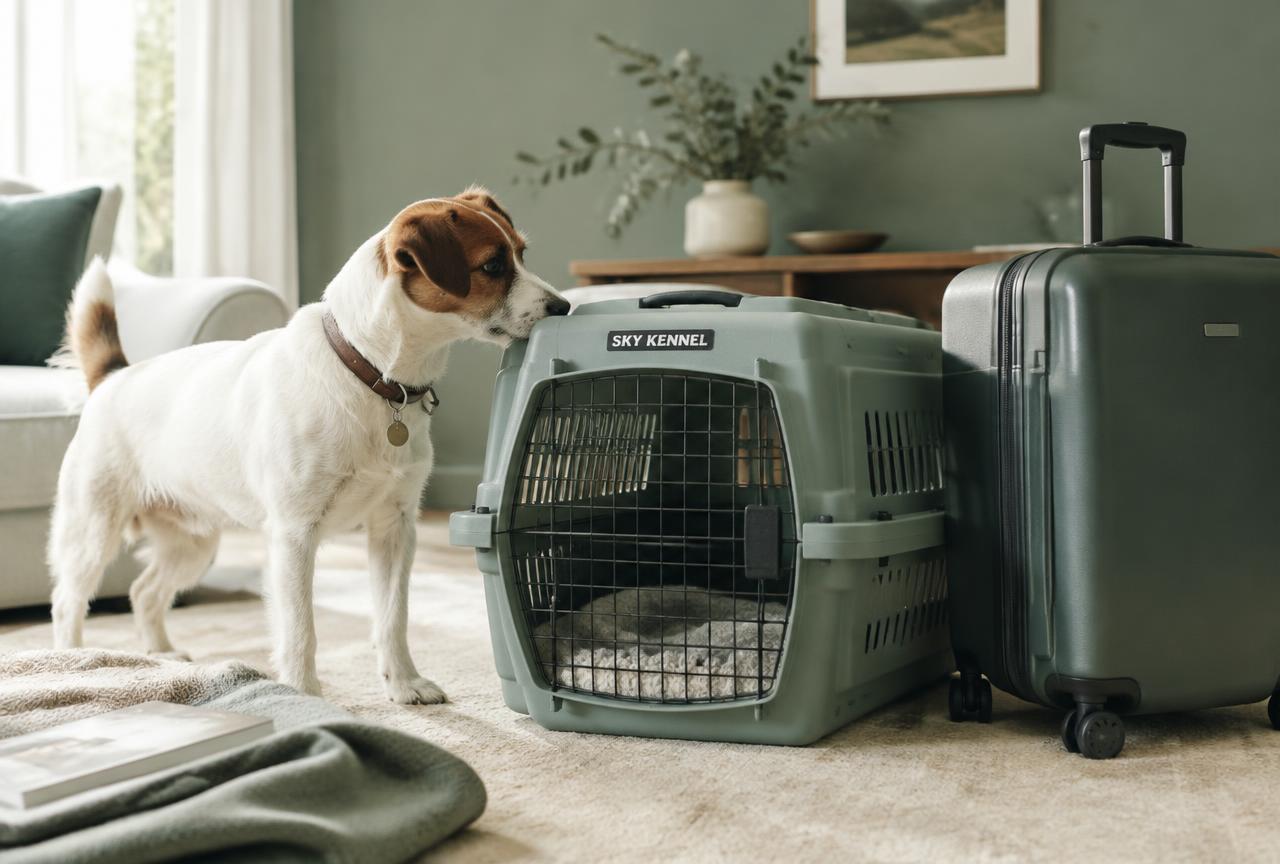
If you do fly, the preparation is measured in weeks. Book early, because airlines limit the number of pets per flight. Buy the crate well in advance and train your dog to rest in it happily at home before it ever becomes a travel crate; a dog who sees the crate as its den copes immeasurably better. Check the destination's entry requirements early: an animal health certificate or pet passport, rabies vaccination with its waiting period, tapeworm treatment for return to the UK, and any country-specific rules. Your vet does this paperwork regularly and will walk you through the timeline. And think honestly about whether the trip suits your dog: for a nervous dog or a snub-nosed breed, whose breathing makes hold travel riskier, a good sitter is sometimes the kinder holiday.
Sedation, by the way, is no longer recommended for air travel by most vets and is banned by many airlines, because it affects balance and temperature regulation at altitude. If your dog cannot fly calm, the answer is training and preparation, not a sedative.
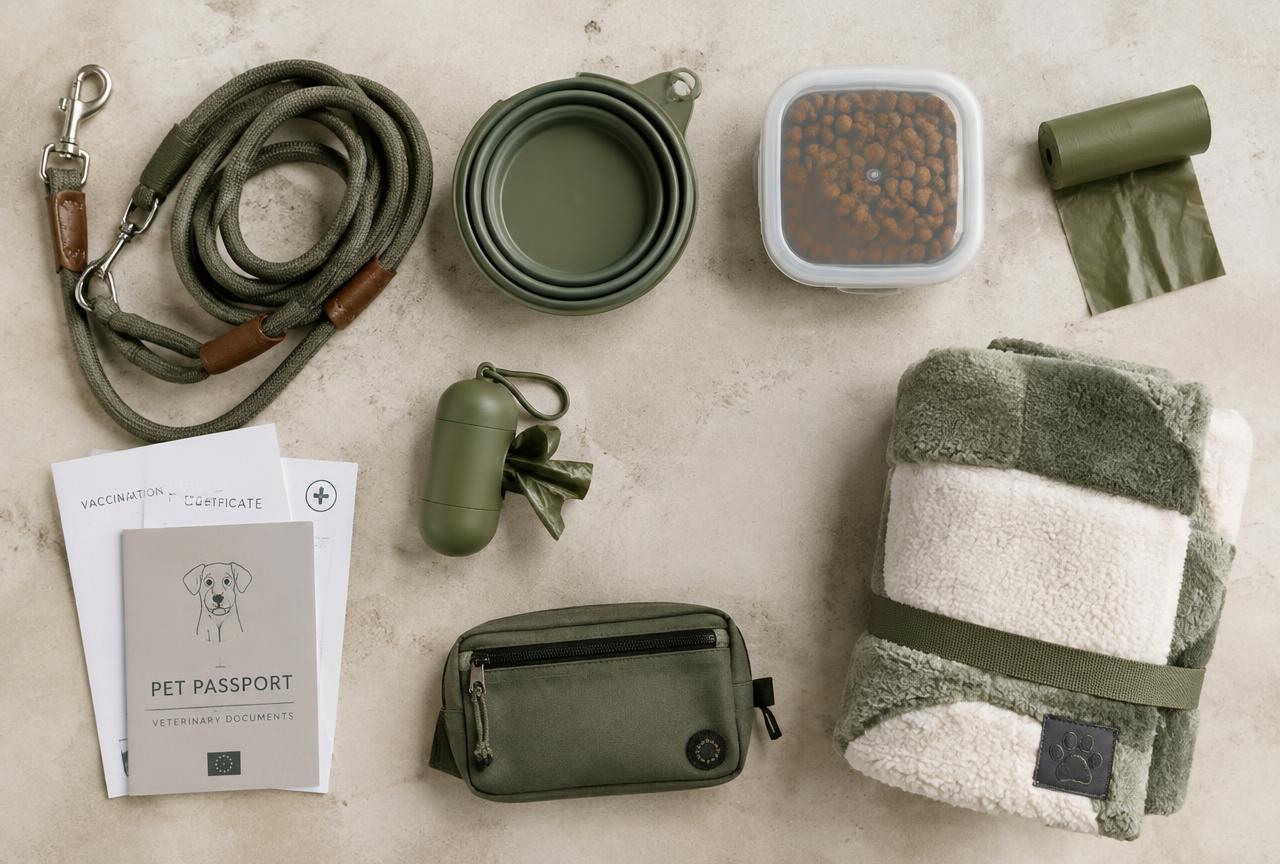
The packing list
Whatever the journey, the dog's bag is remarkably consistent:
- Their usual food, plus extra, and their own bowls
- Water and a collapsible travel bowl
- Lead, harness, and a collar tag with your mobile number
- A familiar blanket or bed
- Poo bags, more than seems reasonable
- Any medication, plus a copy of the prescription
- Vaccination records and, for abroad, the animal health certificate or pet passport
- A recent photo of your dog on your phone, in case you are ever separated
- A familiar chew or toy for settling in strange places
Arriving well
The journey is only half the job. At the destination, give the dog time to decompress before anything is asked of them: a quiet sniff around, water, and their bed set up in a corner. Keep the first evening low-key, keep feeding and walk times as close to home routine as the trip allows, and expect the first night in a strange place to be a little restive. By the second day, most dogs have decided the holiday cottage is, in fact, home.
Taking your dog abroad from Great Britain
Since 2021, pet passports issued in Great Britain are no longer valid for travel to the EU or Northern Ireland. Dogs travelling from Great Britain now need an Animal Health Certificate, issued by an Official Veterinarian no more than ten days before travel, for each trip. Rules change, so always check the current GOV.UK guidance before booking.
| Requirement | What it involves | Timing |
|---|---|---|
| --- | --- | --- |
| Microchip | ISO-compliant chip, registered and up to date | Before rabies vaccination |
| Rabies vaccination | Given after microchipping, dog at least 12 weeks old | At least 21 days before travel |
| Animal Health Certificate | Issued by an Official Veterinarian | Within 10 days of entering the EU |
| Tapeworm treatment | Needed for some destinations, including Ireland, Finland, Malta and Norway | 1 to 5 days before arrival |
| Return to GB | Tapeworm treatment by a vet before returning | 1 to 5 days before arrival in GB |
An EU pet passport issued within the EU remains valid for travel into Great Britain, which helps if you live abroad.
Most travel problems are paperwork problems. Start eight weeks before you go, not eight days.
Car sickness: why it happens and how to help
Car sickness is common in puppies, partly because the inner ear structures that manage balance are still developing, and many grow out of it. In older dogs, it is often a mix of motion sickness and anxiety learned from past bad journeys. Signs include drooling, yawning, lip licking, restlessness, whining and vomiting.
- 1Feed a small meal at least two to three hours before travel, rather than a full stomach.
- 2Face forward. A secured crate or harness on the back seat, rather than the boot, often reduces nausea.
- 3Keep the car cool and ventilated, with windows slightly open.
- 4Build up gradually: sit in the stationary car, then short trips to somewhere fun, before longer drives.
- 5Stop every two hours for water, a toilet break and a short walk.
- 6Ask your vet about anti-nausea medication for dogs that still struggle. Do not give human travel-sickness tablets.
Never leave a dog in a hot car
Cars heat up far faster than many people realise. On a 22 °C day, the inside of a car can reach around 47 °C within an hour, and parking in shade or opening a window makes little difference. Flat-faced breeds such as the Pug, French Bulldog and English Bulldog are at especially high risk of heatstroke. If you see a dog in distress in a hot car in the UK, the RSPCA advises calling 999.
Travel checklist, by mode
- All journeys: water and bowl, poo bags, lead and harness, ID tag with your phone number, vaccination record, familiar blanket
- Car: crash-tested crate or harness, sunshade, towel, first-aid kit
- Train: a lead or carrier, and a mat so your dog can settle on the floor
- Ferry: check whether pets stay in the car, in kennels or in pet-friendly cabins
- Plane: airline-approved crate sized so your dog can stand, turn and lie down; fitted water dish; contact details on the crate
- Abroad: Animal Health Certificate, tapeworm treatment records, a local vet's number at your destination
The verdict, by dog
Puppy: short, positive trips now save years of stressful journeys later.
Large breed such as a [Labrador Retriever](/breeds/labrador-retriever) or [German Shepherd](/breeds/german-shepherd): a sturdy crate or boot guard, and a ramp for older joints.
Flat-faced breed: avoid hold flights, travel in cool hours and never leave in a parked car.
Anxious traveller: go slowly, ask your vet about support, and consider whether a holiday at home with a trusted sitter is kinder. Our separation anxiety guide helps if being left is the bigger worry. The dog age calculator helps you judge whether a senior dog is up for a long trip.
The bottom line
Dogs travel as well as they are prepared to travel. Restrain them properly in the car, rehearse the train before the big trip, treat flying as a weeks-long project rather than a booking, and pack the familiar alongside the practical. Do that, and the dog who once trembled at the car keys becomes the one asleep in the boot before you have left the driveway.
Questions people actually ask
Is it illegal for a dog to be unrestrained in a car in the UK?
Yes, in effect. The Highway Code requires animals to be suitably restrained so they cannot distract the driver or cause injury, and an unrestrained dog can mean a fine and invalidated insurance. Use a crash-tested crate, a harness with a seatbelt adaptor, or at minimum a boot guard.
Can I take my dog on a train in the UK?
Yes. Dogs travel free on UK trains, on a lead, and are not allowed on the seats. Off-peak travel, water, and practice with station environments make it much smoother.
Can my dog fly in the cabin with me?
Only small dogs, typically under about 8 kg including carrier, and only on the minority of airlines that allow it. Larger dogs travel in the hold in an airline-approved crate. Check the specific airline's policy before booking anything.
Should I sedate my dog for a flight?
No. Most vets no longer recommend sedation for air travel and many airlines ban it, because it affects balance and temperature regulation at altitude. Crate training and preparation are the safe route.
How long can a dog travel in a car without a break?
Plan a stop every two hours for water, a toilet break and a leg stretch, and feed at least two hours before departure to avoid car sickness.
What paperwork does my dog need to travel abroad?
From the UK, typically an animal health certificate issued within ten days of travel, a microchip, a valid rabies vaccination with its waiting period, and tapeworm treatment before returning. Your vet handles this regularly, so involve them early.
Can I take my dog to Europe from the UK?
Yes, but dogs travelling from Great Britain need a microchip, a rabies vaccination given at least 21 days before travel, and an Animal Health Certificate issued by an Official Veterinarian within ten days of arrival in the EU. Some countries also require tapeworm treatment. Check current GOV.UK guidance before booking.
How do I stop my dog getting car sick?
Feed a small meal two to three hours before travelling, secure your dog facing forward on the back seat, keep the car cool and ventilated, and stop every two hours. Build confidence with short trips to fun places. If sickness continues, ask your vet about anti-nausea medication suitable for dogs.
Sources
Breeds mentioned

Border Collie
The world's most capable herding mind, needing an equally capable owner to match it.

Golden Retriever
A gentle, biddable gundog famed for its patience with children and its glossy golden coat.
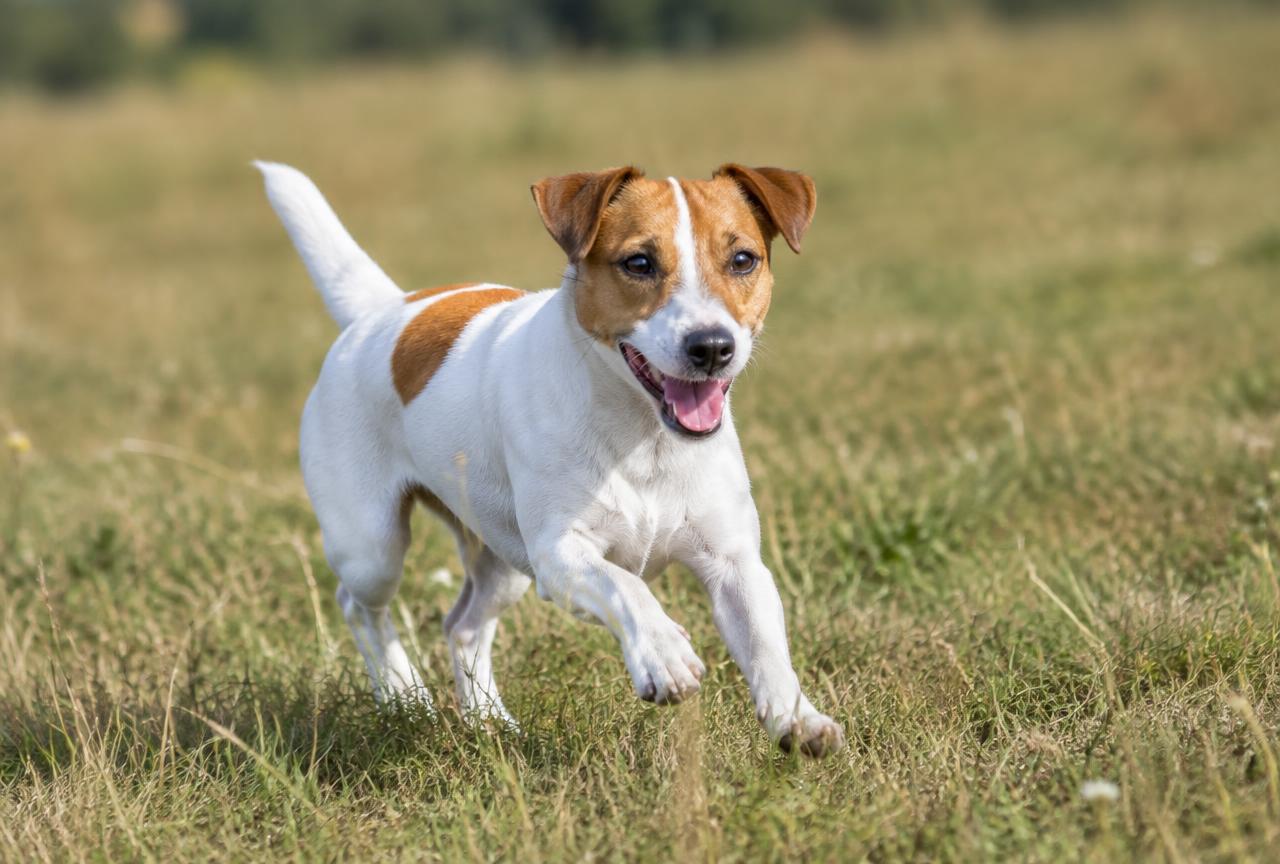
Jack Russell Terrier
A bold, tireless working terrier with huge personality packed into a small frame.
Put it into practice
Read next
Dog Dry Heaving: Causes and When It Is an Emergency
Dog dry heaving is usually throat irritation or mild nausea, but repeated unproductive retching with a swollen, tight belly can be bloat (GDV), a life-threatening emergency.


