Can Dogs Eat Oatmeal? Cooked, Raw and Flavoured
Plain oatmeal cooked in water is a safe, gentle serving for most dogs, and its fibre can even help a mild upset stomach. The flavoured sachets, raw oats and milky versions are another story.
The SniffScroll desk
Published 11 October 2026

Dr Emma Hartley MRCVS
The short version
- Plain oatmeal cooked in water is a safe, gentle serving for most dogs.
- The soluble fibre in oats can help firm up a mild upset stomach as part of a short bland diet.
- Flavoured sachets can contain xylitol, raisins or chocolate: check ingredients and call the vet if eaten.
- Cook with water, never milk and sugar, and always let it cool before serving.
- Keep servings small and occasional: a tablespoon for a toy dog up to half a cup for a giant breed.
Can dogs eat oatmeal?
Yes: plain oatmeal, cooked in water and served cool with nothing added, is a safe and genuinely useful serving for most dogs. Oats are a good source of soluble fibre, which can help firm up a mildly loose stomach, and they are gentle enough that many vets suggest a little oatmeal for dogs recovering from tummy upsets. The versions to avoid are the ones we actually eat ourselves: flavoured sachets, porridge made with milk and sugar, and raw dry oats.
This article covers the safe way to serve it, the versions to skip, and how much is sensible.
Is oatmeal good for dogs?
Oats bring more to the bowl than most treats. They are rich in beta-glucan, a soluble fibre that supports gut health and can help regulate both constipation and mild diarrhoea, plus useful amounts of manganese, phosphorus, zinc and B vitamins. Oats are also lower in fat than many grains, and most dogs tolerate them well.
That said, oatmeal is a supplement to a complete diet, not a replacement for one. Dogs fed a good complete food already get everything they need, so think of oatmeal as a gentle, functional extra: a spoonful stirred into dinner for a dog with a touchy stomach, or an occasional warm breakfast on a cold morning.
Oatmeal for an upset stomach
The classic use is the bland diet. When a dog has mild diarrhoea but is otherwise bright, vets often suggest a day or two of plain, easily digested food, and a little well-cooked oatmeal alongside plain boiled chicken or white fish fits that brief well. The soluble fibre absorbs water in the gut and can help firm things up.
The important caveats: the dog must be otherwise well, drinking normally and not vomiting repeatedly, and the bland diet is a 24 to 48 hour bridge, not a cure. Diarrhoea that lasts beyond that, contains blood, or comes with lethargy needs a vet. Our guide to dog diarrhoea covers the full decision tree.
The versions to avoid
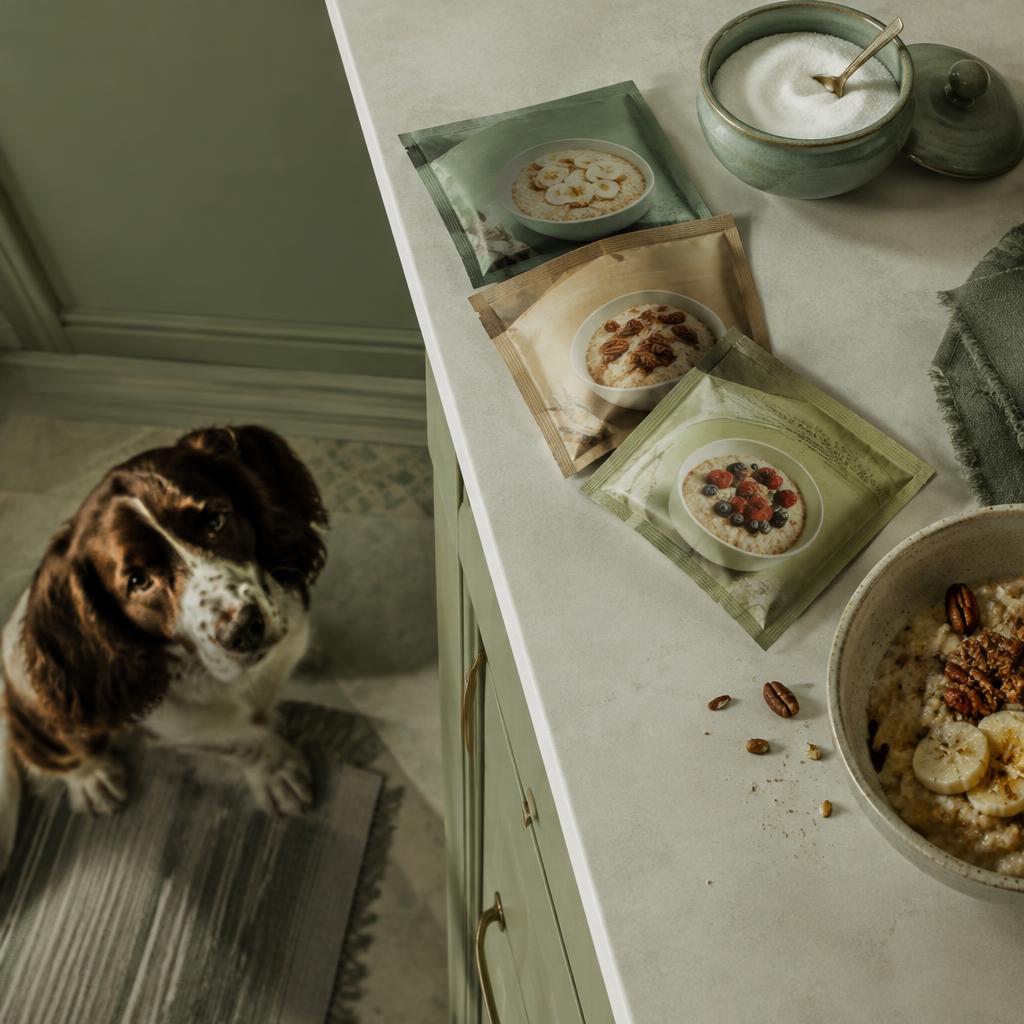
Flavoured and instant sachets. These are the most dangerous version, because some contain xylitol, an artificial sweetener that is toxic to dogs even in small amounts. Raisin, chocolate and toffee varieties carry their own toxic ingredients. If your dog has eaten a flavoured sachet, read the ingredients immediately; if xylitol, raisins or chocolate appear, call the vet now.
Porridge made with milk and sugar. Many dogs are lactose intolerant, so milky porridge commonly causes gas and loose stools, and added sugar or syrup serves no purpose for a dog. Golden syrup, honey toppings and dried fruit all belong off the dog's spoon.
Raw, dry oats. Uncooked oats are hard to digest and absorb water as they swell, which can cause stomach discomfort. A few scattered oats are unlikely to cause trouble, but a bowlful of dry oats warrants a call to the vet, particularly if the belly looks swollen.
How much oatmeal can a dog eat?
Oatmeal is filling and calorie-dense once cooked, so servings stay modest and inside the 10% treat allowance:
| Dog size | Cooked oatmeal serving |
|---|---|
| --- | --- |
| Toy (under 5 kg) | One tablespoon |
| Small (5 to 10 kg) | Two tablespoons |
| Medium (10 to 25 kg) | A quarter of a cup |
| Large (25 to 40 kg) | A third of a cup |
| Giant (over 40 kg) | Half a cup |
Serve it once or twice a week at most as a treat, or for a day or two as part of a vet-sensible bland diet. If you are unsure how treats fit your dog's daily calories, our portion calculator does the maths.
Interactive tool
Oatmeal serving checker
Dog size and preparation, in. Serving guidance, out.
Your plan
- For a medium dog, a serving is about a quarter of a cup, inside the 10% treat allowance.
- Cook plain oats in water, let them cool, and serve with nothing added.
- Oatmeal's soluble fibre can help firm up mild diarrhoea, alongside plenty of water.
- Introduce it slowly; too much fibre too fast means gas and loose stools.
Plain cooked oatmeal is a safe serving
Plain oatmeal cooked in water is a safe, gentle serving. Flavoured sachets, raw oats and milky porridge are the versions to avoid.
How to serve oatmeal safely
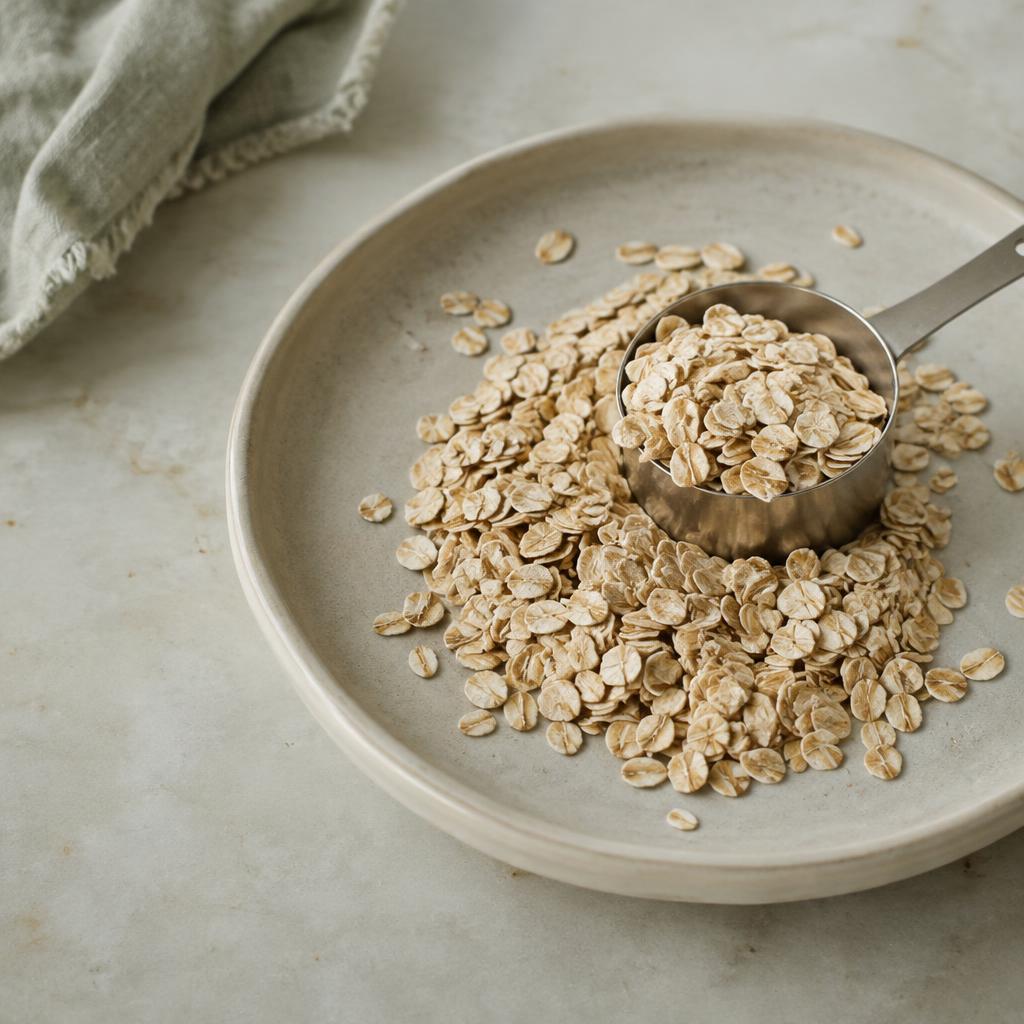
- 1Use plain rolled or porridge oats, never flavoured or instant sachets.
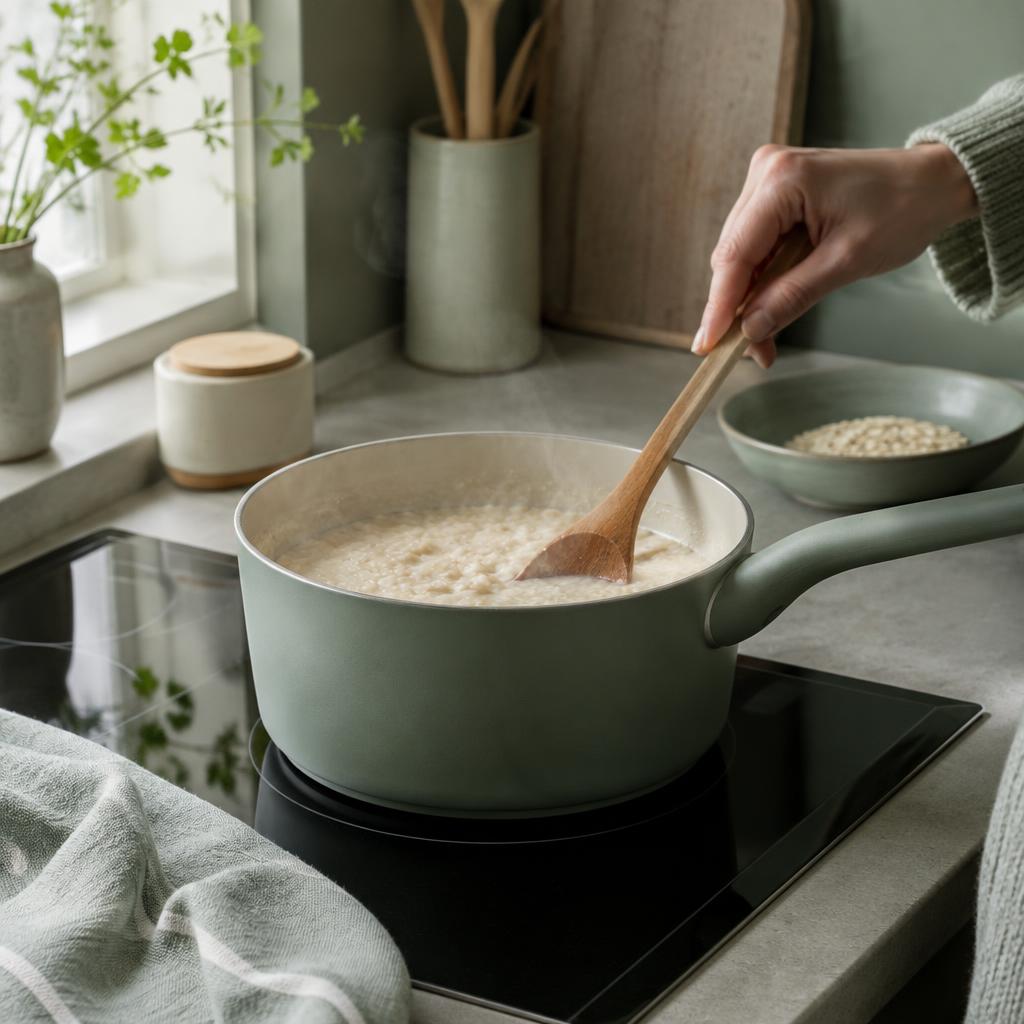
- 2Cook in water only, until soft, with no salt, sugar, milk or butter.
- 3Let it cool to lukewarm or cooler before serving; hot porridge burns mouths.
- 4Serve plain, or stir a spoonful through your dog's usual food.
- 5Introduce it gradually: a sudden large serving of fibre means gas and loose stools.
What about the grain-free question?
Owners sometimes ask whether oats are safe given the debate about grain-free diets and heart disease. The concern in that debate centres on diets built heavily on pulses like peas and lentils, not on oats, and oats are not among the ingredients of concern. A spoonful of oatmeal as an occasional extra in a dog fed a complete, balanced diet is not a heart-health issue. If your dog eats a grain-free or boutique diet as their main food, that broader conversation is one for your vet.
Oats in dog treats and food
Oats appear in plenty of commercial dog foods and biscuits, and they are a perfectly respectable ingredient. If you bake your own dog treats, oat flour or blitzed rolled oats make a good base, combined with dog-safe ingredients like banana, peanut butter without xylitol, or pumpkin. Homemade oat biscuits, baked plain and stored in a tin, are a far better use of the oat tin than sharing your own breakfast.
Oatmeal versus rice for a poorly tummy
Owners often ask whether oatmeal or rice is the better bland-diet choice. Both work, and most vets are happy with either. White rice is slightly plainer and lower in fibre, which suits a very watery stomach; oatmeal brings more soluble fibre, which suits a dog whose stools are loose but formed. What matters more than the choice is the execution: small, frequent meals, plenty of fresh water, and a return to normal food over two or three days rather than all at once. Our guide to rice for dogs covers the rice side of the comparison.
Reading your own breakfast bowl
If the question is really "can my dog finish my porridge", run through a quick checklist. Was it made with water or milk? Milk means caution. Did you add sugar, syrup, honey, dried fruit or chocolate? Any of those means the dog gets none. Was it from a flavoured sachet? Check for xylitol before deciding anything. Plain, water-based, unsweetened leftovers, cooled: a spoonful or two is fine. Everything else goes in the bin, not the bowl.
Puppies and seniors
Both can have plain cooked oatmeal in small amounts. For puppies, keep servings tiny and infrequent, since their nutrition needs to come from a complete puppy food. For seniors, a little soft warm oatmeal can suit dogs with dental problems who struggle with crunchier food, and the fibre helps older dogs prone to constipation. As always, dogs on prescription diets should have extras cleared with the vet first.
Introducing oatmeal for the first time
As with any new food, start small. Offer a teaspoon of plain cooked oatmeal mixed into the usual food and watch for 24 hours. Most dogs take to it without any fuss, but a small number are sensitive to oats, and the signs of a food that does not suit are familiar: itching, ear irritation, wind or loose stools. If any of those appear, oatmeal is simply not your dog's extra, and there are plenty of alternatives. If it suits, you can build gradually to the serving sizes in the table above.
When to see a vet
Call the vet immediately if your dog has eaten a flavoured sachet containing xylitol, raisins or chocolate, or a large amount of dry raw oats with a swollen or painful belly. Book a routine appointment if you are using oatmeal to manage a stomach that keeps misbehaving, because recurring tummy trouble deserves a proper diagnosis rather than a rotating cast of bland diets.
A note on overnight oats and muesli
Two more breakfast formats deserve a mention. Overnight oats soaked in milk or yoghurt carry the same lactose problem as milky porridge, and shop-bought versions often contain added sugar. Muesli and granola are worse: both commonly contain raisins, which are toxic to dogs, plus nuts, seeds and sweeteners. Neither belongs anywhere near the dog bowl. If your dog has raided a bowl of muesli or granola, treat it as a raisin exposure and call the vet.
The bottom line
Plain oatmeal, cooked in water and served cool, is one of the more useful human foods you can share with a dog: gentle, fibrous and genuinely handy during a mild stomach upset. Keep it plain, keep portions small, keep the flavoured sachets for yourself, and let it be an occasional extra rather than a habit. For more gentle foods, see our guides to rice for dogs and sweet potato for dogs.
Frequently asked questions
Can dogs eat oatmeal every day?
It is better as an occasional extra than a daily habit. A small serving once or twice a week is fine for most dogs, but daily oatmeal adds calories and fibre your dog does not need on top of a complete diet.
Can dogs eat porridge made with milk?
It is best avoided. Many dogs are lactose intolerant, so milky porridge commonly causes gas and loose stools. Cook oats in water instead, and skip the sugar and syrup.
Can dogs eat raw oats?
Raw dry oats are hard to digest and can swell in the stomach. A few scattered oats are unlikely to cause harm, but always serve oats cooked, and call the vet if your dog has eaten a large amount of dry oats.
Is oatmeal good for dogs with diarrhoea?
A little plain, well-cooked oatmeal can help firm up mild diarrhoea as part of a short bland diet, alongside plain boiled chicken or white fish. Diarrhoea lasting more than a day or two, or with blood or lethargy, needs a vet.
Can dogs eat flavoured instant oatmeal?
No. Flavoured sachets can contain xylitol, raisins or chocolate, all of which are toxic to dogs. If your dog has eaten one, check the ingredients and call the vet if any of those appear.
Can puppies eat oatmeal?
Yes, in tiny, infrequent servings of plain cooked oatmeal. Their nutrition should come from a complete puppy food, so oatmeal is only ever a small extra.
Sources
- American Kennel Club, Can Dogs Eat Oatmeal?, akc.org
- VCA Animal Hospitals, Bland Diet for Dogs, vcahospitals.com
- PDSA, Foods your dog should avoid, pdsa.org.uk
- Pet Poison Helpline, Xylitol, petpoisonhelpline.com
- Merck Veterinary Manual, Diarrhoea in Dogs, merckvetmanual.com
Questions people actually ask
Can dogs eat oatmeal every day?
It is better as an occasional extra than a daily habit. A small serving once or twice a week is fine for most dogs, but daily oatmeal adds calories and fibre your dog does not need on top of a complete diet.
Can dogs eat porridge made with milk?
It is best avoided. Many dogs are lactose intolerant, so milky porridge commonly causes gas and loose stools. Cook oats in water instead, and skip the sugar and syrup.
Can dogs eat raw oats?
Raw dry oats are hard to digest and can swell in the stomach. A few scattered oats are unlikely to cause harm, but always serve oats cooked, and call the vet if your dog has eaten a large amount of dry oats.
Is oatmeal good for dogs with diarrhoea?
A little plain, well-cooked oatmeal can help firm up mild diarrhoea as part of a short bland diet, alongside plain boiled chicken or white fish. Diarrhoea lasting more than a day or two, or with blood or lethargy, needs a vet.
Can dogs eat flavoured instant oatmeal?
No. Flavoured sachets can contain xylitol, raisins or chocolate, all of which are toxic to dogs. If your dog has eaten one, check the ingredients and call the vet if any of those appear.
Can puppies eat oatmeal?
Yes, in tiny, infrequent servings of plain cooked oatmeal. Their nutrition should come from a complete puppy food, so oatmeal is only ever a small extra.
Sources
Breeds mentioned


Put it into practice
Read next
Can Dogs Eat Honey? Benefits, Risks and Serving Size
Honey is safe in small amounts for healthy adult dogs and may soothe a scratchy throat, but it is almost pure sugar, so portions stay tiny and some dogs should avoid it entirely.