Can Dogs Eat Popcorn? Plain, Buttered and Kernels
Plain air-popped popcorn is a safe occasional treat for most dogs. The butter, salt, flavourings and unpopped kernels are where the trouble lives. Here is how to share it safely.
The SniffScroll desk
Published 11 October 2026

Dr Emma Hartley MRCVS
The short version
- Plain air-popped popcorn is a safe, low-calorie occasional treat for most dogs.
- Butter, salt and sweet or cheesy flavourings are the real problem, not the popped corn.
- Unpopped kernels crack teeth, choke small dogs and can block a gut: sift the bowl every time.
- Sweet popcorn may contain xylitol, which is toxic: check ingredients and call the vet if eaten.
- Keep servings small, feed one piece at a time, and count popcorn inside the 10% treat allowance.
Can dogs eat popcorn?
Yes: plain, air-popped popcorn, fully popped and unsalted, is a safe occasional treat for most dogs. It is low in calories, dogs love the crunch, and a few pieces make a fine film-night share. The problems are never the popped corn itself but everything around it: the butter, the salt, the sweet or cheesy coatings, and the unpopped kernels lurking at the bottom of the bowl.
So the rule is simple. If you want to share, pop it plain, sift out the kernels, and set the dog's portion aside before you season yours.
Is popcorn good for dogs?
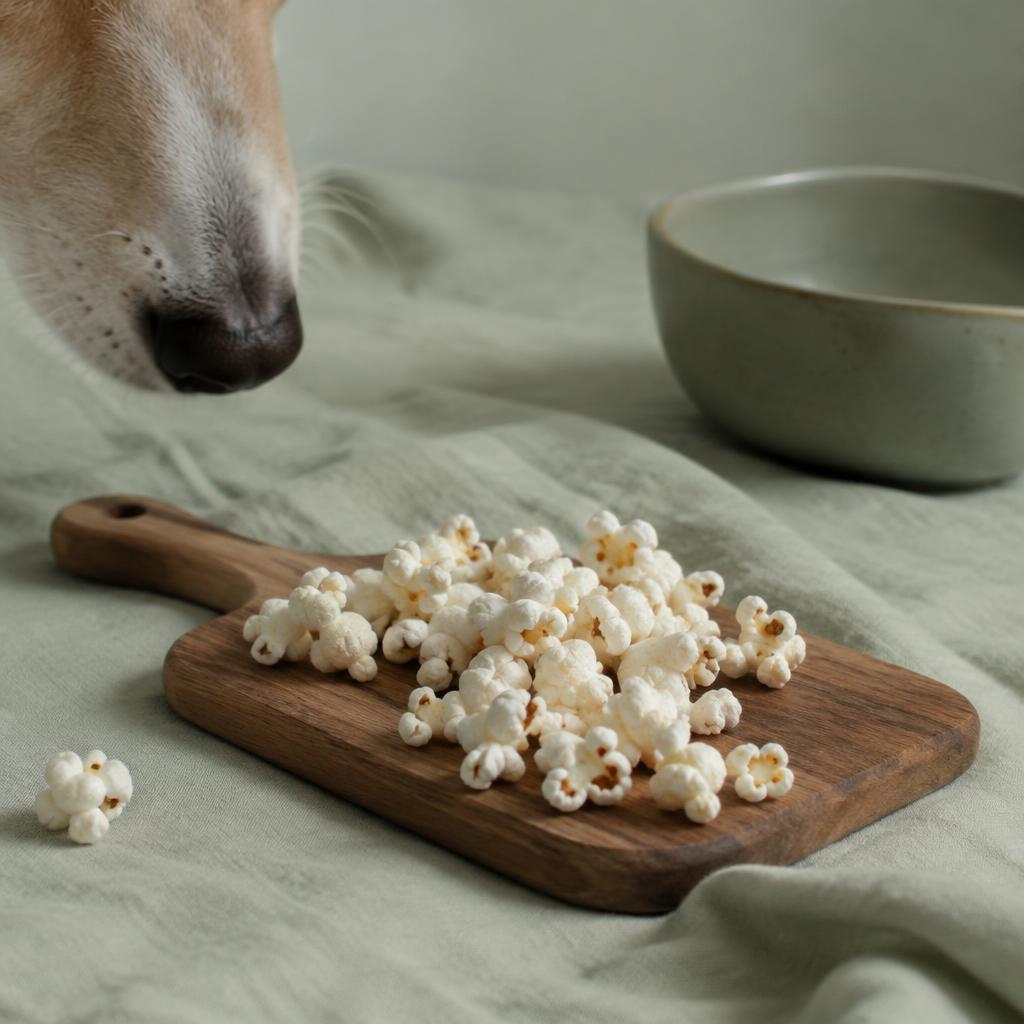
Popcorn is not a health food, but it is not junk either. Plain popped corn is mostly air and fibre, with small amounts of B vitamins, magnesium and zinc, and it is low in calories compared with most commercial treats. A handful of plain popcorn is a far lighter reward than a piece of cheese or a shop-bought biscuit, which makes it useful for dogs watching their weight.
That said, dogs get everything they need from a complete dog food, and popcorn adds nothing they are missing. Treat it as a bit of fun, not a supplement, and keep it inside the 10% treat allowance.
Butter, salt and flavourings: the real problem
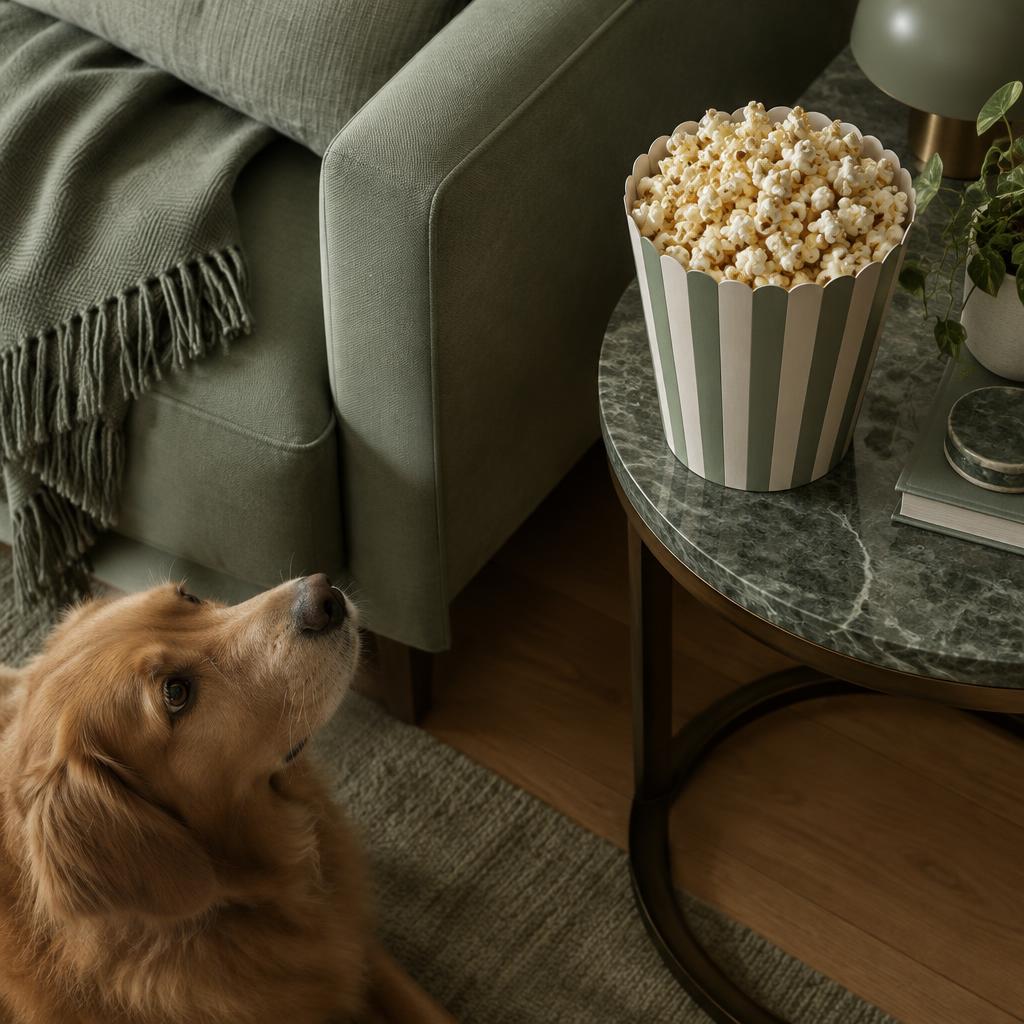
Cinema popcorn, microwave popcorn and anything from a sharing bag is a different food entirely. Butter and oil add a heavy fat load, which is bad news for dogs prone to pancreatitis and for any dog's waistline. Salt in quantity can cause excessive thirst and, in large amounts, genuine salt toxicity. Sweet coatings bring sugar, and some low-calorie or sweet flavoured popcorns contain xylitol, which is toxic to dogs even in small amounts.
Cheese, caramel, toffee and chocolate-drizzled varieties all carry their own problems, from lactose to more sugar to theobromine. If your dog has stolen a few pieces of buttered popcorn, do not panic: a small amount is unlikely to cause more than a rich tummy. But if the popcorn was sweetened with xylitol, or your dog ate a large quantity, call the vet.
Unpopped kernels: the hidden hazard
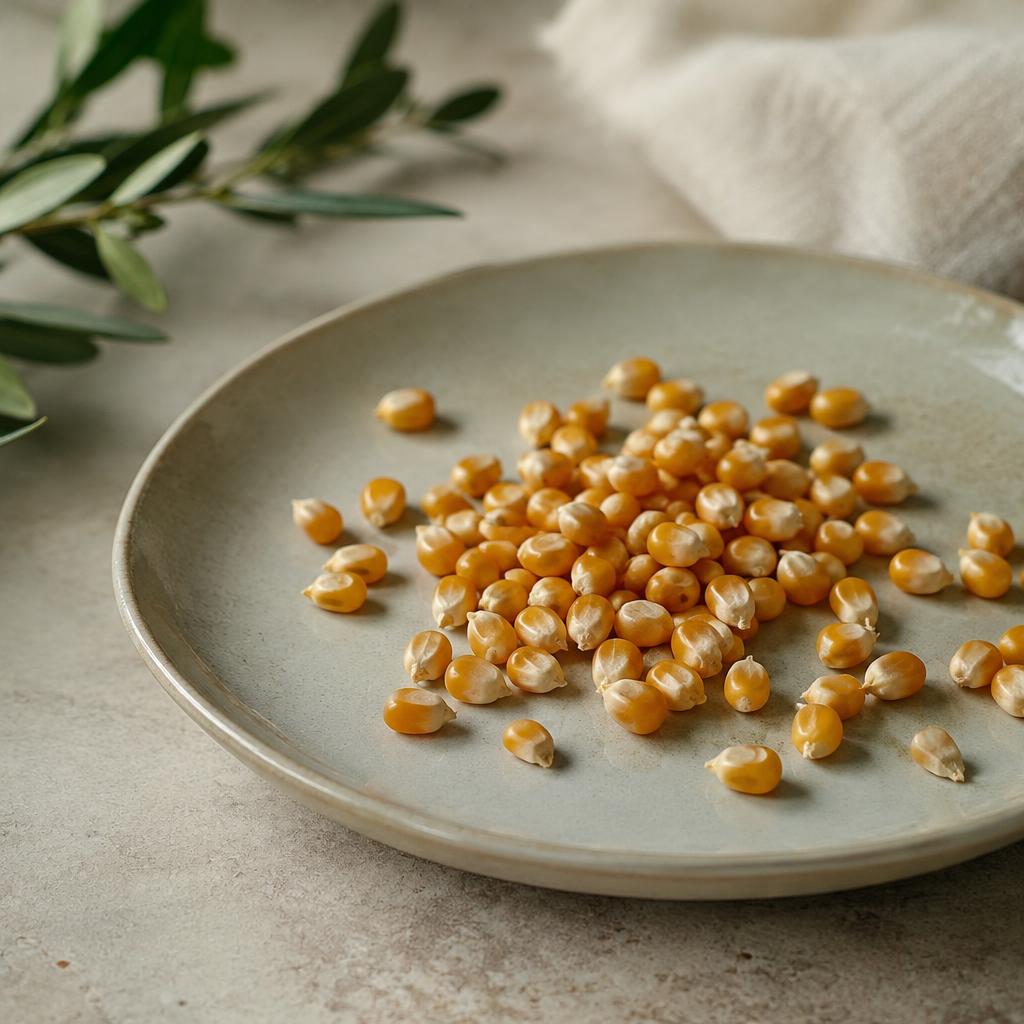
The most dangerous part of a popcorn bowl is at the bottom. Unpopped and half-popped kernels are hard enough to crack a tooth, small enough to lodge between teeth or in the gums, and indigestible enough that a pile of them can cause a gut blockage. They are also a choking risk for small dogs and greedy swallowers.
Before you share any popcorn, sift it. Only fully popped, fluffy pieces go to the dog. If your dog has raided the kernel dregs, watch for gagging, drooling, pawing at the mouth, vomiting or a painful belly over the next couple of days, and call the vet if any of those appear.
How much popcorn can a dog eat?
Popcorn is light, so portions are measured in pieces rather than grams. As a guide within the 10% treat allowance:
| Dog size | Plain popcorn serving |
|---|---|
| --- | --- |
| Toy (under 5 kg) | 2 to 3 pieces |
| Small (5 to 10 kg) | 4 to 5 pieces |
| Medium (10 to 25 kg) | A small handful |
| Large (25 to 40 kg) | A generous handful |
| Giant (over 40 kg) | A couple of handfuls |
Feed pieces one at a time, especially to small dogs, so nothing gets inhaled whole. And remember that even plain popcorn is a treat, not a meal: a bowl a night will quietly add up.
Interactive tool
Popcorn serving checker
Dog size and preparation, in. Serving guidance, out.
Your plan
- For a medium dog, a serving is about a small handful of plain air-popped popcorn, inside the 10% treat allowance.
- Pop it plain: no oil, butter, salt or flavourings.
- Remove every unpopped or half-popped kernel before sharing.
- Feed one piece at a time to small dogs, and skip popcorn for dogs with dental problems.
Plain air-popped is fine as a treat
Plain air-popped popcorn is a safe occasional treat. The toppings and the unpopped kernels are where the trouble lives.
How to serve popcorn safely
- 1Air-pop the corn, or use a plain microwave method with no oil or butter.
- 2Let it cool completely; hot popcorn can burn a mouth.
- 3Sift out every unpopped and half-popped kernel.
- 4Set the dog's portion aside before you add salt, butter or flavourings to yours.
- 5Offer pieces one at a time, and supervise small dogs.
The husk problem nobody mentions
Even fully popped, plain popcorn has one quiet drawback: the husks. The thin brown shells around each piece are the part that wedges between your own teeth, and they do exactly the same in a dog's mouth. A husk trapped along the gumline can irritate for days, cause a small abscess, or make a dog paw at its mouth and drool. Most pass without drama, but if your dog is suddenly chewing oddly or favouring one side a day or two after popcorn, a trapped husk is a likely culprit, and a vet can flick it out in seconds.
Rinsing the mouth is not realistic for most dogs, so the practical answer is moderation: fewer pieces, less often, means fewer husks to cause trouble.
Popcorn as a training treat
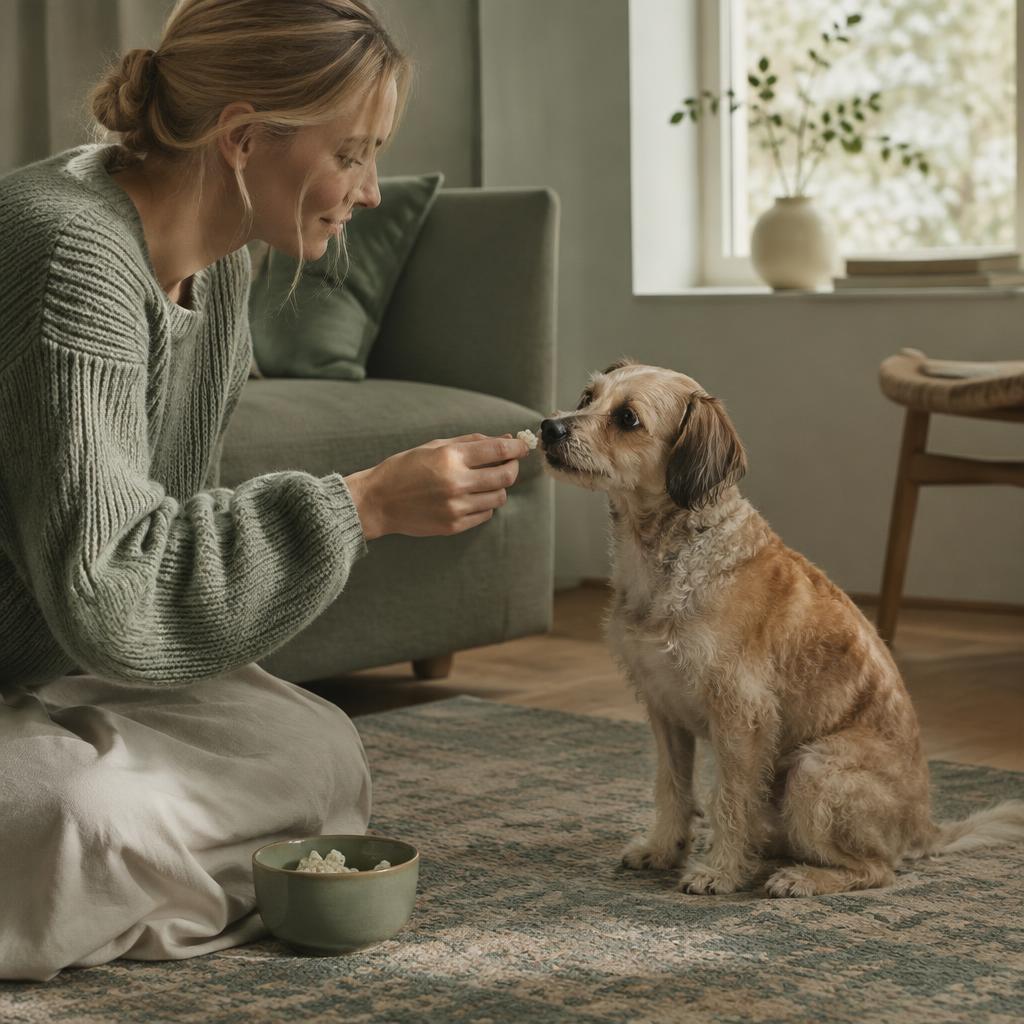
Plain popcorn has one genuinely useful trick: it is big, crunchy and interesting to a dog, yet almost calorie-free compared with most rewards. For a dog on a weight-loss plan who still needs training rewards, a few pieces of plain popcorn can stretch the treat budget further than biscuits. Break pieces in half for small dogs, keep a few in a pocket for walks, and remember that novelty fades: rotate it with other low-calorie rewards like small pieces of carrot or cucumber so it stays exciting.
My dog raided the popcorn bowl: what now?
First, work out what was actually in the bowl. Plain air-popped: expect little more than a full dog and perhaps some extra thirst; monitor at home. Buttered or salted: watch for vomiting, diarrhoea and thirst over the next 24 hours, and call the vet if your dog is small, ate a lot, or seems unwell. Sweet or flavoured: check the ingredients for xylitol immediately, and if it is listed, call the vet now, whatever the amount. A bowl with lots of kernel dregs: watch for gagging, drooling and belly pain over the next 72 hours. When you cannot tell what was in the bowl, a quick call to the vet or a poison line is always the right move.
Popcorn and puppies
Puppies can have a piece or two of plain popped corn once they are comfortably eating solid food, but their smaller teeth and airways make the kernel and choking risks more serious, and their stomachs are less forgiving of rich or salty foods. For puppies, simpler treats are the better choice, and their own puppy food is the best reward of all.
Dogs that should skip popcorn
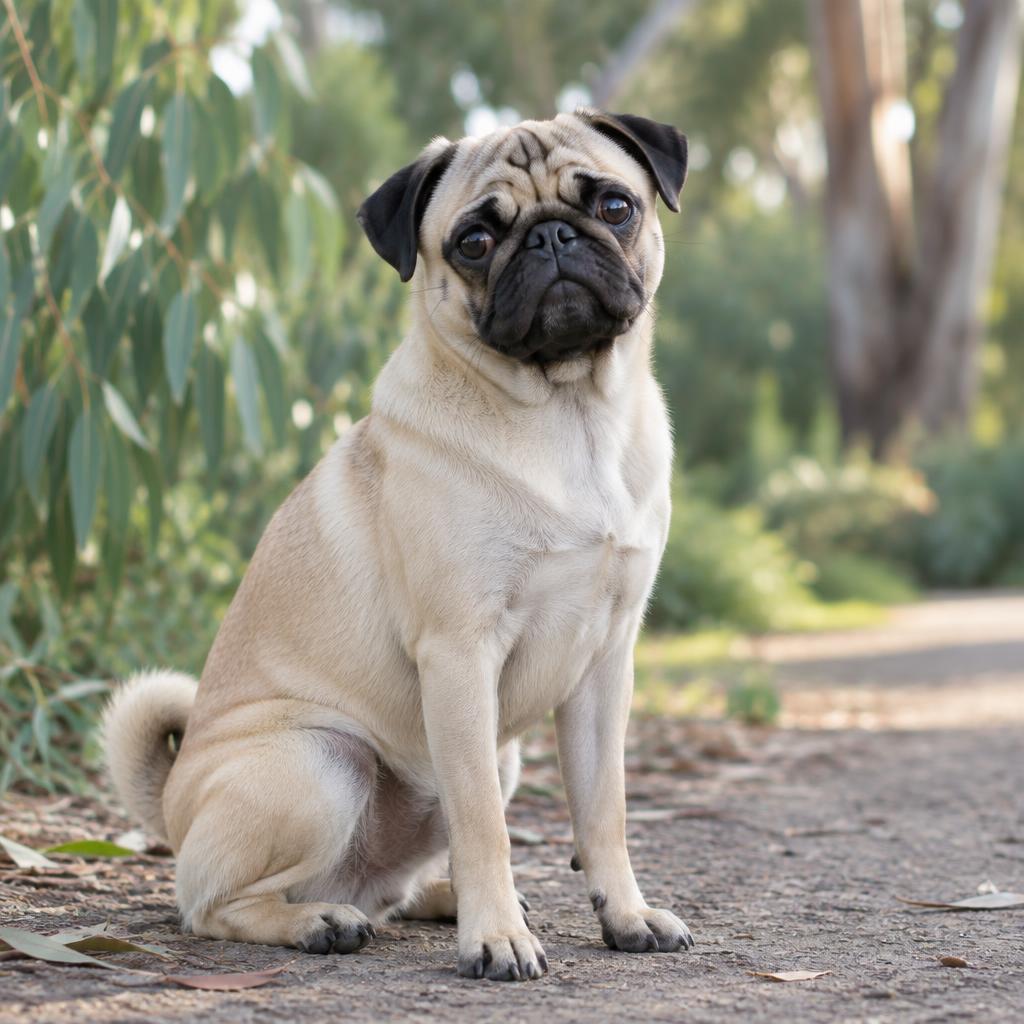
A few groups are better off without it. Dogs with dental disease or missing teeth can struggle with the husks, which catch between teeth and irritate gums. Dogs with a history of pancreatitis should avoid anything but the plainest, smallest taste. Dogs on prescription diets should have any treat cleared with the vet first. And flat-faced breeds like the Pug and the French Bulldog, who already work harder to breathe and chew, do better with soft treats than crunchy ones that can be inhaled.
A note on microwave popcorn bags
The bag itself deserves a mention. Microwave popcorn bags are lined with grease and salt, and a dog that chews the empty bag gets a concentrated dose of both, plus a small risk of the bag itself being swallowed. Bags also go straight into the lidded bin, not left on the counter. More than one dog has been pulled out of a popcorn bag head-first, and a bag over the head is a genuine suffocation risk for a dog home alone.
When to see a vet
Call the vet if your dog has eaten popcorn sweetened with xylitol, a large quantity of buttered or salted popcorn, or a pile of unpopped kernels. Same-day help is needed for repeated vomiting, a painful or swollen belly, gagging that does not resolve, or a dog that seems unwell after a popcorn raid. A cracked tooth from a kernel, often shown as dropping food or chewing on one side, deserves a dental appointment.
Storing and serving leftovers
If you pop a big batch, keep the dog's plain portion in a separate tub so nobody seasons it by mistake, and use it within a day or two while it is still crisp. Stale popcorn is not dangerous, just disappointing, and a dog unimpressed by a treat is a dog less likely to work for it.
The bottom line
Plain air-popped popcorn, fully popped and unseasoned, is one of the safer human snacks to share with a dog: light, crunchy and low in calories. The moment butter, salt, sweet coatings or kernels enter the picture, it stops being a treat. Pop plain, sift well, share a few pieces, and keep the cinema tub to yourself. For more snack maths, see our guides to corn for dogs and cheese for dogs, and our portion calculator for how treats fit the daily budget.
Frequently asked questions
Can dogs eat plain popcorn?
Yes. Plain, air-popped, unsalted popcorn is a safe occasional treat for most dogs. It is low in calories and high in crunch, but it should still sit inside the 10% treat allowance.
Can dogs eat buttered popcorn?
It is best avoided. Butter and oil add a heavy fat load, and salt in quantity is harmful. A few stolen pieces are unlikely to cause serious harm, but buttered popcorn should not be offered deliberately.
Are popcorn kernels dangerous for dogs?
Yes. Unpopped kernels can crack teeth, lodge in gums, choke a small dog, or cause a gut blockage if several are swallowed. Always sift the bowl and only share fully popped pieces.
Can dogs eat sweet or flavoured popcorn?
No. Sweet coatings bring sugar and sometimes xylitol, which is toxic to dogs. Cheese, caramel and chocolate varieties carry their own risks. If your dog ate popcorn containing xylitol, call the vet now.
How much popcorn can I give my dog?
A few pieces for a small dog, up to a couple of handfuls for a giant breed, always plain and fully popped. Feed one piece at a time and supervise small dogs.
Can puppies eat popcorn?
A piece or two of plain popped corn is unlikely to harm an older puppy, but kernels and choking risks are more serious for them, and simpler treats are a better choice.
Sources
- American Kennel Club, Can Dogs Eat Popcorn?, akc.org
- VCA Animal Hospitals, Human Foods to Avoid for Pets, vcahospitals.com
- PDSA, Foods your dog should avoid, pdsa.org.uk
- Pet Poison Helpline, Xylitol, petpoisonhelpline.com
- Royal Veterinary College, Feeding your dog, rvc.ac.uk
Questions people actually ask
Can dogs eat plain popcorn?
Yes. Plain, air-popped, unsalted popcorn is a safe occasional treat for most dogs. It is low in calories and high in crunch, but it should still sit inside the 10% treat allowance.
Can dogs eat buttered popcorn?
It is best avoided. Butter and oil add a heavy fat load, and salt in quantity is harmful. A few stolen pieces are unlikely to cause serious harm, but buttered popcorn should not be offered deliberately.
Are popcorn kernels dangerous for dogs?
Yes. Unpopped kernels can crack teeth, lodge in gums, choke a small dog, or cause a gut blockage if several are swallowed. Always sift the bowl and only share fully popped pieces.
Can dogs eat sweet or flavoured popcorn?
No. Sweet coatings bring sugar and sometimes xylitol, which is toxic to dogs. Cheese, caramel and chocolate varieties carry their own risks.
How much popcorn can I give my dog?
A few pieces for a small dog, up to a couple of handfuls for a giant breed, always plain and fully popped. Feed one piece at a time and supervise small dogs.
Can puppies eat popcorn?
A piece or two of plain popped corn is unlikely to harm an older puppy, but kernels and choking risks are more serious for them, and simpler treats are a better choice.
Sources
Breeds mentioned

Put it into practice
Read next
Can Dogs Eat Oatmeal? Cooked, Raw and Flavoured
Plain oatmeal cooked in water is safe for dogs in small servings and its soluble fibre can help mild diarrhoea. Avoid flavoured sachets, raw oats and porridge made with milk or sugar.