
Can Dogs Eat Cheese? Safe Types, Portions and When to Avoid It
Most dogs can eat a little cheese, and many would trade their favourite toy for it. The trick is knowing which cheeses are safe, how much counts as a treat, and when to keep the cheese board out of reach.
The SniffScroll desk
Published 10 October 2026
Reviewed by the SniffScroll editorial team
The short version
- Most healthy dogs can eat small amounts of plain cheese as an occasional treat.
- Stick to lower-fat, plain cheeses such as mozzarella or cottage cheese; keep cheddar portions tiny.
- Never feed blue cheese or cheeses flavoured with garlic, onion or chives.
- Many dogs are mildly lactose intolerant, so introduce cheese slowly and watch for loose stools.
- Cheese and all other treats together should stay under ten per cent of daily calories.
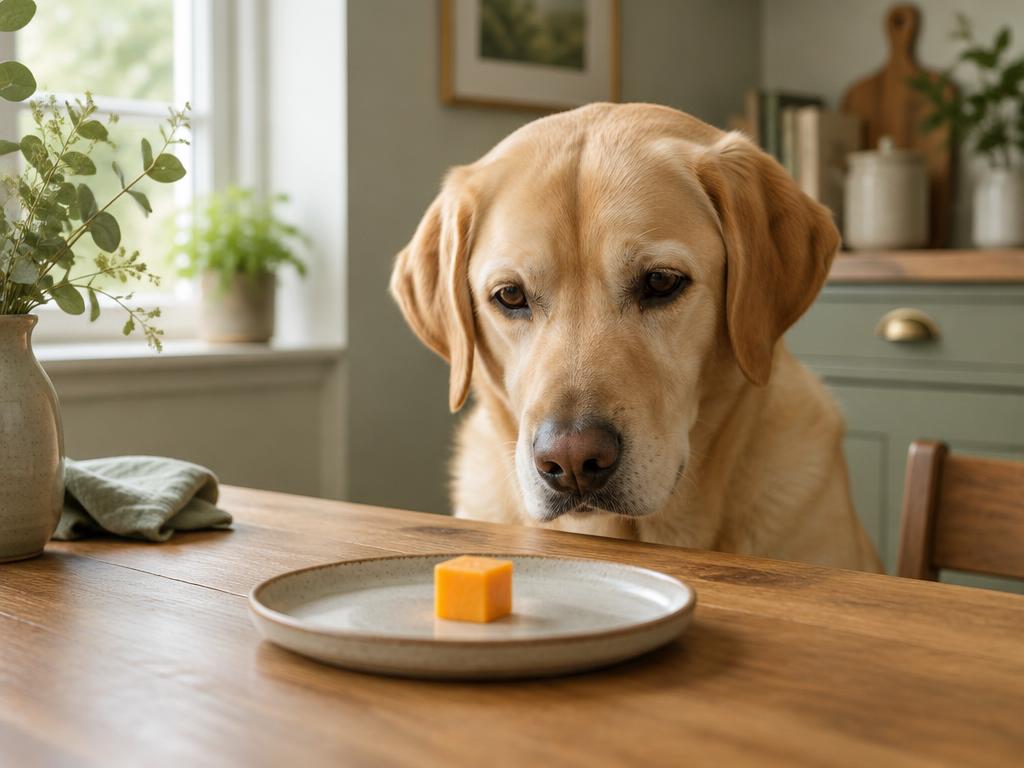
Cheese sits near the top of most dogs' wish lists, and the good news is that plain cheese is not toxic to dogs. A small cube of cheddar or a lick of cottage cheese is fine for the average healthy adult dog. The caveats are about quantity, fat, salt and a handful of varieties that should never be shared. This guide covers which cheeses are safe, how much to offer, and the signs that dairy does not agree with your dog.
Is cheese actually good for dogs?
Cheese offers protein, calcium and fat-soluble vitamins, but a dog eating a complete commercial diet does not need any of that from cheese. Its real value is as a high-value reward: most dogs find it more motivating than their usual biscuits, which makes it brilliant for recall training, vet visits and hiding tablets.
The trade-off is density. A 30 g chunk of cheddar carries around 120 calories, which is a meaningful slice of a small dog's whole day. Cheese is a treat, and like all treats it should stay under ten per cent of daily calories.
Which cheeses are safe, and which are not?
Plainness is the rule. The fewer ingredients beyond milk, the better.
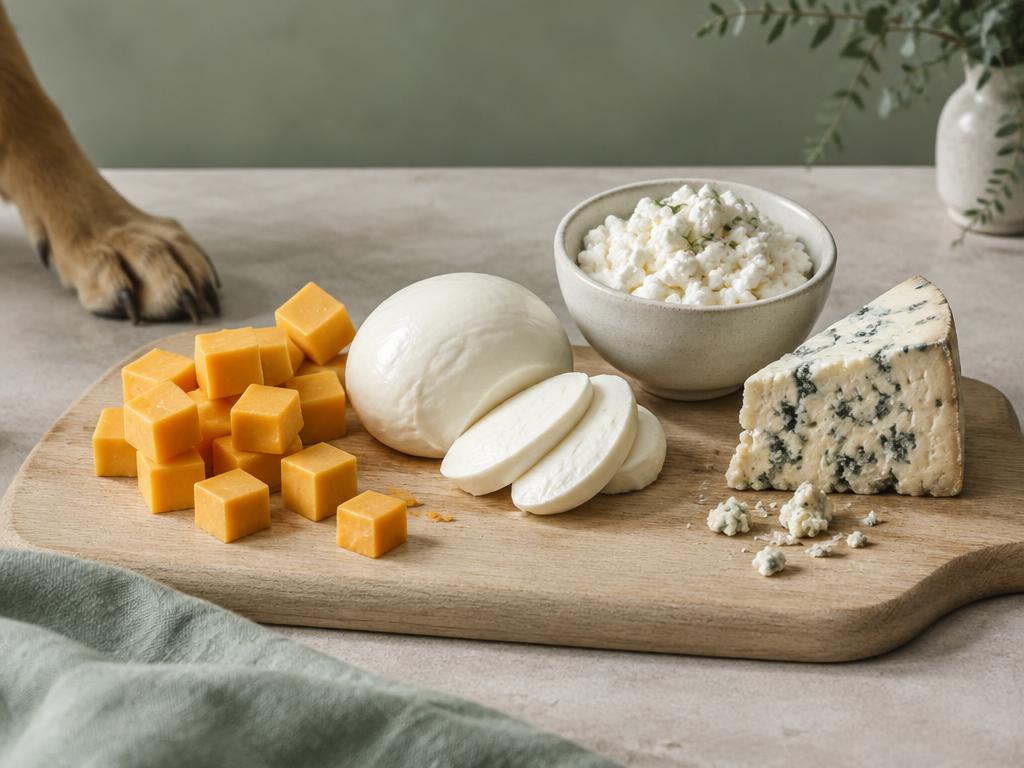
| Cheese | Verdict | Notes |
|---|---|---|
| --- | --- | --- |
| Mozzarella (plain, part-skim) | Good choice | Lower in fat and salt than most |
| Cottage cheese | Good choice | Low lactose, easy to portion |
| Cheddar and hard cheeses | Fine in tiny amounts | Higher fat and salt, very low lactose |
| Soft goat cheese | Fine in tiny amounts | Often easier to digest |
| Brie and camembert | Avoid | Very high fat, rich rinds |
| Blue cheese | Never | Mould can produce roquefortine, which is toxic to dogs |
| Flavoured cheeses | Never | Garlic, onion and chives are toxic to dogs |
How much cheese can a dog eat?
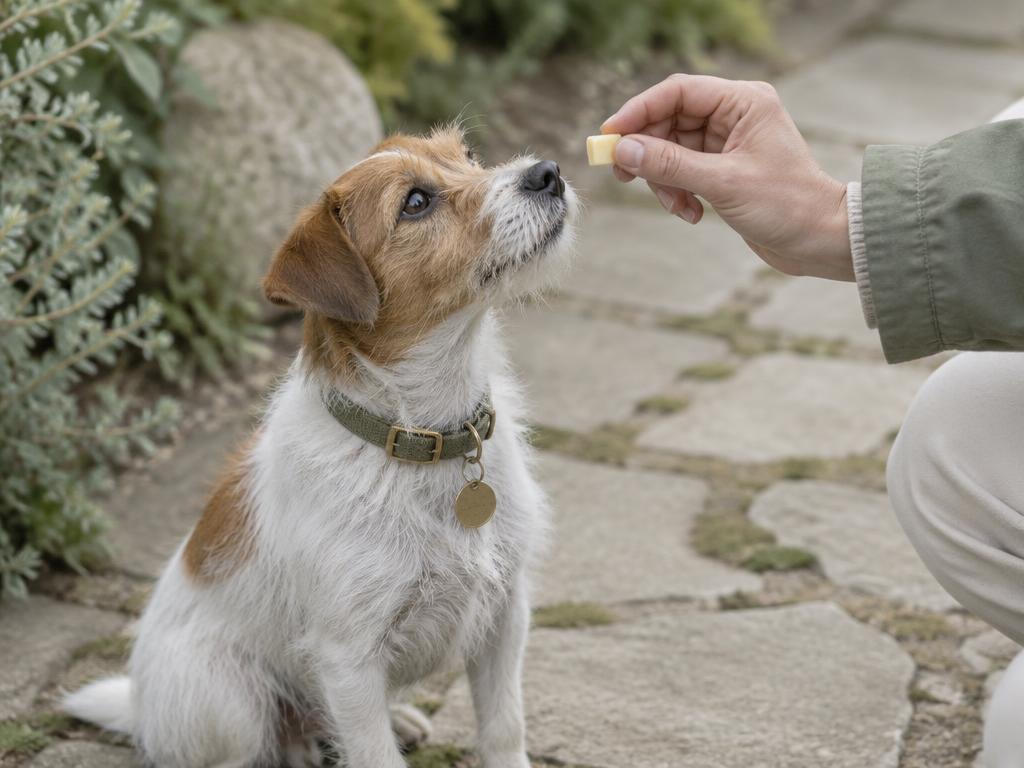
A sensible serving is smaller than most people expect. For a small dog under 10 kg, think a cube the size of your fingernail. A medium dog can have a dice-sized cube, and a large dog two or three. If you use cheese in training, cut it into pea-sized pieces: dogs care about the taste, not the size.
Interactive tool
Cheese portion checker
Size, cheese type and frequency in, a sensible portion and safety verdict out.
How to serve it
- For a medium dog, keep cheese to roughly 14 g or less per serving, about a small dice.
- Count cheese within the daily treat allowance: treats should stay under ten per cent of daily calories.
- Introduce slowly and watch for gas or loose stools, signs of lactose trouble.
- Use small cubes as high-value training rewards rather than a bowl snack.
A small cube is fine
Cheese is a brilliant training reward in tiny amounts. The risks come from fat, salt and the wrong varieties, not from cheese itself.
Lactose intolerance in dogs
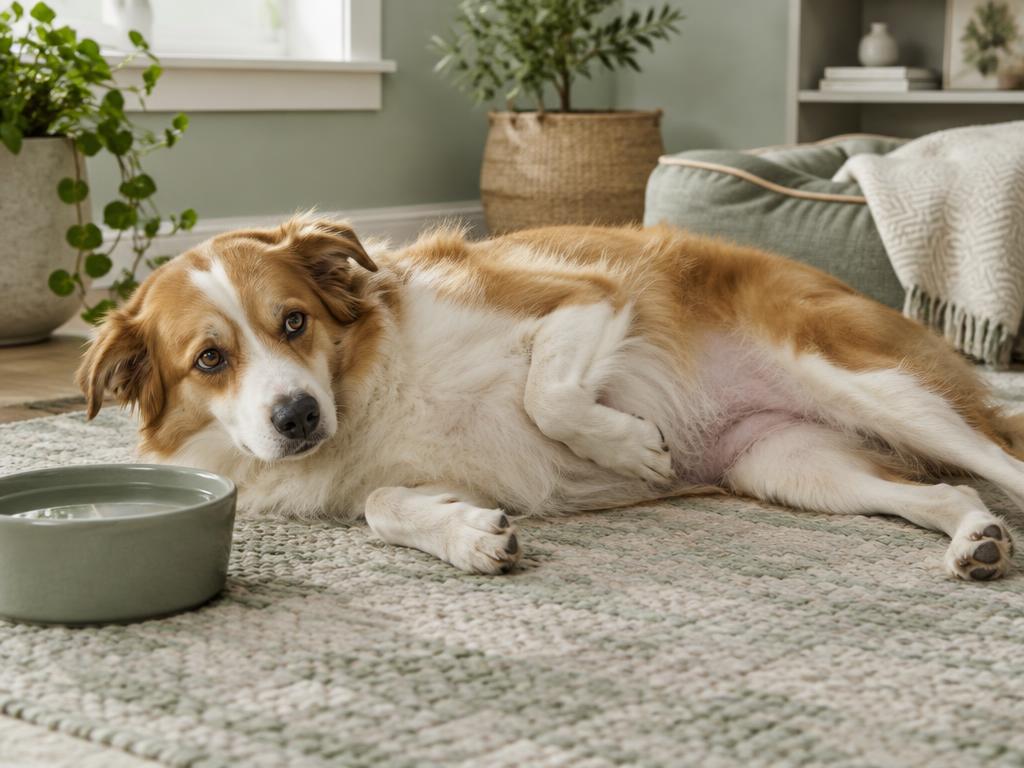
Puppies produce lactase to digest their mother's milk, but many adult dogs produce much less of it. The result is that dairy can ferment in the gut and cause gas, bloating, soft stools or diarrhoea, usually within twelve hours of eating it.
Hard, aged cheeses such as cheddar contain very little lactose because it drains away with the whey, which is why many dogs handle a cheddar cube but not a saucer of milk. If your dog has a sensitive stomach, start with a pea-sized piece and watch for a day before offering more.
Cheese as a training treat and pill hider
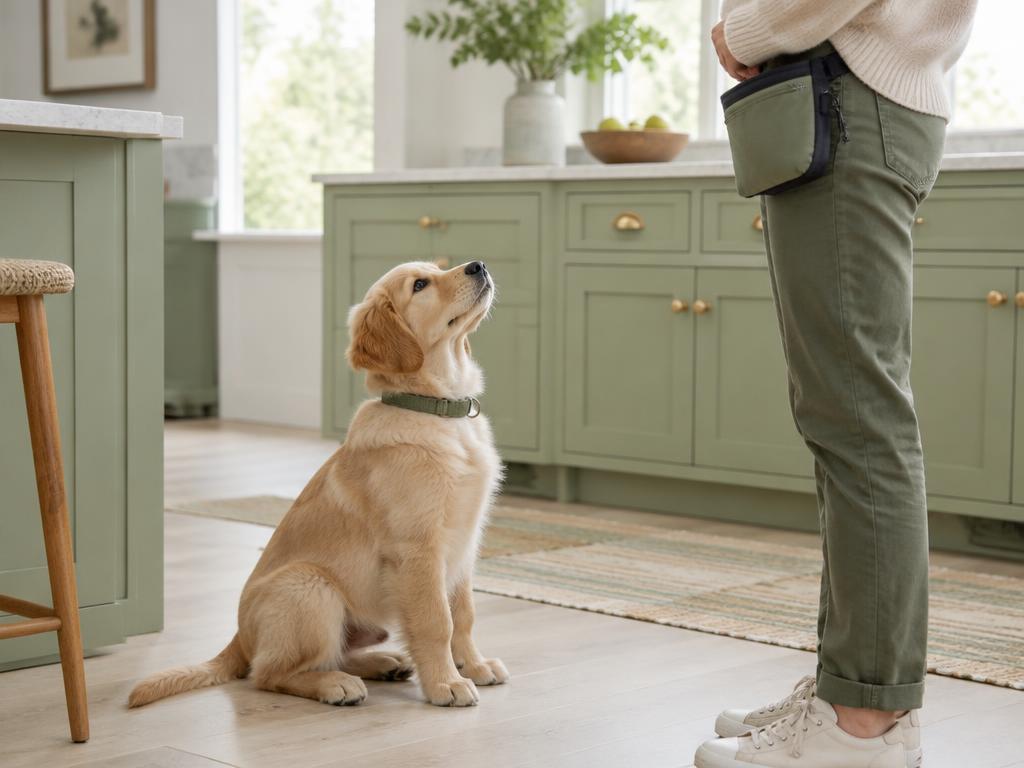
This is where cheese earns its keep. A tiny cube of something smelly beats almost any shop-bought treat for focus, and a soft piece of mozzarella wrapped around a tablet has ended many a pill battle. A few practical rules:
- Cut cheese into pea-sized pieces before a training session, not during it.
- Take the calories out of the day's food ration if the session was a big one.
- For pills, give one empty cheese ball, then the loaded one, then another empty one, so the dog swallows quickly without chewing.
- Keep cheese out of reach on worktops: a whole block is a very different proposition from a cube.
When to avoid cheese altogether
Some dogs should skip cheese entirely. Dogs with pancreatitis or a history of it need low-fat diets, and a fatty treat can trigger a flare. Overweight dogs are better rewarded with lean protein or vegetables. Dogs with confirmed dairy allergies (which involve the immune system, unlike lactose intolerance) should avoid all cheese. And any dog on a prescription diet should stick to it unless your vet agrees otherwise.
How cheese fits the daily calorie budget
The ten per cent rule becomes concrete with a few numbers. A 10 kg dog eating a typical complete food needs roughly 550 to 600 calories a day, so the whole treat budget is about 60 calories: one and a half dice-sized cubes of cheddar, or a generous spoonful of cottage cheese. A 25 kg dog needs around 1,100 calories, giving about 110 treat calories, and a 35 kg dog around 1,500, giving 150. If training sessions are heavy on rewards, the cleanest habit is to weigh out the day's food in the morning and hold back a portion of it, then add the cheese on top of the reduced ration rather than on top of the full one.
Cheese spreads, strings and processed slices
Processed cheese products are a different proposition from a block of cheddar. Spreads, squirty cheeses, plastic-wrapped slices and cheese strings typically carry more salt, more additives and sometimes flavourings that are not dog-friendly. None of them are acutely toxic in a lick, but none of them are a good idea as a habit either. If you would not call it cheese in a deli, do not call it a treat for the dog. The same goes for anything from the cheeseboard that comes studded with fruit, nuts, herbs or garlic.
Signs cheese suits your dog
After a few weeks of occasional cheese, you will know where you stand. A dog that tolerates cheese shows nothing: normal stools, normal wind (or the usual amount, in some breeds), steady weight, no itching. A dog that does not shows soft or loose stools within a day, extra gas, or, in the case of true dairy allergy, itchy skin or ear trouble that flares after dairy. Keep a mental note of what you fed when, and patterns become obvious quickly.
Cheese and puppies
A tiny taste of plain cheese is fine for most weaned puppies, and many trainers rely on it because puppy attention is hard to buy with ordinary biscuits. Keep pieces pea-sized, introduce one new food at a time so you can spot what disagrees with them, and remember that a puppy's calories are carefully balanced for growth: a cube that is trivial for an adult Lab is a significant snack for a two-kilo puppy. If the puppy is on a breeder's or vet's feeding plan, cheese comes out of the treat allowance, not on top of it.
Cheese compared with other treats
It helps to see cheese in context. Per 10 g, cheddar carries roughly 40 calories, similar to many commercial training treats but far more than a piece of carrot or cucumber. Where cheese wins is motivation: for recall practice, nail trims and pill hiding, its smell and softness outperform almost everything. Where it loses is volume feeding: if your dog needs a lot of rewards in a session, mix cheese with lower-calorie options so the total stays sensible. A practical approach many owners land on is cheese for the hard asks, kibble or veg for the easy ones.
Common mistakes worth avoiding
The first is the cheese board problem: dogs do not portion-control, and a dog that clears a board has eaten fat, salt and possibly grapes, onions or blue cheese in one go. Keep boards and bins out of reach. The second is the daily habit: a cube every day is 250 or more calories a week for a small dog, enough to shift weight over a season. The third is using cheese to comfort a dog with an upset stomach, which usually makes things worse. And the fourth is forgetting that flavoured and processed cheese products, spreads, slices and strings, often carry more salt and additives than the real thing.
Reading the signs after a cheese raid
If your dog has helped themselves, stay calm and work the checklist. What did they eat, roughly how much, and when? Plain cheddar in a modest amount usually means a loose stool at worst. Blue cheese, anything with garlic, onion, chives or raisins, or a large quantity of any rich cheese, especially in a small dog, means a call to the vet for advice. Then watch for vomiting, diarrhoea, a hunched or painful belly, or unusual lethargy over the next 24 hours, and note the time of anything you see.
When to see a vet
A single stolen cube of cheddar rarely needs more than monitoring. Call your vet if your dog has eaten blue cheese or a cheese containing garlic, onion, chives or raisins, if a small dog has eaten a large amount of any rich cheese, or if you see repeated vomiting, diarrhoea, a painful or swollen belly, or marked lethargy after a cheese raid. Fatty binges can trigger pancreatitis in susceptible dogs, and that is always a vet job. If your dog has a history of pancreatitis or is on a prescribed low-fat diet, treat cheese as off the menu entirely and ask before offering any rich food: for those dogs, even a modest cube can be enough to trigger a flare-up.
A quick word on sharing from the table
The other place cheese sneaks in is the dinner table, and the issue there is less the cheese than the habit. A dog that learns food appears from human plates becomes a persistent beggar, and guests find it less charming than you do. If you want to share, the cleanest rule is that cheese only ever appears in the dog's own bowl or from a training pouch, never from your plate. Dogs learn the difference between "food comes from the bowl" and "food comes from begging" remarkably fast, in both directions.
The bottom line
Can dogs eat cheese? Yes: plain, small and occasional is the formula. Choose lower-fat varieties, keep portions dice-sized, avoid blue and flavoured cheeses completely, and watch for signs that lactose does not agree with your dog. Used well, a crumb of cheese is one of the best training tools you will ever find in your own fridge.
Questions people actually ask
Can dogs eat cheese every day?
They can, but they probably should not. Cheese is energy dense, so a daily habit adds up quickly in fat and calories. Two or three small servings a week is a sensible rhythm for most dogs, with each serving kept to a small dice-sized piece for a medium dog.
Can dogs eat cheddar cheese?
Yes, in small amounts. Cheddar is not toxic to dogs, but it is one of the fattier, saltier cheeses, so keep portions to a cube roughly the size of a dice and count it towards the daily treat allowance.
Can dogs eat blue cheese?
No. The mould in blue cheeses such as Stilton and Roquefort can produce roquefortine, a compound that can cause vomiting, diarrhoea and, in larger amounts, tremors or seizures in dogs. Keep blue cheese well out of reach.
Are dogs lactose intolerant?
Many adult dogs have low levels of lactase, the enzyme that digests milk sugar. That means dairy can cause gas, soft stools or diarrhoea. Hard, aged cheeses contain very little lactose, so they are often tolerated better than milk or soft cheeses.
Can puppies eat cheese?
A tiny taste of plain cheese is fine for most weaned puppies and it makes an excellent training reward. Keep pieces pea-sized, introduce one new food at a time, and remember that a puppy's daily calories are carefully balanced for growth.
What cheese is safest for dogs?
Plain, lower-fat options are safest: mozzarella, cottage cheese and soft goat cheese in small amounts. Avoid blue cheeses, anything flavoured with garlic, onion or chives, and very rich cheeses such as brie in anything more than a lick.
Sources
Breeds mentioned


Put it into practice
Read next
Can Dogs Eat Oatmeal? Cooked, Raw and Flavoured
Plain oatmeal cooked in water is safe for dogs in small servings and its soluble fibre can help mild diarrhoea. Avoid flavoured sachets, raw oats and porridge made with milk or sugar.


