Can Dogs Eat Honey? Benefits, Risks and Serving Size
A small amount of honey is safe for most healthy adult dogs, but it is still sugar, and puppies, diabetic and overweight dogs should skip it. Here is the honest picture.
The SniffScroll desk
Published 11 October 2026

Dr Emma Hartley MRCVS
The short version
- Honey is safe in small amounts for healthy adult dogs, but it is almost pure sugar.
- Puppies should skip honey because raw honey can carry botulism spores their gut cannot handle.
- Diabetic and overweight dogs should avoid honey entirely.
- Honey can soothe a scratchy throat but never treats the cause of a cough.
- Check labels for xylitol, which is toxic, and measure servings in fractions of a teaspoon.
Can dogs eat honey?
Yes, in small amounts: honey is not toxic to dogs, and a healthy adult dog can safely enjoy a little. It even has a few genuine upsides, from soothing a mildly irritated throat to its well-studied antibacterial properties on wounds. But honey is almost pure sugar, and that fact shapes everything sensible about feeding it: tiny portions, occasional use, and a firm no for puppies, diabetic dogs and dogs carrying extra weight.
This article covers what honey can and cannot do, who should skip it, and how much is reasonable.
Is honey good for dogs?
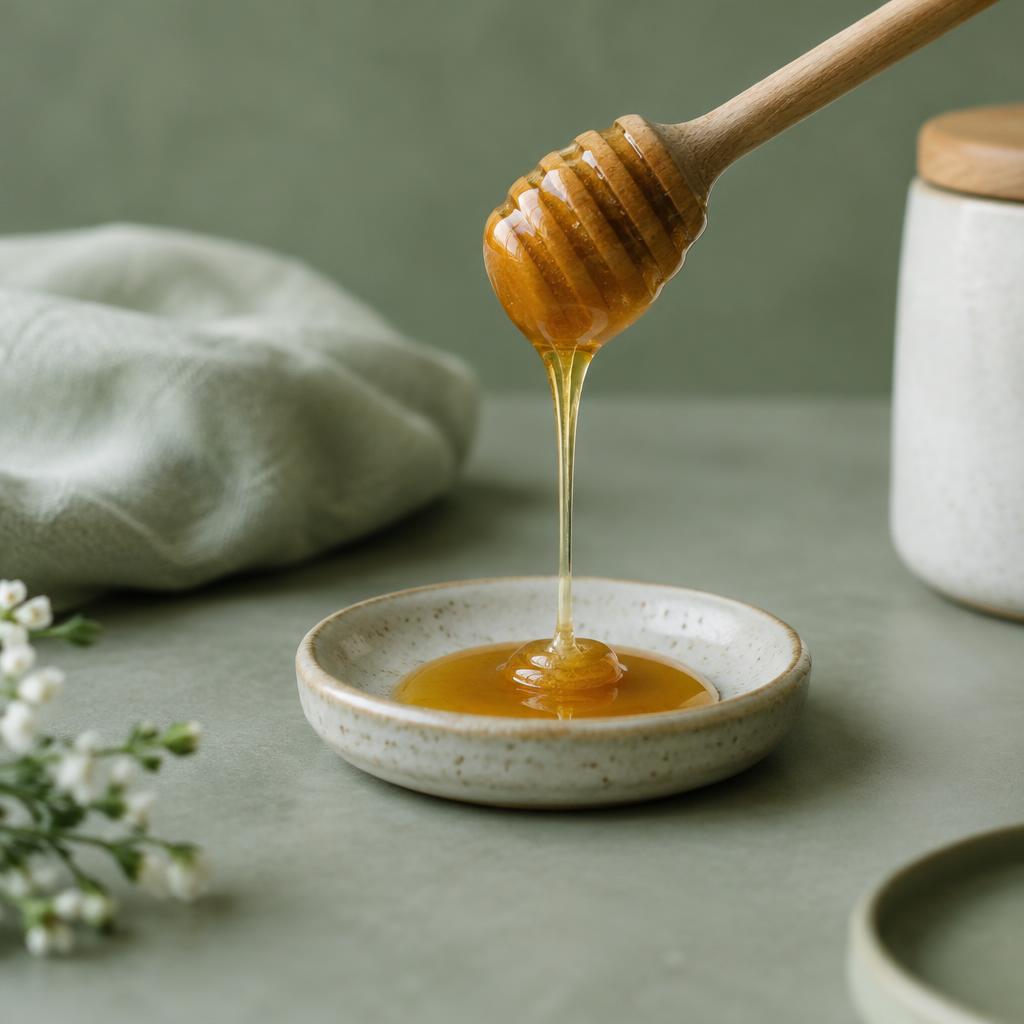
Honey has a long folk-medicine history, and some of it holds up. It contains trace antioxidants, enzymes and small amounts of vitamins and minerals, and its soothing effect on a scratchy throat is real, which is why some owners offer a little when a dog has a mild, occasional cough. Manuka honey in particular has well-documented antibacterial properties and is used in veterinary wound care, though that is a treatment for the vet to direct, not a reason to add it to the bowl.
The popular claim that local honey cures hay fever in dogs is much shakier. The theory is that trace local pollen desensitises the dog, but there is no solid evidence it works, and most seasonal allergy in dogs is driven by pollens that bees do not even collect. If your dog has allergies, our guide to dog allergies covers what actually helps.
The sugar problem
A teaspoon of honey is about six grams of sugar, and dogs have no nutritional need for any of it. Sugar contributes to weight gain, feeds the bacteria behind dental disease, and spikes blood glucose. For a healthy dog at a healthy weight, an occasional half teaspoon is a rounding error. For a dog who is overweight, diabetic, or prone to dental problems, honey is simply the wrong treat.
This is also why honey should never become a daily habit or a vehicle for every tablet. If you use a smear of honey to give medication, that is fine occasionally, but ask your vet about lower-sugar alternatives if it becomes routine.
Puppies and raw honey: the botulism caution
Raw honey can carry spores of Clostridium botulinum, the bacterium behind botulism. An adult dog's mature gut handles these spores without trouble, which is why honey is safe for healthy adults. A puppy's digestive system is not mature enough to be so casual, which is why the standard advice mirrors the advice for human babies: no honey for the very young.
The practical line: skip honey entirely until your dog is fully grown. If a puppy has already licked a little honey, do not panic, one lick is very unlikely to cause harm, but watch for unusual weakness, wobbliness or tummy upset and call the vet if anything seems off.

Manuka honey and wound care
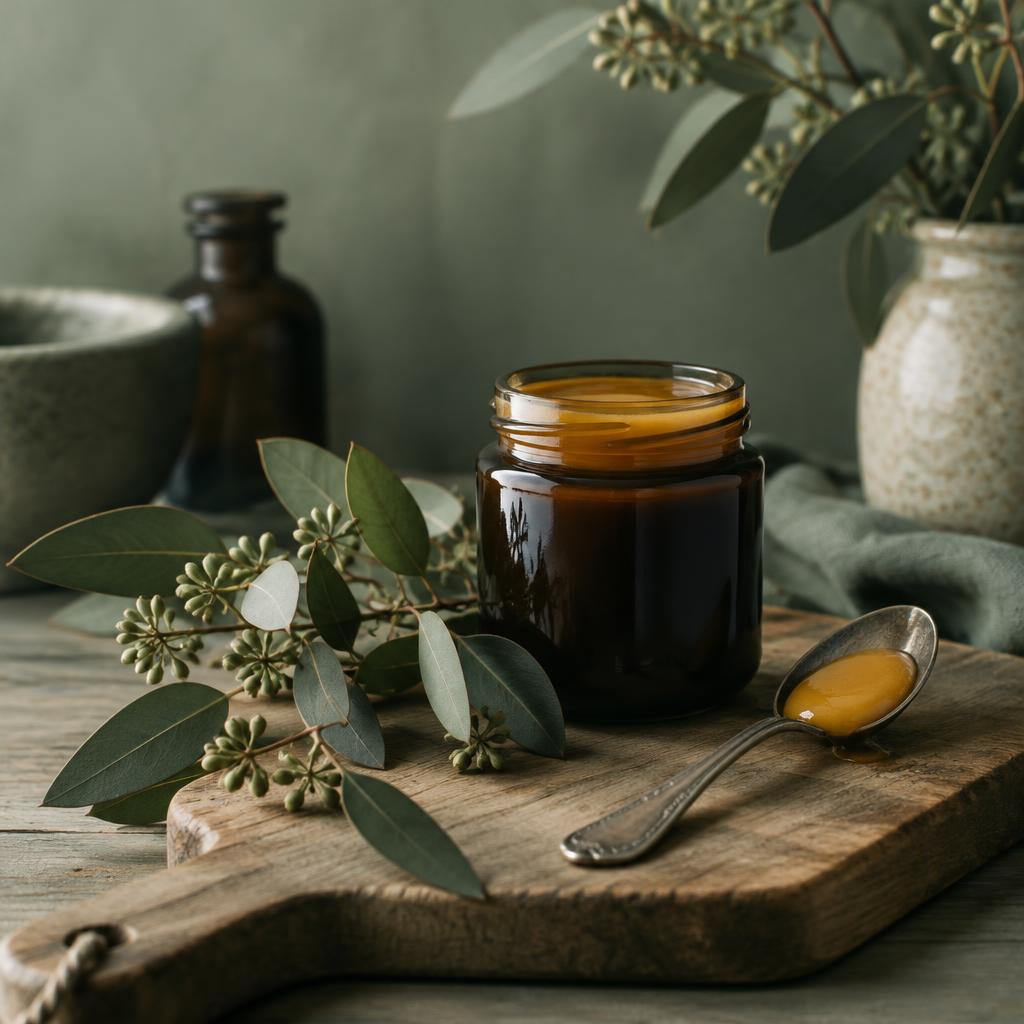
Medical-grade manuka honey is genuinely used in veterinary practice for wounds, because it is antibacterial, keeps wounds moist and can help healing. The important words are medical-grade and veterinary direction. The jar in your cupboard is not sterile wound dressing, and a dog left alone with honey on a wound will simply lick it off, which introduces bacteria and delays healing.
If your dog has a wound, the right move is a vet visit, not the honey jar. If your vet does prescribe a honey-based dressing, follow their instructions exactly, and expect a buster collar to be part of the plan.
How much honey can a dog eat?
Honey portions are measured in fractions of a teaspoon, and always inside the 10% treat allowance:
| Dog size | Honey serving |
|---|---|
| --- | --- |
| Toy (under 5 kg) | A quarter of a teaspoon |
| Small (5 to 10 kg) | Half a teaspoon |
| Medium (10 to 25 kg) | Half to one teaspoon |
| Large (25 to 40 kg) | One teaspoon |
| Giant (over 40 kg) | Up to a tablespoon |
These are occasional servings, a few times a week at most, not daily additions. If you are weighing up treats against your dog's daily calories, our portion calculator shows how quickly sweet extras add up.
Interactive tool
Honey serving checker
Dog size and your dog's situation, in. Serving guidance, out.
Your plan
- For a medium dog, a serving is about half to one teaspoon, and not every day.
- Honey is sugar: count it inside the 10% treat allowance and keep it occasional.
- A little honey can soothe a mildly scratchy throat, but a persistent cough needs a vet, not a remedy.
- Choose plain pasteurised honey; skip anything blended with xylitol or other sweeteners.
A small taste is fine for a healthy adult
Honey is safe in small amounts for healthy adult dogs, but it is still sugar, and puppies, diabetic and overweight dogs should skip it.
How to serve honey safely
- 1Choose plain, pasteurised honey with no added sweeteners; check the label for xylitol, which is toxic.
- 2Measure it: a dipper straight from the jar delivers far more than a teaspoon.
- 3Offer it on a spoon, a lick mat, or drizzled over their usual food, never straight from a jar the dog can knock over.
- 4Keep it occasional, and skip it on days when other treats have already happened.
- 5Store the jar somewhere a counter-surfer cannot reach; a whole jar raid means a very sick dog.
Dogs that should skip honey
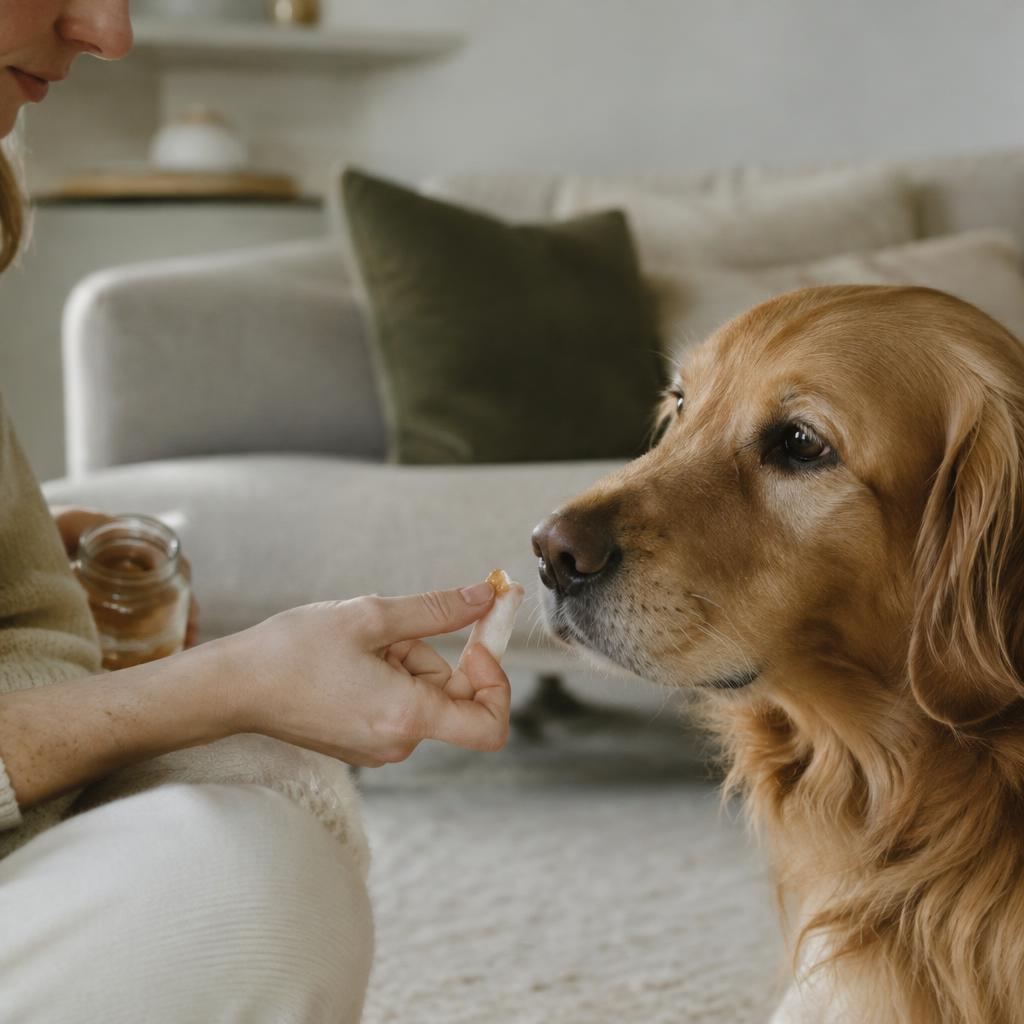
Three groups should not have honey at all. Puppies, because of the botulism spore risk in raw honey. Diabetic dogs, because honey spikes blood glucose exactly as you would expect from liquid sugar. And overweight dogs, because empty sugar calories are the last thing a diet plan needs. Dogs with dental disease should also avoid it, since sugar feeds the bacteria driving the problem. If your dog falls into any of these groups and you need a sweet vehicle for medication, ask your vet for alternatives.
Honey for a cough: does it help?
A little honey can soothe a mildly irritated throat, and many owners find it takes the edge off an occasional dry cough. What it cannot do is treat the cause. A cough that lasts more than a few days, comes with other signs, or sounds like a honk needs a vet, not a remedy, because kennel cough, heart disease and airway problems all announce themselves through coughing. Our guide to dog coughing helps you read the sound.
Honey on a lick mat and other sensible uses
If you want honey to earn its place, use it as an enrichment tool rather than a snack. A thin smear across a lick mat, perhaps with a little of your dog's usual wet food, turns a quarter teaspoon into ten minutes of calm licking, which is genuinely soothing for anxious dogs. A tiny smear can also hide a tablet for a dog who spits out every other disguise. Used this way, honey is a means to an end, and the sugar load stays trivial.
What honey should not become is a daily drizzle over breakfast. Dogs do not need sweetening up, and a dog that expects sweet food can start turning its nose up at the balanced diet it actually needs.
Choosing a honey
For dogs, plain pasteurised honey from a supermarket is perfectly adequate; there is no need to buy anything fancy. The two things to check on the label are the ingredients list, which should say honey and nothing else, and the absence of added sweeteners, particularly xylitol, which appears in some blended or reduced-sugar products and is toxic to dogs. Raw honey is fine for healthy adults but best avoided for seniors with weaker immune systems, and as covered above, never for puppies.
When to see a vet
Call the vet if your dog has eaten a large amount of honey (a jar raid), if the honey contained xylitol or other sweeteners, or if a puppy seems unwell after eating raw honey. Book a routine appointment if you are relying on honey for a cough that will not go away, or if you want to discuss safe treat options for a diabetic or overweight dog.
A quick word on teeth
Sugar is sugar wherever it lands, and honey is no kinder to canine teeth than any other sweet food. If your dog does enjoy the occasional taste, it is one more reason to keep up with tooth brushing, since sugar feeds the bacteria behind plaque and gum disease. Our guide to dog dental care covers a realistic routine.
The bottom line
Honey is one of the few sweet human foods that is genuinely safe for dogs, but safe does not mean free. It is sugar, portions are measured in fractions of a teaspoon, and puppies, diabetic and overweight dogs should skip it entirely. For a healthy adult dog, an occasional small taste is a perfectly nice thing. For everything else, from allergies to wounds to coughs, the jar is not the answer. For more safe sharing ideas, see our guides to peanut butter for dogs and fruit dogs can eat.
Frequently asked questions
Can dogs eat honey safely?
Yes, healthy adult dogs can eat small amounts of plain honey safely. It is not toxic, but it is almost pure sugar, so servings stay tiny and occasional.
How much honey can I give my dog?
From a quarter of a teaspoon for a toy dog up to a tablespoon for a giant breed, a few times a week at most, and always inside the 10% treat allowance.
Can puppies have honey?
No. Raw honey can carry botulism spores that a puppy's immature gut cannot handle. Skip honey until your dog is fully grown.
Is honey good for a dog's cough?
A little honey can soothe a mildly irritated throat, but it does not treat the cause. A cough that persists, worsens or comes with other signs needs a vet.
Can diabetic dogs have honey?
No. Honey is liquid sugar and spikes blood glucose. Diabetic dogs should avoid it unless your vet has specifically said otherwise.
Is manuka honey better for dogs?
Manuka honey has well-documented antibacterial properties and is used in veterinary wound care, but that is a vet-directed treatment. For eating, it is still sugar, with the same portion rules as any honey.
Sources
- American Kennel Club, Can Dogs Eat Honey?, akc.org
- VCA Animal Hospitals, Human Foods to Avoid for Pets, vcahospitals.com
- Pet Poison Helpline, Xylitol, petpoisonhelpline.com
- PDSA, Foods your dog should avoid, pdsa.org.uk
- Merck Veterinary Manual, Diabetes Mellitus in Dogs, merckvetmanual.com
Questions people actually ask
Can dogs eat honey safely?
Yes, healthy adult dogs can eat small amounts of plain honey safely. It is not toxic, but it is almost pure sugar, so servings stay tiny and occasional.
How much honey can I give my dog?
From a quarter of a teaspoon for a toy dog up to a tablespoon for a giant breed, a few times a week at most, and always inside the 10% treat allowance.
Can puppies have honey?
No. Raw honey can carry botulism spores that a puppy's immature gut cannot handle. Skip honey until your dog is fully grown.
Is honey good for a dog's cough?
A little honey can soothe a mildly irritated throat, but it does not treat the cause. A cough that persists, worsens or comes with other signs needs a vet.
Can diabetic dogs have honey?
No. Honey is liquid sugar and spikes blood glucose. Diabetic dogs should avoid it unless your vet has specifically said otherwise.
Is manuka honey better for dogs?
Manuka honey has well-documented antibacterial properties and is used in veterinary wound care, but that is a vet-directed treatment. For eating, it is still sugar, with the same portion rules as any honey.
Sources
Breeds mentioned


Put it into practice
Read next
Can Dogs Eat Oatmeal? Cooked, Raw and Flavoured
Plain oatmeal cooked in water is safe for dogs in small servings and its soluble fibre can help mild diarrhoea. Avoid flavoured sachets, raw oats and porridge made with milk or sugar.