
Dog Coughing: Causes, Sounds and When to Worry
Most coughs are minor and pass on their own. The sound, the timing and what else is going on tell you which ones are not.
The SniffScroll desk
Published 10 October 2026
Dr Emma Whitfield, BVSc MRCVS
The short version
- A dry, honking cough that worsens with excitement or lead pressure is the classic kennel cough or windpipe sound.
- A wet, productive cough suggests fluid or infection in the lungs and deserves a prompt appointment.
- Coughing mainly at night or when lying down can be heart-related, especially in older dogs.
- Any cough lasting beyond two weeks, or paired with low energy, fast breathing or pale gums, needs a vet.
- Film an episode on your phone: the sound is the most useful thing you can bring to the consultation.
First, listen to the cough
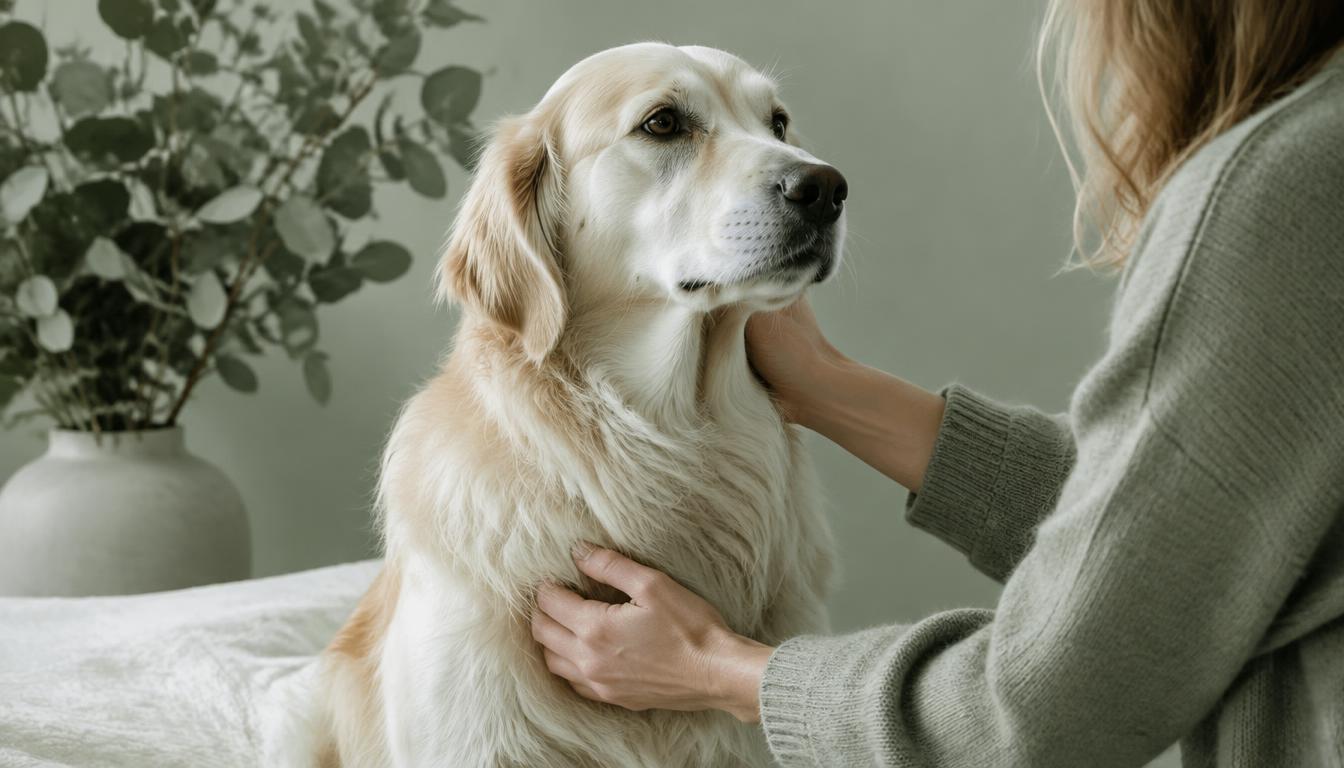
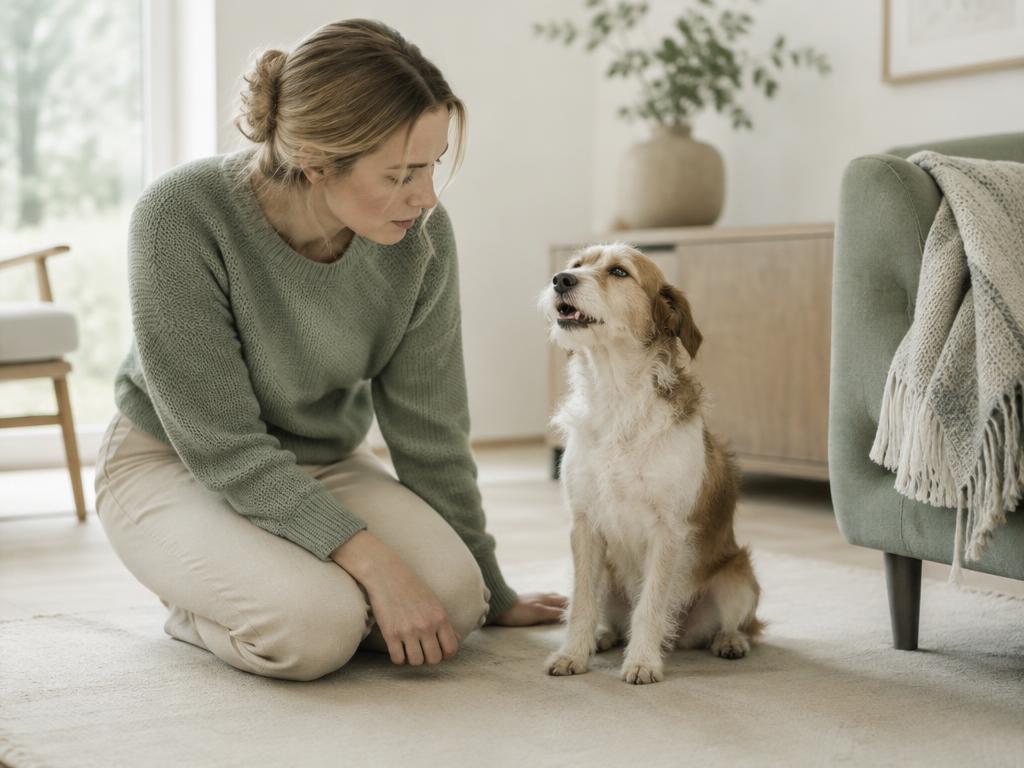
The single most useful thing you can do with a coughing dog is listen properly, because the sound itself narrows the causes dramatically. Vets think in sounds: a dry honk, a wet rattle, a soft hack and a cough that ends in a gag each point somewhere different.
Before you do anything else, film an episode on your phone. Coughs have a habit of vanishing in the consulting room, and a ten-second video gives your vet more information than ten minutes of description. Note when it happens too: excitement, night-time, after drinking, on the lead.
The main causes, sound by sound
Most canine coughs come from a short list of causes, and each has a recognisable signature.
| Sound | Likely cause | Typical company |
|---|---|---|
| --- | --- | --- |
| Dry goose honk | Kennel cough, collapsing windpipe | Otherwise bright, worse with excitement or lead pressure |
| Wet and productive | Pneumonia, fluid on the lungs | Low energy, fast breathing, off food |
| Soft night cough | Heart disease, post-nasal drip | Older dogs, worse lying down |
| Cough ending in a gag | Throat or airway irritation | Retching, foam, eating grass |
| Occasional single cough | Dust, a crumb, a tickle | Nothing else at all |
Kennel cough is the most common by far: a harsh, dry honk in a dog who is otherwise completely well, usually picked up where dogs mix. Most cases clear on their own in one to two weeks. Collapsing windpipe produces a similar honk, but in small breeds such as the Chihuahua and Yorkshire Terrier, and it does not clear: it is a structural problem that needs managing. Heart disease, particularly in older Cavalier King Charles Spaniels, tends to cough at night. Pneumonia coughs wet, and the dog is properly ill with it.
When the timing is the clue
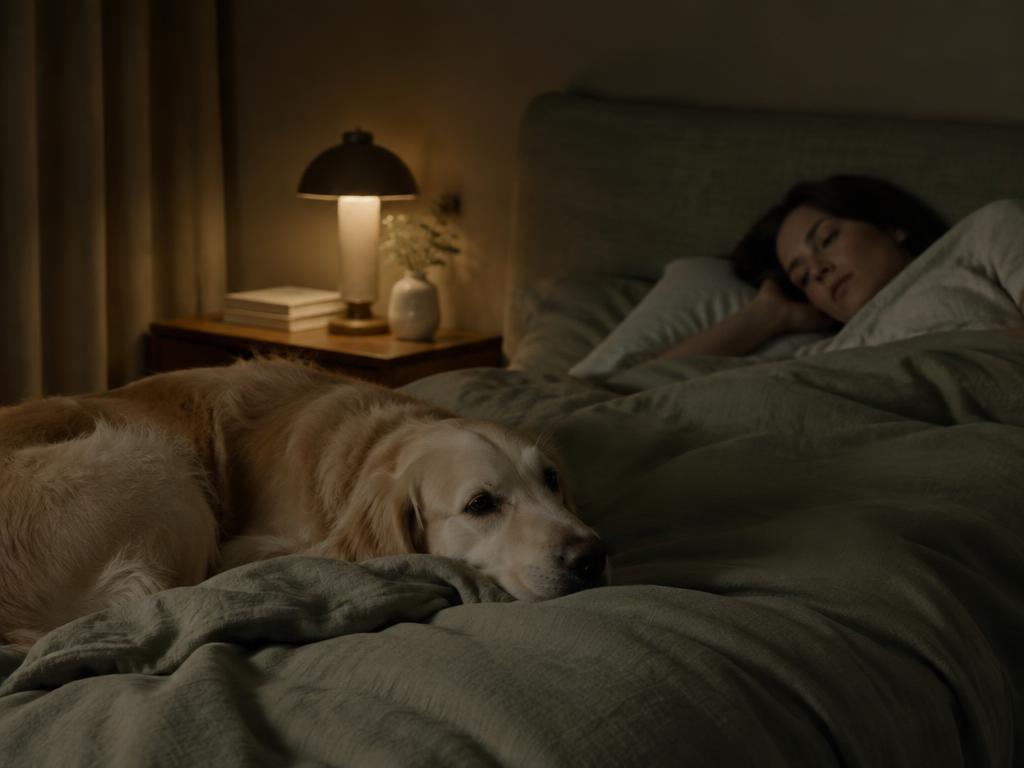
A cough that appears mainly at night or first thing in the morning deserves special attention. When a dog lies flat, fluid redistributes, and a heart that is starting to struggle lets a little fluid collect where it irritates the airway. The result is a soft, recurring cough in a dog who seems fine by day.
Excitement and exercise tell a different story. A cough triggered by the lead, greeting or play points at the windpipe itself, either inflamed from infection or narrowing with age. Switching from a collar to a harness is a genuinely useful first move here, because it removes pressure from exactly the wrong spot.
Contagion and the social calendar
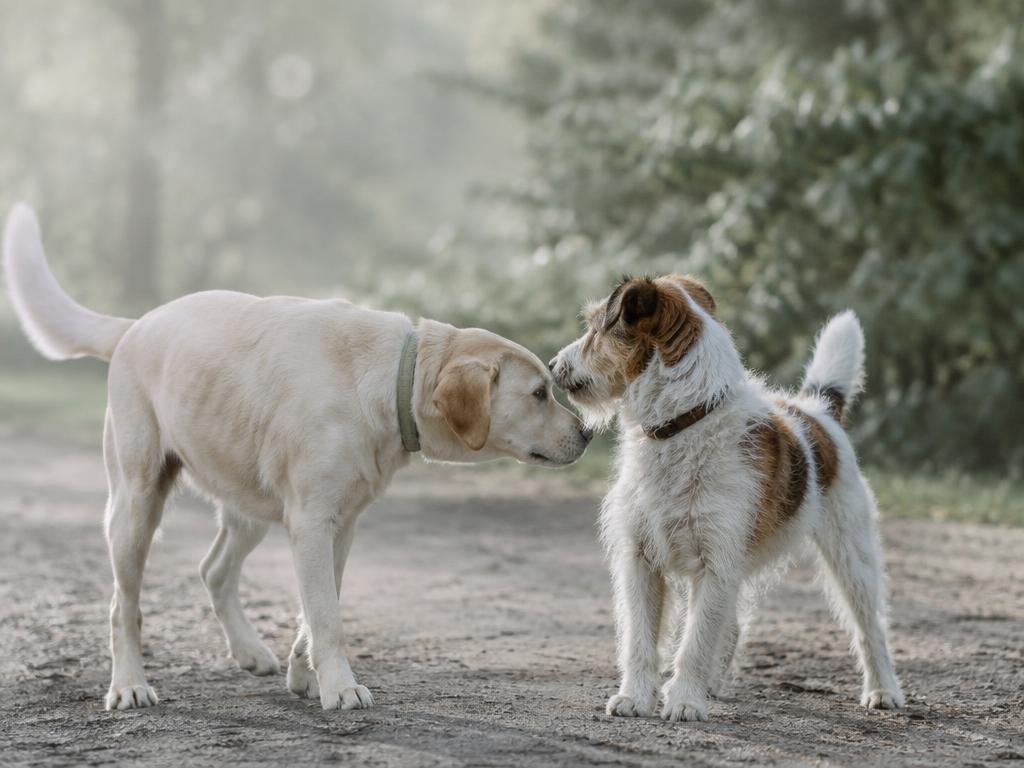
The commonest coughs are social diseases, picked up where dogs meet: training classes, day care, boarding kennels, busy parks, even a friendly nose-to-nose on a walk. This cuts both ways. A dog who has been somewhere sociable in the past two weeks and now coughs has a likely explanation, and a coughing dog owes other dogs a fortnight of distance. Most infectious coughs spread easily for days after the dog sounds better, so the all-clear is two weeks from the last cough, not the first quiet day.
This is worth handling with some tact and no drama. Tell the day care or the walker, skip the class, and walk at quieter times. Owners who do this are the reason kennel cough outbreaks burn out instead of rolling through a whole neighbourhood. If your dog was due to board, call the kennel early; most would rather rearrange than host an outbreak, and several require the kennel cough vaccine for exactly this reason.
Home care for a simple cough
For a bright, eating, otherwise normal dog with a recent dry cough, sensible home care is reasonable for a few days:
- 1Rest and shorten walks; excitement and exertion trigger coughing fits.
- 2Swap the collar for a harness to take pressure off the windpipe.
- 3Keep your dog away from other dogs for at least two weeks, as the common causes are contagious.
- 4Run a humidifier or sit with your dog in a steamy bathroom to soothe the airway.
- 5Keep water available and tempt with wet food if the throat seems sore.
- 6Track it: note how many fits a day, and whether the trend is up or down.
Do not reach for human cough medicine. Several are toxic to dogs, and suppressing a cough that is clearing infection does more harm than good. If your dog is uncomfortable enough to need medicine, that is a vet conversation, and there are safe options they can prescribe.
A cough you can explain is a cough you can manage. The video on your phone is worth a thousand descriptions.
The two-week rule and the tracking habit
Most simple coughs follow a predictable arc: worst in the first few days, then a steady fade over one to two weeks. This gives you a practical rule. A cough that is clearly improving can be watched at home; a cough that is static after a week, or still present at two, has stopped behaving like a simple one. Improvement is the permission to wait, not the calendar alone.
Tracking makes this easy. Each evening, note roughly how many coughing fits the day held and what triggered them. Three lines in a phone note is enough. When you can show a vet that the cough peaked on day two and has halved since, or that it has quietly doubled over a fortnight, you have done half the diagnostic work before anyone listens to a chest. The same habit pays off across every recurring symptom a dog ever gives you, from scratching to stomach upsets.
When to see a vet
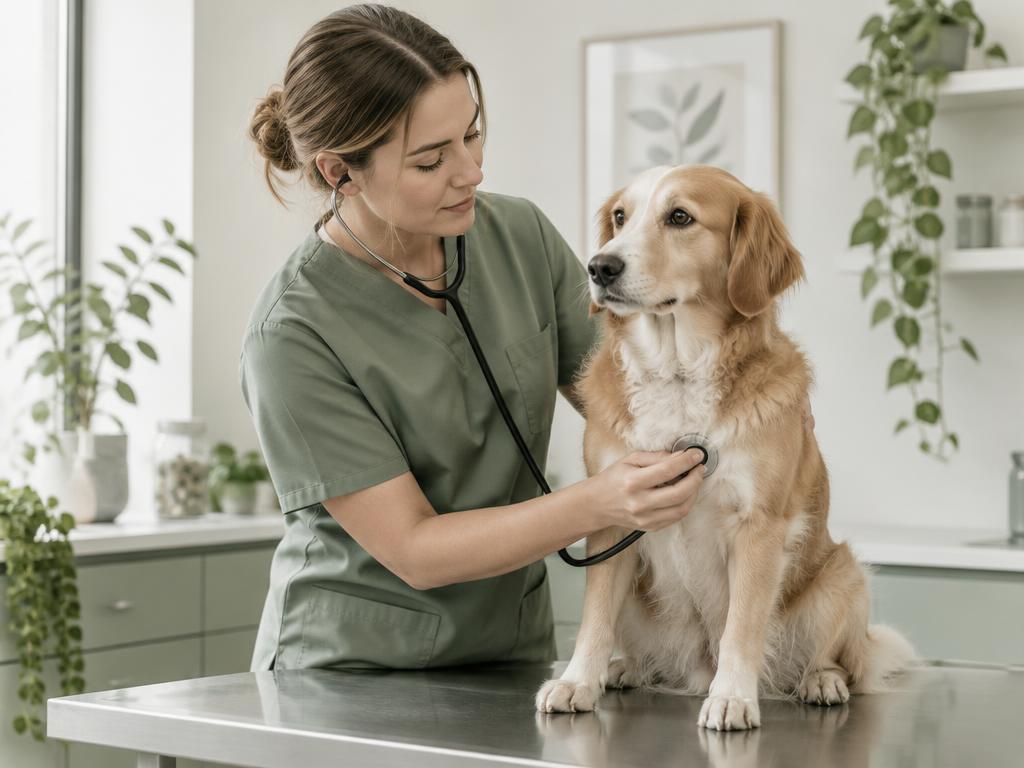
Book promptly, within a day or two, if the cough is wet or productive, if your dog is lethargic or off food, if breathing is fast or effortful between coughing fits, or if the cough has lasted beyond two weeks. Go the same day if the gums look pale, blue or grey, if breathing is laboured at rest, or if your dog seems distressed.
Very rarely, a sudden violent coughing fit in a previously fine dog means something is stuck in the throat. If your dog is pawing at the mouth, drooling and cannot settle, treat it as an emergency.
Interactive · cough sorter
What kind of cough is it?
Describe the sound, the timing and how long it has been going on. We will suggest how urgently to act and what to tell the vet.
What to do
- Film a coughing episode on your phone; the sound is the single most useful thing you can bring to the vet.
- Keep your dog away from other dogs until you know what you are dealing with; several causes are contagious.
- A dry honk, worse on the lead or when excited, fits kennel cough or a collapsing windpipe; use a harness, not a collar, until checked.
A goose-honk cough points to the airway
Most coughs are minor and self-limiting, but the sound, the timing and the company it keeps tell you which ones are not.
Puppies, seniors and flat faces: who coughs differently
Age and shape change what a cough means. Puppies cough mostly because they meet the world mouth-first and mix with other dogs before their vaccinations are complete, so a puppy cough is usually infectious, and usually simple. The exception is the puppy who coughs and is also dull, off food or breathing fast: young dogs decline quicker than adults, and that combination deserves a same-day call.
Senior dogs flip the odds. In a dog over eight, a new persistent cough is more likely to be heart or lung disease than infection, and the night-time pattern matters most. This is the age group where the film-it-and-book-it approach pays best, because early heart disease is managed far more successfully than late heart disease.
Flat-faced breeds live with noisy airways at the best of times, which makes a real cough easy to miss against the background snorting. In these dogs, watch for change rather than sound: a cough that is new, a noise that is different, or breathing effort that is worse than their usual. Their margin for error is smaller, so the threshold for a check is lower.
The questions your vet will ask
Arriving with answers ready turns a fifteen-minute appointment into a useful one. Expect to be asked when the cough started, whether it is getting better, worse or staying the same, what it sounds like, when it happens, whether your dog is eating and playing normally, and whether they have mixed with other dogs recently. The video covers the sound; a rough diary covers the rest. If your dog is on any medication, bring the names, because some drugs cause coughing as a side effect and that changes the whole picture.
Your vet will listen to the heart and lungs, feel the windpipe, check the throat and take a temperature. From there, the common next steps are a trial of treatment for a simple infectious cough, or chest X-rays and blood tests if the picture suggests something deeper. A cough that needs investigating is not a failure of home care; it is the system working as it should.
Protecting the next cough season
If your dog mixes with others, at day care, training classes or boarding, the kennel cough vaccine is worth discussing with your vet. It does not prevent every case, but it softens the commonest one. Keeping your dog at a healthy weight matters more than most people expect: extra weight presses on the airway and makes every cough work harder. Our ideal weight tool can tell you where your dog sits.
Living with a dog who coughs
Once a cause is known, most coughs become a management story rather than a worry. The dog with a collapsing windpipe gets a harness, a healthy weight and an owner who knows the difference between their everyday honk and a bad day. The dog with a heart murmur gets medication, a resting-breathing routine and check-ups that catch change early. The dog who had kennel cough gets a note in the calendar before the next boarding stay.
What all of these have in common is that the owner who noticed early did the heavy lifting. Coughs are loud, frequent and impossible to ignore, which makes them one of the kindest symptoms a dog can have: they rarely hide. Trust what you hear, film it, track it, and let the sound guide the speed of your response. Most of the time the answer is rest and a harness. When it is not, you will have arrived at the vet with exactly the evidence that shortens the road to treatment.
Questions people actually ask
Why is my dog coughing and gagging?
Coughing that ends in a gag or retch is typical of throat and airway irritation, including kennel cough. The gag is the airway clearing itself. If it is frequent, produces foam, or comes with breathing effort, see a vet.
What does kennel cough sound like?
A dry, forceful honk, often compared to a goose. It is usually triggered by excitement, exercise or pressure on the neck, and dogs with it are typically otherwise bright and well.
Why does my dog cough at night?
Night-time coughing, especially in older dogs, can point to heart disease, because fluid shifts when the body lies flat. It can also be post-nasal drip or a collapsing windpipe. Mention the timing to your vet; it is a strong clue.
Can I give my dog cough medicine?
No. Human cough medicines can be dangerous for dogs, and suppressing a productive cough can do harm. Your vet can prescribe something safe if it is genuinely needed.
How long is too long for a dog cough?
A simple infectious cough should improve within one to two weeks. Anything persisting beyond two weeks, slowly worsening, or returning repeatedly needs a proper workup.
Is a dog cough contagious to humans?
Almost never. The common causes of canine cough do not infect people. Kennel cough is, however, very contagious to other dogs, so keep your dog away from others until it clears.
Sources
Breeds mentioned

Cavalier King Charles Spaniel
An affectionate, adaptable toy spaniel that thrives on human company above almost anything else.

Chihuahua
A tiny, big-hearted toy breed that needs careful handling, dental care and protection from the cold.

Yorkshire Terrier
A spirited, confident toy terrier with a big personality and a high maintenance coat.

Pug
A charming, people loving companion whose flat face demands honest, careful ownership.
Put it into practice
Read next
Dog Dry Heaving: Causes and When It Is an Emergency
Dog dry heaving is usually throat irritation or mild nausea, but repeated unproductive retching with a swollen, tight belly can be bloat (GDV), a life-threatening emergency.


