Can Dogs Eat Grapes? Why Even One Is an Emergency
No. Grapes and raisins are toxic to dogs at any dose, and there is no known safe amount. If your dog has eaten even one, call the vet now.
The SniffScroll desk
Published 11 October 2026

Reviewed by the SniffScroll editorial team
The short version
- Dogs must never eat grapes, raisins, sultanas or currants: they are toxic at any dose.
- There is no known safe amount. Some dogs have developed kidney injury after very few.
- If your dog eats even one grape, phone the vet or an animal poison line immediately. Do not wait for signs.
- Do not try to make your dog sick at home. The vet can do it safely if it is still worthwhile.
- Early treatment, ideally within two hours, gives the best chance of a full recovery.
Can dogs eat grapes?
No. Dogs must never eat grapes, raisins, sultanas or currants in any quantity. These fruits are toxic to dogs and can cause acute kidney injury, and there is no known safe amount. Some dogs have become seriously ill after eating only one or two, while others have eaten more with milder effects, and there is no way to predict which dog is which.
This is the one food question on this site where the answer is not about portions. It sits at the top of our toxic foods list alongside chocolate, and the response is the same: treat every exposure as an emergency.
If your dog has just eaten a grape, do this now
- 1Phone your vet, the nearest out-of-hours vet or an animal poison line immediately. Do this even for a single grape.
- 2Do not wait for signs of illness. By the time vomiting and lethargy appear, the toxin is already absorbed.
- 3Do not try to make your dog sick at home. Salt, mustard and hydrogen peroxide cause their own harms. The vet can empty the stomach safely if it is still worthwhile.
- 4Note what was eaten, roughly how much, and when. For baked goods, keep the packaging: fruit cakes and mince pies can also contain chocolate or xylitol.
- 5Remove any remaining grapes, raisins or dried fruit from reach.

Why are grapes so dangerous?
The leading explanation is tartaric acid, which grapes contain at levels dogs appear unable to process safely. The concentration varies between grape varieties, ripeness and growing conditions, and individual dogs vary enormously in sensitivity. That combination, an unpredictable toxin and an unpredictable patient, is exactly why vets treat every exposure the same way.
The target organ is the kidney. In susceptible dogs the toxin damages the kidney tubules, and without treatment this can progress to kidney failure over 24 to 72 hours. The encouraging part is that dogs treated early, before signs develop, usually recover completely.
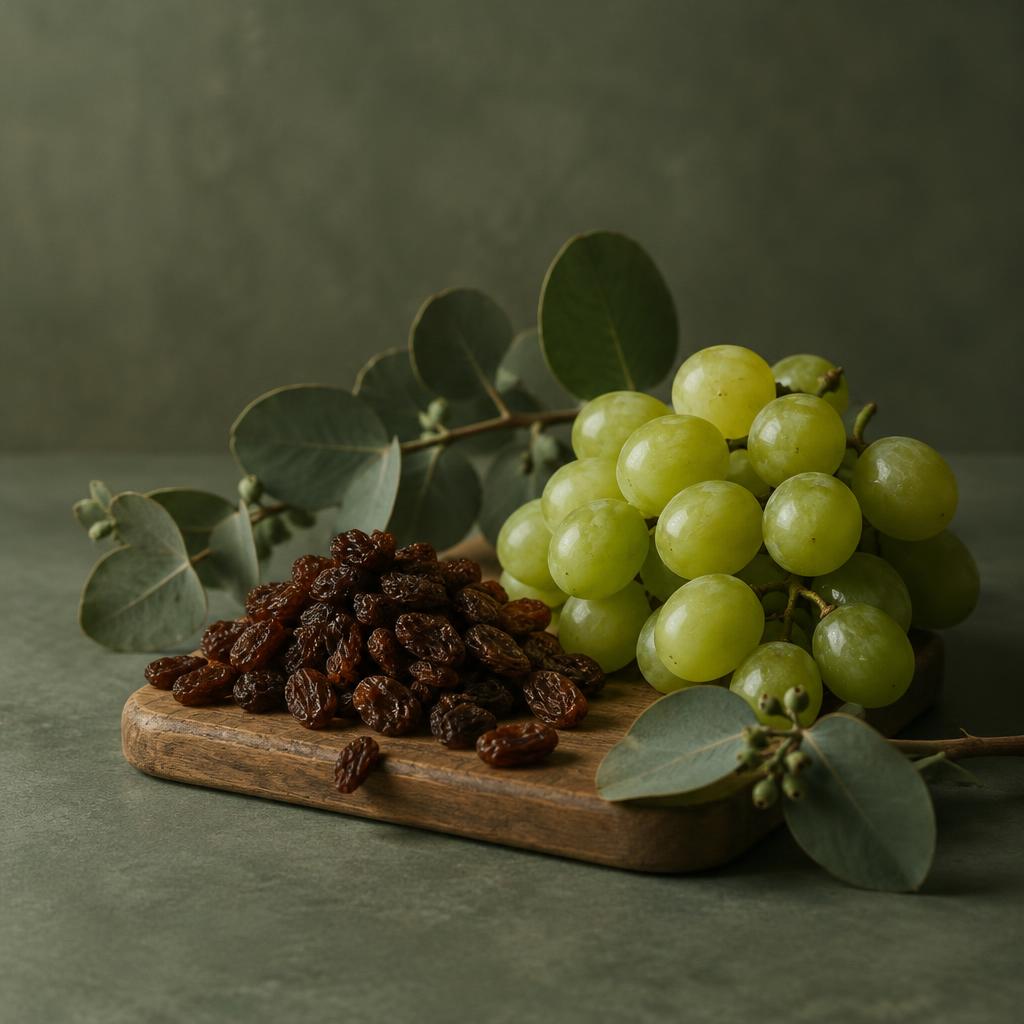
Grapes, raisins and the foods that hide them
| Food | Risk | Note |
|---|---|---|
| --- | --- | --- |
| Fresh grapes, any colour | Toxic | Seedless are just as dangerous |
| Raisins, sultanas, currants | Toxic, concentrated | A small handful is a big dose |
| Fruit cake, hot cross buns, mince pies | Toxic | May also contain chocolate, nuts or xylitol |
| Muesli, trail mix, fruit bars | Toxic | Easy to drop, easy for a dog to hoover |
| Grape juice and wine | Toxic | The toxin survives juicing and fermentation |
| Grape leaves | Avoid | Not well studied; not worth the risk |
What are the signs of grape poisoning?
Vomiting within a few hours is the most common first sign, sometimes with pieces of grape visible. Over the following one to three days, susceptible dogs can develop diarrhoea, marked lethargy, refusal to eat, a painful belly, and changes in drinking and urination: either much more or, ominously, much less. Weakness and trembling can follow.
The cruel detail is that a dog can seem fine for a day while the kidneys are being damaged. That is why the advice is always to call before signs appear, not after.
What will the vet do?
Seen within about two hours, the vet will usually induce vomiting and give activated charcoal to bind what remains in the gut. After that window, or where the amount is significant, the mainstay is intravenous fluids for 48 hours to support the kidneys, plus blood tests to track kidney values. Most dogs treated promptly go home well. Dogs that only present once signs are established need longer, more intensive care, and some do not fully recover.

Prevention at home
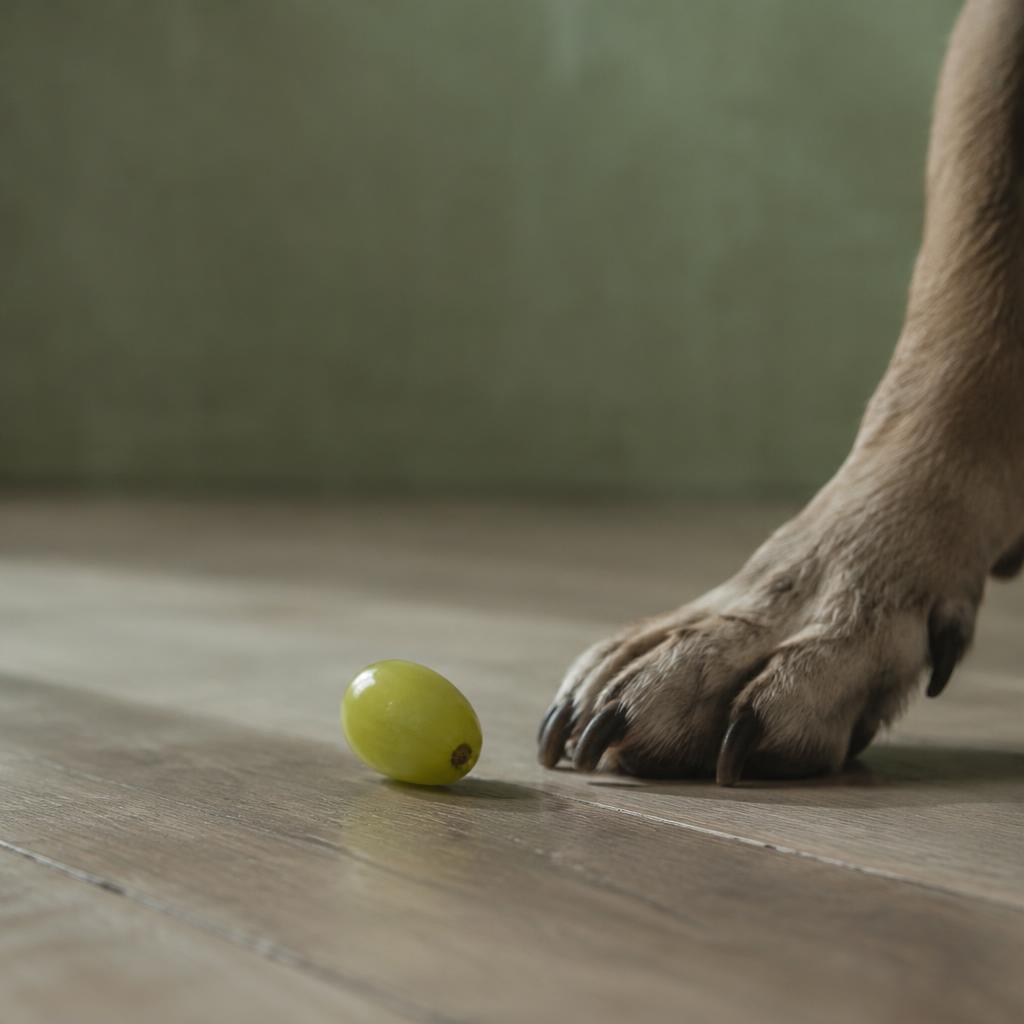
Grape poisonings are usually household accidents: a dropped grape under the table, a child sharing a snack box, a fruit bowl within nose height, a slice of fruit cake left on a low table. A few habits prevent nearly all of them:
- Store grapes and dried fruit in the fridge or a closed cupboard, never in an open fruit bowl at dog height.
- Bin grape stems and spoiled fruit straight into a lidded bin.
- Teach children that grapes and raisins are dog poison, not dog treats.
- Check ingredient lists on cereals, snack bars and baked goods before sharing crumbs.
- At Christmas, treat mince pies, Christmas pudding and stollen like medication: high up, never unattended.
Food-motivated breeds such as Labradors, Beagles and Cocker Spaniels are the most likely to find the one grape you dropped, so these households should be the strictest.
With grapes there is no portion size, no safe variety and no wait-and-see. One phone call, made early, is what protects your dog.
How much is too much? Why there is no number
Owners understandably want a threshold: how many grapes are dangerous? The honest answer is that veterinary science cannot give one. Reported cases range from dogs that ate a kilogram of grapes with no lasting harm to dogs that developed kidney injury after a small handful of raisins. Because the toxin level varies between grapes and the sensitivity varies between dogs, any "safe number" would be a guess dressed up as reassurance. That is why every veterinary body gives the same advice: treat any exposure, however small, as worth a phone call.
What we can say is that raisins, sultanas and currants deliver more toxin per mouthful than fresh grapes, because drying concentrates everything in the fruit. A small box of raisins is a far bigger dose than a small bunch of grapes.
The timeline of a grape poisoning
Knowing the typical sequence helps explain the urgency. In the first few hours, many dogs vomit, and you may see pieces of grape in the vomit. Through the first day, dogs often seem to recover: the vomiting settles and they brighten up. This is the dangerous lull. Behind the scenes, in susceptible dogs, kidney damage is progressing. Between 24 and 72 hours, the signs return harder: marked lethargy, refusal to eat, abdominal pain, and changes in urination, either far more or, worse, far less.
Treatment started in the first window, before signs, is short and usually completely successful. Treatment started in the last window is intensive, expensive and sometimes unsuccessful. The phone call you make in hour one is what keeps you in the first window.
Grape safety in a family kitchen
Most grape poisonings are ordinary domestic accidents, so ordinary domestic habits prevent them. Grapes go in the fridge, not a fruit bowl. Raisins and sultanas live in a closed cupboard, and the baking shelf is the riskiest shelf in the house during December. Children old enough to snack are old enough to learn the rule that grapes and raisins are never for the dog, and lunchboxes with raisin packs should be unpacked at the table, not on the floor. When fruit cake, stollen or mince pies are out, the dog is out of the room or the plate is out of reach. None of this requires vigilance heroics; it just requires the fruit to live behind a door.
What to tell the vet when you call
A calm, quick summary gets you the fastest useful advice. Have ready: your dog's weight, what was eaten and in what form (fresh grapes, raisins, or a baked product), roughly how much, and when. Mention anything else the product contained, because fruit cakes can add chocolate, macadamias or xylitol to the problem. Then follow the vet's instruction exactly, including if they say to come straight in.
The dogs most at risk
Any dog can be poisoned by grapes, but the exposure patterns are predictable. Food-motivated breeds top the list simply because they eat first and ask never: Labradors, Beagles and spaniels are the classic presenters at out-of-hours clinics. Small dogs face a double problem, because a single raisin is a bigger dose per kilogram for a 4 kg dog than for a 30 kg dog, and because they are often closest to the floor where food falls. Puppies are at risk for the same reason, compounded by the fact that they sample everything.
The other high-risk group is dogs in multi-generational or busy households, where grandparents offer "just one" and children drop snacks. If your household includes anyone who might not know the rule, tell them plainly: grapes and raisins are poison to dogs, full stop. A note on the fridge sounds dramatic until the first December when a mince pie goes missing.
After the emergency: what recovery looks like
For dogs treated early, recovery is usually uneventful. Most go home after 24 to 48 hours on fluids, with follow-up blood tests to confirm kidney values are normal. Your vet may suggest a bland diet for a few days and a recheck appointment. Dogs that developed kidney injury before treatment may need longer care and, in some cases, ongoing monitoring of kidney function.
The episode is also worth turning into a permanent household upgrade: grapes and dried fruit stored behind closed doors, a lidded bin, children briefed, and the poison line number saved in your phone. One frightening afternoon is a cheap teacher; the second one is avoidable.
A household checklist for grape safety
Work through these once and the risk drops to near zero:
- Grapes live in the fridge, never in an open fruit bowl.
- Raisins, sultanas and currants live in a closed cupboard.
- The kitchen bin has a lid the dog cannot open.
- Children know the rule: grapes and raisins are never for the dog.
- Guests and grandparents have been told the same rule.
- Christmas baking, mince pies, stollen, Christmas pudding, is never left unattended at dog height.
- The number for your vet and an out-of-hours or poison line is saved in your phone.
None of these is burdensome, and together they cover the routes by which nearly every grape poisoning happens.
Common myths that cost dogs time
Three myths come up repeatedly in grape cases, and all three delay treatment. The first is "my dog has eaten grapes before and was fine", which says nothing about the next time, because sensitivity is unpredictable and the toxin content of grapes varies. The second is "it was only one", which is exactly the exposure that has caused kidney injury in documented cases. The third is "he seems fine, so we will watch him", which spends the treatment window on the one option that does not help. Every veterinary poison service gives the same advice for a reason: with grapes, you call first and ask questions later. The call is free, quick and reassuring when the answer is good news.
When to see a vet
Immediately, for any amount of grape, raisin, sultana or currant, whether or not your dog seems well. This article is the exception to the usual monitor-at-home guidance: there is no home-monitoring option for grapes. If you are reading this because it has already happened, stop reading and phone the vet now, then use the triage below while you wait to be seen.
Interactive tool
Grape exposure triage
What was eaten and when, in. The answer is always: call the vet now.
What to do
- Phone your vet, or an out-of-hours vet or animal poison line, now. Do this even if it was a single grape or raisin.
- Do not try to make your dog sick at home: salt, mustard or hydrogen peroxide can cause serious harm. The vet can do it safely if it is still worthwhile.
- Eaten within the last two hours: the vet may be able to bring the grapes back up and give activated charcoal, so speed matters.
- Tell the vet roughly how many were eaten, your dog's weight and when it happened.
- Remove any remaining grapes, raisins, sultanas and currants from reach.
Call the vet now, do not wait for signs
There is no known safe amount of grapes or raisins for dogs. Some dogs develop kidney injury after very few, and early treatment gives the best outcome.
Questions people actually ask
My dog ate one grape. Should I worry?
Yes, phone the vet now. There is no established safe dose, and some dogs have become seriously ill after a single grape. Most dogs treated quickly do well, but waiting to see what happens is the risky option.
Are raisins more dangerous than grapes?
They are the same toxin in a concentrated form, so a small handful of raisins is a larger dose than the same number of grapes. Treat raisins, sultanas and currants exactly as seriously as fresh grapes, and remember they hide in cakes, buns, mince pies and cereals.
Why are grapes toxic to dogs?
Research points to tartaric acid, which is present in grapes at levels dogs cannot safely process. The exact mechanism is still being studied, which is part of why there is no known safe amount: sensitivity varies unpredictably between individual dogs.
What are the signs of grape poisoning in dogs?
Vomiting within a few hours is typical, followed by diarrhoea, lethargy, loss of appetite, tummy pain and changes in drinking and urination as the kidneys come under stress. Signs can take 24 to 72 hours to fully develop, which is why you call the vet before any appear.
Can dogs eat cooked grapes, grape juice or wine?
No. Cooking, drying and juicing do not remove the toxin. Fruit cake, hot cross buns, mince pies, grape juice and wine are all dangerous, and baked goods may also contain chocolate or xylitol.
How is grape poisoning treated?
If caught early, the vet may induce vomiting and give activated charcoal to limit absorption, then run fluids to protect the kidneys and monitor kidney values with blood tests over two to three days. Dogs treated promptly usually recover fully.
Sources
Breeds mentioned

Labrador Retriever
Britain's most popular family dog: biddable, food driven and built for an active household.

Beagle
A merry, sociable scenthound with a powerful nose and a mind of its own outdoors.

English Cocker Spaniel
A merry, affectionate gundog with a soft, silky coat and a nose that never switches off.
Put it into practice
Read next
Dog Dry Heaving: Causes and When It Is an Emergency
Dog dry heaving is usually throat irritation or mild nausea, but repeated unproductive retching with a swollen, tight belly can be bloat (GDV), a life-threatening emergency.