
My Dog Ate Chocolate: What To Do Now
Chocolate contains theobromine, which dogs cannot process. The right response is always the same: call the vet or a poison line now, with the type, the amount and your dog's weight, and never try to fix it at home.
The SniffScroll desk
Reviewed by Dr Emily Carter, BVSc MRCVS
Published 10 October 2026
Dr Emily Carter, BVSc MRCVS
The short version
- Chocolate is toxic to dogs: call your vet or an animal poison line straight away
- whatever the amount.
- Do not wait for symptoms; they can take 6 to 12 hours to appear
- and early treatment works better.
- Dark chocolate
- baking chocolate and cocoa powder are the most dangerous; small dogs are at highest risk.
- Never try to make your dog vomit at home unless a vet or poison line specifically tells you to.
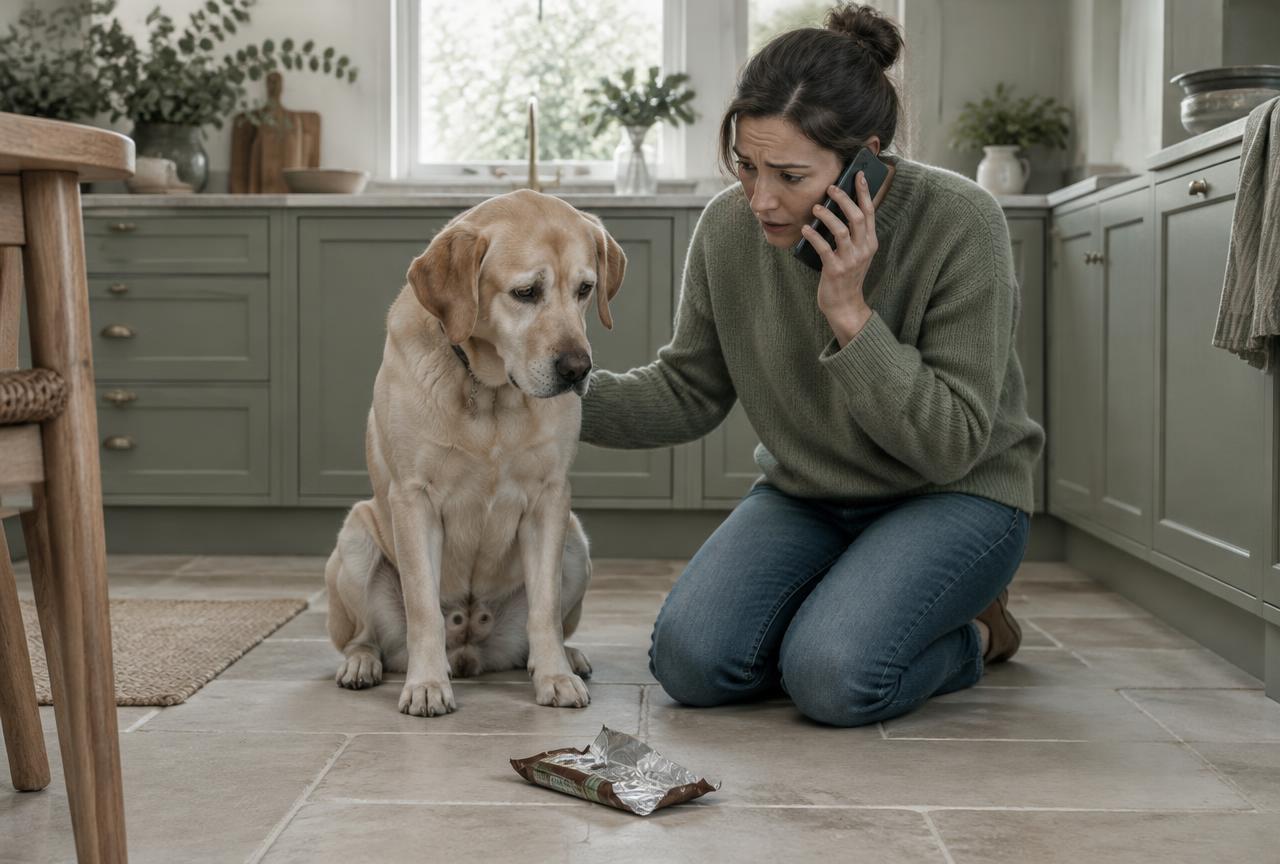
- Keep the wrapper: the type and weight of chocolate are what the vet needs to judge the risk.
If your dog has eaten chocolate, call your vet or an animal poison line now, before you do anything else. Do not wait for symptoms, do not search for a safe amount, and do not try to make your dog vomit at home. Chocolate poisoning is one of the most common pet emergencies, and the dogs who do best are the ones whose owners phoned early.
Why chocolate is dangerous
Chocolate contains theobromine, a stimulant that dogs break down far more slowly than humans, so it builds up to toxic levels in their system.
Theobromine affects the heart, the nervous system and the kidneys. Because dogs process it slowly, a dose that would give a person a mild buzz can make a dog seriously ill. There is no home remedy and no safe threshold you can calculate yourself: the risk depends on the type of chocolate, the amount eaten and your dog's weight, and that calculation is exactly what the vet or poison line does on the phone.

Which chocolate is most dangerous
The darker and more concentrated the chocolate, the more theobromine it contains per gram, and the less it takes to poison a dog.
| Type | Theobromine level | Risk |
|---|---|---|
| --- | --- | --- |
| Cocoa powder, baking chocolate | Very high | Dangerous in small amounts |
| Dark chocolate | High | Dangerous, especially for small dogs |
| Milk chocolate | Moderate | Dangerous in larger amounts |
| White chocolate | Negligible | Fat and sugar risk, not theobromine |
A few grams of dark chocolate can be serious for a toy breed, while a large dog might tolerate a square of milk chocolate with no more than a phone call and monitoring. But "might tolerate" is the vet's call to make, not yours: cocoa content varies between brands, and wrappers lie by omission. Always phone.
What to do in the first hour
Stay calm, remove any remaining chocolate, and phone the vet or poison line with three facts: what type, how much is missing, and your dog's weight.

- 1Remove access. Clear away any remaining chocolate, including wrappers, and shut the dog out of the room.
- 2Gather the facts. Find the wrapper or packaging. Note the type, the weight of the bar or box, and estimate how much is missing. Note the time.
- 3Phone the vet or a poison line. Give them the type, the amount, your dog's weight and the time. They will tell you whether to come in.
- 4Do not induce vomiting at home unless the vet or poison line specifically tells you to. Home methods are unreliable and can cause harm.
- 5Follow the advice. If they say come in, go now; symptoms can take hours to appear, and treatment works best early.
The dogs who do worst with chocolate are the ones whose owners waited to see. The phone call costs nothing; the wait can cost a lot.
Symptoms to watch for
Symptoms of chocolate poisoning include vomiting, diarrhoea, restlessness, panting, excessive thirst, a racing heart, tremors and, in severe cases, seizures.
They typically appear within 6 to 12 hours, which is exactly why "he seems fine" is not reassurance. If the vet advises home monitoring after a low-risk amount, watch for restlessness, panting, vomiting, diarrhoea, drinking more than usual, a fast or irregular heartbeat, muscle tremors or collapse, and go straight in if any appear. Our dog first aid guide covers how to keep a sick dog stable on the way to the clinic.
What the vet will do
Treatment is most effective in the first few hours: the vet may induce vomiting safely, give activated charcoal, and support the heart and hydration.
If you arrive early, the vet can empty the stomach safely with proper medication, give activated charcoal to bind what remains, and then support the dog with fluids and heart monitoring if needed. Most dogs treated promptly recover fully. The wrapper you bring, with the type and weight of chocolate, is genuinely useful information, so bring it.

Prevention: the only reliable fix
Dogs do not learn that chocolate is dangerous; prevention is entirely about storage and habits, especially at Christmas, Easter and birthdays.

- Store chocolate in high cupboards or closed tins, never in bags, stockings or under the tree.
- Remember the less obvious sources: cocoa powder, baking chocolate, hot chocolate, protein bars, chocolate-covered coffee beans and some supplements.
- Baked goods count twice: chocolate cake and brownies contain concentrated cocoa, and some contain xylitol, raisins or macadamia nuts, which are also toxic. Our toxic foods guide lists the full set.
- Warn guests and children: the well-meaning share is a common cause.
- Teach a solid "leave it", but never rely on training where a cupboard would do.
Interactive tool
Chocolate risk checker
Chocolate type, dog size and amount in, how urgent the call is out.
What to do
- Call your vet or an animal poison line now, whatever the amount: do not wait for symptoms, which can take hours to appear.
- Have ready: your dog's weight, the type of chocolate, roughly how much is missing, and when it was eaten. Keep the wrapper.
- Do not try to make your dog vomit at home unless a vet or poison line specifically tells you to.
- Dark chocolate, baking chocolate and cocoa powder are the most dangerous; small dogs are at the highest risk.
- Even lower-risk amounts deserve the call: the vet can calculate the theobromine dose properly and tell you whether to come in.
Phone the vet or a poison line now
This tool cannot calculate a safe dose, and there is no safe home threshold. The right answer to chocolate is always a phone call.
When to see a vet
With chocolate, the answer is always: phone now. Go straight to the clinic if the vet or poison line tells you to, or if your dog shows vomiting, restlessness, panting, tremors, a racing heart or collapse. Do not wait for symptoms to decide.
Chocolate by the calendar: the risky seasons
Vets see chocolate poisonings spike at Christmas, Easter, Halloween and birthdays, because that is when chocolate is everywhere and defences are down.
Advent calendars at tail height, selection boxes under the tree, Easter eggs hidden in the garden for a hunt the dog joins in, Halloween buckets by the door, birthday cake left to cool on a counter a Labrador can surf. The pattern is so reliable that emergency clinics staff for it. The fix is seasonal awareness: during chocolate season, everything lives in a high cupboard or a closed tin, and guests get a gentle briefing. The ten seconds of tidying is the entire prevention strategy.
The wrapper test: what the vet needs to know
The single most useful thing you can do after the call is find the wrapper, because it answers the two questions that decide everything: what type of chocolate, and how much.
The vet or poison line will ask for the type of chocolate, the weight of the product, how much is missing, your dog's weight and when it happened. The wrapper answers the first three. If the chocolate came from a mixed box, describe what is left and what is gone. If it was a homemade bake, the recipe matters, especially if it contained cocoa powder, xylitol, raisins or macadamia nuts, all of which change the picture. Photograph the wrapper if you are heading to the clinic.
Common myths about dogs and chocolate
"A little bit of chocolate is fine." There is no home-calculable safe amount, because cocoa content varies between brands and the dog's weight changes everything. The phone call is always the right move.
"My dog ate chocolate before and was fine, so it is fine." Surviving a low dose once is luck and dose, not immunity. The next incident may be a darker chocolate or a bigger helping.
"White chocolate is safe." It carries almost no theobromine, but the fat and sugar load can trigger pancreatitis, which is a serious and painful condition. It is not a treat to share.
"Making the dog sick at home fixes it." Home methods are unreliable and can cause real harm. If vomiting is needed, the vet does it safely with proper medication, and it works best in the first couple of hours.
"Carob is just as bad." Carob contains no theobromine and is the safe look-alike used in dog treats. It is the one "chocolate" that is genuinely fine.
After the incident: the next few days
Most dogs treated promptly for chocolate poisoning recover fully, and the days after a mild, monitored incident are usually uneventful.
If the vet advised home monitoring, keep the dog quiet, water down, meals light, and watch for the symptom list: vomiting, diarrhoea, restlessness, panting, excessive thirst, a racing heart, tremors. If the dog was treated at the clinic, follow the discharge instructions, which may include a day or two of bland food and rest. Either way, use the incident as the audit: where was the chocolate, how did the dog reach it, and what changes so there is no sequel. The answer is almost always a cupboard, a tin or a conversation with a well-meaning guest.
The theobromine question everyone asks
Every owner in this situation asks the same thing: was it enough to hurt my dog? It is the right question, and it is also the one you cannot answer yourself.
The toxic dose is measured in milligrams of theobromine per kilogram of the dog, and the theobromine content varies enormously between products: a cheap milk chocolate bar and an artisan dark bar of the same size can differ several-fold. Cocoa powder and baking chocolate are the most concentrated of all. Add the uncertainty about how much was actually eaten, the foil and paper that may have gone with it, and the dog's individual sensitivity, and the honest answer is that the calculation needs the wrapper, the scales and professional judgement. That is the whole case for the phone call: it converts your guess into their calculation.
Foil, wrappers and the second problem
Dogs rarely unwrap chocolate neatly, so the packaging often goes down with the chocolate, and that is a separate issue worth mentioning on the call.
Foil and paper wrappers usually pass without trouble in small amounts, but a dog who ate a whole box, wrappers and all, has eaten a lot of indigestible material alongside the theobromine. Tell the vet or poison line about the packaging too, because it changes what they watch for: signs of a blockage, such as repeated vomiting, straining, a painful belly or loss of appetite, sit on the watch list alongside the poisoning signs. Our chicken bone guide covers the blockage watch pattern in more detail, and the monitoring logic is the same.
Why dogs are so good at finding chocolate
Chocolate is sweet, fatty and strongly scented, which makes it one of the most attractive things in the house to a dog, and dogs are far better at finding it than owners expect.
Counter-surfing breeds learn that the interesting smells live on worktops. Dogs with a history of scavenging, and food-obsessed breeds such as the Beagle and the Labrador, treat a handbag, a coat pocket or a Christmas stocking as a puzzle to be solved. This is why the prevention advice is storage rather than training: you can teach a beautiful "leave it", and you should, but the dog who is alone with the selection box at midnight is not practising cues. The cupboard is the training aid that never fails.
The cost question, honestly
Some owners hesitate to phone because they fear the bill, so it is worth saying plainly: the early phone call is the cheap version of this emergency.
A phone consultation and, if needed, an early visit to induce vomiting and give charcoal is a modest, routine procedure. The expensive version is the dog who arrives twelve hours later with tremors and an abnormal heart rhythm, needing hospitalisation, fluids and monitoring. Vets would always rather take the early call, and poison lines exist precisely so that the "is it worth it?" question gets a free, expert answer. When chocolate is involved, early is cheaper, easier and safer in every direction.
A word on staying calm
The hour after a chocolate incident feels long, and the dog will read your state, so calm is part of the treatment. Speak normally, move at normal speed, and save your urgency for the phone call. Dogs who are chased, grabbed or shouted at during a food theft learn to gulp faster and hide better next time, which makes the next incident worse; a calm household literally makes future thefts safer. Most owners who have been through one of these say the same thing afterwards: the dog was fine, the vet was kind, and the worst part was the waiting. That is the honest shape of most chocolate incidents, and it is why this article keeps returning to the same instruction: call early, keep the wrapper, and let the professionals do the maths.
The ten-second checklist
If it happens again, and prevention means it should not, the checklist is: remove the remaining chocolate, find the wrapper, estimate what is missing, weigh the dog in your head, and phone. Five steps, all within the first minutes, none of them involving home remedies. Keep your vet's number and a poison line number in your phone now, before you need them, because the middle of a chocolate incident is not the moment to be searching. The owners who handle these incidents best are simply the ones who knew the number.
The bottom line
Chocolate is a phone-call emergency, not a wait-and-see one. Call the vet or a poison line with the type, amount and your dog's weight, keep the wrapper, and leave the vomiting to the professionals. Then move the chocolate to a high cupboard so there is no next time.
Questions people actually ask
My dog ate chocolate but seems fine. Should I still call the vet?
Yes. Symptoms of chocolate poisoning can take 6 to 12 hours to appear, and treatment is most effective before they start. Call the vet or a poison line now with the type of chocolate, the amount and your dog's weight.
How much chocolate is toxic to dogs?
There is no safe amount to manage at home. The risk depends on the type of chocolate, the amount and the dog's weight, and only a vet or poison line can calculate it properly. Dark chocolate and cocoa are dangerous in much smaller amounts than milk chocolate.
What are the symptoms of chocolate poisoning in dogs?
Vomiting, diarrhoea, restlessness, panting, excessive thirst, a racing or irregular heart rate, tremors and, in severe cases, seizures and collapse. They can take 6 to 12 hours to appear.
Should I make my dog vomit after eating chocolate?
No, not unless a vet or poison line specifically instructs you to. Home methods are unreliable and can cause harm. If vomiting is needed, the vet will do it safely with proper medication.
Is white chocolate dangerous for dogs?
White chocolate contains almost no theobromine, so the poisoning risk is very low, but it is high in fat and sugar and can trigger pancreatitis. Call the vet for advice either way, and watch for vomiting or a painful belly over the next few days.
My dog ate chocolate cake or brownies. What should I do?
Treat it the same way: call the vet or a poison line now. Baked goods often contain cocoa powder, which is one of the most concentrated forms, and some contain xylitol, raisins or macadamia nuts, which are also toxic. Keep the packaging or recipe.
Sources
Breeds mentioned


Put it into practice
Read next
Dog Dry Heaving: Causes and When It Is an Emergency
Dog dry heaving is usually throat irritation or mild nausea, but repeated unproductive retching with a swollen, tight belly can be bloat (GDV), a life-threatening emergency.


