
My Dog Ate a Chicken Bone: What To Do Now
Most dogs who swallow a chicken bone pass it without trouble, but cooked bones can splinter and cause real harm. Here is exactly what to do in the first hour, what to watch for, and when to go straight to the vet.
The SniffScroll desk
Published 10 October 2026
Dr Emily Carter, BVSc MRCVS
The short version
- Choking, gagging, retching, a swollen or painful belly, vomiting or collapse means emergency vet now.
- Do not make your dog vomit at home unless a vet tells you to: sharp fragments can cause more damage coming back up.
- Phone your vet for advice even if your dog seems fine; they will judge the risk by size, bone type and amount.
- Watch closely for 48 to 72 hours for vomiting, straining, poor appetite, black or bloody stools or lethargy.
- Prevention is simple: bones in a lidded bin, never on plates within reach.
If your dog ate a chicken bone, the first step is not to panic, and the second is not to make them vomit. Check they are breathing normally, remove any remaining bones, and phone your vet for advice. Many dogs pass a small bone without trouble, but cooked chicken bones splinter easily, so the next three days need careful watching.
Emergency first: if your dog is choking, gagging, retching repeatedly, drooling heavily, has a swollen or painful belly, is vomiting, or collapses, go to the nearest vet now.
What should I do right now?
Stay calm, check your dog is breathing comfortably, take away any remaining bones, and phone your vet with the details: what was eaten, roughly how much and when.

The call matters even if your dog seems perfectly happy. Your vet will weigh the risk based on your dog's size, whether the bone was cooked or raw, how much was eaten and your dog's medical history. A Labrador who swallowed one small wing tip is a very different picture from a toy breed who ate a whole carcass.
Note the time. If problems develop later, knowing exactly when the bone went down helps your vet decide what to do.
Should I make my dog vomit?
No, do not try to make your dog vomit unless a vet specifically tells you to, because sharp bone fragments can tear the throat on the way back up.
This is the most important don't in this article. Home remedies such as salt or hydrogen peroxide are dangerous in their own right, and bringing splintered bone back up through the oesophagus can cause the very injury you are trying to avoid. In some cases a vet will induce vomiting under controlled conditions, or use an endoscope; that is their call to make, with the right tools.
The safest first move after a dog eats a chicken bone is a phone call, not a home remedy.
Why are cooked chicken bones dangerous?
Cooking makes bones brittle, so they break into sharp shards that can injure the mouth, throat, stomach or intestines, or lodge and cause a blockage.
| Risk | What happens | Warning signs |
|---|---|---|
| --- | --- | --- |
| Choking | Bone lodges in the throat | Gagging, pawing at mouth, distress |
| Mouth or throat injury | Splinters cut tissue | Drooling, blood, reluctance to swallow |
| Blockage | Bone stuck in stomach or gut | Repeated vomiting, no appetite, pain |
| Perforation | Shard pierces the gut wall | Severe pain, fever, lethargy, collapse |
| Constipation | Bone fragments compact | Straining, small hard stools |
| Rectal injury | Sharp pieces on the way out | Blood on stools, pain when passing |
The US Food and Drug Administration has collected reports of exactly these problems from bone treats and table scraps. Most dogs escape them, but the consequences when it goes wrong are serious enough that bones are not worth the gamble.
What to watch for over the next 72 hours
Watch closely for two to three days: vomiting, retching, loss of appetite, straining, black or bloody stools, a painful belly or unusual tiredness all need a call to the vet straight away.
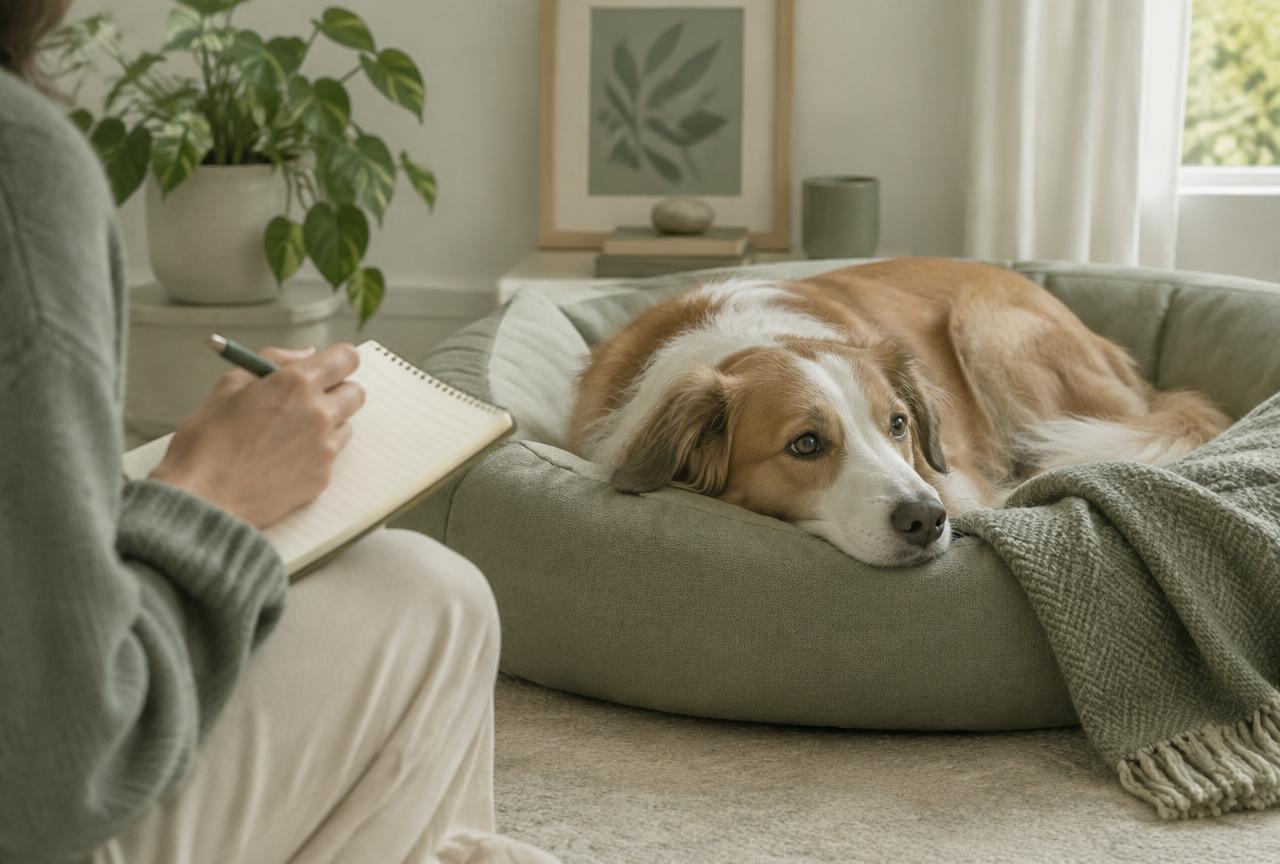
A simple checklist helps:
- Appetite: eating normally, or refusing food?
- Vomiting: none, once, or repeatedly?
- Stools: normal, or straining, hard, black, tarry or bloody?
- Belly: soft, or tense, swollen or sore to touch?
- Energy: normal, or flat, restless or hiding?
- Breathing: relaxed, or fast and uncomfortable?
Check stools as they pass; you may see fragments. Feed normal meals unless your vet advises otherwise. Some vets suggest a little plain bread or a normal meal to cushion fragments, but follow your own vet's advice. There is no fixed timeline for when a dog is in the clear, so stay watchful throughout, and if anything changes, call. Our vomiting guide and constipation guide explain the signs in more detail.
What will the vet do?
Depending on the risk, the vet may advise monitoring at home, examine your dog, take X-rays, retrieve the bone with an endoscope, or, rarely, operate.
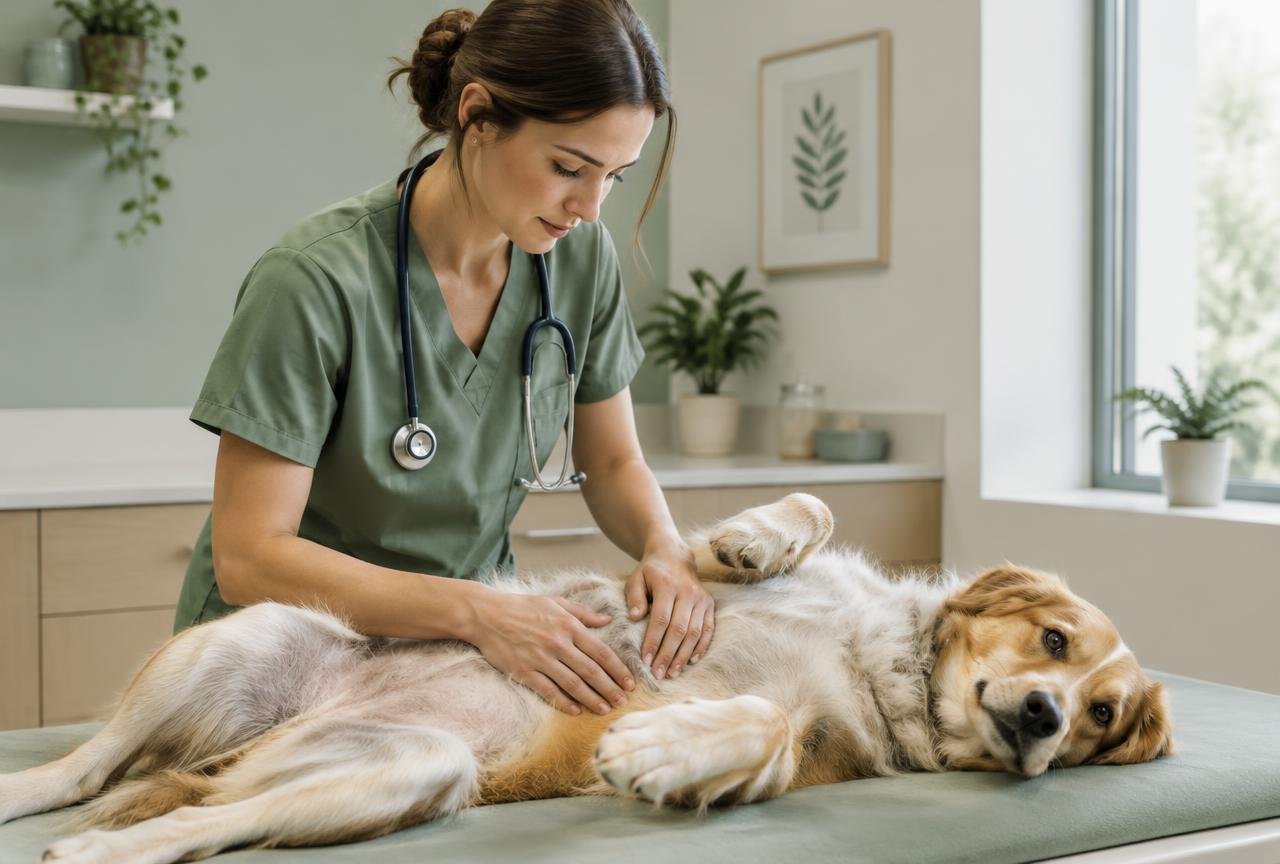
Many cases end with a phone call and careful watching. If your dog has symptoms, X-rays can show where bone fragments sit. Bones caught in the oesophagus or stomach can often be removed with an endoscope under anaesthetic. Surgery is reserved for blockages or perforations, which are uncommon but serious, and which is why acting early on warning signs matters.
How to prevent it happening again
Most bone incidents happen at the bin or the plate: a lidded bin, cleared plates and no bones as treats prevent nearly all of them.
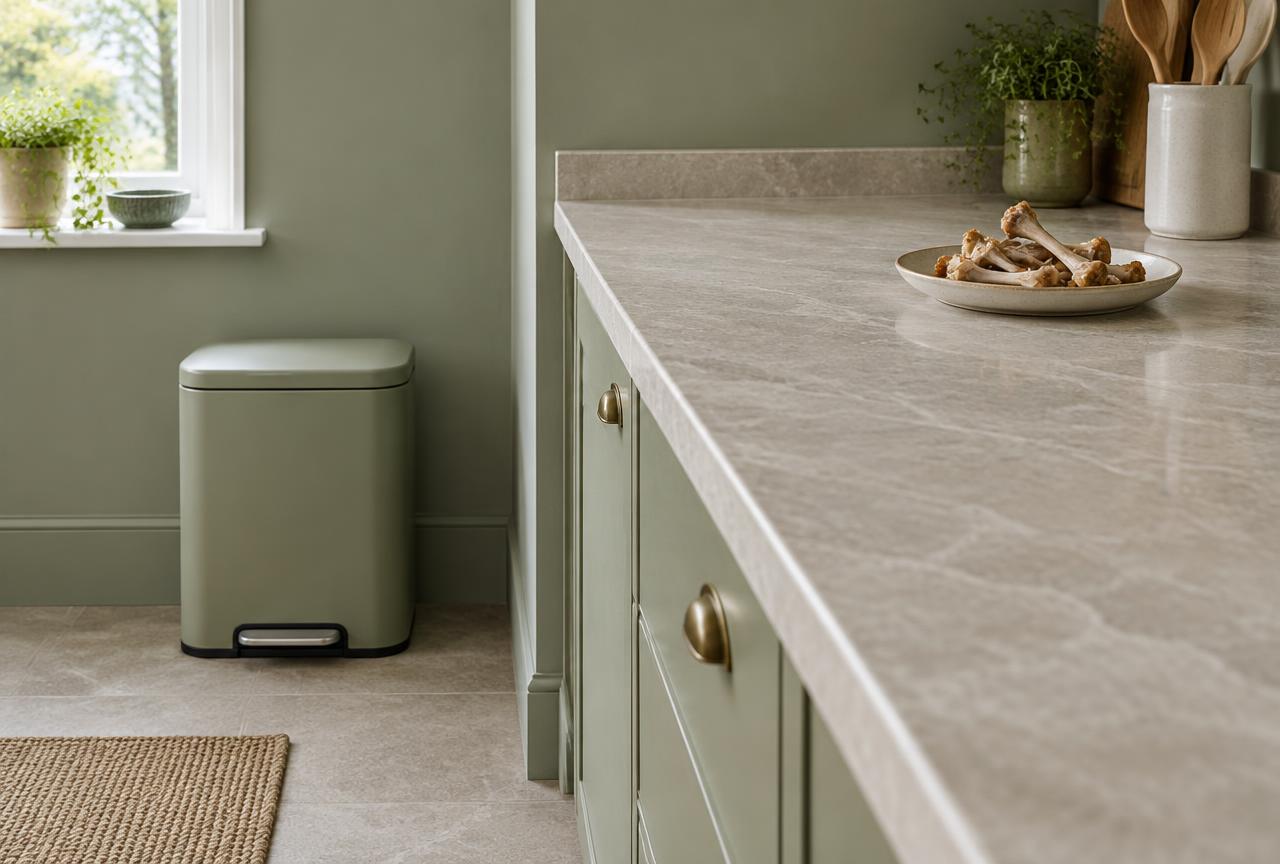
- 1Use a bin with a secure lid, or keep it behind a closed door.
- 2Clear plates straight after meals, especially roast dinners and takeaways.
- 3Never give cooked bones as treats, and talk to guests and children about it.
- 4Teach a solid "leave it" and "drop it": our training guides cover both.
- 5For scavengers such as the Beagle and Golden Retriever, consider a basket muzzle on walks where chicken bones litter the pavements, introduced gradually and positively.
Interactive tool
Bone incident triage
Bone type, amount and signs in, emergency versus monitor out.
What to do
- Phone your vet for advice now, even if your dog seems bright: they will judge the risk by your dog's size, the bone and the amount.
- Do not make your dog vomit at home unless a vet specifically tells you to.
- Feed a normal meal; some vets suggest a little plain bread or pumpkin to cushion fragments, but follow your vet's advice first.
- For the next 48 to 72 hours, watch for vomiting, reluctance to eat, straining, black or bloody stools, a painful belly or unusual tiredness, and call the vet at once if any appear.
Call the vet for advice now
Most dogs who eat a chicken bone are fine with monitoring, but cooked bones can splinter. A quick call to the vet is always the right first move.
When to see a vet
Go to the vet immediately for choking, gagging, repeated retching, heavy drooling, a swollen or painful belly, vomiting, blood from the mouth or bottom, collapse, or if a large amount of cooked bone was eaten. Call the vet the same day for any other bone ingestion, and again at once if new signs appear over the following days. Our first aid guide covers what to do if your dog chokes.
Raw bones, cooked bones and bone treats
Cooked chicken bones are the classic hazard, but they are not the only bone that can hurt a dog, and the whole category deserves a cautious approach.
Cooked bones of any kind, chicken, turkey, lamb, pork, become brittle with heat and splinter into shards. That is why the advice in this article applies to every cooked bone, not just chicken. Raw bones are less likely to splinter, which is why some owners feed them, but they are not risk-free: they can still fracture teeth, cause blockages, and carry bacteria such as Salmonella and Campylobacter that can affect both dog and household. Many vets advise against raw bones for exactly these reasons, and households with young children, elderly people or anyone immunocompromised should be especially careful.
Commercial bone treats are not a safe workaround either. The US Food and Drug Administration has published warnings about bone treats after reports of illness and death in dogs, including blockages, cuts and choking. If you want to give your dog something to chew, purpose-made dental chews accepted by the Veterinary Oral Health Council, or a stuffed rubber toy, give the chewing satisfaction without the splinter risk. Our first aid guide covers what to do if a chew of any kind goes wrong.
Why dogs get hold of bones so often
Most bone incidents are not bad luck; they are predictable moments that can be designed out of the house.
The classic scenarios repeat endlessly: the roast chicken carcass left on the counter while everyone eats, the takeaway box in an open bin, the plate left on a low table during a party, the picnic bone found on a walk. Dogs are opportunists with excellent noses, and a Labrador or Beagle can have a bone located, retrieved and swallowed before you have registered the smell.
Design beats willpower. A bin with a pedal lid that the dog cannot nose open, carcasses straight into a tied bag and outside, plates cleared before the sofa beckons, and a reliable "leave it" for walks will prevent nearly every incident. For determined scavengers, a basket muzzle on walks, introduced gradually with treats so the dog accepts it happily, is a kind and effective safety net, not a punishment.
Common myths about dogs and bones
The idea that dogs and bones belong together is one of the most durable myths in dog ownership, and it costs dogs emergency surgery every year.
"Dogs have eaten bones for thousands of years" is true in the sense that dogs have also eaten things that killed them for thousands of years. Wild canids crunch small, soft bones and suffer the consequences of the hard ones out of sight. Domestic dogs eat cooked bones, which are a different and more dangerous material, and they do it in our kitchens, where we can actually prevent it.
"A big dog can handle a big bone" is similarly shaky. Size changes the odds, not the physics: a shard that would block a terrier can still lacerate a Golden Retriever, and large dogs are over-represented in blockage cases precisely because owners assume they can cope. The safe treat list is long enough that bones never need to be on it: carrots, blueberries, purpose-made chews and stuffed toys all carry the enjoyment without the shard risk.
What about other foods dogs steal?
The chicken bone incident rarely happens in isolation: the same dog, and the same kitchen habits, tend to produce other thefts, and some are far more dangerous.
Bones are frightening because they can injure, but several common foods are outright toxic to dogs, and a scavenging dog will meet them eventually. Chocolate, grapes and raisins, onions and garlic, xylitol in sugar-free products, alcohol and macadamia nuts all cause real poisoning, and the response is different from a bone: with toxins, speed matters, and you call the vet immediately rather than monitoring. Our guide to foods dogs must never eat lists the dangerous ones in detail, and what human foods dogs can eat covers the safe side of the ledger.
The household habits that prevent bone incidents prevent these too: lidded bins, cleared surfaces, bags hung out of reach, and a dog who has learned that counters are not a buffet. If your dog is a repeat offender, treat it as a training project as much as a housekeeping one. A solid "leave it", proofed around food on the floor, is one of the most valuable behaviours a scavenger can learn, and it is taught with patience and rewards, not with punishment after the fact.
If it happens again: being ready
Once you have been through one bone incident, use it: save your vet's out-of-hours number in your phone, know where the nearest emergency clinic is, and keep a note of your dog's weight, which vets need for risk assessments and medication doses.
It is also worth knowing your dog's patterns. Dogs who scavenge tend to do it in the same places: the same bin, the same counter, the same stretch of pavement where takeaways get dropped. Each repeat incident is information about where your prevention has a gap. Close the gap, refresh the "leave it" training, and the next roast dinner can be just a roast dinner. And if you are ever unsure after any incident, bone or otherwise, the rule from the start of this article still holds: phone the vet. A two-minute call is always cheaper than the problem you talked yourself out of reporting.
A word on staying calm
The tone of the hour after a bone incident matters more than people expect. Dogs read panic, and a dog who is chased, grabbed or shouted at is more likely to gulp, guard or bolt with the next stolen item, which makes the next incident worse. Calm is not just kindness here; it is strategy. Speak normally, move slowly, trade rather than grab when you can, and save your urgency for the phone call to the vet. Owners who have been through one of these incidents often say the same thing afterwards: the dog was fine, and the worst part was the waiting. That is the honest shape of most bone incidents, and it is why this article keeps returning to the same three instructions: call the vet, watch closely, and do not try to fix it yourself.
The bottom line
A dog eating a chicken bone is common and usually ends well, but it is never something to ignore. Stay calm, do not induce vomiting, phone the vet, watch closely for three days and act fast on any warning sign. Then put a lid on the bin.
Questions people actually ask
My dog ate a chicken bone but seems fine. What should I do?
Phone your vet for advice, then monitor closely for the next 48 to 72 hours. Many dogs pass small bones without problems, but signs such as vomiting, straining, poor appetite, a painful belly or black or bloody stools mean you should call the vet straight away.
Should I make my dog vomit after eating a chicken bone?
No, not unless your vet specifically tells you to. Sharp bone fragments can damage the oesophagus on the way back up. Never use salt or hydrogen peroxide at home.
How long does it take for a dog to pass a chicken bone?
Most bones pass within one to three days, but timing varies with the dog's size, the bone and what else is in the stomach. Watch for problems throughout that window rather than assuming a fixed timeline.
Are cooked chicken bones worse than raw?
Cooked bones are generally more dangerous because cooking makes them brittle, so they splinter into sharp shards. Raw bones still carry risks, including blockages, broken teeth and bacteria.
Should I feed my dog bread after eating a chicken bone?
Some vets suggest a little plain bread or a normal meal to cushion fragments, but this is not universal advice. Phone your vet first and follow what they recommend for your dog.
What are the signs of a bone blockage in a dog?
Repeated vomiting, retching without producing anything, refusing food, a tense or painful belly, straining without passing stools, lethargy and restlessness. These need urgent veterinary attention.
Sources
Breeds mentioned

Labrador Retriever
Britain's most popular family dog: biddable, food driven and built for an active household.

Beagle
A merry, sociable scenthound with a powerful nose and a mind of its own outdoors.

Golden Retriever
A gentle, biddable gundog famed for its patience with children and its glossy golden coat.
Put it into practice
Read next
Dog Dry Heaving: Causes and When It Is an Emergency
Dog dry heaving is usually throat irritation or mild nausea, but repeated unproductive retching with a swollen, tight belly can be bloat (GDV), a life-threatening emergency.


