
Dog Vomiting: Causes, Colours and When to Worry
Most vomiting is a one-off and a dog who scoffed too fast. Sometimes it is the first sign of something serious. Here is how to tell the difference, by colour, pattern and company it keeps.
The SniffScroll desk
Reviewed against PDSA and Blue Cross guidance on vomiting in dogs
Published 5 October 2026 · Updated 9 October 2026
Checked by a practising UK veterinary nurse
The short version
- A single vomit in a bright dog is usually nothing; the pattern is what matters.
- Yellow foam is usually bile from an empty stomach; a late snack often fixes it.
- Blood, repeated vomiting, or retching with a swollen belly means the vet, now.
- Home care is a short fast, water, then small bland meals of chicken and rice.
- Puppies, seniors and dogs with conditions get a phone call earlier.
Every dog vomits occasionally. They eat too fast, they eat grass, they eat things found in hedges that are best not investigated, and sometimes the stomach simply objects. The skill every owner needs is not preventing vomiting, which is impossible, but reading it: knowing when to shrug, when to watch, and when to phone the vet.
This guide covers the difference between vomiting and regurgitation, what the colour and contents tell you, the common causes, the red flags that end the watching, and what sensible home care looks like.
Vomiting or regurgitation? It matters
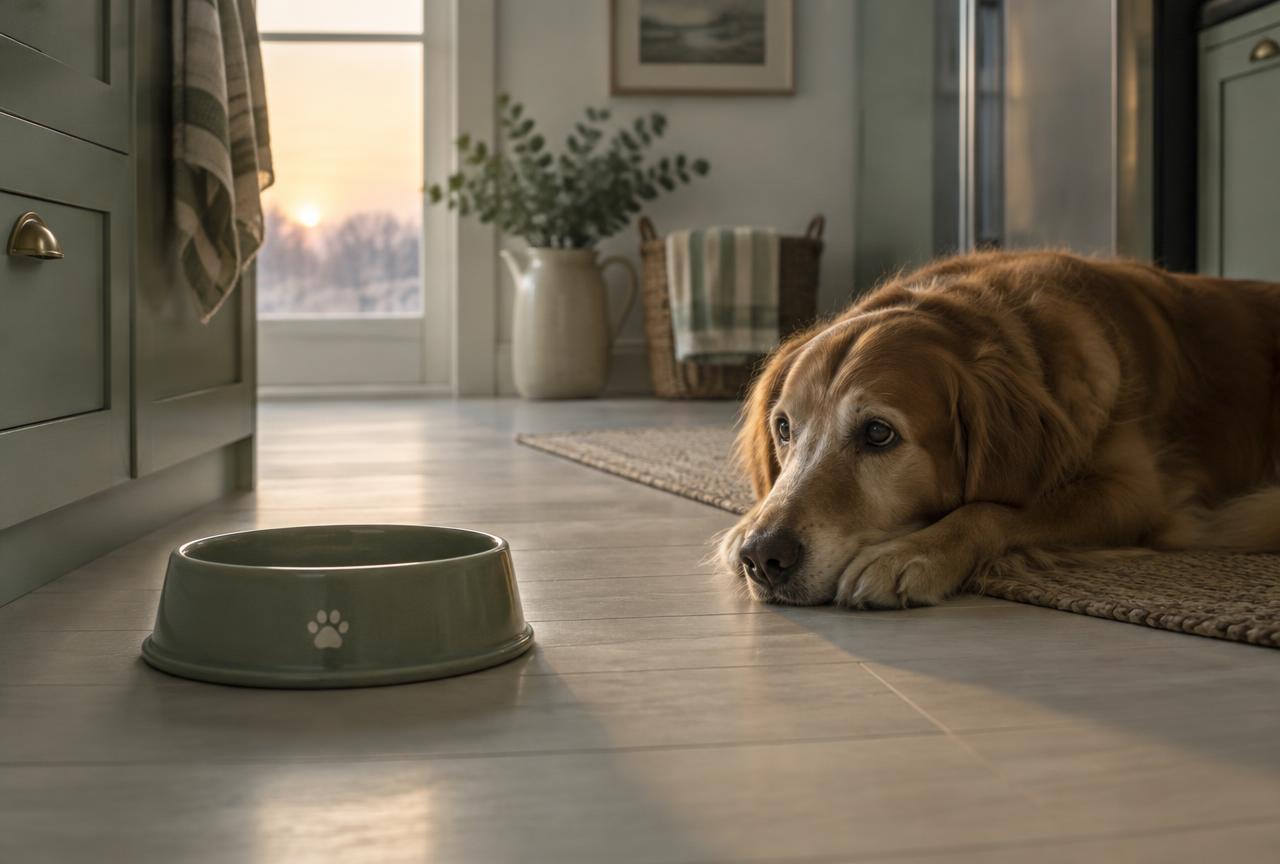
These two look similar on the kitchen floor but mean different things. Regurgitation is passive: the dog lowers its head and undigested food comes back up, usually tube-shaped, usually shortly after eating, with no heaving or effort. It is often a dog who ate too fast, though frequent regurgitation can point to a gullet problem worth investigating. Vomiting is active: retching, heaving, the whole body involved, and what comes up is part-digested, often with bile or fluid. Most of what owners describe as vomiting is one of these two, and telling your vet which one you saw is genuinely useful information.
What the colour tells you
| What it looks like | What it usually means | How worried to be |
|---|---|---|
| --- | --- | --- |
| Undigested food | Ate too fast, or regurgitation | Low, if the dog is bright |
| Yellow or foamy | Bile, usually an empty stomach | Low to moderate, watch the pattern |
| White foam | Empty stomach, but also early bloat | Moderate, repeated foam is urgent |
| Green | Bile, or eaten grass | Low if occasional |
| Red or pink | Fresh blood | High, same-day vet |
| Dark, like coffee grounds | Digested blood | High, same-day vet |
| Worms visible | Heavy worm burden | Vet this week |
Colour is a clue, not a diagnosis. A single yellow vomit in a bouncing dog is a shrug. The same vomit three times in a morning, in a dog who is off its food, is a different sentence.
Interactive · vomit triage
Sick once, or something more?
Describe what you are seeing and we will help you judge whether this is watch-and-wait or phone-the-vet.
Home care while you watch
- Remove food for two to three hours, but keep fresh water available.
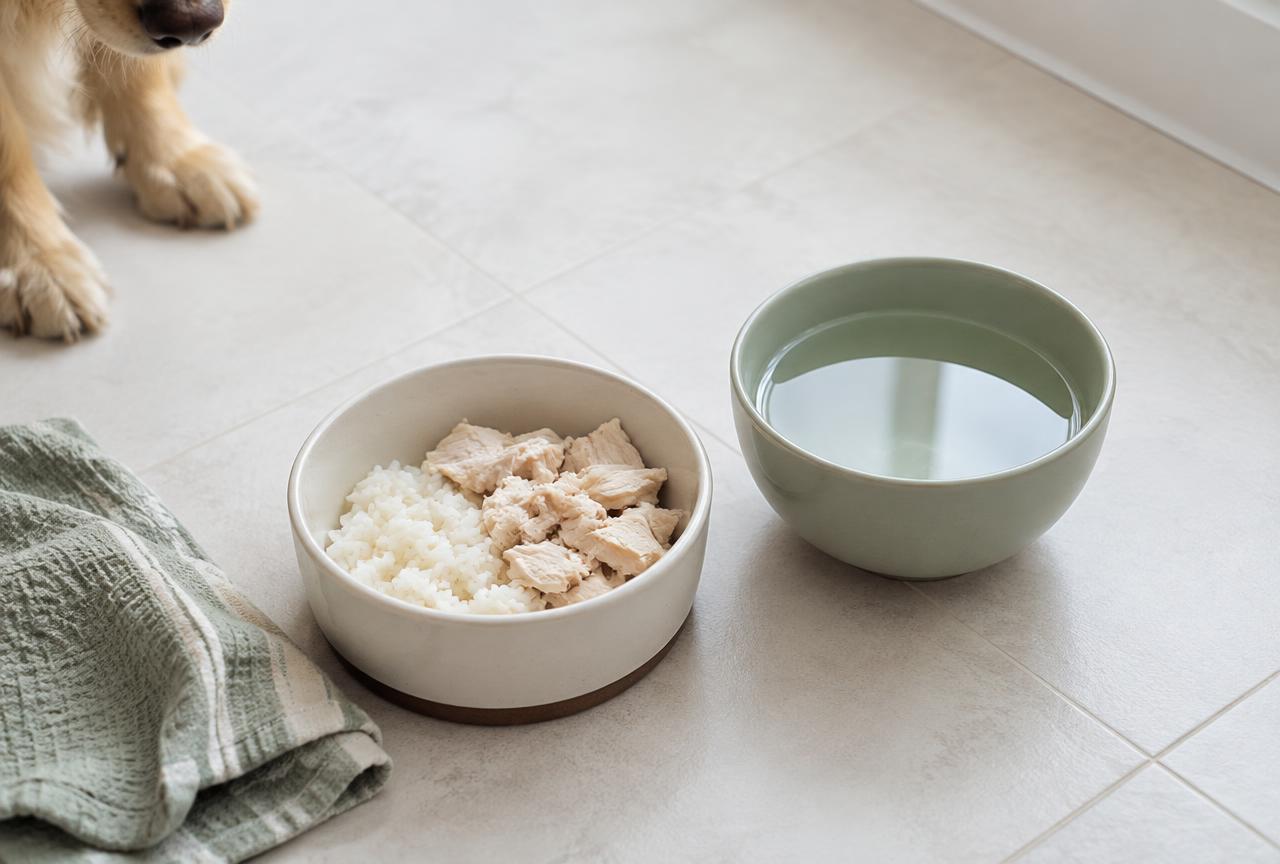
- Offer a small bland meal, plain boiled chicken and rice, and see if it stays down.
- Return to normal feeding gradually over the next day or two if all is well.
Likely a one-off
A single vomit of undigested food in a dog who is otherwise bright and bouncing is usually scoffing too fast or a minor tummy grumble. Withhold food for a couple of hours, offer water, then a small bland meal.
The common causes
Most vomiting in dogs comes from a short, unglamorous list. Dietary indiscretion, the polite veterinary term for eating something disgusting, tops it: bin raids, dead things on walks, the sandwich stolen off a picnic table. Eating too fast is next, especially in greedy breeds, and a slow-feeder bowl often fixes it entirely. Then sudden food changes, which is why new foods are introduced gradually, and rich or fatty scraps, which can tip a sensitive dog into pancreatitis.
Beyond the everyday list sit the causes your vet thinks about: infections, parasites, foreign bodies, kidney or liver disease, and, in deep-chested breeds, bloat. The pattern is what separates them. One vomit and back to normal is almost always the everyday list. Vomiting that repeats, escalates, or arrives with company is not.

The red flags that end the watching
Watch-and-wait is reasonable for a single vomit in an otherwise bright, drinking, interested dog. It stops being reasonable the moment any of these appear:
- Repeated vomiting, more than two or three times in a day, or vomiting that continues into a second day
- Blood, fresh red or dark like coffee grounds
- Retching without producing anything, especially with a swollen or tight belly: in a large, deep-chested dog, treat this as a bloat emergency and go now
- Lethargy, weakness or collapse
- Refusing water, or vomiting water straight back up
- A painful, tense or swollen abdomen
- A suspected swallowed object, toy, sock, bone, corn cob
- A puppy, a senior, or a dog with a known condition: their margins are thinner, so phone earlier
The question is never "was the vomit alarming?" It is "is the dog alarming?" A bright dog who was sick once is a watch. A quiet, hunched dog who was sick once is a phone call.
Home care for the simple cases
For the single, straightforward vomit in an otherwise well adult dog, home care is calm and simple. Remove food for two to three hours to let the stomach settle, but keep fresh water down. Then offer a small bland meal, plain boiled chicken and white rice, about a quarter of a normal portion. If that stays down, offer another small meal a few hours later, and return to normal feeding gradually over the next day or two. If the vomiting returns at any point, the bland diet experiment is over and the vet is next.
Do not give human anti-sickness medicines, and do not withhold water. Dehydration is the thing that turns a minor tummy upset into a poorly dog, especially in small breeds.
What the vet will do
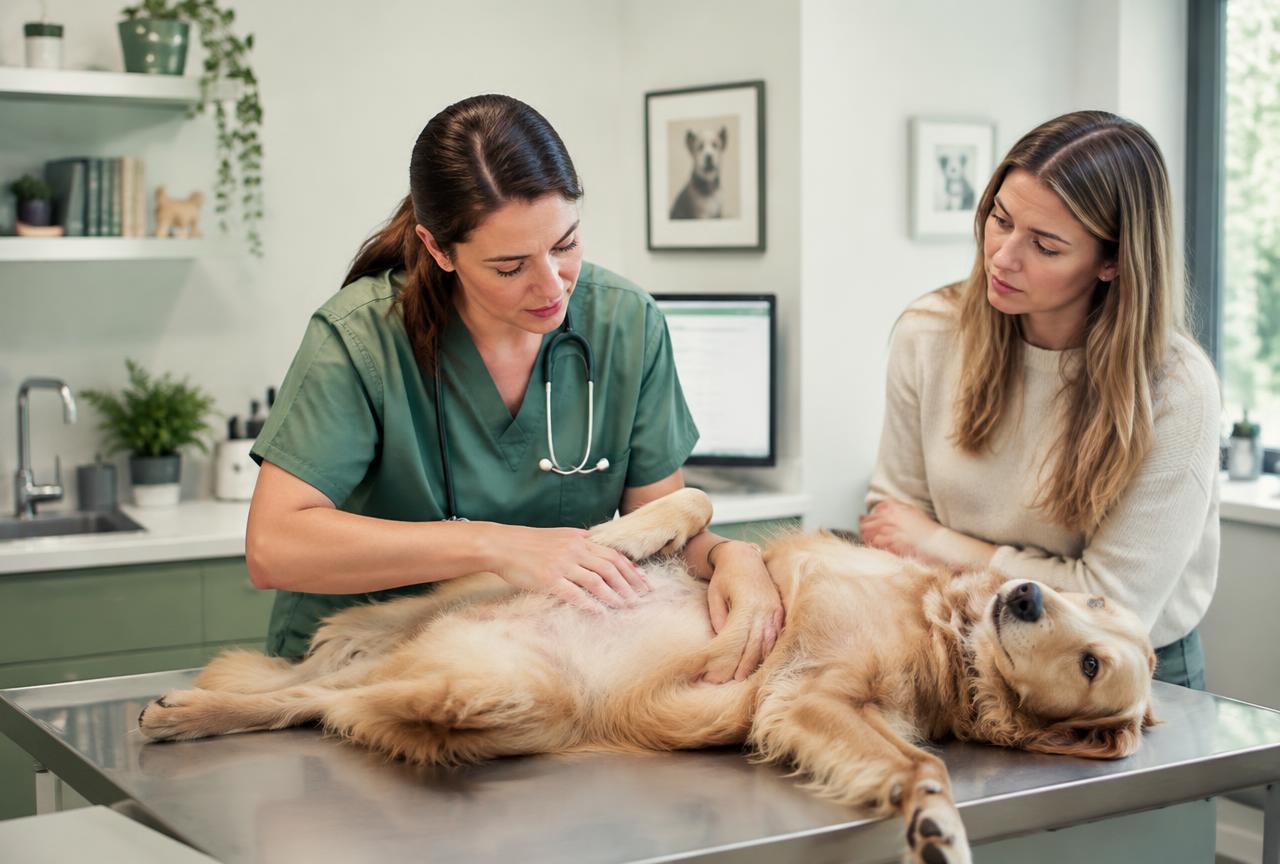
If you do end up at the surgery, it helps to know what to expect. The vet will ask when it started, how often, what it looked like, what the dog might have eaten, and whether anything else has changed. They will examine the belly, check hydration, and take a temperature. Depending on what they find, treatment might be an anti-sickness injection and fluids, or it might be blood tests and imaging to look for a blockage or something deeper. Bring a photo of the vomit if you can. Nobody enjoys taking it, and every vet appreciates it.
Why is my dog throwing up but acting normal?
A single vomit in a dog who is bright, eating and drinking normally, with no diarrhoea, pain or other symptoms, is very often a minor event: grass, eating too fast, a rich treat, or a stomach that was simply empty for too long. Many vets are comfortable with owners watching at home for 12 to 24 hours in that situation. The picture changes if vomiting repeats, if your dog cannot keep water down, or if any red flag appears. Acting normal is reassuring, but it is not a reason to ignore a pattern.
One vomit is an event. Three in a day, or one a week for a month, is a pattern worth a vet's attention.
Acute or chronic vomiting
Vets split vomiting into two broad groups, because the causes and the tests differ.
| Acute vomiting | Chronic vomiting | |
|---|---|---|
| --- | --- | --- |
| Duration | Sudden, lasting hours to a few days | On and off for more than two to three weeks |
| Common causes | Dietary indiscretion, infection, toxins, foreign bodies, pancreatitis | Food intolerance, inflammatory bowel disease, kidney or liver disease, hormonal conditions |
| Typical first step | Assess for red flags, supportive care, sometimes X-ray or ultrasound | Blood tests, diet trials, imaging, sometimes biopsies |
| Owner role | Watch closely, note timing and contents | Keep a vomiting diary with dates, food and triggers |
Chronic vomiting in a dog that seems otherwise fine still deserves investigation. Our dog diarrhoea guide covers the overlapping signs of gut disease.
Which dogs need a vet sooner?
- Puppies, especially unvaccinated ones, because parvovirus causes vomiting and they dehydrate fast
- Seniors and dogs with kidney, liver, heart disease or diabetes
- Toy breeds such as the Chihuahua and Yorkshire Terrier, with small fluid reserves
- Deep-chested breeds such as the Great Dane, German Shepherd and Weimaraner retching without bringing anything up, because that can be gastric dilatation-volvulus, a true emergency
- Known scavengers such as the Labrador Retriever, where a foreign body or toxin is a real possibility
Your 24-hour home-care plan for a mild case
Only follow this for a healthy adult dog with no red flags.
- 1Hours 0 to 2: take up food. Offer small sips of water every 30 minutes rather than a full bowl.
- 2Hours 2 to 6: if no further vomiting, offer more water. Note colour and contents of anything that comes up.
- 3Hours 6 to 12: offer a tablespoon or two of a bland diet, such as plain boiled chicken and white rice or a veterinary gastrointestinal food.
- 4Hours 12 to 24: if that stays down, offer small meals every three to four hours.
- 5Days 2 to 3: gradually mix the usual food back in over a couple of days.
- 6At any point: if vomiting returns, your dog becomes quiet, or a red flag appears, call the vet.
What to tell the vet: a checklist
- When vomiting started and how many times
- What the vomit looked like: food, foam, bile, blood, coffee grounds, objects
- Whether your dog can keep water down
- Any diarrhoea, and its colour
- What your dog could have eaten, including bins, toys, plants, medications or toxic foods
- Current medications, recent diet changes and vaccination status
- Your dog's energy level, appetite and any signs of pain
- A photo of the vomit, which can genuinely help
The verdict, by situation
One vomit, dog bright: watch, rest the stomach briefly, offer water and small bland meals.
Repeated vomiting, unable to keep water down, or lethargic: vet today.
Retching with nothing coming up, a swollen belly, restlessness: emergency vet now.
Suspected toxin or foreign body: call your vet or an animal poison line straight away. Do not try to make your dog sick unless a vet tells you to.
Recurrent vomiting over weeks: book an appointment and start a diary. The ideal weight tool helps you track any weight loss between visits.
The bottom line
Most vomiting is the price of living with an animal that experiences the world through its mouth. Learn the red flags, keep the vet's number handy, and trust the pattern over the single event. When the pattern worries you, phone. Vets would always rather reassure you early than meet you late.
Vomiting myths, checked
| Myth | What the evidence says |
|---|---|
| --- | --- |
| Eating grass means the dog is ill | Many dogs eat grass routinely without vomiting |
| Salt water safely makes a dog sick | Salt can cause dangerous sodium poisoning |
| Yellow vomit is always serious | Bile on an empty stomach is common; patterns matter |
| A dog that vomits should not drink | Small, frequent sips help prevent dehydration |
Questions people actually ask
Why is my dog vomiting yellow foam?
Yellow, foamy vomit is usually bile, and it most often happens on an empty stomach, first thing in the morning. A small snack last thing at night usually fixes it. If it keeps happening, or the dog seems off, book a vet check.
When should I worry about my dog vomiting?
Worry when it repeats, when there is blood, when the dog is lethargic or has a painful or swollen belly, when water will not stay down, or when a swallowed object is possible. Any of those means a same-day vet call.
What can I feed my dog after vomiting?
After a two to three hour rest for the stomach, offer a small bland meal: plain boiled chicken and white rice, about a quarter of a normal portion. If it stays down, build back to normal food over a day or two.
Why does my dog eat grass and then vomit?
Nobody knows for certain. Some dogs eat grass because they like it, some possibly to settle their stomachs. Occasional grass-eating and vomiting is normal; frequent vomiting after grass is worth a vet conversation.
Is white foam vomit serious in dogs?
Once, in a bright dog, usually not. Repeated white foamy retching, especially with a tight or swollen belly in a large deep-chested breed, can be bloat, which is a life-threatening emergency. Go straight to the vet.
My dog vomits after eating too fast, what helps?
A slow-feeder bowl, smaller and more frequent meals, or scattering food on a snuffle mat all slow things down. If fast eating still leads to regular vomiting, mention it to your vet.
Why is my dog throwing up but acting normal?
A single vomit in a dog who is bright, eating and drinking normally is often caused by something minor, such as grass, eating too quickly or a rich treat. Watch closely for 12 to 24 hours. Call your vet if vomiting repeats, your dog cannot keep water down, or other signs such as lethargy, diarrhoea or pain appear.
Should I make my dog sick if they ate something bad?
Not without veterinary advice. Some substances cause more damage coming back up, and home methods such as salt or hydrogen peroxide can be dangerous. Call your vet or an animal poison line immediately with details of what was eaten, how much and when. Vets can safely induce vomiting if it is appropriate.
Sources
- Gastric dilatation-volvulus (bloat), Royal Veterinary College
- Animal PoisonLine, Veterinary Poisons Information Service
Breeds mentioned

Labrador Retriever
Britain's most popular family dog: biddable, food driven and built for an active household.

Beagle
A merry, sociable scenthound with a powerful nose and a mind of its own outdoors.
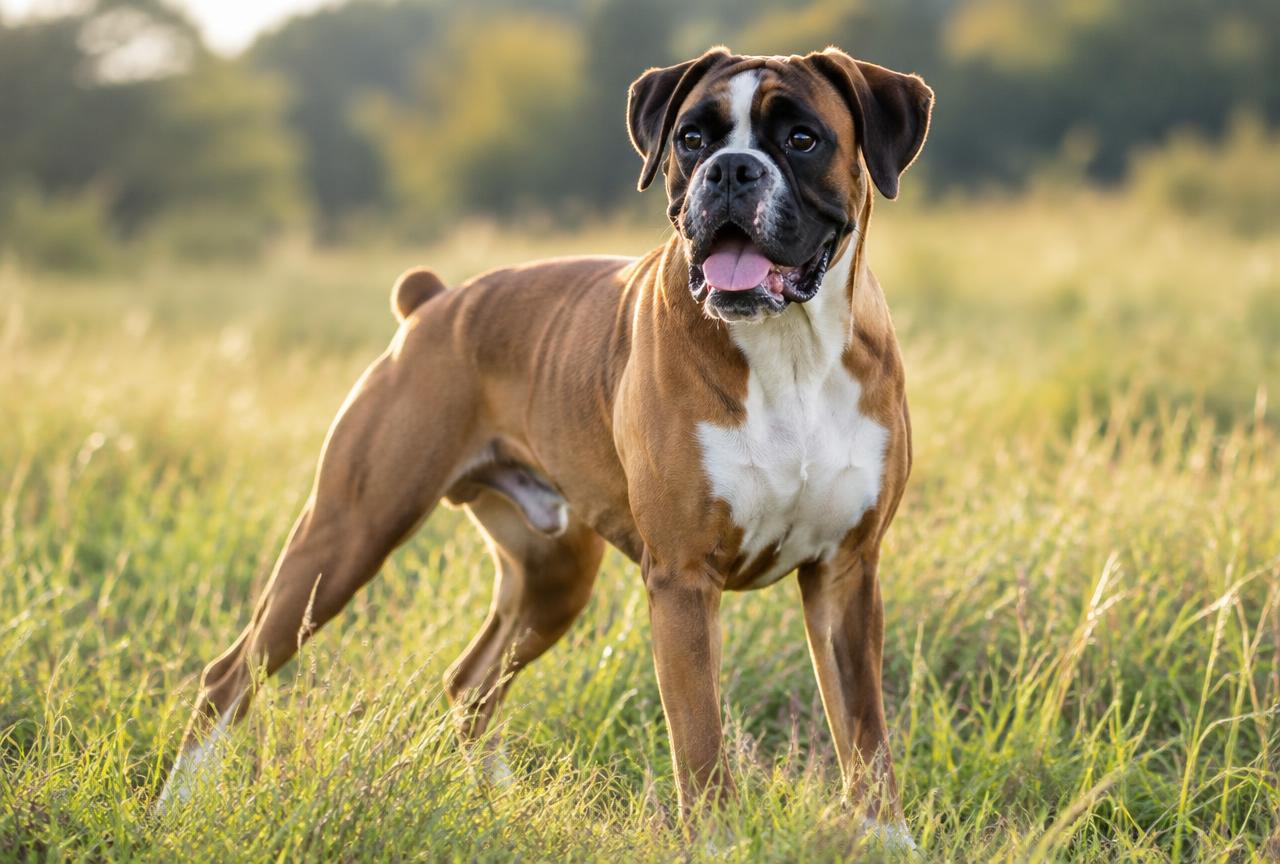
Boxer
An energetic, devoted working dog known for its playful spirit and protective nature.

Dachshund
A bold, characterful hunting breed in a long, low body, needing careful back protection for life.
Put it into practice
Read next
Dog Dry Heaving: Causes and When It Is an Emergency
Dog dry heaving is usually throat irritation or mild nausea, but repeated unproductive retching with a swollen, tight belly can be bloat (GDV), a life-threatening emergency.


