
Foods Dogs Must Never Eat: The Toxic List
Chocolate, grapes, xylitol, onions: the foods that send dogs to emergency vets, why they are dangerous, and exactly what to do if your dog eats one.
The SniffScroll desk
Reviewed against PDSA, Blue Cross and Veterinary Poisons Information Service guidance
Published 3 October 2026 · Updated 9 October 2026
Checked by a practising UK veterinary nurse
The short version
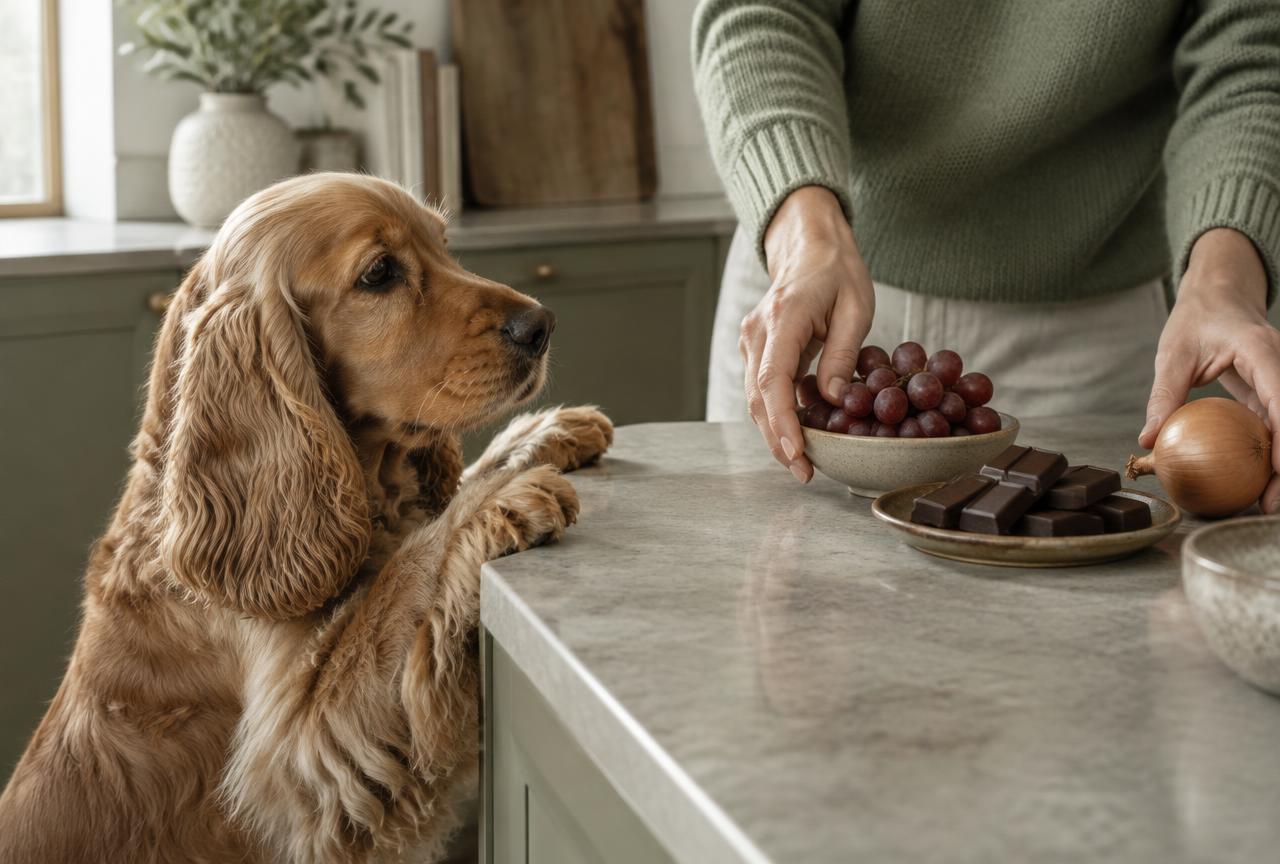
- Chocolate, grapes, xylitol, onions and alcohol are never safe, in any amount.
- Xylitol hides in sugar-free gum and some peanut butters: read every label.
- Most poisoning is scavenged, so bin-proof the kitchen and hang up handbags.
- Phone the vet before symptoms appear; do not wait and watch.
- Never induce vomiting at home unless a vet instructs you to.
Every year, UK vets treat thousands of dogs for food poisoning that was entirely preventable. Not poison in the dramatic sense: ordinary food, from ordinary kitchens, given by owners who simply did not know, or scavenged by dogs who very much did. Chocolate at Easter and Christmas, grapes in a fruit bowl, sugar-free gum in a handbag, the onion-rich gravy left in a roasting tin.
This is the list of foods dogs must never eat, why each one is dangerous, the symptoms to watch for, and what to do if the worst happens. Bookmark it, and make sure everyone who feeds your dog, including children, guests and dog sitters, knows the short version.
Why some foods are toxic to dogs
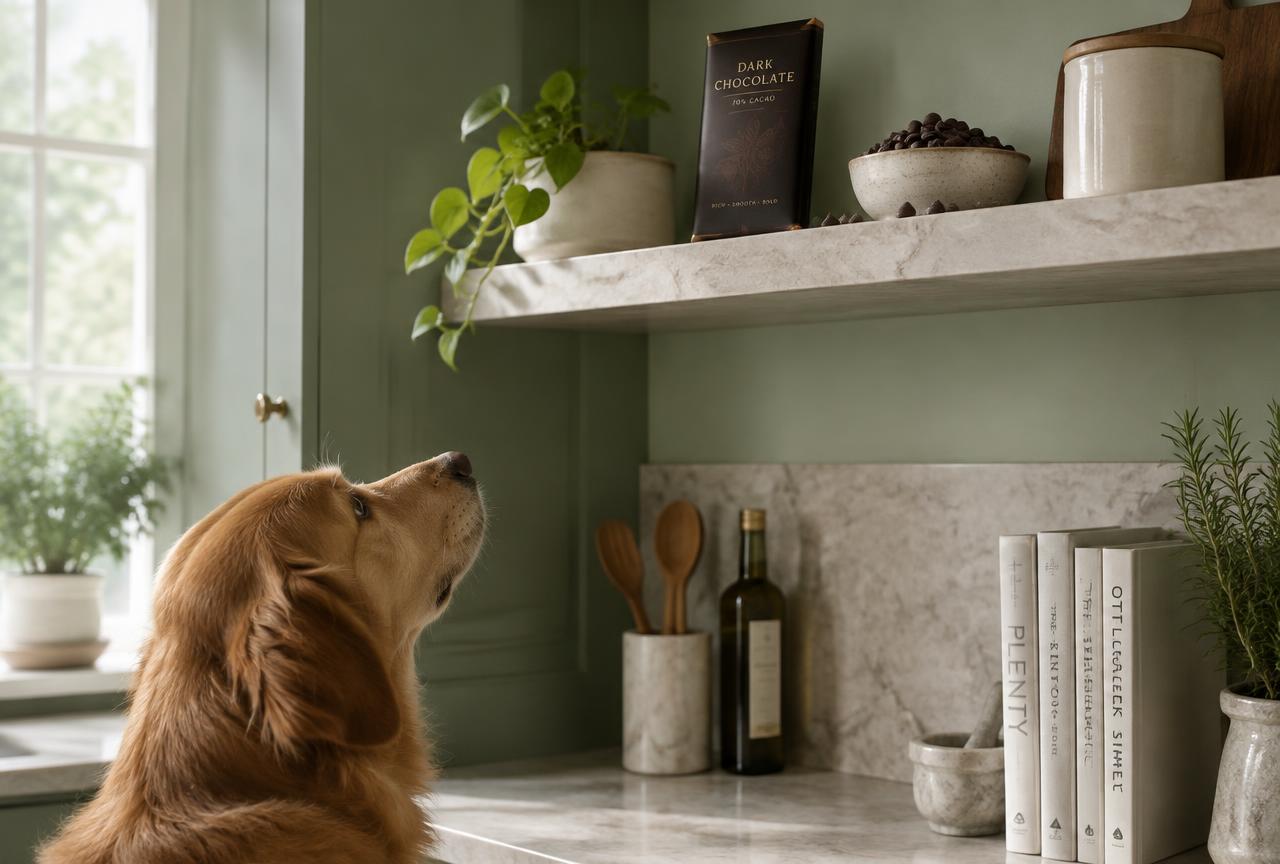
Dogs are not small humans. Their livers process some compounds far more slowly than ours, their red blood cells are vulnerable to chemicals in the onion family, and their size means a dose that is nothing to us can be serious to them. A square of dark chocolate is a pleasant after-dinner bite for a person. For a 5 kg terrier, the same square is a medical event.
The other thing to understand is that toxicity is not always instant. Grape poisoning can look like nothing for a day before kidneys start to fail. Onion damage is cumulative, building over days of small amounts. "He ate it and he was fine" is not evidence of safety; it is sometimes just the gap between eating and illness.
The toxic list
| Food | The toxin | What it does | Urgency |
|---|---|---|---|
| --- | --- | --- | --- |
| Chocolate | Theobromine | Vomiting, tremors, seizures, heart problems | Same-day vet call, dark chocolate is worst |
| Grapes and raisins | Unknown | Sudden kidney failure | Emergency, no safe amount |
| Xylitol (sweetener) | Xylitol | Blood sugar crash, then liver failure | Emergency, even small amounts |
| Onions, garlic, leeks, chives | Thiosulphates | Red blood cell damage, anaemia | Vet call, cumulative over days |
| Macadamia nuts | Unknown | Weakness, tremors, vomiting | Vet call, rarely fatal |
| Alcohol | Ethanol | Dangerous intoxication, coma | Emergency |
| Cooked bones | Physical, not chemical | Splinters, gut perforation, blockage | Vet call if eaten |
| Raw dough | Expanding yeast, alcohol | Bloat, alcohol poisoning | Emergency |
| Caffeine | Methylxanthines | Restlessness, heart rhythm problems | Vet call |
| Avocado | Persin | Stomach upset; the stone is a choking hazard | Usually mild, vet if stone swallowed |
Interactive · toxic food emergency checker
My dog just ate something it should not
Tell us what, how much and how big your dog is, and we will tell you how urgent it is. When in doubt, always phone.
Call your vet or a poison line now
Eaten chocolate: the risk is theobromine poisoning. Dark and cooking chocolate are the most dangerous; milk chocolate needs a larger amount, white is mostly fat and sugar but still not safe. For a medium dog that has had a moderate amount, do not wait for symptoms: phone your vet or the Animal PoisonLine now, note the time eaten, and take the packaging if you have it.
This checker is guidance, not a diagnosis. A phone call to your vet is always free of regret.
The big three, in detail
Chocolate. The danger is theobromine, which dogs metabolise far more slowly than people. Dark chocolate and cooking chocolate carry the most; milk chocolate needs a larger amount; white chocolate is mostly fat and sugar but still not safe. Symptoms start with vomiting and restlessness and can progress to tremors and seizures. If your dog eats chocolate, phone the vet with the type, the amount and your dog's weight. They can calculate the risk precisely.
Grapes and raisins. The strangest entry on the list, because nobody has yet identified the exact toxin, and sensitivity varies wildly. One dog eats a grape and is fine; another eats a handful and goes into kidney failure. Because there is no known safe amount and no way to predict which dog is which, the rule is absolute: no grapes, no raisins, no currants, no sultanas, and that includes fruitcake, hot cross buns and muesli.
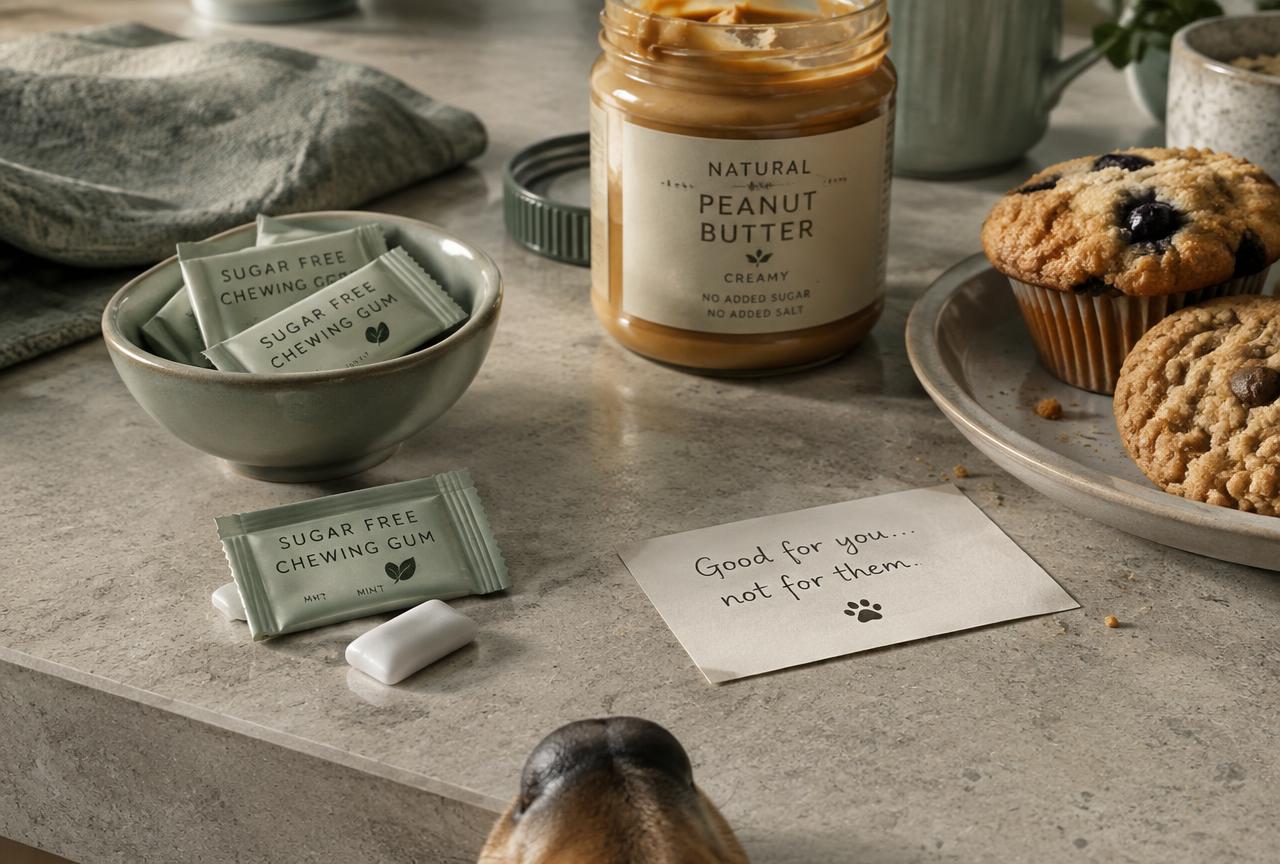
Xylitol. The one most owners have never heard of, and the one vets worry about most. Xylitol is a sweetener in sugar-free gum, some peanut butters, low-sugar baked goods, and some toothpastes. In dogs it triggers a massive insulin release: blood sugar crashes within the hour, and liver failure can follow. A single piece of sugar-free gum can poison a small dog. Check labels, keep gum out of handbags left on the floor, and never buy peanut butter without reading the ingredients.
The kitchen is the crime scene
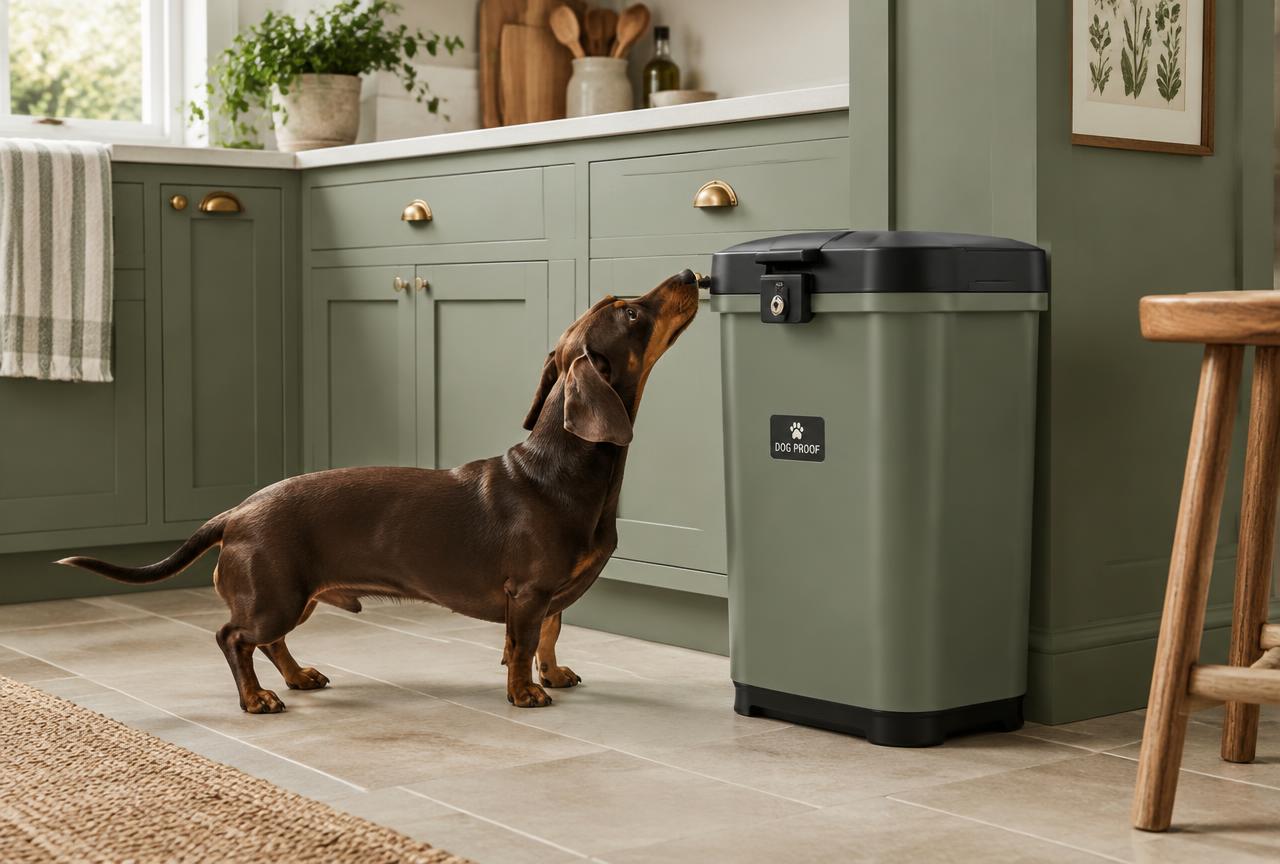
Most food poisoning in dogs is not handed over by an owner. It is scavenged: the bin, the worktop, the handbag, the children's lunchboxes, the plate left at nose height. Labradors and Beagles have turned scavenging into a profession, but almost any dog will take the opportunity if the opportunity smells good enough.
Prevention is boring and completely effective. A bin with a lid the dog cannot open, or a bin in a cupboard. Nothing edible left on worktops, including the cooling roast. Handbags and coats hung up, because that is where the gum lives. Guests told once, cheerfully, that the dog is not fed from plates. Christmas and Easter need extra vigilance, because that is when the chocolate is everywhere and the routine is upside down.
What to do if your dog eats something toxic
Speed matters more than anything else, because treatment is far more effective before symptoms start.
- 1Phone your vet immediately, or the Animal PoisonLine if it is out of hours. Do not wait for symptoms.
- 2Note the details: what was eaten, roughly how much, and when. Take the packaging if you have it.
- 3Do not make your dog sick yourself unless a vet tells you to. Done wrong, it causes more harm.
- 4Do not give food, water or home remedies while you wait for advice.
- 5Watch closely even if the vet says the risk is low, and know where your nearest out-of-hours vet is before you ever need it.
Symptoms that mean the emergency vet, now
Whatever the food, these signs mean you stop reading and start driving: repeated vomiting or vomiting with blood, tremors or twitching, collapse or extreme lethargy, seizures, a swollen or tight abdomen, pale gums, or difficulty breathing. Trust your instincts too. You know what your dog looks like when something is properly wrong.
With toxic foods, the phone call you make before symptoms appear is worth ten times the one you make after.

How much chocolate is toxic to a dog?
The toxic compounds in chocolate are theobromine and caffeine, collectively called methylxanthines. Toxicity depends on the type of chocolate, the amount and the size of the dog. Dark chocolate and cocoa powder carry far more theobromine than milk chocolate; white chocolate has very little, though its fat can still trigger stomach upsets or pancreatitis. Published veterinary references suggest mild signs can appear at around 20 mg of theobromine per kilogram of body weight, with severe signs at higher doses. Because the theobromine content of products varies widely, the only safe rule is to call your vet or an animal poison line whenever a dog eats chocolate, with the wrapper in hand.
| Chocolate type | Relative theobromine | Risk level |
|---|---|---|
| --- | --- | --- |
| Cocoa powder, baking chocolate | Very high | Small amounts can be dangerous |
| Dark chocolate (70 per cent plus) | High | Even a few squares for a small dog |
| Milk chocolate | Moderate | Risky in larger amounts or small dogs |
| White chocolate | Very low | Fat risk rather than theobromine |
Christmas, Easter and birthdays bring spikes in calls to animal poison services in the UK. Advent calendars, chocolate coins and Easter eggs left at dog height are classic culprits.
If your dog ate it and you are wondering whether to call, call. Vets would far rather hear early than late.
Toxic foods by season
| Season | Common hazards | Prevention |
|---|---|---|
| --- | --- | --- |
| Spring | Easter eggs, hot cross buns with raisins | Hide baskets, keep buns out of reach |
| Summer | Barbecue skewers, corn cobs, cooked bones, alcohol | Supervise garden parties, close bins |
| Autumn | Windfall and fermenting fruit, Halloween sweets with xylitol, mushrooms | Clear lawns, store sweets high |
| Winter | Christmas pudding, mince pies, chocolate, macadamia biscuits | Wrap gifts without food inside, tell guests |
Why some dogs are at higher risk
Small dogs reach toxic doses on smaller amounts, so a Chihuahua or Pomeranian can be poisoned by a portion that would barely affect a large dog. Food-driven scavengers such as the Labrador Retriever and Beagle get into trouble more often. Dogs with existing liver, kidney or heart conditions, and those prone to pancreatitis such as the Miniature Schnauzer, are more vulnerable to rich and fatty foods.
Your dog-safe kitchen plan
- 1Store danger foods high. Chocolate, raisins, nuts, sweeteners and medicines go in high cupboards, never on the counter edge.
- 2Use a lidded, dog-proof bin. Onion skins, corn cobs, bones and mouldy food are bin raids waiting to happen.
- 3Check labels for xylitol. Peanut butter, sugar-free gum, mints and some baked goods contain it, sometimes listed as birch sugar or E967.
- 4Brief visitors and children. Most poisoning incidents involve someone being kind.
- 5Keep a pet emergency card on the fridge with your vet's number, the out-of-hours number and the Animal PoisonLine.
- 6Teach leave it and drop. A reliable cue can stop a disaster in the kitchen.
Emergency kit checklist
- Your vet's and nearest emergency clinic's phone numbers
- Animal PoisonLine number saved in your phone
- Your dog's current weight, so dose calculations are quick
- Packaging or a photo of anything eaten
- A note of the time of ingestion and approximate amount
- Car keys and a carrier or lead by the door
Never try to make your dog vomit with salt, mustard or hydrogen peroxide. Some substances cause more harm coming back up, and these remedies are themselves dangerous.
For the other side of the list, see what human foods dogs can eat, and our dog vomiting guide explains what to watch for after a scare. The portion calculator helps you budget treats safely.
The bottom line
The toxic list is short enough to memorise, and the prevention is nothing more than storage and habit. Learn the list, bin-proof the kitchen, check labels for xylitol, and keep the vet's number where everyone can find it. The dogs that survive these incidents are almost always the ones whose owners phoned early.
Questions people actually ask
My dog ate chocolate, what should I do?
Phone your vet straight away with the type of chocolate, the amount eaten and your dog's weight. Dark chocolate is the most dangerous. Do not wait for symptoms, because treatment works best before they start.
Are grapes really that dangerous for dogs?
Yes. Grapes and raisins can cause sudden kidney failure, there is no known safe amount, and sensitivity varies unpredictably between dogs. Any amount eaten warrants an immediate vet call.
What is xylitol and where is it found?
Xylitol is a sweetener in sugar-free gum, some peanut butters, low-sugar baked goods and some toothpastes. In dogs it causes a rapid blood sugar crash and can lead to liver failure. Even a small amount is an emergency.
Can dogs eat onions if they are cooked?
No. Onions, garlic, leeks and chives are toxic raw, cooked or powdered, and the damage to red blood cells is cumulative, so repeated small amounts are as dangerous as one large one.
Should I make my dog vomit after it eats something toxic?
Only if a vet explicitly tells you to. Inducing vomiting at home with salt, hydrogen peroxide or fingers can cause serious additional harm. Phone first, always.
My dog ate a cooked chicken bone, is that an emergency?
Cooked bones splinter and can perforate or block the gut. Phone your vet for advice, and watch for vomiting, lethargy, a painful belly or straining over the following days. Many pass without incident, but the ones that do not are serious.
How much chocolate is toxic to a dog?
It depends on the chocolate type, the amount and your dog's weight. Dark chocolate and cocoa powder are far more dangerous than milk chocolate, and small dogs are at higher risk. Because products vary so widely, call your vet or an animal poison line whenever your dog eats chocolate, and keep the wrapper to hand.
What should I do if my dog ate grapes?
Contact your vet or an animal poison line immediately, even if your dog seems fine. Grapes, raisins, sultanas and currants can cause sudden kidney failure in some dogs, and there is no known safe amount. Early treatment, often including induced vomiting and fluids, gives the best chance of a good outcome.
Sources
- Chocolate toxicosis in animals, MSD Veterinary Manual
Breeds mentioned

Labrador Retriever
Britain's most popular family dog: biddable, food driven and built for an active household.

Beagle
A merry, sociable scenthound with a powerful nose and a mind of its own outdoors.

Dachshund
A bold, characterful hunting breed in a long, low body, needing careful back protection for life.

Jack Russell Terrier
A bold, tireless working terrier with huge personality packed into a small frame.
Put it into practice
Read next
Dog Dry Heaving: Causes and When It Is an Emergency
Dog dry heaving is usually throat irritation or mild nausea, but repeated unproductive retching with a swollen, tight belly can be bloat (GDV), a life-threatening emergency.


