
What Human Foods Can Dogs Eat? The Safe List
From carrots to chicken, plenty of what is in your fridge makes a fine dog treat. Here is the safe list, the preparation rules that matter, and the foods that need a second thought.
The SniffScroll desk
Reviewed against PDSA, Blue Cross and RSPCA feeding guidance
Published 2 October 2026 · Updated 9 October 2026
Checked by a practising UK veterinary nurse
The short version
- Treats, including human food, stay within 10 percent of daily calories.
- Plain means plain: no onion, garlic, salt, sauces or sweeteners.
- Introduce one new food at a time, starting with a thumbnail-sized piece.
- Grapes, onions, chocolate, xylitol and cooked bones are never safe.
- Put the dog's share in the dog's bowl to avoid teaching begging.
Sharing a little of your own food with your dog is one of the small pleasures of living with one, and done properly it is perfectly safe. Done carelessly, it is how dogs end up at the emergency vet on a bank holiday. The difference is rarely the food itself. It is the preparation, the portion, and knowing which short list of foods never crosses the gap between your plate and theirs.
This guide covers the human foods that are safe for dogs, the ones that are safe with conditions, and the handful that are not safe at all. For the full toxic list and what to do in an emergency, see our companion piece on foods dogs must never eat.
The ground rules before you share anything
Three rules sit underneath everything else in this article, and they matter more than any individual food on the list.
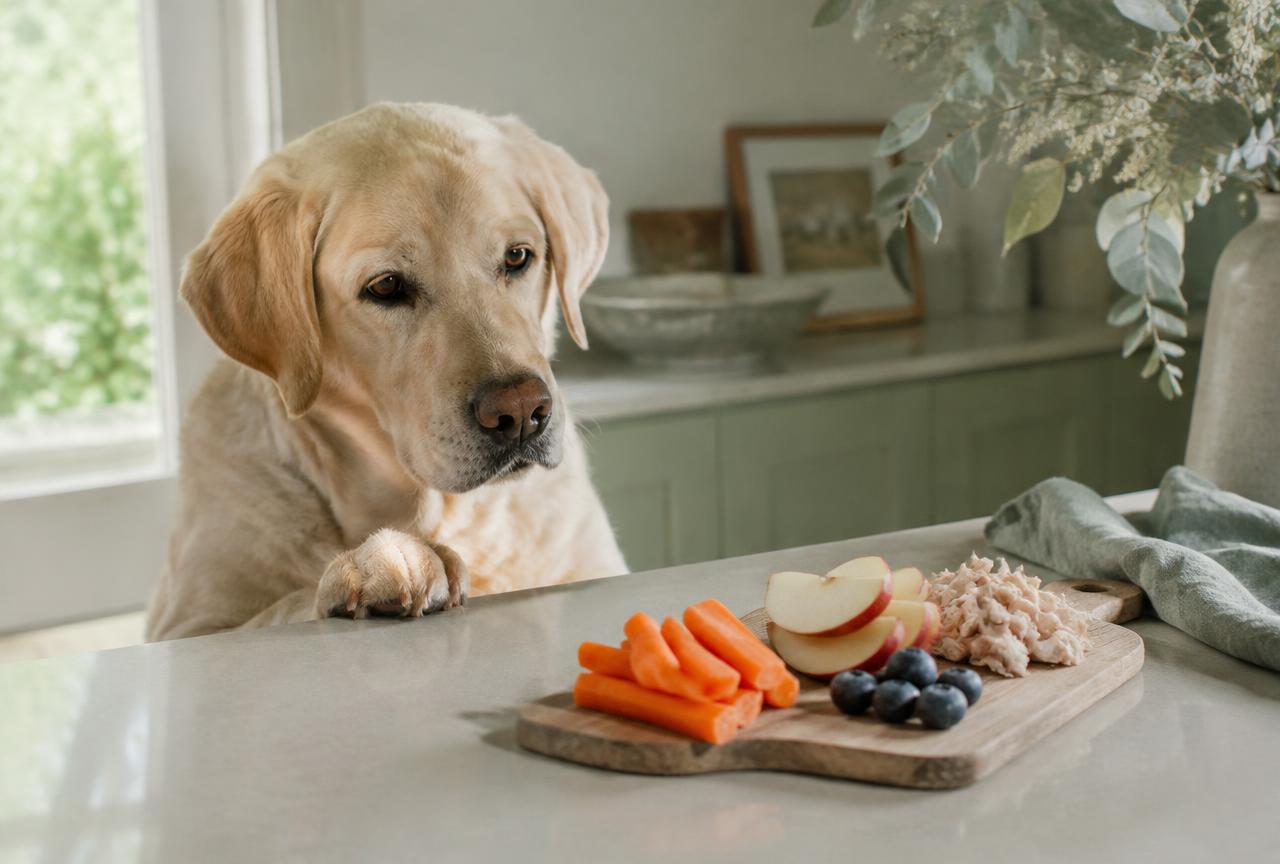
The 10 percent rule. Treats of every kind, including human food, should make up no more than about 10 percent of your dog's daily calories. A 20 kg dog eating around 1,100 calories a day has roughly 110 calories of treat allowance, which is about one small chicken breast or a couple of carrots, not both plus cheese plus a crust of toast. Human food is calorie-dense compared to dog food, and weight creeps on quietly.
Plain means plain. Safe foods become unsafe the moment they are cooked with onion, garlic, heavy salt, rich sauces or sweeteners. A piece of plain boiled chicken is a lovely treat. The same chicken from a Sunday roast, cooked in garlic butter, is not.
New foods start small. Any food your dog has never had before starts with a piece the size of your thumbnail, then a day of watching. Most dogs tolerate the safe list well, but individual stomachs have individual opinions.
The safe list
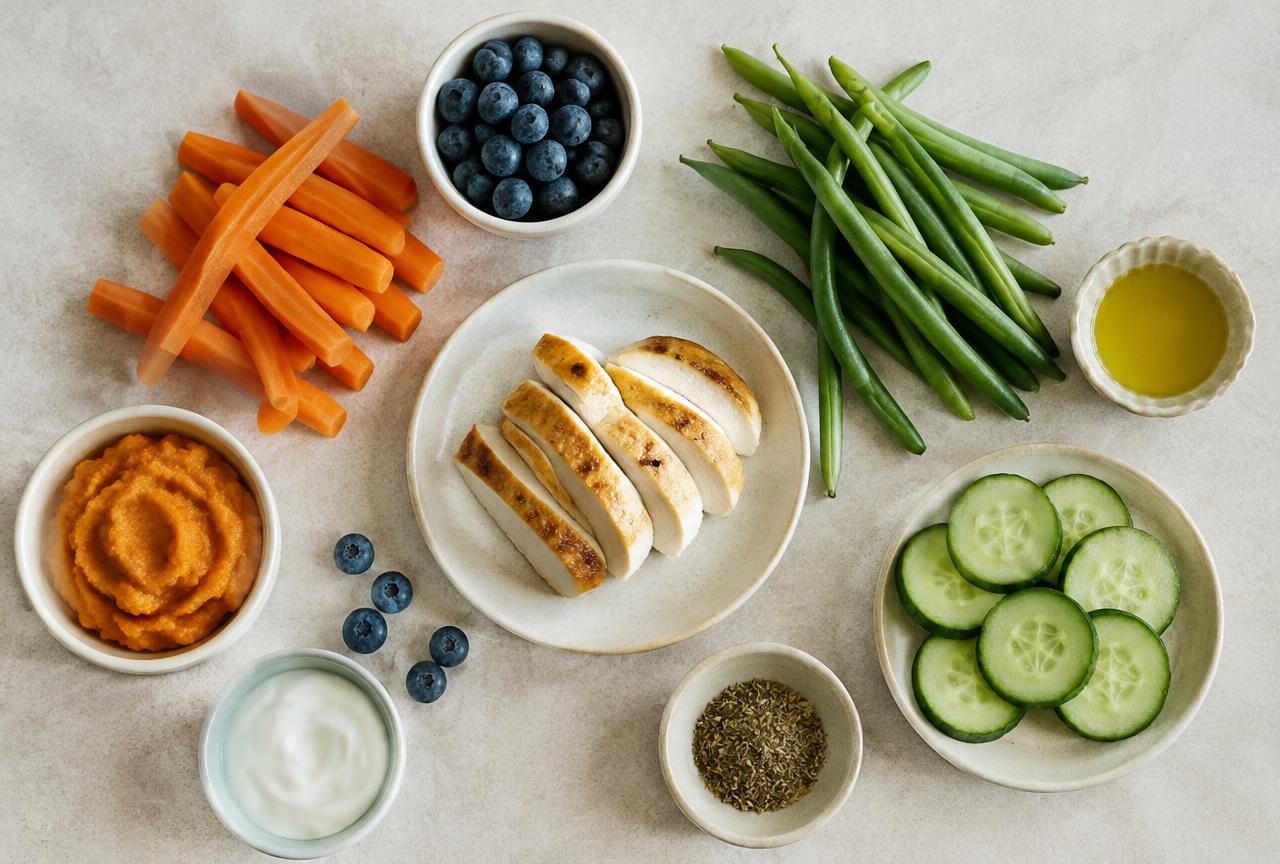
These foods are safe for the vast majority of healthy adult dogs, prepared plainly and served in sensible amounts.
| Food | How to serve it | Watch out for |
|---|---|---|
| --- | --- | --- |
| Cooked chicken or turkey | Plain, boneless, skinless | Cooked bones splinter; no seasoning |
| Carrots | Raw batons or cooked | Cut to size for small dogs |
| Plain rice | Boiled, no salt | A filler, not a meal replacement |
| Eggs | Scrambled or boiled, plain | Cooked only, no butter or oil |
| Apple | Sliced, core and pips removed | Pips contain cyanide compounds |
| Banana | A few slices | Sugary, keep portions small |
| Blueberries | Fresh, a small handful | Easy to overfeed the little ones |
| Green beans | Raw or steamed, plain | Tinned versions often carry salt |
| Pumpkin | Plain cooked or tinned puree | Not pie filling, which is spiced and sweetened |
| Cucumber | Sliced | Very low calorie, good for dieters |
| Cooked white fish | Boneless, plain | Check meticulously for bones |
| Peanut butter | Xylitol-free only, thin smear | Read the label every single time |
Interactive · safe food checker
Can my dog eat this?
Pick a common human food and get a straight answer, with the preparation and portion notes that matter.
Safe, raw or cooked
Carrots are one of the best dog snacks going: low calorie, crunchy, and most dogs love them. Cut into batons for small dogs to avoid a choking risk.
Whatever the food, treats stay within 10 percent of daily calories, and any new food starts with a small piece.
Foods that are safe with conditions
A second tier of foods is fine for most dogs but comes with an asterisk.
Cheese. Most dogs tolerate small amounts, and a cube of cheese is one of the highest-value training treats there is. It is also fatty and calorie-dense, and some dogs are lactose-sensitive. Small cubes, occasionally, and skip it entirely if your dog has a history of pancreatitis.
Bread. A small piece of plain bread will not hurt, but it is empty calories with nothing to offer. The dangerous version is raw dough, which expands in the warm stomach and produces alcohol as it ferments. Raw dough is a vet visit, not a treat.
Yoghurt. Plain, unsweetened yoghurt is fine in small spoonfuls and some owners use it to hide tablets. Flavoured and low-fat versions often contain sweeteners, including xylitol, which changes the category entirely.
Oats. Plain cooked porridge oats are a reasonable occasional addition, especially for dogs with wheat sensitivities. Unsweetened, unflavoured, and cooked in water rather than milk.
The foods that never make the list
Some foods are not a matter of portion or preparation. They are simply out, and every member of the household needs to know the list: grapes and raisins, onions, garlic, leeks and chives, chocolate, macadamia nuts, alcohol, anything containing xylitol, and cooked bones. Our guide to foods dogs must never eat covers each of these, the symptoms they cause, and exactly what to do if your dog gets hold of one.
How to introduce a new food
The process is the same whatever you are introducing. Offer a piece the size of your thumbnail, plain and prepared as it will always be served. Then wait twenty-four hours. Most reactions, soft stools, wind, an itchy spell, show up within a day. If nothing happens, that food goes on your dog's personal safe list and you can offer it in normal treat quantities. If something does happen, you have learned the lesson cheaply.
Introduce one new food at a time. If you offer chicken, cheese and blueberries on the same afternoon and the night goes badly, you have learned nothing except that one of three things disagrees with your dog.
The table scraps question
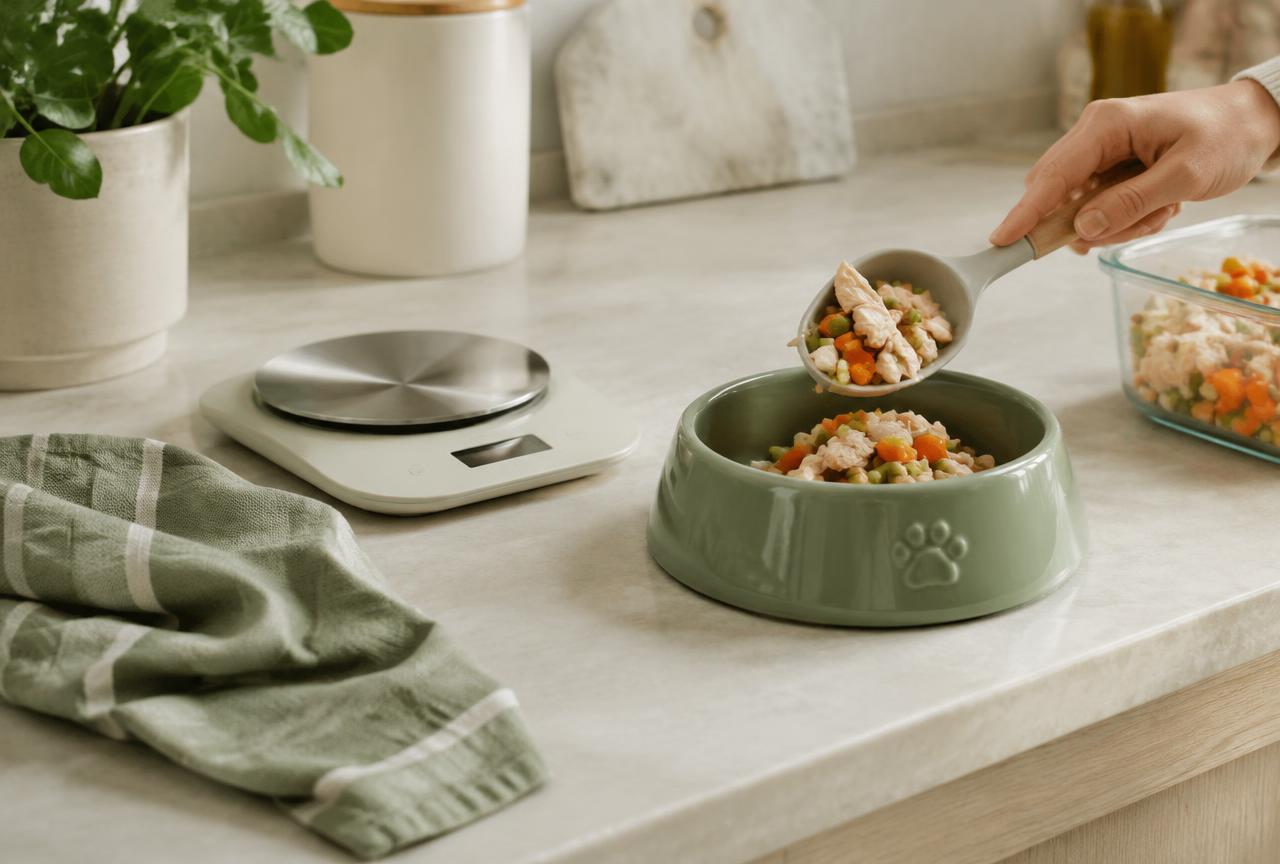
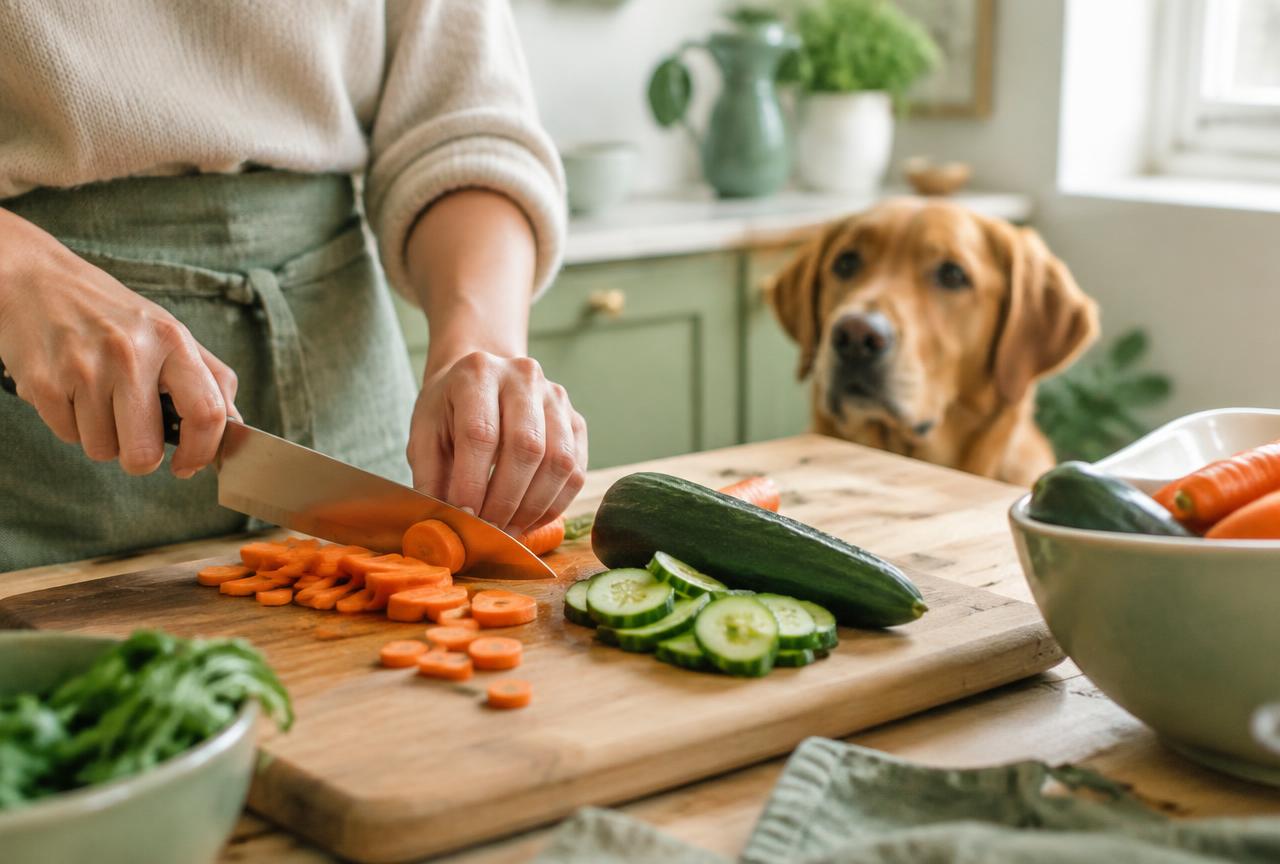
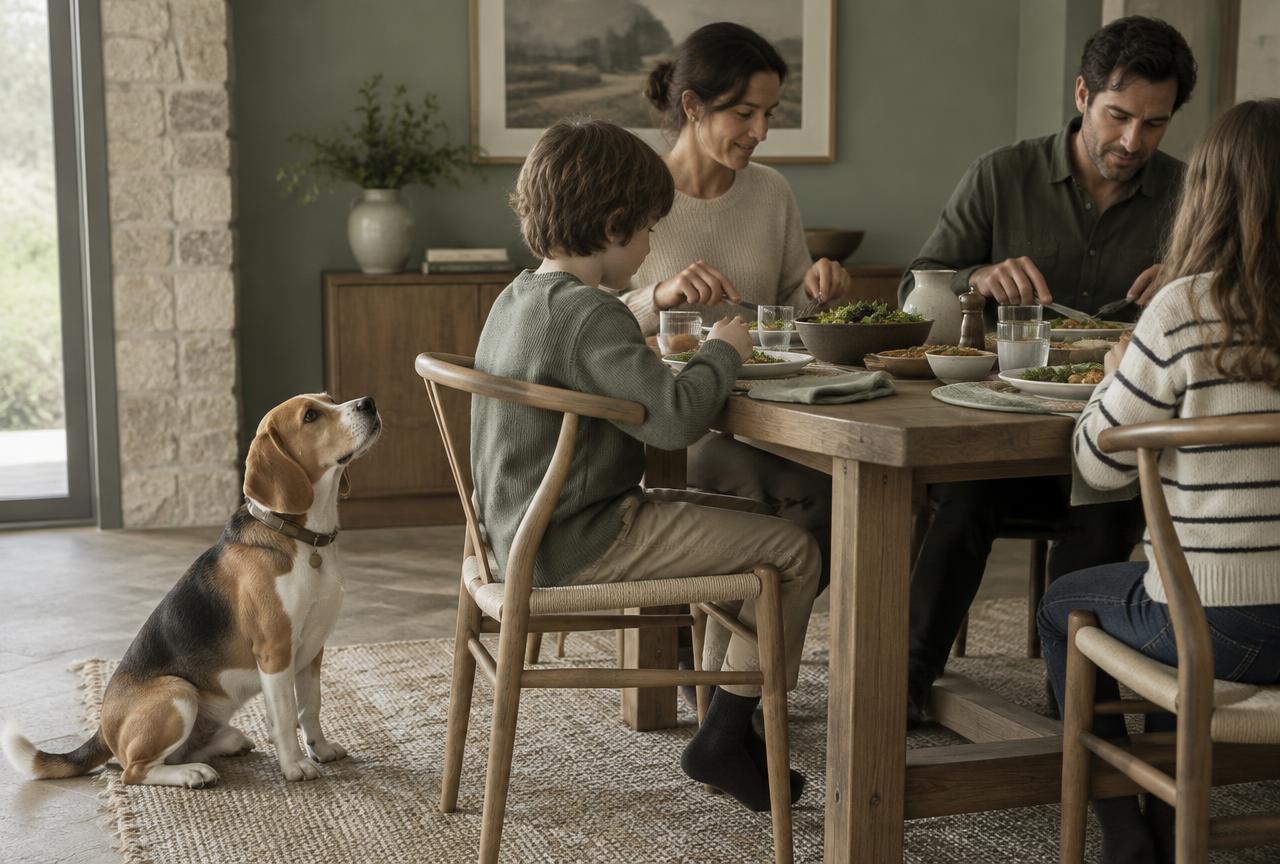
Feeding from the table is a training question more than a nutrition one. The food itself is usually fine if it comes off the safe list, but a dog that is fed from the table learns to stare, whine and paw at every meal you eat for the rest of its life. If you want to share, put the safe portion aside and add it to their bowl at their mealtime, or use it as training rewards. The food is the same; the behaviour it buys is completely different.
The safest human food habit is also the simplest: the dog's share goes in the dog's bowl, at the dog's mealtime, within the dog's calorie allowance.
A word on puppies and seniors
Puppies can have most of the safe list once they are weaned onto solid food, but their stomachs are more sensitive and their calorie margins are smaller, so introduce foods one at a time and keep pieces tiny. Senior dogs often have conditions, kidney disease, pancreatitis, diabetes, that change what safe means for them specifically. If your dog has any diagnosed condition, ask your vet before adding anything new, even foods on this list.
What human food can dogs eat every day?
Very little, in the sense of replacing their main diet. A complete, balanced dog food formulated to FEDIAF or AAFCO standards already supplies what your dog needs. Human foods are best thought of as treats or toppers within the ten per cent rule, which says treats should provide no more than about a tenth of daily calories. Within that budget, plain cooked lean meat, plain cooked white fish, cooked eggs, carrots, green beans, cucumber and small amounts of fruit are reasonable daily options for most healthy dogs. Variety is fine; the total is what matters.
Treats are a seasoning, not a meal. Count them like one.
Healthy swaps for common treats
Many shop-bought treats are energy-dense. Swapping a few for vegetables or lean protein trims calories without cutting the fun.
| Instead of | Try | Why |
|---|---|---|
| --- | --- | --- |
| A biscuit treat | A carrot stick or green bean | Crunchy, very low calorie |
| Cheese cubes | A small piece of cooked chicken | Lower fat, high protein |
| Sausage pieces | Cooked white fish flakes | Lean, no salt or seasoning |
| A dental chew every day | Cucumber slices plus tooth brushing | Fewer calories; brushing does the real work |
| A crust of buttered toast | A blueberry or two | Tiny, low-calorie, easy to portion |
Calories in common dog-friendly foods
These are approximate figures for plain, unseasoned portions. Check the portion calculator for your dog's daily total.
| Food | Portion | Approximate kcal |
|---|---|---|
| --- | --- | --- |
| Carrot | One medium stick | 5 |
| Green beans | Five beans | 5 |
| Apple, cored | One slice | 10 |
| Cooked chicken breast | 10 g | 16 |
| Cooked egg | Half an egg | 35 |
| Plain cooked salmon | 10 g | 20 |
| Cheddar cheese | 10 g | 40 |
| Peanut butter, xylitol free | One teaspoon | 30 |
For a 10 kg dog needing roughly 500 to 600 kcal a day, the treat budget is about 50 to 60 kcal. One teaspoon of peanut butter and a slice of cheese uses all of it.
Foods for dogs with special needs
- Overweight dogs: lean on vegetables; check progress with the ideal weight tool.
- Dogs prone to pancreatitis, including the Miniature Schnauzer: avoid fatty foods such as cheese, sausages and skin.
- Dogs with kidney disease: ask your vet before adding protein-rich toppers.
- Dogs with allergies: introduce one new food at a time, and keep a food diary.
- Diabetic dogs: discuss fruit and starchy foods with your vet first.
- Flat-faced breeds such as the Pug and French Bulldog: cut foods small to reduce choking risk.
The safe-sharing routine
- 1Check the food against a trusted list, such as this one and our list of foods dogs must never eat.
- 2Serve it plain: no salt, butter, oil, garlic, onion, sauces or spices.
- 3Cut into pieces matched to your dog's size.
- 4Offer one small amount and watch for 24 hours.
- 5Count it within the ten per cent treat budget.
- 6Reduce main meals slightly if treats become a daily habit.
Sharing checklist
- Plain, unseasoned and cooked where appropriate
- No bones, cores, pits or stones
- Bite-sized for your dog
- Introduced one at a time
- Within the daily treat allowance
- Never from the table during meals, to avoid begging habits
The verdict, by dog
Healthy adult: a small, varied selection of plain foods is a pleasant addition.
Puppy: keep treats tiny so they do not unbalance growth diets.
Senior: soft, easy foods such as scrambled egg or fish may be welcome; check with your vet for chronic conditions.
Dog on a prescription diet: ask your vet before adding anything at all. For fruit specifically, see can dogs eat apples.
The bottom line
Most of what is safe is also simple: plain meat, plain vegetables, a little fruit, all within the 10 percent rule. The dogs that get into trouble are almost never the ones whose owners checked a list. They are the ones whose owners assumed. You are reading the list, which already puts your dog ahead.
Questions people actually ask
Can dogs eat chicken every day?
Plain cooked chicken is safe daily in treat quantities, but it should not replace a complete dog food, which is formulated to cover every nutrient. As a topper or treat within the 10 percent rule, it is one of the best options there is.
Is cheese bad for dogs?
Not inherently. Most dogs tolerate small amounts of cheese well, and it makes an excellent training reward. It is fatty and calorie-dense, so keep portions small, and avoid it entirely for dogs with pancreatitis or lactose sensitivity.
Can dogs eat rice?
Yes. Plain boiled white rice is gentle on the stomach and a staple of the bland diet vets recommend for mild tummy upsets. Serve it plain, with no salt, butter or seasoning.
What human food is best for training treats?
Small cubes of cheese, tiny pieces of cooked chicken, and commercial training treats all work well. The key is size: a training treat should be pea-sized, because you will be giving dozens in a session.
Can puppies eat human food?
Once weaned, puppies can have small amounts of most foods on the safe list, introduced one at a time. Their stomachs are more sensitive than adult dogs, so keep pieces tiny and watch for any upset.
How much human food can I give my dog?
All treats combined, human food included, should stay within about 10 percent of daily calories. For a typical medium dog that is roughly 100 calories, about one small chicken breast or two carrots.
What human food can dogs eat every day?
Small amounts of plain cooked lean meat, white fish, cooked egg, carrots, green beans and cucumber are suitable daily treats for most healthy dogs. Keep all treats, including human food, to around ten per cent of daily calories, and continue feeding a complete, balanced dog food as the main diet.
Is cheese safe for dogs?
Most dogs can have small amounts of plain cheese as an occasional treat. It is high in fat and calories, so use tiny pieces and count them in the daily treat allowance. Avoid cheeses with garlic, onion, herbs or blue moulds, and skip cheese entirely for dogs prone to pancreatitis or with dairy intolerance.
Sources
Breeds mentioned

Labrador Retriever
Britain's most popular family dog: biddable, food driven and built for an active household.

Beagle
A merry, sociable scenthound with a powerful nose and a mind of its own outdoors.

French Bulldog
A comic, affectionate companion built for city life, but with health needs that demand a careful breeder.
Put it into practice
Read next
Can Dogs Eat Oatmeal? Cooked, Raw and Flavoured
Plain oatmeal cooked in water is safe for dogs in small servings and its soluble fibre can help mild diarrhoea. Avoid flavoured sachets, raw oats and porridge made with milk or sugar.


