

Utility group
France (developed from English toy bulldogs)
French Bulldog
The French Bulldog is a compact, sociable companion suited to flats and calm households, though its flat face brings real health considerations.
Reviewed against Kennel Club and breed club health guidance
A comic, affectionate companion built for city life, but with health needs that demand a careful breeder.
The short version
- French Bulldogs are affectionate, low exercise companions well suited to flat living.
- Brachycephalic airway problems are common in the breed and should be screened by BOAS grading before buying.
- Heat tolerance is poor, so exercise and travel need careful timing in warm weather.
- Most litters are born by caesarean section, which every responsible buyer should discuss with the breeder.
- Training works best with short, upbeat, food-based sessions rather than long drilling.
- Weight
- 8 to 14 kg
- Height
- 27 to 33 cm
- Lifespan
- 10 to 12 yrs
- Size
- Small
- Group
- Utility
- Coat
- Short, smooth, single coat
- Grown male
- 9 to 14 kg
- Grown female
- 8 to 13 kg
- Years to full size
- about 1.2
- One-off setup
- €500 to 1000

Get one if…
- Flat or house dwellers
- First-time owners wanting a calm companion
- Owners who work from home or have flexible schedules
- People wanting a dog that travels easily
- Households without extreme heat
Think again if…
- Runners or hikers wanting a fitness partner
- Households in hot climates without air conditioning
- Owners unwilling to budget for possible surgery
- People wanting a strong swimmer or water dog
- Very active multi-dog households needing stamina matches
Trait profile
Low exercise needs and high affection make this a natural flat dog, but heat sensitivity and a stubborn streak temper the easy image.
Space & setup. Comfortable in a small flat with no garden, provided daily short walks and cool indoor temperatures are guaranteed.
Allergies. Not hypoallergenic; sheds a modest amount year round and skin folds need regular cleaning to avoid odour and irritation.
Living with a French Bulldog
The French Bulldog is one of the most popular companion breeds in Europe, prized for its clownish personality and manageable size. Behind the charm sits a brachycephalic body plan that every prospective owner needs to understand before buying.
The French Bulldog descends from small bulldogs bred down in size by English lace workers, many of whom emigrated to Normandy during the Industrial Revolution. There, the breed was crossed with local ratters and terriers, and the now famous bat ears were fixed as a breed hallmark by Parisian society in the late nineteenth century. Unlike its bulldog ancestors, the Frenchie was never a working or fighting dog. It was bred purely as a companion, and that history shows in a temperament built for human company rather than a job.
At home this is a comedian in a small, muscular body. Frenchies are affectionate, often glued to one favourite person, and enjoy being part of whatever the household is doing, from cooking to watching television. They tend to get on well with children who understand gentle handling, and many live contentedly with other dogs and cats, especially when raised together. They are not big barkers as a rule, though they can be vocal in short bursts, and they often communicate with a range of grunts, snorts and snores that owners find endearing but that also hint at the breathing challenges built into the breed.
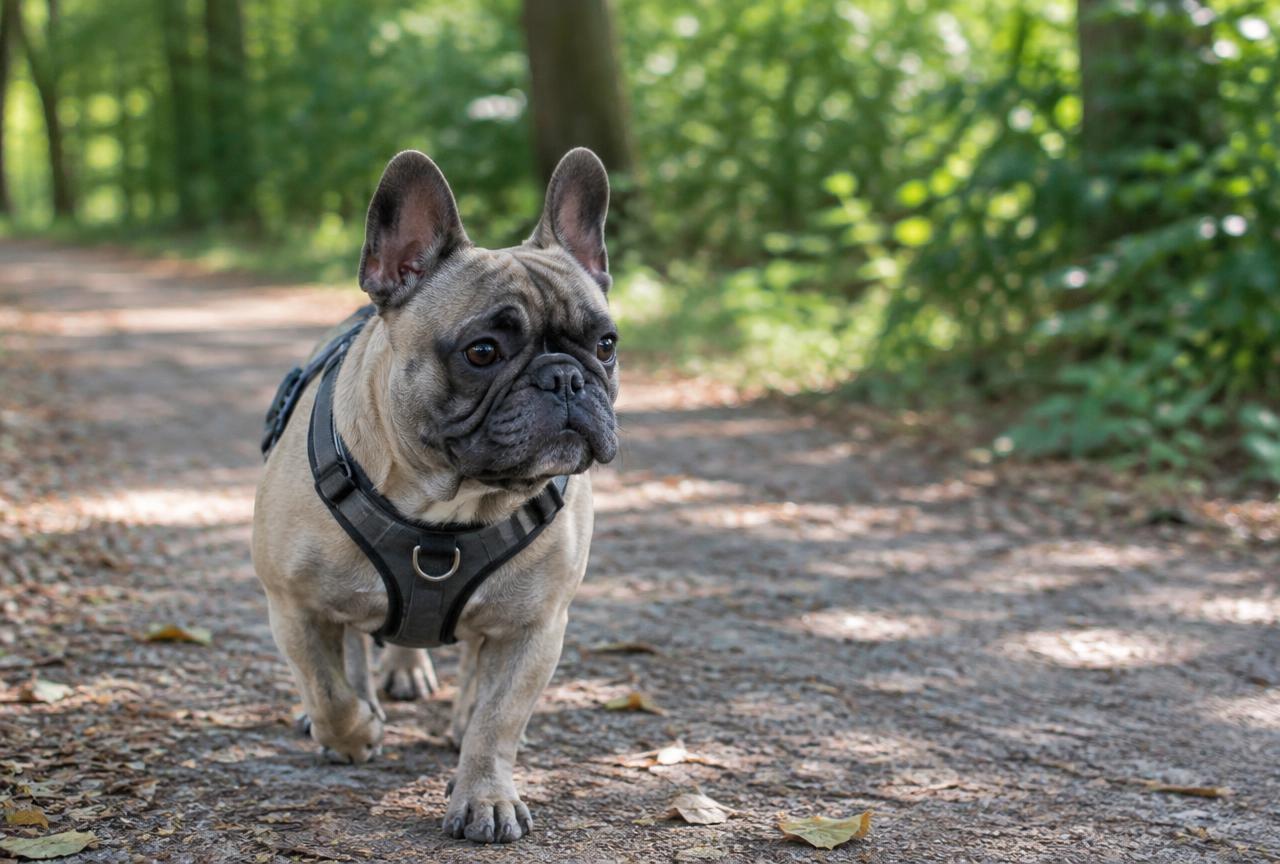
Exercise needs are modest compared with most breeds, which suits owners with limited time or mobility, but modest does not mean none. Two short walks a day, kept to cooler parts of the day in summer, are usually enough, and games of tug or gentle fetch indoors provide useful mental stimulation. Because of their airways, Frenchies overheat quickly and should never be exercised hard in warm weather or left in cars, gardens without shade, or hot rooms. Training is straightforward if kept upbeat and short, since these dogs are food motivated but can be stubborn when bored. Harness use rather than a collar is strongly advised to avoid pressure on the throat.

Health is the single most important subject for anyone considering this breed. Brachycephalic Obstructive Airway Syndrome affects a large proportion of the breed to varying degrees, causing snoring, snorting and, in severe cases, real breathing distress that may need surgical correction. Spinal issues including hemivertebrae, intervertebral disc disease, skin fold dermatitis, eye ulcers, and heat intolerance are all more common than in the average dog. Most Frenchie litters are conceived by artificial insemination and delivered by caesarean section because the broad heads and narrow hips of the breed make natural whelping risky, a fact that responsible buyers should ask breeders about directly. Choosing a breeder who health tests, respects BOAS grading, and avoids breeding from dogs with narrow nostrils or visibly laboured breathing makes a real difference to lifetime welfare and vet bills.
The French Bulldog suits people who want a genuinely affectionate, low exercise companion and who live in a flat or house without a large garden. It is a poor match for very active households wanting a jogging or hiking partner, for families in hot climates without air conditioning, or for buyers unwilling to budget for insurance and possible surgery. Anyone drawn to the breed should see the parents in person, ask searching questions about breathing and whelping history, and accept that the comic charm comes with a duty of careful, informed ownership.
A devoted, funny flatmate of a dog that needs a health-conscious owner more than a big garden.
Exercise, day to day
- 1Two walks of 15 to 20 minutes daily, avoiding the heat of the day and midday sun in summer.
- 2Puppies under 12 months should have short, gentle play sessions rather than long walks or stairs.
- 3Add short scent games or puzzle feeders indoors for mental stimulation without overheating.
- 4Use a well-fitted harness rather than a collar to protect the airway during walks.
- 5Watch for excessive panting or blue tinged gums and stop activity immediately if seen.
Grooming, realistically
- 1Brush weekly with a soft bristle or rubber curry brush to lift loose hair.
- 2Clean facial and tail skin folds two to three times a week with a vet-approved wipe to prevent infection.
- 3Trim nails every three to four weeks as this breed rarely wears them down naturally.
- 4Brush teeth several times a week, as small jaws are prone to crowding and dental disease.
- 5Check ears weekly, since bat ears can trap debris and moisture.

What you actually need
- Rubber curry brush
- Fold cleaning wipes
- Nail clippers or grinder
- Canine toothbrush and paste
- Ear cleaning solution
Puppy to adult
| Age | Male | Female | What is happening |
|---|---|---|---|
| 8 weeks | 2 to 3 kg | 1.8 to 2.8 kg | Small, compact puppy stage. |
| 3 months | 3.5 to 5 kg | 3 to 4.5 kg | Steady, moderate growth. |
| 6 months | 6 to 9 kg | 5.5 to 8 kg | Most of adult height reached. |
| 9 months | 8 to 12 kg | 7 to 11 kg | Muscle and chest depth filling out. |
| 12 months | 9 to 13 kg | 8 to 12 kg | Close to adult weight. |
| 18 months | 9 to 14 kg | 8 to 13 kg | Fully mature, adult proportions set. |
Ranges are typical, not targets. Judge condition by ribs and waist, and check with the ideal weight checker.
What to ask a breeder
- Has this litter's parents been BOAS graded, and what were the results?
- Was the dam mated and whelped naturally or by artificial insemination and caesarean?
- Can I see evidence of spine, hip and eye screening for both parents?
- How wide are the puppy's nostrils, and have you observed any noisy breathing?
- What socialisation has the litter had by eight weeks?
- What is your policy if health issues emerge after purchase?
Health tests to ask for
Ask to see results for both parents before you put down a deposit.
- BOAS (Brachycephalic Obstructive Airway Syndrome) functional grading assessment
- Spine X-ray for hemivertebrae
- Patella evaluation
- Hip scoring where breeding stock is used
- Eye examination for ulcers and entropion
Health watch-list
What to ask a breeder about, and what to watch for over a lifetime. This is orientation, not veterinary advice, anything you notice belongs in front of a vet.
Brachycephalic Obstructive Airway Syndrome
Very likelyNarrowed nostrils and elongated soft palate restrict airflow; severity ranges from mild snoring to needing surgery.
Intervertebral disc disease and hemivertebrae
NotableScrewed tails can be linked to malformed vertebrae, which occasionally cause spinal cord compression.
Skin fold dermatitis
CommonMoisture trapped in facial and tail folds can lead to infection without regular cleaning.
Heat stroke
NotableRestricted airways make it hard for the breed to cool itself, so exercise and travel need careful timing.
Patellar luxation
UncommonThe kneecap can slip out of place, sometimes requiring surgical correction.
Corneal ulcers
Common with ageProminent eyes are prone to scratches and ulcers that need prompt veterinary attention.
What it costs to keep one
Realistic running cost
€112 / month
About €1,344 a year, or roughly €14,784 across a 11-year life, before purchase price, neutering and one-off vet events.
Before the puppy arrives. Budget roughly €500 to 1000 for a crate, bed, lead and harness, bowls, puppy classes, first vaccinations and grooming kit sized for this breed. Figures throughout are indicative and vary a good deal between countries.
Interactive · built for this breed
Is a French Bulldog right for your home?
Seven honest questions about your space, time and household, checked against this breed's exercise need, coat, sociability and tolerance for time alone.
Fit with your routine
98%
A strong fit
Your routine suits a French Bulldog well. Meet adult dogs of the line before you commit.
Working in your favour
- Your daily walking comfortably covers this breed's exercise need.
- Coat care fits the grooming time you offered.
Compare more breeds in the matchmaker, or plan meals with the portion calculator.
The verdict, by household
First-time owner
A strong choice
Manageable size and affectionate nature suit a calm first ownership experience, provided health testing is prioritised.
Family with young children
A good match with supervision
Sturdy and playful, but children must be taught not to sit on or squeeze the dog's chest.
Active outdoor household
Not the best fit
Heat sensitivity and low stamina make this breed a poor hiking or running companion.
Flat dweller in a city
An excellent choice
Small size and low exercise needs make this one of the best breeds for urban flat life.
When to call your vet
- Loud snoring or snorting that worsens or changes suddenly
- Bluish tinge to gums or tongue, especially after exercise or heat
- Reluctance to walk or repeated collapse after short activity
- Scooting or licking around the tail, which can signal a corkscrew tail infection
- Persistent scratching at skin folds or a strong odour from the face folds
Nothing here is a diagnosis. A swollen, hard belly with retching, collapse, breathing difficulty and sudden hind-leg weakness are emergencies: go straight away.
French Bulldog vs the closest alternatives
| Breed | Weight | Energy | Grooming | € / month |
|---|---|---|---|---|
| French Bulldog | 8 to 14 kg | 4/10 | 2/10 | €112 |
| Boston Terrier | 5 to 11 kg | 5/10 | 2/10 | €67 |
| Pug | 6 to 10 kg | 4/10 | 3/10 | €85 |
| Great Dane | 45 to 90 kg | 5/10 | 2/10 | €302 |
French Bulldog questions, answered
Do French Bulldogs bark a lot?
No, they are not persistent barkers, though they can be vocal with grunts, snorts and occasional short barking bursts when excited or alerting to visitors.
Can French Bulldogs swim?
Most cannot swim safely due to their heavy heads and short muzzles, and many sink rather than float, so supervised life jackets are essential near water.
How much exercise does a French Bulldog need?
Around 30 to 40 minutes a day split into short walks is usually enough, timed to avoid heat and kept gentle to protect the airway.
Why are French Bulldogs so expensive?
High demand, costly veterinary care for whelping by caesarean section, and thorough health testing in reputable litters all push up the purchase price.
Are French Bulldogs good with children?
Yes, they are generally playful and patient with children, though their compact chest means rough handling or sitting on the dog must be avoided.
What health tests should I ask a French Bulldog breeder about?
Ask for BOAS functional grading, spine imaging for hemivertebrae, patella checks and eye examination results for both parents.
Sources
- French Bulldog breed standard, The Kennel Club
- French Bulldog breed standard, American Kennel Club
- BOAS research programme, University of Cambridge
- Brachycephalic breeds health, British Veterinary Association
- French Bulldog health survey, French Bulldog Club of England
Put it into practice
Reading that goes with this

Nutrition
Can Dogs Eat Fruit? A Vet-Informed Guide

Puppies
Crate Training a Puppy: A 14-Day Plan

Health
Dog Heat Cycles: How Long, How Often and What to Expect

Health
Dog Reverse Sneezing: Causes and What to Do

Behaviour
Dog Separation Anxiety: Signs, Causes and a Training Plan

Puppies
How to Socialise a Puppy: The First 16 Weeks

Nutrition
What Human Foods Can Dogs Eat? The Safe List

Health
Why Do Dogs Lick Their Paws? Causes and Fixes

Health
Why Do Dogs Sleep So Much? Hours by Age and Breed
Behaviour
Why Do Dogs Tilt Their Heads? Curiosity, Ears and One Warning Sign

Health
Why Is My Dog Itching? Allergies, Parasites and Skin

Health
Why Is My Dog Panting So Much? Causes and Warning Signs

Health
Dog Allergies: Types, Symptoms and Treatment

Health
Dog Sneezing: Play, Allergies and When It Means More

Health
Dog Breathing Fast: Normal Panting, Dreaming and Danger Signs

Health
Why Does My Dog Snore? Normal Noises and When to Worry

Nutrition
Can Dogs Eat Bananas? Portions, Benefits and When to Skip Them

Nutrition
Can Dogs Eat Strawberries? Portions, Sugar and Serving Ideas

Nutrition
Can Dogs Eat Watermelon? Rind, Seeds and Safe Servings

Health
Dog Swollen Face: Causes and When It Is an Emergency

Nutrition
Can Dogs Eat Blueberries? Portions, Benefits and Serving Ideas

Nutrition
Can Dogs Eat Pineapple? Fresh, Canned and Dried

Behaviour
Why Do Dogs Hump? Causes and How to Stop It

Nutrition
Can Dogs Eat Tomatoes? Ripe, Green and the Plant

Health
Dog Panting at Night: Causes and When to Worry
Breeds people compare with this

Boston Terrier
A dapper, good natured American companion with a milder face and a gentleman's manners.

Pug
A charming, people loving companion whose flat face demands honest, careful ownership.

Great Dane
A gentle giant whose enormous size demands patient growth, vigilant bloat awareness and an honest look at lifespan and cost.