
Why Is My Dog Itching? Allergies, Parasites and Skin
Where and when your dog itches is the best clue to the cause. Here is how vets narrow it down, and what you can do to bring the scratching down.
The SniffScroll desk
Published 9 October 2026

Reviewed against current veterinary guidance
The short version
- Fleas are the commonest cause of itching, even if you never see one.
- Itch at the tail base suggests fleas; paws, ears and belly suggest allergy.
- Sudden, intense itch on ear tips and elbows can be contagious mange.
- Food allergy is only reliably tested with a strict eight-week elimination diet.
- Itch lasting over a week, broken skin or hair loss needs a vet.
A dog itching now and then is completely normal. A dog itching so much that it wakes you at night, chews its paws raw or cannot settle on its bed is not, and it is one of the commonest reasons owners take a dog to the vet. The good news is that most dog itching has a short list of causes: parasites, allergies and skin infections, often in combination. Work out which one is driving it and you can usually bring the scratching right down.
This guide explains why dogs itch, how the location and timing of the itch point to the cause, what you can safely try at home, and when a vet visit will get your dog comfortable faster.
Why is my dog itching? The short answer
Dogs itch most often because of fleas, allergies (to flea bites, pollen, dust mites or food) or a skin infection caused by bacteria or yeast. Less common causes include mites such as sarcoptic mange, dry skin, contact irritation and hormonal disease. The pattern matters: itching at the lower back and tail base suggests fleas; paws, ears, face and belly suggest allergy; sudden intense itching everywhere suggests mites. Start by ruling out fleas, then look for a seasonal or year-round pattern.
How do I know if the itching is normal?
A healthy dog scratches briefly a few times a day, and anything more than that, or any damage to the skin, is a sign of a problem. Vets often use a simple ten-point itch scale: zero is no itch, ten is a dog that scratches constantly, even while eating or playing. Most owners underestimate itch because it builds slowly. Signs that it has gone beyond normal include:
- Scratching, licking or chewing that interrupts sleep, meals or play.
- Red, greasy or darkened skin, especially in the armpits, groin and between the toes.
- Hair loss, thinning patches or broken hairs.
- Rust-brown staining on light-coloured fur from constant licking.
- A yeasty or musty smell from the skin or ears.
- Scabs, spots or hot, weeping patches known as hot spots.
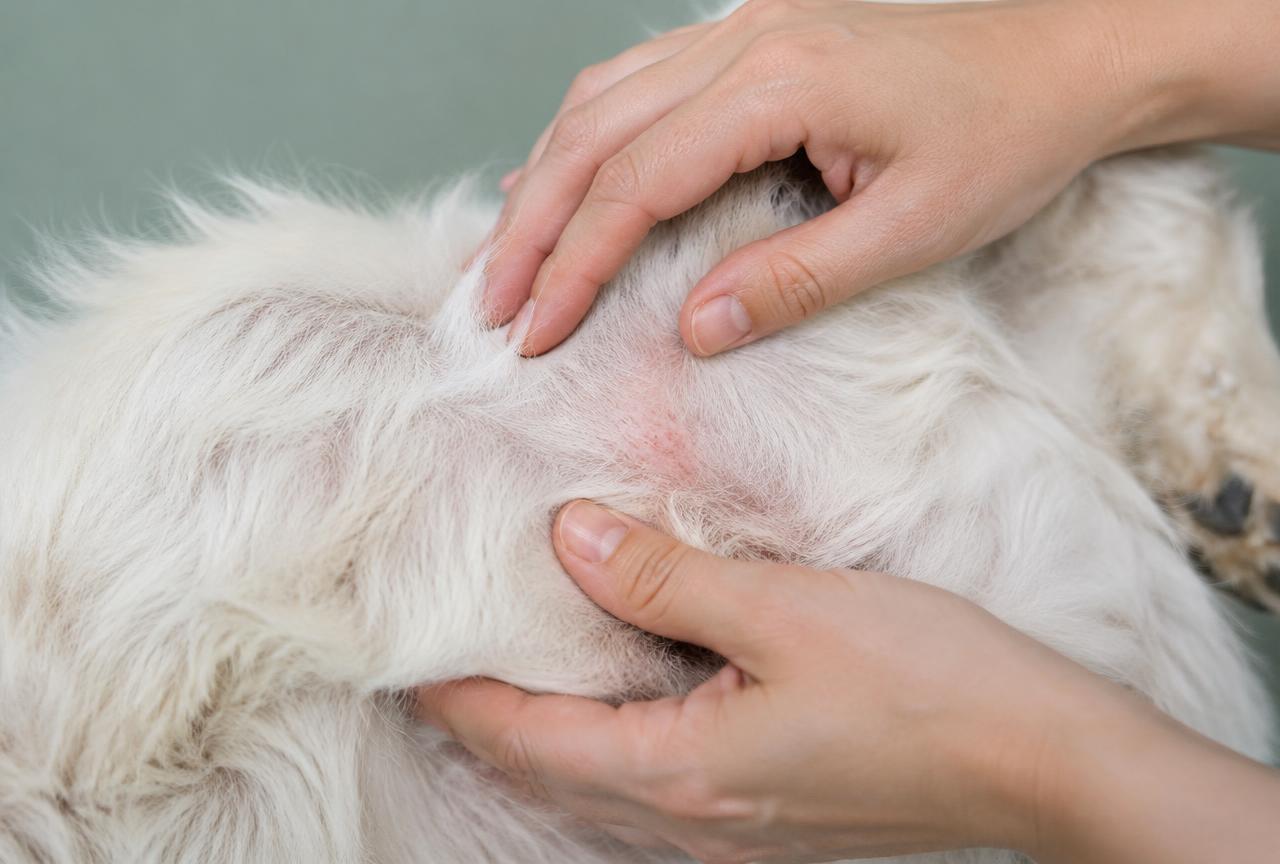
Where your dog itches: what it tells you
The location of the itch is the single most useful clue to its cause, and vets use it every day. This table summarises the classic patterns.
| Where the itch is worst | Most likely cause | Next step |
|---|---|---|
| --- | --- | --- |
| Lower back, tail base, back of thighs | Flea allergy | Comb test for flea dirt, treat every pet and the home |
| Paws, between the toes | Environmental or food allergy | Wipe paws after walks, vet allergy plan |
| Ears, face, around the eyes | Allergy, often with ear infection | Vet ear check, treat infection |
| Belly, armpits, groin | Atopic or contact allergy | Rinse after walks, check for new products |
| Elbows, ear tips, all over, very intense | Sarcoptic mange (mites) | Vet visit, skin scrape, treat in-contact dogs |
| Bottom only | Anal glands or tapeworm | See our scooting guide |
| Flaky back, little redness | Dry skin or Cheyletiella mites | Vet check, gentle moisturising shampoo |
If the itch is around the bottom, our guide to why dogs scoot covers the gland and worm causes in detail.
Fleas: always rule them out first
Fleas are the commonest cause of itchy dogs in the UK and Europe, and you do not need to see a flea to have a flea problem. Allergic dogs groom so thoroughly that they remove the evidence, and one bite can trigger a week of scratching. Central heating means fleas breed all year round, not just in summer.
To check, run a flea comb through the coat over a damp white paper towel. Black specks that dissolve into reddish-brown smears are flea dirt, which is digested blood and proves fleas are present. If you find them, treat every pet in the house with a vet-recommended product on the same day and clean the home thoroughly: wash bedding at 60 degrees and vacuum daily for two weeks. Our full guide to fleas on dogs has the complete plan.
Even if you find nothing, many vets will suggest a strict flea treatment trial for every pet for eight weeks before investigating other causes, because flea allergy is so common and so easily missed.
Allergies: the long-term itch
When fleas are ruled out, allergy is the most likely cause of a chronically itchy dog. There are two main types.
Environmental allergy (atopic dermatitis) is a reaction to things in the air and on the ground: pollens, grasses, dust mites, moulds. It usually starts between six months and three years of age, often begins as a seasonal itch in spring and summer, and may become year-round over time. Paws, ears, face, armpits and belly are the typical areas. Breeds such as the West Highland White Terrier, French Bulldog, Labrador Retriever, Golden Retriever and Staffordshire Bull Terrier are predisposed.
Food allergy is less common than many owners assume, and it is usually a reaction to a protein such as beef, chicken, dairy or wheat that the dog has eaten for a long time, not something new. It causes the same itchy pattern as environmental allergy, often all year round, and sometimes comes with soft stools or frequent bowel movements. The only reliable test is a strict elimination diet using a hydrolysed or genuinely novel protein food for eight weeks, with absolutely nothing else to eat. Blood and hair tests sold online for food allergy are not considered reliable by veterinary dermatologists.
Allergy cannot usually be cured, but it can be controlled very well. Modern anti-itch tablets and injections work quickly and safely for most dogs, and allergen immunotherapy (a course of vaccines tailored to your dog's allergies) can reduce the problem long term.

Skin infections and mites
Bacterial and yeast infections are rarely the first cause of itching, but they almost always make it worse. When a dog scratches, the skin barrier breaks, and bacteria (usually *Staphylococcus*) and yeast (*Malassezia*) that normally live harmlessly on the skin take over. Signs include small red spots and pustules, crusty circles, a greasy coat and a strong yeasty smell. Infections need treating with medicated shampoo, sprays or tablets, and the underlying cause must be found or they will return.
Sarcoptic mange, caused by a microscopic mite, produces some of the most intense itching a dog can experience. It often starts on the ear tips, elbows and belly, spreads quickly, is contagious to other dogs and can cause a temporary itchy rash in people. Foxes are a common source in the UK. If your dog has suddenly become frantically itchy, see a vet promptly.
What can I do at home?
You can make your dog more comfortable at home while you work out the cause, but persistent itching always deserves a vet's opinion. Here is a step-by-step plan.
- 1Treat for fleas properly. Use a vet-recommended product on every pet, on the same day, and treat the home.
- 2Wipe down after walks. In pollen season, wipe paws and belly with a damp cloth when you come home to remove allergens.
- 3Bathe sensibly. A gentle, soap-free dog shampoo or a vet-prescribed medicated one can remove allergens and calm skin. Every one to two weeks is enough for most allergic dogs; see our guide to how often to bathe a dog.
- 4Check for new products. New carpet cleaner, laundry detergent or bedding can cause contact irritation on the belly and paws.
- 5Feed a complete, good-quality diet. Diets with omega-3 fatty acids support the skin barrier; ask your vet before adding supplements.
- 6Stop the damage. A soft cone or a light T-shirt can stop a dog chewing a sore spot while it heals.
- 7Keep a diary. Note where your dog itches, how badly (zero to ten), the time of year and any new food or product. It makes the vet visit far more useful.
Avoid human creams, tea tree oil, and home remedies that are toxic if licked. Apple cider vinegar can sting broken skin. Antihistamines meant for people have limited effect in dogs and some formulations contain ingredients that are dangerous, so only use them if your vet has advised a specific product and dose.
Allergy is rarely cured, but it is very treatable. The goal is a comfortable dog with occasional flare-ups, not a dog that never scratches again.

Use the itch mapper
The interactive tool below asks where and when your dog itches and whether the skin is damaged, then suggests the most likely cause group and next steps.
Interactive · itch mapper
Map your dog's itch
Where and when your dog itches says a lot about the cause. Pick the pattern for a likely cause and plan.
Your next steps
- Do the white paper towel comb test for flea dirt.
- Year-round itch with no fleas may be food allergy; only a strict 8-week elimination diet tests it.
Lower back and tail base: fleas first
Itch concentrated over the rump and tail base is the classic flea allergy pattern. One bite can trigger days of scratching.
When should I see the vet?
See your vet if itching lasts more than a week, keeps coming back, disturbs your dog's sleep, or causes any broken skin, hair loss or smell. Early treatment stops the itch-scratch cycle before infection sets in, and your vet can give fast relief while you investigate the cause.
Book an appointment within a day or two if:
- Your dog is scratching or chewing constantly and cannot settle.
- There are open sores, weeping patches, pustules or bald areas.
- The itching started suddenly and is very intense, especially on the ears and elbows.
- Other pets or people in the house have started itching.
- There is swelling of the face, hives or any difficulty breathing, which can signal an allergic reaction and needs urgent care.
Your vet may do skin scrapes, tape strips or hair plucks to look for mites and infection, and may suggest a flea trial or an elimination diet. For difficult cases, a referral to a veterinary dermatologist can make a real difference.

The bottom line
Dog itching has a short list of causes, and fleas and allergies top it. Rule out fleas first with a comb test and proper treatment for every pet. Then look at where and when your dog itches: paws, ears and belly suggest allergy, sudden intense itching suggests mites, and broken or smelly skin means infection. Treat what you can at home, keep a diary, and see your vet for anything that lasts more than a week. With the right plan, even a very itchy dog can be comfortable again.
Questions people actually ask
Why is my dog itching but has no fleas?
Allergic dogs groom away the evidence, so fleas are still possible. If a strict flea trial does not help, environmental or food allergy, mites or infection are next.
What can I give my dog for itching?
Treat for fleas, wipe paws after walks and use a gentle shampoo. For medication, ask your vet: modern anti-itch tablets and injections work well, and human antihistamines are unreliable.
Can food cause my dog to itch?
Yes, but it is less common than environmental allergy. It is usually a reaction to a long-eaten protein, tested with an elimination diet.
How do I know if my dog has mange?
Sudden, intense itching, often starting on the ear tips, elbows and belly, with crusting and hair loss. A vet skin scrape confirms it.
How often should I bathe an itchy dog?
Every one to two weeks with a gentle or vet-prescribed shampoo suits most allergic dogs.
Is dog itching contagious to humans?
Fleas and sarcoptic mange can bite or irritate people. Allergies and most skin infections are not contagious.
Sources
Breeds mentioned

West Highland White Terrier
A small white terrier with a huge sense of self, bred to dig, bark and stand its ground.

French Bulldog
A comic, affectionate companion built for city life, but with health needs that demand a careful breeder.

Labrador Retriever
Britain's most popular family dog: biddable, food driven and built for an active household.

Golden Retriever
A gentle, biddable gundog famed for its patience with children and its glossy golden coat.
Put it into practice
Read next
Dog Dry Heaving: Causes and When It Is an Emergency
Dog dry heaving is usually throat irritation or mild nausea, but repeated unproductive retching with a swollen, tight belly can be bloat (GDV), a life-threatening emergency.


