Terrier group
England
Staffordshire Bull Terrier
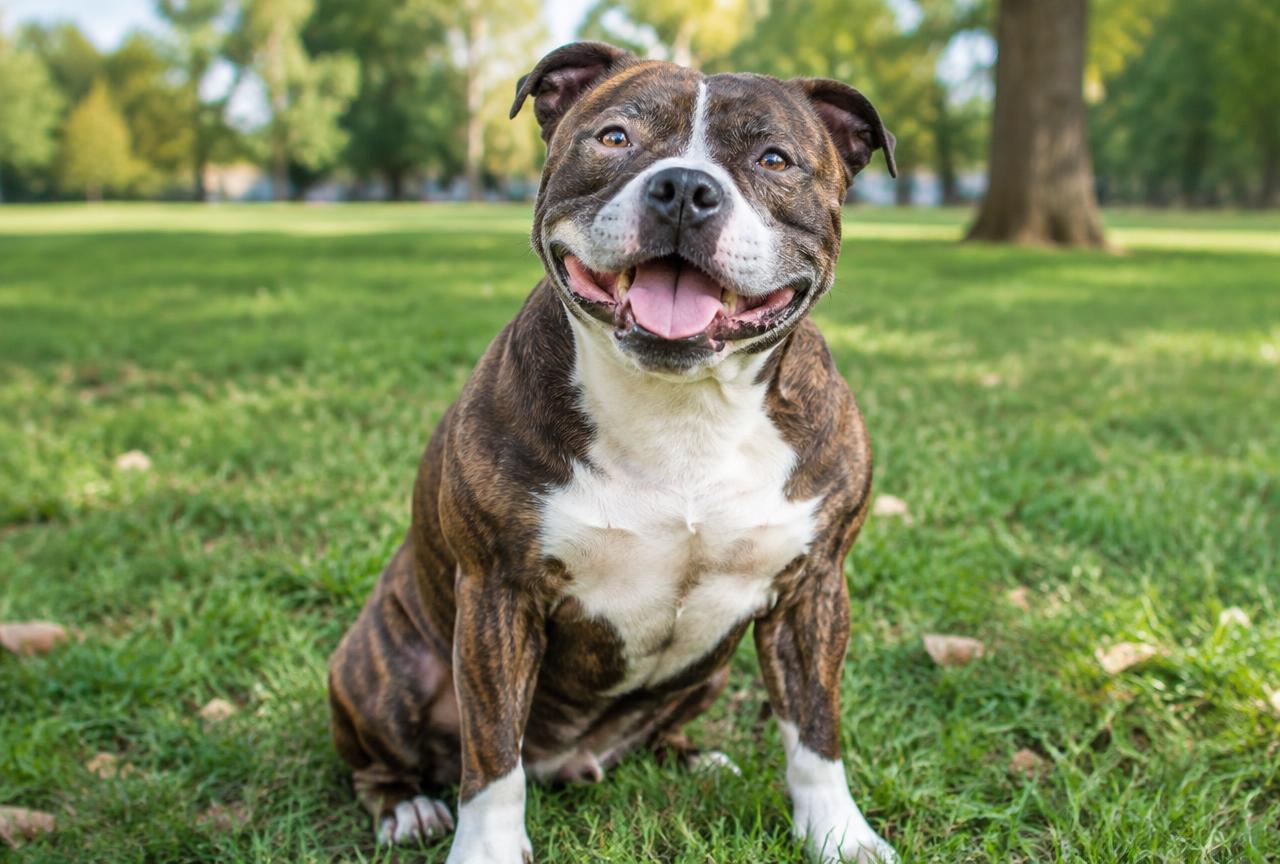
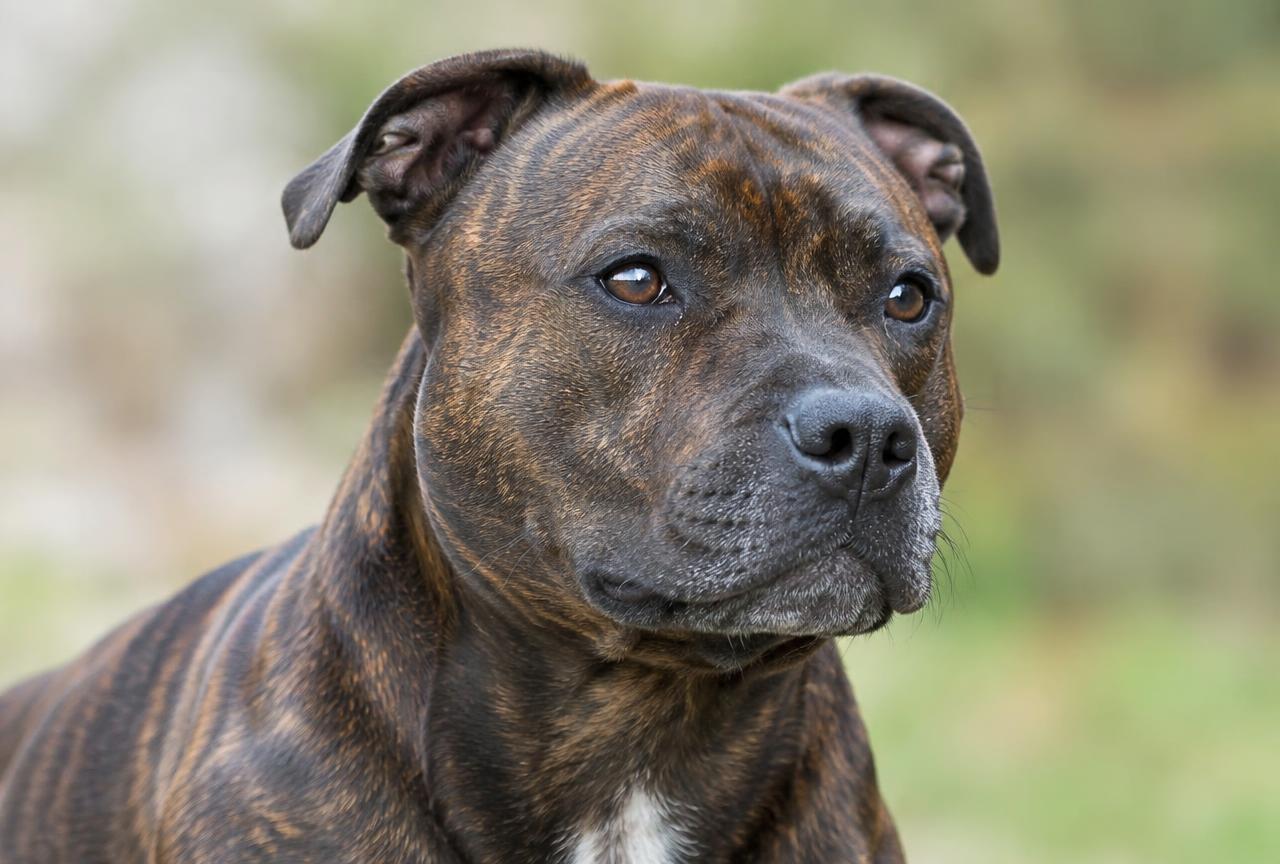
The Staffordshire Bull Terrier is a muscular, deeply affectionate English terrier that bonds closely with its family and needs thoughtful management around other dogs.
Reviewed against Kennel Club and breed club health guidance
A muscular, people loving terrier that thrives on closeness and firm, fair handling.
The short version
- Staffordshire Bull Terriers form extremely close bonds with their human family and generally adore children.
- Many individuals are selective about other dogs, so careful socialisation and sensible introductions matter throughout life.
- DNA testing for L-2-HGA and HC-4 hereditary cataracts is an essential check when choosing a puppy.
- The breed is prone to weight gain and skin allergies, so diet, body condition and coat checks need ongoing attention.
- Rescue organisations have large numbers of Staffies needing homes, and adopting an adult dog is a genuinely honourable route into the breed.
- Weight
- 11 to 17 kg
- Height
- 35 to 40 cm
- Lifespan
- 12 to 14 yrs
- Size
- Medium
- Group
- Terrier
- Coat
- Short, smooth, close lying coat
- Grown male
- 13 to 17 kg
- Grown female
- 11 to 15 kg
- Years to full size
- about 1
- One-off setup
- €350 to 700
Get one if…
- Owners who want a dog that wants to be physically close at all times
- Families with children who can supervise play sensibly
- People willing to manage introductions to unfamiliar dogs carefully
- Owners committed to strict portion control and regular exercise
- Adopters open to taking on an adult rescue dog
Think again if…
- Households with small pets such as rabbits or guinea pigs, given strong prey drive
- Owners wanting a dog that is relaxed off lead around every dog it meets
- People who want a low maintenance dog that tolerates long periods alone
- Owners unwilling to monitor diet and weight closely
- Anyone seeking a breed with no local or landlord restrictions to check in advance
Trait profile
The Staffordshire Bull Terrier combines very high affection and a strong desire for human closeness with a selective, sometimes assertive attitude toward other dogs, so management and socialisation matter more than raw obedience work.
Space & setup. A house with a secured garden suits this breed well, though a flat can work for an owner committed to daily exercise, since the Staffordshire Bull Terrier is a strong escape artist and jumper when bored.
Allergies. The short coat sheds moderately, but the breed is commonly reported to suffer from skin allergies, so owners should watch for itching, redness or recurrent ear and paw licking.
Living with a Staffordshire Bull Terrier
The Staffordshire Bull Terrier is a compact, muscular terrier developed in the Black Country of England, originally bred for pit sports before becoming a devoted family companion. It is famous for its deep affection for people, including children, though many individuals are selective about which other dogs they get along with.
The Staffordshire Bull Terrier was developed in the industrial Black Country of England during the nineteenth century, bred from bulldog and terrier stock originally for the pit sports of the time. When those blood sports were banned, the breed's natural devotion to people, rather than any aggression toward them, carried it forward as a working class family dog, and that history still shapes the Staffie owners meet today: a dog engineered across generations to be utterly reliable and affectionate with humans, including children, while retaining real determination and physical courage around other animals.
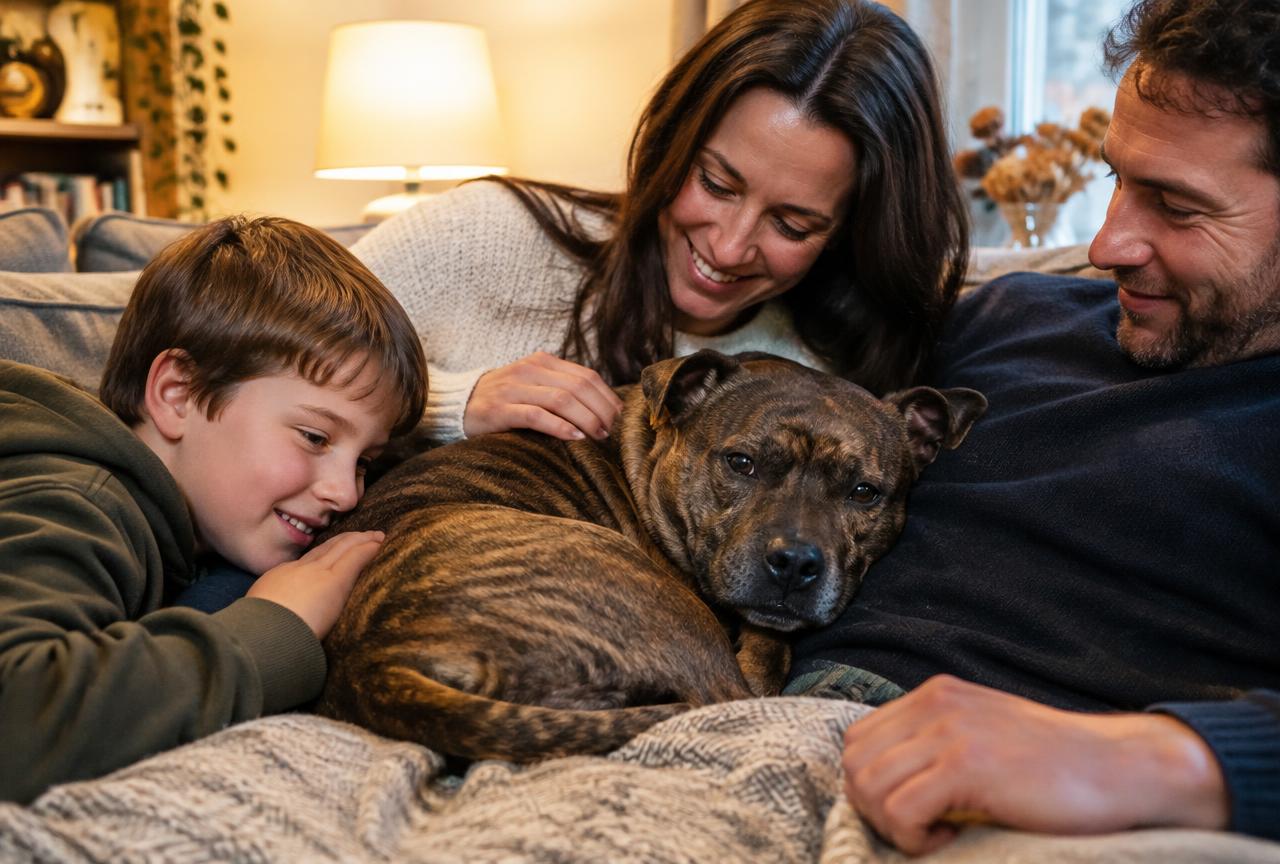
At home, this is a breed defined by closeness. A Staffordshire Bull Terrier does not simply tolerate its family, it actively seeks them out, leaning against legs, following from room to room and settling only once it is touching someone it trusts. This intensity of affection is genuine and well documented, and it is one reason the breed earned its old nickname as a nanny dog among people who grew up with one. It also means the Staffie is a poor candidate for long days alone; separation related distress, chewing and vocal protest are common when this need for company goes unmet, so owners working long hours without a plan for company or daycare should think carefully before choosing this breed.
The other defining trait, and the one prospective owners most need to understand honestly, is selectivity around other dogs. Many Staffordshire Bull Terriers are perfectly sociable with familiar dogs they have grown up with, but a meaningful number become increasingly particular about unfamiliar dogs as they mature, sometimes reacting to dogs that approach too quickly or assertively. This is not universal and it is not aggression toward people, but responsible breeders and owners plan for it: careful, gradual socialisation from puppyhood, continued exposure throughout adolescence, and lifelong good management on walks, including the judgement to avoid unleashed free for alls with dogs of unknown temperament. Owners who already have other dogs, or who want a breed guaranteed to be relaxed with every dog at the park, need to weigh this honestly rather than assume good intentions will be enough.
Health wise, two DNA tests matter enormously for this breed and should be treated as non negotiable when choosing a puppy. L-2-HGA, a metabolic condition affecting the nervous system, and HC-4, a form of hereditary cataracts, are both tested for directly through DNA screening, and reputable breeders will readily share clear results for both parents. Beyond these headline conditions, Staffordshire Bull Terriers are commonly reported to suffer from skin allergies, showing up as itching, redness, paw licking or recurrent ear trouble, so a consistent diet, prompt veterinary attention to flare ups and regular skin checks make a real difference to comfort over a lifetime. The breed's muscular build also means weight management deserves constant attention; extra kilograms show quickly on a compact, dense frame and place avoidable strain on joints.
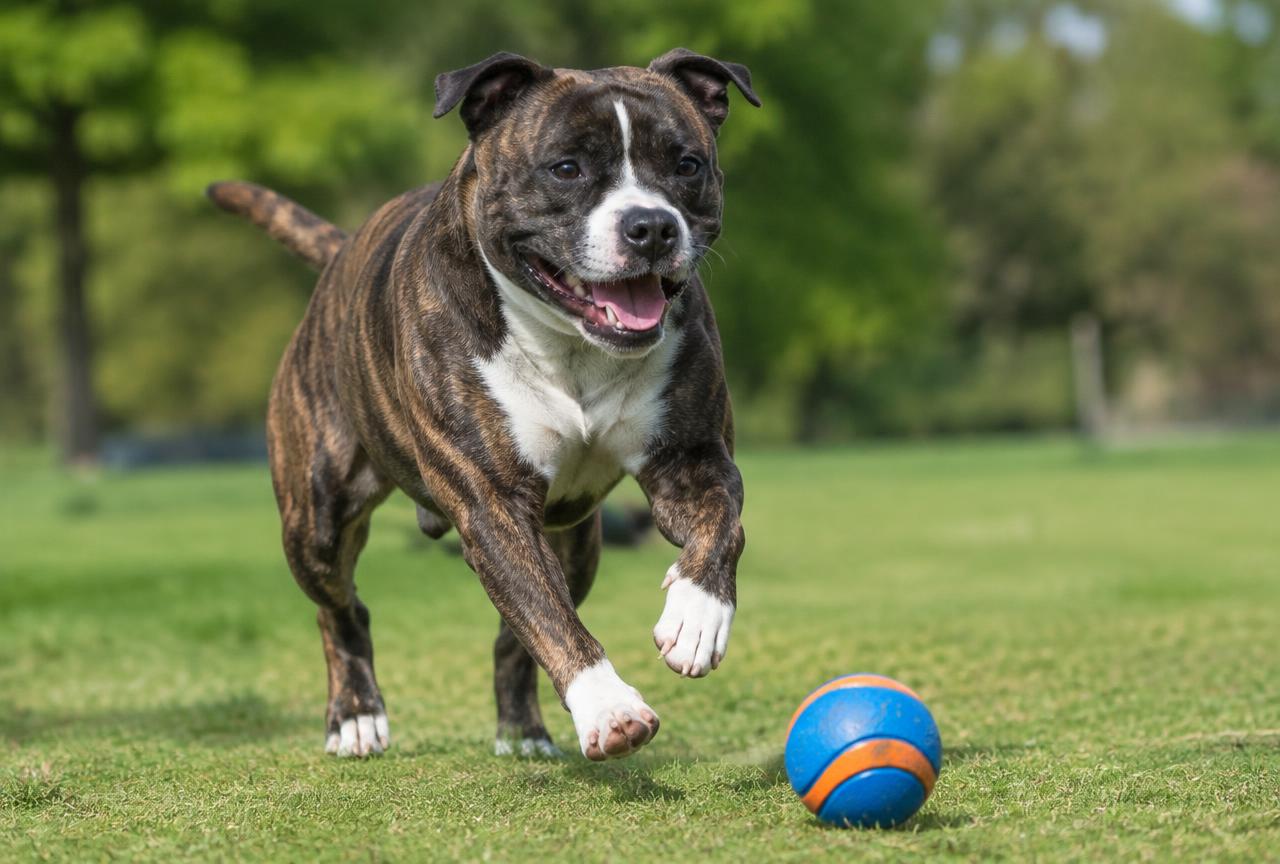
Exercise needs are moderate but genuine, around an hour a day including proper physical activity rather than gentle strolling. Staffies are athletic, muscular dogs that enjoy structured games such as tug and short bursts of focused play, and this kind of engagement also does a great deal to satisfy their emotional need for close interaction with their person. Training tends to go well because the breed is intelligent, food motivated and eager to please, though a firm, consistent approach from early puppyhood pays off given the dog's physical strength as an adult. Grooming, by contrast, is genuinely easy, a short coat needing only weekly brushing and occasional bathing, which suits owners who want low maintenance coat care alongside a more involved exercise and socialisation commitment.
It is worth saying plainly that adopting a Staffordshire Bull Terrier from a rescue organisation is one of the most honourable ways to bring this breed into a home. Staffies and Staffie crosses are consistently among the most common breeds found in British rescue centres, often through no fault of their own, and many adult rescue dogs arrive already house trained, past the most demanding puppy stage, and with their temperament already known to the staff who can match them carefully to a new household. This breed suits families with children who can supervise play sensibly, owners who want a dog that genuinely wants to be near them, and people prepared to manage introductions to other dogs with patience rather than assumption. It does not suit households wanting a dog that is instantly relaxed with every animal it meets, owners unable to commit daily time and company, or anyone unwilling to take allergy and weight management seriously over the dog's lifetime. Done properly, few breeds reward that effort with more devotion.
An intensely devoted, people focused companion that needs careful introductions to other dogs and firm weight management.
Exercise, day to day
- 1Puppies (8 to 20 weeks): short, gentle sessions of 5 minutes per month of age, avoiding repetitive jumping or hard surfaces.
- 2Adults: around 60 minutes a day, combining brisk walks with structured games such as tug or flirt pole work.
- 3Muscle conditioning: short bursts of controlled play help maintain this athletic breed's naturally muscular frame.
- 4Dog to dog exercise: introduce new dogs gradually and on lead, since many Staffies prefer a small circle of familiar canine friends.
- 5Mental stimulation: puzzle feeders and scent games help an intelligent, people focused dog that dislikes being left to its own devices.
Grooming, realistically
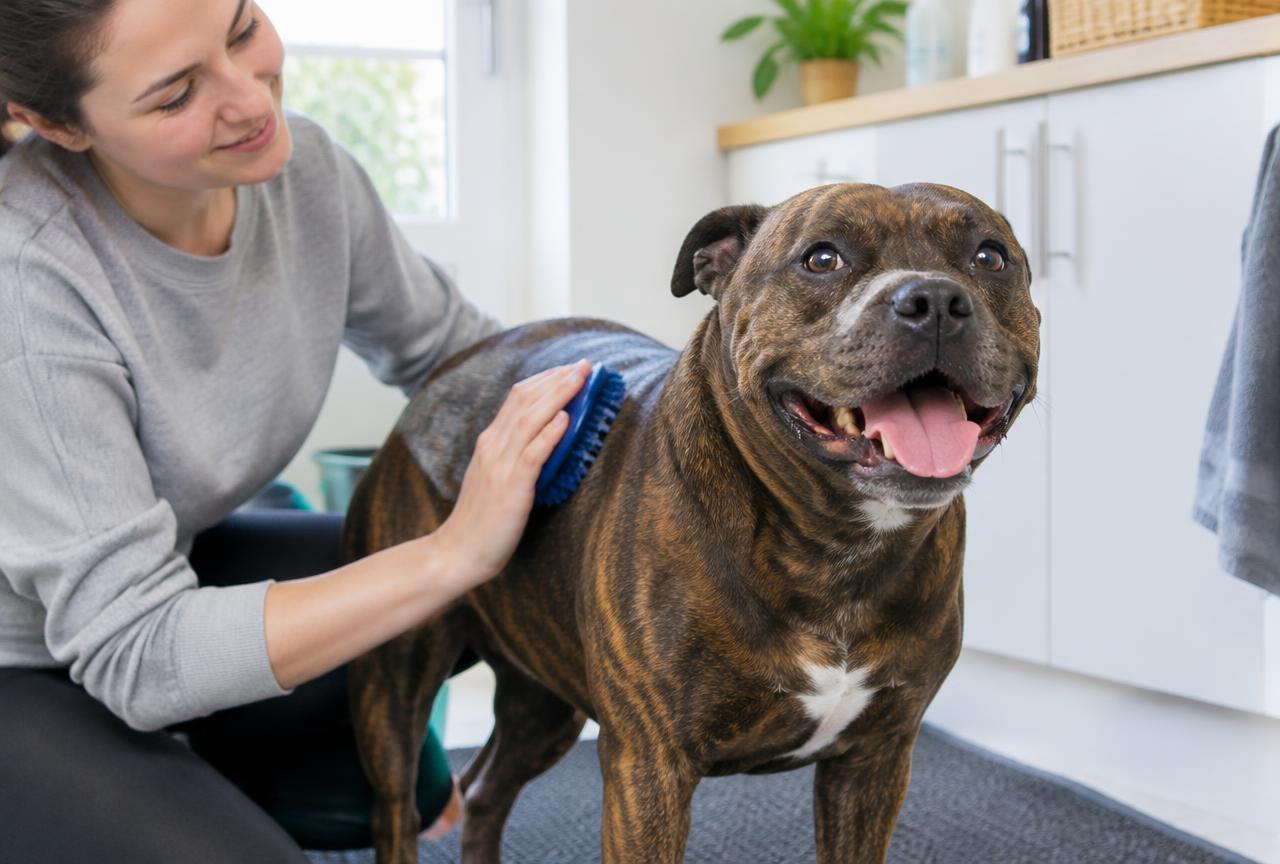
- 1Brush weekly with a soft bristle or rubber curry brush to lift loose hair and keep the coat glossy.
- 2Bathe every 6 to 8 weeks, or sooner if skin irritation develops, using a gentle, hypoallergenic shampoo.
- 3Check the skin regularly for redness, hot spots or excessive licking, common signs of allergy in this breed.
- 4Trim nails every 3 to 4 weeks, as the short coat does little to wear them down naturally.
- 5Brush teeth several times a week and check for tartar build up at the vet.
What you actually need
- Soft bristle or rubber curry brush
- Hypoallergenic dog shampoo
- Dog nail clippers
- Enzymatic dog toothpaste and brush
- Ear cleaning solution
- Flirt pole or sturdy tug toy
Puppy to adult
| Age | Male | Female | What is happening |
|---|---|---|---|
| 8 weeks | 3 to 4.5 kg | 2.8 to 4 kg | Sturdy, compact puppy build with a surprisingly strong appetite. |
| 3 months | 6 to 8.5 kg | 5.5 to 7.5 kg | Rapid early growth; portion control habits should start now. |
| 6 months | 9.5 to 13 kg | 8.5 to 11.5 kg | Muscle development accelerates alongside adolescent energy and testing behaviour. |
| 9 months | 11.5 to 15.5 kg | 10 to 13.5 kg | Approaching adult height, though muscle and chest depth still filling out. |
| 12 months | 12.5 to 16.5 kg | 10.5 to 14.5 kg | Close to adult weight; this is when careful weight monitoring really begins to matter. |
| 18 months | 13 to 17 kg | 11 to 15 kg | Full adult size and muscular condition reached. |
Ranges are typical, not targets. Judge condition by ribs and waist, and check with the ideal weight checker.
What to ask a breeder
- Can I see L-2-HGA and HC-4 hereditary cataract DNA test results for both parents?
- What hip and patella checks have been done on the breeding stock?
- How do the puppies behave around unfamiliar dogs during early socialisation?
- What skin or allergy issues, if any, have appeared in previous litters from this line?
- Can I meet both parents and observe their temperament around people and other dogs?
- What feeding guidance do you give to help manage weight in this muscular breed?
Health tests to ask for
Ask to see results for both parents before you put down a deposit.
- L-2-HGA (L-2-hydroxyglutaric aciduria) DNA test
- HC-4 hereditary cataracts DNA test
- Patella luxation examination
- Hip score (BVA/KC scheme) where available
- General skin and allergy history review of the line
Health watch-list
What to ask a breeder about, and what to watch for over a lifetime. This is orientation, not veterinary advice, anything you notice belongs in front of a vet.
L-2-HGA (L-2-hydroxyglutaric aciduria)
NotableAn inherited metabolic condition affecting the nervous system, caused by a known gene mutation; DNA testing of breeding stock prevents affected puppies being produced.
HC-4 hereditary cataracts
NotableAn inherited form of cataracts that can affect vision from a relatively young age; DNA testing identifies carriers and affected dogs before breeding.
Skin allergies
CommonCommonly reported in the breed, showing as itching, redness or recurrent paw and ear licking; diet trials and veterinary advice help manage flare ups.
Patella luxation
UncommonA kneecap that slips out of position, ranging from mild to requiring surgery; screening breeding stock reduces incidence.
Hip dysplasia
UncommonMalformed hip joints that can lead to arthritis; hip scoring of parents through the BVA/KC scheme helps lower risk.
Obesity
CommonA muscular, food motivated breed prone to weight gain, which places added strain on joints; measured portions and daily exercise are important.
What it costs to keep one
Realistic running cost
€81 / month
About €972 a year, or roughly €12,636 across a 13-year life, before purchase price, neutering and one-off vet events.
Before the puppy arrives. Budget roughly €350 to 700 for a crate, bed, lead and harness, bowls, puppy classes, first vaccinations and grooming kit sized for this breed. Figures throughout are indicative and vary a good deal between countries.
Interactive · built for this breed
Is a Staffordshire Bull Terrier right for your home?
Seven honest questions about your space, time and household, checked against this breed's exercise need, coat, sociability and tolerance for time alone.
Fit with your routine
95%
A strong fit
Your routine suits a Staffordshire Bull Terrier well. Meet adult dogs of the line before you commit.
What to sort out first
- Needs more daily exercise than you have pencilled in.
Working in your favour
- Coat care fits the grooming time you offered.
Compare more breeds in the matchmaker, or plan meals with the portion calculator.
The verdict, by household
First-time owner
A good choice with preparation
Deeply affectionate and biddable, but new owners must commit to firm boundaries and careful dog to dog introductions.
Family with children
An excellent match
Famously patient and affectionate with children, often described as a nanny dog by long time owners, though play should always be supervised.
Active single or couple
A strong choice
Enjoys close companionship and daily exercise, and suits an owner who wants a dog nearby at all times.
Owner in a flat with close neighbours
Workable with commitment
Low barking tendency helps, but daily exercise and careful management of visitors and other dogs remain essential.
When to call your vet
- Persistent licking, redness or hair loss on the paws, belly or ears, which may indicate a skin allergy
- Reluctance to rise, stiffness or a change in gait, which could point to joint issues
- Cloudiness in the eyes or reduced vision, worth checking against hereditary cataract risk
- Unexplained weight gain, which places extra strain on a naturally muscular frame and joints
- Sudden lack of coordination or wobbliness, which should prompt urgent veterinary assessment given L-2-HGA risk
Nothing here is a diagnosis. A swollen, hard belly with retching, collapse, breathing difficulty and sudden hind-leg weakness are emergencies: go straight away.
Staffordshire Bull Terrier vs the closest alternatives
| Breed | Weight | Energy | Grooming | € / month |
|---|---|---|---|---|
| Staffordshire Bull Terrier | 11 to 17 kg | 7/10 | 2/10 | €81 |
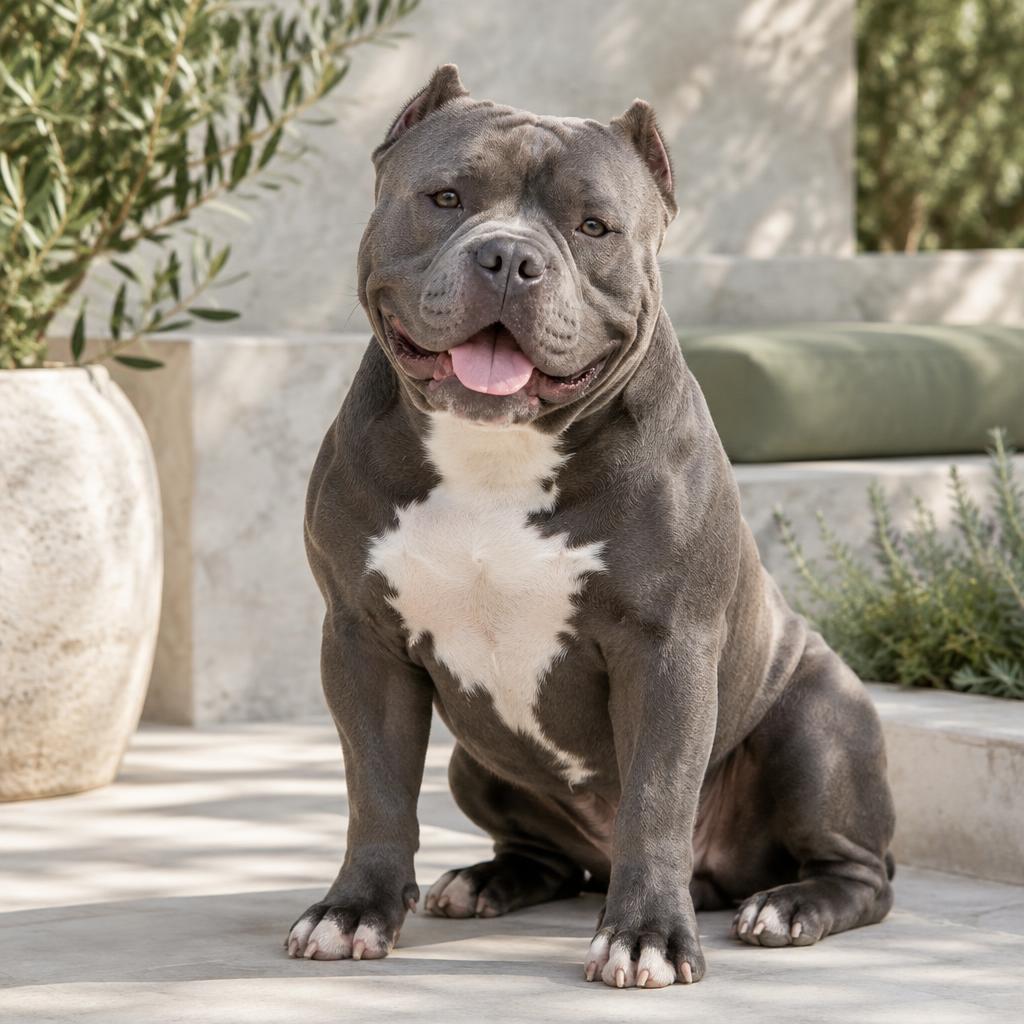
| American Bully | 15 to 55 kg | 6/10 | 3/10 | €185 |
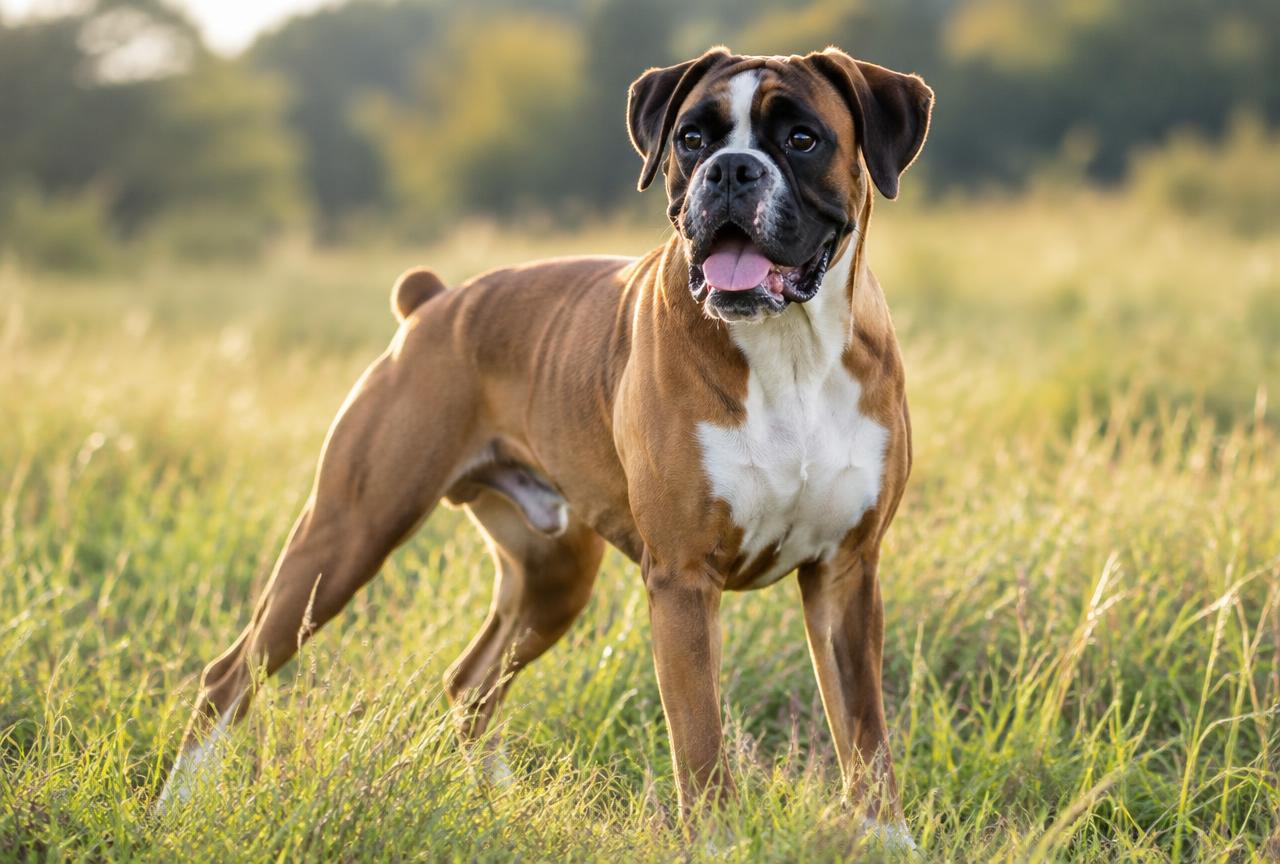
| Boxer | 25 to 32 kg | 9/10 | 2/10 | €165 |
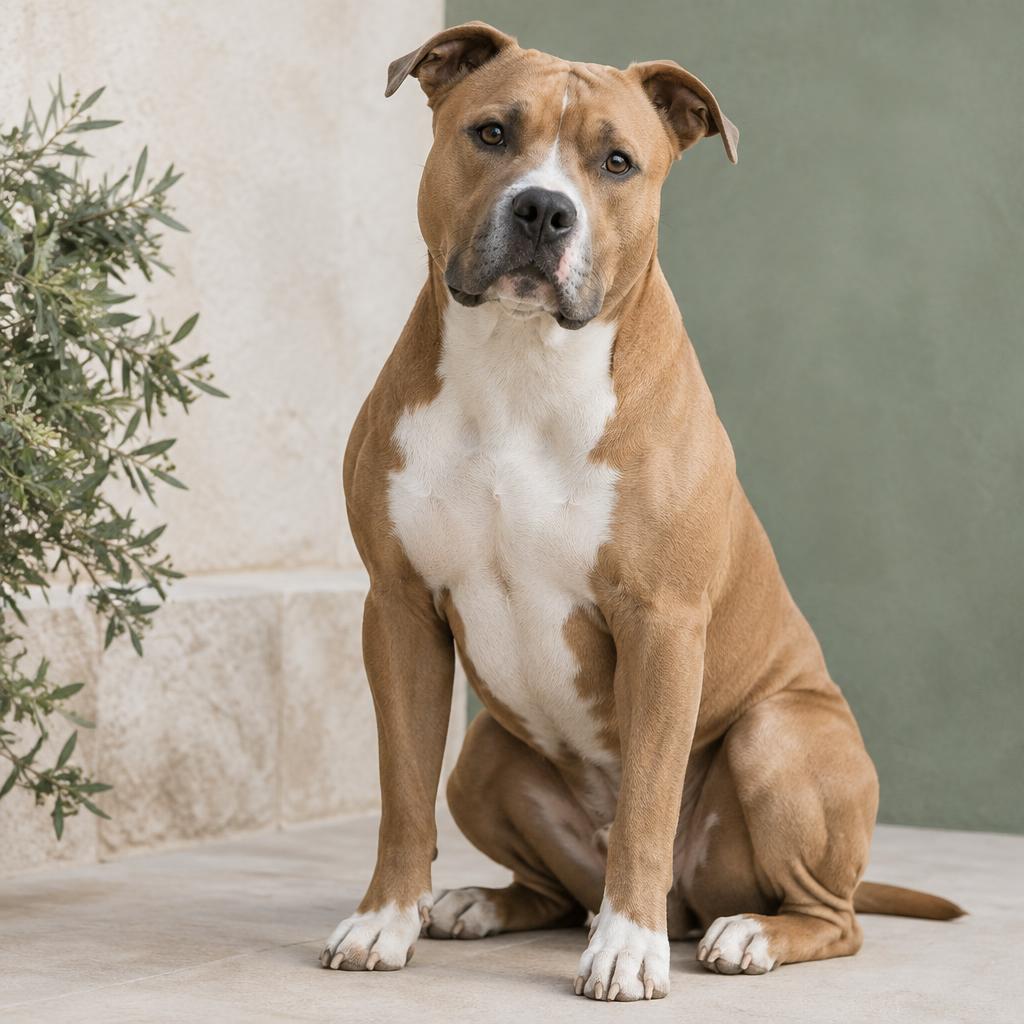
| American Staffordshire Terrier | 24 to 34 kg | 7/10 | 2/10 | €76 |
Staffordshire Bull Terrier questions, answered
What is the temperament of a Staffordshire Bull Terrier?
Staffordshire Bull Terriers are typically bold, affectionate and deeply devoted to their human family, often described as a nanny dog for their patience with children. They can be selective with unfamiliar dogs, so careful socialisation and sensible introductions matter throughout their life.
How big do Staffordshire Bull Terriers get?
Males typically weigh 13 to 17 kg and females 11 to 15 kg, standing around 35 to 40 cm at the shoulder. They are classed as a medium sized breed despite their compact, muscular build, and reach full adult size by around one year old.
Do Staffordshire Bull Terriers shed a lot?
Their short, smooth coat sheds moderately throughout the year rather than in dramatic seasonal bursts. Weekly brushing with a soft bristle or rubber curry brush keeps shedding manageable, spreads the coat's natural oils and keeps that glossy, close fitting finish looking its best.
How much exercise does a Staffordshire Bull Terrier need?
Around 60 minutes a day of genuine activity, combining brisk walks with structured games such as tug or short bursts of play. This athletic, muscular breed also benefits from mental stimulation such as puzzle feeders alongside physical exercise.
Are Staffordshire Bull Terriers good with children?
Yes, this breed is widely known for being patient, playful and affectionate with children, which is why it earned the old nickname nanny dog. As with any dog, play between Staffies and young children should always be supervised.
What health problems are common in Staffordshire Bull Terriers?
The breed carries risk for L-2-HGA and HC-4 hereditary cataracts, both detectable through DNA testing of breeding stock, and is commonly reported to suffer from skin allergies. Obesity, patella luxation and hip dysplasia are also worth screening for.
How much does it cost to own a Staffordshire Bull Terrier?
Monthly costs typically include around 35 euros for food, 28 euros for insurance and smaller amounts for grooming and parasite prevention, alongside an initial setup cost of roughly 350 to 700 euros for equipment. Veterinary costs can rise if allergy management or DNA tested health issues need ongoing care.
Sources
- Staffordshire Bull Terrier breed standard, The Kennel Club
- Staffordshire Bull Terrier breed information, American Kennel Club
- L-2-HGA and hereditary cataract DNA testing, The Kennel Club
- Patella luxation scheme, British Veterinary Association
- Skin allergies in dogs, PDSA
- Staffordshire Bull Terrier rescue and rehoming, Dogs Trust
Put it into practice
Reading that goes with this
Nutrition
Can Dogs Eat Fruit? A Vet-Informed Guide

Puppies
Crate Training a Puppy: A 14-Day Plan

Care
Dog Years to Human Years: The Real Science

Health
Why Do Dogs Lick Their Paws? Causes and Fixes
Health
Why Is My Dog Itching? Allergies, Parasites and Skin

Health
Why Is My Dog Panting So Much? Causes and Warning Signs
Health
Dog Worms: Types, Symptoms and a Worming Schedule
Health
My Dog Swallowed a Sock: What To Do Now