
Can Dogs Eat Fruit? A Vet-Informed Guide
From apples to watermelon, here is what is safe, what to limit, and what to keep locked away.
The SniffScroll desk
Dog care editors
Published 30 September 2026 · Updated 9 October 2026

Reviewed against RVC, BSAVA and PDSA guidance
The short version
- Apples, bananas, watermelon, strawberries and blueberries are safe for dogs in small, prepared portions.
- Grapes and raisins can cause sudden kidney failure in dogs and have no known safe dose.
- Always remove cores, stones, seeds and rind before offering fruit to a dog.
- Fruit should stay under around 10 percent of daily calories to avoid weight gain or an unbalanced diet.
- Contact a vet immediately if your dog eats grapes, raisins, avocado or a fruit stone.
Can dogs eat fruit safely
Yes, many fruits are safe for dogs in small amounts, but a few are seriously toxic and must be avoided altogether. Fruit can make a useful low-calorie treat for dogs who need to watch their weight, and it offers fibre, vitamins and antioxidants that complement a complete dog food. The key is knowing which fruits are fine, how much to offer, and which ones belong nowhere near your dog's bowl. This guide runs through the most commonly asked-about fruits, from apples and bananas to the genuinely dangerous case of grapes and raisins.
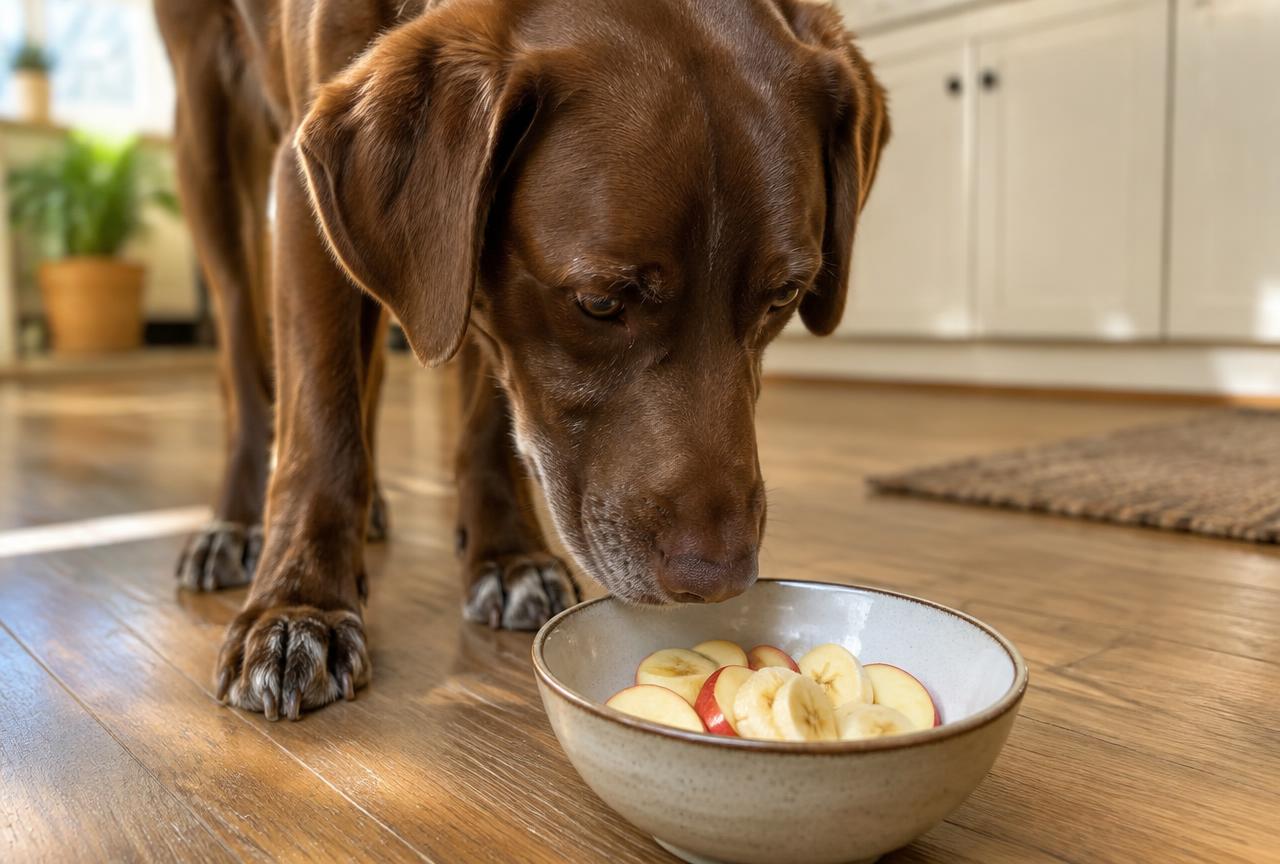
Apples: a good everyday option
Apples are one of the safest fruits you can offer a dog, provided you remove the core and seeds first. Apple seeds contain a compound that releases cyanide when broken down, and while a dog would need to chew and swallow a large quantity to be at real risk, it is simplest to core the apple and slice the flesh before handing it over. The skin is fine to leave on and adds extra fibre. Apples are low in calories and high in vitamin C, which makes them a sensible swap for fattier commercial treats, especially for dogs managing their weight alongside a portion tool plan. Avoid tinned pie filling or apple sauce with added sugar, cinnamon or artificial sweeteners.
Bananas: energy dense, so go easy
Bananas are safe for dogs but should be treated as an occasional treat rather than a daily habit because they are high in sugar and calories relative to their size. A few small coins of peeled banana make an excellent training reward, particularly for dogs who find dry biscuit treats unexciting. Bananas also contain potassium and biotin, both useful nutrients, but a large dog eating a whole banana regularly is taking in more sugar than is ideal. Peel the banana fully; the peel is not toxic but is fibrous and hard to digest, and can be a choking or obstruction risk in smaller dogs.
Watermelon: hydrating in hot weather
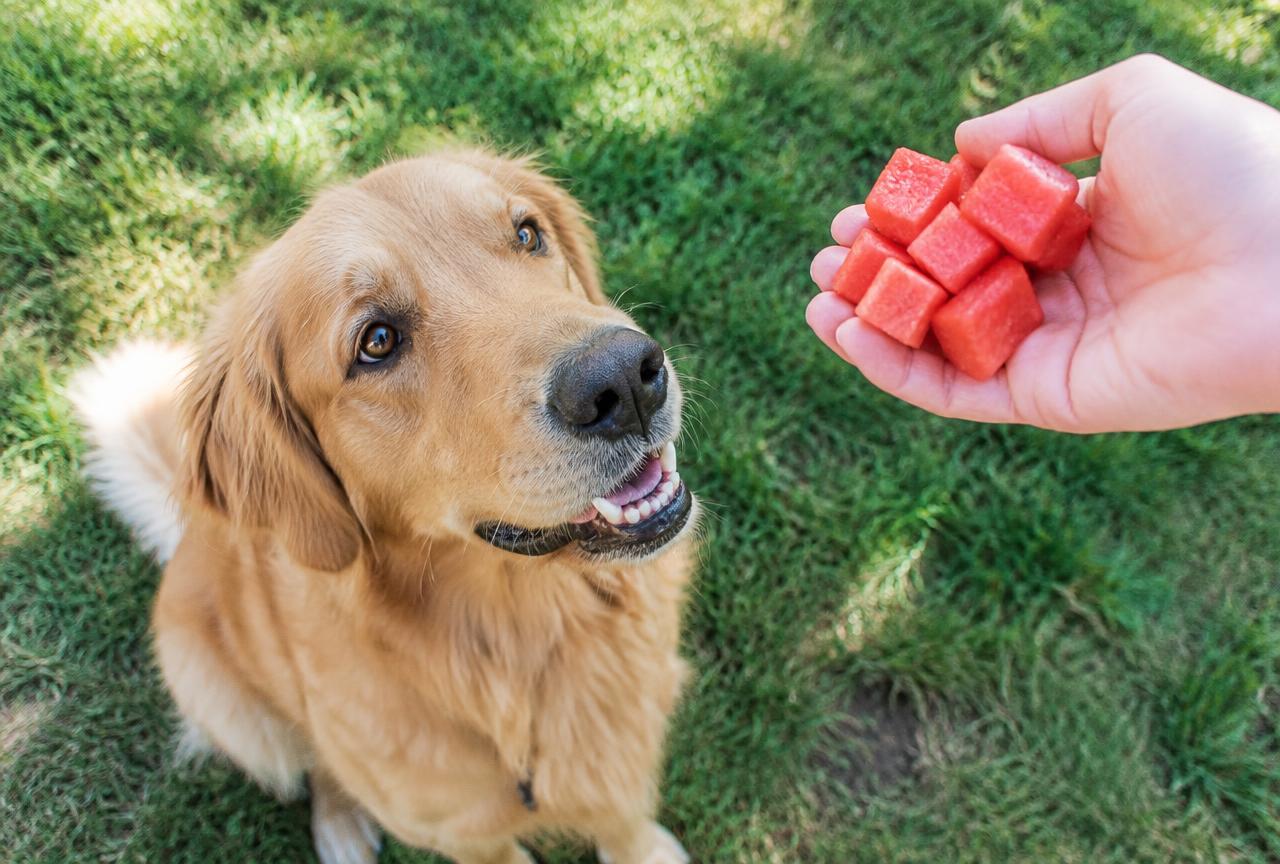
Watermelon is a genuinely useful warm-weather treat because it is around 90 percent water and low in calories once you remove the rind and seeds. The rind is tough and can cause an upset stomach or, in rare cases, contribute to a blockage, so always cut it away along with any large seeds. Seedless watermelon still contains small white pips that are generally harmless in tiny amounts. Frozen watermelon cubes are a popular enrichment treat for dogs on a hot afternoon and are gentler on the waistline than most shop-bought frozen treats.
Strawberries and blueberries: antioxidant-rich treats
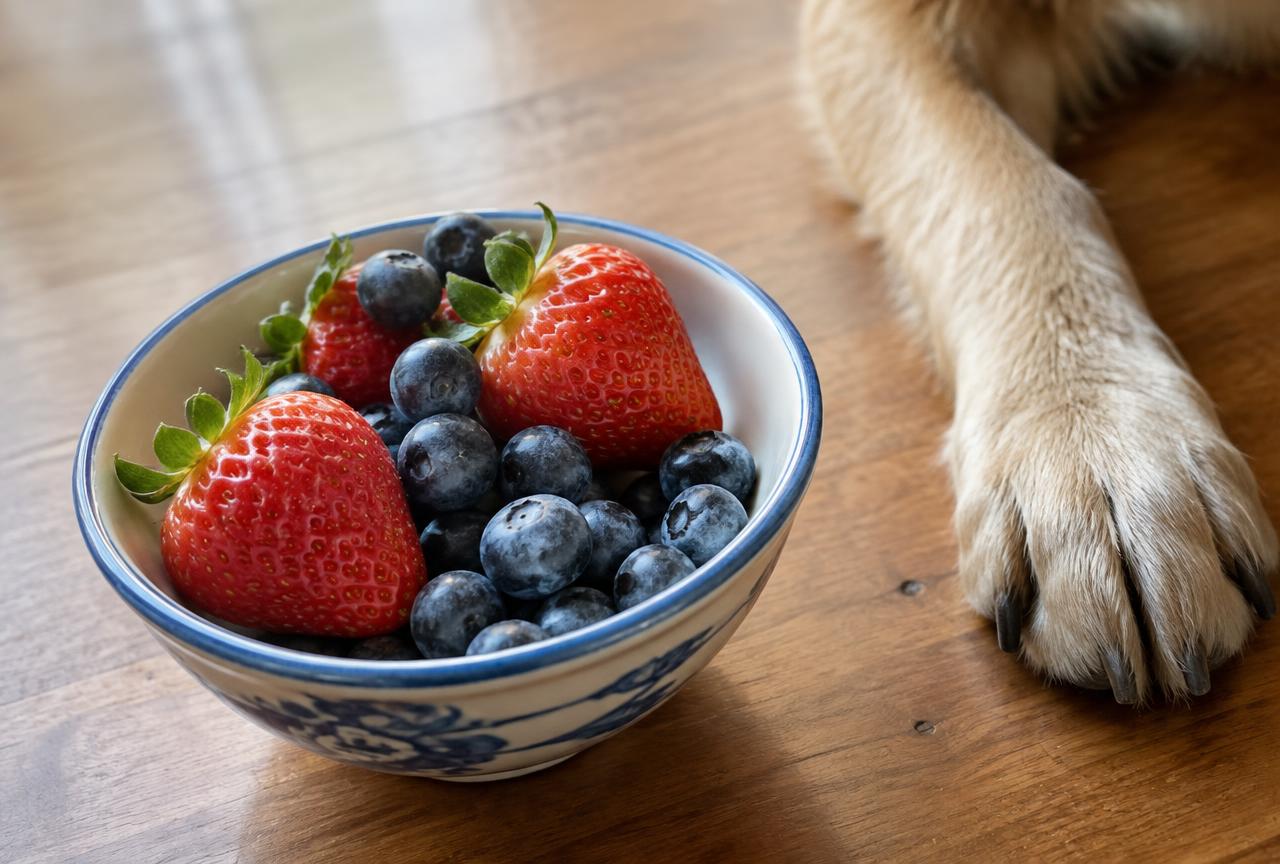
Both strawberries and blueberries are safe for dogs and are often recommended by vets as a healthier alternative to processed treats. Strawberries contain natural sugars and a small amount of fibre, and should be hulled and roughly chopped before serving to reduce any choking risk in small breeds. Blueberries are smaller, lower in sugar, and popular as a training treat because they can be doled out one at a time; many dogs enjoy chasing them across the kitchen floor as a game before eating them. Both fruits are rich in antioxidants, which is why you will sometimes see them listed as ingredients in senior dog diets aimed at supporting joint and cognitive health.
Grapes and raisins: never, under any circumstances
Grapes and raisins are genuinely toxic to dogs and can cause sudden kidney failure, even in small quantities, and even in dogs who have eaten them before with no apparent problem. The exact toxic substance has not been fully identified, which is part of what makes this fruit so unpredictable: some dogs seem to tolerate a grape or two, while others become critically unwell after eating a handful of raisins in a slice of fruit cake. Because there is no known safe dose, the only sensible approach is total avoidance. This includes obvious sources such as grapes, raisins, sultanas and currants, as well as hidden sources like fruit cake, hot cross buns, trail mix, and some granola bars.
When to see a vet: if your dog eats any amount of grapes, raisins, sultanas or currants, contact your vet or an emergency vet immediately, even if your dog seems completely normal. Do not wait for symptoms such as vomiting, lethargy or reduced urination to appear, because by the time they do, kidney damage may already be underway. Vets will usually recommend inducing vomiting if the dog was seen eating the fruit recently, followed by blood tests to monitor kidney function over the following days.
Other fruits worth knowing about
- Oranges and other citrus: the flesh is generally safe in small amounts, but the peel, pith and seeds can upset the stomach and are best avoided
- Pineapple: safe in small chunks with the tough skin and core removed, though the natural acidity can cause loose stools in some dogs
- Mango: the flesh is safe in moderation, but the stone must never be given as it is a serious choking and obstruction hazard and contains small amounts of cyanide compounds
- Cherries: the flesh itself is not toxic, but the stone, stem and leaves contain cyanide compounds, and stones are also a choking hazard, so cherries are best avoided altogether
- Avocado: contains a substance called persin that can cause vomiting and diarrhoea in dogs, along with a large stone that poses a serious choking risk, so it is safest left out of a dog's diet entirely
- Dried fruit generally: even fruits that are safe fresh, such as apple, become much higher in sugar once dried, so treat dried fruit (other than the banned raisins and sultanas) as an occasional indulgence at most
How much fruit is too much
Step 1: Treat fruit as a bonus, not a meal replacement
Fruit should never make up more than around 10 percent of your dog's daily calorie intake, with the rest coming from a complete and balanced dog food. Overdoing fruit, even the safe kinds, can lead to loose stools, weight gain, or an unbalanced diet if it starts displacing proper meals.
Step 2: Introduce new fruits gradually
Offer a small piece of a new fruit and wait 24 hours before offering more, watching for any signs of an upset stomach. Dogs, like people, can have individual sensitivities even to fruits that are considered generally safe.
Step 3: Adjust for size and health conditions
A poodle and a labrador retriever do not need the same portion of banana, and dogs with diabetes, pancreatitis or a history of obesity may need to avoid sugary fruits altogether. If you are unsure how fruit fits into your dog's daily calories, a vet or veterinary nutritionist can help you work it into an existing feeding plan alongside the tool below.
Interactive · fruit portion picker
How much fruit can my dog have?
Pick a fruit and your dog's weight to see a safe daily amount, based on the 10 percent treat allowance of their daily calories.
Up to 163 g a day
Based on a 10% treat allowance of your dog's daily calories (85 kcal). Remove the core and seeds first.
Fruit safety at a glance
| Fruit | Safe? | Notes |
|---|
| Apple | Yes | Remove core and seeds, slice flesh |
|---|
| Banana | Yes, in moderation | High in sugar, peel fully |
|---|
| Watermelon | Yes | Remove rind and large seeds |
|---|
| Strawberries | Yes | Hull and chop for small dogs |
|---|
| Blueberries | Yes | Good low-calorie training treat |
|---|
| Grapes and raisins | No, ever | Can cause sudden kidney failure |
|---|
| Avocado | No | Persin and choking risk from stone |
|---|
| Cherries | No | Stones and stems contain cyanide compounds |
|---|
Building fruit into a balanced routine
Fruit works best as part of a considered feeding routine rather than an impulsive handout whenever you happen to be eating some yourself. Many owners find it useful to keep a small tub of pre-chopped apple or blueberries in the fridge specifically for training sessions, so the portions stay consistent and the fruit does not become an extra on top of an already generous dinner. If your dog is also enjoying other treats through the day, such as biscuits or chews, remember to count fruit within their overall daily allowance rather than as something separate. Comparing notes with your dog's ideal weight target can help you judge whether treats, fruit included, are creeping too high. Understanding how ageing affects appetite and metabolism, as covered in our guide to dog years and human years, can also help you judge whether a senior dog needs fewer treat calories than they did as a young adult.
When to see a vet
Common myths about dogs and fruit
- Myth: fruit is always a healthier treat than commercial dog treats. In reality, some fruits are surprisingly calorie-dense once you account for size, and a few grapes worth of banana can add up quickly in a small dog's daily allowance.
- Myth: organic fruit is automatically safer for dogs. Organic status has no bearing on whether a fruit is toxic; grapes grown organically are just as dangerous as any other grapes.
- Myth: if a dog has eaten grapes before with no problem, they are safe to feed again. Some dogs appear to tolerate grapes for years before suddenly reacting badly, which is exactly why vets recommend total avoidance rather than testing your luck.
- Myth: cooking or baking fruit into treats makes it safer. Baking does not remove the toxic compounds in grapes, raisins or the persin in avocado, and can also concentrate sugar content through reduction or added ingredients.
Troubleshooting fruit-related tummy trouble
My dog had loose stools after eating fruit
This is usually linked to the natural sugars and fibre in fruit rather than anything sinister, particularly if your dog is not used to fruit or ate a larger amount than usual. Cut back the portion, stick to well-tolerated options like a few blueberries, and monitor for 24 to 48 hours.
My dog seems fine but I am not sure how much they ate
If you cannot rule out grapes, raisins, avocado or a fruit stone, treat it as a precaution and call your vet rather than waiting to see if symptoms develop. Early treatment for grape or raisin ingestion makes a real difference to outcomes.
My dog keeps begging for fruit at the table
Consistent boundaries help here: decide in advance which fruits are allowed as prepared treats away from the table, and avoid handing pieces down during your own meals, since this reinforces begging regardless of how safe the fruit itself is.
Preparing fruit safely, a quick checklist
- Wash all fruit thoroughly to remove pesticide residue and dirt before offering it
- Remove pits, stones, cores and seeds every time, even for fruits you have prepared safely before
- Cut fruit into pieces appropriate for your dog's size to reduce choking risk, especially for small breeds and puppies
- Introduce one new fruit at a time so you can identify the cause if your dog reacts badly
- Store fruit-based treats away from countertops and bags your dog could reach unsupervised, particularly around holidays when cakes and dried fruit mixes are more common in the house
Fruit and specific life stages
Puppies
Young puppies have sensitive digestive systems still adjusting to solid food, so any fruit should be introduced in tiny amounts and only once a puppy is reliably eating their regular diet. A single small piece of apple or a couple of blueberries is plenty for a first try.
Senior dogs
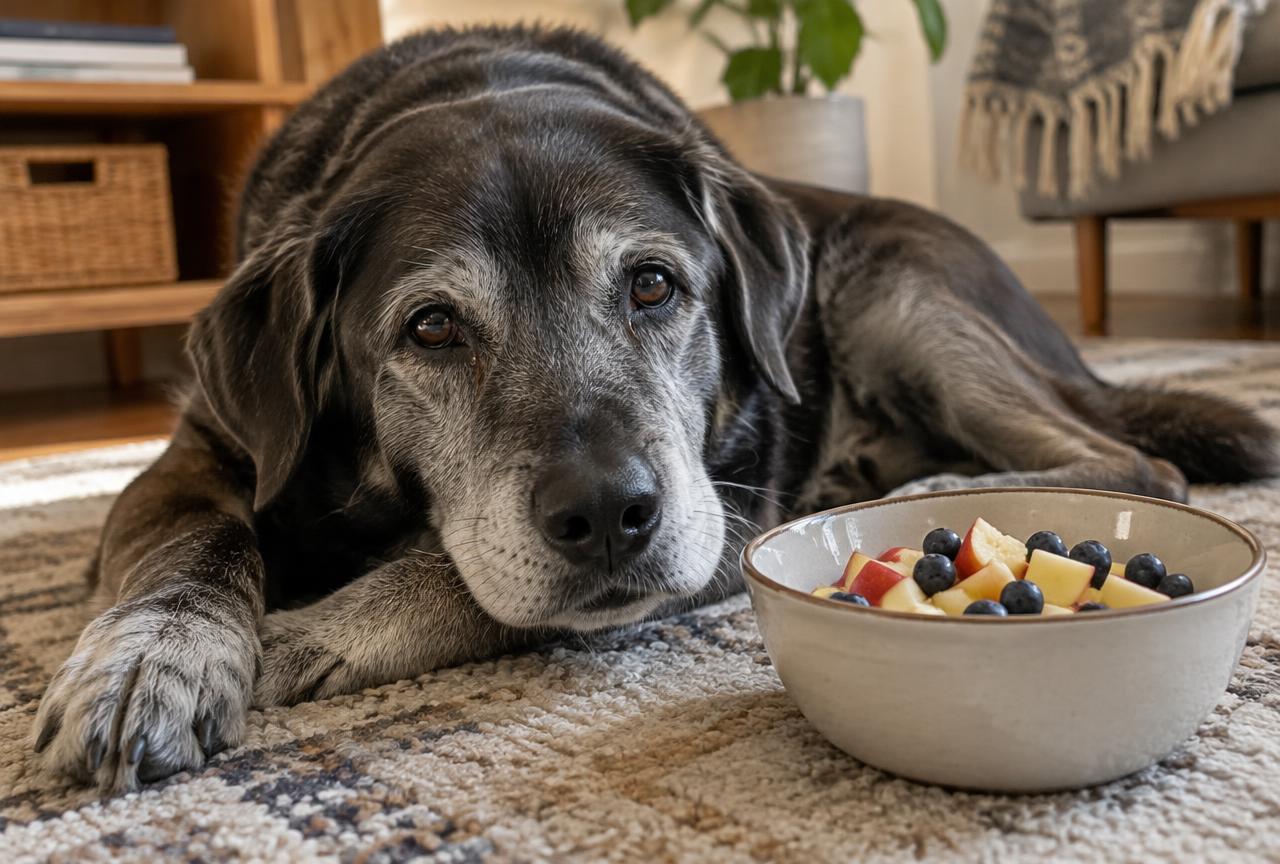
Older dogs may have reduced tolerance for high-sugar treats, particularly if they have diabetes, kidney disease or dental issues that make crunchy fruit uncomfortable to chew. Softer, low-sugar options like a few pieces of ripe banana or well-mashed blueberry can be easier to manage.
Dogs with health conditions
Dogs with diabetes, pancreatitis, obesity or a history of gastrointestinal sensitivity may need to avoid fruit altogether or stick to the lowest-sugar options in very small amounts. Always check with your vet before adding fruit to the diet of a dog with an existing health condition.
Contact your vet promptly if your dog eats grapes, raisins, currants, sultanas, avocado, a fruit stone, or a large quantity of any fruit, or if they develop vomiting, diarrhoea, lethargy or a swollen abdomen after eating fruit. Choking, gagging or repeated attempts to vomit after swallowing a fruit stone or large chunk is also an emergency and needs same-day veterinary attention.
Questions people actually ask
Can dogs eat grapes at all?
No. Grapes and raisins can cause sudden kidney failure in dogs, and there is no known safe amount. Even a small handful has been linked to serious illness in some dogs, so they should never be offered, and any accidental ingestion needs immediate veterinary attention.
Is banana good for dogs every day?
A small amount occasionally is fine, but bananas are high in sugar for their size, so daily feeding can contribute to weight gain. Treat banana as a training reward or occasional treat rather than a routine addition to meals, especially for dogs prone to carrying extra weight.
Can puppies eat fruit?
Yes, in very small, well-prepared amounts once they are eating solid food, but introduce it slowly and watch for stomach upset. Puppies have sensitive digestive systems, so a tiny piece of apple or blueberry is plenty while their gut adjusts to new foods.
What should I do if my dog eats a fruit stone?
Contact your vet straight away, as stones from cherries, peaches, plums and mangoes are a choking and blockage risk and some contain trace toxins. Watch for gagging, repeated swallowing, vomiting or reluctance to eat, and seek same-day veterinary advice even if your dog seems otherwise well.
Is dried fruit safe for dogs?
Most dried fruit is far higher in sugar than the fresh version and best avoided as a regular treat, and dried grapes, currants and sultanas are strictly off limits. If you want to offer fruit, fresh, unsweetened pieces in small quantities are a better choice.
Can dogs eat fruit seeds?
Most fruit seeds and pips should be removed before feeding, as apple and pear seeds contain compounds that release cyanide when broken down in quantity. A single accidentally swallowed pip from an apple slice is unlikely to cause harm, but seeds should not be offered deliberately.
Sources
Breeds mentioned

Labrador Retriever
Britain's most popular family dog: biddable, food driven and built for an active household.

Poodle
A brilliant, low shedding companion that comes in three sizes but one sharp mind.

Beagle
A merry, sociable scenthound with a powerful nose and a mind of its own outdoors.

French Bulldog
A comic, affectionate companion built for city life, but with health needs that demand a careful breeder.
Put it into practice
Read next
Can Dogs Eat Oatmeal? Cooked, Raw and Flavoured
Plain oatmeal cooked in water is safe for dogs in small servings and its soluble fibre can help mild diarrhoea. Avoid flavoured sachets, raw oats and porridge made with milk or sugar.


