Utility group
Germany, developed in France as a water retriever
Poodle
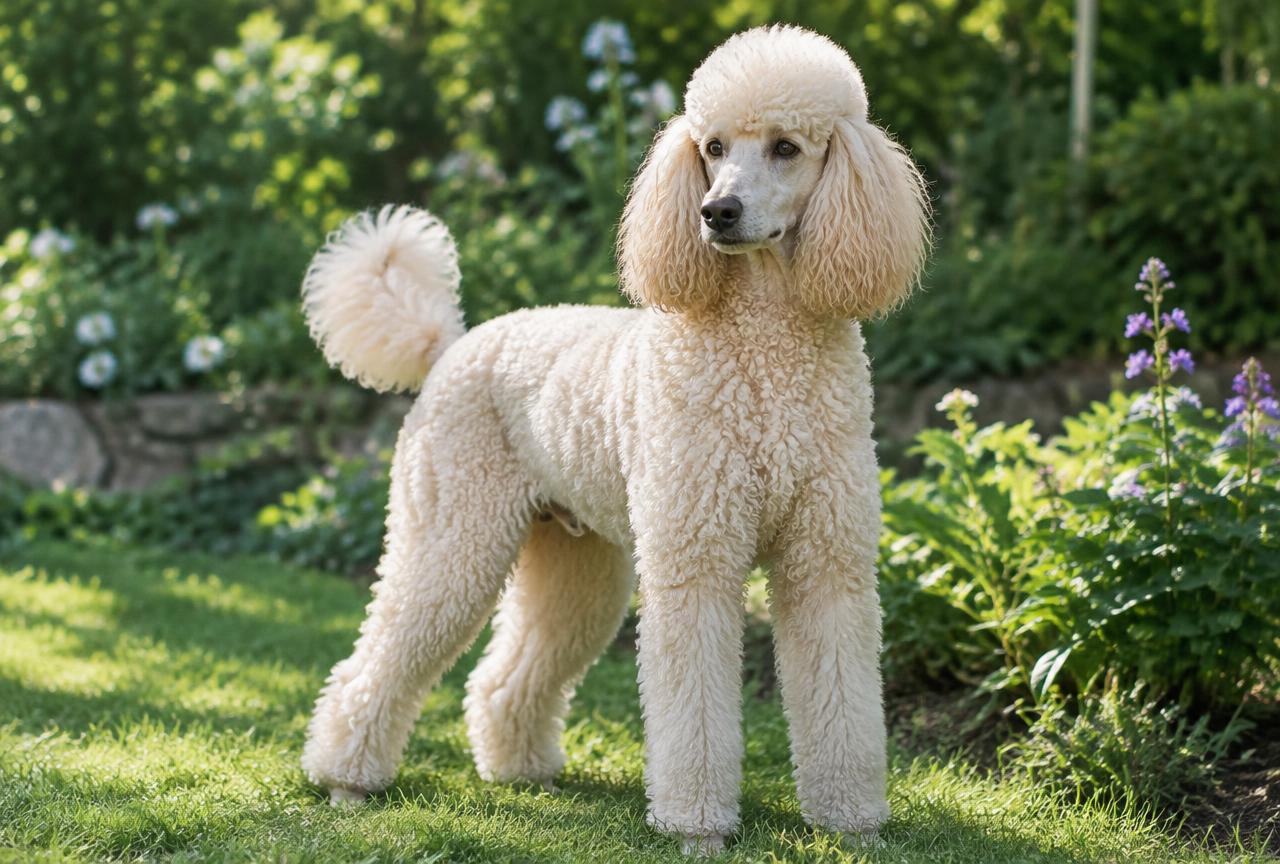
The Poodle is one of the most trainable and low shedding breeds available, ranging from the elegant Standard to the pocket-sized Toy.
Reviewed against Kennel Club and breed club health guidance
A brilliant, low shedding companion that comes in three sizes but one sharp mind.
The short version
- Poodles come in three sizes, Standard, Miniature and Toy, all sharing high intelligence and low shedding coats.
- The curly coat requires clipping every four to six weeks, a real ongoing cost for owners.
- Standard Poodles need close to an hour of exercise daily, while Toys need much less physical but similar mental stimulation.
- Health priorities differ by size, from bloat in Standards to patella and eye conditions in smaller varieties.
- This is one of the most trainable breeds available, excelling at obedience, agility and trick work.
Choose a variety
The original working size, athletic and best suited to active households with garden access.
- Weight
- 20 to 32 kg
- Height
- 45 to 62 cm
- Lifespan
- 12 to 15 yrs
- Size
- Large
- Group
- Utility
- Coat
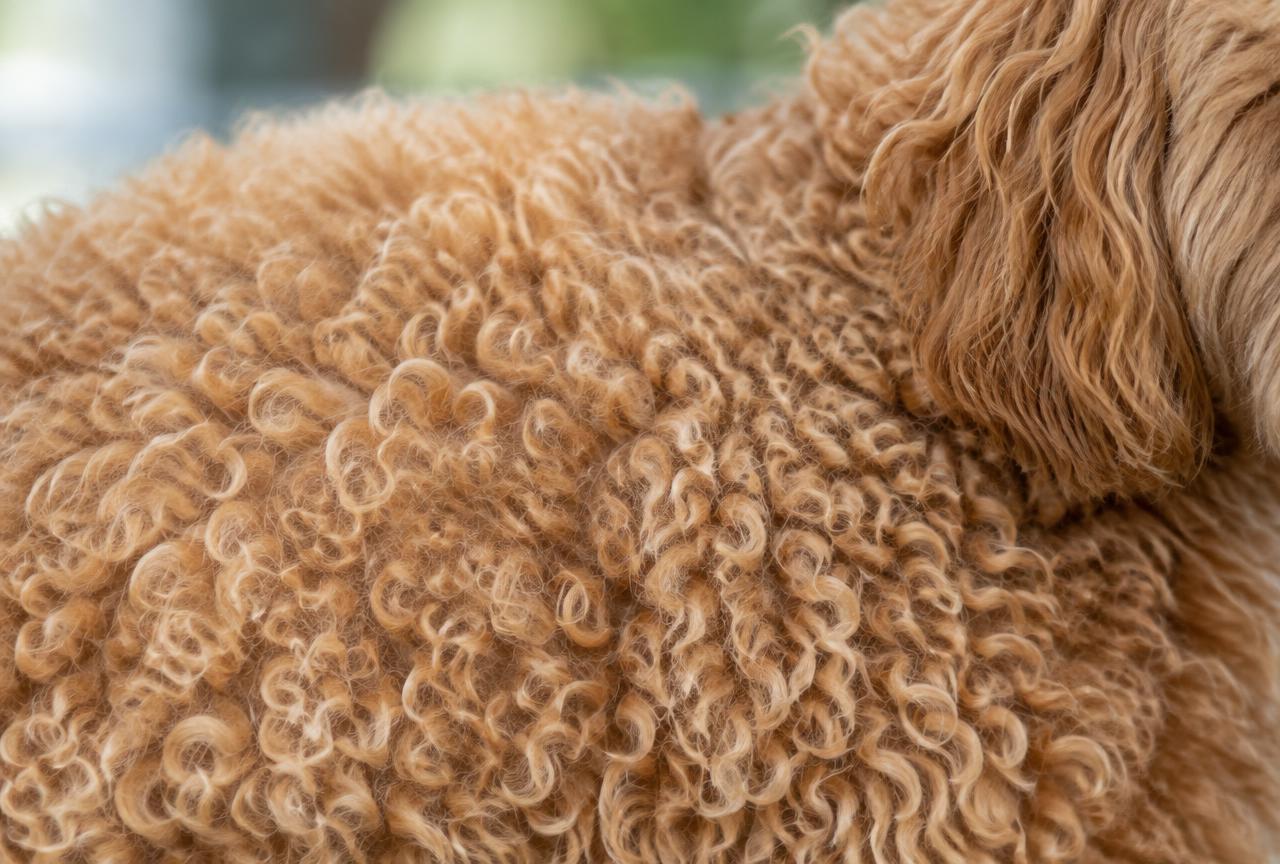
- Dense, curly, single coat, low shedding
- Daily exercise
- 60 minutes a day, including swimming or running where possible
- Years to full size
- about 1.5
- One-off setup
- €600 to 1200
Get one if…
- Owners wanting a highly trainable dog
- Households prepared to budget for regular professional grooming
- Active families wanting a dog for sport or fieldwork
- People with mild dog allergies
- Owners wanting a size option to match their lifestyle
Think again if…
- Owners wanting a wash-and-go, low maintenance coat
- Households wanting a dog left alone for long hours
- People unwilling to pay for regular grooming appointments
- Owners wanting a placid, low energy companion
- Homes without any mental stimulation plan
Trait profile
Exceptional trainability and low shedding are offset by high grooming demands and a need for real mental and physical engagement.
Space & setup. Standard Poodles benefit from a garden and regular access to open space; Miniature and Toy sizes adapt comfortably to flats.
Allergies. Low shedding and often better tolerated by people with mild allergies, though no dog is fully hypoallergenic and regular clipping is essential.
Living with a Poodle
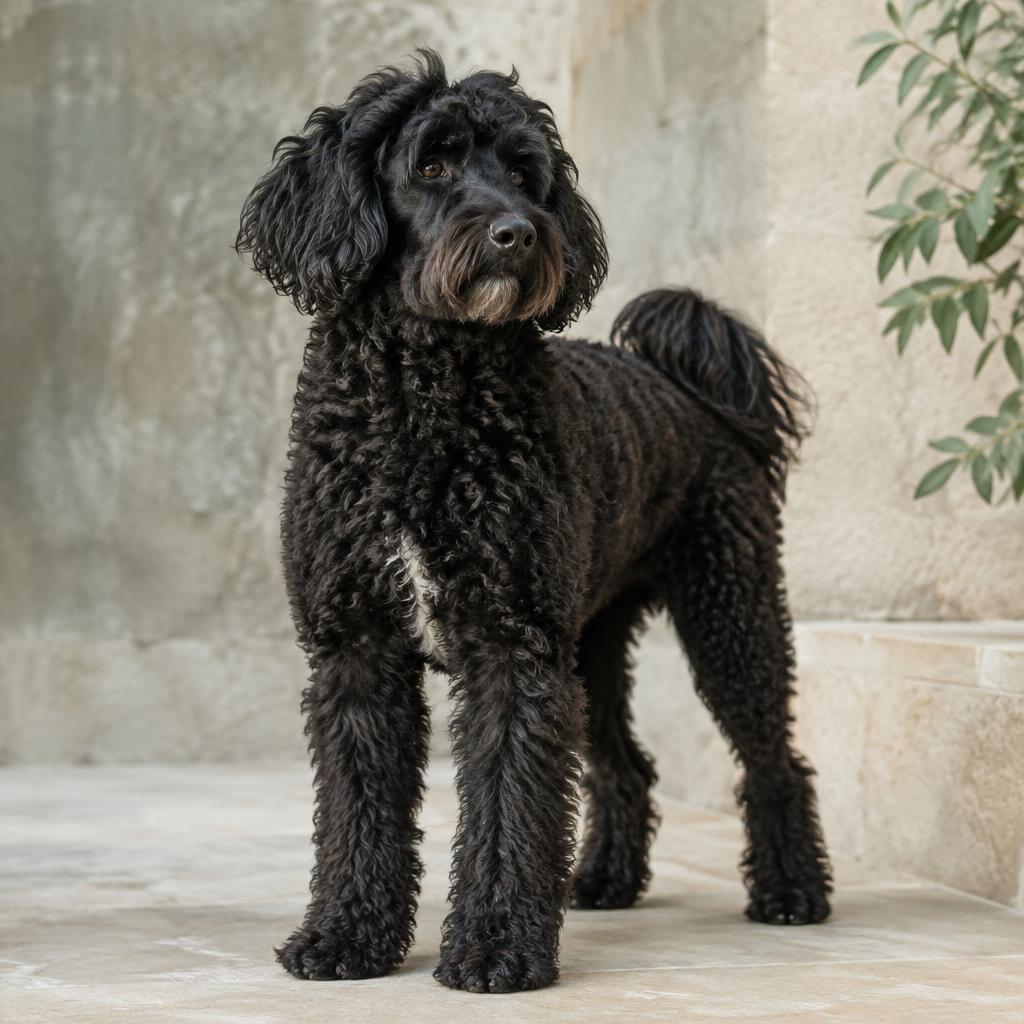
The Poodle is widely regarded as among the most intelligent dog breeds, originally bred in Germany and refined in France as a water retriever. Today it comes in three official sizes, Standard, Miniature and Toy, each sharing the same sharp mind and curly, low shedding coat.
The Poodle's history is more working dog than showring fashion piece, despite its modern reputation. It was developed in Germany as a duck retriever, its name likely deriving from the German 'pudel', meaning to splash in water. The distinctive clip, with shaved hindquarters and puffed joints, began as a practical way to protect vital organs and joints from cold water while leaving the legs free to swim. France later adopted and refined the breed, and it was there that the Standard, Miniature and Toy sizes were developed, the smaller versions bred down for companionship and, in the case of the Toy, for portability in city life.
Across all three sizes the temperament stays remarkably consistent. Poodles are famously intelligent, alert and eager to work with their owner, which makes them highly trainable but also easily bored by repetition. They bond closely with their family and are typically good with children and other pets when properly socialised, though Toy Poodles can be more delicate around boisterous younger children simply due to their small size. Poodles are often more reserved with strangers than a typical retriever, without being fearful, and many make excellent watchdogs because of this natural alertness combined with a tendency to bark at anything unusual.
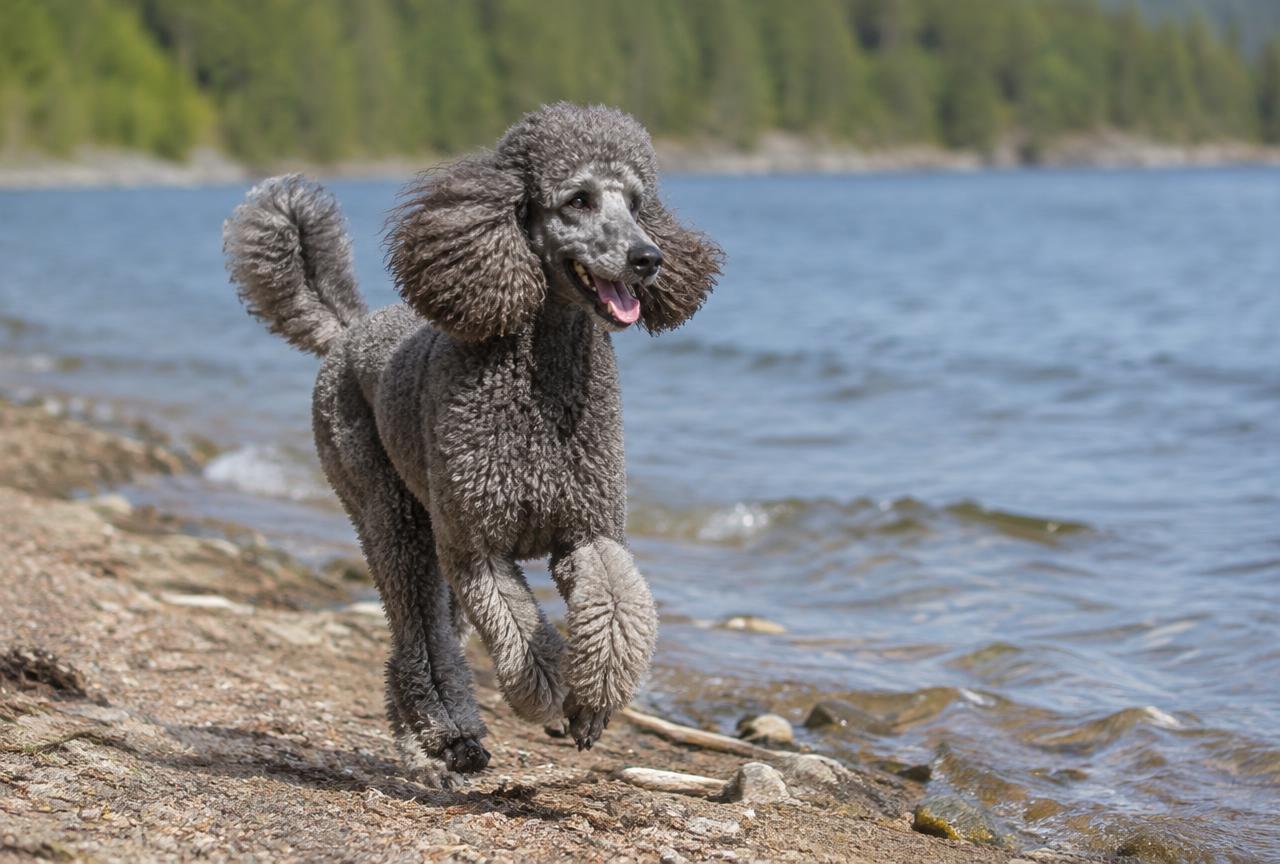
Exercise needs scale with size. Standard Poodles need a genuine daily outlet, ideally 60 minutes including some off-lead running or swimming, since this is at heart an athletic water dog. Miniatures do well with 45 to 60 minutes of varied activity, while Toy Poodles are content with shorter, gentler walks plus mental games indoors. All three sizes excel at training sports such as agility, obedience and trick training, and mental stimulation matters as much as physical exercise for keeping a Poodle content, since an understimulated Poodle can become anxious or destructive. The coat, prized for being low shedding, is not low maintenance, and clipping every four to six weeks by a professional groomer is a real and ongoing cost that buyers should factor in from day one.
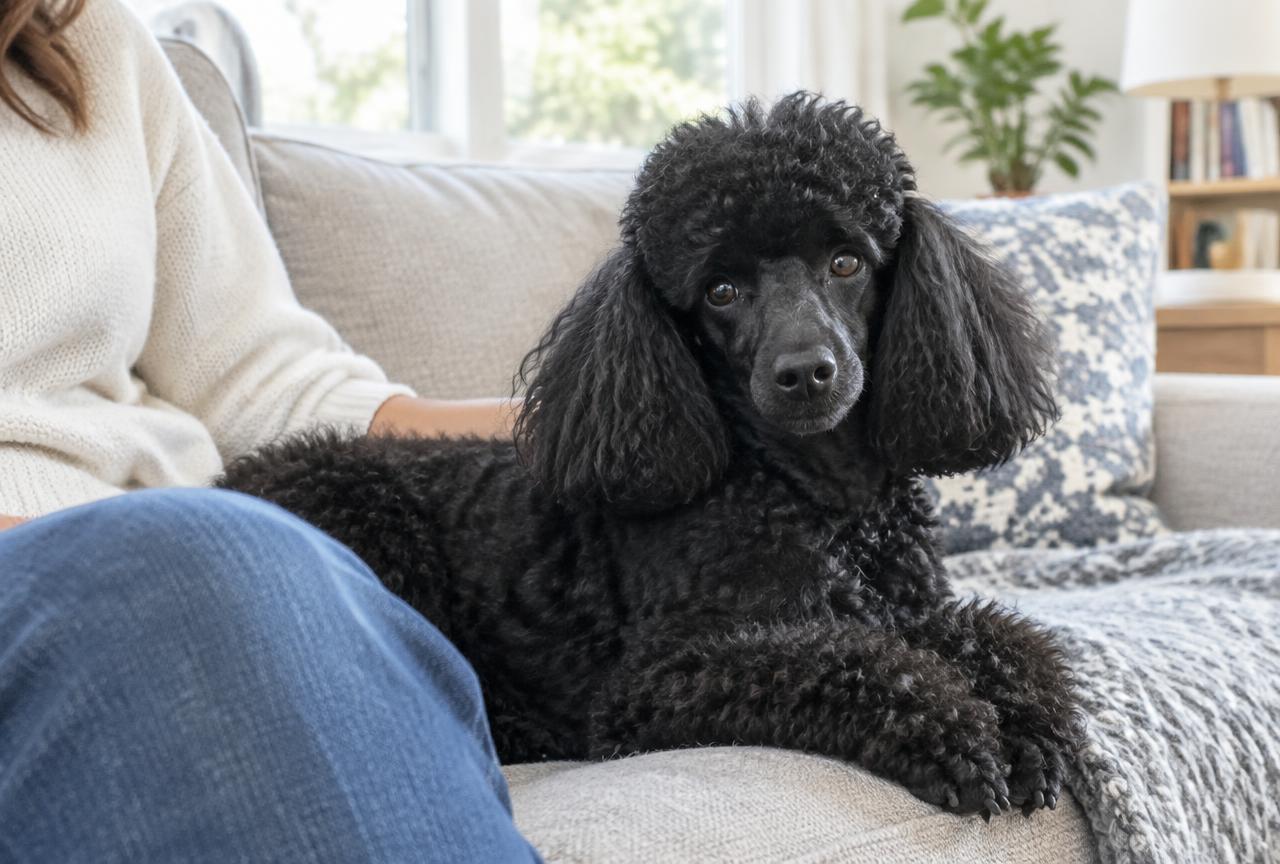
Health varies somewhat by size. Standard Poodles are prone to Addison's disease, sebaceous adenitis, and gastric dilatation volvulus (bloat), a life-threatening emergency more common in deep-chested large breeds, so owners should learn the warning signs and consider slower feeding methods. Miniature and Toy Poodles more often face patellar luxation, progressive retinal atrophy and Legg-Calve-Perthes disease affecting the hip joint. All sizes can be affected by hip dysplasia and eye conditions, so buyers should seek breeders who screen for the size-appropriate conditions and who can show clear certificates rather than verbal assurances.
The Poodle in any size suits owners who want an intelligent, trainable dog and who are prepared to commit to regular professional grooming and daily mental engagement. Standard Poodles fit active families wanting a versatile working companion, Miniatures suit those wanting a slightly smaller, equally clever all-rounder, and Toy Poodles work well for owners in flats who still want a genuinely intelligent dog rather than a purely decorative one. The breed is a poor match for owners who want a wash-and-go coat, who cannot commit to grooming costs, or who want a dog content to be left to its own devices for long stretches.
A clever, low shedding all-rounder available in a size to suit almost any home, provided the coat gets professional attention.
Exercise, day to day
- 1Standard: 60 minutes daily including off-lead running or swimming where safe.
- 2Miniature: 45 to 60 minutes of varied walking and play.
- 3Toy: 30 to 40 minutes of gentle walks plus indoor games.
- 4Puppies of all sizes should avoid repeated jumping or long walks until growth plates close.
- 5Add daily training or puzzle sessions, since mental fatigue is as important as physical tiredness for this breed.
Grooming, realistically
- 1Brush two to three times a week to prevent the curly coat matting down to the skin.
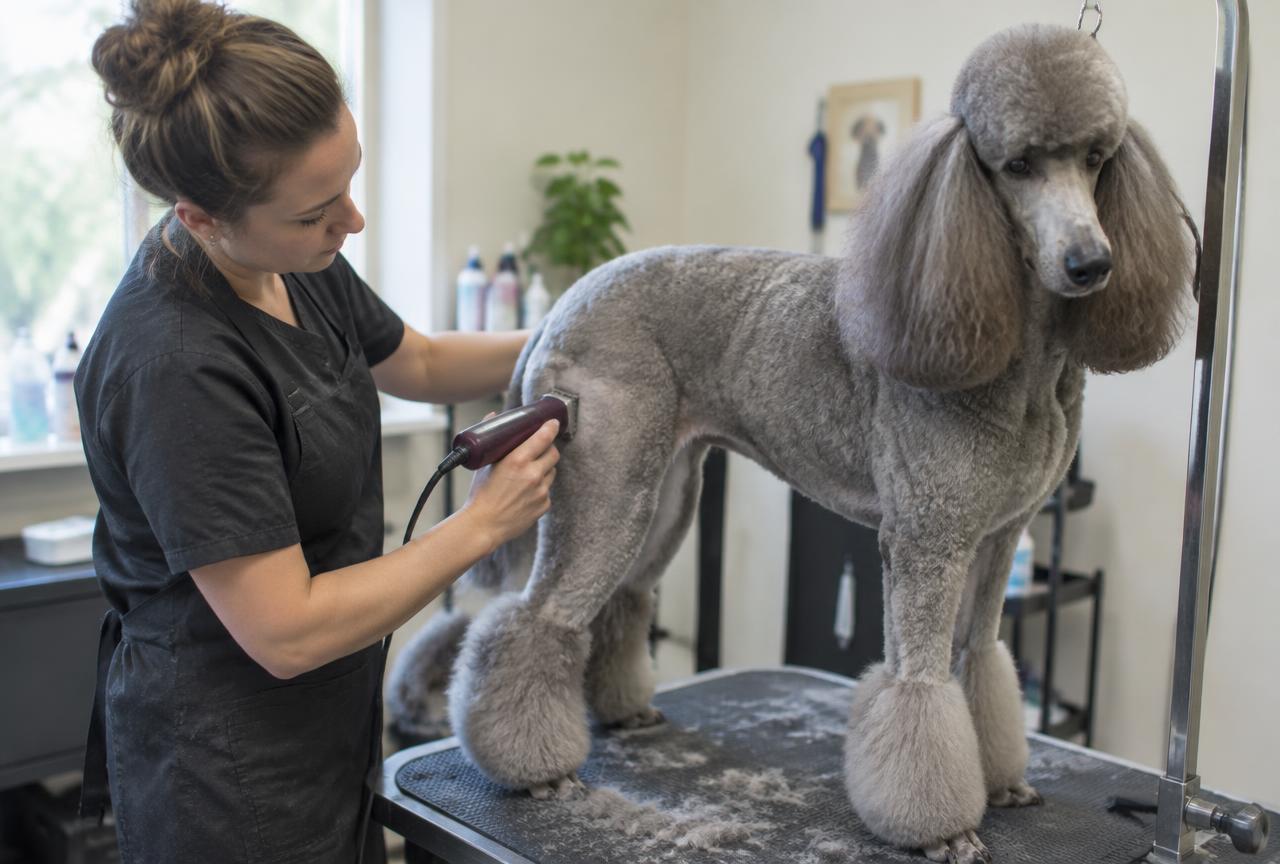
- 2Book a professional clip every four to six weeks to maintain coat health and hygiene.
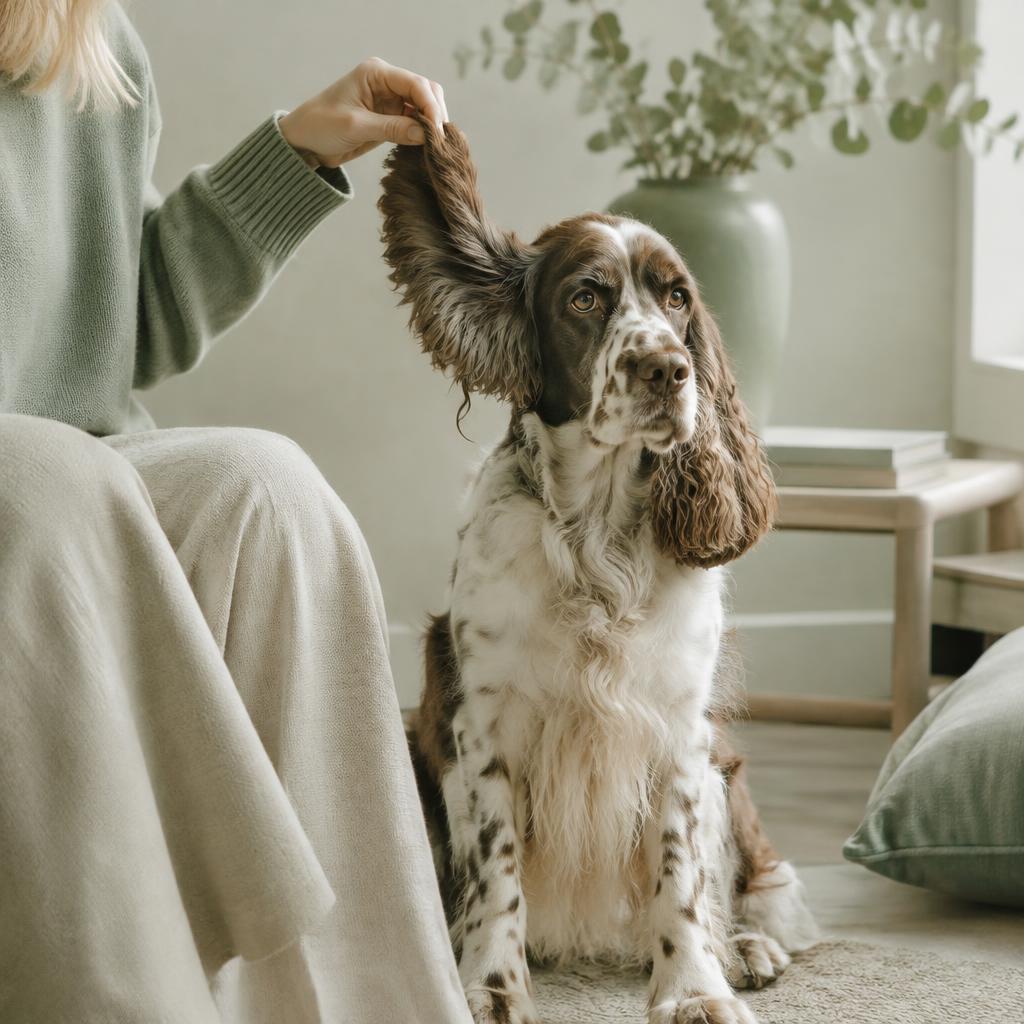
- 3Check and clean ears weekly, as the low airflow ear canal is prone to infection.
- 4Trim nails every three to four weeks.
- 5Brush teeth several times a week to guard against dental disease common in smaller varieties.
What you actually need
- Slicker brush
- Metal comb
- Professional grooming appointments
- Ear cleaning solution
- Nail clippers or grinder
- Canine toothbrush and paste
Puppy to adult
| Age | Male | Female | What is happening |
|---|---|---|---|
| 8 weeks | 2.5 to 4 kg | 2.2 to 3.6 kg | Varies significantly by variety; figures shown for Standard. |
| 3 months | 5 to 8 kg | 4.5 to 7 kg | Rapid early growth phase for Standard Poodles. |
| 6 months | 12 to 18 kg | 11 to 16 kg | Most height reached, frame still filling out. |
| 9 months | 17 to 25 kg | 15 to 22 kg | Approaching adult weight. |
| 12 months | 21 to 29 kg | 19 to 25 kg | Close to mature size. |
| 18 months | 23 to 32 kg | 20 to 28 kg | Fully mature, adult muscle tone developed. |
Ranges are typical, not targets. Judge condition by ribs and waist, and check with the ideal weight checker.
What to ask a breeder
- Which size variety are the parents, and what is the expected adult size of this litter?
- Can I see hip, eye and patella screening results for both parents?
- Has this line been tested for degenerative myelopathy or, for Standards, Addison's disease?
- How often will the puppy need professional clipping, and what coat care have you started?
- What temperament traits have you noticed in this particular litter?
- What socialisation and early training have the puppies had so far?
Health tests to ask for
Ask to see results for both parents before you put down a deposit.
- Hip score (BVA/KC scheme), important for Standard Poodles
- Eye examination for progressive retinal atrophy
- Patella evaluation, particularly for Miniature and Toy
- DNA test for degenerative myelopathy
- Thyroid and Addison's disease screening for Standard breeding stock
Health watch-list
What to ask a breeder about, and what to watch for over a lifetime. This is orientation, not veterinary advice, anything you notice belongs in front of a vet.
Gastric dilatation volvulus (bloat)
NotableA life-threatening emergency more common in deep-chested Standard Poodles; slow feeders and rest after meals reduce risk.
Addison's disease
NotableAn adrenal hormone disorder more common in Standard Poodles, causing vague symptoms like lethargy and vomiting.
Patellar luxation
CommonMore frequent in Miniature and Toy Poodles, causing the kneecap to slip and occasionally needing surgery.
Progressive retinal atrophy
UncommonA hereditary eye condition leading to gradual vision loss; DNA testing of breeding stock helps reduce incidence.
Sebaceous adenitis
UncommonAn inflammatory skin condition affecting hair follicles, more often seen in Standard Poodles.
Hip dysplasia
UncommonCan affect all sizes but is more relevant in Standards; hip scoring of parents reduces risk.
What it costs to keep one
Realistic running cost
€170 / month
About €2,040 a year, or roughly €28,560 across a 14-year life, before purchase price, neutering and one-off vet events.
Before the puppy arrives. Budget roughly €600 to 1200 for a crate, bed, lead and harness, bowls, puppy classes, first vaccinations and grooming kit sized for this breed. Figures throughout are indicative and vary a good deal between countries.
Interactive · built for this breed
Is a Poodle right for your home?
Seven honest questions about your space, time and household, checked against this breed's exercise need, coat, sociability and tolerance for time alone.
Fit with your routine
91%
A strong fit
Your routine suits a Poodle well. Meet adult dogs of the line before you commit.
What to sort out first
- Needs more daily exercise than you have pencilled in.
- Coat needs more brushing or trimming than you have allowed.
Compare more breeds in the matchmaker, or plan meals with the portion calculator.
The verdict, by household
First-time owner
A strong choice
High trainability suits new owners, though grooming costs and mental stimulation needs should be planned for in advance.
Family with young children
A good match
Standard and Miniature sizes cope well with family life; Toy Poodles need gentler handling around very young children.
Active outdoor household
An excellent choice for Standard
Standard Poodles thrive with hiking, swimming and dog sports; smaller varieties need less but still enjoy activity.
Flat dweller in a city
A good match for Miniature or Toy
Smaller varieties adapt well to flat life provided daily walks and training games are maintained.
When to call your vet
- Restlessness, unproductive retching or a swollen abdomen, which can signal bloat in Standard Poodles
- Sudden lameness or skipping steps, which may indicate patellar luxation
- Cloudy eyes or reluctance to move in dim light, which can suggest progressive retinal atrophy
- Vomiting, lethargy or poor appetite, which can point to Addison's disease in Standards
- Excessive scratching or hair loss, which may indicate sebaceous adenitis
Nothing here is a diagnosis. A swollen, hard belly with retching, collapse, breathing difficulty and sudden hind-leg weakness are emergencies: go straight away.
Poodle vs the closest alternatives
| Breed | Weight | Energy | Grooming | € / month |
|---|---|---|---|---|
| Poodle | 20 to 32 kg | 8/10 | 8/10 | €170 |
| Portuguese Water Dog | 16 to 27 kg | 8/10 | 8/10 | €139 |
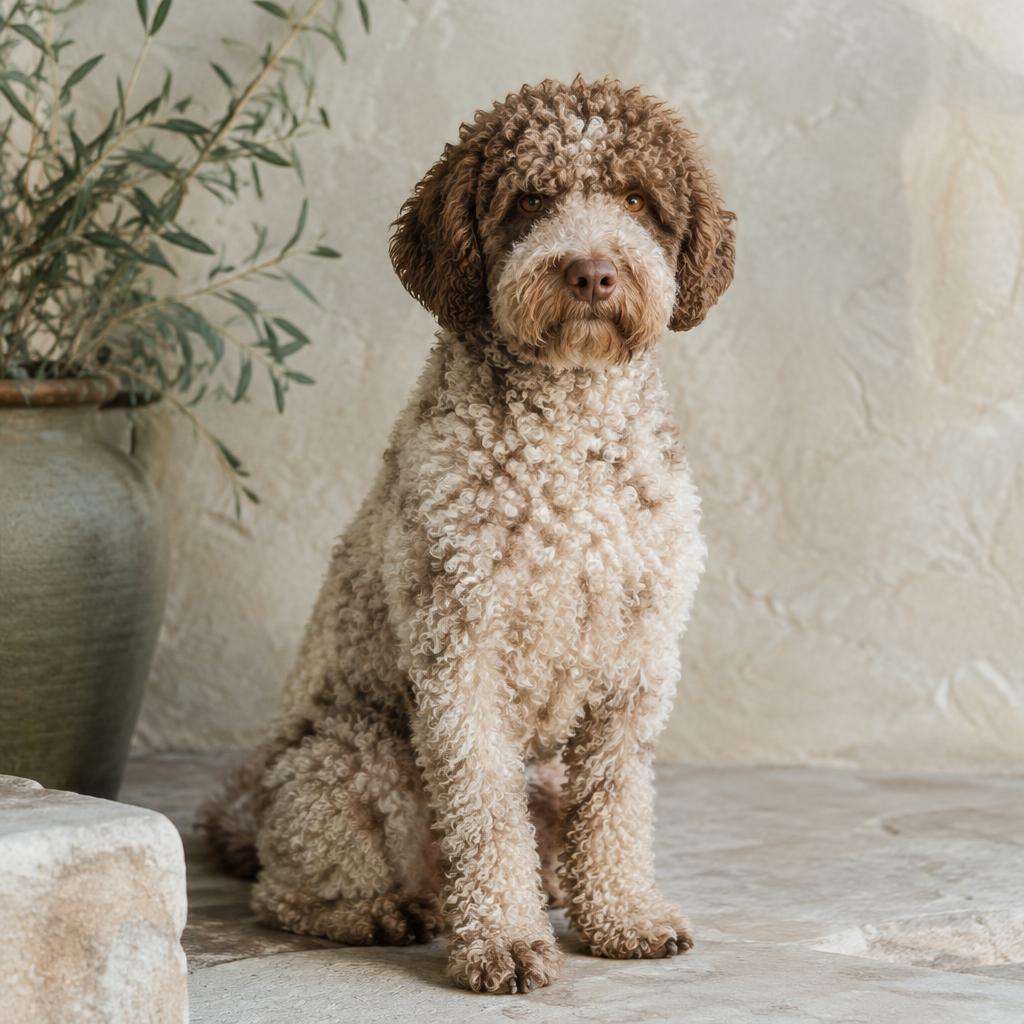
| Lagotto Romagnolo | 11 to 16 kg | 6/10 | 8/10 | €124 |
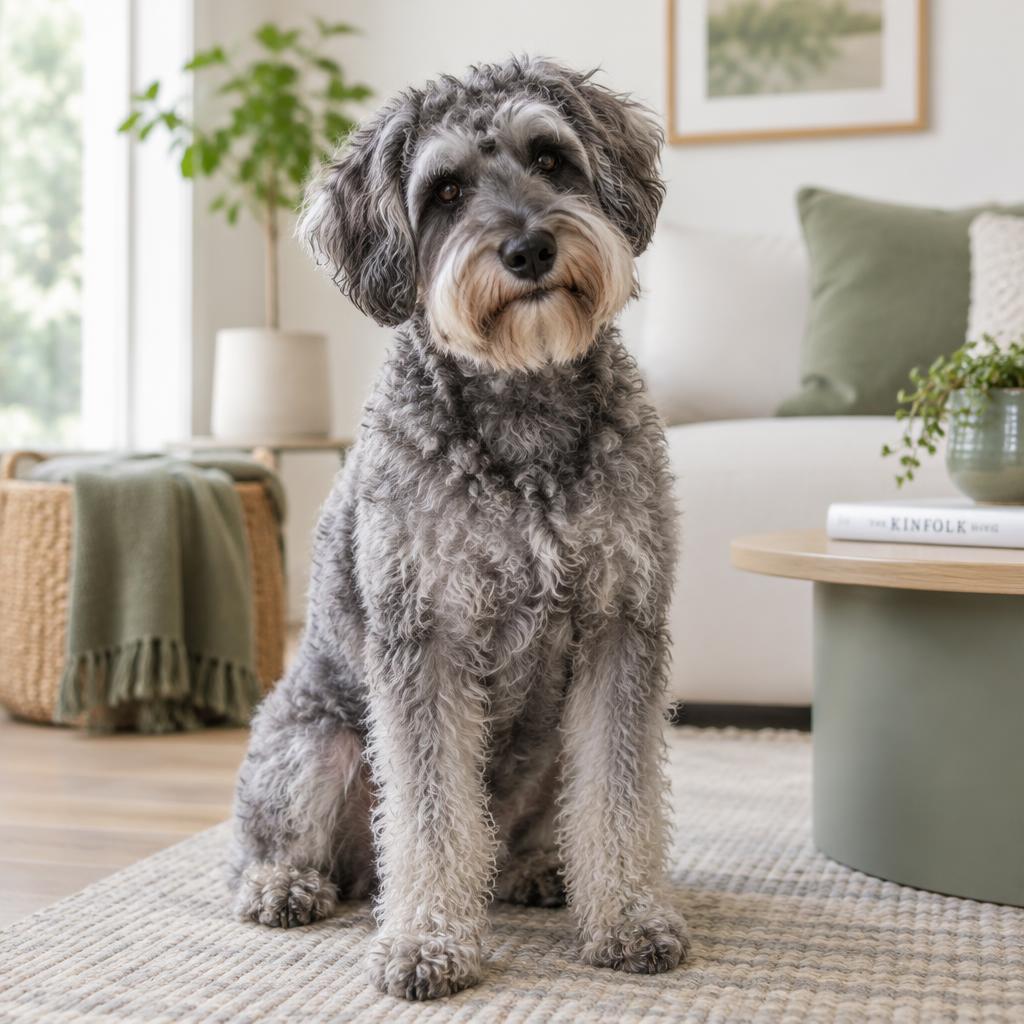
| Schnoodle | 9 to 30 kg | 7/10 | 7/10 | €104 |
Poodle questions, answered
Are Poodles hypoallergenic?
No dog is completely hypoallergenic, but Poodles shed very little and are often better tolerated by people with mild dog allergies than most breeds.
Which Poodle size is best for a flat?
Miniature and Toy Poodles adapt most easily to flat living, though Standard Poodles can also manage with enough daily exercise and mental stimulation.
How much grooming does a Poodle need?
Poodles need brushing two to three times a week and a professional clip roughly every four to six weeks to prevent matting and maintain coat health.
Are Poodles good family dogs?
Yes, Poodles are typically affectionate and good with children, though Toy Poodles need gentler handling due to their small, delicate frame.
How intelligent are Poodles compared with other breeds?
Poodles are consistently ranked among the most intelligent breeds for working and obedience intelligence, learning new commands very quickly.
Do Poodles need a lot of exercise?
Standard Poodles need close to an hour of exercise a day, while Miniature and Toy Poodles need less physical activity but still benefit from daily mental engagement.
Sources
- Poodle breed standard, The Kennel Club
- Poodle breed standard, American Kennel Club
- Poodle health information, Poodle Club of America Health Foundation
- Addison's disease in dogs, Royal Veterinary College
- Bloat (GDV) in dogs, British Veterinary Association