Gundog group
Italy
Lagotto Romagnolo
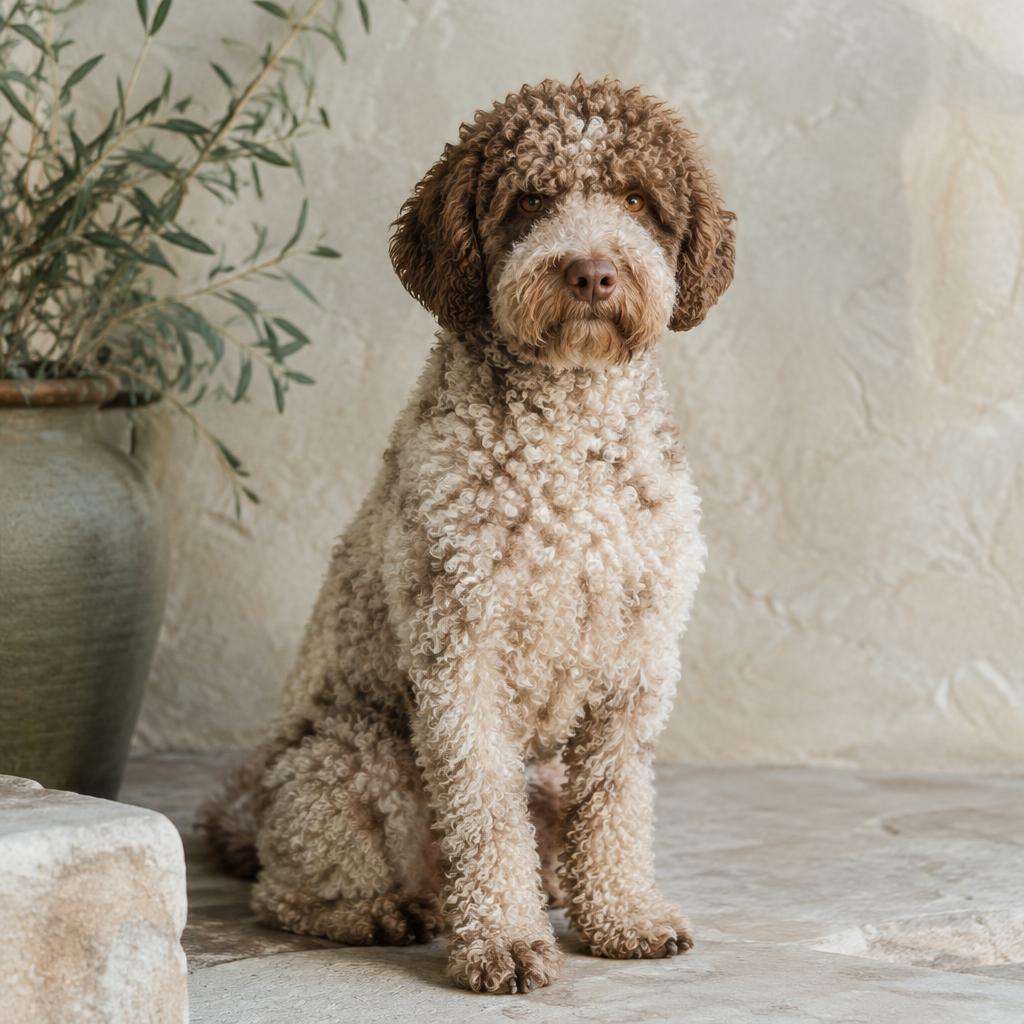
A woolly Italian truffle dog with a calm indoor nature, a world-class nose and a coat that needs professional upkeep.
The SniffScroll editorial desk
The truffle dog: a woolly, nose-driven worker with a calmer nature than most doodles.
The short version
- Calmer and more predictable than most poodle crosses
- The woolly coat does not shed but needs clipping every 6 to 8 weeks
- Give the nose a job: scent games are the fastest route to a happy Lagotto
- Ask breeders for hip scores, eye tests and Lagotto storage disease DNA results
- Weight
- 11 to 16 kg
- Height
- 41 to 48 cm
- Lifespan
- 12 to 16 yrs
- Size
- Medium
- Group
- Gundog
- Coat
- Woolly, curly, non-shedding
- Grown male
- 13 to 16 kg
- Grown female
- 11 to 14 kg
- Years to full size
- about 1.5
- One-off setup
- €350 to 800
Get one if…
- Allergy-aware homes wanting a predictable pure breed
- Owners who enjoy scent games and training
- Families wanting a calmer low-shedding dog
- People who walk daily and want a companion, not an athlete
Think again if…
- Anyone unwilling to pay for regular professional grooming
- Owners wanting an off-lead dog that ignores wildlife scent
- Households away from home all day with no cover
- People wanting a highly social, everyone-is-a-friend dog
Trait profile
Trait scores reflect a typical well-bred adult; the breed is steadier than most working gundog crosses.
Space & setup. Adapts well to flats and houses alike if walked and given nose work daily.
Allergies. Non-shedding woolly coat; many allergy sufferers cope, but meet adult dogs first.
Living with a Lagotto Romagnolo
The Lagotto Romagnolo is an Italian water retriever turned truffle hunter, and it shows: a superb nose, a woolly non-shedding coat and a steady, thoughtful temperament. Compared with the poodle crosses it is often mistaken for, the Lagotto tends to be calmer indoors and more focused outdoors. It suits owners who want a low-shedding dog with real working character, and who will give that nose a job, whether truffle-style scent games, tracking or long investigative walks.
The Lagotto Romagnolo has quietly become one of the most sensible answers to the doodle question. It offers the woolly, low-shedding coat people want, but as a pure breed with predictable size, temperament and health testing, rather than a lottery between two parent breeds.
Living with a Lagotto is generally easy. The breed is affectionate without being frantic, good with children, and content with a solid daily walk plus something for the nose to do. Scent work is where it shines: hide food or toys, teach tracking, and you have a happy dog. Indoors most Lagotti are calm and settle well, which sets them apart from many working crosses.
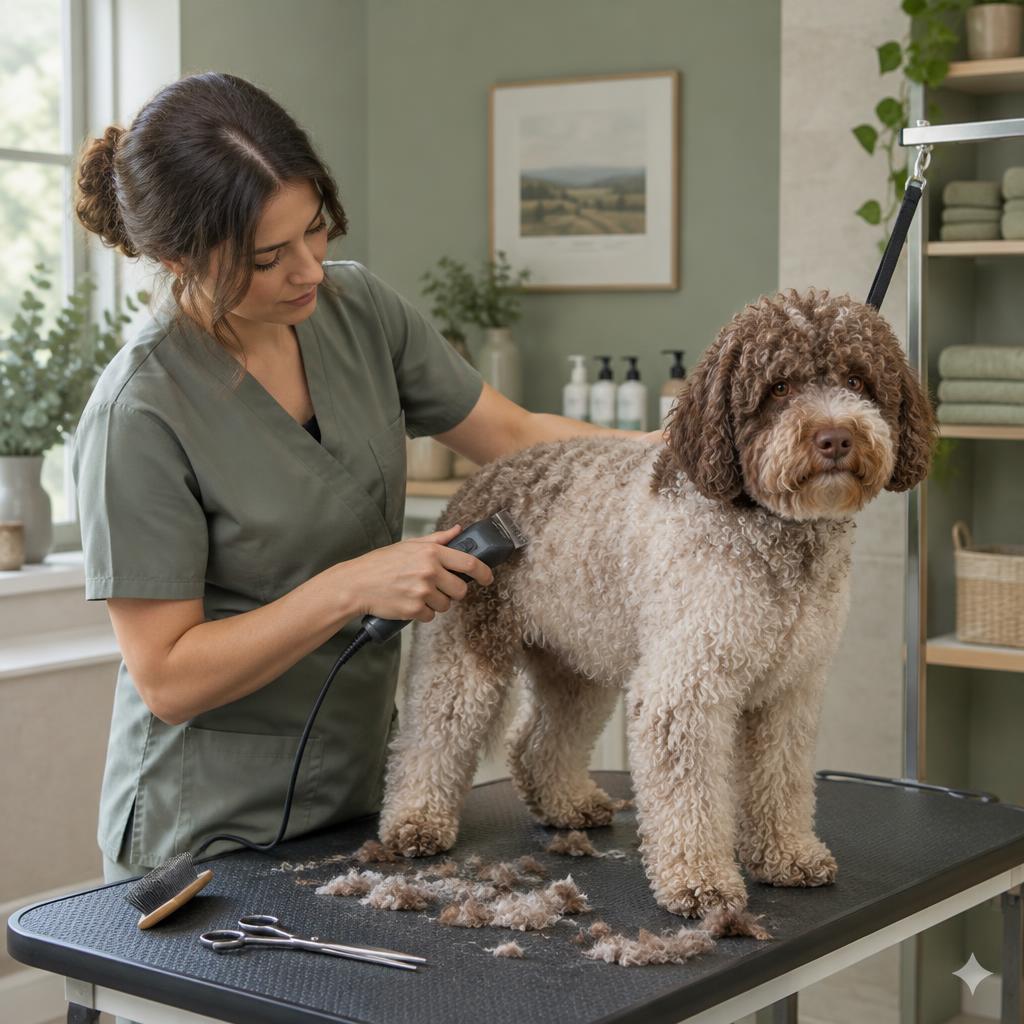
The catches are the coat and the nose. The woolly curls do not shed but they do mat, and professional grooming every six to eight weeks is a standing cost. Outdoors, that truffle nose means the dog may choose its own agenda on walks; recall needs consistent work. Some lines are reserved with strangers and benefit from thorough early socialisation.
For a household wanting a characterful, low-shedding medium dog that is calmer than a cockapoo and more predictable than a first-generation cross, the Lagotto is one of the best choices in the whole library.
A calmer, sturdier alternative to the popular doodles, with a wonderful nose and a coat that still needs professional care. One of the easier low-shedding breeds to live with.
Exercise, day to day
- 145 to 60 minutes of walking daily
- 2Scent games or tracking practice most days
- 3Off-lead time in secure areas where recall allows
Grooming, realistically
- 1Brush and comb to the skin two to three times a week
- 2Professional clip every 6 to 8 weeks
- 3Check ears weekly; the drop ear and hair in the canal trap moisture
- 4Rinse the beard and paws after muddy walks
What you actually need
- Slicker brush
- Metal comb
- Ear cleaner
- Blunt-ended scissors for hygiene trims
Puppy to adult
| Age | Male | Female | What is happening |
|---|---|---|---|
| 8 weeks | |||
| 4 months | |||
| 6 months | |||
| 12 months | |||
| 18 months |
Ranges are typical, not targets. Judge condition by ribs and waist, and check with the ideal weight checker.
What to ask a breeder
- Are both parents hip scored and eye tested?
- Are both parents DNA tested for Lagotto storage disease and juvenile epilepsy?
- Can I meet the mother and see where the puppies are raised?
- How do you socialise the litter before they leave?
- What grooming routine do you recommend from day one?
Health tests to ask for
Ask to see results for both parents before you put down a deposit.
- Hip scoring for both parents
- Eye examinations
- Lagotto storage disease DNA test
- Benign familial juvenile epilepsy DNA test
Health watch-list
What to ask a breeder about, and what to watch for over a lifetime. This is orientation, not veterinary advice, anything you notice belongs in front of a vet.
Hip dysplasia
UncommonAsk for hip scores on both parents and keep the dog lean through growth.
Lagotto storage disease
RareA serious neurological condition now preventable with a DNA test; both parents should be tested.
Benign familial juvenile epilepsy
RarePuppies typically outgrow it; a DNA test exists and responsible breeders use it.
Ear infections
CommonHairy ear canals and drop ears trap moisture; check and clean weekly.
Progressive retinal atrophy
UncommonAnnual eye examinations help catch inherited eye disease early.
Skin irritation under a matted coat
CommonNot a disease so much as a grooming failure; mats pull the skin and hide infections.
What it costs to keep one
Realistic running cost
€124 / month
About €1,488 a year, or roughly €20,832 across a 14-year life, before purchase price, neutering and one-off vet events.
Before the puppy arrives. Budget roughly €350 to 800 for a crate, bed, lead and harness, bowls, puppy classes, first vaccinations and grooming kit sized for this breed. Figures throughout are indicative and vary a good deal between countries.
Interactive · built for this breed
Is a Lagotto Romagnolo right for your home?
Seven honest questions about your space, time and household, checked against this breed's exercise need, coat, sociability and tolerance for time alone.
Fit with your routine
94%
A strong fit
Your routine suits a Lagotto Romagnolo well. Meet adult dogs of the line before you commit.
What to sort out first
- Needs more daily exercise than you have pencilled in.
- Coat needs more brushing or trimming than you have allowed.
Compare more breeds in the matchmaker, or plan meals with the portion calculator.
The verdict, by household
When to call your vet
- Head shaking or smelly ears
- Scratching, redness or mats tightening to the skin
- Limping or reluctance to jump
- Any seizure, tremor or unexplained wobbliness
Nothing here is a diagnosis. A swollen, hard belly with retching, collapse, breathing difficulty and sudden hind-leg weakness are emergencies: go straight away.
Lagotto Romagnolo vs the closest alternatives
| Breed | Weight | Energy | Grooming | € / month |
|---|---|---|---|---|
| Lagotto Romagnolo | 11 to 16 kg | 6/10 | 8/10 | €124 |
| Poodle | 20 to 32 kg | 8/10 | 8/10 | €170 |
| Portuguese Water Dog | 16 to 27 kg | 8/10 | 8/10 | €139 |
| Coton de Tulear | 3.5 to 6 kg | 5/10 | 7/10 | €94 |
Lagotto Romagnolo questions, answered
Is a Lagotto Romagnolo just a curly doodle?
No. It is an old Italian pure breed with predictable size, temperament and health testing, unlike first-generation crosses.
Do Lagotti shed?
Very little. The woolly coat holds loose hair, which is why regular brushing and clipping are essential.
How much exercise do they need?
Around an hour of walking daily plus scent games. They are energetic outdoors but notably calm indoors.
Are they good family dogs?
Yes: affectionate, patient and playful with children when well socialised, and steadier than most doodle crosses.
Can a Lagotto live in a flat?
Yes, better than most working breeds, provided it gets a daily walk and regular nose work.
Do they really find truffles?
Yes, the breed still works as a truffle dog in Italy. At home, hide-and-seek scent games scratch the same itch.
What health tests matter most?
Hip scores, eye examinations and DNA tests for Lagotto storage disease and juvenile epilepsy on both parents.