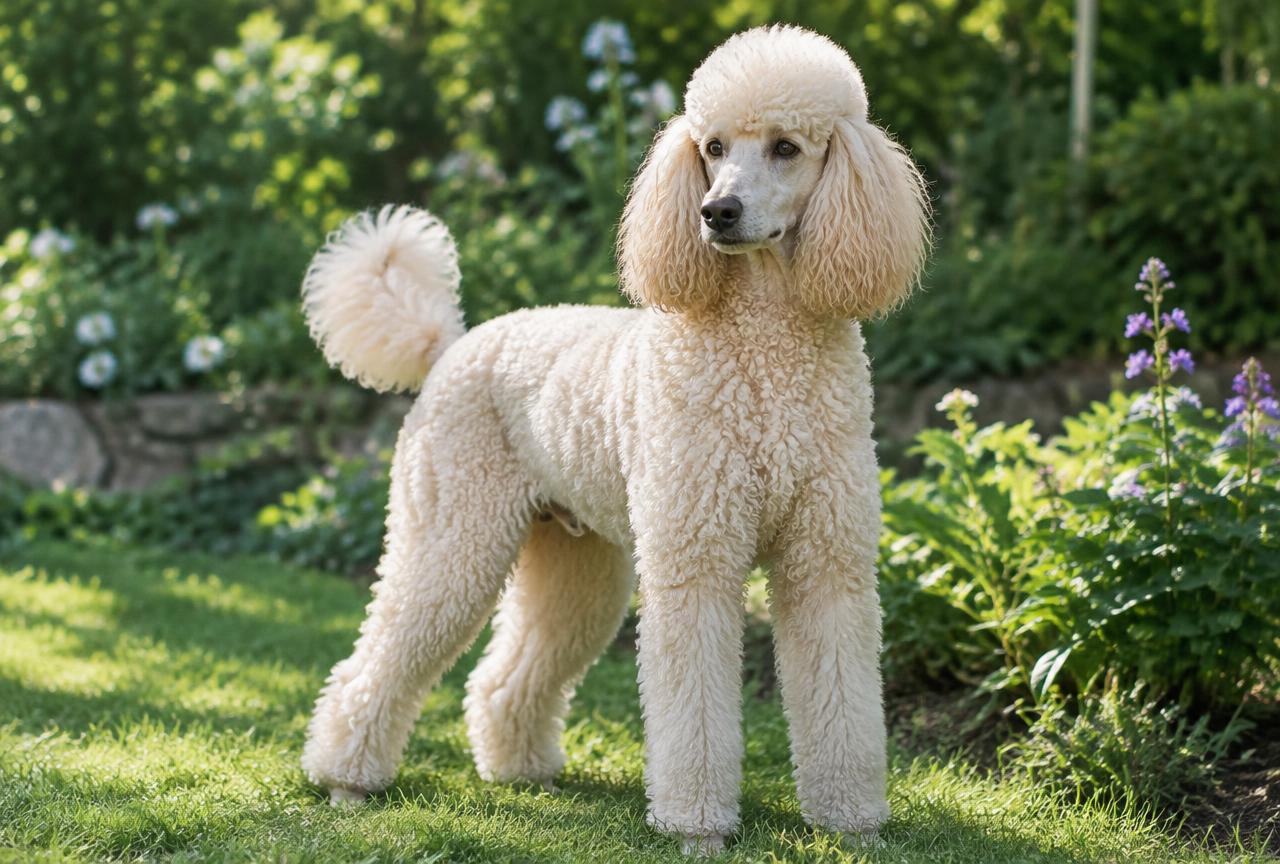
Working group
Portugal
Portuguese Water Dog
A working water dog with a family heart: bright, athletic and low-shedding, but the coat and the exercise needs are real commitments.
The SniffScroll editorial desk
A working water dog in a family-sized, low-shedding coat.
The short version
- Low-shedding, not low-effort: the coat needs professional grooming every 6 to 8 weeks
- A working dog at heart: plan on 90 minutes of proper exercise daily
- Deeply people-focused and unhappy with long days alone
- Health testing matters: ask for hips, eyes, GM1 and JDCM DNA results
- Weight
- 16 to 27 kg
- Height
- 43 to 57 cm
- Lifespan
- 11 to 14 yrs
- Size
- Medium
- Group
- Working
- Coat
- Curly or wavy, single, non-shedding
- Grown male
- 19 to 27 kg
- Grown female
- 16 to 23 kg
- Years to full size
- about 1.5
- One-off setup
- €400 to 900
Get one if…
- Active families who walk, swim or run daily
- Allergy-aware households willing to test with adult dogs first
- Owners who enjoy training and dog sports
- Homes where someone is around much of the day
Think again if…
- Sedentary households wanting a calm ornament
- Anyone unwilling to budget for grooming every 6 to 8 weeks
- Full-time workers with no daytime cover
- First-time owners wanting an effortless dog
Trait profile
Trait scores reflect a typical well-bred, well-socialised adult; working lines run hotter than show lines.
Space & setup. Adapts to a house with a garden; a flat is possible only with serious daily exercise.
Allergies. Low-shedding single coat; many allergy sufferers cope, but meet adult dogs first.
Living with a Portuguese Water Dog
The Portuguese Water Dog worked alongside fishermen on the Portuguese coast, herding fish into nets and carrying messages between boats. That working brain and body remain: this is an athletic, clever, people-focused dog that needs real exercise and real company. The coat sheds very little, which draws many families in, but it grows continuously and demands professional grooming every six to eight weeks. In the right home the breed is joyful, biddable and endlessly up for anything; in a quiet, sedentary home it becomes inventive in ways owners rarely enjoy.
The Portuguese Water Dog has a public image problem in reverse: two presidential dogs made it famous as a hypoallergenic family pet, and many buyers arrive expecting a calm, decorative companion. What they get is a working gundog-adjacent athlete with a sense of humour and a strong opinion about being left alone all day.
The good news first. This is one of the most trainable of the water dogs, deeply bonded to its people, excellent with children when raised with them, and genuinely low-shedding. Many allergy sufferers cope well with the breed, though no dog is truly hypoallergenic and time with adult dogs before committing is essential. A well-exercised Portie is a delight: cheerful, responsive, up for anything from agility to a long swim.
The honest catches are three. Exercise: an hour of walking is a starting point, not a finish, and the breed thrives with swimming, retrieving and training on top. Grooming: the coat mats to the skin if neglected, and professional grooming every six to eight weeks is a fixed cost for the dog's life. Company: this is a Velcro working breed that copes poorly with long empty days and can develop nuisance barking and destructive habits when bored.
For active households near water, or anyone wanting a dog to do things with rather than simply live alongside, the Portuguese Water Dog is outstanding. For a low-effort, low-shedding ornament, look elsewhere.
A brilliant match for active families who want a low-shedding dog and will genuinely use one: swimming, hiking, training. The coat is the honest catch, costing real time and money.
Exercise, day to day
- 160 to 90 minutes of walking daily, split across two outings
- 2Swimming or retrieving sessions two to three times a week
- 3Training or scent games most days to occupy the working brain
Grooming, realistically
- 1Brush through to the skin two to three times a week
- 2Professional clip every 6 to 8 weeks
- 3Check and dry ears after every swim
- 4Bathe monthly or after muddy or salty swims
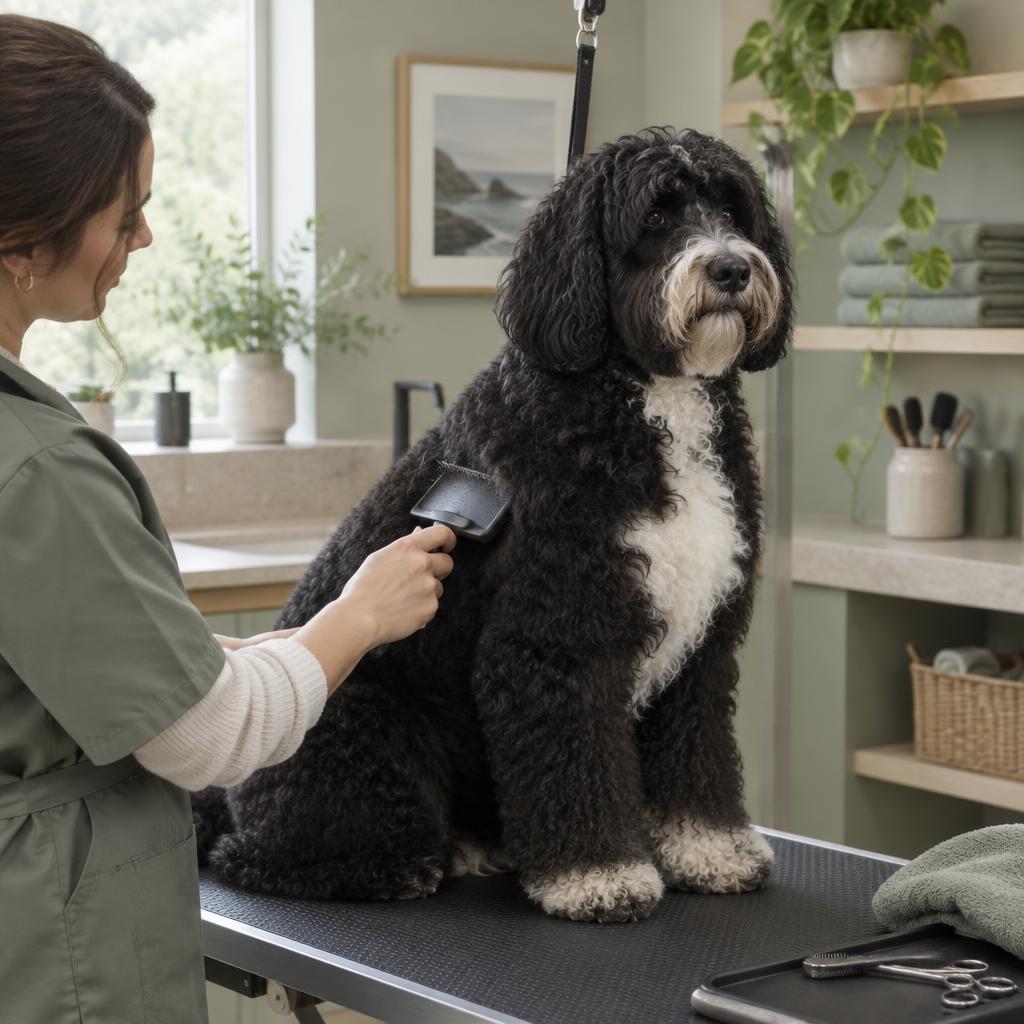
What you actually need
- Slicker brush
- Metal comb
- Ear cleaner and drying solution
- Detangling spray
Puppy to adult
| Age | Male | Female | What is happening |
|---|---|---|---|
| 8 weeks | |||
| 4 months | |||
| 6 months | |||
| 12 months | |||
| 18 months |
Ranges are typical, not targets. Judge condition by ribs and waist, and check with the ideal weight checker.
What to ask a breeder
- What are the hip scores of both parents?
- Are both parents DNA tested for GM1 and JDCM?
- Have the parents had current eye examinations?
- Can I meet the mother and see how the litter is raised?
- What early socialisation and water exposure do the puppies get?
Health tests to ask for
Ask to see results for both parents before you put down a deposit.
- Hip scoring for both parents
- Annual eye examinations
- GM1 storage disease DNA test
- JDCM (juvenile dilated cardiomyopathy) DNA test
Health watch-list
What to ask a breeder about, and what to watch for over a lifetime. This is orientation, not veterinary advice, anything you notice belongs in front of a vet.
Hip dysplasia
UncommonAsk for hip scores on both parents; keep the dog lean and avoid forced running in the first year.
Progressive retinal atrophy
UncommonDNA testing and annual eye examinations reduce the risk of affected litters.
GM1 storage disease
RareA fatal neurological disease now preventable through a simple DNA test; both parents should be tested clear or carrier-safe pairings used.
Juvenile dilated cardiomyopathy (JDCM)
RareA sudden, fatal heart condition in young dogs; a DNA test exists and responsible breeders use it.
Ear infections
CommonDrop ears plus a love of water make regular ear drying and checks essential.
Addison's disease
UncommonVague signs such as lethargy and stomach upsets; manageable once diagnosed.
What it costs to keep one
Realistic running cost
€139 / month
About €1,668 a year, or roughly €21,684 across a 13-year life, before purchase price, neutering and one-off vet events.
Before the puppy arrives. Budget roughly €400 to 900 for a crate, bed, lead and harness, bowls, puppy classes, first vaccinations and grooming kit sized for this breed. Figures throughout are indicative and vary a good deal between countries.
Interactive · built for this breed
Is a Portuguese Water Dog right for your home?
Seven honest questions about your space, time and household, checked against this breed's exercise need, coat, sociability and tolerance for time alone.
Fit with your routine
91%
A strong fit
Your routine suits a Portuguese Water Dog well. Meet adult dogs of the line before you commit.
What to sort out first
- Needs more daily exercise than you have pencilled in.
- Coat needs more brushing or trimming than you have allowed.
Compare more breeds in the matchmaker, or plan meals with the portion calculator.
The verdict, by household
When to call your vet
- Red, itchy or smelly ears, especially after swimming
- Limping or stiffness after exercise
- Cloudy eyes or bumping into furniture
- Lethargy, weakness or collapse, which can signal heart disease
Nothing here is a diagnosis. A swollen, hard belly with retching, collapse, breathing difficulty and sudden hind-leg weakness are emergencies: go straight away.
Portuguese Water Dog vs the closest alternatives
| Breed | Weight | Energy | Grooming | € / month |
|---|---|---|---|---|
| Portuguese Water Dog | 16 to 27 kg | 8/10 | 8/10 | €139 |
| Poodle | 20 to 32 kg | 8/10 | 8/10 | €170 |
| Lagotto Romagnolo | 11 to 16 kg | 6/10 | 8/10 | €124 |
| Schnoodle | 9 to 30 kg | 7/10 | 7/10 | €104 |
Portuguese Water Dog questions, answered
Are Portuguese Water Dogs hypoallergenic?
No dog is truly hypoallergenic, but the breed's single, low-shedding coat suits many allergy sufferers. Spend time with adult dogs before committing.
How much exercise does a Portuguese Water Dog need?
Plan on 60 to 90 minutes of walking daily plus swimming, retrieving or training. A short lead walk is not enough for this working breed.
How often does the coat need grooming?
Brush two to three times a week and book a professional clip every six to eight weeks. Neglected coats mat to the skin.
Are they good with children?
Generally excellent: playful, tolerant and people-focused. As with any breed, supervise with young children and teach calm handling.
Can a Portuguese Water Dog live in a flat?
Possible but demanding. The dog would need multiple long daily outings and plenty of training; a house with a garden is a far easier fit.
Do they bark a lot?
Moderately. They are alert and will announce visitors, and bored or lonely Porties can develop nuisance barking.
What health tests should a breeder show me?
Hip scores, current eye examinations, and DNA results for GM1 and juvenile dilated cardiomyopathy for both parents.