Crossbreed group
United States, 1980s
Schnoodle
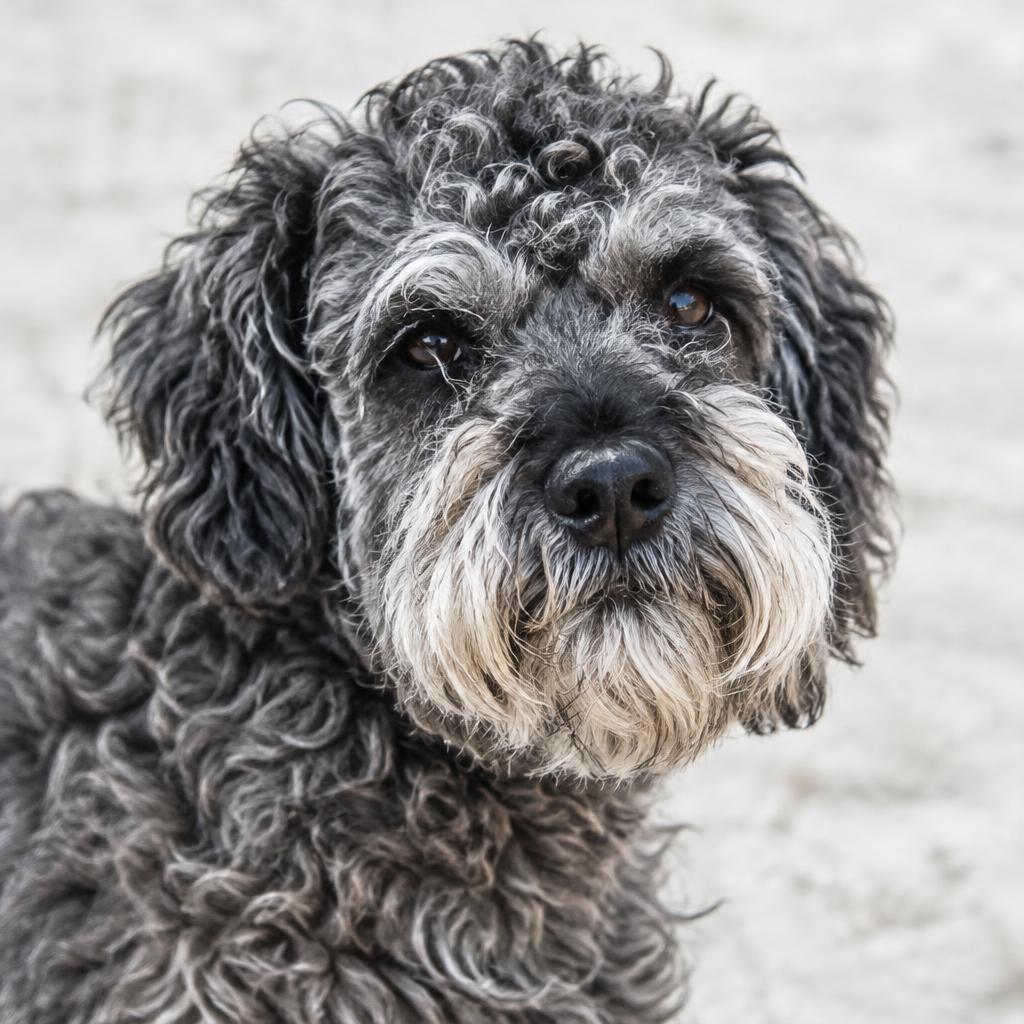
Bright, bearded and busy, the Schnoodle is one of the original doodles and still one of the best, as long as you can keep up with the coat and the brain.
The SniffScroll editorial team
The bearded brainbox in a curly coat
The short version
- One of the oldest Poodle crosses, combining Schnauzer steadiness with Poodle intelligence.
- Adult size varies enormously by parentage, from around 6 kg to over 30 kg: ask exactly which parents produced the litter.
- Most shed very little, but the coat mats without several brushes a week and a professional groom every six to eight weeks.
- A watchdog streak means alert barking unless you train a quiet cue early.
- Health testing should cover both parents: hips, elbows, eyes and the relevant DNA panels.
Choose a variety
- Weight
- 9 to 30 kg
- Height
- 33 to 66 cm
- Lifespan
- 12 to 15 yrs
- Size
- Medium
- Group
- Crossbreed
- Coat
- Wavy to curly
- Years to full size
- about 1.5
- One-off setup
- €350 to 700
Get one if…
- First-time owners who want a clever, trainable companion
- Allergy-conscious households willing to meet the litter first
- Active families with children old enough to respect a dog
- Home workers and retirees who can offer company
- Owners happy to commit to a professional grooming routine
Think again if…
- Households empty for long working days
- Anyone unwilling to brush several times a week
- People wanting a guaranteed size or coat type
- Severe allergy sufferers who have not met the specific litter
- Anyone wanting a low-effort, wash-and-go dog
Trait profile
Expect a bright, affectionate dog with a watchdog bark and a brain that needs daily work; temperament is steadier than size or coat, which both vary by litter.
Space & setup. Adapts well to flats and houses alike provided daily exercise and mental work are genuinely delivered; the watchdog bark needs training in shared buildings.
Allergies. Often low-shedding, especially in curlier coats, but no dog is truly hypoallergenic. Meet the specific litter before committing if allergies are a concern.
Living with a Schnoodle
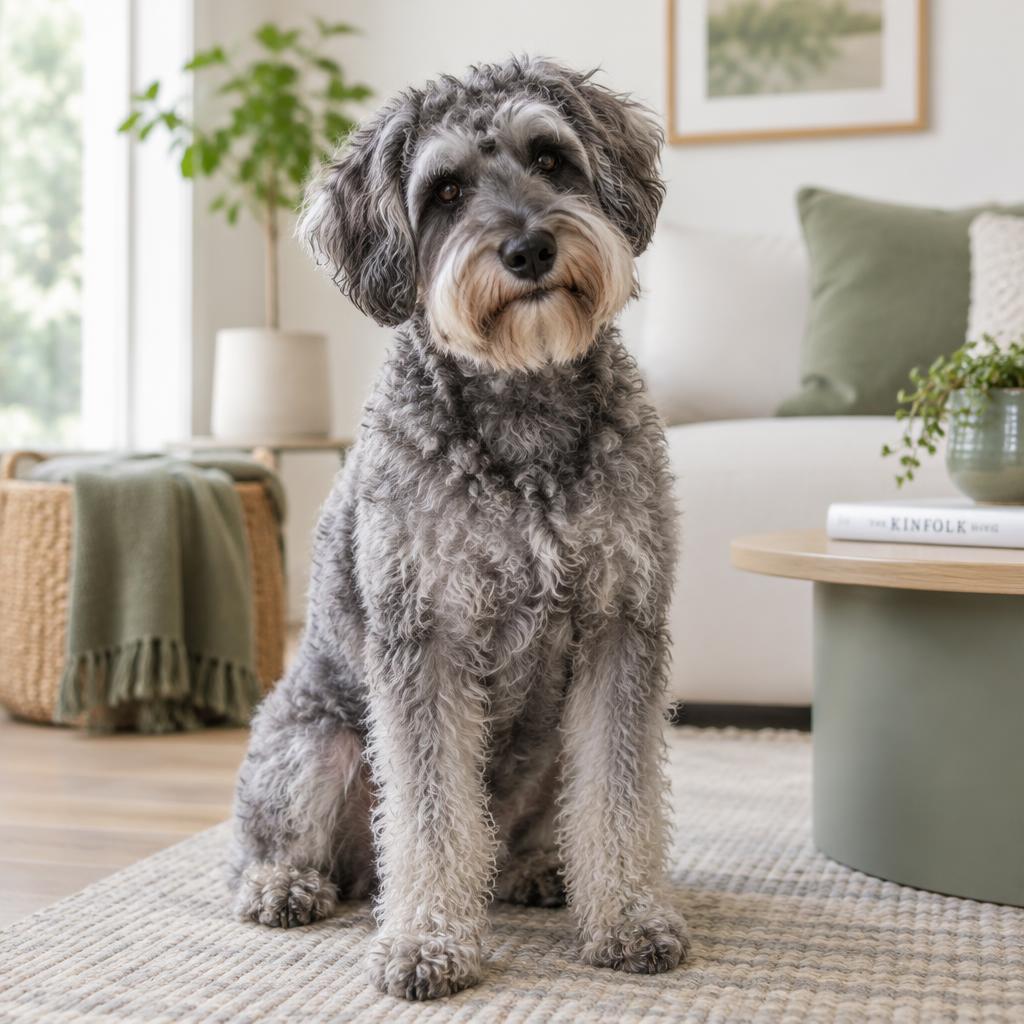
A Schnauzer and Poodle cross that pairs the Schnauzer's steady, watchful nature with the Poodle's quick mind, in a low-shedding coat that ranges from shaggy wave to full curl.
The Schnoodle has been around since the 1980s, one of the earliest deliberate Poodle crosses, and it has quietly outlasted plenty of trendier doodles. The appeal is obvious: the Schnauzer contributes steadiness, humour and that magnificent bearded face, while the Poodle brings intelligence, athleticism and a coat that (usually) holds onto its hair. What the glossy adverts skip is how much variation sits inside the name. There is no breed standard, no closed stud book and no guarantee of what a puppy will become. Size is the first variable. Breeders pair Toy, Miniature or Standard Poodles with Miniature, Standard or even Giant Schnauzers, so adult weight can land anywhere from 6 kg to over 30 kg. A responsible breeder will tell you the exact parentage, the expected adult size and which puppies in the litter are tracking larger or smaller. Coat is the second variable. Puppies in one litter can range from a loose Schnauzer-style wave to tight Poodle curl. Curlier coats shed least but mat fastest; wavier coats shed a little more and forgive the odd missed brush. None are maintenance-free, and the "hypoallergenic" label is a hope, not a promise. Spend time with the actual litter if allergies matter. Temperament is more predictable: bright, trainable, sociable and strongly attached to their people. The Schnauzer side adds a watchdog streak, so expect alert barking at the doorbell unless you train a quiet cue early. The Poodle side adds a brain that needs work; a bored Schnoodle will redesign your skirting boards. Exercise needs are moderate to high depending on size, roughly an hour to ninety minutes a day for a standard-sized adult, plus training and scent games. Health draws from both parents: hip and elbow scoring, eye testing and the relevant DNA panels should all be on the table, and Miniature Schnauzer lines bring a pancreatitis risk that makes a sensible, not-too-fatty diet worth following. Grooming is the honest dealbreaker. This coat needs brushing several times a week down to the skin, a professional clip every six to eight weeks, ear hair management and regular nail trims. Owners who keep up with it get a wonderful, charismatic dog. Owners who do not get a matted, uncomfortable one. Choose accordingly.
The Schnoodle is what happens when two of the cleverest, most people-focused breeds meet. The result is a dog that learns quickly, bonds hard and wants to be involved in everything you do. What catches owners out is the variation: a Schnoodle from a Toy Poodle and a Miniature Schnauzer may finish at 7 kg, while one from a Standard Poodle and a Giant Schnauzer line can top 30 kg. Ask exactly which parents produced the litter, and meet them if you can. The coat is the second surprise. Most Schnoodles shed very little, which is why allergy sufferers seek them out, but that hair keeps growing and it mats. Budget for a professional groom every six to eight weeks and brush between appointments, or the coat will felt against the skin. Temperament leans cheerful and busy. These are dogs that need a daily walk, some training games and company; left alone for long stretches they can become vocal and inventive in ways you will not enjoy. With their people they are affectionate without being clingy in the best lines, and typically good with considerate children and other dogs. First-time owners do well with them provided they commit to the grooming and the mental work. If you want a clever, low-shedding companion and you are honest about the coat care, the Schnoodle is one of the most rewarding crosses going.
Exercise, day to day
- 1Puppies (8 to 20 weeks): short play sessions and gentle exploring; socialisation is the priority.
- 2Adolescents (4 to 12 months): two decent walks a day plus training games; the clever brain needs work.
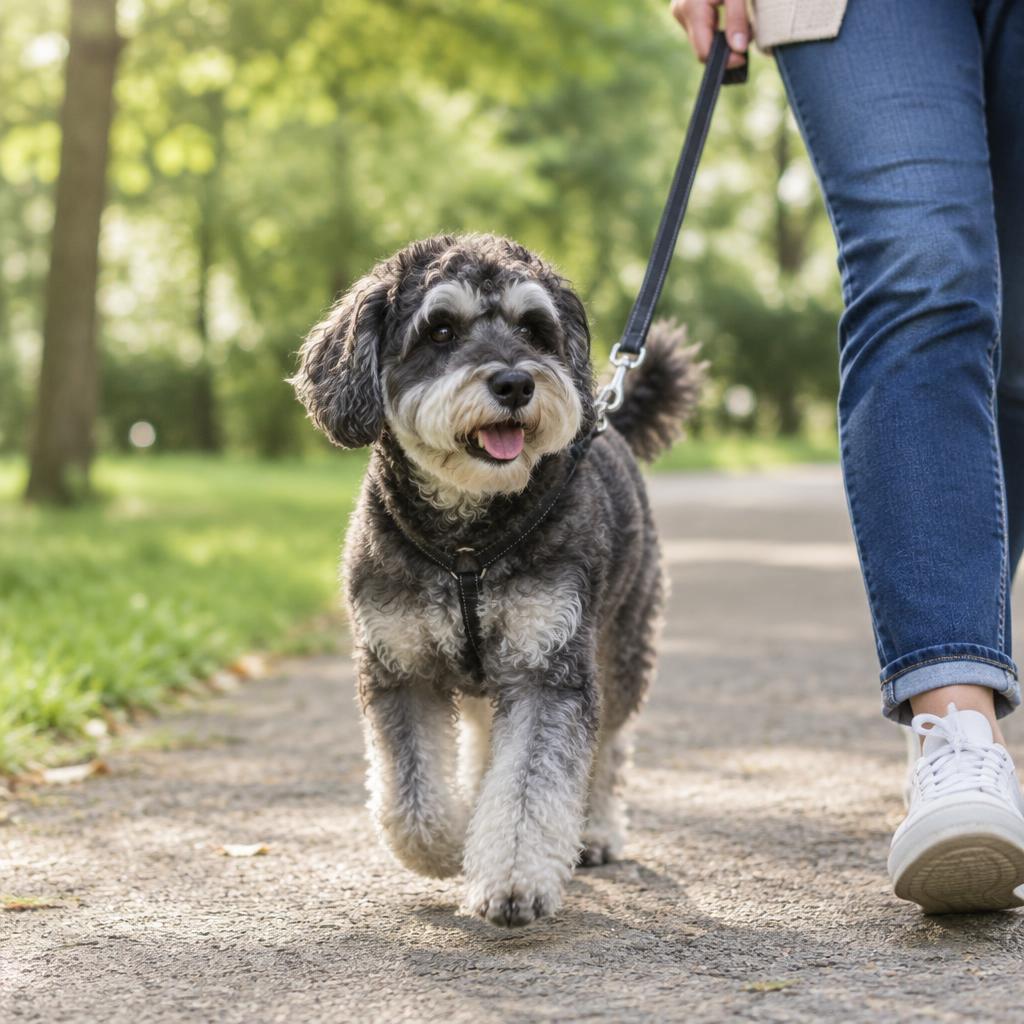
- 3Adults: an hour to ninety minutes daily depending on size, mixing walks, play and scent work.
- 4Mental work: trick training, puzzle feeders and hide-and-seek keep the Poodle brain content.
- 5Company matters as much as mileage: build alone-time tolerance gradually from puppyhood.
Grooming, realistically
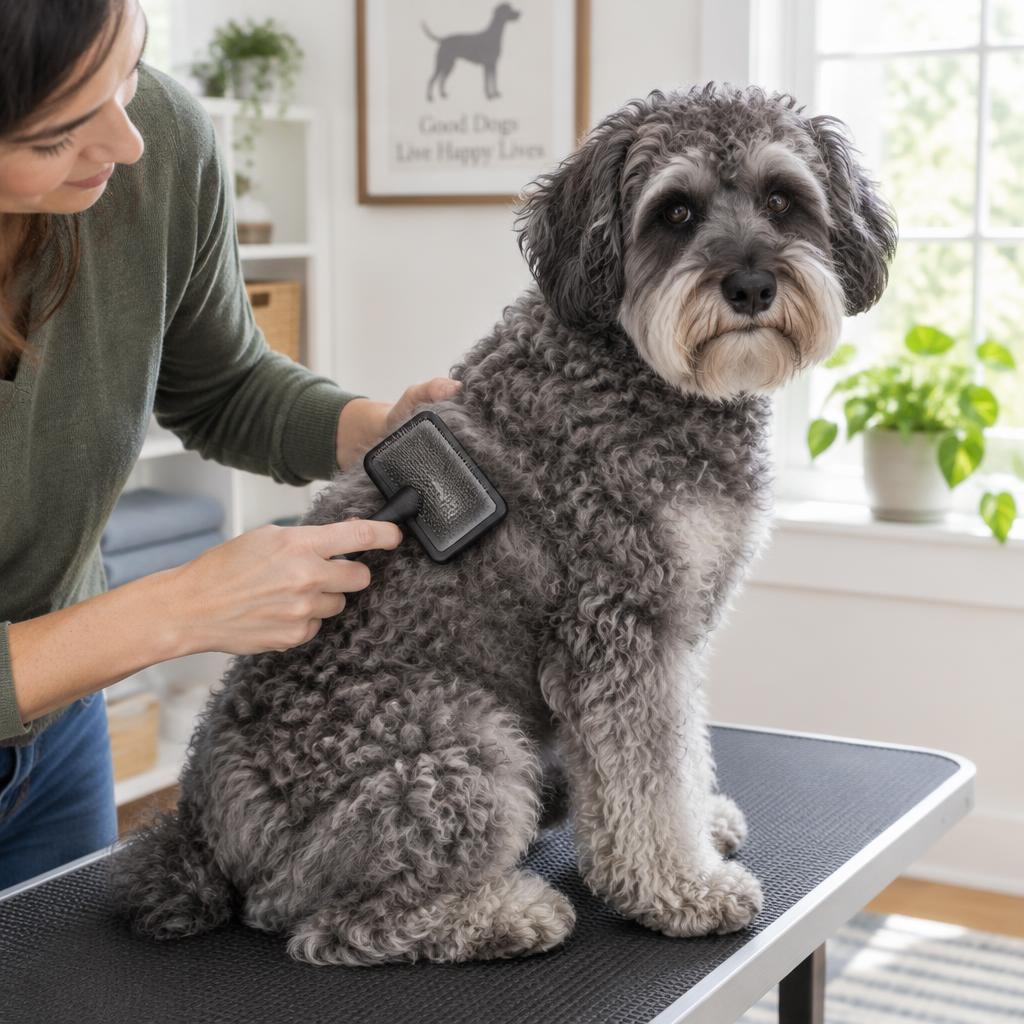
- 1Brush three or four times a week for wavy coats, daily for curly ones, working right down to the skin.
- 2Book a professional groom every six to eight weeks; most owners choose a practical teddy-bear or schnauzer-style clip.
- 3Check and clean ears weekly; hairy ear canals trap moisture and debris.
- 4Keep the beard clean after meals and the hair around the eyes trimmed or wiped daily.
- 5Trim nails every three to four weeks and brush teeth several times a week.
What you actually need
- Slicker brush
- Metal comb
- Detangling spray
- Dog nail clippers
- Ear cleaning solution
- Enzymatic dog toothpaste and brush
Puppy to adult
| Age | Male | Female | What is happening |
|---|---|---|---|
| 8 weeks | 1.5 to 2.5 kg | 1.4 to 2.3 kg | Confident and curious; household sounds and gentle handling build a steady adult. |
| 3 months | 3.5 to 5.5 kg | 3 to 5 kg | Puppy coat is soft and easy; the adult texture arrives over the coming months. |
| 6 months | 7 to 12 kg | 6 to 11 kg | Coat change begins; this is when matting starts if brushing slips. |
| 9 months | 9 to 18 kg | 8 to 16 kg | Near adult height for most; keep training sessions short and fun. |
| 12 months | 10 to 24 kg | 9 to 20 kg | Smaller Schnoodles finish here; standard-sized ones keep filling out. |
| 18 months | 11 to 30 kg | 9 to 26 kg | Fully mature; adult coat settled into its final texture. |
Ranges are typical, not targets. Judge condition by ribs and waist, and check with the ideal weight checker.
What to ask a breeder
- Which Schnauzer and Poodle sizes are the parents, and what adult size do you expect?
- What health tests have both parents had: hips, elbows, eyes and DNA panels?
- Has the Schnauzer parent been screened for pancreatitis risk and eye conditions?
- What coat types are in the litter, and which puppies are likely to shed least?
- How are the puppies socialised before they leave?
Health tests to ask for
Ask to see results for both parents before you put down a deposit.
- Hip and elbow scoring for both parents
- Eye testing (BVA/KC scheme or equivalent) for both parents
- DNA panel relevant to each parent breed, including PRA
- Pancreatitis and hyperlipidaemia awareness from Miniature Schnauzer lines
Health watch-list
What to ask a breeder about, and what to watch for over a lifetime. This is orientation, not veterinary advice, anything you notice belongs in front of a vet.
Hip and elbow dysplasia
UncommonJoint malformation seen in both parent breeds, especially in standard-sized dogs. Ask for hip and elbow scores for both parents and keep puppies lean and off repetitive high-impact exercise while growing.
Progressive retinal atrophy
UncommonAn inherited eye disease present in both Poodles and Schnauzers. DNA testing of both parents removes most of the risk; ask to see certificates.
Pancreatitis
OccasionalMiniature Schnauzer lines carry a real risk of pancreatitis, often linked to fatty diets. Feed a sensible, moderate-fat diet and keep the dog lean.
Luxating patella
OccasionalSlipping kneecaps, more common in toy and miniature sized dogs. Watch for a skipping step on the back leg; severe cases need surgery.
Ear infections
OccasionalHairy, hanging ear canals trap moisture. Weekly ear checks and cleaning, plus hair management at grooms, prevent most trouble.
Dental disease
CommonSmaller Schnoodles crowd teeth into small jaws. Brush several times a week and budget for professional dental care as the dog ages.
What it costs to keep one
Realistic running cost
€104 / month
About €1,248 a year, or roughly €17,472 across a 14-year life, before purchase price, neutering and one-off vet events.
Before the puppy arrives. Budget roughly €350 to 700 for a crate, bed, lead and harness, bowls, puppy classes, first vaccinations and grooming kit sized for this breed. Figures throughout are indicative and vary a good deal between countries.
Interactive · built for this breed
Is a Schnoodle right for your home?
Seven honest questions about your space, time and household, checked against this breed's exercise need, coat, sociability and tolerance for time alone.
Fit with your routine
95%
A strong fit
Your routine suits a Schnoodle well. Meet adult dogs of the line before you commit.
What to sort out first
- Needs more daily exercise than you have pencilled in.
- Coat needs more brushing or trimming than you have allowed.
Compare more breeds in the matchmaker, or plan meals with the portion calculator.
The verdict, by household
A cheerful, robust playmate for children old enough to treat a dog kindly; supervise with toddlers as with any breed.
Well suited if walked properly and trained to settle; the alert bark needs early work in shared buildings.
One of the more forgiving crosses: clever, biddable and sociable, provided the grooming commitment is understood.
Usually good with other dogs and can live with cats when raised with them; early socialisation does the heavy lifting.
When to call your vet
- Reluctance to walk, limping or stiffness after rest
- Red, cloudy or weeping eyes, or bumping into furniture
- Repeated tummy upsets or a hunched, painful abdomen after fatty food
- Head shaking, ear odour or scratching at the ears
- New lumps, or drinking and urinating much more than usual
Nothing here is a diagnosis. A swollen, hard belly with retching, collapse, breathing difficulty and sudden hind-leg weakness are emergencies: go straight away.
Schnoodle vs the closest alternatives
| Breed | Weight | Energy | Grooming | € / month |
|---|---|---|---|---|
| Schnoodle | 9 to 30 kg | 7/10 | 7/10 | €104 |
| Poodle | 20 to 32 kg | 8/10 | 8/10 | €170 |
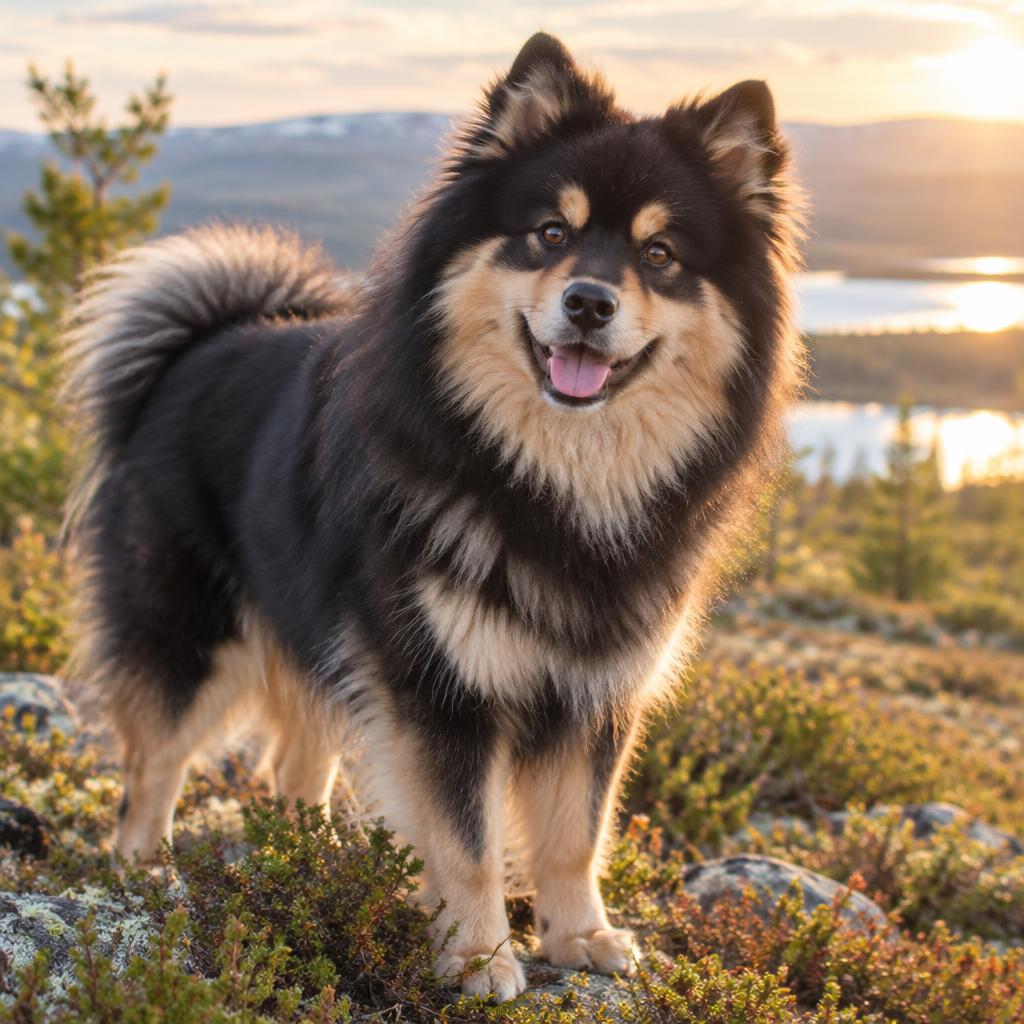
| Finnish Lapphund | 15 to 24 kg | 7/10 | 5/10 | €89 |
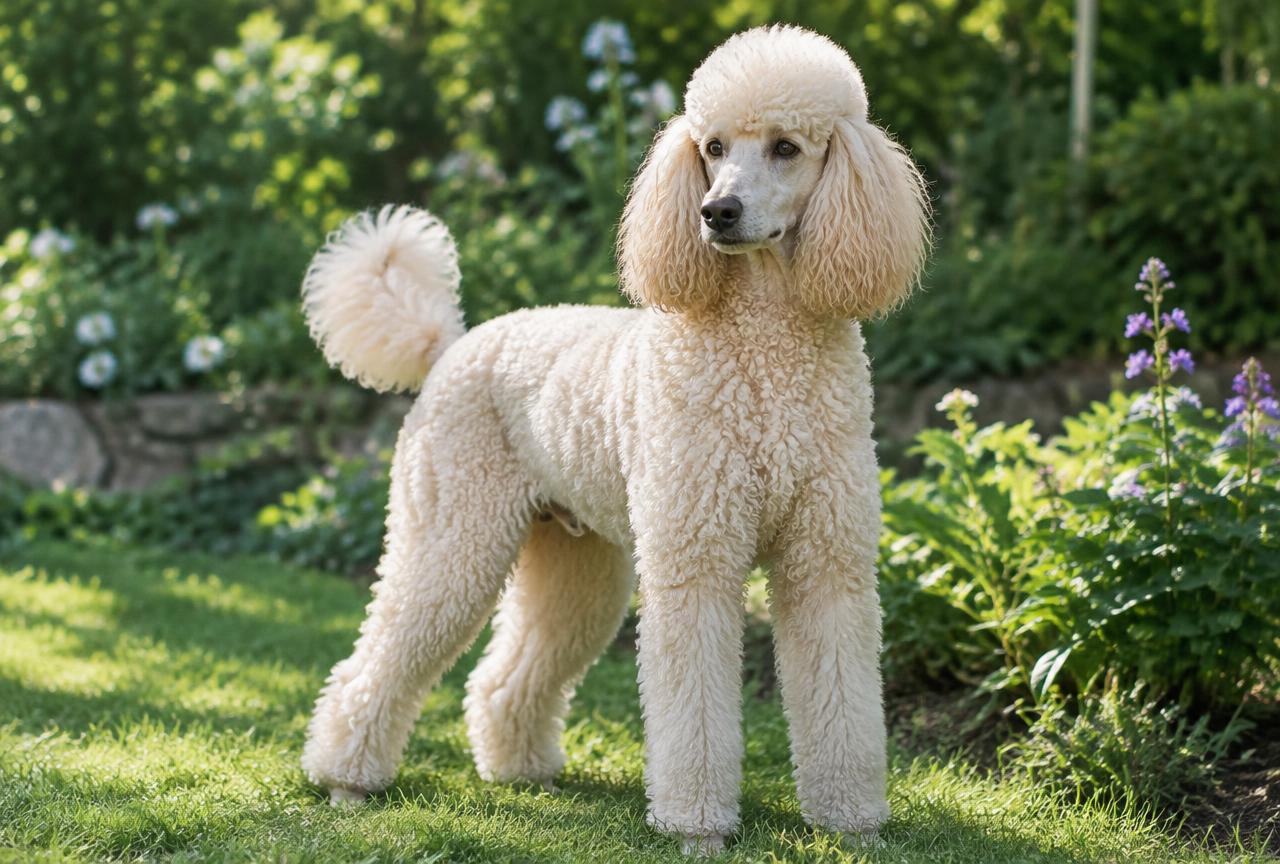
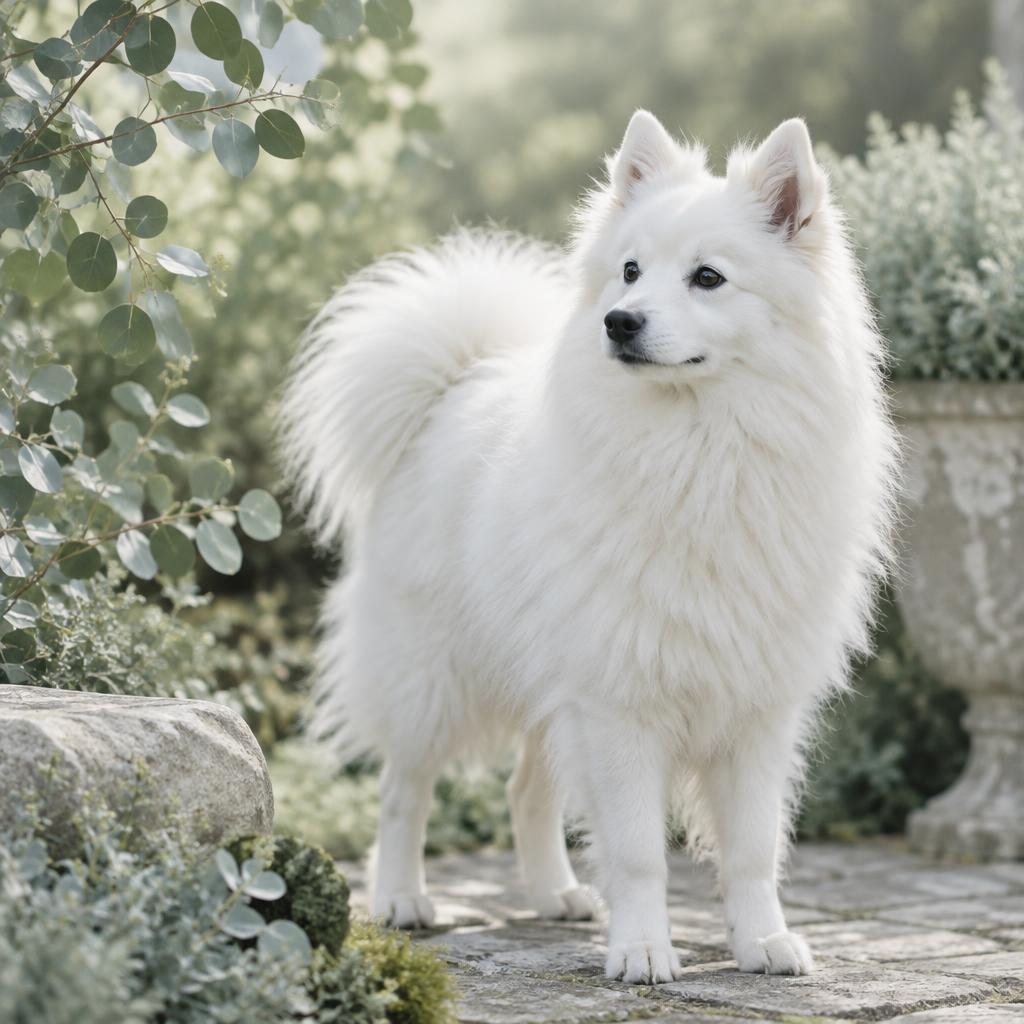
| American Eskimo Dog | 3 to 16 kg | 7/10 | 6/10 | €73 |
Schnoodle questions, answered
How big does a Schnoodle get?
Anywhere from about 6 kg to over 30 kg, because breeders pair Toy, Miniature or Standard Poodles with Miniature, Standard or Giant Schnauzers. Ask the breeder exactly which parents produced the litter and what adult size they expect.
Do Schnoodles shed?
Most shed very little, particularly the curlier coats, which is why allergy sufferers seek them out. The trade-off is a coat that mats without several brushes a week and a professional groom every six to eight weeks. No dog is truly hypoallergenic, so meet the litter first if allergies matter.
Are Schnoodles good family dogs?
Yes, in the main. They are affectionate, playful and typically good with considerate children and other dogs. As with any breed, supervise around toddlers and teach children how to treat a dog kindly.
How much exercise does a Schnoodle need?
Roughly an hour to ninety minutes a day for a standard-sized adult, split between walks, play and training. The brain needs as much work as the legs: scent games and trick training are not optional extras for this cross.
Do Schnoodles bark a lot?
The Schnauzer side brings a watchdog streak, so many will alert-bark at the doorbell and passers-by. It is very trainable: teach a quiet cue early and reward calm behaviour, and avoid leaving the dog alone for long stretches, which makes barking worse.
Are Schnoodles easy to train?
Very. Both parent breeds are sharp and biddable, and most Schnoodles learn quickly and enjoy the work. Keep sessions short, positive and varied, and start alone-time training from puppyhood.
How long do Schnoodles live?
Typically 12 to 15 years, with smaller individuals often at the longer end. Good breeding, a lean body condition and kept-up dental care all add healthy years.