How to Stop a Dog Barking: A Practical Guide
Excessive barking has a cause. Find it, and the barking usually follows.
The SniffScroll desk
Dog care editors
Published 30 September 2026 · Updated 9 October 2026

Reviewed against RVC, BSAVA and PDSA guidance
The short version
- Barking is normal communication; the trigger, not the noise itself, is what needs addressing.
- Common causes include alert barking, attention-seeking, boredom, anxiety and excitement.
- Teaching a 'quiet' cue and rewarding calm behaviour works better than punishment.
- Anti-bark shock or spray collars can worsen anxiety-related barking and are best avoided.
- Sudden barking changes in an older dog can signal pain and deserve a vet check.
Understanding why your dog barks
Barking is a completely normal form of canine communication, and the most effective way to reduce excessive barking is to identify what is triggering it rather than trying to simply suppress the noise. Dogs bark for many different reasons, including alerting to visitors or noises, seeking attention, boredom, anxiety, excitement and territorial behaviour, and each of these root causes calls for a different response. Punishing barking without addressing the underlying cause often fails to reduce it long term and can create new anxiety-related problems, so identifying the trigger is always the sensible first step.
The main types of barking
Alert or territorial barking
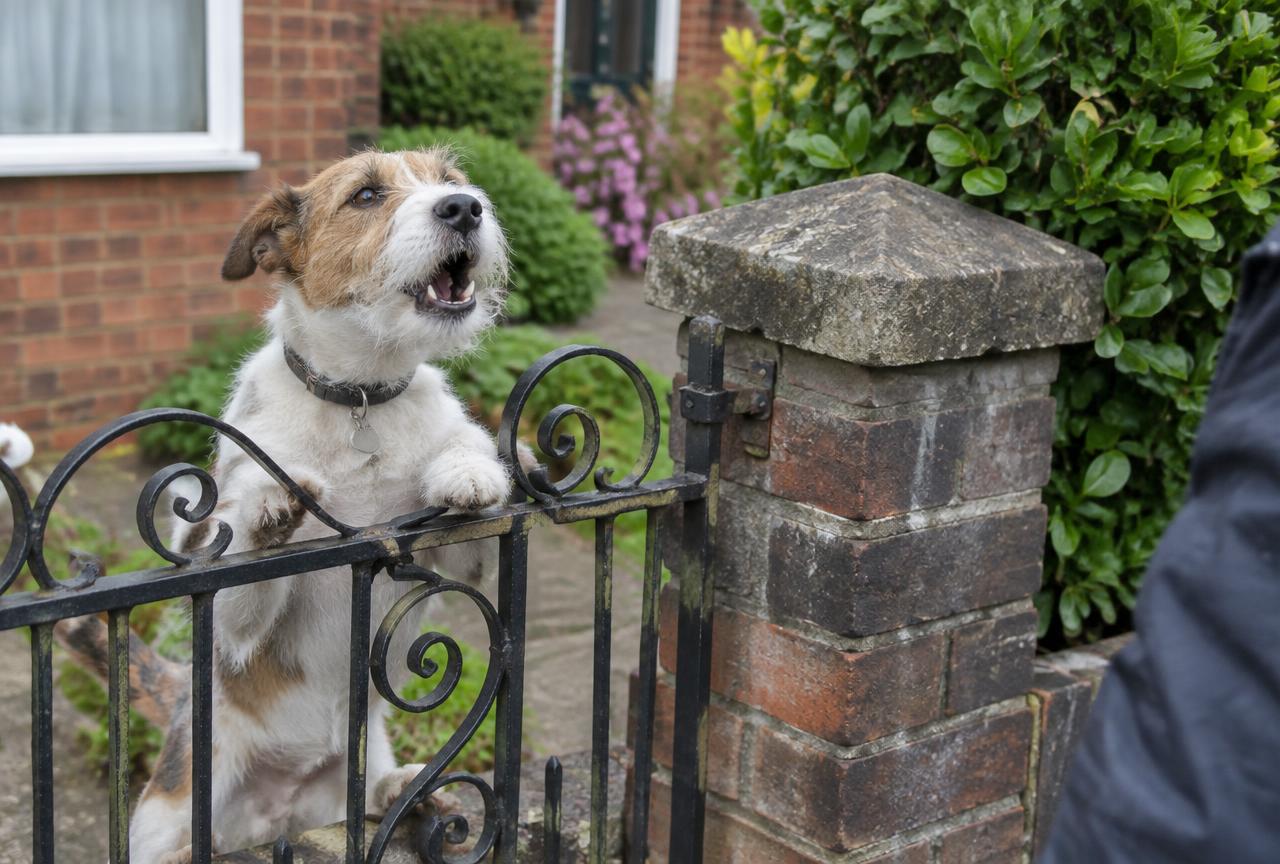
This is triggered by noises, visitors, passing people or animals, and is often accompanied by a stiff posture and a focused gaze toward the trigger. It tends to happen at doors, windows and garden boundaries.
Attention-seeking barking
Dogs who have learned that barking gets a reaction, even a negative one such as being told off, will often keep using it as a strategy to get attention, play or food.
Boredom or under-stimulation barking
Dogs left alone for long periods with little to do, particularly high-energy breeds such as the border collie or working line dogs, often bark simply because they have excess energy and nothing constructive to do with it.
Anxiety or fear-based barking
This type is often linked to separation anxiety, noise phobias or fear of specific triggers, and tends to come with other signs of distress such as pacing, drooling or destructive behaviour.
Excitement barking
Common during play, greetings or before a walk, this type is usually short-lived and linked to a clear, positive trigger such as the lead coming out.

A step-by-step plan to reduce excessive barking
Step 1: Identify the trigger and the type of barking
Spend a few days observing exactly when your dog barks, what happens just before it starts, and how long it lasts. This detective work is the single most useful thing you can do before starting any training.
Step 2: Remove or reduce access to the trigger where possible
If your dog barks at passers-by through a window, blocking the view with frosted film or a barrier, or moving their resting spot to a quieter room, can reduce the number of practice repetitions of the behaviour.
Step 3: Teach and reward an alternative behaviour
Train a solid 'quiet' cue by waiting for a natural pause in barking, marking it with a word or clicker, and rewarding calm behaviour, gradually increasing the length of quiet required before a reward.
Step 4: Increase physical and mental exercise
A dog getting enough exercise, sniffing time and mental enrichment through puzzle feeders and training games is generally far less likely to bark out of boredom or excess energy.
Step 5: Address anxiety-based barking with a tailored plan
If barking is linked to separation anxiety or fear, gradual desensitisation, safe space building, and in some cases professional behavioural support, will be more effective than any generic barking fix.
Step 6: Stay consistent and avoid inadvertently rewarding barking
Giving attention, food or access to the garden the moment a dog barks, even to try to calm them, can accidentally reinforce the behaviour, so aim to reward calm moments instead.
Interactive · bark type finder
What kind of barking is this?
Barking always has a reason. Answer a few questions to identify the likely type and get a simple training plan.
Likely type
Alert barking
- 1Acknowledge the alert calmly rather than shouting, which can sound like joining in.
- 2Teach a 'thank you, that's enough' cue and reward quiet within a few seconds.
- 3Reduce visual triggers, such as blocking a window view of the street.
- 4Practise with controlled exposure to the trigger at a distance, rewarding calm.
Barking type and effective response
| Barking type | Common trigger | Most effective approach |
|---|
| Alert or territorial | Visitors, noises, passers-by | Block the view, teach a quiet cue |
|---|
| Attention-seeking | Learned reward pattern | Ignore the barking, reward calm behaviour |
|---|
| Boredom | Under-stimulation | Increase exercise and enrichment |
|---|
| Anxiety or fear | Separation, noise phobia | Gradual desensitisation, professional support |
|---|
| Excitement | Play, greetings, walks | Short-lived, manage with calm routines |
|---|

What to avoid
- Shouting at a barking dog, which can sound like joining in and may increase barking
- Anti-bark collars that use shock, spray or noise correction, which can cause fear and worsen anxiety-related barking without addressing the cause
- Inconsistent responses, such as sometimes allowing barking and sometimes punishing it, which confuses a dog about what is expected
- Isolating a dog for long periods as a punishment for barking, which can increase anxiety and worsen the behaviour over time
- Expecting an instant fix; most barking reduction plans take several weeks of consistent effort to show clear results

When to see a vet or behaviourist
Common myths about barking
- Myth: a barking dog is always trying to be dominant or naughty. Most barking reflects a genuine emotional state, such as excitement, alarm or anxiety, rather than a deliberate bid for control.
- Myth: shouting 'quiet' loudly will stop the barking. To a dog, a raised human voice can sound like barking along with them, and many dogs bark more, not less, when their owner shouts.
- Myth: some breeds simply cannot be trained not to bark excessively. While some breeds are more vocal by nature, such as terriers bred for work that rewarded barking, excessive barking in any breed usually responds to consistent, appropriate training.
- Myth: a tired dog never barks excessively. Physical tiredness helps, but a dog that is physically worn out but mentally under-stimulated, anxious or in pain can still bark heavily, so exercise alone is not always the full answer.
Barking by context: extra detail
Barking at the doorbell or knocking
This is a classic alert-barking trigger. Desensitising your dog to recorded doorbell sounds at a low volume, paired with calm rewards, can reduce the intensity of the reaction over several short sessions before reintroducing the real doorbell.
Barking in the car
Often linked to excitement or frustration at restricted movement and passing scenery. Gradual exposure to short, calm car journeys, along with a comfortable, secure travel crate or harness, tends to reduce this over time.
Barking at other dogs on walks
This can stem from frustration at not being able to greet, fear of unfamiliar dogs, or poor early socialisation. Increasing distance from triggers, rewarding calm behaviour near other dogs, and working with a trainer on structured introductions usually helps more than repeated exposure alone.
Barking during play with people or other dogs
Some dogs bark enthusiastically during play as part of normal excitement, and this is not usually a concern unless it becomes so intense that play needs interrupting to help the dog settle.
Troubleshooting barking training
I have tried the quiet cue for two weeks with no improvement
Check that you are rewarding calm behaviour consistently and not accidentally reinforcing barking with attention at other times of day. Also consider whether the trigger is one you can reduce exposure to further while training continues.
My dog barks the moment I start training
Some dogs bark out of frustration when they do not understand what is being asked. Break the training down into smaller steps, reward more frequently for small successes, and keep sessions short and upbeat.
The barking has gotten worse since I started ignoring it
This can be a normal 'extinction burst', where a behaviour temporarily increases before it decreases, as your dog tries harder to get the previously reliable reward of attention. Stay consistent, since giving in at this point can teach your dog that persistence works.
My neighbours have complained about barking when I am out
Consider setting up a camera to see what triggers the barking while you are away. This is often linked to separation anxiety or reactivity to passers-by, and addressing the specific trigger, sometimes alongside professional support, is more effective than generic training.
Tools and aids that can genuinely help
| Tool | How it helps | Notes |
|---|
| Puzzle feeders and snuffle mats | Reduce boredom-related barking by providing mental stimulation | Best for boredom, not anxiety-driven barking |
|---|
| White noise or calming music | Can mask outside triggers that cause alert barking | Useful for dogs reactive to street noise |
|---|
| Visual barriers such as frosted window film | Reduce triggers from passers-by and other dogs | Effective for window-based alert barking |
|---|
| Calming pheromone diffusers | May help take the edge off mild anxiety-related barking | Not a substitute for a full behaviour plan in more severe cases |
|---|
Building a longer-term management plan
Sustainable improvement in barking usually comes from combining several approaches rather than relying on one fix: reducing exposure to triggers, teaching and rewarding calm alternatives, ensuring adequate exercise and enrichment, and staying consistent as a household so your dog gets the same response from everyone. Breeds bred historically for guarding or vocal alert work, including some german shepherd lines, may need a little more patient, structured training to reach the same quiet baseline as a naturally quieter breed, but meaningful progress is achievable with time and consistency.
Barking and breed tendencies
Some breeds were historically developed for work that rewarded vocal behaviour, including flushing, guarding or vermin control, and these genetic tendencies can make certain dogs naturally more prone to barking than others. This does not mean excessive barking in these breeds is untrainable, but it does mean owners of naturally vocal breeds may need a little extra patience and consistency to reach the same quiet baseline achievable in a less vocal breed.
Working with children and visitors around a barking dog
Consistency across everyone in the household, including children and regular visitors, makes a real difference to how quickly barking training progresses. Agree in advance on a simple, shared approach: the same quiet cue, the same response to excitement barking at the door, and the same rule about not rewarding barking with attention, even when it feels easier in the moment to give in.
Managing visitor arrivals specifically
Practising calm greetings with a cooperative friend or family member, well before real visitors arrive, allows you to reward calm behaviour in a low-pressure setting. Ask visitors to ignore your dog until they are sitting or settled, rather than greeting them while they are barking and jumping at the door.
A quick summary for busy owners
If you remember nothing else from this guide, remember that barking always has a cause, and finding that cause, then rewarding calm behaviour consistently while managing exposure to the trigger, works far better than punishment or a quick-fix gadget.
Speak to your vet or a qualified behaviourist if barking is sudden in onset, especially in an older dog, as this can occasionally signal pain, sensory decline or a medical issue rather than a behavioural one. Persistent barking linked to clear anxiety, such as when left alone, also deserves a proper behavioural assessment rather than a generic training approach, since separation anxiety usually needs a structured, gradual plan to resolve safely.
Questions people actually ask
What is the fastest way to stop a dog barking?
There is no instant fix, but identifying the trigger and removing or reducing exposure to it, alongside teaching a reliable quiet cue, tends to bring visible improvement within a few weeks of consistent practice.
Should I use a bark collar?
Shock, spray or noise-correction collars are not recommended, as they can cause fear and stress without addressing the underlying cause of barking, and may worsen anxiety-related behaviour in the long run.
Why does my dog bark when I leave the house?
This is often linked to separation anxiety, especially if it is paired with pacing, drooling or destructive behaviour near exits. It usually needs a gradual desensitisation plan rather than standard barking training.
Is it bad to ignore my dog's barking?
Ignoring attention-seeking barking, while rewarding calm behaviour instead, is often an effective strategy, but it is not appropriate for anxiety or pain-related barking, which need a different, more supportive approach.
Can more exercise reduce barking?
Yes, for dogs barking out of boredom or excess energy, increasing physical exercise and mental enrichment such as puzzle feeders and training games often reduces the behaviour noticeably within a couple of weeks.
When should I get professional help for barking?
Seek a qualified behaviourist if barking is severe, linked to clear anxiety or fear, or has not improved after a few weeks of consistent, appropriate training, since some cases need a more tailored, structured plan.
Sources
Breeds mentioned

Border Collie
The world's most capable herding mind, needing an equally capable owner to match it.

German Shepherd
A loyal, capable working dog that needs a job to do and an owner ready to provide one.

Beagle
A merry, sociable scenthound with a powerful nose and a mind of its own outdoors.

Jack Russell Terrier
A bold, tireless working terrier with huge personality packed into a small frame.
Put it into practice
Read next
How to Stop a Dog Jumping Up at People
Jumping up persists because it works: it gets attention. Remove the reward, reward four paws on the floor, get the whole household consistent, and most dogs change within weeks.