How to Stop a Dog Pulling on the Lead
Dogs pull because it works: pulling gets them where they want to go faster. Make it stop working, reward a slack lead, and walks change within weeks.
The SniffScroll desk
Dog care editors
Published 9 October 2026
Reviewed against RVC, BSAVA and PDSA guidance
The short version
- Dogs pull because pulling is rewarded: every time a tight lead gets them closer to a smell or a friend, the habit strengthens.
- Stop still the moment the lead goes tight, and move on only when it slackens. Consistency matters more than any gadget.
- A well-fitted Y-front harness with a front clip reduces pulling force without the neck pressure of a collar.
- Teach loose lead walking at home first, where there are no distractions, then build up to the street.
- Lunging and barking at dogs or people is usually reactivity, not pulling, and needs a different plan.
Learning how to stop a dog pulling on the lead turns a daily tug of war into the best part of the day. A dog that pulls hard is uncomfortable for both ends of the lead: it can strain the dog's neck and the owner's shoulder, and it makes walks short and stressful. Pulling is also one of the most fixable problems in dog training, because the reason for it is simple.
Why dogs pull on the lead
Dogs pull because pulling works. Every time a tight lead gets your dog closer to a lamp post, a friend or the park gate, the behaviour is rewarded and becomes more likely. Dogs also naturally walk faster than people, and many have never been taught that a slack lead is what we want.
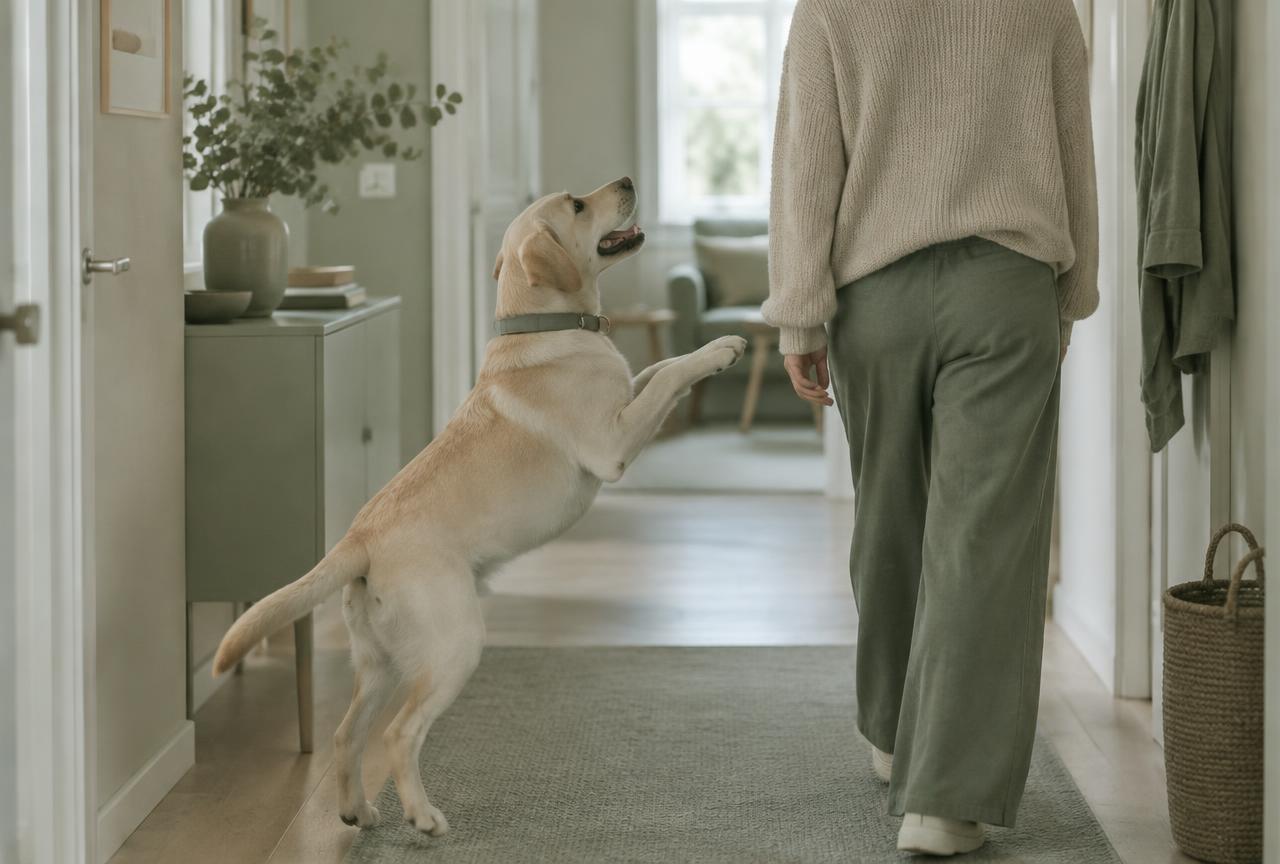
Some dogs find it harder than others. Scent hounds like the Beagle follow their noses, sled breeds such as the Siberian Husky were bred to pull, and young, energetic dogs like the Labrador are simply keen to get going.
| Reason for pulling | Typical pattern | What helps most |
|---|---|---|
| Learned habit | Pulls constantly, all walk | Stop still, reward slack lead |
| Excitement at start | Worst in first five minutes | Calm door routine |
| Scent drive | Pulls towards smells | Sniffing as a reward |
| Under-exercised | Pulls hard, frantic | Long line runs, enrichment |
| Fear or reactivity | Lunges, barks at triggers | Distance and behaviourist help |
Choose kit that helps, not hurts
The right equipment makes training easier, but it does not replace training. A comfortable, well-fitted harness protects your dog's neck and gives you better control.
- Y-front harness with front clip: the most recommended option. The chest clip gently turns the dog back towards you when it pulls.
- Back-clip harness: comfortable, but can encourage pulling in some dogs, much like a sled harness.
- Flat collar: fine for dogs that already walk nicely, but pressure on the neck is a concern for strong pullers and for small breeds prone to tracheal problems.
- Head collars: can help very strong dogs, but need careful, gradual introduction.
Most welfare organisations, including the RSPCA, advise against choke chains and prong collars.
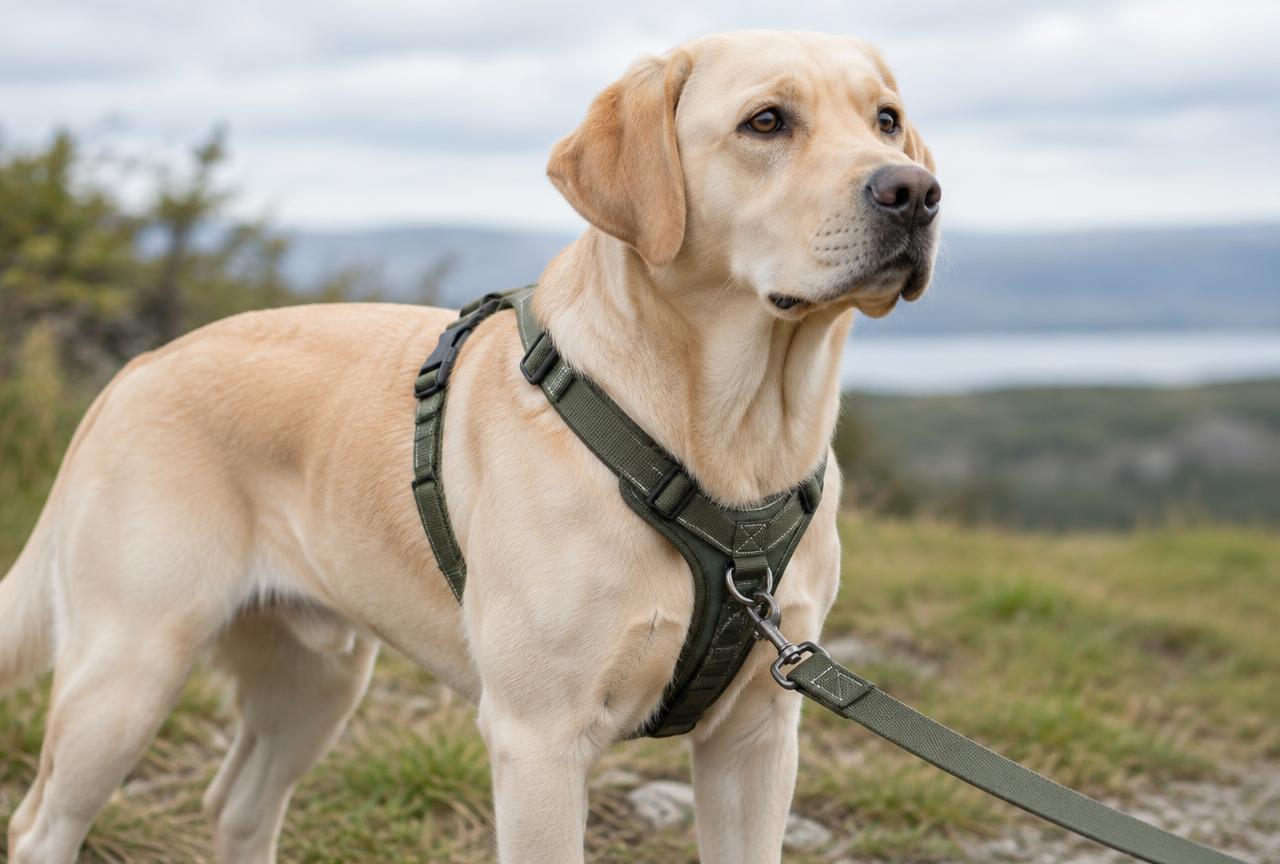
The golden rule: a tight lead means stop
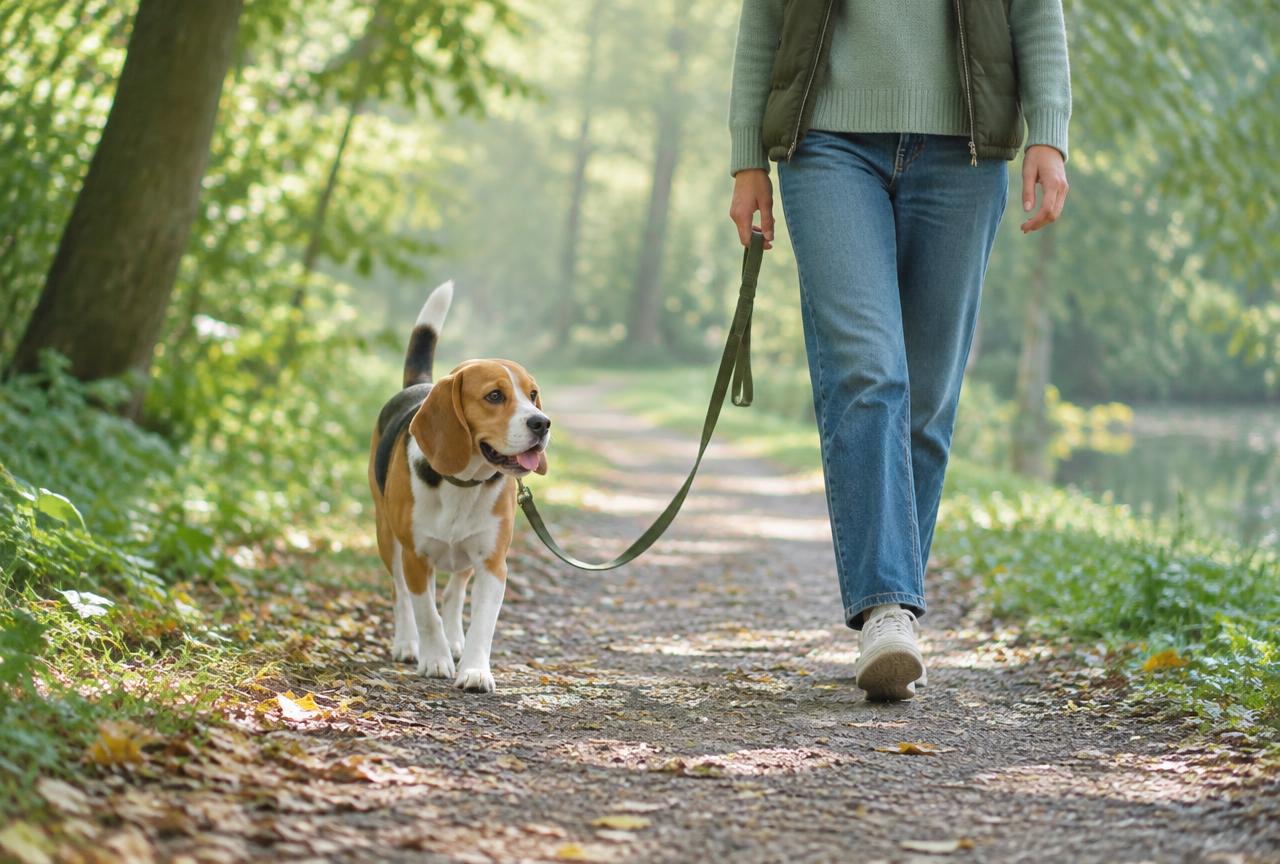
The single most effective technique is to stop still the moment the lead tightens, and move only when it slackens. This teaches your dog that pulling makes the walk stop, while a loose lead makes it continue.
At first you may only travel a few metres in ten minutes. That is normal. Dogs learn fast once they realise the rules never change, but if you sometimes let them pull, they learn that pulling occasionally pays off, which makes the habit stronger.
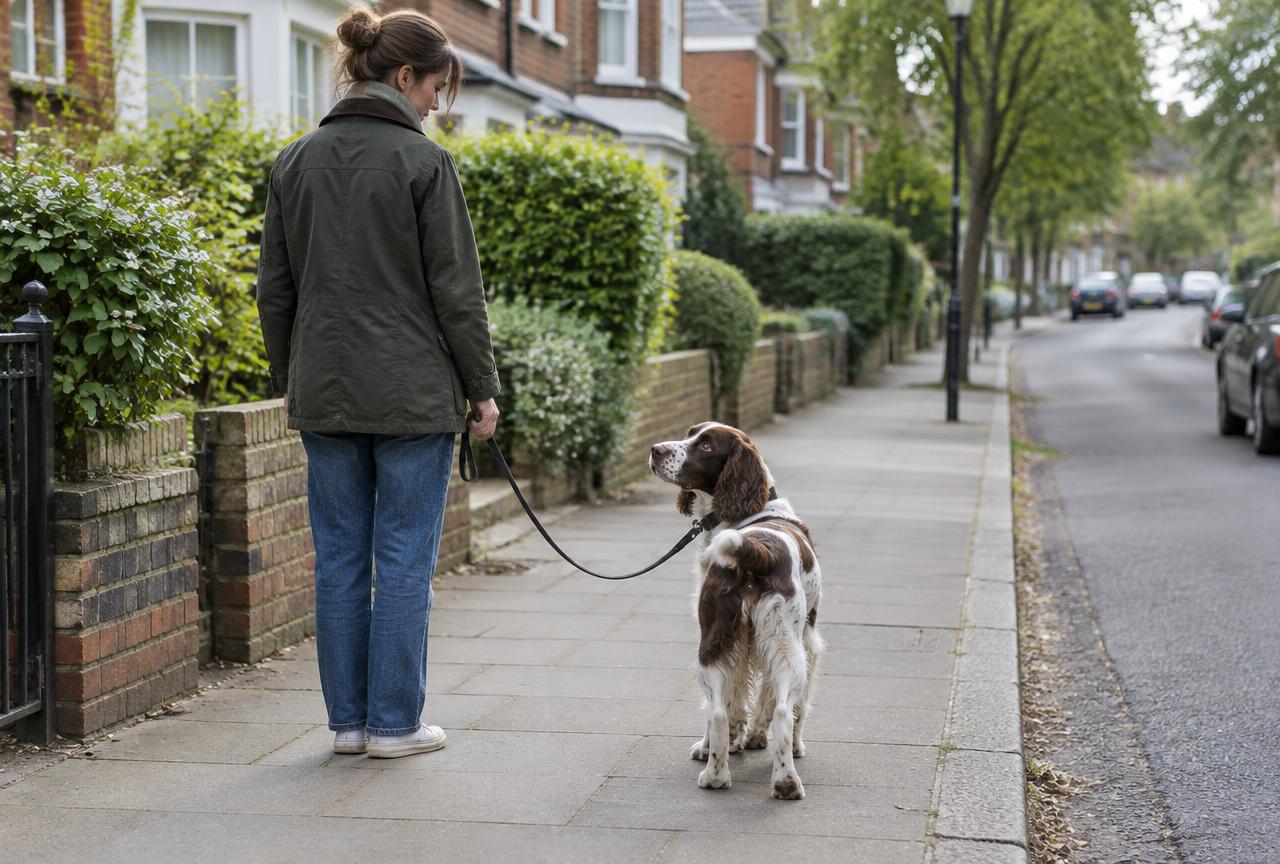
Pulling is learned because it works. The fix is not a stronger arm but a clearer rule: a tight lead never gets you anywhere.
Your step-by-step training plan
Start where there are no distractions, then move to the real world once your dog understands the game. Use the fixer below to tailor the plan to your dog.
Interactive · lead pulling fixer
Why is your dog pulling, and what to try
Describe the walk and the kit, and we will suggest a method to start with.
Start here
- Try a Y-front harness with a front clip; it reduces pulling force without discomfort.
- Practise in the house and garden first: reward every step taken with a slack lead, at your hip.
- The moment the lead goes tight, stop still. Move forward only when the lead slackens.
- Keep training walks short, 10 to 15 minutes, and use a long line in a field for free running.
Expect progress in two to six weeks
Pulling is learned because it works. Make it stop working, reward the alternative, and most dogs improve steadily with daily practice.
- 1Indoors: with your dog on the lead, walk around the house and reward every step taken beside you. Use small, tasty treats and deliver them at your hip.
- 2Garden: repeat with mild distractions. Change direction often and reward your dog for following.
- 3Doorstep routine: wait at the door until your dog is calm. Open it, and reward the first three loose-lead steps outside.
- 4Short street sessions: do 10 to 15 minute training walks. Stop still every time the lead tightens.
- 5Add rewards from the environment: when the lead is slack, say "go sniff" and let your dog explore a smell.
- 6Build duration: gradually reward less often as your dog gets better, but never stop rewarding entirely.
Give your dog an outlet
Dogs who never get to run or sniff freely are more likely to pull. A tired, satisfied dog walks better.
- Use a long line (5 to 10 metres) in open spaces for relaxed sniff walks.
- Add play, scatter feeding and puzzle toys at home.
- Match the walking to the breed. Our matchmaker shows how much exercise different breeds tend to need.
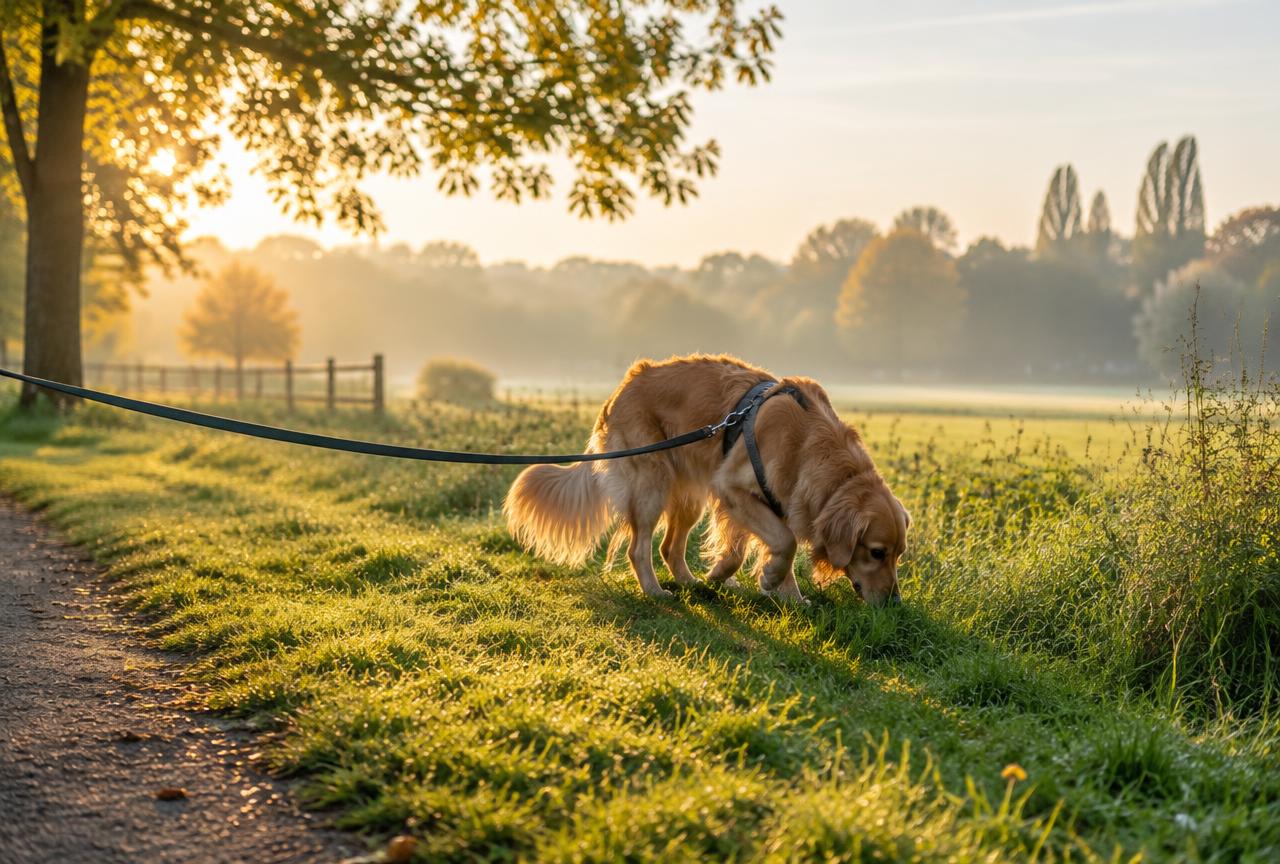
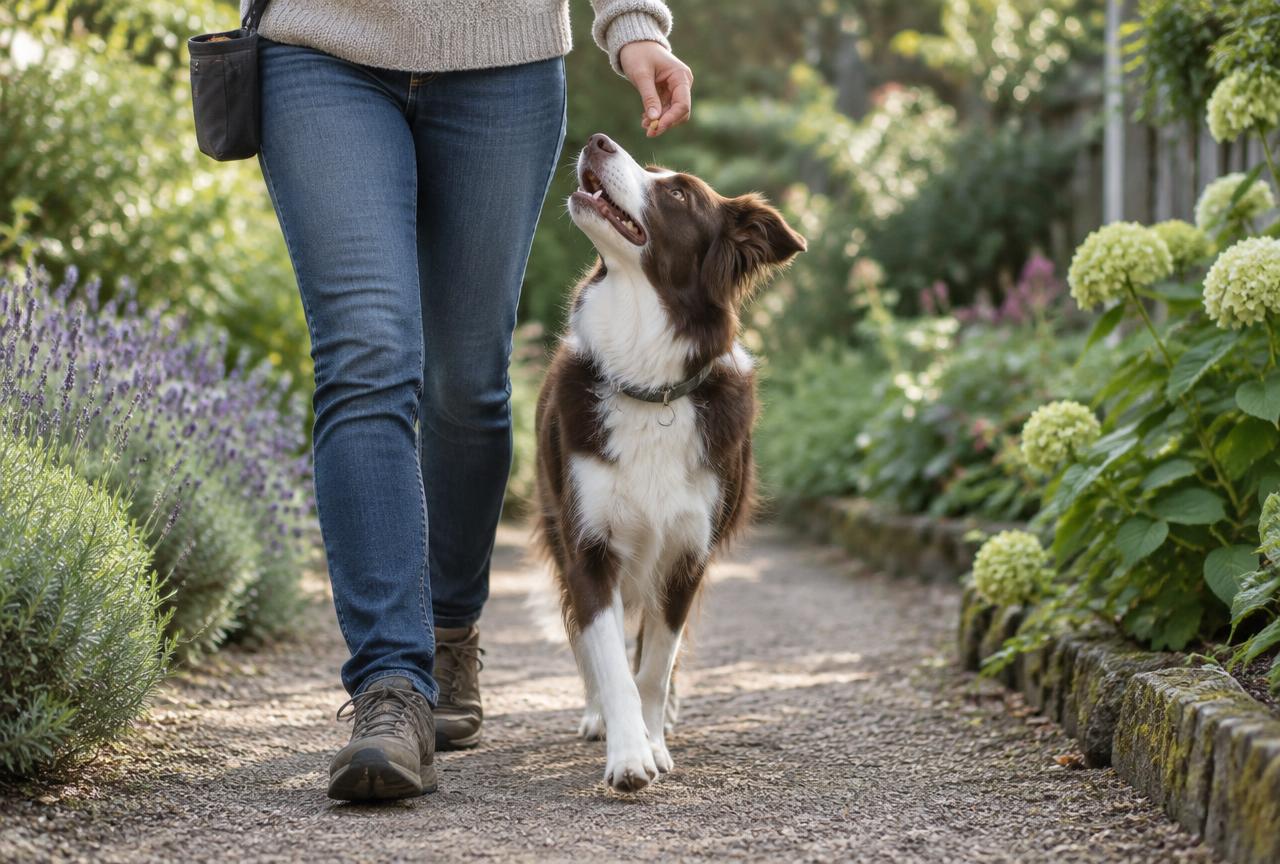
Reward the right position
Where you deliver the reward matters. Treats given at your hip teach the dog that this is the best place to be.
Keep a treat pouch on the side your dog walks, and reward often in the first weeks. Small, soft treats work best. Count them in the daily food allowance, and check your dog's weight now and then with our ideal weight tool.
How long does it take to stop a dog pulling on the lead?
With short, consistent sessions most dogs show clear improvement within two to four weeks, and walk reliably on a loose lead within two to three months. The variable that matters most is consistency. Every walk where pulling works, the dog relearns that pulling gets them forward. That is why many trainers suggest separating training walks from the walks you need to get somewhere.
| Week | Focus | Realistic goal |
|---|---|---|
| --- | --- | --- |
| 1 | Indoors and garden, reward position | Dog stays by your leg for 10 steps |
| 2 | Quiet street, stop when lead tightens | 30 seconds of loose lead at a time |
| 3 | Add mild distractions | Loose lead past a parked car or bin |
| 4 to 6 | Busier routes, other dogs at distance | Most of a short walk on a loose lead |
| 6 to 12 | Parks, new places | Reliable in most everyday situations |
A loose lead is not a trick. It is a conversation your dog chooses to have with you, because it pays.
Harness, collar or head halter?
The kit question generates a lot of heat, but the evidence and welfare consensus is clear on a few points. Flat collars on a strong puller can place pressure on the throat, which matters for small breeds and those prone to tracheal or eye problems. Choke chains, prong collars and electronic collars are not recommended by UK welfare organisations, and electronic collars are banned in England and Wales.
| Kit | Pros | Watch out for |
|---|---|---|
| --- | --- | --- |
| Y-shaped harness, front and back clips | Spreads pressure across the chest; front clip turns the dog gently | Poorly fitted straps can rub or restrict shoulders |
| Flat collar | Fine for dogs who already walk nicely; carries ID | Throat pressure on pullers |
| Head halter | Strong control for large dogs | Needs careful conditioning; never jerk |
| Long line (5 to 10 m) | Freedom to sniff safely | Use with a harness, never a collar |
Flat-faced breeds such as the Pug and French Bulldog, and small dogs such as the Yorkshire Terrier, are usually best walked on a harness.
The two-minute daily drill
Short practice beats long frustration. Run this indoors once or twice a day.
- 1Stand still with your dog on lead and a pouch of small treats.
- 2Take one step. If your dog is beside you, mark and treat at your leg.
- 3Build to two steps, then five, then ten, rewarding at your side each time.
- 4Turn in a new direction occasionally and reward your dog for following.
- 5Finish while it is still going well. Two minutes is plenty.
Loose-lead walk checklist
- Treats small enough to eat in a second, in a pouch you can reach quickly
- A well-fitted harness with a front clip for strong pullers
- A 2 m lead, long enough to allow slack
- Five minutes of sniffing before training starts, to take the edge off
- A decision before you leave: training walk or getting-somewhere walk
- A plan for distractions, such as crossing the road early
The verdict, by dog
Young, bouncy dog such as a [Labrador Retriever](/breeds/labrador-retriever): more exercise and sniffing before training, and reward heavily.
Big, strong dog: front-clip harness, two hands on the lead, and short sessions on quiet streets first.
Reactive dog that pulls towards other dogs: that is often fear or frustration, not pulling. Increase distance and consider a behaviourist.
Rescue with no lead experience: start indoors, and treat the lead itself as something new to learn.
If your puppy is also biting the lead, our guide to how to stop a puppy biting covers redirection. The ideal weight tool is a useful check that exercise is matching food intake as walks lengthen.
When to see a vet or behaviourist
Some lead problems are not about pulling at all, and need a different plan.
- Lunging and barking at other dogs or people is usually fear or frustration. A qualified behaviourist can help.
- Sudden reluctance to walk, limping or a change in gait can mean pain. See your vet.
- Coughing or gagging on a collar, especially in small breeds, may signal tracheal irritation. Switch to a harness and mention it to your vet.
Choose a trainer or behaviourist who uses reward-based methods, such as members of the Animal Behaviour and Training Council.
The short version
Dogs pull because it works. Make sure it never does, reward a loose lead generously, use a comfortable front-clip harness, and give your dog chances to sniff and run. With daily practice, most dogs walk noticeably better within a few weeks.
Lead pulling myths, checked
| Myth | What the evidence says |
|---|---|
| --- | --- |
| Pulling means the dog is dominant | Dogs pull because it gets them forward faster, not to lead the pack |
| A sharp tug teaches them | Corrections risk injury and fear, and rarely teach a new habit |
| No-pull harnesses fix it alone | Kit helps, but reward-based practice does the teaching |
| Older dogs cannot learn | Adult dogs learn loose-lead walking well with consistency |
Questions people actually ask
How do I stop my dog pulling on the lead?
Stop still whenever the lead goes tight, and move forward only when it slackens. Reward your dog frequently for walking beside you with a loose lead, starting at home and building up to busier places. Most dogs improve noticeably within two to six weeks of daily practice.
What is the best harness for a dog that pulls?
A Y-front harness that sits clear of the shoulders, with a clip on the chest, is the most widely recommended option. The front clip turns the dog gently back towards you when it pulls. Avoid harnesses with a strap straight across the front of the shoulders, which can restrict movement.
Are slip leads or choke chains OK for pulling?
Most welfare organisations advise against choke chains, prong collars and tight slip leads for pulling, because they work by causing discomfort and can injure the neck and throat. Reward-based methods with a comfortable harness are just as effective and kinder.
Why does my dog pull more at the start of the walk?
Excitement is highest in the first few minutes, and the dog has learned that rushing out of the door gets it to the good stuff faster. Wait at the door until your dog is calm, reward the first few loose-lead steps, and go back inside briefly if it falls apart.
Can you teach an older dog not to pull?
Yes. Adult and older dogs learn loose lead walking well, though an established habit takes longer to change. Short, frequent training walks and a front-clip harness help a great deal. Rescue dogs often improve fast once they understand the rules.
Should I let my dog sniff on walks?
Yes. Sniffing is mentally tiring and very satisfying for dogs. You can use permission to sniff as a reward for walking nicely, and offer a long line in open spaces for relaxed sniff walks.
How long does it take to train a dog not to pull?
Most dogs improve noticeably within two to four weeks of short daily practice and walk reliably on a loose lead within two to three months. Consistency matters more than session length. Avoid letting pulling work on other walks, and build up slowly from quiet places to busier ones.
Is a harness better than a collar for a dog that pulls?
For most dogs that pull, a well-fitted Y-shaped harness is kinder than a collar because it spreads pressure across the chest rather than the throat. A front clip can help turn the dog towards you. A harness does not train loose-lead walking on its own, so pair it with reward-based practice.
Sources
- How to teach your dog to walk on a loose lead, The Kennel Club
- Lead walking, Dogs Trust
- Teaching your dog to walk on a lead, RSPCA
- How to stop your dog pulling on the lead, Blue Cross
- Effects of collars and harnesses on canine gait and pressure, Animals (MDPI)
- Electronic collars ban in England, UK Government (Defra)
Breeds mentioned

Beagle
A merry, sociable scenthound with a powerful nose and a mind of its own outdoors.

Labrador Retriever
Britain's most popular family dog: biddable, food driven and built for an active household.
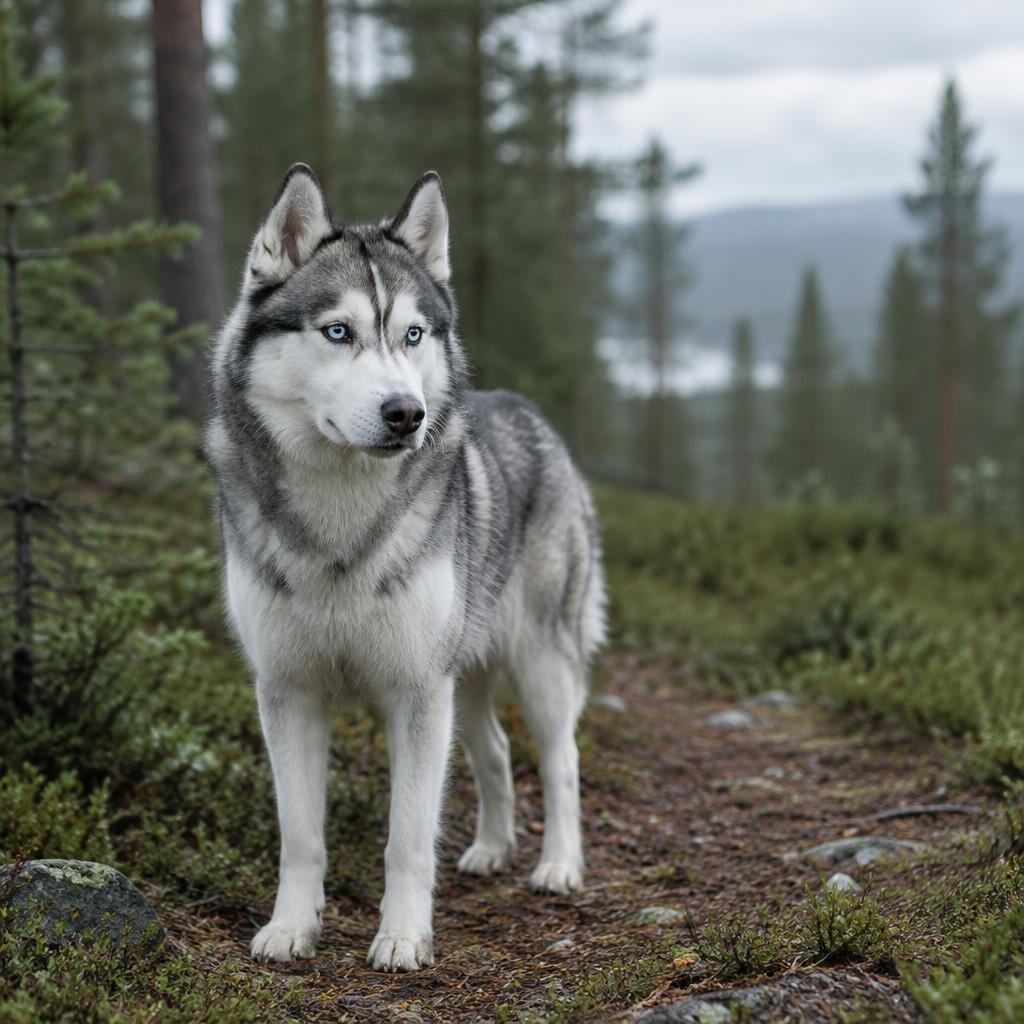
Siberian Husky
A striking, athletic sled dog built for distance running and ill suited to a quiet life in the garden.

German Shepherd
A loyal, capable working dog that needs a job to do and an owner ready to provide one.
Put it into practice
Read next
How to Stop a Dog Jumping Up at People
Jumping up persists because it works: it gets attention. Remove the reward, reward four paws on the floor, get the whole household consistent, and most dogs change within weeks.