How to Stop a Dog Jumping Up at People
Dogs jump up because it has always worked: every push off, every laugh, every 'down' is attention. The fix is not a sharper correction but a better economy, where only four paws on the floor ever pay.
The SniffScroll desk
Reviewed by Dr Emily Carter, BVSc MRCVS
Published 10 October 2026
Dr Emily Carter, BVSc MRCVS
The short version
- Jumping up is attention-seeking that works: any reaction
- including pushing off or saying 'down'
- is a reward.
- The fix has two halves: ignore the jump completely
- and reward four paws on the floor generously.
- Everyone must play by the same rule
- including guests; one person who allows it resets the training.
- Expect the jumping to get briefly worse before it improves: that extinction burst means it is working.
- Manage the door with a lead or gate until calm greetings are the default.
To stop a dog jumping up, remove the reward for jumping and pay generously for four paws on the floor. Jumping persists because it works: every push off, every laugh, every "down" is attention, and attention is the prize. Change the economy and the behaviour follows, usually within weeks.
Why dogs jump up
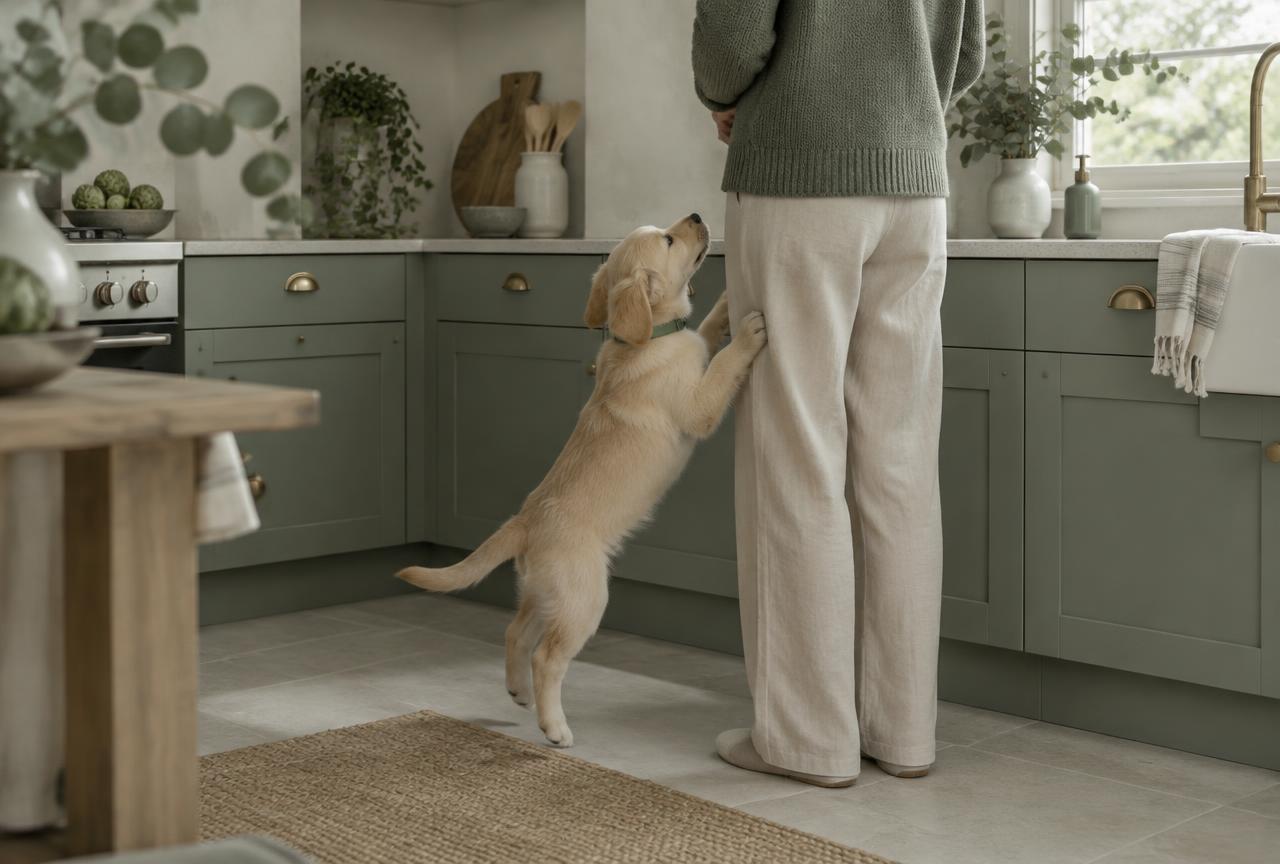
Dogs jump up to greet face to face and to get attention, and the behaviour survives because almost every human response rewards it.
Puppies jump at their mother to lick her muzzle, and the greeting instinct carries into adulthood: your face is up there, and the dog wants to reach it. The reason the habit sticks is simpler. Watch what a jumping dog gets: hands on them, voices, eye contact, movement. Pushing the dog off is a game. Saying "down" is a conversation. From the dog's side of the ledger, jumping pays every single time.
The two rules that fix it
The whole method is two rules: jumping earns nothing at all, and four paws on the floor earns everything.
Rule one: the jump gets nothing. When the dog jumps, turn away, fold your arms, and remove eye contact and speech. No pushing, no "down", no laughing. You become the least interesting thing in the room. The moment the paws return to the floor, turn back and greet calmly.
Rule two: the floor gets paid. Four paws on the floor, or a sit, is what earns attention, treats and greetings. Reward it every time at first, calmly, at the dog's level so jumping up to you is unnecessary.
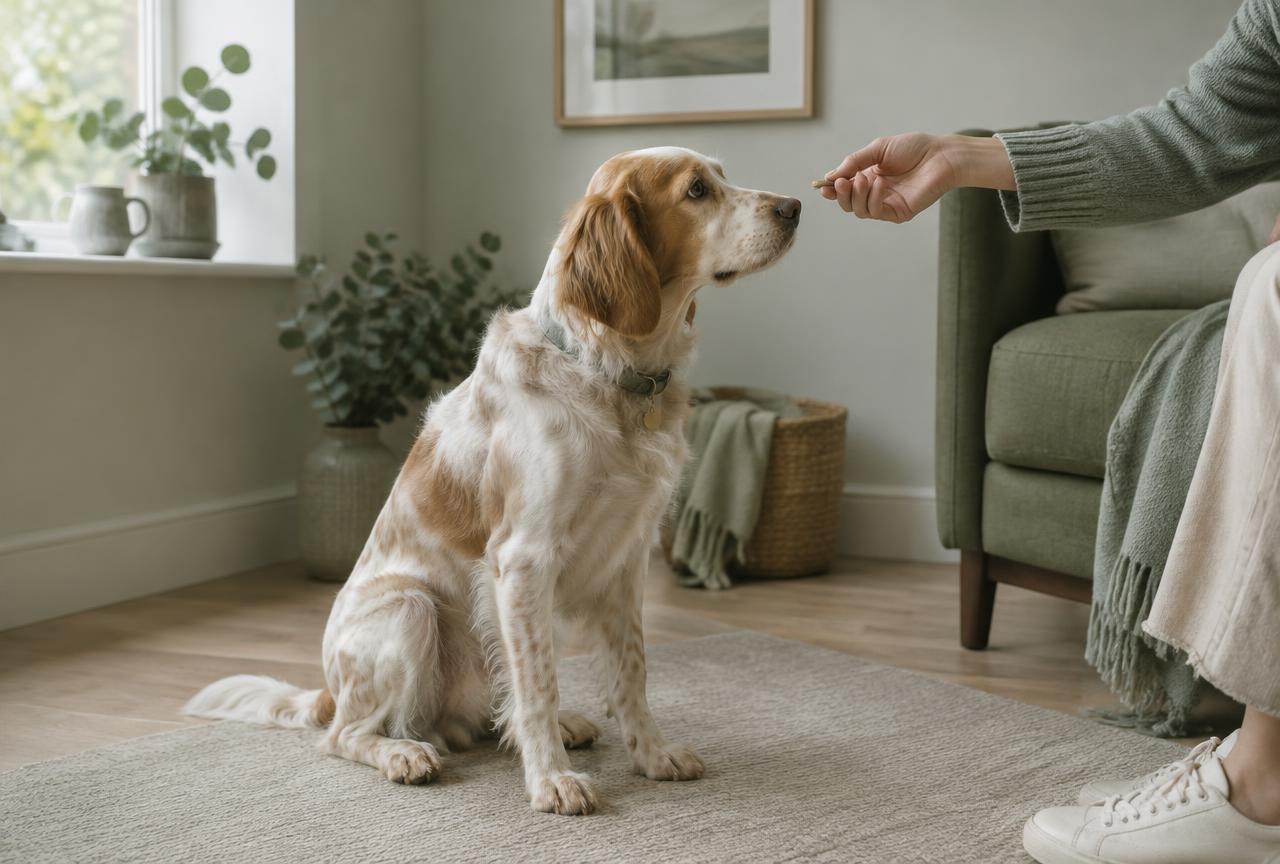
You do not need a sharper correction. You need a better economy: jumping never pays, calm always does.
The consistency problem
The method fails when one person, often a guest or a family member, keeps paying for the jump.
Dogs learn rules per person, which is why "he only jumps on visitors" is so common: the visitors have not been trained. Before guests arrive, brief them in one sentence: ignore the dog until all four paws are down, then say hello calmly. Most people are delighted to help, especially if you hand them a treat to deliver once the dog is sitting. If your household is split, fix the humans first; our tool below builds the plan around exactly that.
The door: managing the hardest minute
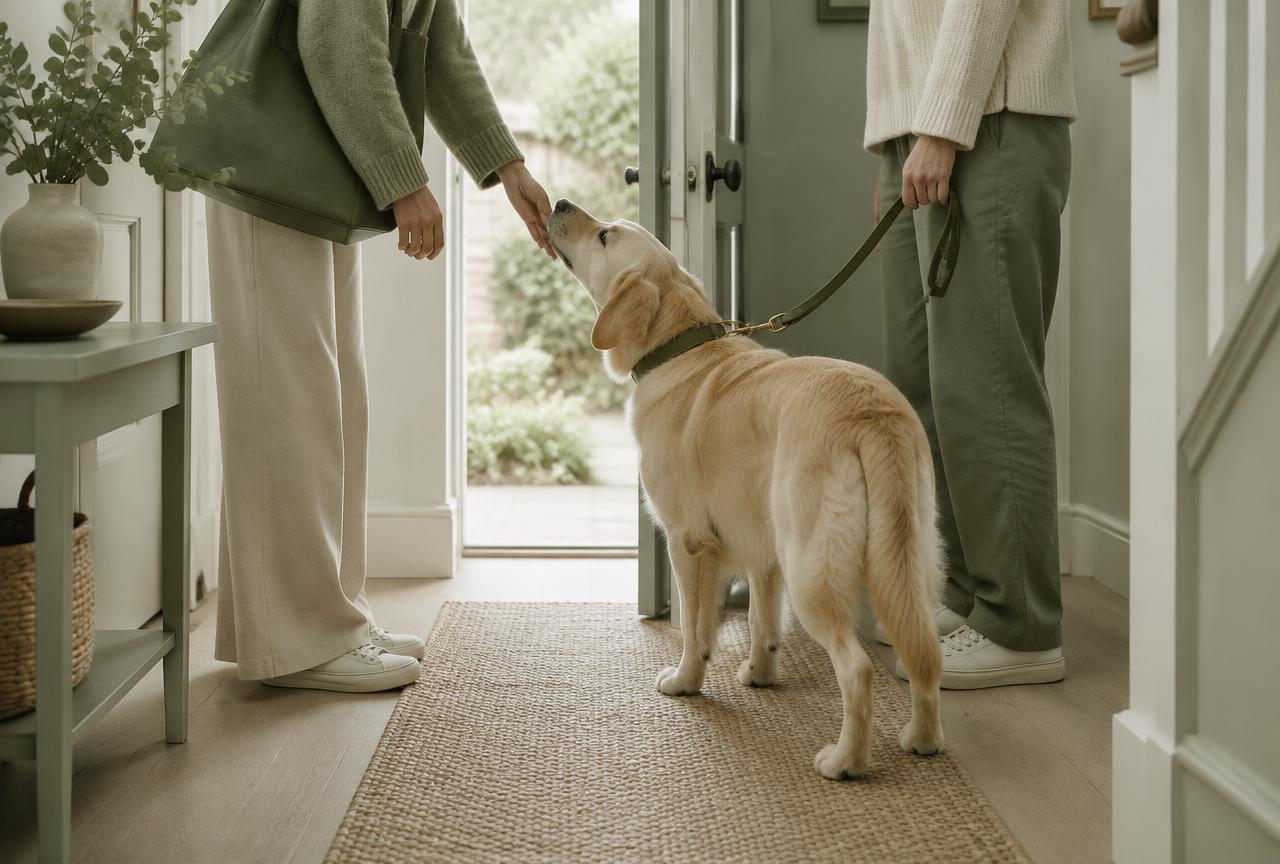
Door greetings are the highest-arousal moment of the day, so manage them with a lead or a gate until calm is the default.
- 1Dog on lead, or behind a baby gate, before the door opens.
- 2Guest enters, ignores the dog, settles in.
- 3When the dog is calm, the guest greets at the dog's level, ideally with a treat for a sit.
- 4Any jump: attention switches off instantly, and the greeting pauses.
- 5Calm: the greeting resumes. The dog learns that calm is the key that opens the door.
Ten repetitions of a managed greeting teach more than a month of chaotic ones. The same structure works for your own arrivals: come in, ignore the dog until calm, then greet. It feels cold for a fortnight and then it is simply how your house works.
Puppies versus adults
With a puppy you are setting the habit for life; with an adult you are changing an established one, and both are very doable.
For puppies, keep every greeting low-key, kneel to their level, and pay four paws from day one. A jumping puppy is charming, but a Labrador or Boxer doing the same at 30 kg knocks over children and grandparents. For adults, expect an extinction burst: when the old behaviour stops paying, the dog tries it harder for a few days before giving up. That spike is the sign the training is working, so hold your nerve through it. Pair this with the basics in our socialisation guide for young dogs.
Out on walks
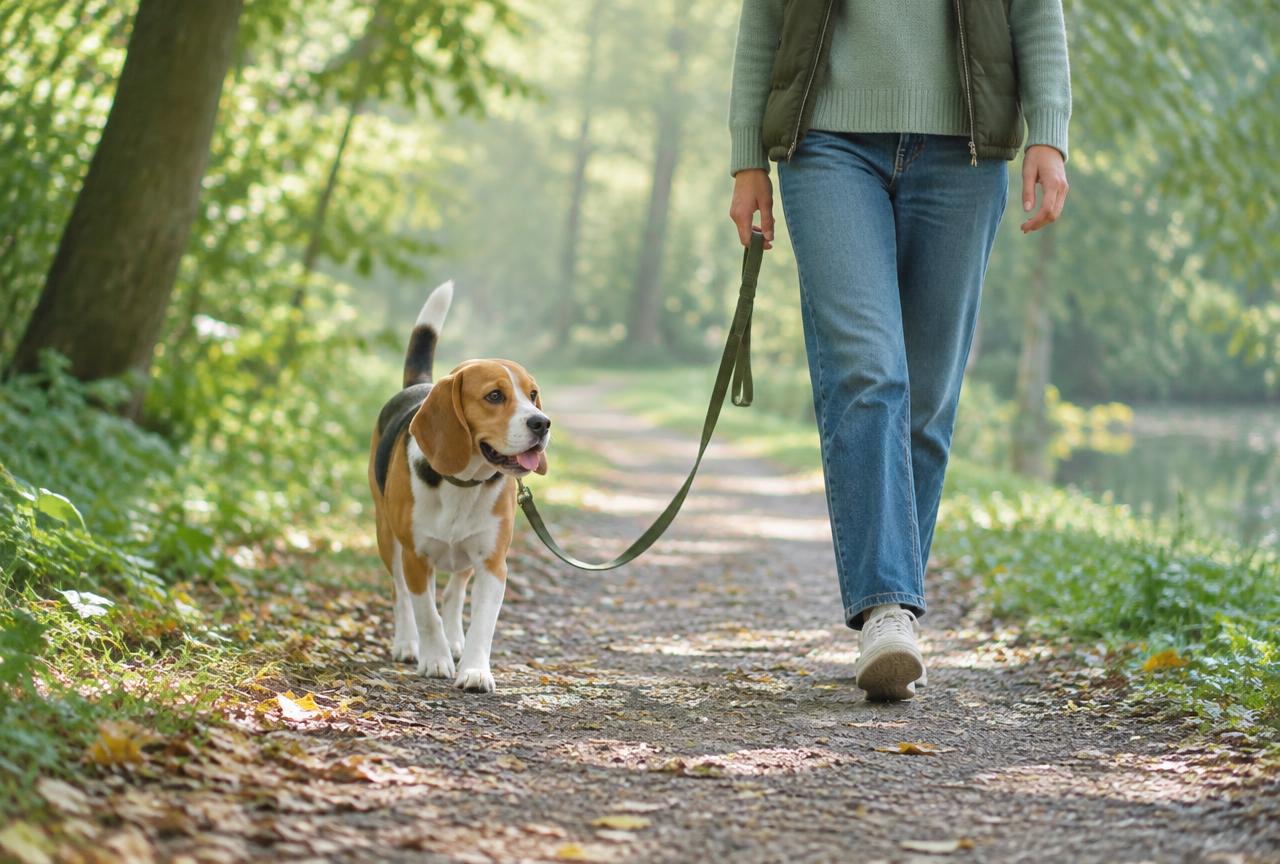
On walks, shorten the lead when people approach, ask for a sit before any greeting, and enlist strangers with a treat.
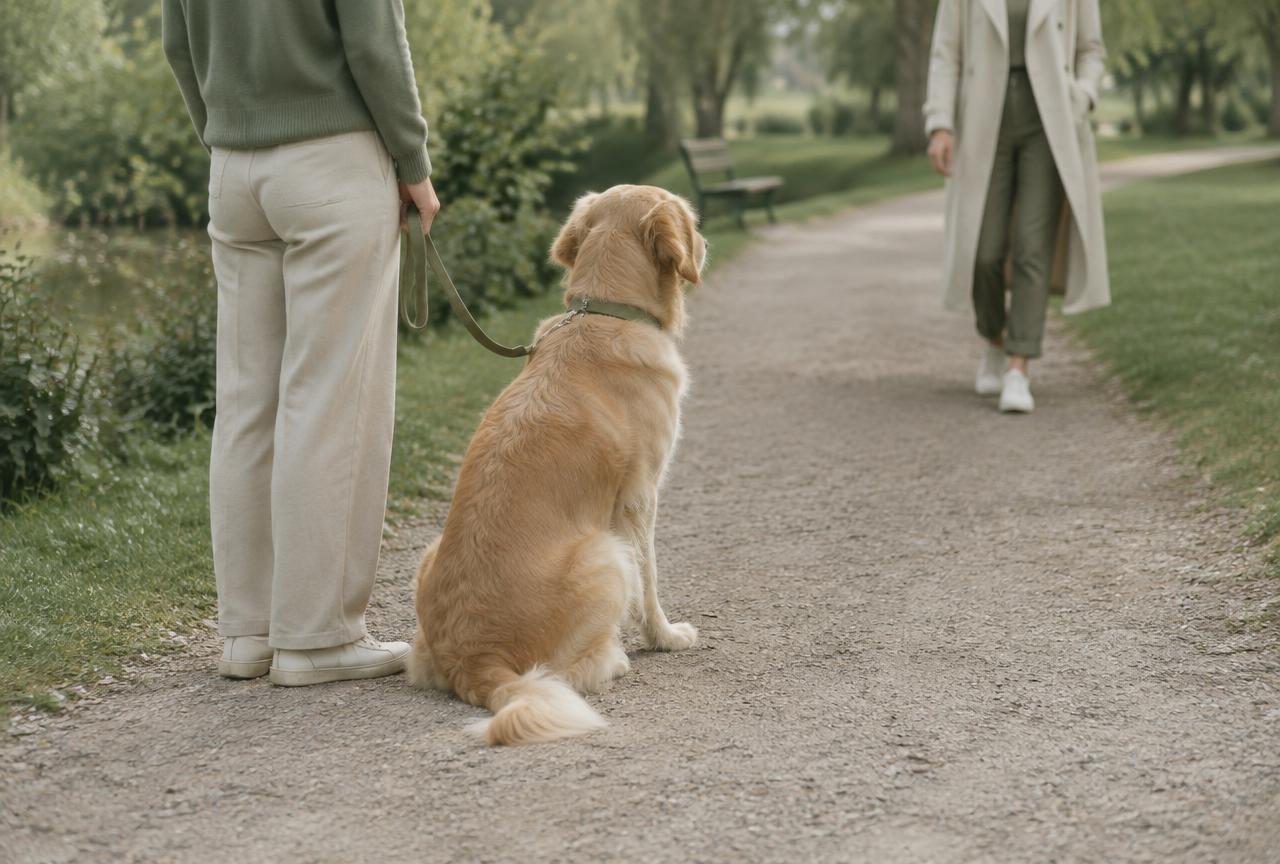
The park ambush, where a stranger leans in cooing while your dog levitates, is solved with a sentence: "He's in training, would you mind giving him this treat once he's sitting?" Most people will happily help. If the dog cannot hold a sit, increase the distance and practise where the distraction is weaker. Calm greetings outdoors are the same skill as calm greetings at the door, just with a bigger audience.
Your first week
- 1Agree the household rule: jumping gets nothing, four paws gets everything. Brief the regulars.
- 2Put a lead or gate on the door routine for every arrival, yours and guests'.
- 3Practise ten calm greetings a day in quiet moments: approach, reward four paws, move on.
- 4Through every jump: turn, fold, silence. Through every calm moment: calm reward.
- 5Expect the extinction burst around days three to five and hold the line.
- 6Review after two weeks; most dogs are visibly better, and the habit then fades with maintenance.
Interactive tool
Jumping up plan
Age, trigger and household consistency in, a first-week plan out.
Your first week
- Your main battleground is door greetings: the highest-arousal moment of your dog's day. Everything below is built around that.
- Step one is a household agreement: everyone, including guests, responds to jumping the same way. One person who allows it resets the training.
- When the dog jumps: turn away, arms folded, no eye contact, no words. The moment all four paws are down, turn back and reward calmly.
- Teach the alternative: a sit or four paws on the floor is what earns attention, treats and greetings. Practise at quiet times, not just at the door.
- With an adult dog, expect the jumping to get worse briefly before it improves: that extinction burst means the training is working.
- Manage the door: lead on, or dog behind a gate, for the first minute of any arrival until calm greetings are the default.
Fix the humans first
Jumping up persists because it works. Remove the reward, reward the calm alternative, and most dogs change within weeks.
When to get help
Jumping up is a training matter, not a medical one. If your dog's greetings tip into fear, mouthing or hard staring, or the jumping is frantic and unresponsive to weeks of consistent work, ask your vet for a referral to a qualified, reward-based behaviourist.
The greetings ladder: from chaos to calm
Think of calm greetings as a ladder your dog climbs one rung at a time, and never practise on a rung the dog cannot manage.
The bottom rung is you, alone, arriving calmly: easy. Then household members, then regular visitors, then the exciting guest the dog adores, then the doorbell itself, then strangers on walks. Practise at the level where the dog can succeed, and only climb when the current rung is reliable. The classic mistake is training only at the top of the ladder, the doorbell moment, where arousal is highest and failure is guaranteed. Ten calm repetitions at the bottom of the ladder do more than a hundred failures at the top.
What about "off" and other commands?
A cue like "off" has its place, but it is a tidy-up tool, not the training itself.
The problem with relying on "off" or "down" is timing: by the time you say it, the jump has already happened and already been rewarded with your attention. The real work is the economy described above, where jumping never pays and four paws always does. Once that rule is established, a calm "off" cue can help a dog who is already mid-decision, but it is the consequence structure, not the word, that changes the behaviour. Teach a solid "sit" as the greeting position and you have given the dog a clear job to do instead of jumping.
Children, elderly people and muddy paws: why this matters
Jumping up is not just bad manners; for a large dog it is a genuine safety issue, which is why it deserves proper training rather than tolerance.
A Golden Retriever launching at a toddler or an elderly relative can knock them down. Muddy paws ruin clothes and scratch skin. Delivery drivers and nervous visitors deserve a dog with four feet on the floor. This is also why the "he is just friendly" framing does not help: the dog's friendliness is not in question, and the person being jumped on does not experience it as friendly. Training calm greetings is part of being a good owner, and it makes your dog more welcome everywhere.
Common mistakes that keep jumping alive
Pushing the dog off. It is a game of wrestling, and the dog wins attention every time.
Saying "down" while looking at the dog. Eye contact plus voice is a conversation, and conversation is attention.
Kneeing the dog in the chest. Apart from being unkind, it is still physical engagement, and it can injure a small dog or teach a large one that greetings are rough.
Letting some people allow it. "He can jump on me, I do not mind" resets the training for everyone.
Only training at the door. The door is the hardest moment; the habit is built in quiet repetitions elsewhere.
Giving up at the extinction burst. The brief worsening around days three to five is the sign it is working. Hold the line.
The two-week review
After a fortnight of consistent rules, most dogs are visibly better: fewer jumps, quicker recovery, more offered sits.
If you are not seeing movement after two genuinely consistent weeks, audit the humans first, because inconsistency is the usual culprit, then look at the practice structure: are you training at the bottom of the ladder or only at the door? Increase the easy repetitions, keep the door managed with the lead or gate, and give it another fortnight. Persistent, frantic jumping that does not respond to weeks of consistent work, or jumping that comes with mouthing or anxiety, deserves a qualified, reward-based trainer or behaviourist, via your vet. Our guides to lead pulling and puppy biting follow the same economy-based approach if those are also on your list.
The arousal problem underneath
Jumping up is often a symptom of a wider pattern: a dog whose arousal goes from zero to sixty at any trigger will jump, mouth, bark and spin as a package.
If your dog's jumping comes with mouthing, barking, spinning or an inability to settle afterwards, the greeting is not the whole story. The underlying skill the dog needs is arousal regulation: the ability to get excited and come back down. That is built with calm routines, enough sleep, decompression walks where the dog sniffs rather than performs, and training sessions that practise calm as a skill in its own right. Our over-excitement and zoomies guide covers the arousal side. Fix the arousal and the jumping often halves before you have trained it directly.
Teaching an incompatible behaviour
The most elegant way to kill jumping is to teach a behaviour the dog cannot do at the same time, and the two best are sit and go-to-mat.
A dog cannot jump and sit simultaneously, so a rock-solid "sit for greetings" gives the dog a job that pays the same wage. Teach it first with no guests, no doorbell and no excitement: sit, treat, repeat, dozens of times in boring contexts. Then practise at the door with the lead on, then with household members playing the guest, then with real visitors. Go-to-mat works the same way for households that prefer it: the dog learns that the mat is where greetings begin, and the mat travels to wherever the door is. Both approaches turn "stop doing that" into "do this instead", which is always the faster lesson.
When the jumper is not yours
A surprising amount of jumping happens to other people: the dog who leaps at the dog walker, the child minder, the cleaner, the neighbour.
Anyone who regularly handles your dog needs the same briefing as your household: turn away from the jump, reward the four paws, no exceptions. Write it down if it helps; the rule is one sentence long. If your dog jumps at strangers whose dogs you meet on walks, a cheerful "sorry, in training, could you ignore him for a second?" does the work, and most dog people have been on both sides of that exchange. The goal is a world where your dog's jumping never pays, whoever is on the receiving end, and that world is built one briefed human at a time.
Keeping it fixed
Behaviour that has been trained away stays away only as long as the rules stay in place, so the maintenance plan is simple: the rules are permanent.
After the first month, most dogs jump rarely and recover instantly, and the household can relax its vigilance slightly, but the core rule never changes: jumping earns nothing, calm earns attention. Watch for the slow creep, the guest who was not briefed, the exciting visitor who encourages it, the tired evening when you let it slide, because a few paid jumps can resurrect the habit. The good news is that a dog with a solid history of calm greetings re-learns the rule in days rather than weeks. The economy, once established, is easy to keep.
A note on the dog's feelings
It is worth saying, because owners worry about it: ignoring the jump does not hurt your dog's feelings in the way it would hurt a person's. Dogs read consequences, not snubs, and the turn-away lands as information, not rejection. What dogs do find genuinely confusing is inconsistency: the human who sometimes laughs and sometimes scolds, the greeting that pays on Tuesdays but not Fridays. The consistent economy, where jumping never pays and calm always does, is not cold; it is the clearest, kindest communication you can offer a dog. Within weeks, the dog who used to levitate at the door is the dog who sits, looks up, and collects the greeting they wanted all along, and both of you enjoy the hello more.
The ten-second briefing
Every person who meets your dog needs the same one-sentence briefing: ignore him until all four paws are on the floor, then say hello calmly. Ten seconds, one sentence, and it is the difference between a training programme and a revolving door. Keep a pot of treats by the door so the briefing comes with the means to reward the sit, and the dog learns that visitors are simply another chance to be paid for calm. The method is not complicated; the whole art is making sure everyone plays.
The bottom line
Jumping up is a behaviour your household has been paying for. Stop paying for the jump, start paying for the floor, keep everyone consistent, and the dog rewrites the habit within weeks.
Questions people actually ask
Why do dogs jump up at people?
To get attention and to greet face to face. Puppies jump at their mother to lick her face, and the greeting instinct stays. It persists because it works: pushing off, laughing, talking and even telling the dog off are all attention.
How do I stop my dog jumping up at guests?
Brief your guests before they come in: ignore the dog completely until all four paws are on the floor, then greet calmly. Manage the first minute with a lead or a gate, and reward the dog for sitting or standing calmly.
Should I knee my dog or push them off when they jump?
No. Kneeing and pushing are still attention, and they can hurt the dog or teach it that greetings are physical and rough. The effective response is the boring one: turn away, no eye contact, no words, and reward four paws on the floor.
How long does it take to stop a dog jumping up?
With a fully consistent household, most dogs improve noticeably within two to four weeks. The timeline depends almost entirely on consistency: every person who rewards the jump adds weeks.
How do I stop a puppy jumping up?
Start now, while the habit is light: keep greetings low-key, kneel to the puppy's level so jumping is unnecessary, and reward four paws on the floor from day one. A jumping puppy is charming; a 30 kg adult doing the same is not.
My dog jumps up at strangers on walks. What should I do?
Shorten the lead when people approach, ask for a sit before any greeting, and tell well-meaning strangers the dog is in training. Most people will happily help if you hand them a treat to give once the dog is sitting.
Sources
Breeds mentioned

Labrador Retriever
Britain's most popular family dog: biddable, food driven and built for an active household.

Golden Retriever
A gentle, biddable gundog famed for its patience with children and its glossy golden coat.
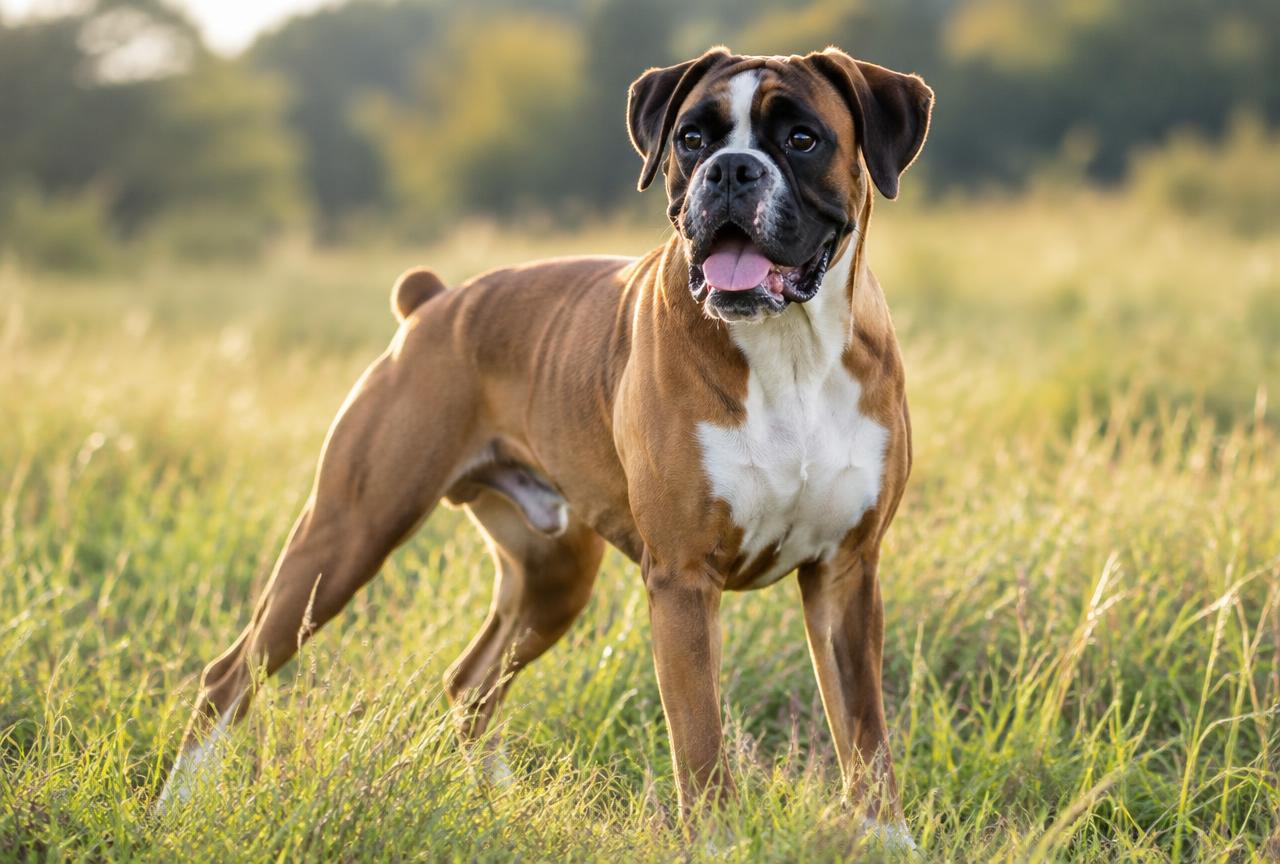
Boxer
An energetic, devoted working dog known for its playful spirit and protective nature.
Read next
How to House Train a Puppy: A Two-Week Plan
How to potty train a puppy with a two-week plan, toilet timings by age, crate tips, accident handling and when it might be medical.