
Why Do Dogs Have Zoomies? Frenetic Energy Explained
Sudden laps of the living room, a skid, a grin, then a flop. Here is what zoomies are, why dogs get them and how to keep them safe.
The SniffScroll desk
Published 9 October 2026
Reviewed against current veterinary guidance
The short version
- Zoomies, or FRAPs, are normal bursts of energy and emotion.
- They peak in puppies, in the evening, after baths and after poos.
- Keep them safe with grip underfoot and a clear space; never near roads.
- Do not chase: standing still helps them wind down faster.
- Very frequent or compulsive-looking episodes suggest too little outlet or need advice.
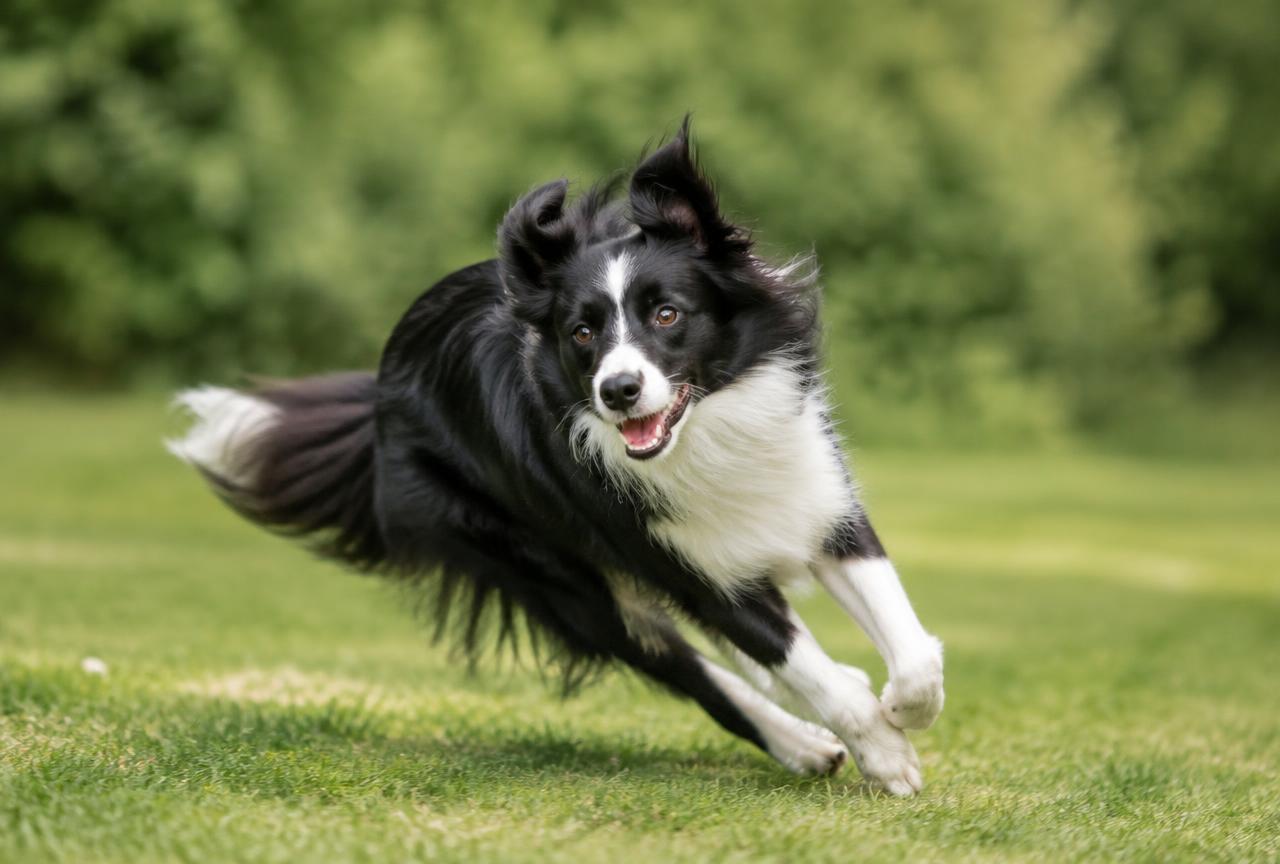
One minute your dog is calm on the sofa, the next it is racing round the living room in tight circles, ears back, bottom tucked, skidding round corners and grinning like a lunatic. Then, just as suddenly, it stops, pants happily and flops down. These bursts are known as dog zoomies, and they are one of the most joyful things dogs do. They are almost always perfectly normal, but the timing and frequency can tell you a lot about how your dog is feeling and whether its day has enough outlets.
This guide explains what zoomies are, why dogs get them, the common triggers, how to keep them safe and when they might be telling you something more.
What are dog zoomies? The short answer
Zoomies are sudden, short bursts of frantic running, spinning and play that usually last a few seconds to a few minutes. The scientific term is frenetic random activity periods, or FRAPs. They are a normal way for dogs to release pent-up energy, excitement or stress, and are most common in puppies and young dogs, in the evening, after a bath, after a poo and after being released from a crate or lead. Zoomies are rarely a concern; only very frequent, long or compulsive-looking episodes need a closer look.
Why do dogs get the zoomies?
Dogs get the zoomies to discharge a build-up of energy or emotion quickly, and the cause is usually simple: there is more fizz in the dog than it has had a chance to use. Veterinary behaviourists generally describe FRAPs as a normal, healthy behaviour rather than a problem. The common drivers are:
- Excess energy. Young dogs and active breeds such as the Border Collie, Jack Russell Terrier and English Springer Spaniel store up energy fast.
- Excitement. A family member coming home, visitors, the start of a walk or the end of a training session.
- Relief from stress. After a bath, a vet visit, nail trimming or being handled, zoomies can be a way of shaking off tension.
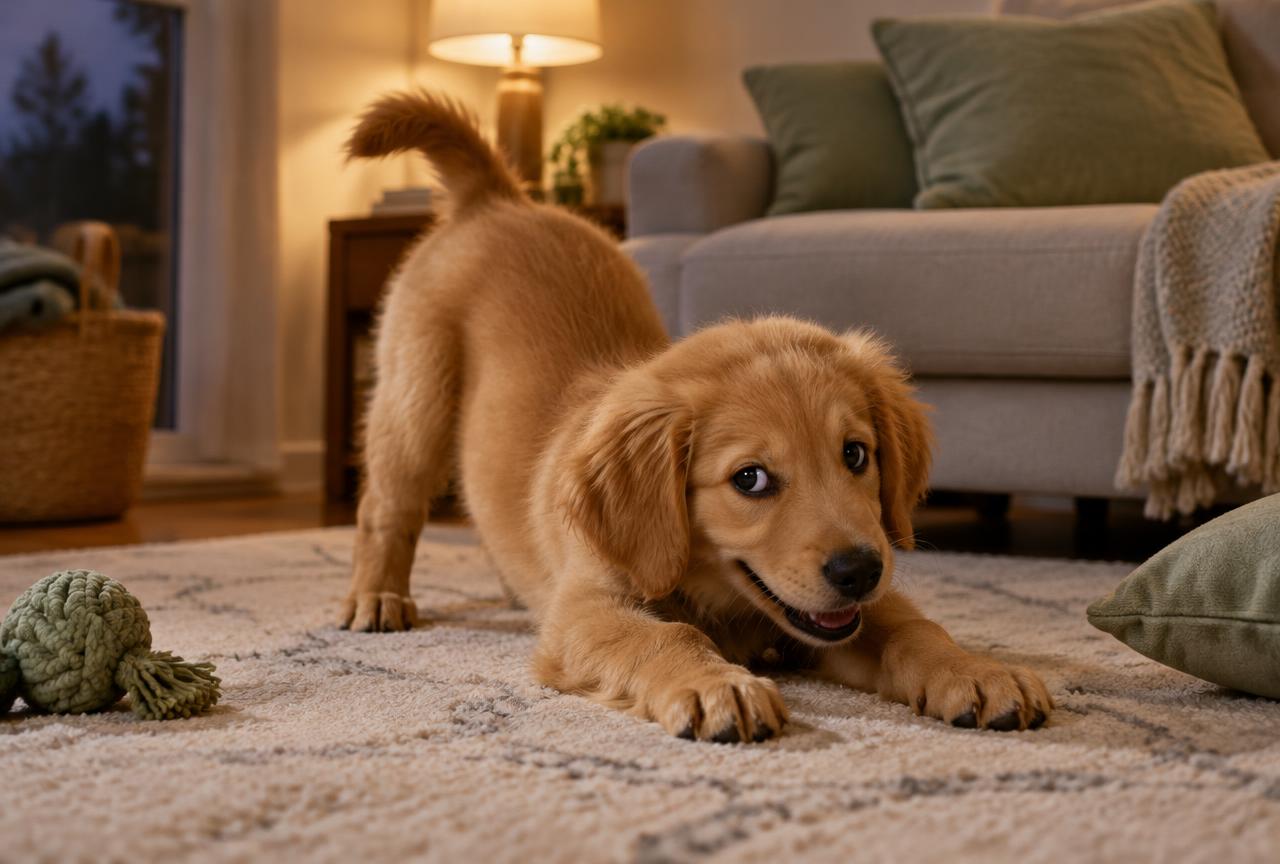
- Play invitation. Zoomies often come with play bows and a look over the shoulder, inviting you or another dog to chase.
- Physical sensations. After a poo or a bath, dogs may be reacting to feeling lighter, cleaner or simply different.
There is no evidence that zoomies are a sign of a particular health problem in themselves. They are generally a sign of a dog that feels good.
Common zoomie triggers and what they mean
The timing of zoomies is the best clue to what is behind them, and this table sets out the most common patterns.
| When it happens | Likely reason | Anything to change? |
|---|---|---|
| --- | --- | --- |
| Evening, often around the same time | Leftover energy before settling for the night | Usually no; add a short evening play or sniff session if it is wild |
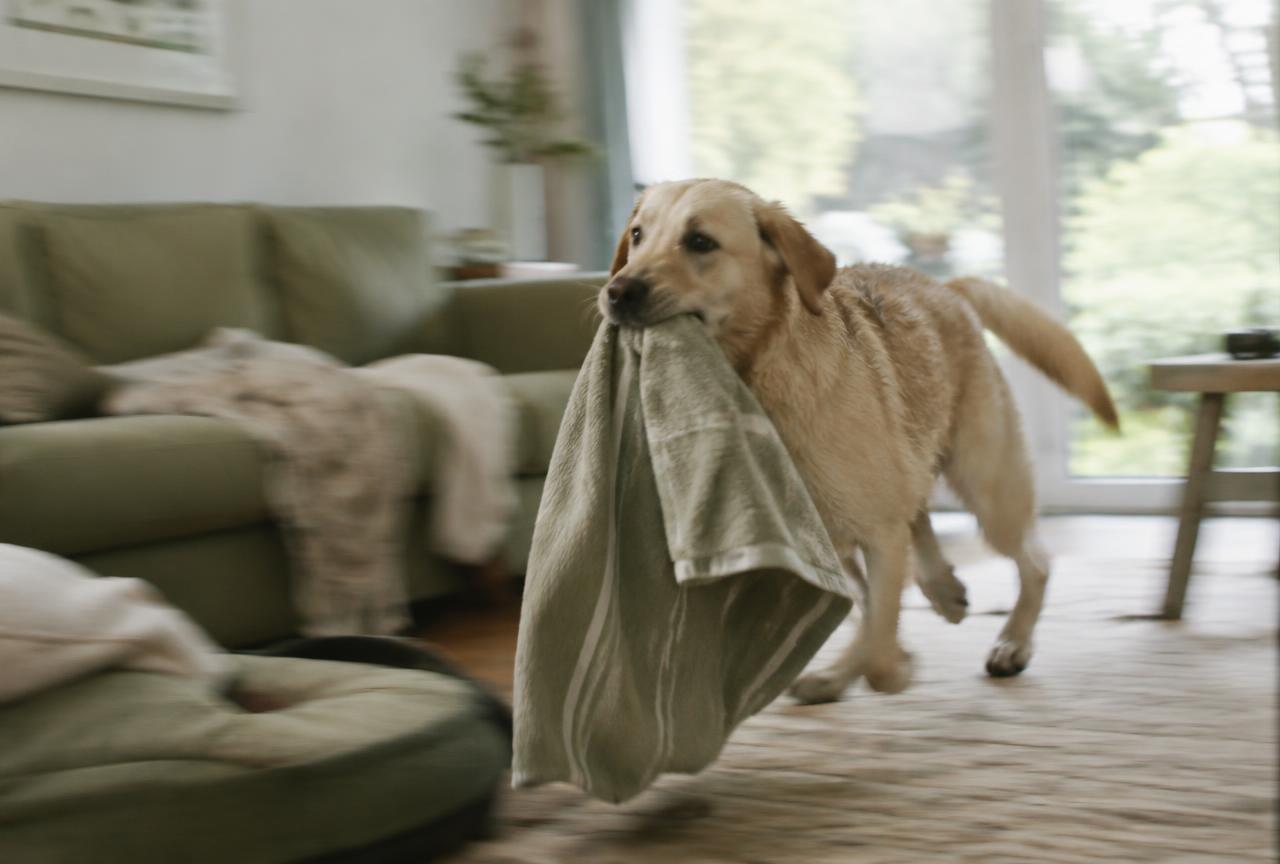
| After a bath | Stress release, drying off, removing the shampoo smell | No; give a safe space and a towel to rub on |
| After a poo | Relief, excitement or scent marking with the paws | No |
| On returning from a walk | Energy still to burn, or an over-exciting walk | Add a calmer wind-down at the end of walks |
| On release from a crate or after rest | Stored energy after confinement | Check the time in the crate is reasonable |
| Many times a day, long episodes | Boredom or not enough physical or mental outlet | Yes: more exercise, enrichment and training |
Are zoomies more common in puppies?
Yes. Puppies and adolescent dogs up to about two years of age zoom far more often than adults, and many owners describe a daily "witching hour" in the evening when their puppy goes wild. Puppies have high energy, short attention spans and less ability to regulate excitement, so it bursts out in sudden spells. Overtiredness can also trigger zooms in puppies, just as an overtired toddler becomes more hyper rather than less.
If your puppy's evening zoomies come with nipping and biting, it is often a sign it needs a nap, not more play. Our guide to how to stop a puppy biting covers how to settle an overtired puppy, and the article on why dogs sleep so much explains how much rest young dogs really need, which is often eighteen hours or more a day.
Do older dogs get the zoomies?
Older dogs do get zoomies, though usually less often and for shorter spells. A senior dog having an occasional zoom is a lovely sign of good health and good mood. However, take care with older dogs, and dogs with arthritis or joint problems, because the sudden twisting and turning puts strain on joints and the spine. If your older dog seems stiff or lame after a zoom, mention it to your vet.
How to keep zoomies safe
Zoomies themselves are healthy, but dogs at full speed are not careful, and most zoomie injuries come from slippery floors, furniture, stairs and roads. A few simple steps keep them safe.
- 1Move it somewhere safe. If you can, calmly open the back door so your dog can zoom on grass rather than tiles or laminate.
- 2Add grip indoors. Rugs and runners on slippery floors prevent splayed legs and skids into walls.
- 3Clear the runway. Move breakable items, cables and low tables out of the regular zoom route.
- 4Never zoom near roads. If your dog tends to zoom on release from the lead, only let it off in securely fenced areas, and practise a strong recall.
- 5Do not chase. Chasing turns zooms into a game and makes them last longer. Stand still, or walk away calmly, and most dogs wind down quickly.
- 6Have a calm landing. Once it stops, offer water, a chew or a lick mat to help your dog settle.
If your dog zooms right after eating, try to keep things calm for an hour or so after big meals. Deep-chested breeds are at risk of gastric dilatation volvulus (bloat), and vigorous exercise straight after a meal is thought to be one risk factor.
Zoomies are a dog's way of saying it feels great. The job is not to stop them, it is to make sure there is somewhere safe to have them.
When zoomies may signal something more
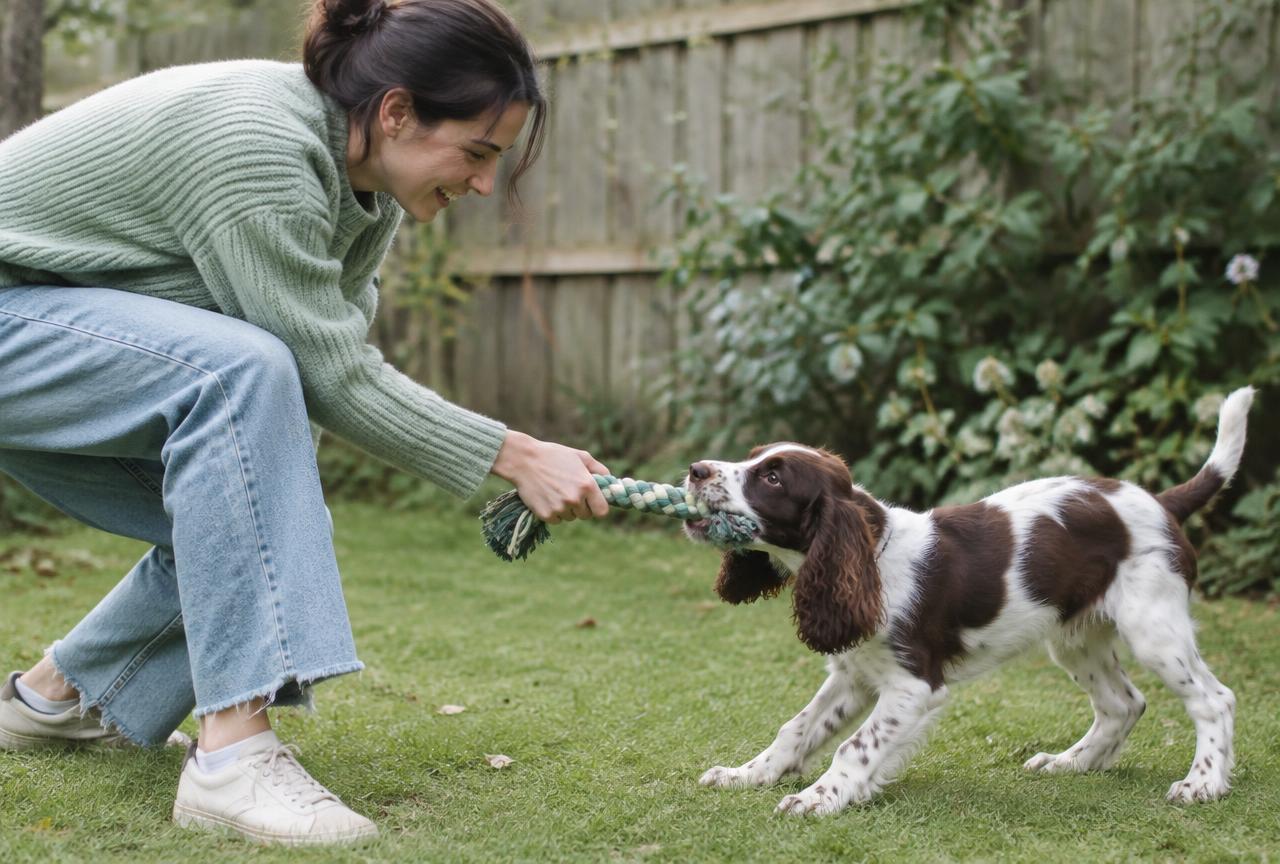
Occasional zoomies are a sign of a happy dog, but very frequent, long or hard-to-interrupt episodes can be a sign that your dog is not getting enough outlet for its energy or brain. Working and sporting breeds in particular need both physical exercise and mental work. Signs that zoomies are compensating for an under-stimulated day include:
- Several long episodes every day, not just at the usual trigger times.
- Zoomies alongside chewing, digging, barking or other frustration behaviours.
- Difficulty settling at all, even after a walk.
The answer is usually not more running but more variety: sniff walks, short training sessions, scatter feeding, puzzle feeders and safe chews all tire the mind. Our guide to why dogs dig covers other signs of under-stimulation, and you can check your dog's ideal daily food against its activity with the portion calculator.
Rarely, repetitive spinning or tail chasing that looks the same every time and is hard to interrupt can be a compulsive behaviour rather than zoomies. This is more common in certain breeds, such as Bull Terriers and German Shepherds, and is worth discussing with your vet or a qualified behaviourist.
Zoomies checklist
Use this list if you are unsure whether your dog's zoomies are normal:
- Do they last a few minutes or less?
- Do they happen at predictable times, such as evening or after a bath?
- Does my dog look relaxed and playful during them, not distressed?
- Does my dog settle easily afterwards?
- Is it getting enough exercise and mental stimulation for its breed and age?
- Is the zoom space safe, with grip underfoot and no hazards?
If you can tick most of these, your dog's zoomies are just healthy fun.
Read your dog's zoomies
Use the interactive tool below to see what your dog's zoomie pattern is likely telling you.
Interactive · zoomies reader
What are your dog's zoomies telling you?
Pick when they happen and how active your dog's day is. We will explain the likely reason and whether to change anything.
What to do
- Let it run its course in a safe space: clear trip hazards, keep away from roads and stairs.
- Do not chase: that turns it into a game. Stand still or walk away and they wind down faster.
Healthy, happy zoomies
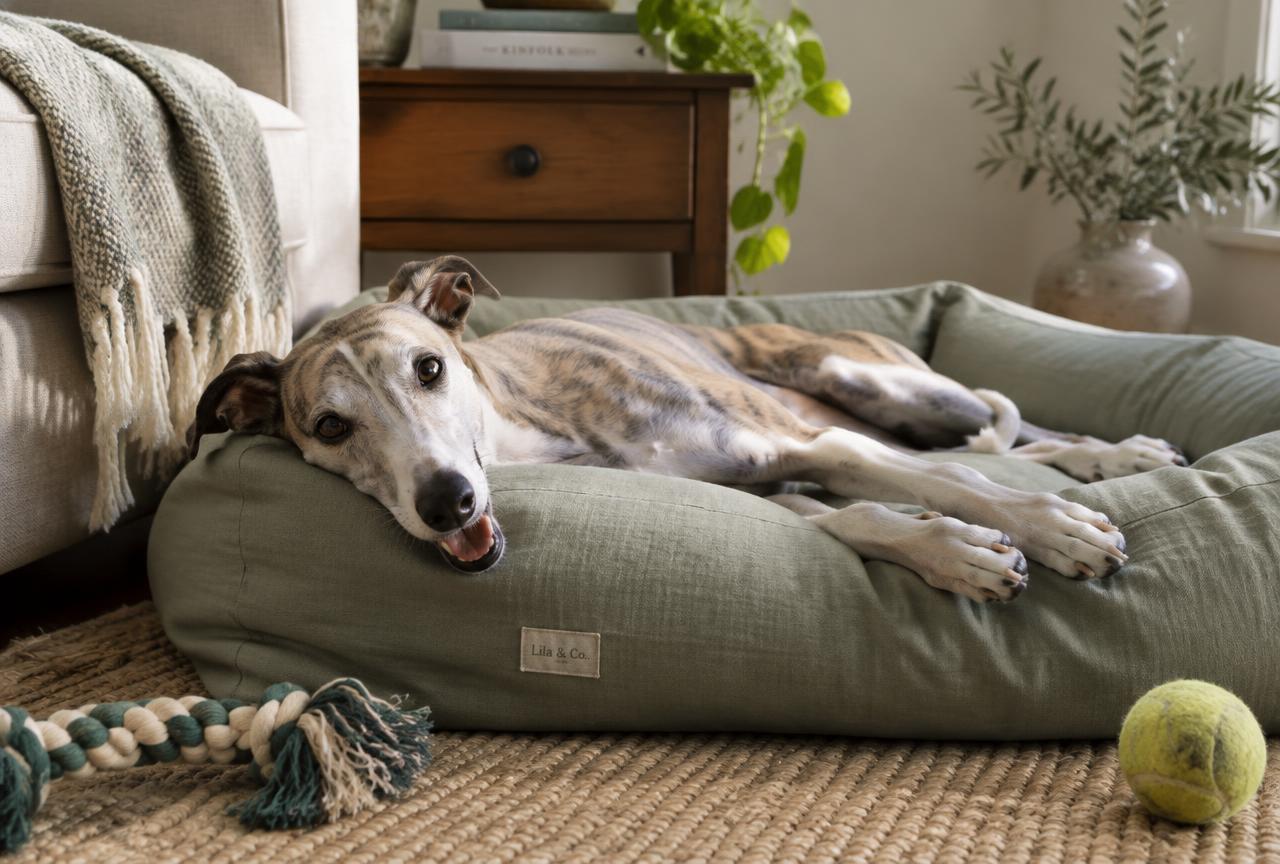
Evening zoomies are the classic pattern: a burst of leftover energy before settling for the night, especially in puppies.
Common myths about zoomies
Zoomies do not mean your dog is badly behaved. They are not a training failure and do not need correcting, only managing for safety. They are not a sign of an anxious dog in the vast majority of cases; anxious dogs tend to pace, pant, hide or tremble rather than play. Tiring your dog out completely will not stop them, and over-exercising young dogs can harm growing joints; a balanced day of walks, sniffing, training and rest works better. Older dogs are not too old to zoom, though they need more care with footing. And breed matters less than age and routine: a quiet breed such as the Whippet can zoom spectacularly after a nap.
When should I see the vet?
Zoomies themselves are not a reason to see the vet, but speak to your vet or a qualified behaviourist if the running looks compulsive, if your dog seems distressed, disorientated or unaware of you during episodes, or if it is lame or stiff afterwards. A dog that suddenly starts spinning, circling in one direction or chasing its tail repeatedly should also be checked, as pain, ear problems and neurological conditions can occasionally look similar.
Seek urgent help if a zoom ends in a collapse, a yelp with lameness, a swollen belly after eating, or any change in breathing.
The bottom line
Dog zoomies, or FRAPs, are a normal, healthy burst of energy and emotion. They are most common in puppies, in the evening, after baths and after poos, and they usually last only a few minutes. Keep them safe with grip underfoot and a hazard-free space, do not chase, and give your dog a calm landing afterwards. If they become very frequent or look compulsive, add more variety to your dog's day and seek advice. Otherwise, enjoy the show.
Questions people actually ask
Are zoomies a sign of a happy dog?
Usually, yes. Zoomies are a release of energy and excitement and generally show a dog that feels good.
Why does my dog get zoomies at night?
Evening zoomies release leftover energy before the dog settles, and are especially common in puppies and young dogs.
Why do dogs get zoomies after a bath?
It is a mix of stress release, drying off and trying to rub off the shampoo smell.
Should I stop my dog's zoomies?
No, just keep them safe. Move your dog somewhere with grip, clear hazards and avoid chasing.
At what age do dogs stop getting zoomies?
They become less frequent after about two years, but many adult and even senior dogs still zoom occasionally.
Can zoomies be a problem?
Rarely. Very frequent, long or repetitive spinning that is hard to interrupt can signal under-stimulation or a compulsive behaviour worth discussing with a vet.
Sources
Breeds mentioned

Border Collie
The world's most capable herding mind, needing an equally capable owner to match it.
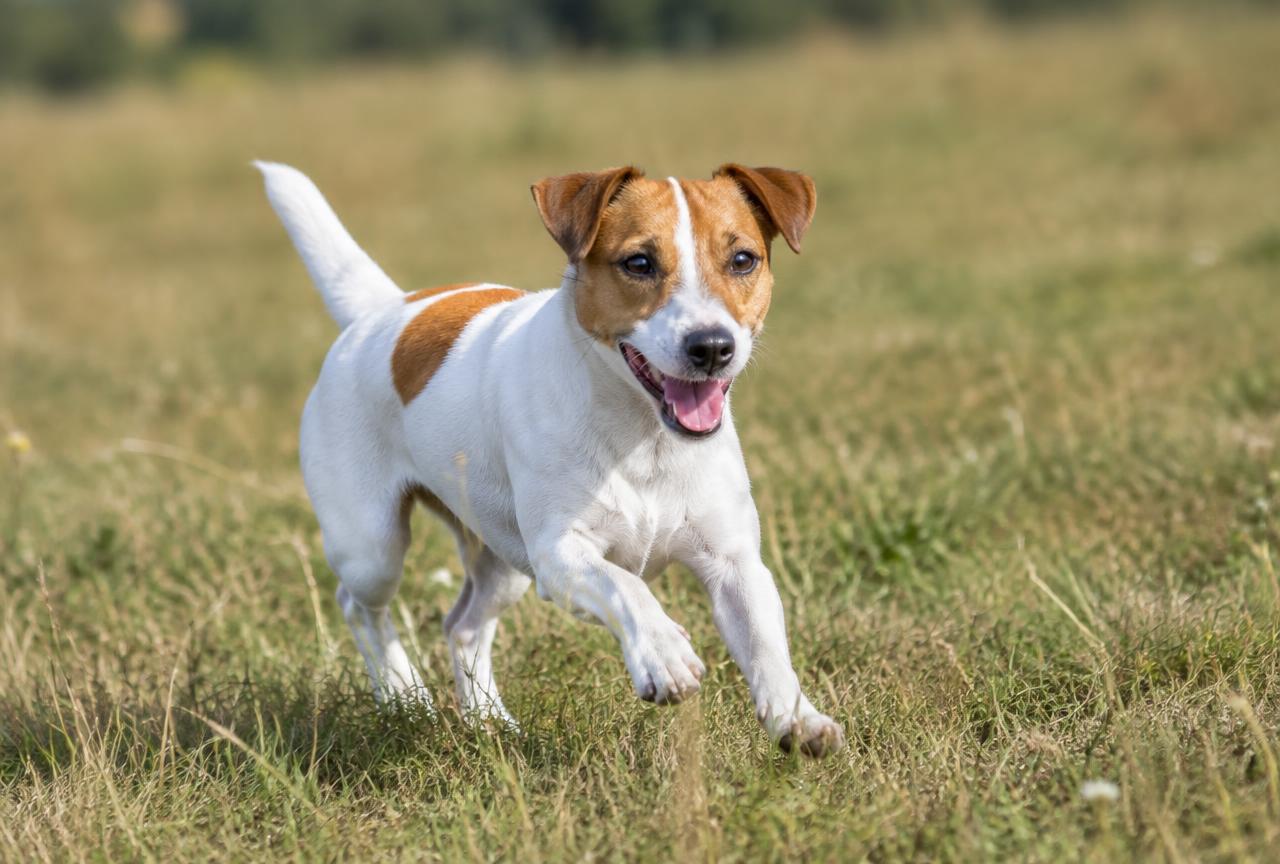
Jack Russell Terrier
A bold, tireless working terrier with huge personality packed into a small frame.
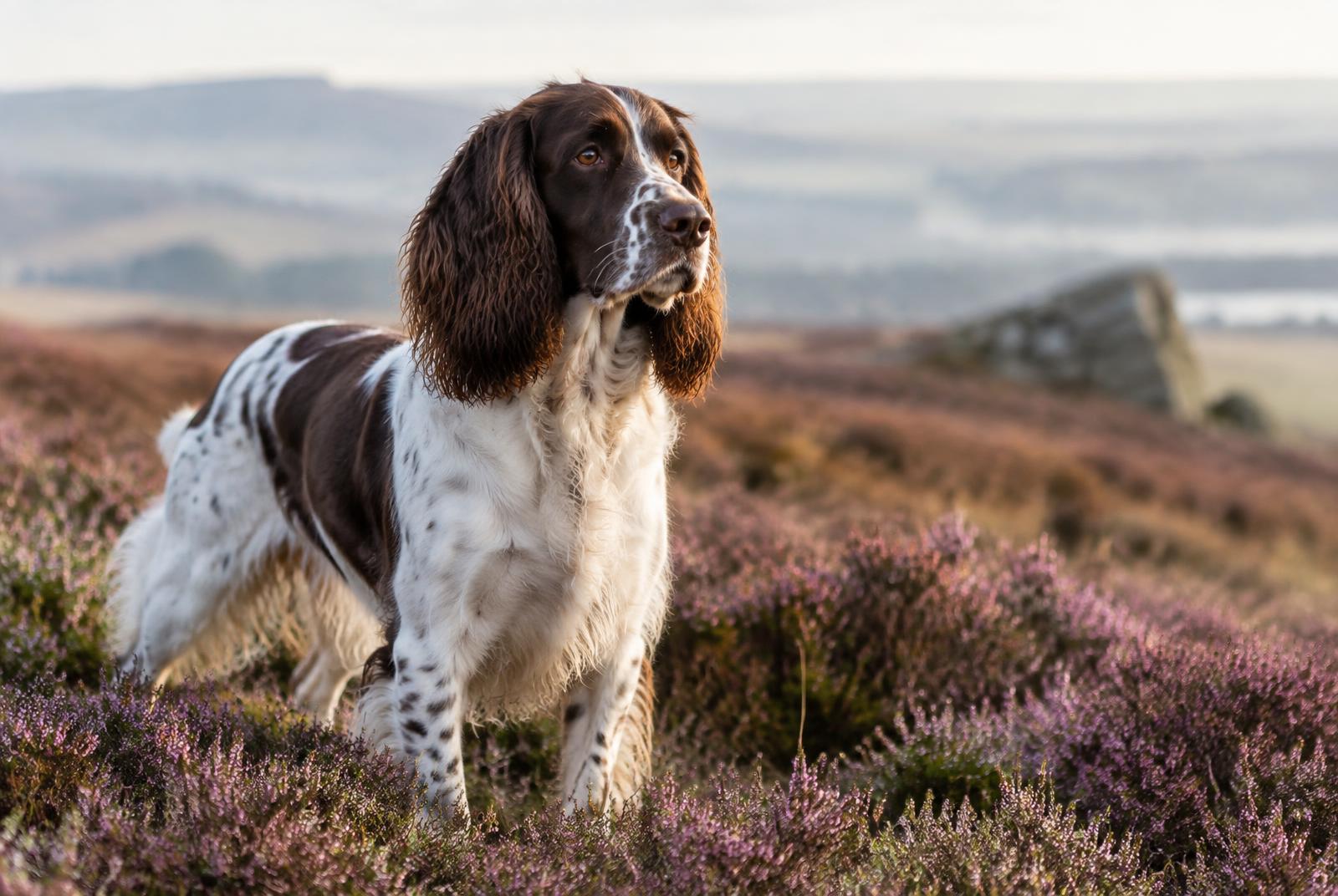
English Springer Spaniel
A nose-driven, biddable gundog that needs real work for its mind and body.
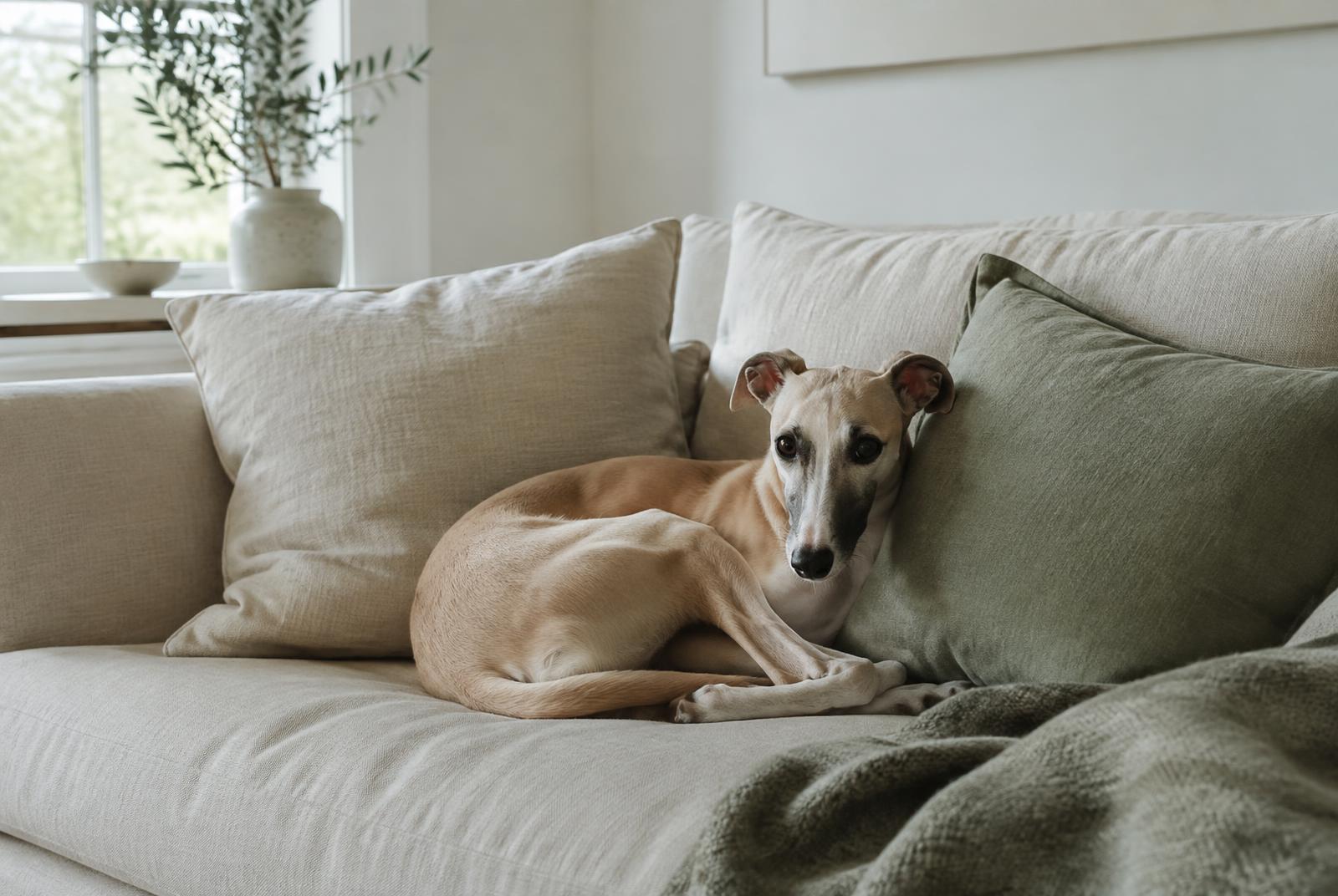
Whippet
A 35mph sprinter wrapped around a dedicated couch potato, happiest after a short burst of speed followed by hours of sleep.
Put it into practice
Read next
Why Do Dogs Roll in Poop? The Instinct Explained
Why dogs roll in the worst smells they can find, what the behaviour is really about, and how to prevent it or at least clean up well afterwards.


