Gundog group
England
English Springer Spaniel
The English Springer Spaniel is a warm, driven gundog that needs genuine daily exercise and mental work to be the settled companion it can be.
Reviewed against Kennel Club and breed club health guidance
A nose-driven, biddable gundog that needs real work for its mind and body.
The short version
- Working and show lines differ meaningfully in drive and build, so ask breeders which type a puppy comes from.
- This breed needs around 90 minutes to two hours of varied exercise daily, including scent based activity.
- Hip scoring and annual eye screening of breeding stock are essential checks when choosing a puppy.
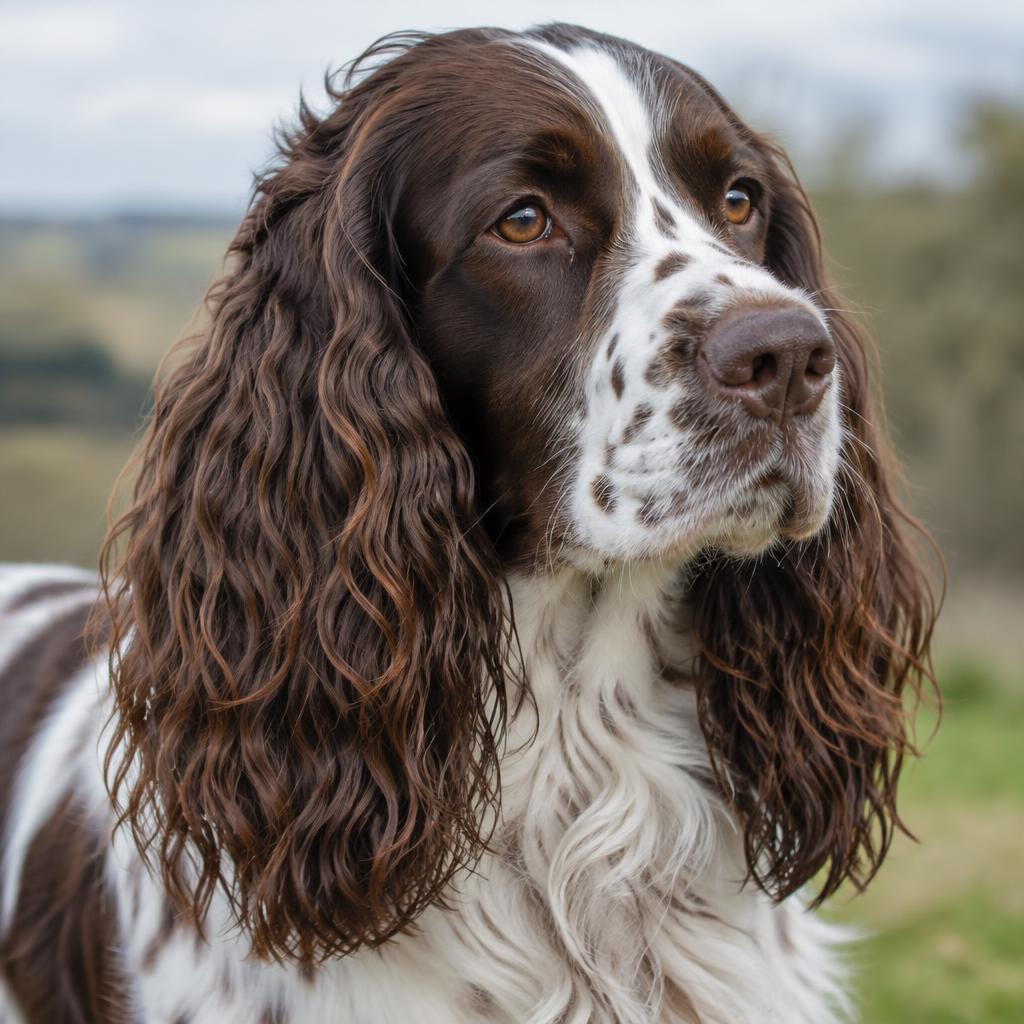
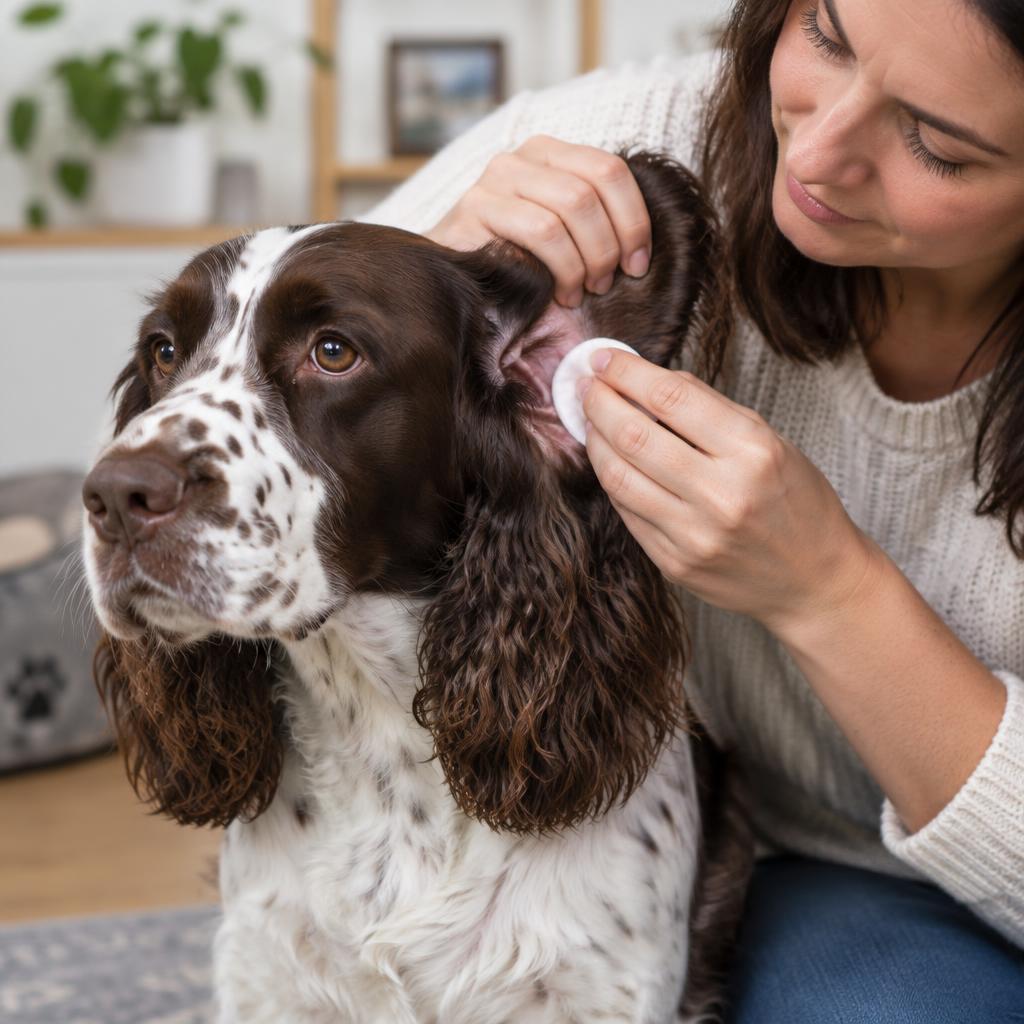
- Long, feathered ears make this breed prone to ear infections, so regular cleaning is part of routine care.
- Without enough physical and mental outlets, Springers can become restless, destructive or obsessive in their behaviour.
- Weight
- 18 to 25 kg
- Height
- 46 to 56 cm
- Lifespan
- 12 to 14 yrs
- Size
- Medium
- Group
- Gundog
- Coat
- Medium length, flat or wavy, weather resistant double coat with feathering
- Grown male
- 20 to 25 kg
- Grown female
- 18 to 23 kg
- Years to full size
- about 1.5
- One-off setup
- €350 to 700
Get one if…
- Active owners able to provide 90 minutes or more of varied exercise daily
- Households keen on structured activities such as scent work, agility or gundog training
- Families with children who enjoy outdoor play and can supervise a boisterous young dog
- Owners willing to commit to several grooming sessions a week
- People drawn to a highly affectionate, biddable dog that wants a close working partnership
Think again if…
- Owners wanting a low exercise, sedentary companion breed
- Households unable to commit regular time to training recall around scent distractions
- Anyone unwilling to groom a feathered coat several times weekly
- Owners away from home for long stretches without a midday exercise plan
- People seeking a breed with minimal risk of ear infections given its ear shape
Trait profile
The English Springer Spaniel combines high energy and a powerful scenting drive with genuine affection and willingness to work with people, so structured activity matters as much as obedience training.
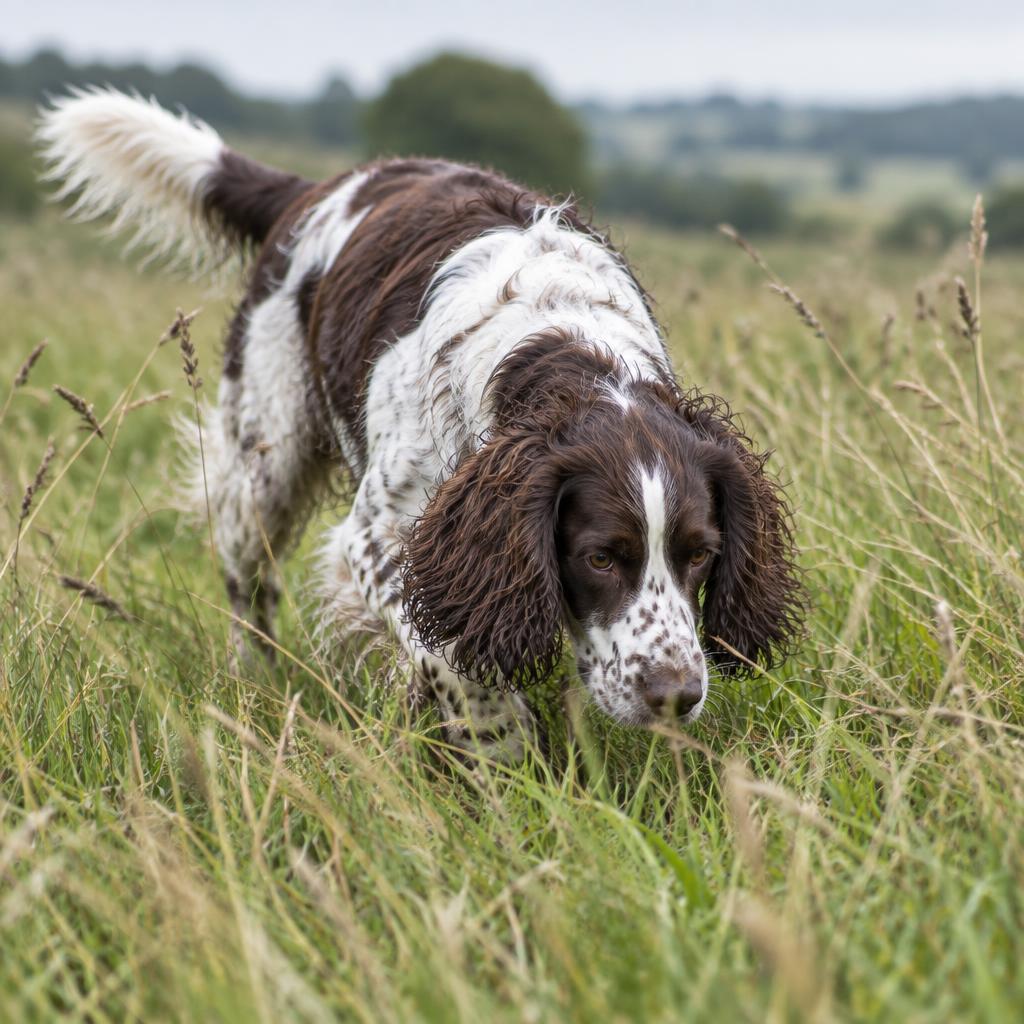
Space & setup. A house with a secure garden and easy access to open space for off lead exercise suits this breed far better than a flat, given its high exercise and scent driven needs.
Allergies. The double coat sheds moderately year round with a heavier seasonal blow, and feathering on the ears and legs needs regular brushing to prevent matting and trapped debris.
Living with a English Springer Spaniel
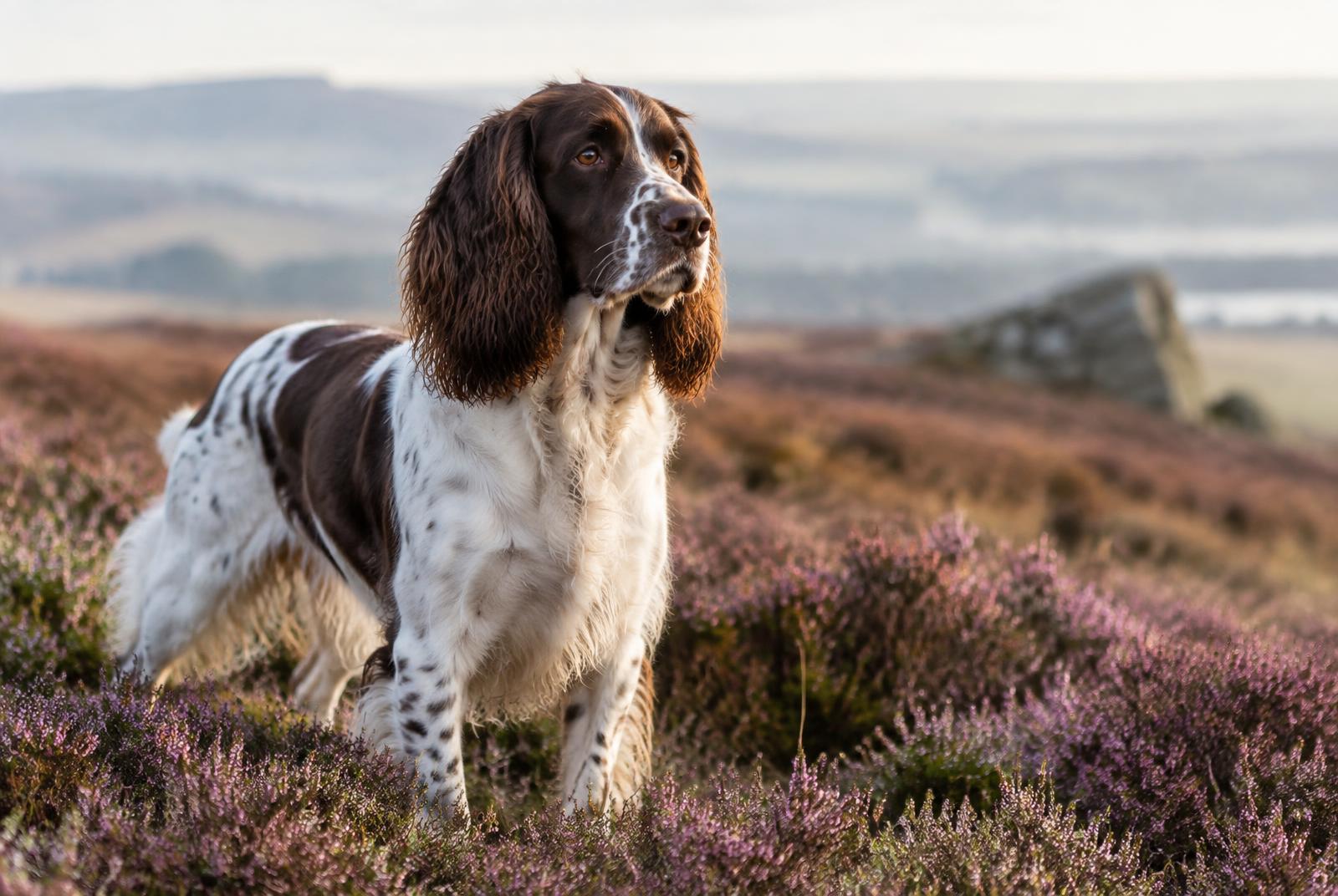
The English Springer Spaniel is a medium sized gundog developed in England to flush, or spring, game for hunters. Working and show lines have diverged in temperament and build, but both share the breed's hallmark enthusiasm, affection and need for purposeful activity.
The English Springer Spaniel takes its name from its original job: springing, or flushing, game birds from cover so that a waiting hunter could take the shot. It is one of the oldest identifiable spaniel types in Britain, with roots stretching back centuries before the breed was formally separated from the Cocker Spaniel in the late nineteenth century, the split made largely on size. From the start, this was a dog bred for stamina, scenting ability and an eagerness to work closely with a human handler, and those traits have never really left the breed, whatever shape an individual dog's daily life now takes.
It is worth understanding early that English Springer Spaniels come in two broad types that can differ meaningfully in temperament and build. Working lines, bred primarily for field trials and shooting, tend to be leaner, higher drive and relentlessly nose led, sometimes to the point of seeming oblivious to anything except a scent trail. Show lines, bred to the breed standard for conformation, are typically a little stockier and calmer, though still a genuinely active gundog by most standards. Prospective owners should ask breeders directly which line a puppy comes from, because a working bred Springer dropped into a sedentary household is a recipe for frustration on both sides.
The defining temperament trait across both lines is an almost compulsive eagerness to be busy and useful. A Springer that is given a job, whether that is formal gundog work, scent games, agility or simply a structured daily routine, tends to be a settled, deeply affectionate companion that forms close bonds with its family. Left without outlets, the same dog can become restless, destructive or prone to obsessive behaviours such as compulsive sniffing or circling. This is not a breed suited to owners hoping for a dog that naps contentedly all day; the nose, in particular, tends to lead the Springer first and the owner's instructions second, so recall around interesting scents needs dedicated, patient training from puppyhood.
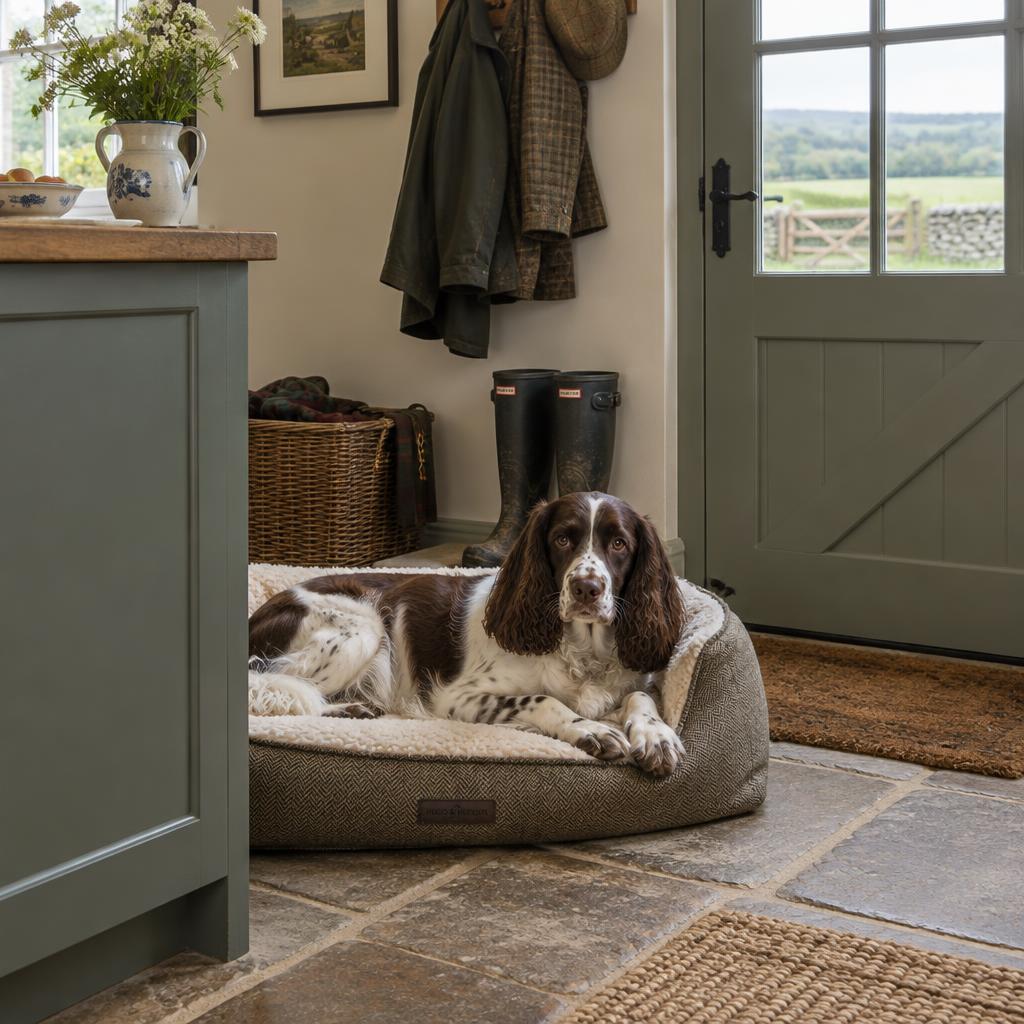
The honest limitation here is exactly that nose driven independence combined with real exercise volume. An under exercised or under stimulated Springer Spaniel is a genuinely difficult dog to live with, prone to counter surfing, chewing and a kind of wound up energy that no amount of affection alone resolves. Households wanting a low key companion breed, or those unable to commit roughly ninety minutes to two hours of varied exercise most days, including off lead opportunities to use that nose constructively, should look elsewhere. This is equally true for owners working long hours without a solid plan for midday exercise or enrichment.
Health wise, the breed carries a handful of conditions worth knowing in plain terms. Hip dysplasia, a malformation of the hip joint that can lead to arthritis, is screened for through hip scoring schemes such as the BVA/Kennel Club programme, and buyers should ask to see both parents' scores. Inherited eye conditions, including progressive retinal atrophy and glaucoma, are tested for through recognised eye screening schemes, and reputable breeders test annually. Ear infections are a common practical issue given the breed's long, low set, heavily feathered ears, which trap moisture and debris, so regular cleaning and checking is part of routine care rather than an occasional chore. Some lines, particularly certain working strains, have also shown a condition sometimes called springer rage, a controversial and poorly understood aggressive behaviour pattern; it is rare, but worth asking a breeder about openly rather than dismissing.
Training tends to go well given the breed's intelligence and eagerness to work with people, though consistency matters more than harshness, and food or toy motivated reward based methods suit the Springer's willing temperament far better than confrontation. Grooming is a genuine, ongoing commitment: the feathered coat on the ears, legs, chest and tail mats readily and needs brushing several times a week, with regular trims to keep feathering manageable and ears clear of excess hair, alongside the already mentioned ear maintenance.
Taken together, the English Springer Spaniel suits active owners, families who enjoy outdoor activity together, and anyone drawn to a genuinely affectionate, biddable dog willing to learn whatever is asked of it, provided enough is asked. It does not suit owners wanting a low exercise companion, households unable to commit serious time to training and grooming, or anyone hoping affection alone will substitute for proper mental and physical outlets. Chosen with open eyes and matched to the right line, this is one of the most rewarding, loyal gundog breeds a committed owner could ask for.
A warm, driven gundog that thrives with an active household able to meet its exercise and mental needs in full.
Exercise, day to day
- 1Puppies (8 to 20 weeks): short, gentle sessions of 5 minutes per month of age, avoiding repetitive jumping or hard surfaces.
- 2Adults: 90 minutes to two hours a day, combining brisk walks with off lead scent based activity where safe.
- 3Scent work: structured games such as hidden treat searches channel the breed's powerful nose constructively.
- 4Recall training: practise consistently around scent distractions from puppyhood, since this breed's nose can override instructions.
- 5Mental stimulation: puzzle feeders, gundog style retrieving games and training sessions prevent boredom related behaviours.
Grooming, realistically
- 1Brush the feathered areas on ears, legs, chest and tail at least three times a week to prevent matting.
- 2Check and clean ears weekly, since the long, low set ears trap moisture and debris readily.
- 3Bathe every 6 to 8 weeks, or after muddy outdoor work, using a gentle dog shampoo.
- 4Trim feathering and nails every few weeks to keep the coat manageable and feet comfortable.
- 5Brush teeth several times a week and arrange regular dental checks at the vet.
What you actually need
- Slicker brush and metal comb
- Ear cleaning solution and cotton pads
- Dog nail clippers
- Enzymatic dog toothpaste and brush
- Thinning shears for feathering upkeep
- Gentle dog shampoo
Puppy to adult
| Age | Male | Female | What is happening |
|---|---|---|---|
| 8 weeks | 3.5 to 5 kg | 3 to 4.5 kg | Compact, playful puppy build with early signs of the breed's characteristic enthusiasm. |
| 3 months | 7 to 9.5 kg | 6 to 8.5 kg | Rapid growth phase; structured short walks are more useful now than free running. |
| 6 months | 12 to 16 kg | 10.5 to 14 kg | Adolescent energy surges; recall training around scent distractions should be well underway. |
| 9 months | 15 to 19.5 kg | 13 to 17 kg | Approaching adult height, with the frame still filling out in depth and muscle. |
| 12 months | 17.5 to 22 kg | 15 to 19 kg | Close to adult weight, though many Springers continue filling out gradually. |
| 18 months | 19 to 25 kg | 16 to 21 kg | Full adult size and condition typically reached. |
Ranges are typical, not targets. Judge condition by ribs and waist, and check with the ideal weight checker.
What to ask a breeder
- Is this puppy from working or show lines, and what does that mean for exercise needs?
- Can I see hip scores (BVA/Kennel Club scheme) for both parents?
- What annual eye screening results are available for the breeding stock?
- Has this line shown any history of the aggressive behaviour pattern sometimes called springer rage?
- How do the puppies respond to early scent and recall exercises?
- What grooming and ear care routine do you recommend from puppyhood?
Health tests to ask for
Ask to see results for both parents before you put down a deposit.
- Hip score (BVA/Kennel Club scheme)
- Annual eye screening for progressive retinal atrophy and glaucoma
- Elbow score where available
- Temperament history review, including any reports of springer rage in the line
- General ear health history of the breeding stock
Health watch-list
What to ask a breeder about, and what to watch for over a lifetime. This is orientation, not veterinary advice, anything you notice belongs in front of a vet.
Hip dysplasia
CommonA malformation of the hip joint that can lead to arthritis; hip scoring of parents through the BVA/Kennel Club scheme helps buyers choose lower risk puppies.
Progressive retinal atrophy
NotableAn inherited eye condition causing gradual vision loss; annual eye screening of breeding stock identifies affected and carrier dogs.
Ear infections
CommonThe long, low set, heavily feathered ears trap moisture and debris; regular cleaning and prompt veterinary attention to odour or scratching helps prevent flare ups.
Glaucoma
UncommonA painful build up of pressure within the eye that can threaten vision; routine eye screening and prompt veterinary care for redness or discomfort are important.
Elbow dysplasia
UncommonAbnormal development of the elbow joint that can cause lameness; elbow scoring of breeding stock reduces the likelihood of affected puppies.
Springer rage syndrome
UncommonA controversial, poorly understood aggressive behaviour pattern reported in some lines; asking breeders directly about temperament history is a sensible precaution.
What it costs to keep one
Realistic running cost
€108 / month
About €1,296 a year, or roughly €16,848 across a 13-year life, before purchase price, neutering and one-off vet events.
Before the puppy arrives. Budget roughly €350 to 700 for a crate, bed, lead and harness, bowls, puppy classes, first vaccinations and grooming kit sized for this breed. Figures throughout are indicative and vary a good deal between countries.
Interactive · built for this breed
Is a English Springer Spaniel right for your home?
Seven honest questions about your space, time and household, checked against this breed's exercise need, coat, sociability and tolerance for time alone.
Fit with your routine
90%
A strong fit
Your routine suits a English Springer Spaniel well. Meet adult dogs of the line before you commit.
What to sort out first
- Needs more daily exercise than you have pencilled in.
- Coat needs more brushing or trimming than you have allowed.
Compare more breeds in the matchmaker, or plan meals with the portion calculator.
The verdict, by household
First-time owner
Workable with real commitment
The breed's eagerness to learn helps first-time owners, but the exercise volume and recall training demands are substantial.
Family with children
A strong match
Playful and affectionate with children, though its boisterous energy as a youngster benefits from supervision and structure.
Active single or couple
An excellent match
This is close to an ideal breed for owners who want a hiking, running or gundog training partner.
Owner in a flat with close neighbours
Not recommended
High exercise needs, a tendency to vocalise when under stimulated and limited apartment suitability make this a difficult fit.
When to call your vet
- Head shaking, scratching at the ears or an odour, which may indicate an ear infection
- Reluctance to rise, stiffness or an altered gait, which could point to hip dysplasia
- Cloudiness in the eyes, bumping into objects or reduced vision, worth checking against inherited eye conditions
- Obsessive circling, sniffing or sudden unexplained aggression, which should prompt veterinary and behavioural assessment
- Excessive licking or chewing of paws, which may indicate skin irritation or allergy
Nothing here is a diagnosis. A swollen, hard belly with retching, collapse, breathing difficulty and sudden hind-leg weakness are emergencies: go straight away.
English Springer Spaniel vs the closest alternatives
| Breed | Weight | Energy | Grooming | € / month |
|---|---|---|---|---|
| English Springer Spaniel | 18 to 25 kg | 9/10 | 6/10 | €108 |
| English Cocker Spaniel | 12 to 16 kg | 8/10 | 6/10 | €192 |
| Irish Setter | 24 to 32 kg | 9/10 | 6/10 | €87 |
| Border Terrier | 5.1 to 7.1 kg | 7/10 | 5/10 | €142 |
English Springer Spaniel questions, answered
What is the temperament of an English Springer Spaniel?
English Springer Spaniels are affectionate, eager and energetic gundogs that bond closely with their family and want a genuine job to do. Working lines tend to be higher drive and more nose led than show lines, so asking a breeder about lineage helps set realistic expectations for daily life.
How big do English Springer Spaniels get?
Males typically stand 48 to 56 centimetres at the shoulder and weigh 20 to 25 kilograms, while females are slightly smaller at 46 to 51 centimetres and 18 to 23 kilograms. They reach full adult size at around eighteen months, classing them firmly as a medium sized gundog breed.
Do English Springer Spaniels shed a lot?
Yes, the double coat sheds moderately throughout the year with a heavier seasonal blow, and the feathered hair on the ears, legs and tail mats easily if not brushed. Three brushing sessions a week, plus occasional trimming of the feathering, keeps shedding and tangles under reasonable control.
How much exercise does an English Springer Spaniel need?
This breed needs around ninety minutes to two hours of varied exercise daily, ideally including off lead time to use its powerful scenting ability constructively. Scent games, gundog style retrieving and consistent recall training all help channel its drive in a productive direction rather than leaving it frustrated.
Are English Springer Spaniels good with children?
Generally yes, this breed is playful, affectionate and patient with children who treat it respectfully, making it a popular family gundog. Its high energy as a youngster means play sessions benefit from supervision and structure so neither dog nor child becomes overwhelmed.
What health problems are common in English Springer Spaniels?
Hip dysplasia and ear infections are the most commonly reported issues, alongside inherited eye conditions such as progressive retinal atrophy and glaucoma, which reputable breeders screen for through hip scoring and annual eye testing. A rare behavioural condition sometimes called springer rage is also worth asking breeders about.
How much does it cost to own an English Springer Spaniel?
Monthly costs typically include around 40 euros for food, 30 euros for insurance and 25 euros for grooming given the feathered coat, alongside an initial setup cost of roughly 350 to 700 euros for equipment. Veterinary costs can rise if hip, eye or ear issues need ongoing management.
Sources
- English Springer Spaniel breed standard, The Kennel Club
- English Springer Spaniel breed information, American Kennel Club
- Hip dysplasia and eye screening schemes, British Veterinary Association
- Breed specific health testing requirements, The Kennel Club
- Ear infections in dogs, PDSA
Put it into practice
Reading that goes with this
Behaviour
Why Do Dogs Have Zoomies? Frenetic Energy Explained

Health
Why Is My Dog Panting So Much? Causes and Warning Signs

Puppies
Crate Training a Puppy: A 14-Day Plan

Health
Dog Ear Infections: Signs, Causes and Treatment

Behaviour
Why Do Dogs Roll in Poop? The Instinct Explained

Health
Why Do Dogs Lick Their Paws? Causes and Fixes

Nutrition
Can Dogs Eat Oatmeal? Cooked, Raw and Flavoured