
Gundog group
United Kingdom
English Cocker Spaniel
The English Cocker Spaniel is cheerful, biddable and full of energy. It needs regular exercise, dedicated coat care and ear vigilance.
Reviewed against Kennel Club and breed club health guidance
A merry, affectionate gundog with a soft, silky coat and a nose that never switches off.
The short version
- English Cocker Spaniels are affectionate but prone to separation anxiety, so alone time should be built up gradually.
- The breed needs around an hour of varied daily exercise including scent based activities.
- Annual eye testing and hip scoring in the parents help reduce the risk of inherited disease.
- The long, floppy ears require regular checking and cleaning to prevent infection.
- Working and show lines differ noticeably in energy, so it helps to ask breeders which type a puppy is from.
- Weight
- 12 to 16 kg
- Height
- 38 to 43 cm
- Lifespan
- 12 to 14 yrs
- Size
- Medium
- Group
- Gundog
- Coat
- Silky, flat or slightly wavy coat with feathering
- Grown male
- 13 to 16 kg
- Grown female
- 12 to 15 kg
- Years to full size
- about 1
- One-off setup
- €500 to 1000

Get one if…
- Active families who enjoy daily walks
- Owners keen on scent work or gundog training
- Households able to provide company for most of the day
- People willing to commit to regular grooming and ear checks
- First time owners ready to train consistently
Think again if…
- Owners who need to leave a dog alone for long hours
- Households unwilling to manage a moderate grooming routine
- Owners wanting a naturally calm, low energy dog
- Homes without any daily exercise plan
- Very house proud owners who dislike shedding
Trait profile
High energy and a strong nose mean this breed needs a genuine outlet for scent work, not just walks, alongside plenty of affectionate company.
Space & setup. A garden is helpful but not essential, since the breed's compact size makes town living workable if daily exercise needs are met.
Allergies. The silky coat sheds moderately year round, so it is not fully suited to households seeking a low allergen dog.
Living with a English Cocker Spaniel
The English Cocker Spaniel is a compact, cheerful gundog bred to flush and retrieve game in thick cover. Affectionate and biddable, it is a popular companion as well as a working dog.
The English Cocker Spaniel descends from land spaniels used across Britain for centuries to flush game from dense undergrowth, with the modern breed separated from the Field Spaniel and formally recognised by the Kennel Club in 1893. The name Cocker comes from its original job of flushing woodcock. Bred to work close to the gun in thick cover, the breed developed a compact, muscular body, a constantly wagging tail, an exceptional nose and boundless stamina relative to its size, qualities that still define both working and companion lines today.
At home, the English Cocker Spaniel is famously merry and affectionate, often described as having a permanently wagging tail and an eagerness to be involved in whatever the family is doing. It bonds closely with its people and is generally good with children and sociable with other dogs. The breed does have a well known tendency towards separation anxiety and can become vocal or destructive if left alone too often. There is also a documented split between working and show lines, with working bred Cockers typically higher energy and more intensely driven, so prospective owners should ask breeders which type a puppy comes from.
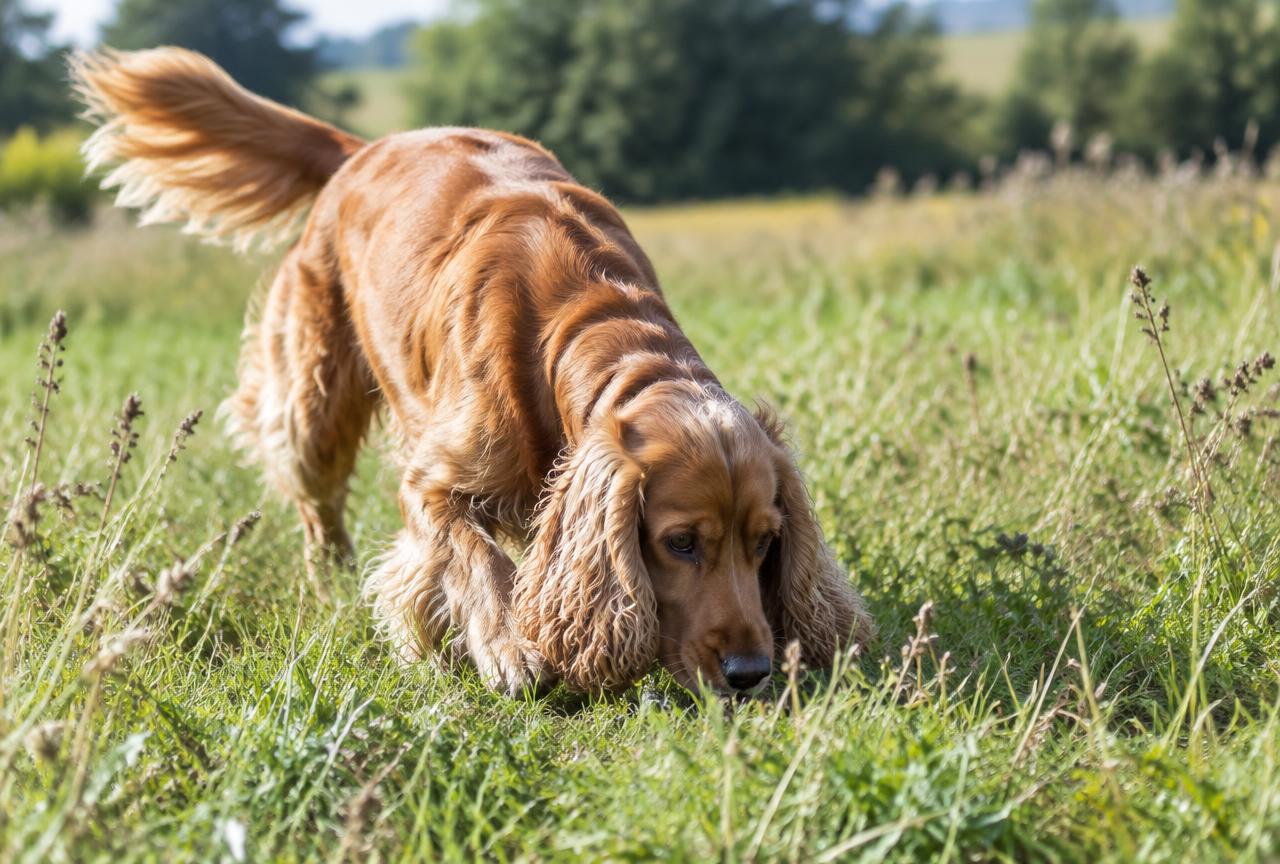
Exercise needs are meaningful for a dog of this size: a full grown English Cocker Spaniel benefits from around an hour of varied activity a day, including free running, scent work and retrieving games, since the breed's nose driven determination means it can wear itself out chasing a scent trail if not given a job to do. Training is generally straightforward thanks to the breed's eagerness to please, though some individuals, particularly working lines, can be strong willed and benefit from early, consistent handling. Cockers are prone to becoming overweight if exercise is reduced without a corresponding cut in food, since their appetite rarely fades with age.

Health considerations are notable for this breed. English Cocker Spaniels have a relatively high incidence of progressive retinal atrophy and other inherited eye conditions, so annual eye testing of breeding stock is important, alongside hip scoring and screening for familial nephropathy in some lines. The long, floppy ears that suit the breed's working style also trap moisture and debris, making ear infections a recurring issue that needs regular checking and cleaning. A less common but serious concern, rage syndrome, a form of sudden aggression linked in some studies to certain colour lines, has been documented, although it remains rare and is a matter of ongoing research rather than a defining trait of the breed.
The English Cocker Spaniel suits active families, owners who enjoy scent work or gundog activities, and households able to give consistent company and daily exercise. It is a poor match for owners who need to leave a dog alone for long stretches, or for those unwilling to commit to the grooming routine its silky coat requires. Given plentiful exercise, ear care, regular coat maintenance and health screened parents, the English Cocker Spaniel is a warm, biddable and endlessly enthusiastic companion that thrives on being part of everyday family life.
A merry, nose driven companion that needs company, exercise and dedicated coat and ear care.
Exercise, day to day
- 1Puppies: short, gentle play sessions several times a day, avoiding excessive jumping while joints develop.
- 2Adults: around 60 minutes daily split between free running, retrieving games and scent work.
- 3Use snuffle mats or scatter feeding to satisfy the breed's strong nose driven instincts.
- 4Include basic obedience or gundog style training to channel energy productively.
- 5Monitor working line Cockers for higher exercise needs than typical show bred individuals.
Grooming, realistically
- 1Brush two to three times a week to prevent matting in the feathering on ears, legs and belly.
- 2Trim the coat every 6 to 8 weeks, particularly around the feet, ears and sanitary areas.
- 3Check and clean ears weekly, since the long, floppy ears trap moisture and debris.
- 4Trim nails monthly and brush teeth several times a week.
- 5Bathe every four to six weeks or when visibly dirty after outdoor activity.

What you actually need
- Slicker brush
- Metal comb for feathering
- Grooming scissors
- Ear cleaning solution
- Dog nail clippers
- Gentle dog shampoo
Puppy to adult
| Age | Male | Female | What is happening |
|---|---|---|---|
| 8 weeks | 3 to 4 kg | 2.5 to 3.5 kg | Small, soft puppy build; keep exercise brief. |
| 3 months | 5 to 7 kg | 4.5 to 6 kg | Steady growth; avoid excessive jumping. |
| 6 months | 8 to 11 kg | 7 to 10 kg | Adolescent energy increases; consistent training helps. |
| 9 months | 10 to 13 kg | 9 to 12 kg | Approaching adult size, still filling out. |
| 12 months | 12 to 15 kg | 11 to 14 kg | Near full size for most individuals. |
| 15 months (adult) | 13 to 16 kg | 12 to 15 kg | Mature weight reached; coat fully developed. |
Ranges are typical, not targets. Judge condition by ribs and waist, and check with the ideal weight checker.
What to ask a breeder
- Can I see hip scores and recent eye test results for both parents?
- Is this litter from working or show lines, and how does that affect energy levels?
- Has the litter been screened for familial nephropathy or other known line specific issues?
- How do the puppies react to handling of their ears, paws and mouth?
- What is the temperament of the parents, particularly around strangers and other dogs?
- Can I see where the puppies are raised and meet the mother?
Health tests to ask for
Ask to see results for both parents before you put down a deposit.
- Hip score (BVA/Kennel Club scheme)
- Annual eye examination for progressive retinal atrophy and other inherited conditions
- DNA test for familial nephropathy where relevant to the line
- DNA test for progressive retinal atrophy (prcd-PRA)
- Patella check for luxating patella
Health watch-list
What to ask a breeder about, and what to watch for over a lifetime. This is orientation, not veterinary advice, anything you notice belongs in front of a vet.
Progressive retinal atrophy
NotableAn inherited, gradual loss of vision with no cure. Annual eye testing and DNA testing of breeding stock reduce the risk considerably.
Ear infections
CommonLong, floppy ears trap moisture and debris. Weekly checking and cleaning helps prevent recurring infections.
Familial nephropathy
UncommonAn inherited kidney disease seen in some lines. Screening breeding stock and monitoring kidney values helps manage the risk.
Hip dysplasia
UncommonMalformed hip joints can cause discomfort and arthritis. Hip scoring of parents through the BVA/Kennel Club scheme reduces risk.
Luxating patella
UncommonA kneecap that slips out of place, ranging from mild to requiring surgery. Regular veterinary checks help catch it early.
Obesity
CommonA steady appetite combined with reduced exercise in later life can lead to weight gain if portions are not adjusted.
What it costs to keep one
Realistic running cost
€192 / month
About €2,304 a year, or roughly €29,952 across a 13-year life, before purchase price, neutering and one-off vet events.
Before the puppy arrives. Budget roughly €500 to 1000 for a crate, bed, lead and harness, bowls, puppy classes, first vaccinations and grooming kit sized for this breed. Figures throughout are indicative and vary a good deal between countries.
Interactive · built for this breed
Is a English Cocker Spaniel right for your home?
Seven honest questions about your space, time and household, checked against this breed's exercise need, coat, sociability and tolerance for time alone.
Fit with your routine
93%
A strong fit
Your routine suits a English Cocker Spaniel well. Meet adult dogs of the line before you commit.
What to sort out first
- Needs more daily exercise than you have pencilled in.
- Coat needs more brushing or trimming than you have allowed.
Compare more breeds in the matchmaker, or plan meals with the portion calculator.
The verdict, by household
First-time owner
A strong choice
Biddable and affectionate, though the coat and ear care routine takes commitment.
Family with young children
A good match
Generally gentle and playful, though its energy means supervision helps with very young children.
Small flat, no garden
Workable with effort
Manageable given committed daily exercise and scent work, thanks to its compact size.
Senior or retired owner
A good match if active
Affectionate and biddable, but its energy and need for company suit an owner able to provide daily engagement.
When to call your vet
- Persistent head shaking or ear odour, common signs of ear infection
- Cloudy eyes or reluctance to move in dim light, possible signs of progressive retinal atrophy
- Excessive thirst or urination, possible signs of kidney issues linked to familial nephropathy
- Limping or reluctance to jump, possible signs of patella or hip problems
- Sudden, unprovoked aggression, worth discussing promptly with a vet or behaviourist
- Persistent scratching or coat changes, possible skin or allergy issues
Nothing here is a diagnosis. A swollen, hard belly with retching, collapse, breathing difficulty and sudden hind-leg weakness are emergencies: go straight away.
English Cocker Spaniel vs the closest alternatives
| Breed | Weight | Energy | Grooming | € / month |
|---|---|---|---|---|
| English Cocker Spaniel | 12 to 16 kg | 8/10 | 6/10 | €192 |
| Irish Setter | 24 to 32 kg | 9/10 | 6/10 | €87 |
| Labradoodle | 15 to 30 kg | 8/10 | 7/10 | €209 |
| Flat-Coated Retriever | 25 to 36 kg | 8/10 | 5/10 | €103 |
English Cocker Spaniel questions, answered
Are English Cocker Spaniels good family dogs?
Yes, English Cocker Spaniels are generally affectionate, playful and good with children, making them popular family companions. Their energy and enthusiasm mean supervision is sensible with very young children, as with any lively breed.
How much exercise does an English Cocker Spaniel need?
An adult English Cocker Spaniel typically needs around an hour of varied daily exercise, ideally including scent work and retrieving games alongside walks. Working line individuals often need more than show bred ones, so it helps to ask a breeder about the puppy's background.
Do English Cocker Spaniels need a lot of grooming?
Yes, their silky, feathered coat needs brushing two to three times a week and professional trimming roughly every six to eight weeks to prevent matting. Ears also need weekly checking and cleaning because the breed is prone to ear infections.
What is the difference between working and show line Cocker Spaniels?
Working line English Cocker Spaniels are typically bred for high drive, stamina and intense focus in the field, while show lines tend to be somewhat calmer and bred more for conformation to the breed standard. Both share the breed's core temperament, but working lines generally need more vigorous daily exercise.
Are English Cocker Spaniels prone to health problems?
The breed has a notable rate of progressive retinal atrophy and ear infections, and some lines carry a risk of familial nephropathy, so health testing of parents is important. Choosing a puppy from a breeder who screens eyes, hips and relevant DNA conditions considerably reduces these risks.
Can English Cocker Spaniels be left alone?
English Cocker Spaniels can be prone to separation anxiety and generally do not do well being left alone for long stretches, especially without gradual training. Building up alone time slowly from puppyhood and providing enrichment can help, but this is not a breed suited to households absent most of the day.
Sources
- English Cocker Spaniel breed standard, The Kennel Club
- Cocker Spaniel breed information, American Kennel Club
- English Cocker Spaniel health survey, The English Cocker Spaniel Club
- Hip Dysplasia Scheme, British Veterinary Association
- Progressive retinal atrophy in dogs, OFA
Put it into practice
Reading that goes with this

Health
Dog Ear Infections: Signs, Causes and Treatment

Behaviour
Why Do Dogs Tilt Their Heads? Curiosity, Ears and One Warning Sign

Nutrition
Can Dogs Eat Broccoli? Florets, Stems and Portions

Health
Can Dogs Eat Grapes? Why Even One Is an Emergency

Care
How Often Should You Bathe a Dog? By Coat and Lifestyle
Health
My Dog Swallowed a Sock: What To Do Now

Nutrition
Can Dogs Eat Peaches? Stone, Skin and Serving Size