
Can Dogs Eat Peaches? Stone, Skin and Serving Size
Fresh peach flesh is a safe, sweet treat for most dogs, but the stone is a genuine hazard and tinned syrup is best left on the shelf. Here is how to share a peach properly.
The SniffScroll desk
Published 11 October 2026

Dr Emma Hartley MRCVS
The short version
- Fresh peach flesh is a safe, low-calorie treat in small servings.
- The stone is the real danger: cyanide compounds inside, plus a serious choking and blockage risk.
- Tinned peaches in syrup and dried peaches are too sugary; check any label for xylitol.
- A medium dog can have two to three slices, a few times a week, inside the 10% treat allowance.
- A swallowed stone always earns a phone call to the vet, even if the dog seems fine.
Can dogs eat peaches?
Yes, dogs can eat fresh peach flesh in small amounts, and most dogs love it. The flesh is soft, sweet, low in calories and easy to digest for the majority of healthy dogs. The two things that turn a peach from treat to trouble are the stone, which is a genuine hazard, and the sugar, which sets the portion size.
So the short answer is a warm yes to a few slices of fresh peach on a summer afternoon, and a firm no to letting your dog anywhere near the stone, the tinned syrup or the whole fruit bowl.
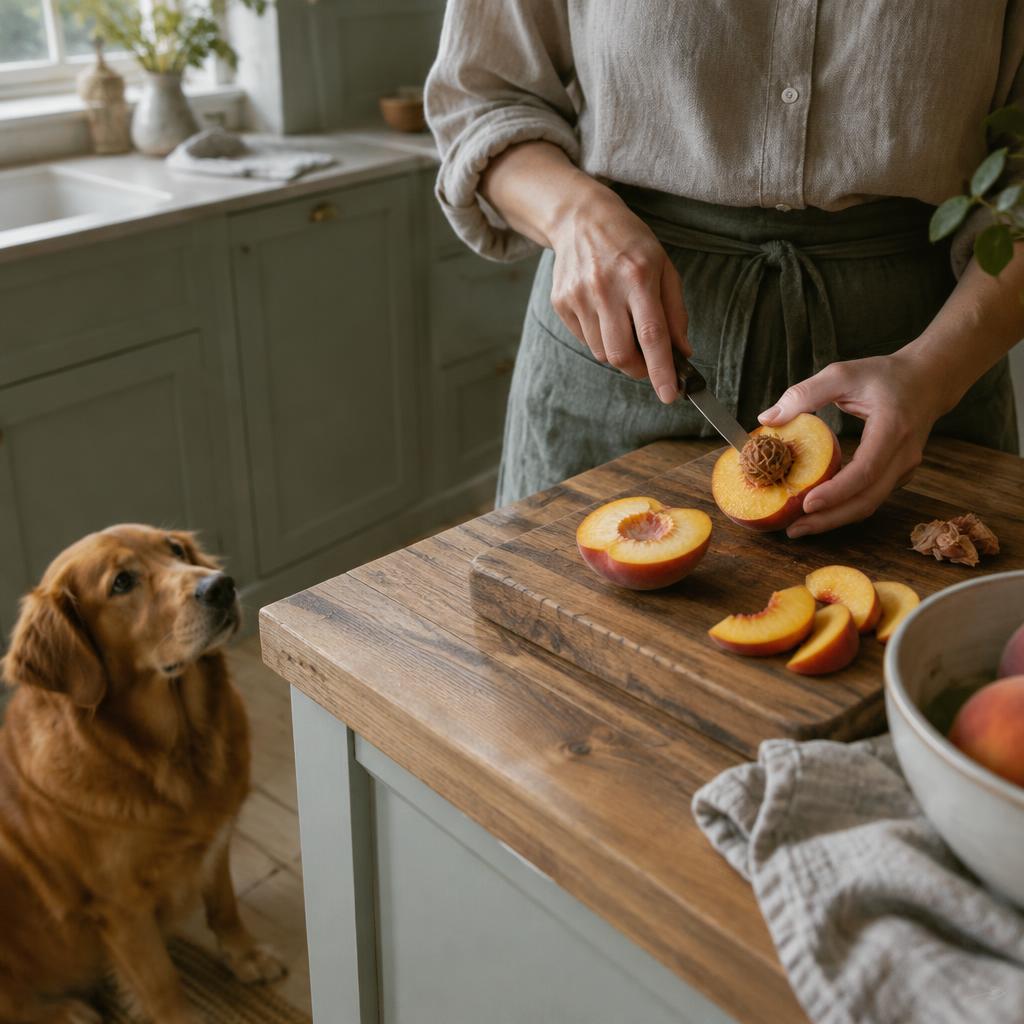
Why the stone is the dangerous part
A peach stone is a triple problem. First, the kernel inside contains amygdalin, which releases cyanide when chewed and digested. Second, the stone itself is large, hard and ridged: exactly the shape that lodges in a dog’s intestine and causes a blockage, which is a surgical emergency. Third, its size makes it a choking risk on the way down, particularly for medium and small dogs.
A dog that has swallowed a peach stone needs a phone call to the vet straight away, even if they seem perfectly well. Blockages can take a day or more to show themselves, and earlier treatment is far simpler than later surgery. Do not try to make your dog sick at home: a ridged stone coming back up can get stuck in the oesophagus, which is worse.
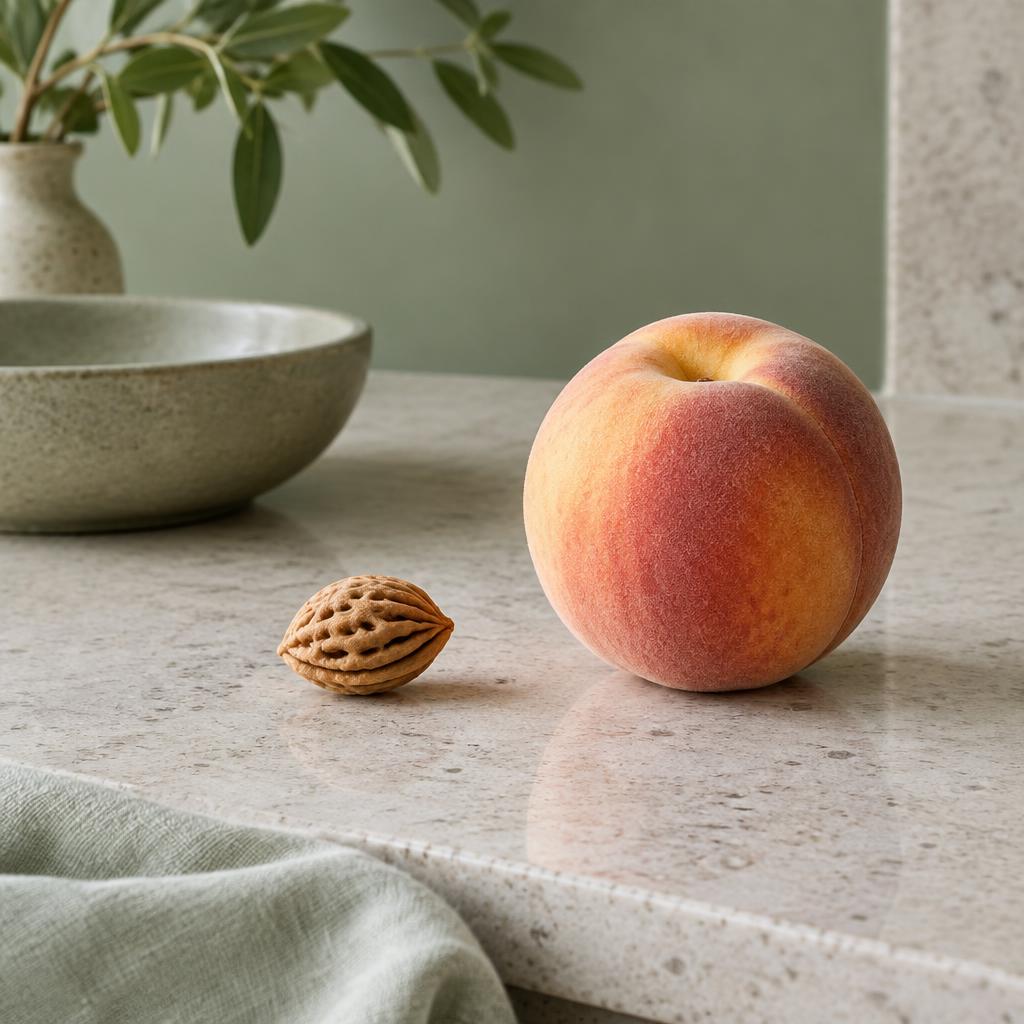
Skin on or off?
Peach skin is not toxic, and most dogs digest it without trouble. It is, however, the fibrous part of the fruit, and dogs with sensitive stomachs can find it a little hard work. If your dog has a delicate digestion, peel the peach before slicing. For everyone else, washed skin-on slices are fine.
The fuzz on the skin puts some dogs off entirely, which solves the question for you. Ripe, fragrant fruit is also easier on the stomach than hard, under-ripe slices, so let the peach ripen properly before sharing.
Tinned, dried and cooked peaches
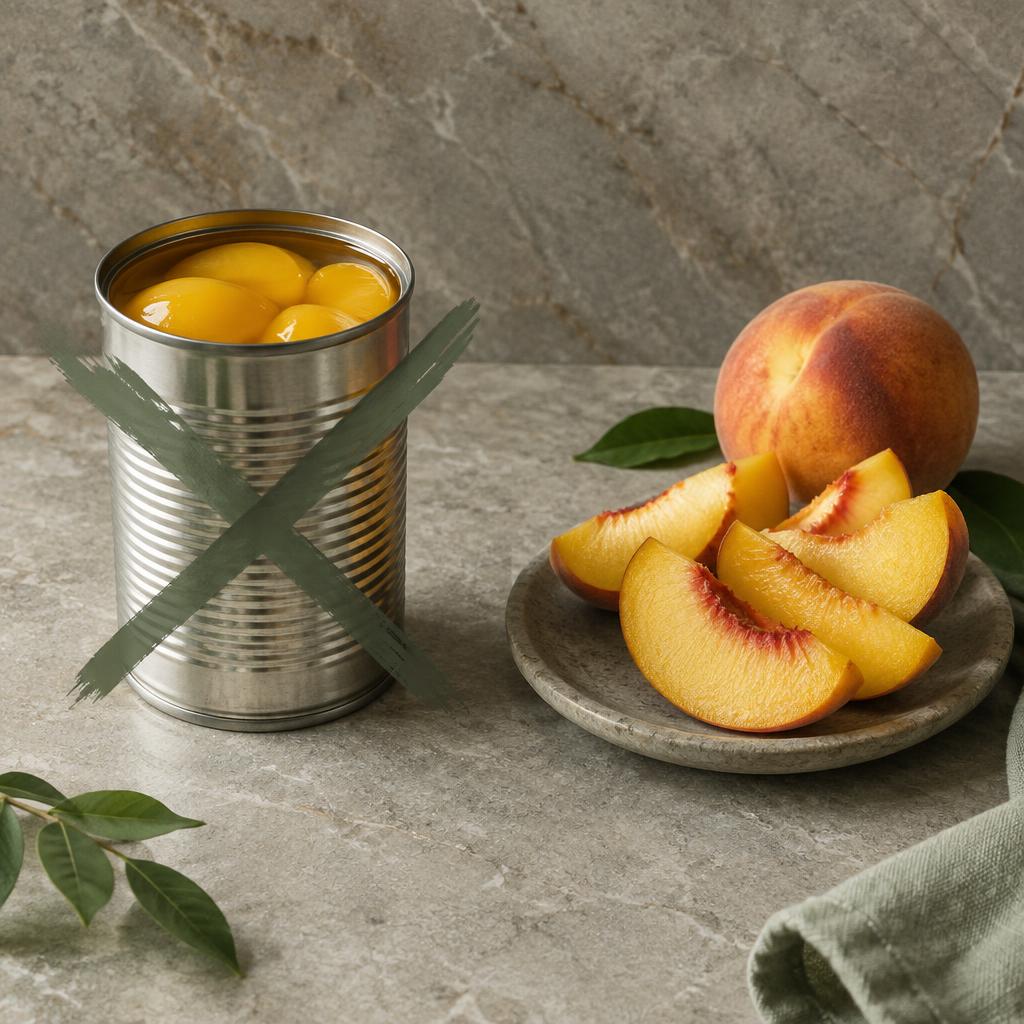
Tinned peaches in syrup are best avoided. The syrup carries a heavy sugar load that can upset the stomach and, over time, contribute to weight gain and dental problems. Always check the label on any tinned fruit: anything listing xylitol (sometimes called birch sugar) is toxic to dogs and means an immediate vet call if eaten. Peaches tinned in natural juice, drained and rinsed, are acceptable as an occasional treat, but fresh is better.
Dried peaches concentrate the sugar into a small, sticky package and often contain added sweeteners or preservatives like sulphur dioxide, which some dogs react to. Skip them. Cooked peach in pies and crumbles arrives wrapped in butter, sugar and pastry, so that is a no as well.
How many peach slices can a dog eat?
Treats, fruit included, should stay within 10% of your dog’s daily calories. A medium peach is roughly 60 calories, so portions are modest:
| Dog size | Sensible serving | How often |
|---|---|---|
| --- | --- | --- |
| Toy (under 5 kg) | 1 small slice | A few times a week |
| Small (5 to 10 kg) | 1 to 2 small slices | A few times a week |
| Medium (10 to 25 kg) | 2 to 3 slices | A few times a week |
| Large (25 kg plus) | 3 to 4 slices | A few times a week |
| Giant breeds | 4 to 5 slices | A few times a week |
Diabetic and overweight dogs should have peaches rarely, if at all, and only with your vet’s agreement.
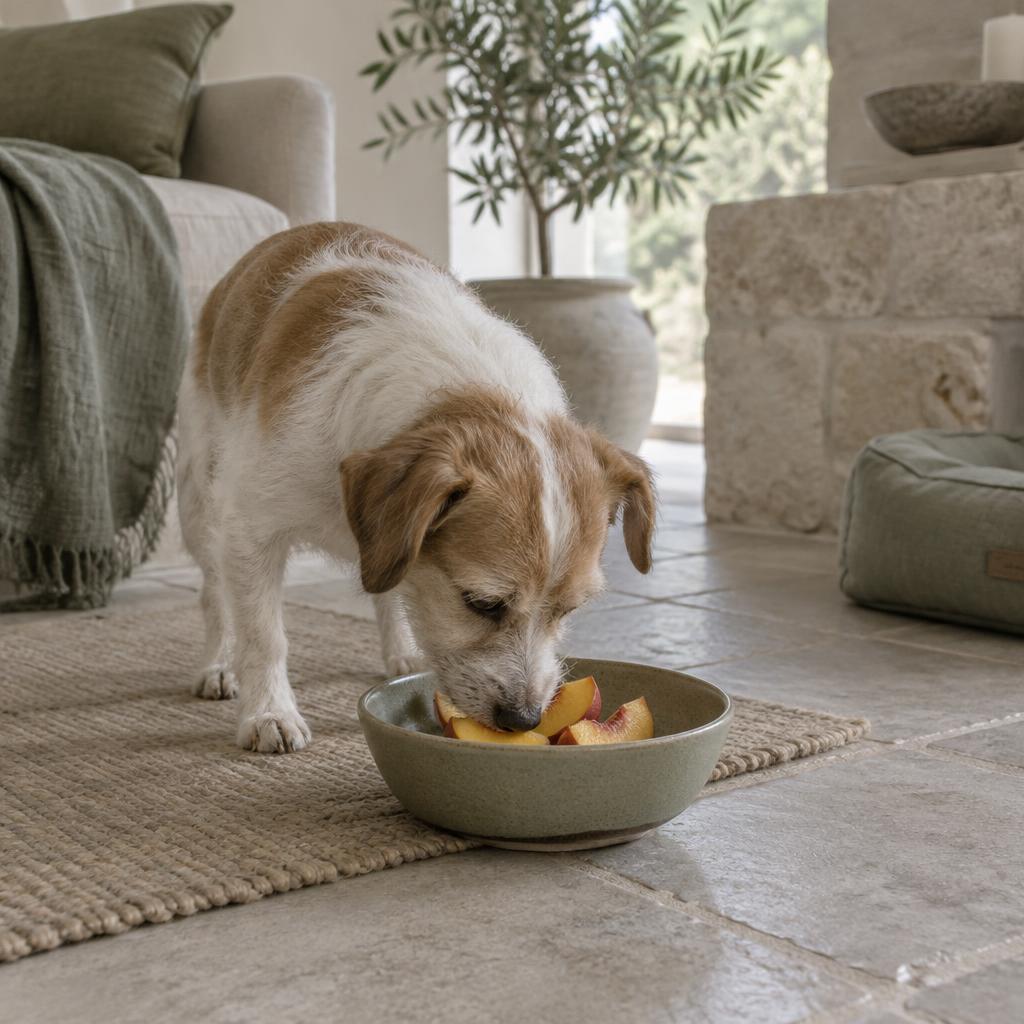
How to serve a peach safely
- 1Choose a ripe peach and wash it well.
- 2Cut around the stone, twist the halves apart, and lift the stone out.
- 3Put the stone straight into a lidded bin your dog cannot open.
- 4Slice or cube the flesh, peeling first for sensitive stomachs.
- 5Serve fresh, or freeze slices for a cooling treat on hot days.
The bin step is not optional. A stone in an open bin smells of peach, and plenty of dogs have fished one out while their owner’s back was turned.
Are peaches good for dogs?
In treat-sized amounts, peaches bring a few genuine benefits: vitamin A for skin and eyes, vitamin C, fibre for digestion, and a high water content that makes them refreshing in warm weather. They are low in calories compared with most commercial treats, which makes a couple of slices a reasonable swap for a biscuit.
The honest caveat is that a complete dog food already covers every nutritional need, so peach is a pleasure rather than a supplement. Enjoy it as one.
My dog swallowed a peach stone: what now?
Phone your vet now and tell them your dog’s size, roughly when the stone went down, and whether it was whole or broken. Most vets will want to see the dog, because a stone that reaches the small intestine can obstruct it. Over the following 48 hours, watch for vomiting, not eating, a painful or swollen belly, straining, constipation or lethargy, and treat any of these as an emergency.
Interactive tool
Peach serving checker
Dog size and preparation in, serving guidance out.
Your plan
- For a medium dog, a serving is about two to three slices, inside the 10% treat allowance.
- Wash the peach, slice around the stone, and bin the stone where your dog cannot reach it.
- Skin is safe for most dogs but can be fibrous; peel it for sensitive stomachs.
- Peaches are sugary, so keep them occasional for overweight or diabetic dogs.
Fresh slices are a good treat
Fresh flesh is a fine treat. The stone is the danger: cyanide risk plus a blockage risk.
Peach products: a quick comparison
| Peach product | Safe for dogs? | Why |
|---|---|---|
| --- | --- | --- |
| Fresh slices, stone out | Yes, in small servings | The safest form |
| Fresh with skin | Yes, for most dogs | Fibrous; peel for sensitive stomachs |
| Frozen slices, stone out | Yes | A good cooling summer treat |
| Tinned in juice, rinsed | Acceptable rarely | Still sweeter than fresh |
| Tinned in syrup | Best avoided | Heavy sugar load |
| Dried | Best avoided | Concentrated sugar, possible additives |
| Pie, crumble, yoghurt | Best avoided | Sugar, butter, dairy, possible xylitol |
| The stone | Never | Cyanide compounds plus blockage risk |
Keeping peach season incident-free
Most peach problems are storage problems. A ripe peach smells wonderful to a dog, and the stone smells of peach too, which is why bin raids happen. Keep the fruit bowl in the fridge or well back from counter edges, stone peaches over a lidded bin, and clear up dropped slices straight away. If you have a peach tree, rake windfall fruit before it ferments, and teach a solid “leave it” cue for anything that hits the ground. Breeds that live with their noses to the ground, like the Cocker Spaniel, find fallen fruit long before you do.
A note for multi-dog households
If one dog gets peach, assume they all want peach. Portion each dog separately, feed a little apart to avoid squabbles over a high-value treat, and pick up anything uneaten. The fastest eater will otherwise take the lot, stone included if you are unlucky.
When to see a vet
Phone the vet the same day for any swallowed stone, and go immediately for vomiting, a swollen or painful belly, repeated retching, drooling, breathing changes or collapse. For the fruit itself, see the vet if diarrhoea from over-indulgence lasts more than a day, or if your dog seems uncomfortable.
What about the skin’s pesticide residue?
Peaches regularly appear on lists of fruits with higher pesticide residues, which matters more for a small dog eating a bigger relative serving. Washing the peach under running water and rubbing the skin removes most surface residue, and peeling removes nearly all of it. If you can buy organic or unwaxed fruit, all the better, but a well-washed ordinary peach is a reasonable treat for an otherwise healthy dog.
The bottom line
Fresh peach is one of the nicer fruits to share with a dog: sweet, juicy, low in calories and full of summer. Keep it to a few slices, always remove the stone, bin it where it cannot be retrieved, and skip the tinned syrup and dried versions. Do that, and peach season can be a shared pleasure rather than a vet visit.
For more fruit guidance, see our articles on can dogs eat mango, which has the same stone problem, and the broader can dogs eat fruit guide. Food-motivated breeds like the Golden Retriever and the Cocker Spaniel are champion fruit-bowl raiders, so storage matters, and our portion calculator will help you keep treats within the daily allowance.
Frequently asked questions
Can dogs eat nectarines?
Yes: a nectarine is simply a smooth-skinned peach, and the same rules apply. Remove the stone, serve a few slices of flesh, and keep portions small.
Can dogs eat peach yoghurt or ice cream?
A small lick is unlikely to harm a healthy dog, but these are sugary dairy products and many dogs are lactose sensitive. Check for xylitol on the label, which is toxic, and keep it to a rare taste.
Are peach trees dangerous for dogs?
The leaves, stems and stones contain cyanogenic compounds, and fallen fermenting fruit can cause stomach upsets and even alcohol toxicity in quantity. Rake up windfall fruit and fence off the base of the tree if your dog grazes.
Can puppies eat peach?
A small taste of ripe flesh is safe for a puppy on solid food, but introduce it slowly and watch for loose stools. Their smaller airways make careful slicing even more important.
What are the signs of a gut blockage in dogs?
Repeated vomiting, not eating, a painful or swollen belly, straining or producing no stools, and lethargy. These can appear a day or more after swallowing a stone, and they always mean an urgent vet visit.
My dog ate a whole peach, stone and all. What should I do?
Phone the vet now with your dog’s size and when it happened. Do not wait for symptoms and do not try to make your dog sick at home. Most single stones pass in large dogs, but your vet may want to see the dog or have you monitor closely for 48 hours.
Sources
- American Kennel Club, Can Dogs Eat Peaches?, akc.org
- Pet Poison Helpline, Peach and Nectarine Toxicity, petpoisonhelpline.com
- VCA Animal Hospitals, Cyanide Poisoning in Dogs, vcahospitals.com
- PDSA, Safe fruits for dogs, pdsa.org.uk
- Merck Veterinary Manual, Foreign Bodies of the Digestive System, merckvetmanual.com
Questions people actually ask
Can dogs eat nectarines?
Yes: a nectarine is simply a smooth-skinned peach, and the same rules apply. Remove the stone, serve a few slices of flesh, and keep portions small.
Can dogs eat peach yoghurt or ice cream?
A small lick is unlikely to harm a healthy dog, but these are sugary dairy products and many dogs are lactose sensitive. Check for xylitol on the label, which is toxic, and keep it to a rare taste.
Are peach trees dangerous for dogs?
The leaves, stems and stones contain cyanogenic compounds, and fallen fermenting fruit can cause stomach upsets. Rake up windfall fruit and fence off the base of the tree if your dog grazes.
Can puppies eat peach?
A small taste of ripe flesh is safe for a puppy on solid food, but introduce it slowly and watch for loose stools. Their smaller airways make careful slicing even more important.
What are the signs of a gut blockage in dogs?
Repeated vomiting, not eating, a painful or swollen belly, straining or producing no stools, and lethargy. These can appear a day or more after swallowing a stone, and they always mean an urgent vet visit.
My dog ate a whole peach, stone and all. What should I do?
Phone the vet now with your dog’s size and when it happened. Do not wait for symptoms and do not try to make your dog sick at home. Most single stones pass in large dogs, but your vet may want to see the dog or have you monitor closely for 48 hours.
Sources
Breeds mentioned


Put it into practice
Read next
Can Dogs Eat Oatmeal? Cooked, Raw and Flavoured
Plain oatmeal cooked in water is safe for dogs in small servings and its soluble fibre can help mild diarrhoea. Avoid flavoured sachets, raw oats and porridge made with milk or sugar.


