
Can Dogs Eat Mango? Stone, Skin and Serving Size
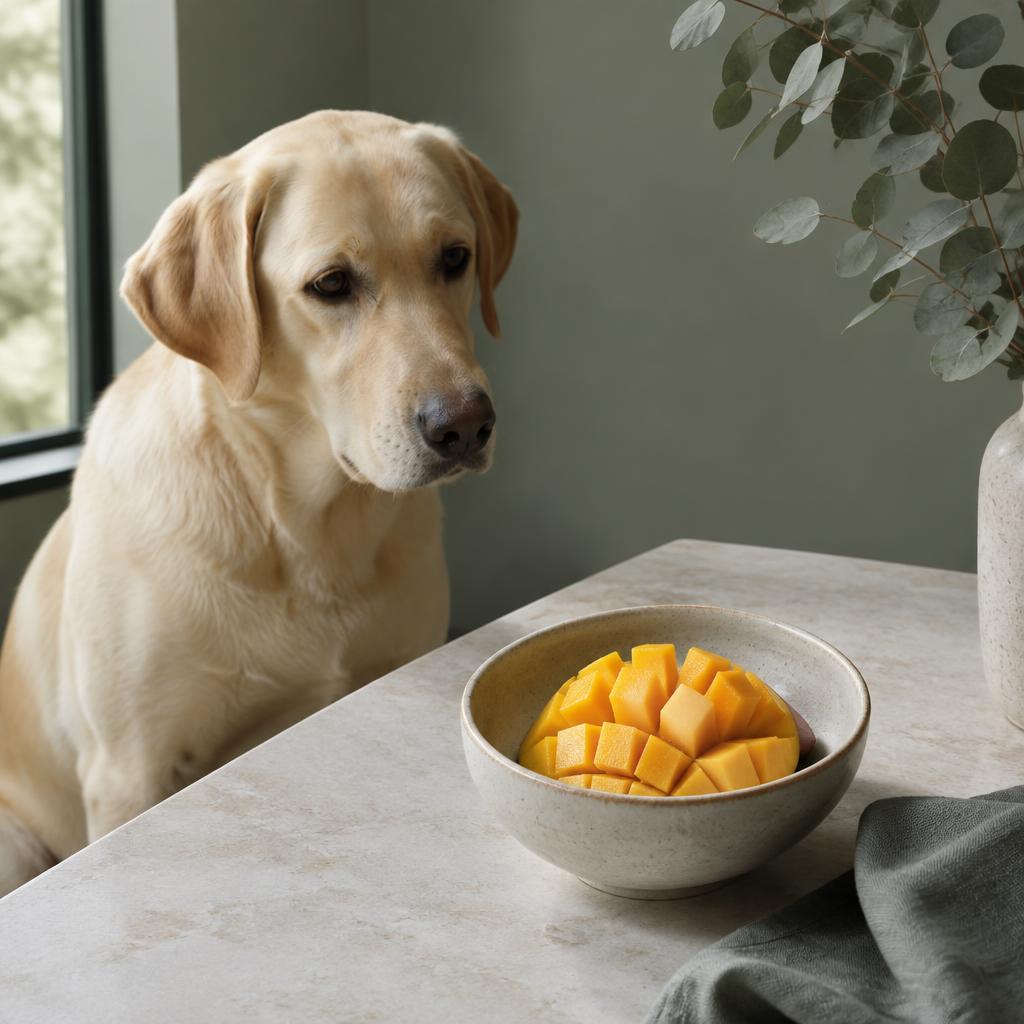
Yes, dogs can eat ripe mango flesh in small amounts. Peel it, remove the stone, and keep portions modest because mango is one of the sweeter fruits.
The SniffScroll desk
Published 11 October 2026
Reviewed by the SniffScroll editorial team
The short version
- Dogs can eat ripe, peeled mango flesh in small amounts.
- The stone must always be removed: it is a choking and blockage hazard and contains small amounts of cyanogenic compounds.
- Mango skin is tough to digest and can irritate, so peel the fruit first.
- Mango is high in natural sugar: keep portions to a few cubes and skip it for diabetic dogs.
- Dried mango is concentrated sugar; offer only a sliver of the unsweetened kind, if at all.
Can dogs eat mango?
Yes, dogs can eat mango. The soft flesh of a ripe mango is safe for most dogs and many love the sweetness. Two rules matter more than everything else: always remove the stone, and always peel the fruit. After that it is a portion question, because mango is one of the sugar-rich fruits.
Mango joins pineapple and the fruits on our safe fruit guide as an occasional treat rather than an everyday extra.
The stone is the real hazard
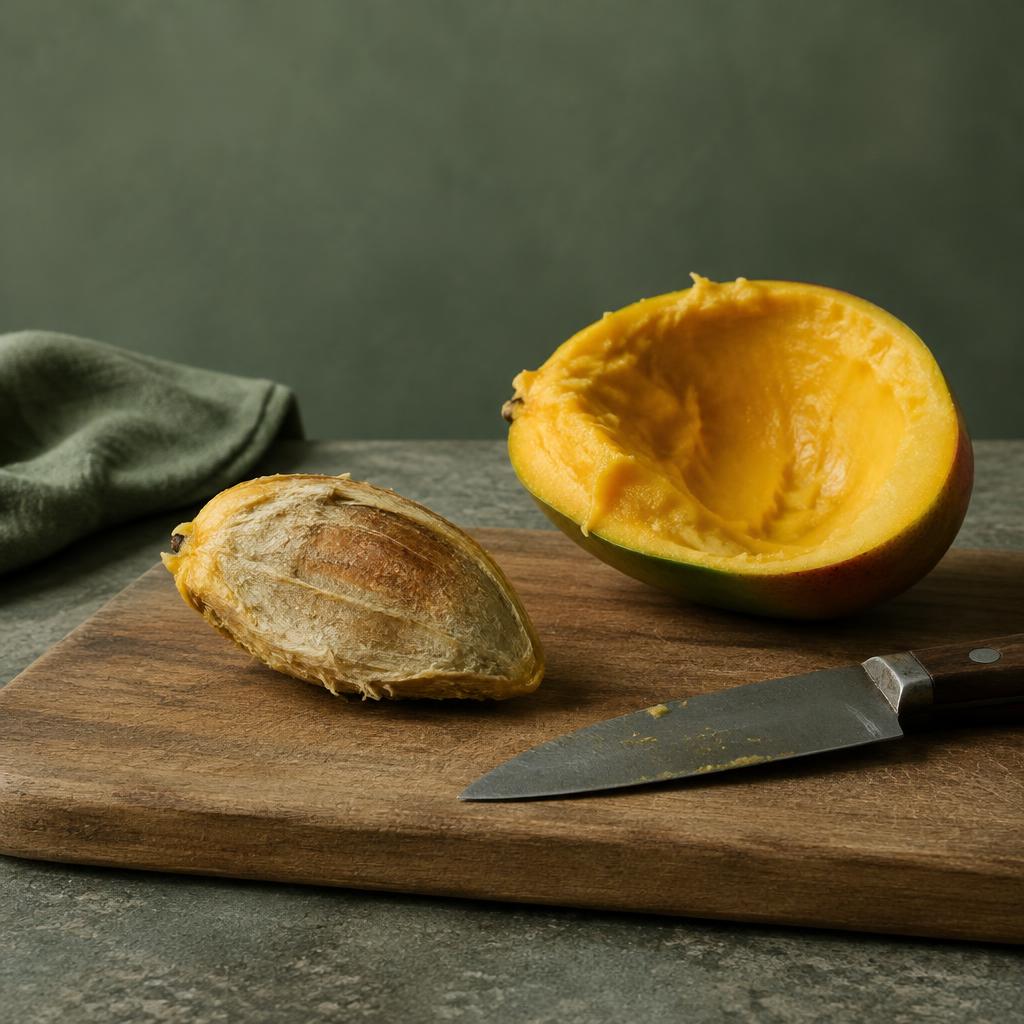
A mango stone is large, smooth and hard, which makes it dangerous in two ways. A dog that grabs one can choke on it, and a dog that swallows one can end up with a gut blockage, because the stone does not break down during digestion. The stone also contains small amounts of cyanogenic compounds, though the mechanical risk is by far the bigger concern.
If your dog has swallowed a mango stone or a large piece of one, phone the vet now rather than waiting to see if it passes. Watch for gagging, retching, vomiting, a painful or swollen belly, straining and refusal to eat, and treat any of these as an emergency.
Skin, flesh and dried mango compared
| Form | Safe? | Note |
|---|---|---|
| --- | --- | --- |
| Ripe peeled flesh | Yes, in small amounts | The only form worth serving |
| Skin | Avoid | Tough, hard to digest, contains irritant compounds |
| Stone | Never | Choking and blockage hazard |
| Dried mango | Tiny amounts only | Concentrated sugar, often sweetened or sulphited |
| Mango yoghurt, juice, lassi | Avoid | Added sugar and dairy; nothing a dog needs |
How much mango can a dog eat?
Mango is around 14% sugar, so the 10% treat rule applies firmly. As a guide:
- Toy dogs (under 5 kg): one or two small cubes
- Small dogs (5 to 10 kg): two or three cubes
- Medium dogs (10 to 25 kg): three to five cubes
- Large dogs (over 25 kg): a small handful of cubes, around a quarter of a mango
Start with a single cube. Mango is fibrous as well as sweet, and too much at once commonly means loose stools the next day.

How to serve mango safely
- 1Choose a ripe mango; unripe fruit is more acidic and harder on the stomach.
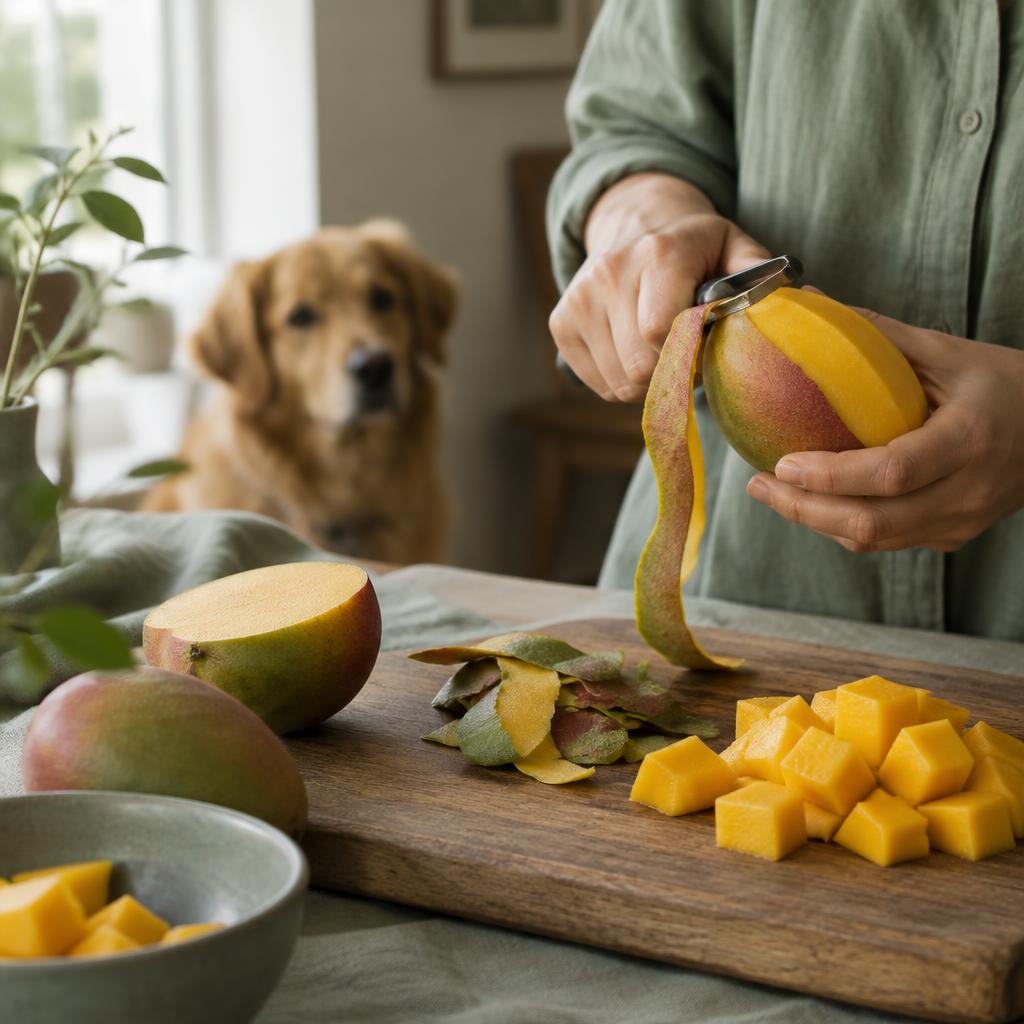
- 2Peel the skin off completely with a peeler or knife.
- 3Cut the cheeks away from the stone, then cube the flesh.
- 4Put the stone and skin straight into a lidded bin your dog cannot raid.
- 5Offer a cube or two and count them towards the day's treat allowance.
Frozen mango cubes make a decent hot-weather treat for larger dogs, though they are too hard for toy breeds and puppies.
Which dogs should skip mango?
Skip mango, or ask your vet first, for dogs with diabetes, dogs on a weight-loss plan, and dogs with sensitive stomachs that react to rich or sweet foods. For those dogs, cucumber or carrot are far better treats. And because Labradors and Golden Retrievers rarely stop at one cube, measure the serving rather than offering the bowl.
What about dried mango?
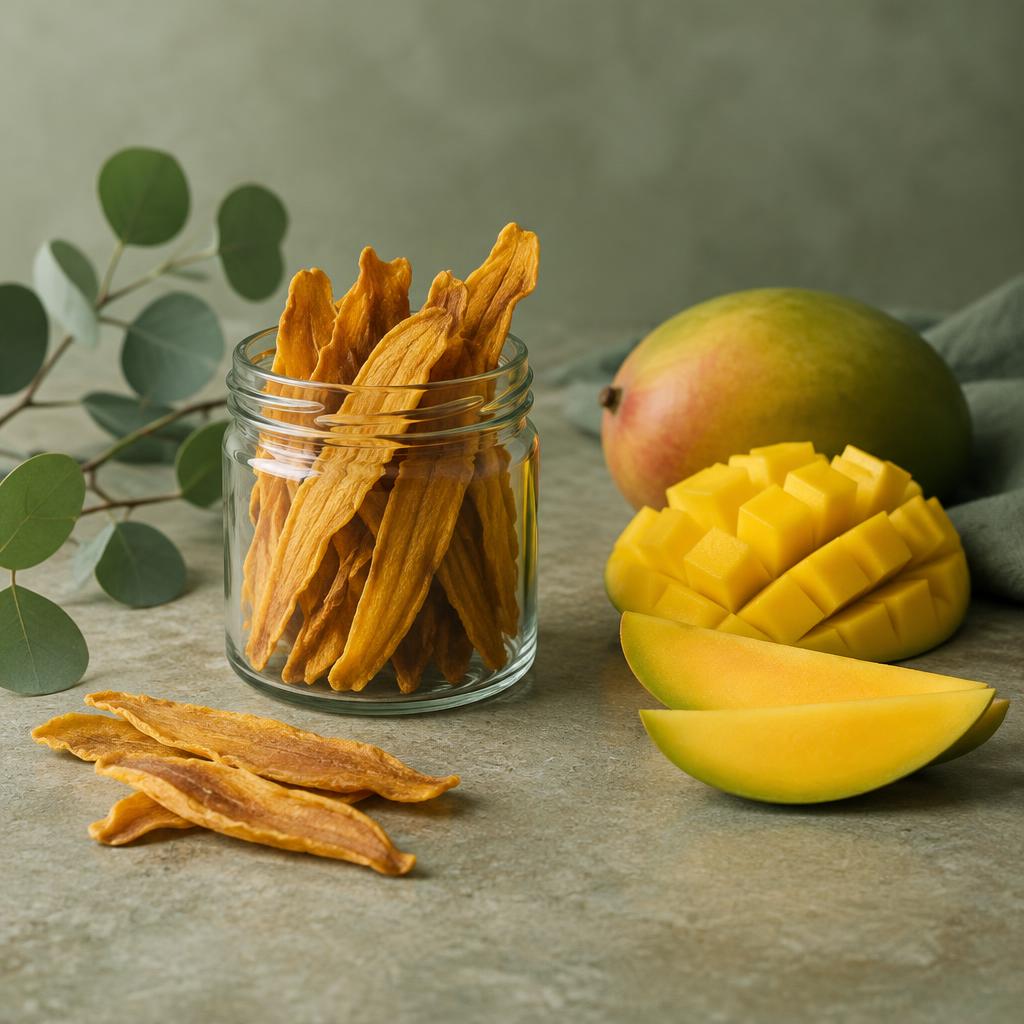
Dried mango is not toxic, but drying concentrates the sugar several-fold and many products add more sugar or preservatives such as sulphites on top. If you want to share it, choose unsweetened dried mango and offer a sliver, not a strip. For most dogs it is simply not worth it: fresh cubes are the better choice every time.
When to see a vet
Phone the vet straight away if your dog has swallowed a mango stone or a large piece of one. Also call if your dog has eaten a large amount of mango and now has persistent vomiting, diarrhoea that lasts more than a day, a painful belly or marked lethargy. For a dog with diabetes that has stolen a significant amount of mango, call for advice on the same day. An extra cube or two in a healthy dog needs nothing more than a watchful eye.
Mango compared with other sweet fruits
Mango is at the sweeter end of the fruits dogs can eat, which is exactly why portion discipline matters. Per 100 grams it carries roughly 14 grams of sugar, against about 10 for apple and blueberries and around 6 for watermelon. It is also more fibrous than most, so large amounts show up the next day as loose stools. For dogs that need a lower-sugar option, cucumber, courgette and watermelon are kinder choices, and for dogs that simply love a sweet chew, a few blueberries give better portion control than mango cubes.
| Fruit (per 100 g) | Sugar | Watch out for |
|---|---|---|
| --- | --- | --- |
| Mango | about 14 g | Stone and skin; sweetest common treat |
| Banana | about 12 g | Easy to overfeed |
| Pineapple | about 10 g | Core and skin off; acidic |
| Apple | about 10 g | Core and pips out |
| Watermelon | about 6 g | Rind and seeds out |
Frozen mango and other serving ideas
A few serving ideas work well beyond the plain cube. Frozen mango cubes are a decent hot-weather treat for medium and large dogs, though they are too hard for toy breeds, puppies and seniors with worn teeth. A cube or two mashed into a lick mat with a spoon of plain yoghurt keeps a dog busy for ten minutes. And small cubes freeze well inside a stuffed rubber toy for dogs that need their treats to last. Whatever the format, the total still counts towards the same few-cube serving.
The bin is part of the recipe
Most mango emergencies are not about the flesh at all; they are about the stone going into an open bin. A mango stone smells strongly of mango, and to a dog it reads as a large, chewable prize. Open kitchen bins, and particularly the swing-top kind, are not dog-proof. The stone and skin should go straight into a lidded bin, ideally the outside one, the moment the fruit is prepped. If your dog is a known bin-raider, treat mango prep like chicken bones: the waste leaves the kitchen immediately.
Puppies and seniors
Puppies can try a tiny cube of ripe mango once they are on solid food, but introduce it slowly and keep it rare; their treat allowance is small and their digestion is easily upset. Senior dogs with good teeth can enjoy mango the same way as any adult, but seniors with dental wear should have it soft and ripe, never frozen.
Reading ripeness for your dog
Ripeness matters more for dogs than for people. An under-ripe mango is harder, more acidic and more fibrous, all of which make it tougher on a dog's stomach, and the flesh clings to the stone so owners are tempted to hand over a half-stripped stone to "finish", which is exactly how stones get swallowed. A ripe mango yields slightly to a gentle squeeze and smells sweet at the stem end. At that point the flesh cuts away cleanly, cubes easily and digests gently.
Over-ripe mango is the other end of the problem: fermenting fruit can contain small amounts of alcohol and is more likely to cause an upset stomach. If you would not eat it yourself, do not offer it to the dog.
Treat maths: where mango fits in the day
The 10% rule sounds abstract until you put numbers on it. A 20 kg dog on a typical maintenance diet eats roughly 1,000 calories a day, so all treats together should stay under about 100 calories. A quarter of a mango is around 35 to 40 calories, which is a third of the whole treat budget in one sitting. Two or three cubes, at 10 to 15 calories, is the sensible version. For a 5 kg toy dog with a 300-calorie day and a 30-calorie treat budget, even two cubes is generous.
This is why the serving checker below asks for dog size first: the same handful of mango is a modest treat for a Labrador and a significant meal supplement for a Chihuahua.
If your dog steals mango
A stolen cube or two needs no action beyond watching the next day's stools. The scenarios that do need attention are a swallowed stone, a large amount of peel, or a whole mango eaten by a small dog. For the stone, call the vet the same day. For peel and excess flesh, expect possible vomiting or loose stools, offer water, feed lightly, and call the vet if signs are marked or last beyond 24 hours.
A checklist before you serve
- The mango is ripe: slight give, sweet smell at the stem.
- The skin is fully peeled off.
- The flesh is cut cleanly away from the stone.
- The stone and skin have gone straight into a lidded bin.
- The cubes are sized for your dog and fit the day's treat allowance.
- Your dog has no diabetes or weight plan that argues against a sweet fruit.
Follow that sequence and mango is one of the safer fruits to share. Skip it, and the stone in the bin is the part most likely to cause a very expensive evening.
Mango for dogs with sensitive stomachs
If your dog has a delicate digestion, mango deserves extra caution rather than a total ban. The fibre and sugar that make it harmless for most dogs can tip a sensitive gut into loose stools at much smaller amounts. Start with a single small cube, ripe and at room temperature, and judge by the next day. If stools stay firm, an occasional cube or two is fine. If not, mango is simply not your dog's fruit, and lower-sugar, lower-fibre options such as a little cooked pumpkin or a blueberry or two will suit them better. Dogs with a history of pancreatitis should skip mango altogether and check any treat plan with their vet.
The bottom line
Can dogs eat mango? Yes: ripe, peeled, stoned flesh in small cubes is a safe and popular treat. The stone is a genuine emergency hazard, the skin is best left off, and the sugar means a few cubes, not a fruit bowl. Use the checker below to size a serving.
Interactive tool
Mango serving checker
Dog size and preparation in, serving guidance out.
Your plan
- For a medium dog, a serving is about three to five cubes, inside the 10% treat allowance.
- Use ripe, peeled flesh only, cut into bite-sized cubes, with the stone removed and out of reach.
- Mango is high in natural sugar, so keep it occasional and skip it for diabetic dogs.
- Try one cube first and check the stools the next day.
A safe occasional treat
Peeled, stoned mango flesh is a safe treat in small amounts. The stone is the real hazard.
Questions people actually ask
Can dogs eat mango skin?
It is best avoided. The skin is fibrous and hard to digest, and it contains urushiol, the irritant compound also found in poison ivy, which can bother sensitive stomachs and skin. A small nibble is unlikely to cause harm, but peel the fruit before serving.
What happens if my dog eats a mango stone?
Phone the vet. A mango stone is large, hard and slippery: it can lodge in the throat or cause a gut blockage, and it contains small amounts of cyanogenic compounds. Do not wait for it to pass, and watch for gagging, vomiting, a painful belly or straining.
Can dogs eat dried mango?
Only in tiny amounts, and only the unsweetened kind. Drying concentrates the sugar, and many products add more sugar or preservatives such as sulphites. A sliver is enough; dogs with diabetes or weight problems should skip it entirely.
Is mango good for dogs?
It provides vitamins A, C and E plus fibre, but a complete dog food already covers those needs. Mango is best thought of as a pleasant, sweet treat rather than a supplement, and its sugar content is the reason to keep servings small.
Can puppies eat mango?
Yes, once they are on solid food, in very small amounts. Offer one tiny cube of ripe, peeled flesh and see how their digestion handles it. Puppies have sensitive stomachs, so introduce any new food slowly.
Sources
Breeds mentioned

Labrador Retriever
Britain's most popular family dog: biddable, food driven and built for an active household.

Golden Retriever
A gentle, biddable gundog famed for its patience with children and its glossy golden coat.

Cavalier King Charles Spaniel
An affectionate, adaptable toy spaniel that thrives on human company above almost anything else.
Put it into practice
Read next
Can Dogs Eat Oatmeal? Cooked, Raw and Flavoured
Plain oatmeal cooked in water is safe for dogs in small servings and its soluble fibre can help mild diarrhoea. Avoid flavoured sachets, raw oats and porridge made with milk or sugar.


