
Can Dogs Eat Carrots? Raw, Cooked and Portion Guide
Carrots are one of the most dog-friendly vegetables in the kitchen: crunchy, low in calories and liked by most dogs. The two rules are sizing them safely and remembering they do not replace a toothbrush.
The SniffScroll desk
Published 10 October 2026
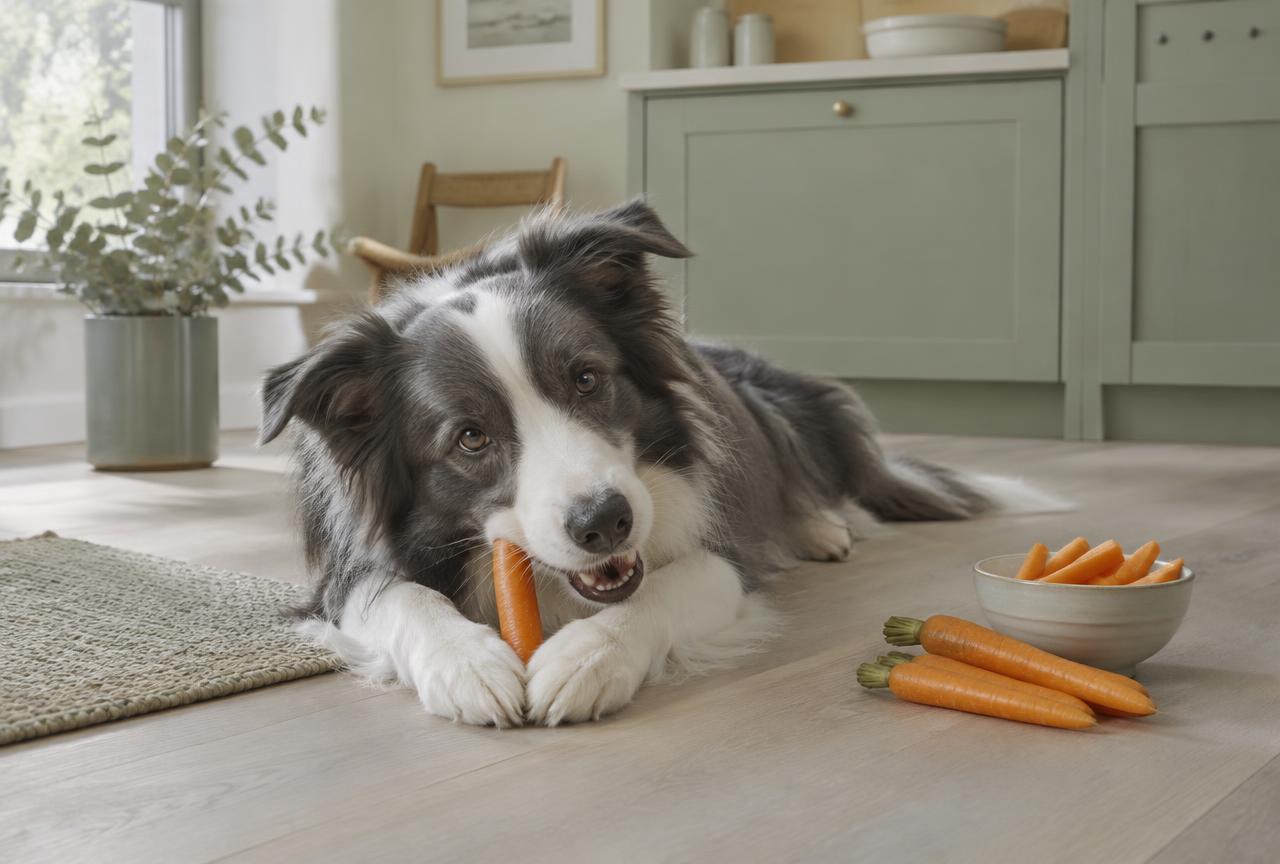
Dr Emily Carter, BVSc MRCVS
The short version
- Carrots are safe for dogs raw or cooked, and one of the best low-calorie treats available.
- Cut them to a size your dog can chew: whole carrots are a choking risk for small dogs and gulpers.
- Cooked carrots are softer and easier to digest; serve them plain, without salt or butter.
- Carrots may help a little with plaque through chewing, but they do not replace tooth brushing.
- Count them in the 10% treat allowance, especially for dogs watching their weight.
Yes, dogs can eat carrots, raw or cooked, and they are one of the best vegetable treats you can offer. They are cheap, low in calories, high in fibre and most dogs love the crunch. The two things to get right are size, so they cannot cause choking, and expectations, because carrots help teeth far less than their reputation suggests.
Are carrots good for dogs?
Carrots are a genuinely good treat: around 25 calories per medium carrot, rich in beta-carotene, fibre and vitamin K, and filling enough to satisfy a dog who always seems hungry.
That calorie count is the headline. A medium carrot has about the same calories as two small commercial dog biscuits but takes far longer to eat, which makes carrots a favourite for dogs on a weight-loss plan. Beta-carotene, which the body converts to vitamin A, supports eyes, skin and immunity, although a dog on a complete diet already gets enough vitamin A from their food.
The fibre helps digestion in moderate amounts. In large amounts, the same fibre causes wind and loose stools, which is why portion size still matters.
Raw or cooked carrots?
Both are safe: raw carrots offer crunch and chewing time, cooked carrots are softer, easier to digest and better for puppies, seniors and dogs with dental problems.
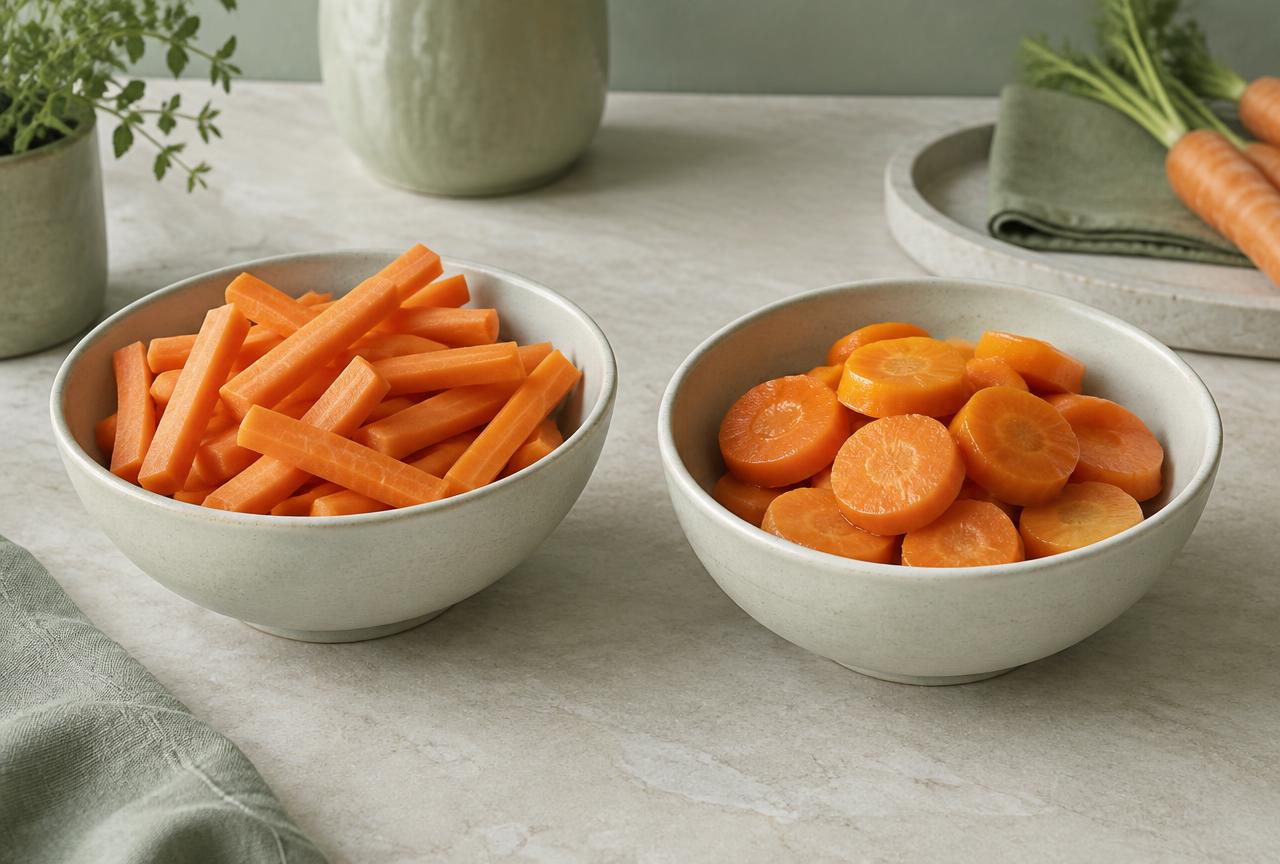
| Raw carrot | Cooked carrot | |
|---|---|---|
| --- | --- | --- |
| Texture | Hard, crunchy | Soft |
| Best for | Healthy adult dogs, chewers | Puppies, seniors, sensitive teeth |
| Digestibility | Lower, passes partly undigested | Higher, nutrients more available |
| Choking risk | Higher if pieces are large | Lower |
| How to serve | Washed, cut to size | Steamed or boiled, plain |
Cooking breaks down the cell walls, so a dog absorbs more of the beta-carotene from cooked carrot. Raw carrot is more about the chewing experience. Neither is wrong; many owners use raw as a chew and cooked as a meal topper.
Whatever you choose, keep it plain. Carrots cooked with butter, salt, honey glaze, onion or garlic are not suitable for dogs. Onion and garlic in particular are toxic to dogs.
How many carrots can a dog eat?
Treat carrots like any other extra and keep them within 10% of your dog's daily calories:
| Dog size | Example weight | Carrot per serving |
|---|---|---|
| --- | --- | --- |
| Toy | Under 5 kg | 1 baby carrot or 2 to 3 small rounds |
| Small | 5 to 10 kg | 1 to 2 baby carrots or 3 to 4 rounds |
| Medium | 10 to 25 kg | Half a medium carrot, cut up |
| Large | Over 25 kg | 1 medium carrot, in chunks |
A Border Collie after a long hill walk and a Beagle who would eat the carrot, the bag and the fridge have the same rule: count it. Our portion calculator works out daily calories so you can see how much room treats really have.
How to cut carrots safely
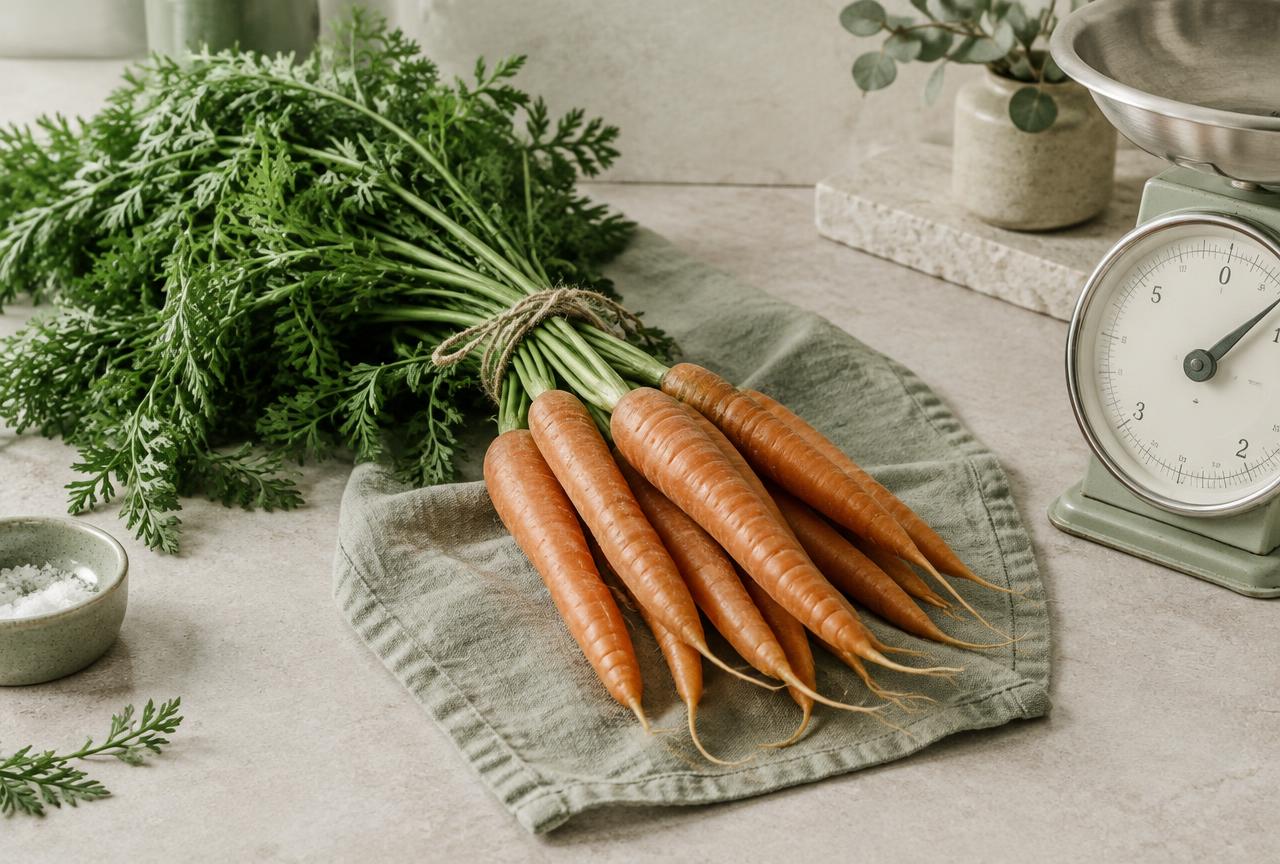
Cut carrots into rounds or batons your dog can chew rather than swallow whole, and go smaller for toy breeds and dogs who gulp.
Whole carrots are the classic choking hazard for small dogs: the round shape fits a throat neatly. Thin rounds, about the thickness of a coin, suit toy breeds. Batons suit medium and large dogs who actually chew. A whole carrot for a large, careful chewer is acceptable under supervision, but pieces are always the safer choice.
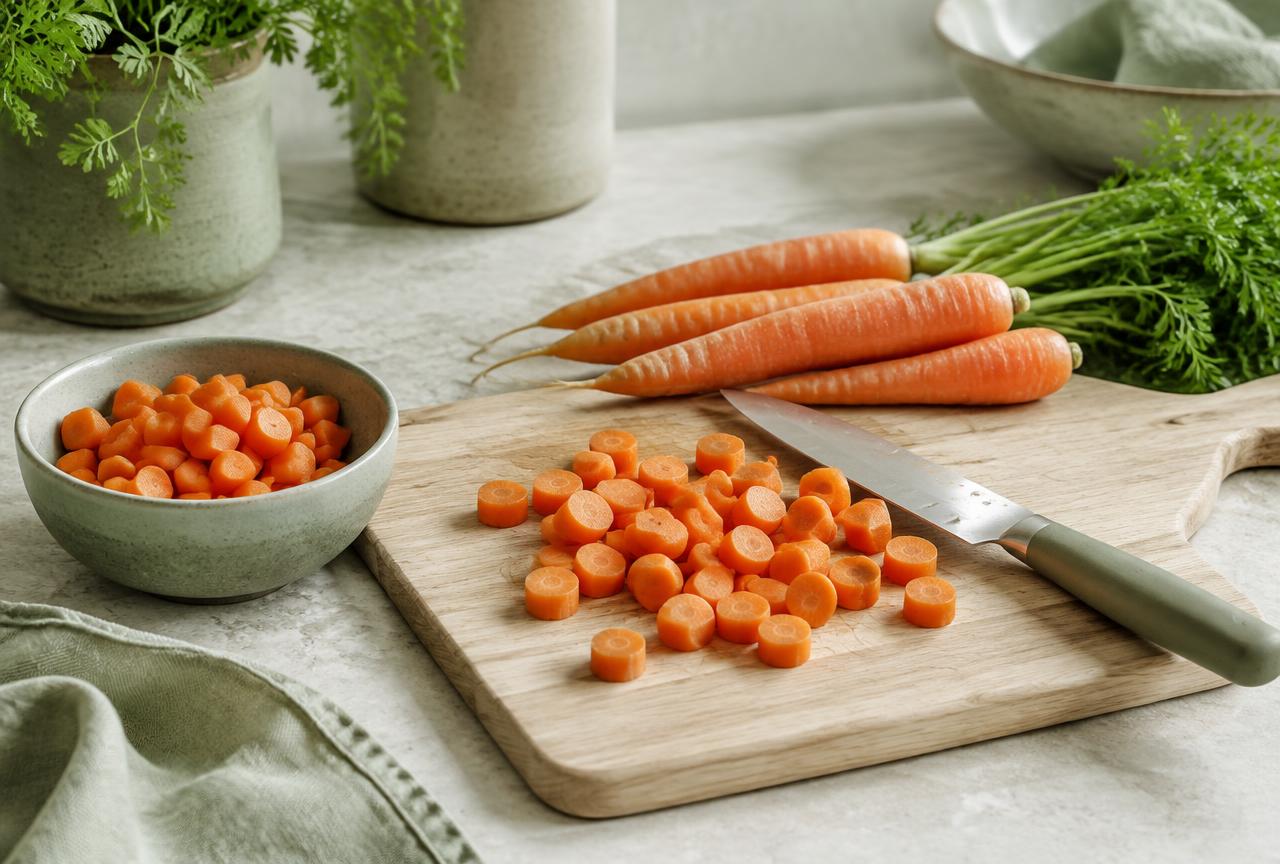
Grated carrot mixed into food is another good option for fussy eaters and dogs who should not have hard chews.
Carrots are one of the few treats where the problem is never the food itself, only the size of the piece.
Can carrots clean a dog's teeth?
Chewing raw carrot may scrape off a little soft plaque, but the effect is modest and carrots are not a dental care plan.
This is the most common carrot myth. Dental disease is extremely common in dogs, and the gold standard of prevention is daily brushing with a dog toothpaste, supported by dental diets or chews accepted by the Veterinary Oral Health Council. Carrots are a nice extra; see our dental care guide for what actually protects teeth.
Can puppies eat carrots?
Puppies can eat carrots once weaned: cooked and mashed or finely chopped to start, and chilled carrot pieces can soothe teething gums.
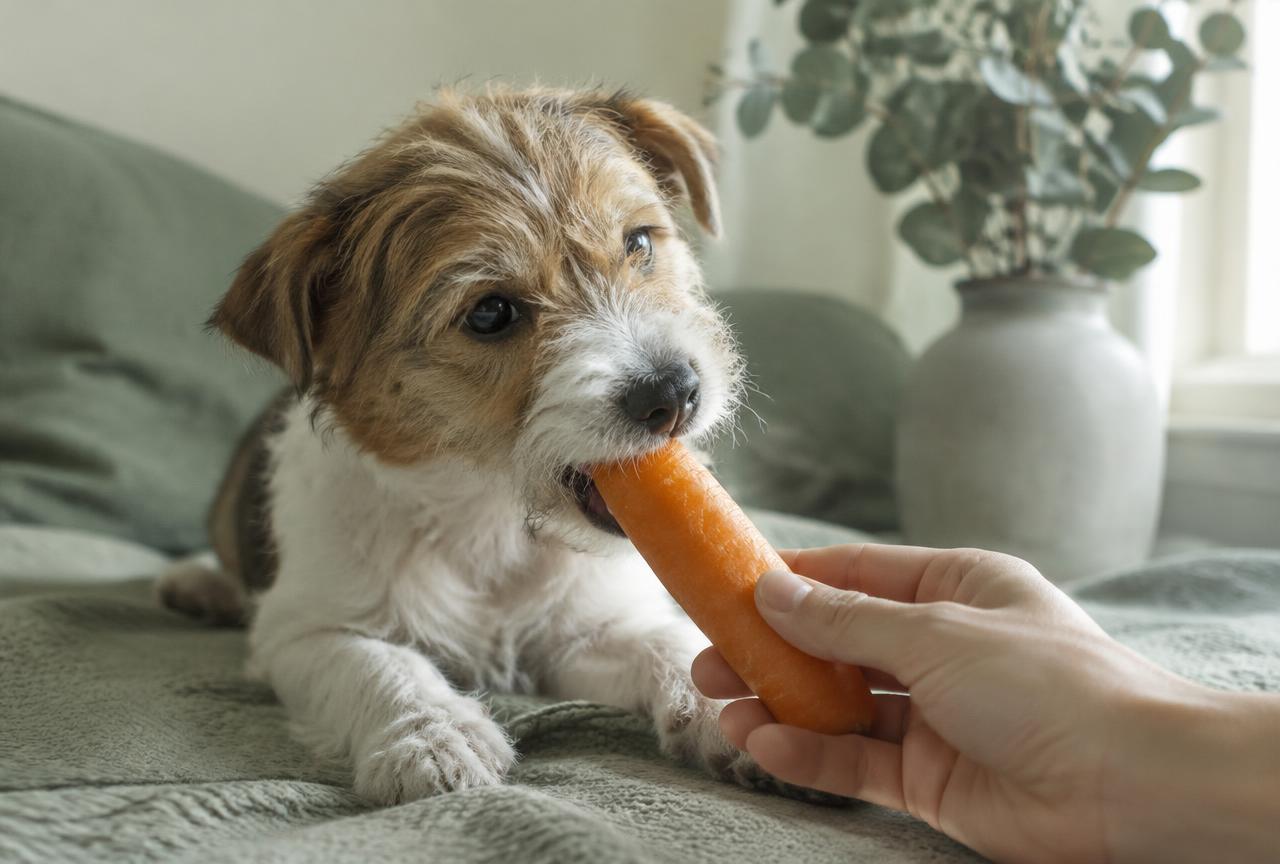
For a teething puppy, a chilled or frozen carrot sized for their mouth, held or supervised, is a classic and sensible trick. Take it away once it is small enough to swallow. Our puppy teething guide covers the full timeline.
A simple carrot plan
- 1Wash the carrot; peeling is optional.
- 2Decide raw or cooked based on age and teeth.
- 3Cut to a safe size: coin-thin rounds for toy dogs, batons for larger dogs.
- 4Start with a small amount and check the stools over the next day.
- 5Settle into the portion for your dog's size and count it within the treat allowance.
- 6Rotate with other safe foods from our human foods guide, such as apples.
Interactive tool
Carrot portion checker
Dog size and preparation in, portion guidance out.
Your plan
- For a medium dog, a serving is about half a medium carrot, cut up, within the day's 10% treat allowance.
- Raw carrot is crunchy and low in calories; wash it and cut it to a size your dog can chew safely.
- Carrots can support dental abrasion a little, but they do not replace tooth brushing.
- Carrots are sweet: fine daily in small amounts for most dogs, but count them if your dog is watching their weight.
A great low-calorie treat
Carrots are one of the best vegetable treats for dogs: cheap, low in calories and most dogs enjoy the crunch.
When to see a vet
Carrots are not toxic. Call the vet if your dog chokes or gags on a piece, has persistent vomiting, diarrhoea or straining after eating a large amount, or if the carrots were cooked with onion, garlic or other unsafe ingredients. If your dog is choking and cannot breathe, it is an emergency: see our first aid guide and head to the nearest vet.
Carrots for dogs with health conditions
Carrots suit most dogs, but a few situations deserve a moment's thought.
Diabetic dogs can usually have carrots, as their sugar content is modest and their glycaemic impact is low, but portions should be fixed and counted as part of the agreed diet rather than given freely.
Overweight dogs are where carrots shine brightest. Swapping biscuits for carrot pieces is one of the easiest calorie cuts in dog ownership, and the crunch keeps the dog satisfied. Pair the swap with a proper look at daily calories using our portion calculator and the ideal weight tool.
Dogs with kidney or bladder stone histories are often fine with carrots, which are low in purines and moderate in oxalates, but any dog on a prescription diet should have extras cleared with the vet first.
Dogs with missing or diseased teeth should have cooked, mashed or grated carrot only. If chewing looks uncomfortable, that is a dental problem to address, and our dental care guide explains the signs.
Carrots in training and enrichment
Carrot pieces work well as low-stakes training rewards at home, and a whole carrot for a large, careful chewer buys ten minutes of peace.
For training, cut carrot into pea-size pieces and keep a small pot in the fridge. They are not exciting enough for high-distraction work outdoors, where most dogs want something smellier, but for practising sits and stays in the kitchen they are ideal: cheap, clean and calorie-light.
For enrichment, try scattering chopped carrot across a snuffle mat, freezing grated carrot into a lick mat with a little water, or hiding pieces around a room for a sniffing game. A Border Collie with a working brain will take the puzzle over the plate every time.
One habit to avoid: handing over a carrot every time you cook. Dogs learn kitchen routines fast, and a Beagle who gets carrot at the chopping board will be under your feet at every meal preparation for the rest of their life. Feed treats away from the counter, on your terms.
Storing and preparing carrots for the week
A little preparation makes carrots the easiest treat in the house. Once a week, wash a bag of carrots, cut them into the right size for your dog, and store them in a container of water in the fridge; they stay crisp for days and are ready to grab. Cooked carrot keeps for two to three days refrigerated, or you can steam a batch and freeze it in portions. Baby carrots are convenient but check the bag: they are just cut-down large carrots, and the price per kilo reflects the convenience. However you buy them, the preparation rule stays the same: sized to the dog, served plain, counted in the day.
Common questions owners ask about carrots
Why does carrot come out looking the same as it went in? Dogs do not chew thoroughly and their digestive systems are not designed to break down raw plant cell walls completely, so bright orange pieces in the stool are normal and harmless. If you want the nutrients absorbed rather than admired later, cook the carrot.
Can carrots turn my dog orange? In theory, enormous quantities of beta-carotene can tint light skin and fur, but a dog would need to eat carrots at a level no sensible portion guide approaches. At treat portions, it is not a concern.
Are baby carrots the same as normal carrots? Yes. Baby carrots are full-size carrots cut and polished into shape. Nutritionally they are identical; you are paying for the convenience.
My dog swallowed a big piece whole. What now? A single large piece usually passes, but watch for gagging, repeated swallowing, drooling or distress in the first hour, then vomiting or straining over the next couple of days. Any of those means a call to the vet. It is also your cue to cut the pieces smaller next time.
Building a sensible treat shelf
Carrots earn their place in a rotation rather than a monopoly. A good treat shelf has something crunchy and low-calorie for everyday rewards, something high-value and smelly for important training moments, and something long-lasting for settling time. Carrots fill the first role brilliantly and cost almost nothing. Pair them with the fruits covered in our fruit guide, keep the high-value treats tiny, and remember that the whole shelf, carrots included, lives inside the 10% treat allowance. The portion calculator will show you what that allowance actually is for your dog, and for most owners the honest answer is smaller than they assumed. Carrots are how you stretch it.
A note on buying and serving
Any carrot works: the wonky value bag is nutritionally identical to the premium bunch with tops, and your dog will not know the difference. Wash rather than peel where possible, since much of the fibre sits in and under the skin. If you batch-prepare pieces in water in the fridge, change the water every couple of days. And a final repetition worth making, because it is the mistake that actually hurts dogs: the hazard is never the carrot, it is the size of the piece and the speed of the eater. Cut small, supervise the gulpers, and carrots remain what they should be, the easiest yes in the treat cupboard.
The bottom line
Carrots are safe, cheap and low in calories, and most dogs love them. Cut them to size, keep them plain, count them as treats and enjoy one of the easiest healthy snacks in the kitchen. Just do not let the crunch replace the toothbrush.
Questions people actually ask
Can dogs eat raw carrots?
Yes. Raw carrots are safe, crunchy and low in calories. Wash them and cut them into rounds or batons sized for your dog, as whole raw carrots can be a choking hazard for small dogs and fast eaters.
Are carrots good for dogs' teeth?
Chewing raw carrot may scrape away a little plaque, but the effect is small. Carrots are not a substitute for daily tooth brushing or vet-approved dental products.
How many carrots can a dog eat a day?
As a guide: one baby carrot or a few small rounds for toy dogs, up to one medium carrot cut into chunks for large dogs. Keep carrots within the 10% treat allowance alongside other extras.
Can puppies eat carrots?
Yes. Cooked, mashed or finely chopped carrot is suitable once puppies are weaned, and a chilled or frozen carrot piece sized to the puppy can soothe teething gums under supervision.
Can carrots give dogs diarrhoea?
In large amounts, yes. Carrots are high in fibre, and a sudden big helping can cause loose stools or wind. Introduce them gradually and keep portions modest.
Can dogs eat carrot tops?
Carrot greens are not considered toxic, but they offer little benefit and may carry pesticide residue. Most vets suggest sticking to the root, washed and cut.
Sources
Breeds mentioned



Put it into practice
Read next
Can Dogs Eat Oatmeal? Cooked, Raw and Flavoured
Plain oatmeal cooked in water is safe for dogs in small servings and its soluble fibre can help mild diarrhoea. Avoid flavoured sachets, raw oats and porridge made with milk or sugar.


