Puppy Teething: Timeline, Symptoms and Relief
Puppies swap 28 baby teeth for 42 adult ones in about four months, and they chew their way through the transition. Here is the timeline, what is normal, and how to save your furniture.
The SniffScroll desk
Dog care editors
Published 9 October 2026
Reviewed against RVC, BSAVA and PDSA guidance
The short version
- Puppies have 28 baby teeth, all through by about 8 weeks, and 42 adult teeth, mostly in place by 6 to 7 months.
- Peak teething runs from about 12 to 24 weeks, which is when chewing behaviour is at its worst.
- Safe relief comes from rubber teething toys, rope toys and chilled or frozen damp cloths, never from ice-hard objects that can crack teeth.
- A tiny spot of blood on a chew toy is normal; a puppy off its food or with bleeding gums is not.
- Retained baby teeth, where the baby tooth stays next to the adult one, are common in small breeds and usually need vet removal.
Somewhere around the four-month mark, many puppy owners conclude they have adopted a small, furry woodchipper. The skirting boards, the chair legs, the TV remote, your left slipper: all fair game. This is teething, and it is both completely normal and entirely survivable with the right kit and a bit of strategy.
Puppies are born toothless, grow 28 baby teeth by about eight weeks, and then swap the whole set for 42 adult teeth by six to seven months. That is a lot of dental traffic in a short time, and the chewing is how your puppy manages it.
The teething timeline
| Age | What is happening |
|---|---|
| 2 to 4 weeks | Baby teeth erupt, while still with the breeder |
| 5 to 8 weeks | All 28 baby teeth through; needle-sharp |
| 12 to 16 weeks | Incisors start falling out; teething begins in earnest |
| 4 to 6 months | Canines and premolars swap; peak chewing |
| 6 to 7 months | Molars arrive; 42 adult teeth, teething ends |
Those baby teeth are deliberately sharp, incidentally. The leading theory is that needle teeth wean puppies off their mother efficiently: she loses patience, and solid food starts looking good.
What is normal, and what is not
Normal teething looks like this:
- Intense chewing, especially on things with give: wood, fabric, your hands
- Drooling more than usual
- Red, slightly swollen gums
- Tiny spots of blood on chew toys or bedding
- Finding a baby tooth on the floor (or never finding any; most are swallowed harmlessly)
- Mild grumpiness or a slightly softer appetite on the worst days
Not normal: a puppy that stops eating, has obviously bleeding or very swollen gums, develops a fever, or vomits. Those are not teething symptoms, and they justify a vet call rather than a wait.

Relief that is actually safe
The goal is to give sore gums something appropriate to work on. The reliable options:
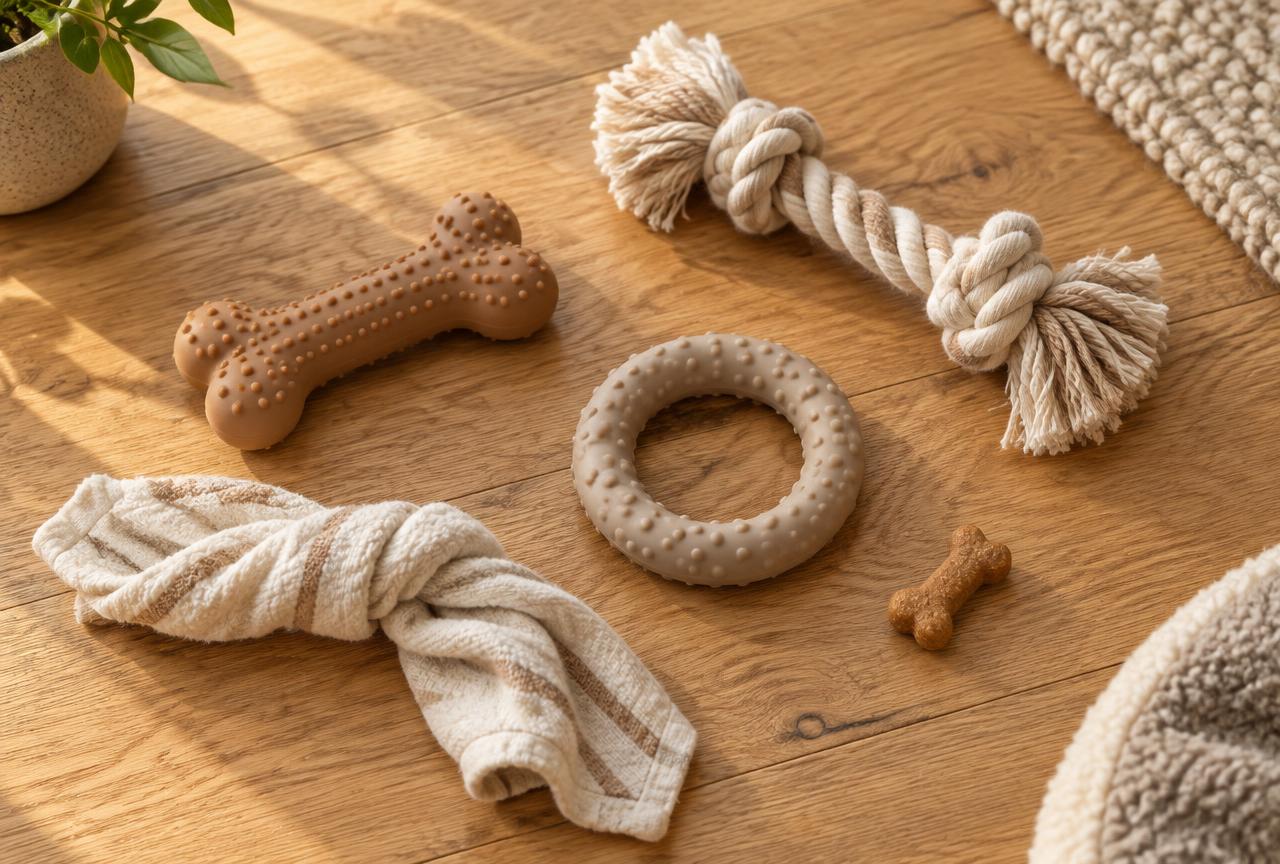
- 1Rubber teething toys with texture, sized so the puppy cannot swallow them. Many can be stuffed with a little of the puppy's normal food and chilled.
- 2A damp washcloth, twisted and frozen, offered under supervision. The cold numbs the gums and the texture is satisfying.
- 3Rope toys for gnawing, again supervised, and retired once they fray.
- 4Chilled carrots for some puppies, in moderation and under supervision, though they are not for every stomach.
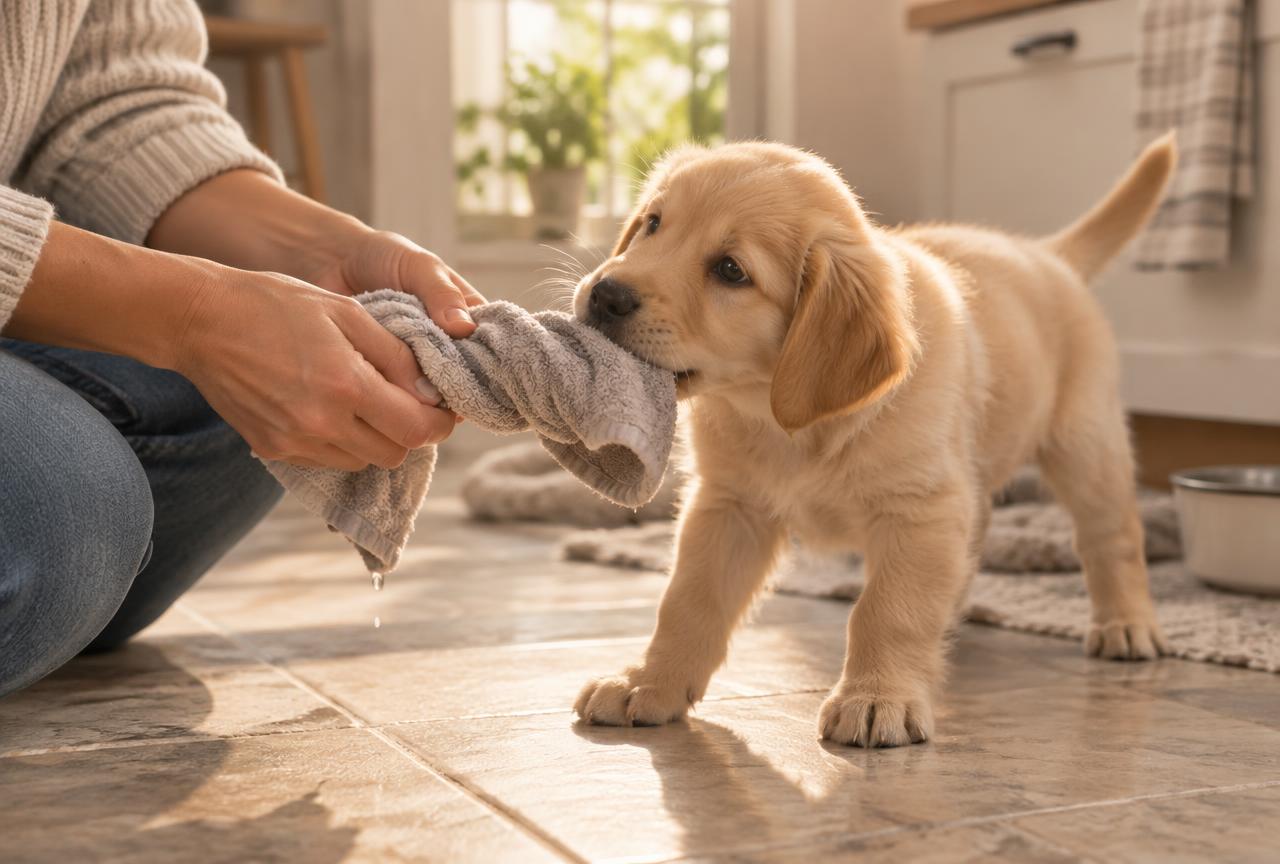
Equally important is what to avoid: antlers, weight-bearing bones, hooves and rock-hard nylon chews can fracture teeth, and baby teeth fracture easily. The thumbnail test is a decent guide: if you cannot dent it with a thumbnail, it is too hard for a puppy.
The rule of teething: everything the puppy can reach is a chew toy, so decide in advance what that will be.
Saving your furniture (and your hands)
Relief alone is not a strategy; you also need management. Puppy-proof the rooms the puppy actually uses: cables behind furniture, shoes in cupboards, chair legs sprayed with a pet-safe bitter deterrent if your puppy has a favourite. Then run a constant redirect: when the puppy chews the wrong thing, calmly swap it for the right thing and praise the switch.
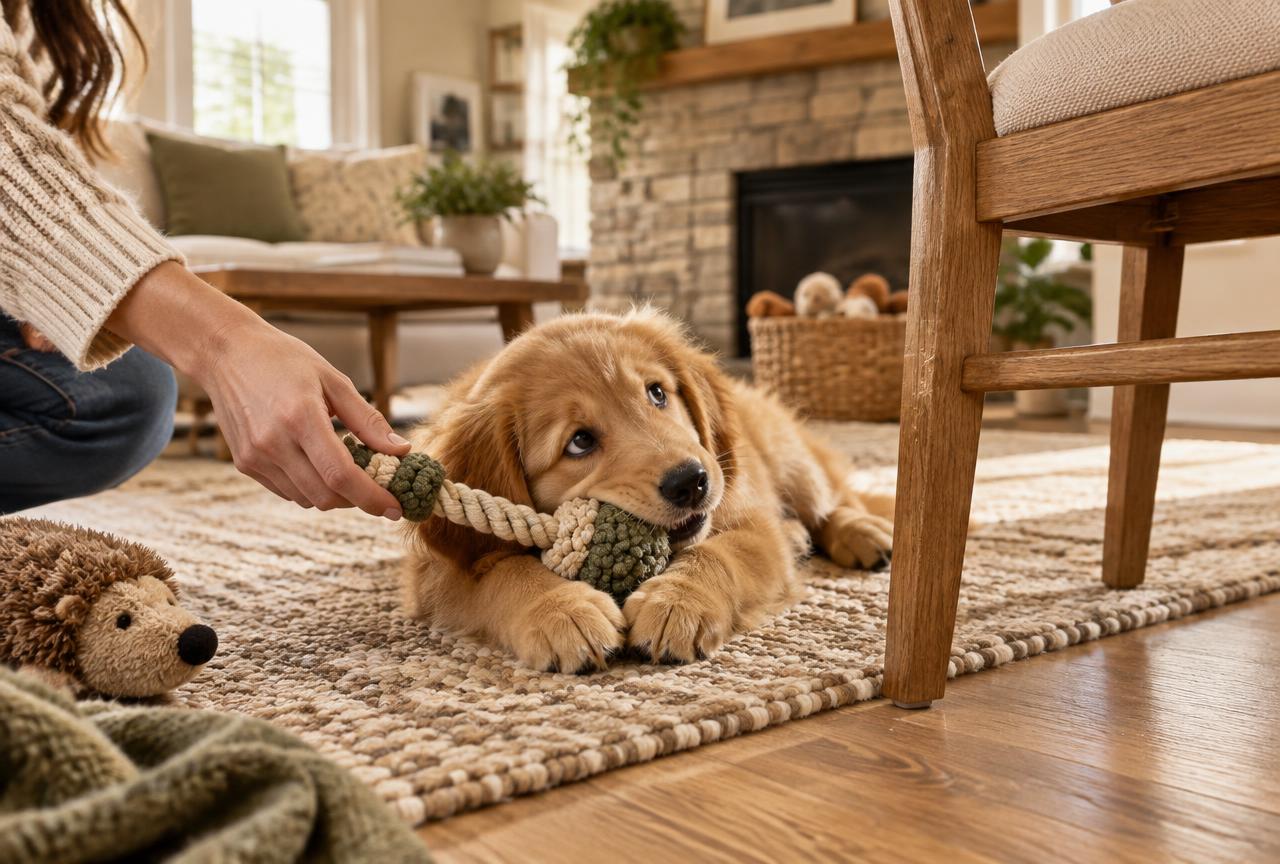
Hands deserve a special mention. Mouthing is normal puppy play, but letting it continue teaches a growing dog that human skin is a chew surface. When teeth touch skin, end the game for a few seconds, then offer a toy. Consistency across the whole household is what makes this work; our crate training guide covers the related question of giving a chewy puppy a safe, calm space.
Where is your puppy in the timeline?
Enter your puppy's age below to see what should be happening right now, and which signs fall outside normal teething.
Interactive · teething timeline
Where is your puppy in the teething timeline?
Enter your puppy's age in weeks to see what should be happening, and which signs are not part of normal teething.
Normal for this stage
Peak teething begins. Incisors start falling out around 12 to 16 weeks. Expect heavy chewing, sore gums and the occasional tiny tooth on the floor.
Retained baby teeth: the one common complication
Sometimes a baby tooth refuses to leave, and the adult tooth comes in beside it. You will see two teeth in one slot, most often the canines, and most often in small breeds like Chihuahuas and Cavalier King Charles Spaniels. The double tooth traps food, crowds the adult tooth, and sets up early dental disease.
Check your puppy's mouth weekly during teething. If an adult tooth is visibly coming through and the baby tooth is still firmly in place after a week or two, mention it to your vet. Retained teeth are usually removed, conveniently often at the same time as neutering.
How long does puppy teething last?
For most puppies, teething runs from around three weeks old, when the first baby teeth appear, to roughly six or seven months, when the last adult molars are through. The uncomfortable stretch most owners notice is the exchange of baby teeth for adult teeth, which typically begins at about twelve to sixteen weeks and peaks between four and six months.
| Age | What is happening | What you will notice |
|---|---|---|
| --- | --- | --- |
| 3 to 6 weeks | 28 baby teeth erupt | Still with the breeder; nursing becomes uncomfortable for mum |
| 8 to 12 weeks | Full set of needle-sharp baby teeth | Mouthy play, nipping hands and sleeves |
| 12 to 16 weeks | Incisors loosen and fall out | Tiny teeth on the floor, the odd spot of blood on toys |
| 4 to 6 months | Canines and premolars change; molars erupt | Peak chewing, gum soreness, sometimes a softer appetite |
| 6 to 7 months | 42 adult teeth complete | Chewing settles, though adolescent chewing may follow |
Giant breeds such as the Great Dane sometimes finish a little later, while toy breeds such as the Chihuahua can finish on time but are prone to keeping baby teeth. The dog age calculator helps you place your puppy on this timeline.
Teething does not cause biting. It turns up the volume on a puppy who was already exploring the world with their mouth.
Teething, biting and chewing: what is what
Owners often blend three different things together. Teething is the physical change in the mouth. Mouthing and play biting are normal social behaviours present from the first weeks, which puppies use to learn bite inhibition. Destructive chewing is often a mixture of teething discomfort, boredom and simply not yet knowing what belongs to the dog. Separating them matters, because the fixes differ.
If your puppy is biting you during play, the answer is training rather than more chews. Our guide to how to stop a puppy biting walks through that plan. If your puppy is gnawing table legs while you work, the answer is supervision, management and an appropriate alternative ready to hand.
Your teething-week plan
- 1Puppy-proof one safe area. Lift cables, shoes, remote controls and children's toys. Use a pen or baby gate when you cannot watch.
- 2Rotate three or four chew types. Puppies lose interest in the same toy; rotating keeps novelty high. Include one soft, one firm and one food-releasing toy.
- 3Offer something cold twice a day. A frozen damp cloth, a chilled rubber toy, or a stuffed toy with part of their meal frozen inside.
- 4Make chewing a scheduled activity. Offer a chew after walks and during settle time, so the habit attaches to the right object.
- 5Swap, never snatch. If your puppy picks up something forbidden, offer a toy or treat, praise the choice and remove the item calmly.
- 6Check the mouth weekly. Lift the lips, look for any baby tooth sitting alongside an adult tooth, and get your puppy used to gentle handling.
Safe chew checklist
- Small enough to carry, too big to swallow whole
- Passes the thumbnail test: if your nail cannot dent it, it is too hard for baby teeth
- No cooked bones, antlers, hooves or hard nylon for young puppies, as they can fracture teeth
- No rawhide or small pieces that can be swallowed and cause blockages
- Replace any toy once it splits or pieces come off
- Supervise new chews until you know how your puppy uses them
Start tooth brushing now, with a puppy toothbrush and dog toothpaste, a few seconds a day. The habit is far easier to build at sixteen weeks than at three years. Our dog dental care guide covers the method.
The verdict, by household
Young family: set up a pen, give children a toy to offer instead of their hands, and supervise every interaction.
Working from home: schedule chew sessions during calls; a stuffed frozen toy buys twenty quiet minutes.
Small or toy breed: check closely for retained baby canines at six months.
Large, mouthy breed such as a [Labrador Retriever](/breeds/labrador-retriever): buy durable toys sized for the adult dog, and expect enthusiastic chewing well past teething.
When to call your vet
Teething itself never needs a vet, but call if your puppy stops eating, has significant or ongoing bleeding, develops very swollen gums or facial swelling, has a fever, or if you spot a retained baby tooth that is not budging. Otherwise: stock the chew toys, freeze the washcloths, hide the shoes, and take heart. By seven months, the woodchipper phase is over.
Teething myths, checked
| Myth | What the evidence says |
|---|---|
| --- | --- |
| Teething causes a high fever | A slightly warm mouth is normal; a true fever is not teething and needs a vet |
| Ice cubes are the best relief | Hard ice can crack teeth; a frozen cloth or chilled rubber toy is gentler |
| Baby teeth do not need brushing | Brushing now builds the habit that protects adult teeth for life |
| Chewing will stop at six months | Many dogs chew through adolescence, roughly to 18 months |
| Teething gels for children are fine | Some contain ingredients unsafe for dogs; ask your vet first |
The most useful mindset is that teething is a short phase and chewing is a lifelong need. Give your puppy good outlets now, and the adult dog keeps them.
Questions people actually ask
When do puppies lose their baby teeth?
Puppies start losing their baby teeth at around 12 to 16 weeks, beginning with the incisors. The canines and premolars follow, and most dogs have their full set of 42 adult teeth by 6 to 7 months. You may find tiny teeth on the floor, though most are swallowed harmlessly.
When do puppies stop teething?
The intense teething phase usually ends by 6 to 7 months, when the last adult molars come through. Chewing as a behaviour continues beyond that, especially in adolescent dogs, but the frantic, must-chew-everything stage eases noticeably once the adult teeth are in.
What are the symptoms of puppy teething?
Increased chewing on everything, sore or red gums, drooling, mild irritability, and occasionally a slight drop in appetite or a tiny spot of blood on toys. You may also find small baby teeth on the floor or in bedding. Fever, vomiting or refusing food are not teething symptoms.
What can I give my teething puppy for pain?
Safe options include rubber teething toys, rope toys, and a damp washcloth twisted and chilled or frozen for supervised chewing. Never give human painkillers, and avoid rock-hard chews like antlers, bones or hard nylon, which can fracture baby and adult teeth.
Is it normal for a puppy's gums to bleed when teething?
A small spot of blood on a chew toy or a slightly red gum line where a tooth is coming through is normal. Ongoing bleeding, swollen or very red gums, or a puppy that stops eating is not normal and should be checked by a vet.
What are retained baby teeth in puppies?
Sometimes a baby tooth fails to fall out and stays in place next to the adult tooth, most often the canines in small breeds like Chihuahuas and Cavaliers. The double tooth traps food and crowds the adult tooth, so vets usually remove retained baby teeth, often during neutering.
How long does puppy teething last?
Most puppies teethe from about three weeks old until six or seven months, when all 42 adult teeth are in. The most uncomfortable phase is usually between four and six months, as baby teeth fall out and adult canines and molars come through. Chewing often continues into adolescence even after teething ends.
Do puppies swallow their baby teeth?
Often, yes. Baby teeth are tiny and frequently fall out while a puppy is eating or chewing, so many are swallowed without harm. You may find a few on the floor or in toys. It is not a concern, but do check at six months for any baby teeth that have not fallen out.
Sources
- Puppy teething, PDSA
- When do puppies lose their teeth, American Kennel Club
- Puppy dental care, Blue Cross
- Retained deciduous teeth, VCA Animal Hospitals
- Dental development in dogs, VCA Animal Hospitals
- Puppy teething, The Kennel Club
Breeds mentioned

Golden Retriever
A gentle, biddable gundog famed for its patience with children and its glossy golden coat.

Labrador Retriever
Britain's most popular family dog: biddable, food driven and built for an active household.

Cavalier King Charles Spaniel
An affectionate, adaptable toy spaniel that thrives on human company above almost anything else.

Chihuahua
A tiny, big-hearted toy breed that needs careful handling, dental care and protection from the cold.
Put it into practice
Read next
How to Socialise a Puppy: The First 16 Weeks
What socialisation really means, the critical window, a week-by-week checklist and how to socialise safely before vaccinations are complete.