Crate Training a Puppy: A 14-Day Plan
How to turn a crate into your puppy's favourite place, one short session at a time.
The SniffScroll desk
Dog care editors
Published 30 September 2026 · Updated 9 October 2026

Reviewed against RVC, BSAVA and PDSA guidance
The short version
- Crate training should always build a positive association, never be used as punishment.
- A realistic 14-day plan builds duration gradually from seconds to overnight stays.
- Choose a crate sized for your puppy to stand, turn and lie down, not much larger.
- Young puppies need frequent toilet breaks and cannot be crated for long stretches.
- Significant distress around the crate may need input from a vet or force-free trainer.
Crate training basics
Crate training gives a puppy a safe, den-like space of their own and, done well, helps with house training, settling behaviour and safe confinement when you cannot supervise them directly. The crate should always be introduced as a positive, comfortable place rather than a punishment, and most puppies can learn to genuinely enjoy their crate within a couple of weeks with consistent, gentle handling. This guide sets out a realistic 14-day plan, along with the common mistakes that slow progress down.
Choosing and setting up the crate
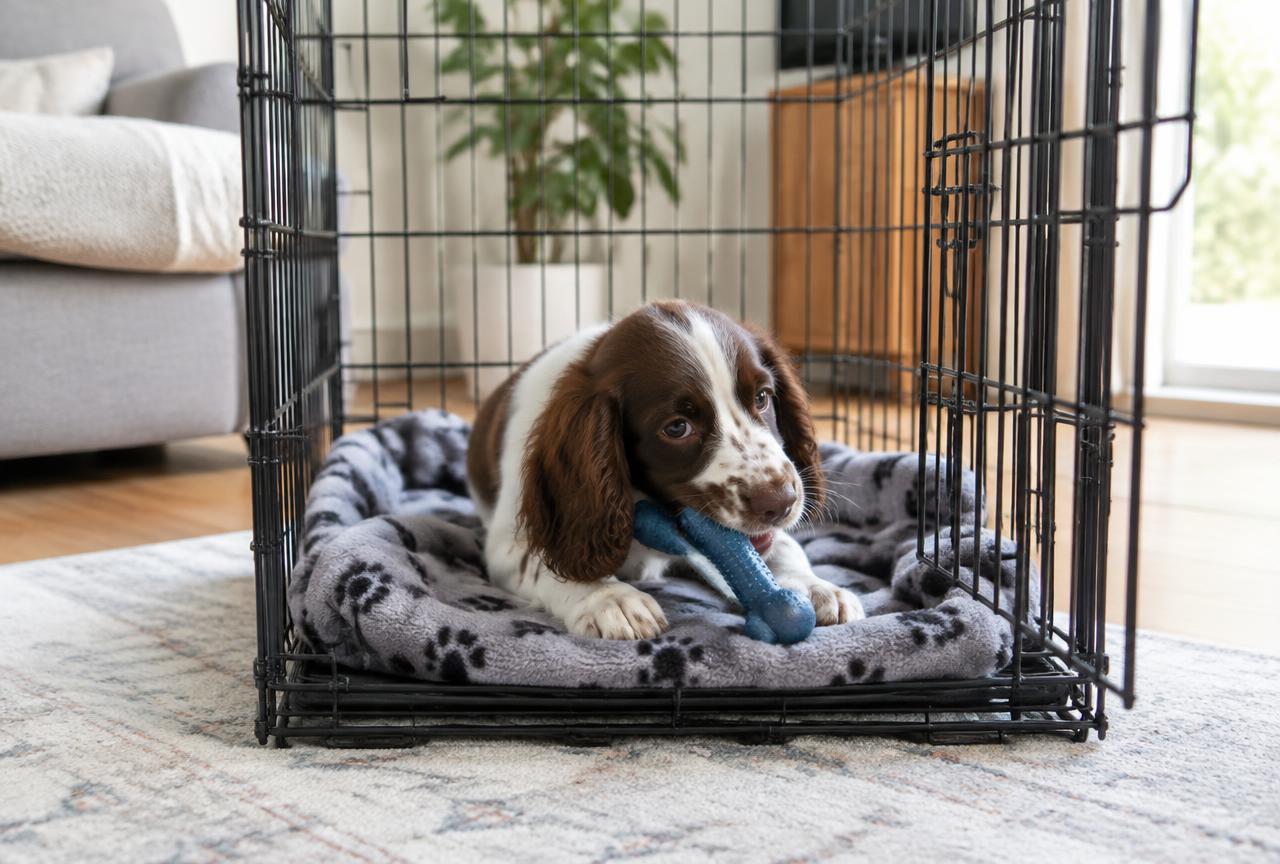
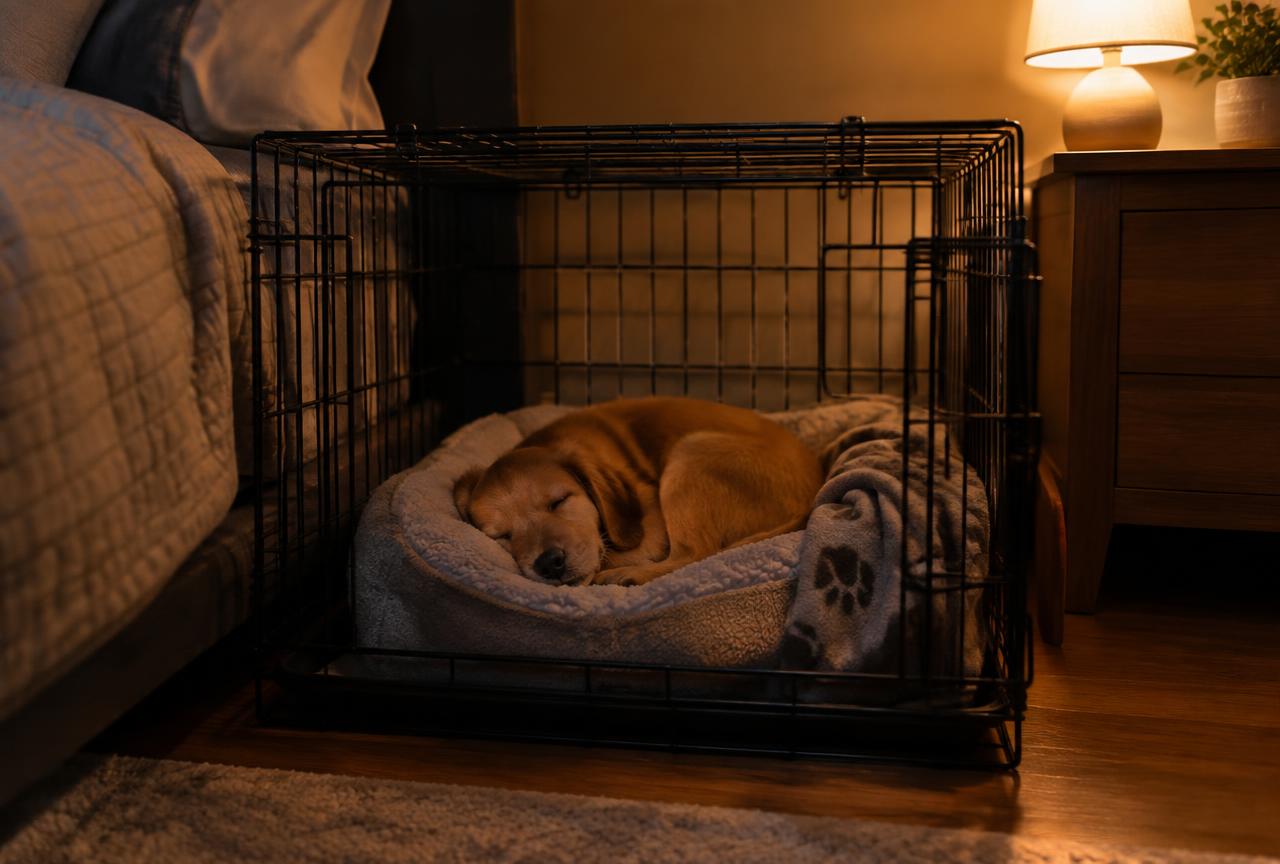
Pick a crate large enough for your puppy to stand up, turn around and lie down fully stretched out, but not so large that they can use one end as a toilet area away from their bed. Many crates come with dividers so you can size the space up as your puppy grows, which is more economical than buying several crates over the first year. Line the base with a comfortable bed or blankets, add a couple of safe chew toys, and position the crate somewhere the family spends time, such as a living room corner, so your puppy does not feel isolated. Breeds prone to separation-related anxiety, including some cavalier king charles spaniels, often benefit from extra care in these early stages to build a genuinely positive association with the crate.
The 14-day crate training plan
| Day | Focus | What to do |
|---|
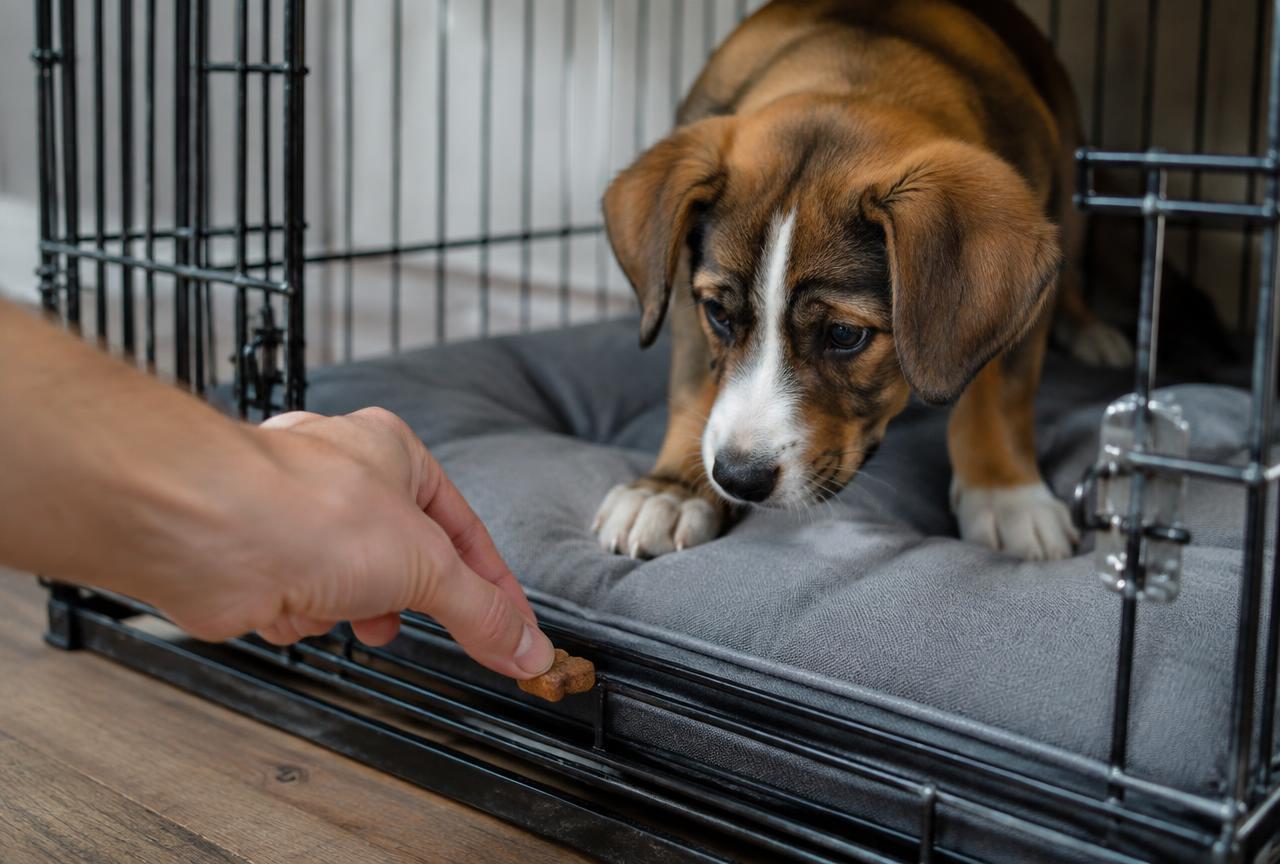
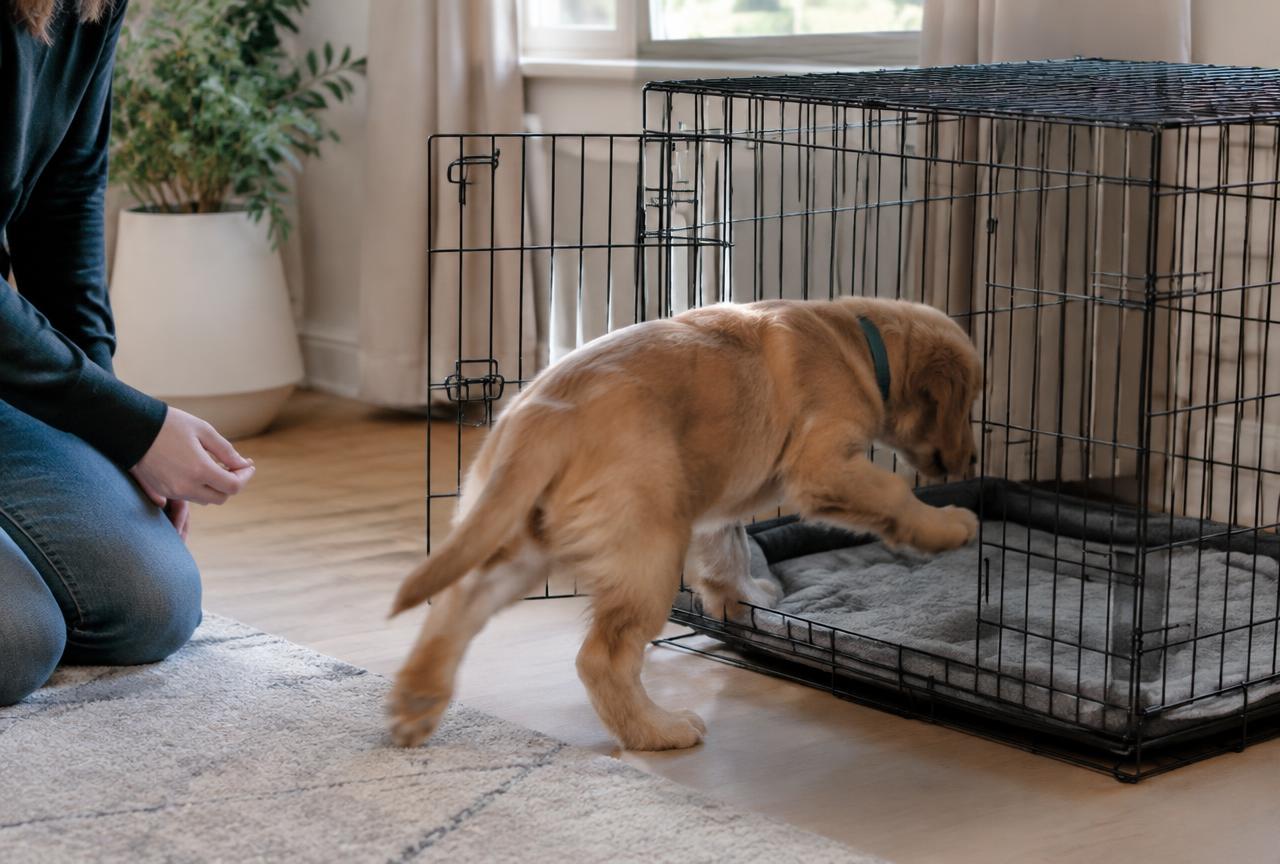
| 1 to 2 | Introduction | Leave the door open, toss treats and toys inside, let your puppy explore freely with no pressure |
|---|
| 3 to 4 | Feeding in the crate | Feed meals inside the crate with the door open, building a positive food association |
|---|
| 5 to 6 | Short closed-door spells | Close the door for one to two minutes while you stay nearby, then open calmly |
|---|
| 7 to 8 | Extending duration | Gradually build up to 10 to 15 minutes with the door closed, staying in the room |
|---|
| 9 to 10 | Stepping out of sight | Close the door and leave the room briefly, returning before your puppy becomes distressed |
|---|
| 11 to 12 | Building independence | Practise short absences of 20 to 30 minutes, including leaving the house briefly |
|---|
| 13 to 14 | Overnight and longer spells | Introduce overnight crating with a toilet break planned, and short daytime absences up to an hour |
|---|
Step-by-step first sessions
Step 1: Make the crate irrelevant to anything scary
Never use the crate as a punishment or send your puppy there when you are frustrated, since this quickly undoes the positive association you are trying to build. The crate should always predict good things: treats, meals, quiet chew time and rest.
Step 2: Keep the first closed-door sessions genuinely short
A minute or two is enough for the very first closed-door attempt. Open the door calmly before your puppy starts to whine or scratch, so they learn that the door opening is a normal, unremarkable event rather than a relief from distress.
Step 3: Build duration slowly and expect some setbacks
Some days will go better than others, and that is completely normal. If your puppy struggles at a certain duration, go back to the last stage that worked well for a day or two before trying to extend again.
Step 4: Pair crate time with a settled, calm routine
A predictable routine around crate time, such as a toilet break, a short walk and a chew toy before settling, helps your puppy understand what to expect and reduces anxiety around the process.
Interactive · crate schedule builder
Build a puppy crate schedule
Puppies can typically hold their bladder for about one hour per month of age, plus one. Enter their age and wake time for a day plan.
Estimated bladder gap: about 4 hours during the day. Most puppies can manage a longer stretch overnight once settled, but expect at least one night wake-up under 4 to 5 months old.
| 07:00 | Wake up, straight outside for a toilet break |
| 07:15 | Breakfast, then a short play or walk |
| 11:00 | Toilet break, then crate nap |
| 15:00 | Toilet break, lunch, play session |
| 19:00 | Toilet break, crate nap |
| 23:00 | Toilet break, dinner, evening play |
| 03:00 | Last toilet break before settling for the night |
Common mistakes that slow progress
- Forcing a puppy into the crate or closing the door before they are comfortable going in voluntarily
- Leaving a puppy crated for far too long, too soon, which can trigger genuine distress and set training back
- Using the crate as punishment, which teaches a puppy to fear rather than enjoy the space
- Ignoring genuine distress signals such as prolonged crying, drooling or frantic scratching, rather than adjusting the plan
- Skipping toilet breaks, which can force a puppy to soil their crate and undermine house training progress
- Choosing a crate that is the wrong size, either too small to be comfortable or too large to help with toileting habits
How long can a puppy stay in a crate?
As a general guide, young puppies cannot hold their bladder for long, and a common rule of thumb is roughly one hour for every month of age up to a maximum of around four hours, though this varies between individuals and breeds. Overnight crating is usually more manageable once a puppy is a little older and has an empty stomach and bladder before settling, but expect at least one night-time toilet break for very young puppies. The crate should never be used for extended confinement during the day as a substitute for proper exercise, attention and toileting opportunities, and a tired puppy who has had a good walk and mental stimulation, alongside guidance from our article on why dogs eat grass if boredom-related chewing crops up, will generally settle far more easily.
When to see a vet or trainer
Common myths about crate training
- Myth: crates are cruel and should never be used. Used correctly, with gradual positive introduction, a crate functions like a den a puppy chooses to use, not a cage they are forced into.
- Myth: a puppy that cries in the crate just needs to cry it out. Genuine distress crying is different from mild protest, and ignoring real distress can damage trust in the crate and worsen anxiety rather than resolve it.
- Myth: crate training only matters for house training. While it helps enormously with toilet training, a well-used crate also supports safe travel, recovery after surgery, and calm behaviour during visitors or fireworks.
- Myth: once a puppy is crate trained, the crate is not needed any more. Many adult dogs continue to use their crate as a settled resting spot for years, and it remains useful for vet visits, travel and boarding.
Troubleshooting common crate problems
My puppy refuses to go anywhere near the crate
Go right back to the start and make the crate the most rewarding place in the house without any pressure to enter it. Scatter high-value treats just inside the door, feed meals nearby, and let your puppy set the pace for a few extra days before trying to close the door at all.
My puppy is fine during the day but cries all night
Night-time crying often relates to a longer stretch alone without company after a full day of activity. Moving the crate into your bedroom temporarily, ensuring a toilet break right before bed, and gradually moving the crate to its permanent spot over a week or two can help ease this transition.
My puppy soils the crate even though we go out often
Check the crate size first, since a crate that is too large can allow a puppy to toilet at one end and sleep at the other without discomfort. Also review your toileting schedule against your puppy's age, since very young puppies genuinely cannot hold on as long as an older puppy can.
My puppy was doing well and then suddenly regressed
Setbacks are common and often follow a change in routine, a growth spurt, or a stressful event such as a house move or loud fireworks. Simply return to the last stage that was working reliably and rebuild duration gradually rather than treating it as a failure.
Crate training and daily life
Using the crate at mealtimes beyond initial training
Continuing to feed some meals in the crate, even after your puppy is fully settled, helps maintain a positive association over the long term and gives you a reliable, calm space to use during hectic mealtimes with visitors or children in the house.
Travelling with a crated puppy
A crate-trained puppy usually travels far more calmly in a car than one who has never learned to settle in an enclosed space. Practise short, stationary sessions in the car with the crate secured before attempting a full journey, building confidence gradually just as you did at home.
Crate training alongside other household pets
If you have other dogs in the household, introduce crate time gradually and separately at first so your puppy is not distracted or overstimulated by another dog nearby. Once your puppy is confident and settled, most households can manage multiple crates or a shared settling routine without difficulty.
Equipment that helps
| Item | Why it helps |
|---|
| Adjustable divider panel | Keeps the crate sized correctly as your puppy grows, avoiding toileting in a too-large space |
|---|
| Washable crate mat or bedding | Makes accidents easy to clean and keeps the crate inviting |
|---|
| Snuffle mat or stuffed food toy | Gives your puppy something absorbing to do during closed-door sessions |
|---|
| Cover or blanket over part of the crate | Creates a den-like, calming feel and reduces visual stimulation at night |
|---|
Choosing the right crate type
Wire crates
Wire crates offer good ventilation and visibility, fold flat for storage or travel, and usually come with a divider panel, making them a popular first choice for many puppy owners.
Plastic or airline-style crates
These feel more den-like and enclosed, which some anxious puppies find more calming, and they are typically required for air travel, so they can be a sensible choice if you expect to fly with your dog later in life.
Soft-sided crates
Lightweight and portable, soft crates suit calm, already crate-trained dogs for short trips, but are not suitable for boisterous chewers or during the early training phase, since they offer little containment against a determined escape attempt.
Crate placement and household routine
Where you put the crate matters as much as the crate itself. A spot that is warm but not overheated, away from direct sun and draughts, and within sight of normal household activity helps a puppy feel included rather than isolated. Avoid placing the crate somewhere noisy or high-traffic, such as directly beside a front door, since sudden noises and movement can undermine the calm association you are building.
Speak to your vet or a qualified force-free trainer if your puppy shows signs of significant distress around the crate, such as prolonged howling, destructive escape attempts, self-injury, drooling excessively or refusing to eat inside the crate even after several weeks of gradual training. These can be signs of separation anxiety that need a tailored behaviour plan rather than the standard crate training approach.
Questions people actually ask
How long does crate training take?
Most puppies can be comfortable with several hours in a crate within around two weeks of consistent, gradual training. Some puppies take a little longer, especially if early sessions move too fast, so it is worth slowing down rather than rushing the schedule.
Should I let my puppy cry it out in the crate?
No, ignoring genuine distress can damage trust and worsen anxiety around the crate. If your puppy is crying with obvious distress rather than mild protest, go back a step in the plan and build duration more slowly with extra positive associations.
Can an older dog still be crate trained?
Yes, adult dogs can learn to use a crate using the same gradual, positive approach, though it may take a little longer if they have no prior experience. Patience and short, successful sessions work just as well for adult dogs as for puppies.
Is it cruel to crate a puppy at night?
Not when introduced properly and used appropriately for the puppy's age; many puppies actually settle better overnight in a den-like crate than loose in a room. It becomes a welfare concern only if a puppy is left too long without toilet breaks or shows signs of distress.
What size crate does my puppy need?
Choose a crate that allows your puppy to stand up, turn around and lie down fully stretched out comfortably. A crate with an adjustable divider is useful so you can size the space appropriately as your puppy grows into an adult.
My puppy hates the crate, what should I do?
Go back to the very first stage of leaving the door open with treats and toys inside, and slow the whole process down significantly. If strong distress continues after several weeks, speak to your vet or a qualified force-free trainer for a tailored plan.
Sources
Breeds mentioned

Cavalier King Charles Spaniel
An affectionate, adaptable toy spaniel that thrives on human company above almost anything else.

Labrador Retriever
Britain's most popular family dog: biddable, food driven and built for an active household.

French Bulldog
A comic, affectionate companion built for city life, but with health needs that demand a careful breeder.

Beagle
A merry, sociable scenthound with a powerful nose and a mind of its own outdoors.
Put it into practice
Read next
How to Socialise a Puppy: The First 16 Weeks
What socialisation really means, the critical window, a week-by-week checklist and how to socialise safely before vaccinations are complete.