
Working group
Germany
Great Dane
The Great Dane is a gentle giant whose owners must manage slow growth carefully, watch constantly for bloat, and plan honestly for a shorter lifespan and true giant breed costs.
Reviewed against Kennel Club and breed club health guidance
A gentle giant whose enormous size demands patient growth, vigilant bloat awareness and an honest look at lifespan and cost.
The short version
- Great Dane puppies grow extremely fast, and careful feeding and limited high impact exercise are essential until around two years of age.
- Bloat, or gastric dilatation volvulus, is a life threatening emergency this deep chested breed is notably prone to, and owners must know the warning signs.
- The breed's typical lifespan of around 7 to 10 years is notably short, a fact worth considering honestly before committing.
- Despite its size, the Great Dane is generally calm, gentle and only moderately active once fully grown.
- Giant breed costs are real: food, an extra large bed and veterinary care all cost considerably more than for a medium sized dog.
- Weight
- 45 to 90 kg
- Height
- 71 to 81 cm
- Lifespan
- 7 to 10 yrs
- Size
- Giant
- Group
- Working
- Coat
- Short, smooth, dense coat
- Grown male
- 54 to 90 kg
- Grown female
- 45 to 59 kg
- Years to full size
- about 2
- One-off setup
- €900 to 1800
Get one if…
- Spacious households with room for a giant breed to move comfortably
- Owners prepared for giant breed food, bed and veterinary costs
- Calm, patient families able to supervise young children around a very large dog
- Owners willing to follow strict growth and feeding guidance for the first two years
- People wanting an affectionate, dignified indoor companion rather than a high energy working dog
Think again if…
- Flats or small homes without space for a giant breed to turn and rest comfortably
- Owners unable or unwilling to budget for substantially higher food and veterinary costs
- Households unwilling to learn the warning signs of bloat and act immediately
- People wanting a long lived companion, given the breed's comparatively short lifespan
- Owners tempted to over exercise or over supplement a growing puppy
Trait profile
Great Danes combine very high affection and a generally calm nature with significant drool and space needs, so households need room, patience and realistic expectations about giant breed upkeep.
Space & setup. A spacious home with room for the dog to move, turn and lie down comfortably is essential, since a Great Dane's sheer size makes small flats impractical.
Allergies. The short coat sheds moderately year round and the breed drools considerably, both of which are worth considering for households with allergy concerns.
Living with a Great Dane
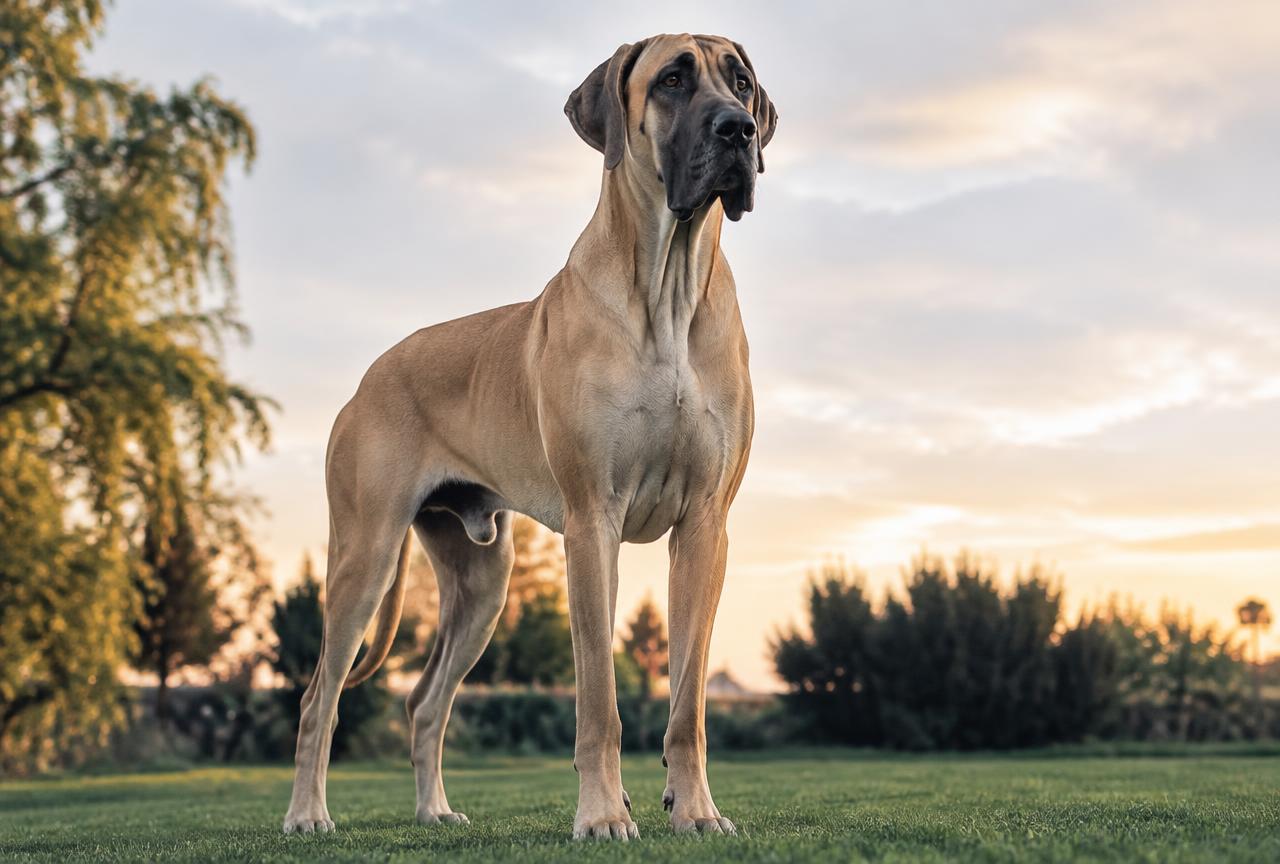
The Great Dane is a giant German breed descended from boar hunting mastiffs, now known chiefly for its calm, affectionate temperament and its sheer physical scale. Owning one means committing to slow, careful growth management, bloat awareness and the real costs of a true giant dog.
The Great Dane traces its ancestry to large mastiff and boarhound type dogs used across Europe for centuries to hunt wild boar, with the modern breed refined chiefly in Germany, where it carries the name Deutsche Dogge. Despite the name most people know it by, it has no particular connection to Denmark. Bred for size, speed and nerve against dangerous quarry, it later became prized simply for its extraordinary, gentle presence as a companion, and today it is better known for leaning affectionately against visitors than for anything to do with hunting.
What first strikes most people about the Great Dane is sheer scale, and the single most important thing a prospective owner needs to understand is that giant breed growth is a slow, careful process, not simply a bigger version of a normal puppy. A Great Dane puppy can gain several kilograms a week during its fastest growth phase, and that speed puts real strain on developing bones and joints. Overfeeding, excessive calcium supplementation or too much high impact exercise, including jumping and repetitive stair use, during the first 12 to 18 months significantly raises the risk of skeletal problems. Reputable breeders and vets recommend a large or giant breed specific puppy food, controlled portions and gentle, short exercise sessions rather than letting a Dane puppy play to exhaustion, right through to around two years of age, when the breed finally reaches full physical maturity. Many breeders and vets also advise keeping a Great Dane puppy lean rather than heavy through this period, since carrying extra weight on a rapidly growing frame adds further strain to joints that are already working hard to keep pace with the dog's skeleton.
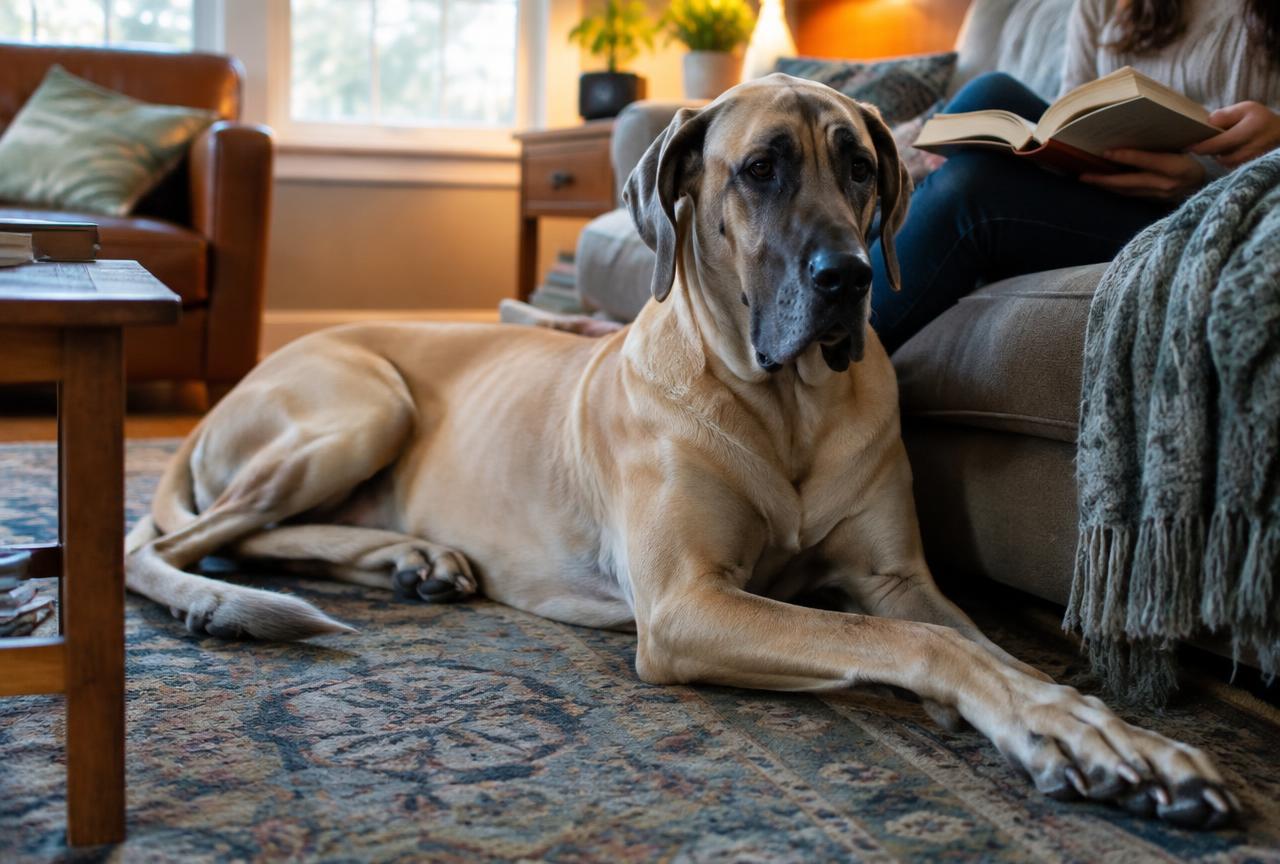
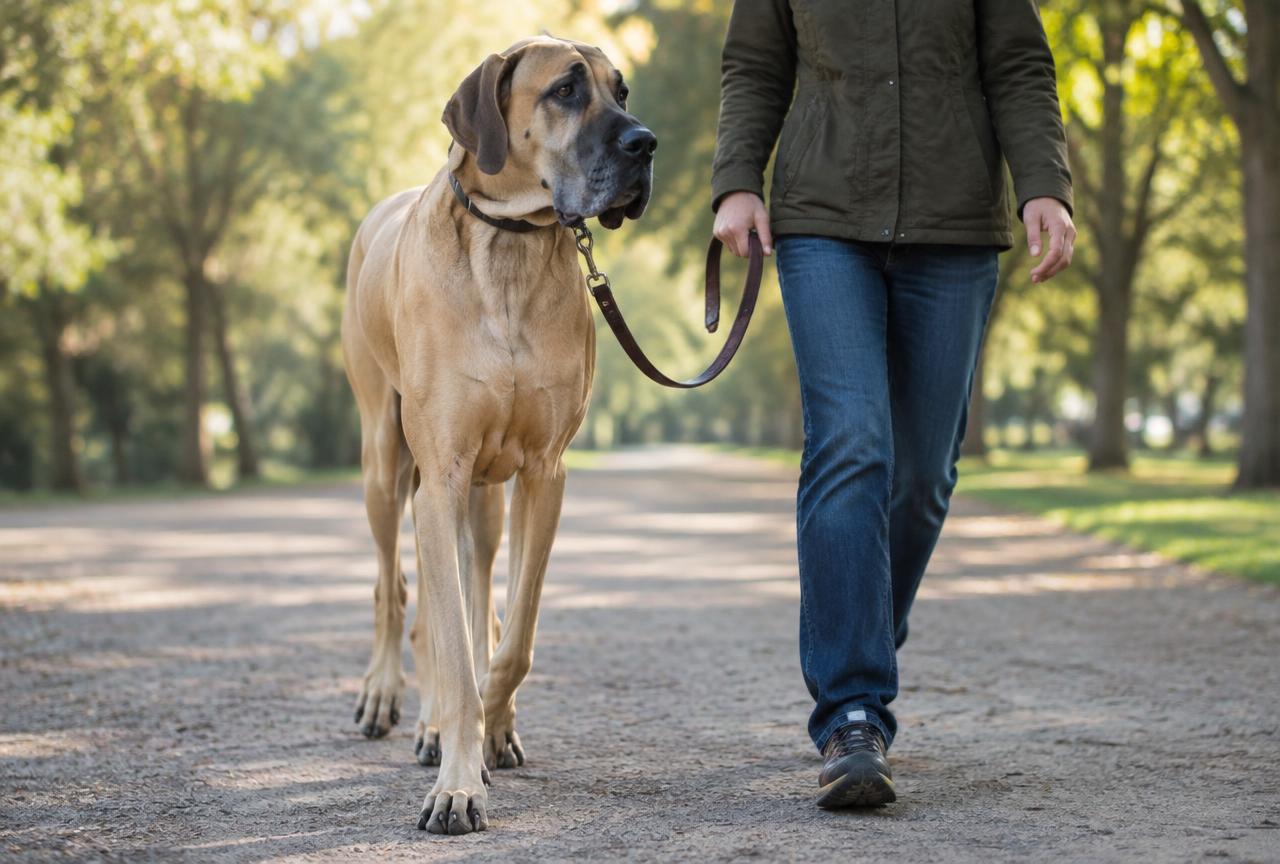
The temperament behind that imposing frame is, by most accounts, remarkably sweet. Great Danes are often described as gentle giants, typically affectionate, patient and eager to be close to their people, sometimes apparently unaware of their own size as they lean or sit on laps built for much smaller dogs. They are generally good with children in households used to managing a very large dog around toddlers, though their sheer bulk means supervision matters more for safety than for temperament concerns. Early socialisation and basic manners training are important simply because an untrained giant breed dog is a much bigger problem than an untrained small one. Despite their size, Great Danes are not a particularly high energy breed once mature, and many are content with a settled, calm household routine punctuated by walks rather than constant activity, which suits owners who want a large, undemanding presence rather than a dog requiring hours of exertion.
The most urgent health issue every Great Dane owner needs to recognise immediately is gastric dilatation volvulus, commonly called bloat, a life threatening emergency in which the stomach fills with gas and can twist on itself, cutting off blood supply. Deep chested giant breeds like the Great Dane are at notably elevated risk compared with most other breeds. Warning signs include a visibly swollen or hard abdomen, unproductive retching, restlessness, pacing and obvious distress, and any of these signs require emergency veterinary treatment immediately, since the condition can become fatal within hours. Many vets recommend feeding smaller, more frequent meals, avoiding vigorous exercise immediately before or after eating, and discussing a prophylactic gastropexy, a surgical procedure that tacks the stomach in place, particularly during any other abdominal surgery such as neutering. Breeding stock should also be screened for hip dysplasia, heart conditions including dilated cardiomyopathy, and thyroid function.
Great Danes also carry a sobering honesty point that any serious profile owes prospective owners: their lifespan is notably short for a dog, commonly reported around 7 to 10 years, a consequence of the physical strain that comes with extreme size. Alongside that, the practical costs of giant dog ownership are genuinely substantial and worth planning for honestly before bringing one home: food bills are considerably higher than for a medium sized dog, an extra large bed and a car big enough to transport the dog comfortably are real expenses, and veterinary costs, including anaesthesia and medication dosing, scale with body weight.
Taken as a whole, the Great Dane suits calm, spacious households with the budget and commitment for a giant breed's needs, who understand the growth, bloat risk and shortened lifespan involved, and who want an enormous, gentle companion rather than a working guard dog. It is a poor match for owners in small flats, those unable to afford giant breed veterinary and food costs, or anyone unprepared for a comparatively short time together. Pet insurance is worth arranging early given the breed's health risks, and owners should also think ahead about practicalities such as a car large enough for the dog and furniture sturdy enough to support its weight.
An enormous, gentle companion that needs careful growth management, bloat awareness and a household ready for true giant breed costs.
Exercise, day to day
- 1Puppies (8 weeks to 12 months): short, gentle lead walks several times a day, avoiding jumping, stairs and forced running.
- 2Adolescents (12 to 24 months): gradually increasing walk length, still avoiding high impact or repetitive strain activity while growth plates close.
- 3Adults: around 45 to 60 minutes a day of moderate walking, since this breed is calmer than its size suggests.
- 4Avoid vigorous exercise for at least an hour either side of meals to reduce bloat risk.
- 5Provide a calm, settled indoor routine, since Great Danes are generally content with moderate activity and plenty of rest.
Grooming, realistically
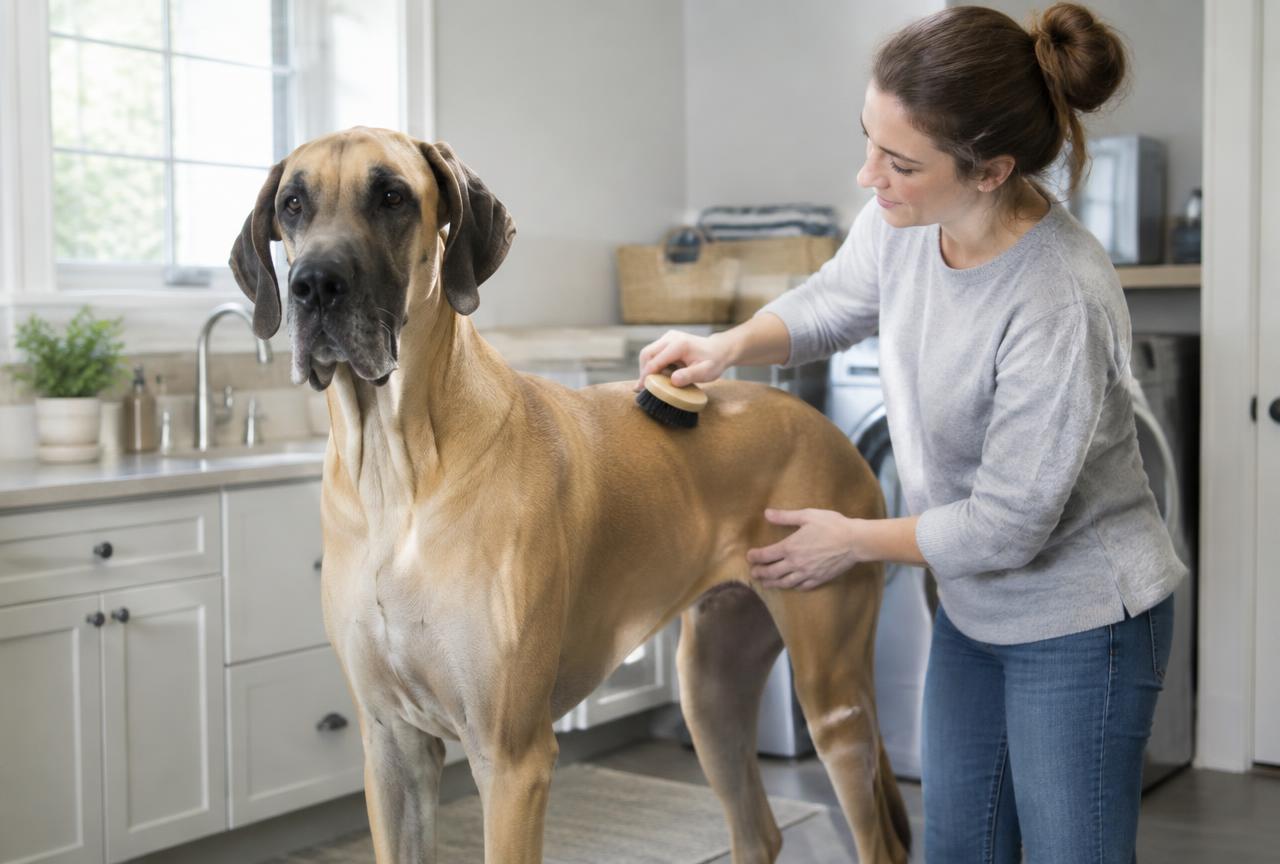
- 1Brush weekly with a rubber curry brush or grooming mitt to remove loose hair.
- 2Bathe every 6 to 8 weeks or when dirty, using a gentle dog shampoo.
- 3Check ears weekly and clean gently to prevent wax build up.
- 4Trim nails every 3 to 4 weeks, since overgrown nails affect this breed's joints more than most.
- 5Wipe drool and facial folds daily to keep skin clean and comfortable.
What you actually need
- Rubber curry brush or grooming mitt
- Gentle dog shampoo
- Heavy duty dog nail clippers or grinder
- Ear cleaning solution
- Drool towels or bandana
- Extra large orthopaedic dog bed
Puppy to adult
| Age | Male | Female | What is happening |
|---|---|---|---|
| 8 weeks | 8 to 11 kg | 7 to 10 kg | Already a large puppy, but growth plates are still fragile. |
| 3 months | 20 to 27 kg | 18 to 23 kg | Extremely rapid weight gain, giant breed puppy food and portion control are essential. |
| 6 months | 38 to 48 kg | 32 to 40 kg | Fast growing adolescent frame, high impact exercise should still be limited. |
| 9 months | 48 to 60 kg | 38 to 48 kg | Height largely reached, but muscle and bone density are still developing. |
| 12 months | 52 to 70 kg | 40 to 52 kg | Close to adult height, growth plates still closing, care should continue. |
| 24 months | 54 to 90 kg | 45 to 59 kg | Full skeletal and muscular maturity reached around this age. |
Ranges are typical, not targets. Judge condition by ribs and waist, and check with the ideal weight checker.
What to ask a breeder
- Can I see hip and heart screening results, including echocardiogram findings, for both parents?
- Has either parent experienced bloat, and what precautions do you recommend to reduce the risk?
- What feeding and growth guidance do you give for the first two years to protect developing joints?
- What is the typical lifespan and cause of death in your lines?
- Have the parents been thyroid tested?
- Can I meet both parents and see the environment the puppies were raised in?
Health tests to ask for
Ask to see results for both parents before you put down a deposit.
- Hip score (BVA/KC scheme)
- Cardiac screening including echocardiogram for dilated cardiomyopathy
- Thyroid function testing
- Eye examination for inherited conditions
- Discussion of prophylactic gastropexy to reduce bloat risk
- Elbow score where available
Health watch-list
What to ask a breeder about, and what to watch for over a lifetime. This is orientation, not veterinary advice, anything you notice belongs in front of a vet.
Bloat (gastric dilatation volvulus)
CommonA life threatening emergency in which the stomach fills with gas and can twist; deep chested giant breeds are at notably elevated risk, and owners should know the warning signs and consider prophylactic gastropexy.
Hip dysplasia
CommonMalformed hip joints can cause discomfort and arthritis; hip scoring of breeding stock and controlled puppy growth help reduce risk.
Dilated cardiomyopathy
NotableA serious heart muscle disease reported in the breed; cardiac screening including echocardiogram is recommended for breeding stock.
Wobbler syndrome
NotableA condition affecting the neck vertebrae that can cause unsteady gait, more frequently reported in giant breeds; a vet should assess any sudden coordination changes.
Hypothyroidism
UncommonAn underactive thyroid can cause weight gain, coat changes and lethargy; thyroid testing of breeding stock is advised.
Bone cancer (osteosarcoma)
UncommonGiant breeds are reported to have an elevated risk of this aggressive bone cancer; any persistent limb swelling or lameness should be assessed promptly.
What it costs to keep one
Realistic running cost
€302 / month
About €3,624 a year, or roughly €32,616 across a 9-year life, before purchase price, neutering and one-off vet events.
Before the puppy arrives. Budget roughly €900 to 1800 for a crate, bed, lead and harness, bowls, puppy classes, first vaccinations and grooming kit sized for this breed. Figures throughout are indicative and vary a good deal between countries.
Interactive · built for this breed
Is a Great Dane right for your home?
Seven honest questions about your space, time and household, checked against this breed's exercise need, coat, sociability and tolerance for time alone.
Fit with your routine
97%
A strong fit
Your routine suits a Great Dane well. Meet adult dogs of the line before you commit.
Working in your favour
- Your daily walking comfortably covers this breed's exercise need.
- Coat care fits the grooming time you offered.
Compare more breeds in the matchmaker, or plan meals with the portion calculator.
The verdict, by household
First-time owner
Only with thorough preparation
Manageable for a committed first time owner who researches giant breed growth, bloat prevention and costs thoroughly before bringing a puppy home.
Family with children
A good match with supervision
Generally gentle and patient, though the dog's sheer size means supervision around young children is important for safety.
Active single or couple
A solid match
Suits owners with space and moderate daily exercise routines rather than those seeking a high energy running companion.
Owner in a flat with close neighbours
Not recommended
The breed's sheer size makes small flat living impractical regardless of temperament.
When to call your vet
- A visibly swollen or hard abdomen, unproductive retching or obvious distress, which can indicate bloat and requires emergency veterinary treatment immediately
- Lameness or reluctance to rise, which may point to a hip or joint problem during growth
- Reduced exercise tolerance, coughing or fainting, which can suggest a heart condition
- Rapid or uneven growth, which should prompt a check of feeding and exercise routines
- Swollen, painful joints in a growing puppy, which can indicate skeletal stress and needs prompt veterinary assessment
Nothing here is a diagnosis. A swollen, hard belly with retching, collapse, breathing difficulty and sudden hind-leg weakness are emergencies: go straight away.
Great Dane vs the closest alternatives
| Breed | Weight | Energy | Grooming | € / month |
|---|---|---|---|---|
| Great Dane | 45 to 90 kg | 5/10 | 2/10 | €302 |
| Irish Wolfhound | 47 to 63 kg | 5/10 | 4/10 | €225 |
| Boston Terrier | 5 to 11 kg | 5/10 | 2/10 | €67 |
| Rottweiler | 35 to 60 kg | 6/10 | 2/10 | €158 |
Great Dane questions, answered
How big do Great Danes get?
Male Great Danes typically weigh 54 to 90 kg and stand 76 to 81 cm at the shoulder, while females weigh 45 to 59 kg and stand 71 to 76 cm. They continue growing until around two years of age, considerably longer than most breeds.
Are Great Danes good with children?
Yes, Great Danes are generally gentle, patient and affectionate with children when well socialised from puppyhood. Their enormous size means supervision is still important simply to prevent accidental knocks during play, not because of any temperament concern around the family itself.
How long do Great Danes live?
Great Danes commonly live around 7 to 10 years, a notably short lifespan linked to the physical strain of their extreme size. Anyone considering the breed should weigh that honestly against the breed's wonderful temperament before committing.
What is bloat in Great Danes?
Bloat, or gastric dilatation volvulus, is a life threatening emergency in which the stomach fills with gas and can twist, cutting off blood supply. Deep chested giant breeds like the Great Dane are at notably elevated risk, and any swollen abdomen, retching or distress needs immediate veterinary attention.
How much exercise does a Great Dane need?
Despite their size, mature Great Danes generally need only around 45 to 60 minutes of moderate daily exercise, split across two relaxed walks. Puppies need far shorter, gentler activity, because forced or repetitive exercise can damage their rapidly growing joints.
Do Great Danes shed much?
Great Danes shed a moderate amount year round from their short coat, with heavier losses as seasons change. They also drool considerably, which matters as much as shedding for some households. Weekly brushing and a cloth for daily wiping keep both manageable.
How much does it cost to own a Great Dane?
Giant breed costs are genuinely substantial: expect around 130 euros a month in food, 75 euros in insurance, and initial setup costs of 900 to 1800 euros for an extra large bed, crate and other equipment. Veterinary costs, including medication dosing, also scale with the dog's weight.
Sources
- Great Dane breed standard, The Kennel Club
- Great Dane breed information, American Kennel Club
- Bloat (gastric dilatation volvulus) in dogs, PDSA
- Canine heart schemes, British Veterinary Association
- Hip dysplasia scheme, British Veterinary Association
- Giant breed growth and nutrition, American Kennel Club
Put it into practice
Reading that goes with this

Health
Why Is My Dog Panting So Much? Causes and Warning Signs

Puppies
Crate Training a Puppy: A 14-Day Plan

Health
Why Is My Dog Shaking? Causes and When to Worry
Health
How Long Do Dogs Live? Lifespan by Size and Breed

Care
Dog Years to Human Years: The Real Science
Nutrition
Can Dogs Eat Fruit? A Vet-Informed Guide
Health
Dog Throwing Up White Foam: Causes and When to Worry

Health
Dog Dry Heaving: Causes and When It Is an Emergency
Breeds people compare with this
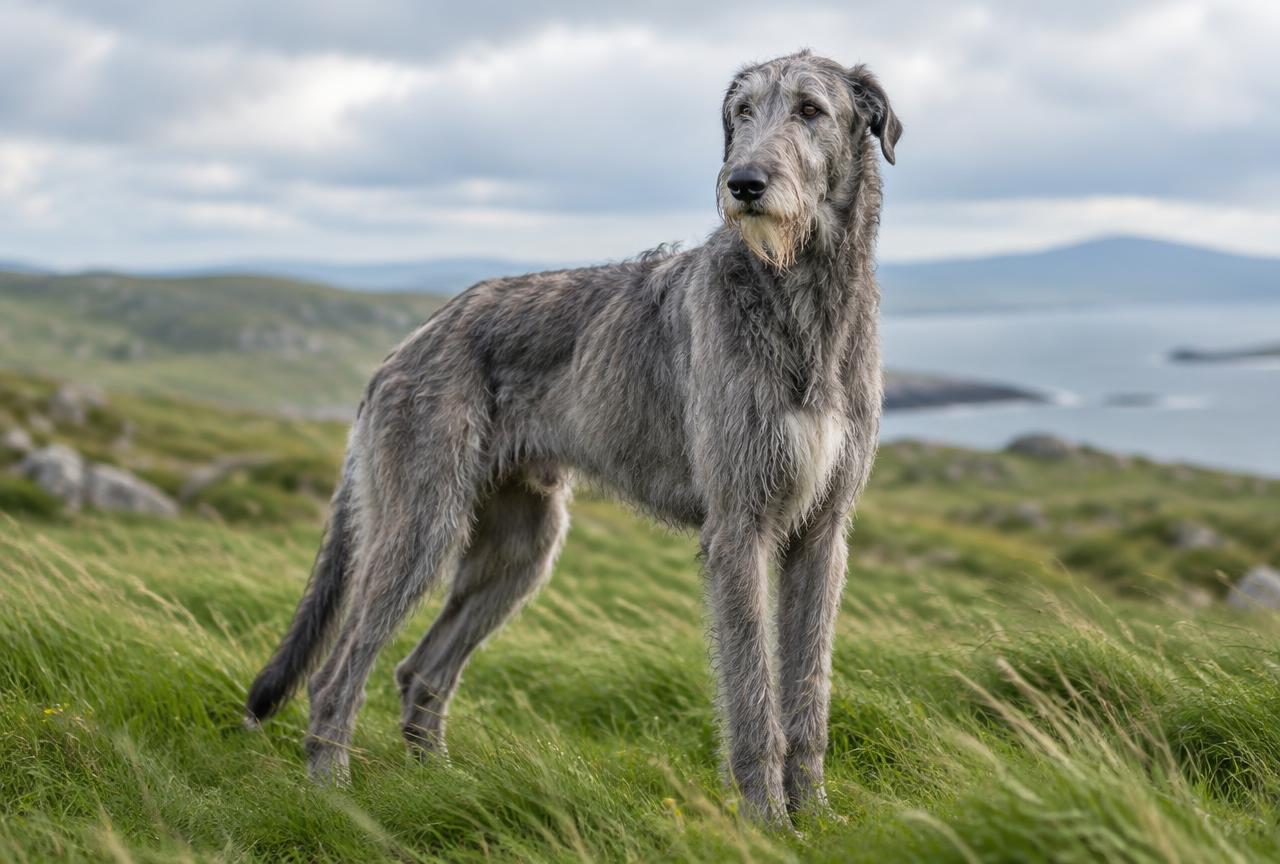
Irish Wolfhound
The tallest of all dog breeds: a gentle giant with a heartbreakingly short clock.
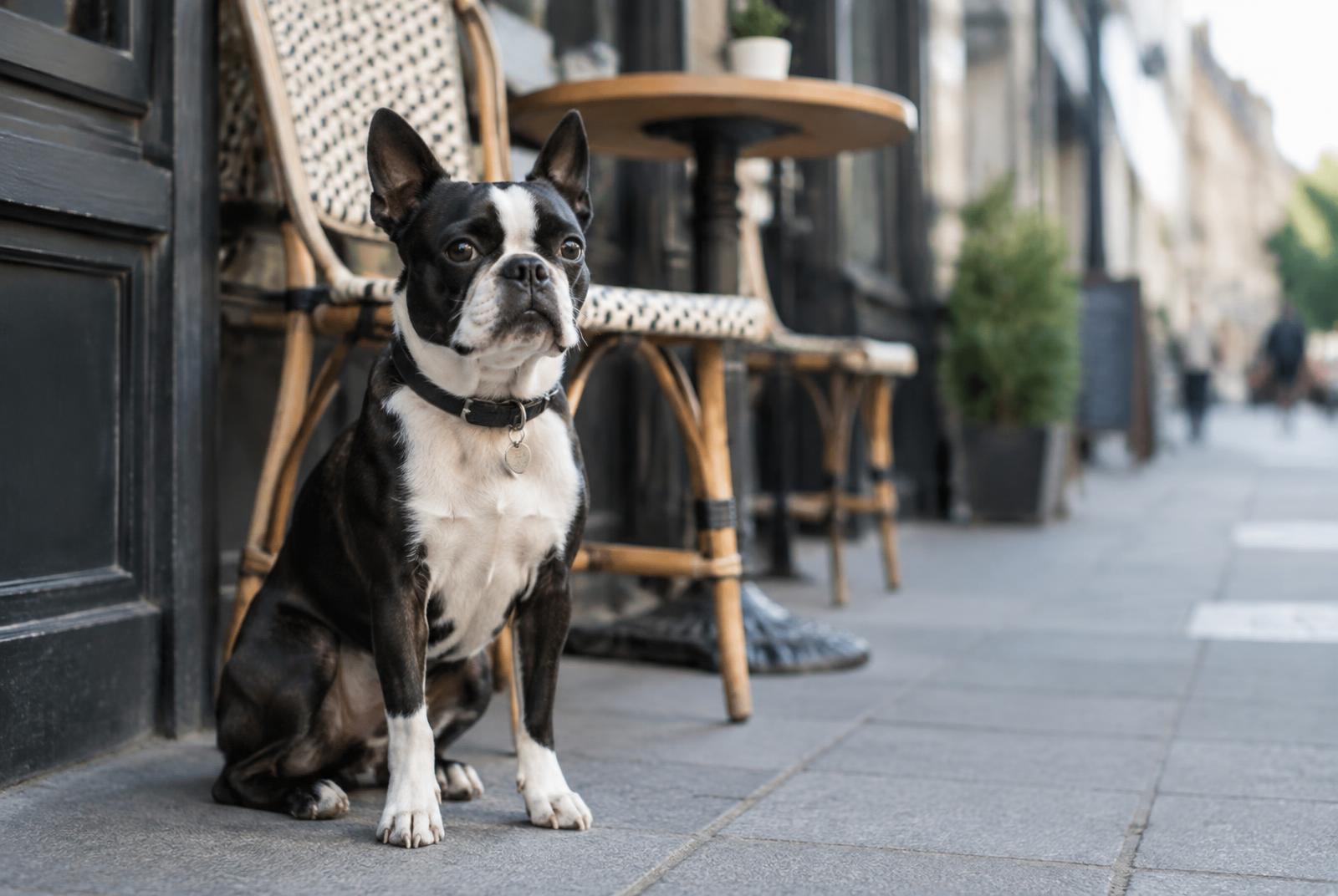
Boston Terrier
A dapper, good natured American companion with a milder face and a gentleman's manners.
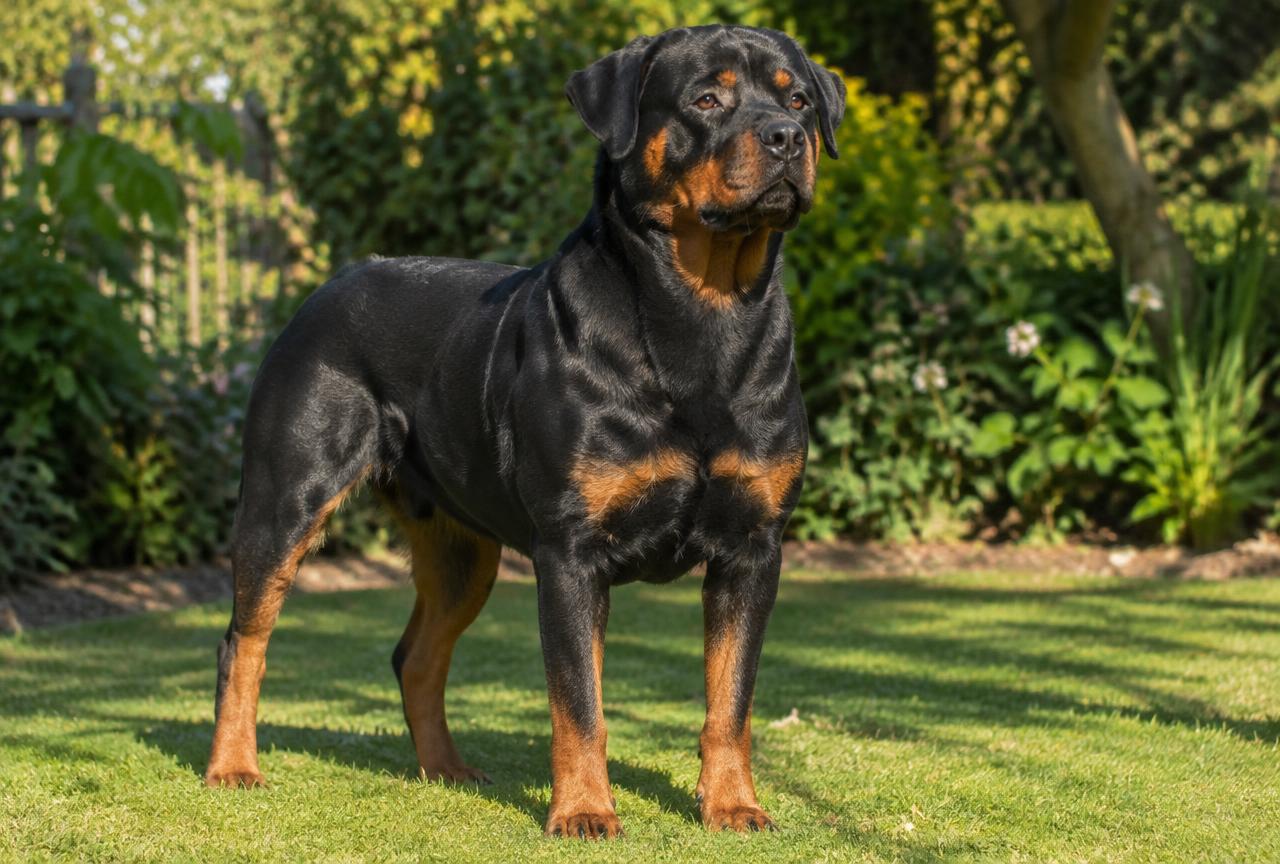
Rottweiler
A calm, powerful guardian breed that needs early socialisation and a confident, consistent owner.