
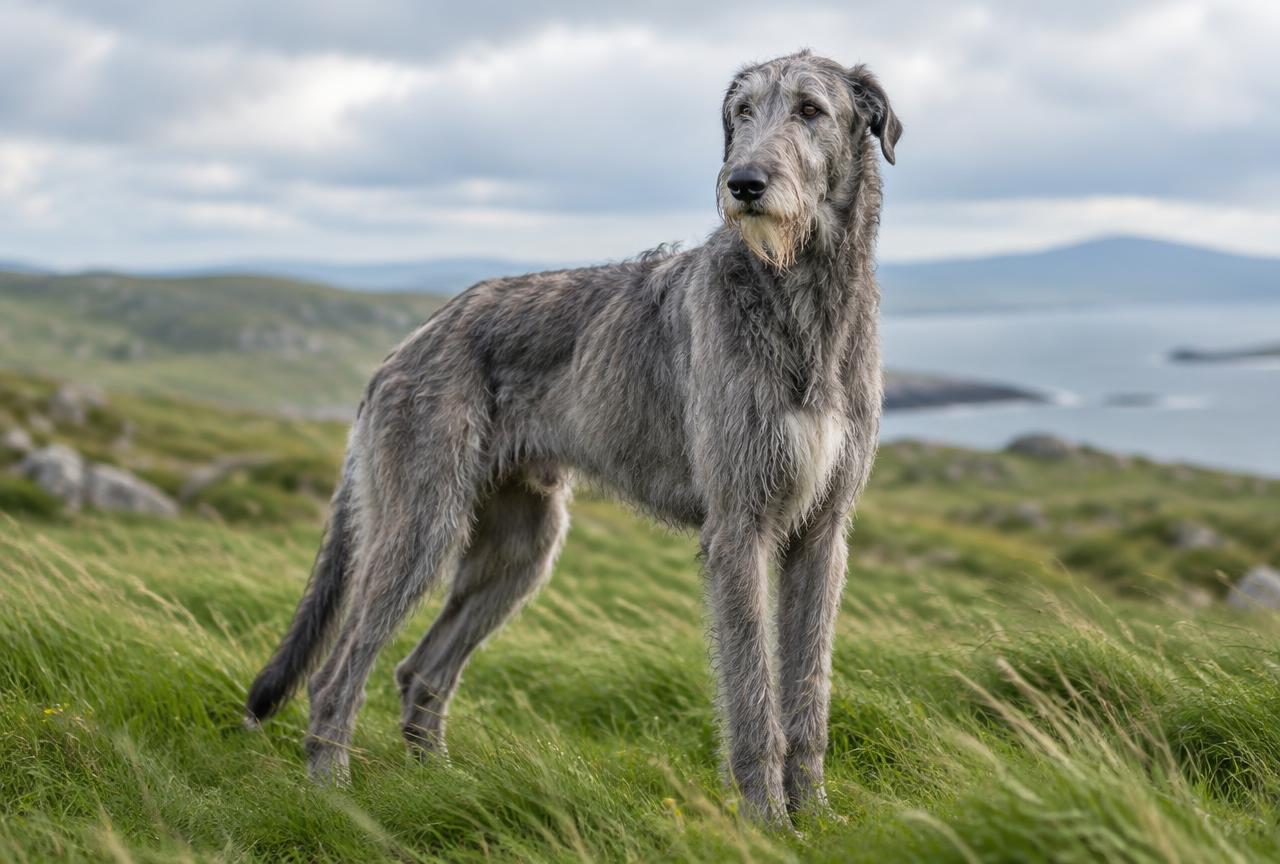
Hound group
One of the oldest recognised breeds in Ireland, the Irish Wolfhound was bred for centuries to hunt wolf and Irish elk alongside Irish chieftains, prized for size, speed and courage. The breed nearly died out as wolves disappeared from Ireland, and was reconstructed in the nineteenth century by Captain George Augustus Graham, who crossed surviving lines with Deerhounds, Great Danes and Borzois to restore its size and type.
Irish Wolfhound
The Irish Wolfhound is the tallest dog breed in the world, a gentle, dignified sighthound whose calm temperament belies a demanding size and a lifespan shorter than almost any other breed.
Reviewed by the SniffScroll editorial desk
The tallest of all dog breeds: a gentle giant with a heartbreakingly short clock.
The short version
- Gentle, calm and affectionate despite its enormous size, closer in temperament to a sighthound than a guard dog.
- Lifespan of six to ten years is among the shortest of any breed and needs to be considered honestly before buying.
- Dilated cardiomyopathy, bloat and osteosarcoma are the main health risks; regular cardiac screening matters.
- Puppies grow extremely fast and need a slow-growth feeding plan with restricted hard exercise until joints mature.
- Food, insurance and space costs all sit at the top of the giant-breed range.
- Needs a large home with secure, tall garden fencing rather than a flat or small house.
- Weight
- 47 to 63 kg
- Height
- 71 to 86 cm
- Lifespan
- 6 to 10 yrs
- Size
- Giant
- Group
- Hound
- Coat
- Rough, wiry, medium-length double coat, most commonly grey, but also brindle, red, black, pure white or fawn
- Grown male
- 53 to 63 kg
- Grown female
- 47 to 54 kg
- Years to full size
- about 2
- One-off setup
- €2200 to 3800
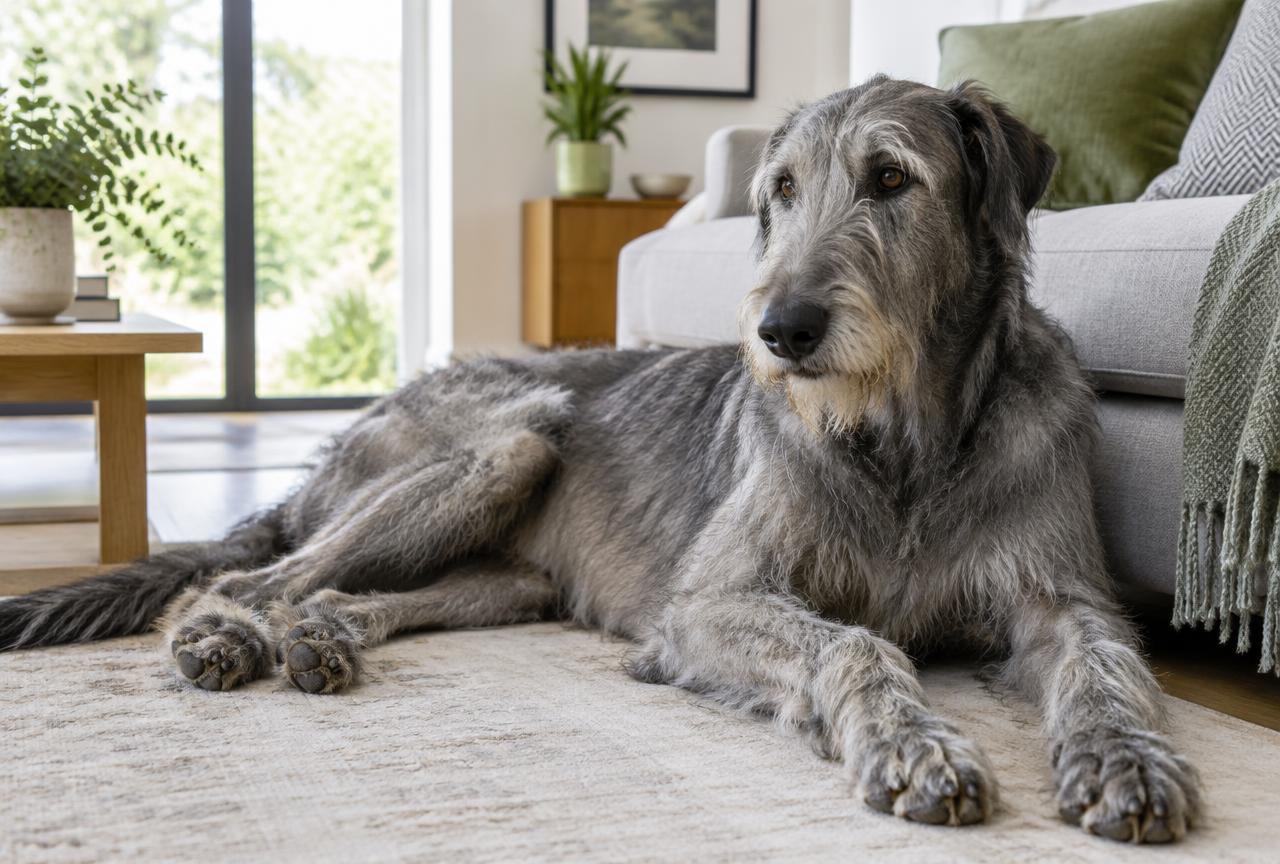
Get one if…
- Households with genuinely large indoor and outdoor space
- Owners able to manage a careful slow-growth puppy feeding and exercise plan
- Families wanting a calm, gentle giant rather than a high-energy working dog
- Owners emotionally prepared for a short lifespan relative to the dog's size
- Homes with secure, tall garden fencing and room for a large car
Think again if…
- Flats or small homes without space for a dog this large to move and rest
- Owners on a tight budget who have not costed giant-breed food, insurance and vet care
- Anyone unwilling to restrict hard exercise during the puppy's first two years
- Households wanting a dog likely to live well into its teens
- Gardens without tall, secure fencing around open sightlines
Trait profile
The Wolfhound combines sighthound calm with giant-breed scale: gentle, affectionate and quiet indoors, but needing real space and a careful approach to growth and health that smaller breeds do not require.
Space & setup. Needs a genuinely large home and a secure, tall-fenced garden. Car boots, doorways and furniture all need to accommodate a dog that, stretched out, takes up far more room than its calm temperament suggests.
Allergies. The wiry double coat sheds moderately year round with a heavier drop in spring and autumn. It is not a low-allergen breed and is unsuitable for households with significant dog allergies.
Living with a Irish Wolfhound
The Irish Wolfhound is a giant sighthound, historically bred to course wolves and deer, now kept almost entirely as a calm, dignified companion. Gentle and affectionate with people, it needs space, a careful growth plan as a puppy, and owners prepared for a lifespan far shorter than most breeds.
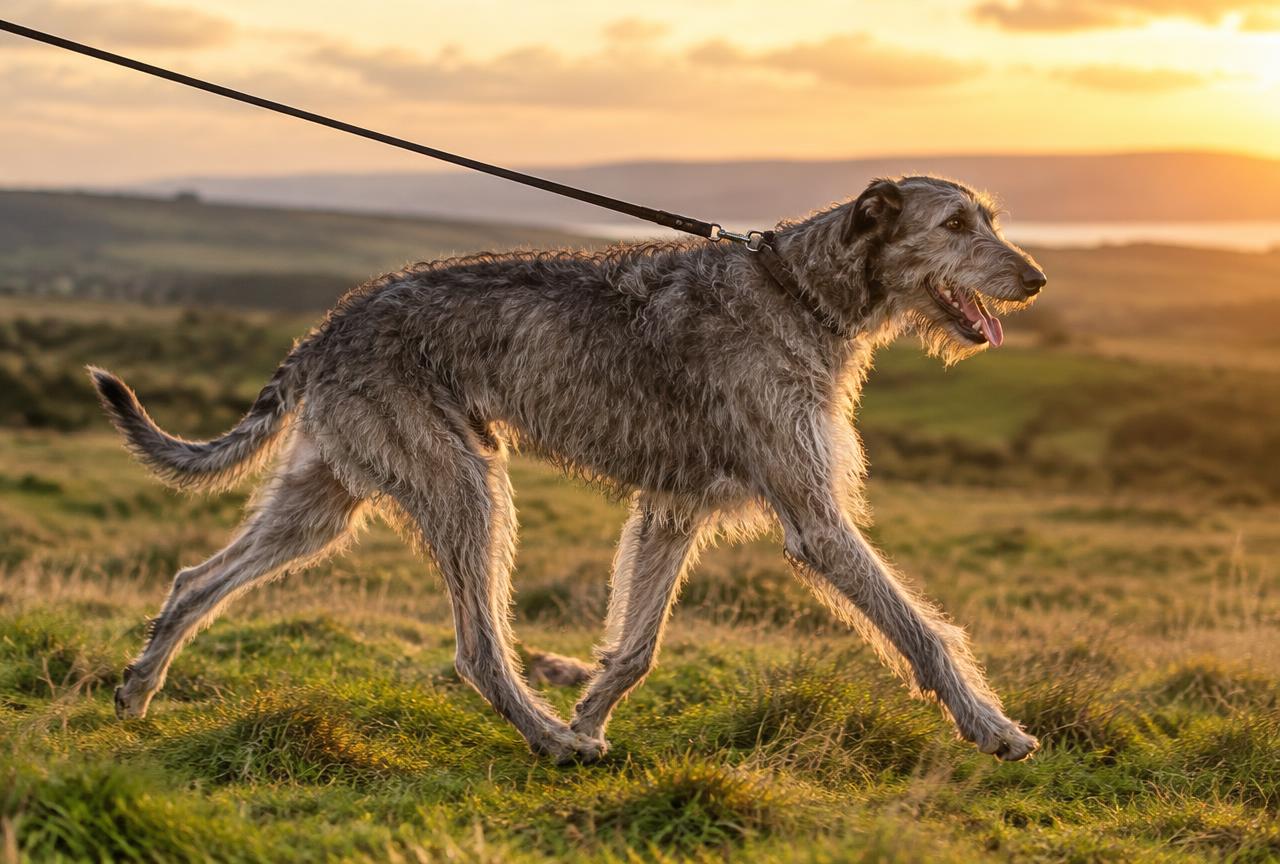
No breed quite prepares an owner for the Irish Wolfhound in the flesh. At up to 86 centimetres at the shoulder, it is the tallest dog breed recognised anywhere, yet the temperament behind that towering frame is one of the gentlest in the hound group. Wolfhounds are calm, affectionate, patient with considerate children and generally easygoing with other dogs. They were bred to course wolves, not to guard or to work independently all day, and that sighthound heritage shows in long naps punctuated by short bursts of genuine speed. This is not a breed that matches its size with a demanding temperament, which is part of why people fall for it so quickly. It is also part of why people underestimate what living with one actually costs, physically, financially and emotionally.
The single hardest truth about the Irish Wolfhound is its lifespan. Six to ten years is short even among giant breeds, and many families lose their Wolfhound well before they are ready. Anyone considering this breed needs to sit with that honestly before bringing a puppy home: you are choosing a dog whose decline, when it comes, will likely come faster and sooner than with almost any other breed. This is not meant to frighten people away, but to make sure the decision is made with open eyes rather than discovered partway through a first heartbreak.
Health follows directly from that shortened clock. Dilated cardiomyopathy is common in the breed and a major cause of early death, which is why annual cardiac auscultation and periodic echocardiograms from middle age onward are not optional extras but core care. Gastric dilatation-volvulus, or bloat, is a genuine emergency risk in deep-chested giants: feeding smaller meals, avoiding vigorous exercise around mealtimes, and knowing the signs of bloat before they ever appear can be lifesaving. Osteosarcoma, an aggressive bone cancer, occurs more often in giant breeds than almost any other group, and any sudden lameness in an older Wolfhound deserves prompt veterinary attention rather than a wait-and-see approach. Portosystemic liver shunts and hip dysplasia round out the main watch list, both screened for in responsible breeding programmes through bloodwork, imaging and hip and elbow scoring.
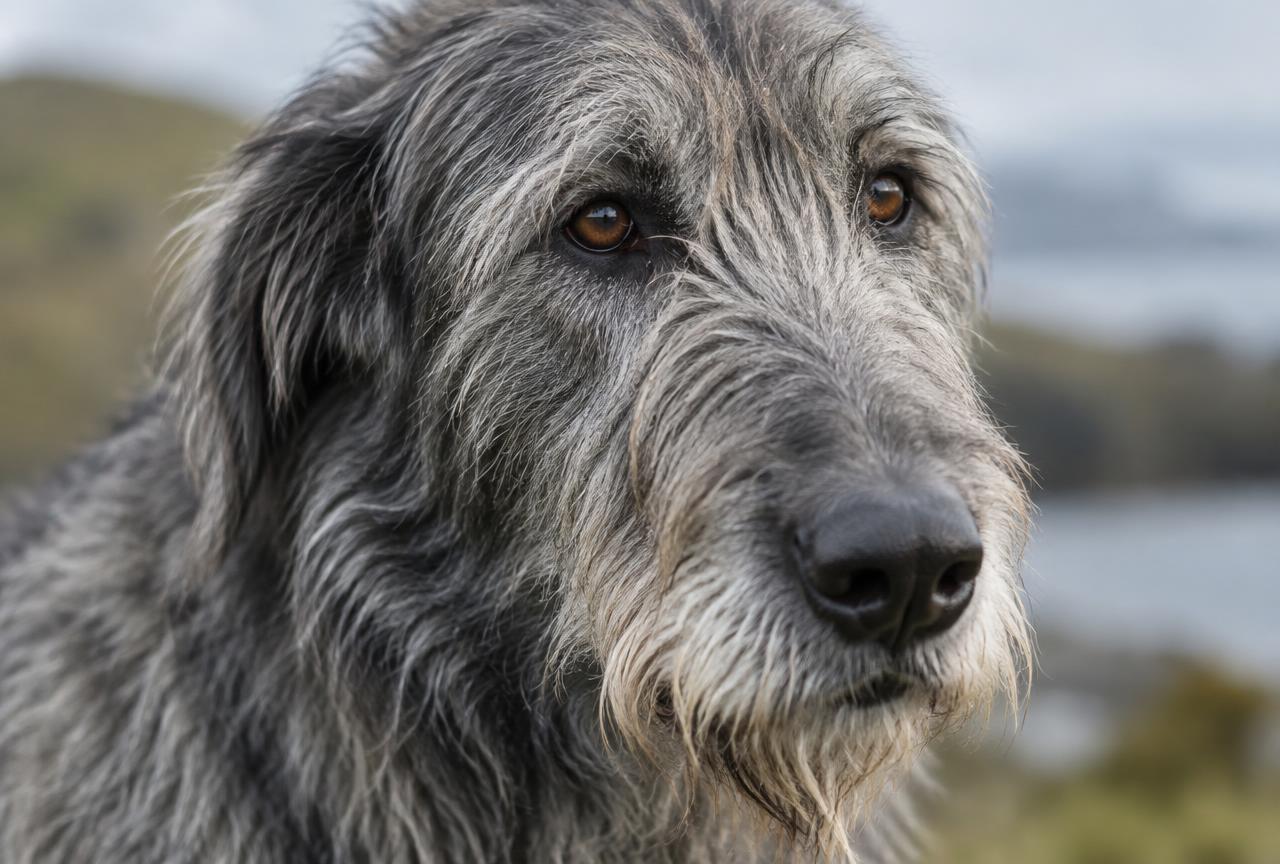
Puppyhood deserves its own section because it is where many giant-breed mistakes happen. Wolfhound puppies grow at an extraordinary rate, reaching much of their adult height within the first year while their joints and growth plates are still soft and vulnerable. A slow-growth feeding plan using a large or giant breed puppy food, calculated to produce steady rather than rapid weight gain, protects developing joints far better than a food designed to maximise growth speed. Hard exercise, repetitive stair use, jumping from furniture and forced road walking should all be avoided until growth plates close at around eighteen months to two years. Gentle, short, free-running sessions on soft ground are the right approach; marathon walks and cycling alongside a bike are not, not yet.
Space and cost are the other two pillars of Wolfhound ownership that cannot be waved away. This is a dog that needs a genuinely large home, not a generous flat. A Wolfhound stretched out takes up what feels like one and a half sofas, car boots need to be measured before the dog arrives rather than after, and garden fencing needs to be both tall and secure, since a sighthound that sees something worth chasing will clear low obstacles with little effort. Food costs sit at the very top of the giant-breed range, and insurance, parasite prevention and routine veterinary costs all scale with the dog's sheer size. None of this is prohibitive for the right household, but it needs honest budgeting well before the puppy arrives.
For the right owner, though, the Irish Wolfhound rewards all of this with a companionship that is hard to match: a dog content to lean its whole weight gently against you, to settle quietly by the fire, and to greet strangers with curiosity rather than suspicion. It suits households with space, time for puppy-appropriate exercise, a stable income for giant-breed costs, and the emotional resilience to love a dog knowing the years will be few. It does not suit flats, households wanting a long-lived companion, or anyone unwilling to manage a careful growth plan through the first two years. Go in with your eyes open, and the Wolfhound gives back a depth of calm affection that few breeds can equal.
A remarkably gentle, dignified companion for owners with the space and the emotional readiness for a breed whose lifespan is tragically short. Giant-scale costs and careful puppy growth management are non-negotiable.
Exercise, day to day
- 1Puppies (8 to 26 weeks): short, gentle free-running sessions on soft ground only; avoid stairs and jumping.
- 2Adolescents (6 to 18 months): gradually increasing lead walks, still avoiding hard, repetitive or forced exercise while growth plates remain open.
- 3Adults: 45 to 60 minutes daily, combining a steady walk with a short burst of free-running sighthound speed in a secure area.
- 4Mental work: scent games and calm settle training suit the breed's temperament better than high-arousal activity.
Grooming, realistically
- 1Hand-strip or brush the wiry coat weekly to remove dead hair and maintain texture.
- 2Bathe only occasionally, as frequent bathing softens the harsh outer coat.
- 3Trim nails every three to four weeks, as giant breeds can be reluctant to wear them down naturally.
- 4Clean ears weekly and check for debris after outdoor runs.
- 5Brush teeth several times a week to manage plaque, which forms quickly in large dogs.
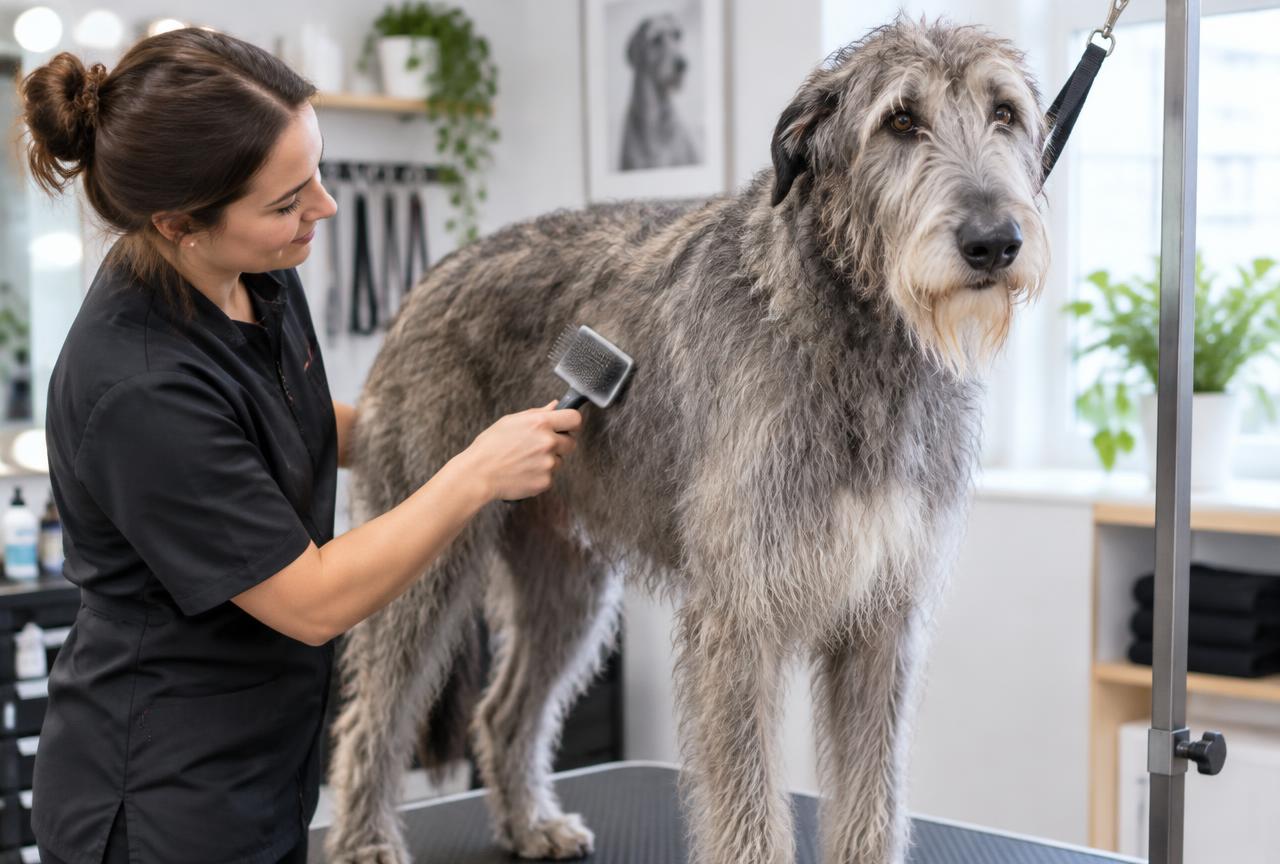
What you actually need
- Slicker brush
- Undercoat rake
- Stripping knife
- Large dog nail clippers
- Ear cleaning solution
- Enzymatic dog toothpaste and brush
Puppy to adult
| Age | Male | Female | What is happening |
|---|---|---|---|
| 8 weeks | 9 to 12 kg | 7 to 10 kg | Already a substantial puppy; begin gentle handling, start the slow-growth feeding plan immediately. |
| 3 months | 18 to 25 kg | 15 to 21 kg | Rapid bone growth under way; avoid stairs, jumping and long forced walks. |
| 6 months | 35 to 48 kg | 30 to 42 kg | Close to half adult weight already; keep exercise short and on soft ground. |
| 9 months | 45 to 58 kg | 38 to 50 kg | Much of adult height reached, though frame is still filling out and growth plates remain open. |
| 12 months | 50 to 61 kg | 43 to 54 kg | Looks nearly adult but joints are still maturing; continue to avoid high-impact exercise. |
| 18 months | 53 to 63 kg | 46 to 56 kg | Growth plates closing; normal adult exercise can begin gradually from this point. |
Ranges are typical, not targets. Judge condition by ribs and waist, and check with the ideal weight checker.
What to ask a breeder
- Have the parents had recent cardiac screening, including echocardiogram results?
- What hip and elbow scores do the parents and grandparents have?
- Can you show me a feeding and exercise plan for slow, controlled puppy growth?
- What is the longevity and cause of death history in this line?
- How do you socialise puppies to traffic, handling and other dogs before they leave?
Health tests to ask for
Ask to see results for both parents before you put down a deposit.
- Cardiac auscultation and periodic echocardiogram, especially from middle age onward
- Hip and elbow scoring on breeding stock
- Slow-growth feeding plan with a large or giant breed puppy food
- Bile acid testing where portosystemic shunt is suspected in a puppy
- Prompt imaging for any unexplained limb lameness in adults
Health watch-list
What to ask a breeder about, and what to watch for over a lifetime. This is orientation, not veterinary advice, anything you notice belongs in front of a vet.
Dilated cardiomyopathy
CommonA leading cause of early death in the breed; regular cardiac auscultation and echocardiograms from middle age onward help catch it early.
Gastric dilatation-volvulus (bloat)
NotableA deep chest raises the risk of this life-threatening emergency; smaller meals and calm behaviour around mealtimes reduce the risk.
Osteosarcoma
NotableThis aggressive bone cancer occurs more often in giant breeds; any sudden limb lameness deserves prompt veterinary imaging.
Portosystemic liver shunt
UncommonA congenital condition seen in puppies that fail to thrive or show poor coordination; bile acid testing confirms it.
Hip dysplasia
Common with ageGiant size places real strain on hip joints over a lifetime; breeding stock should be hip scored before pairing.
Pneumonia and respiratory infection
UncommonReported at a slightly higher rate than in many breeds; prompt veterinary attention for persistent coughing is wise.
What it costs to keep one
Realistic running cost
€225 / month
About €2,700 a year, or roughly €21,600 across a 8-year life, before purchase price, neutering and one-off vet events.
Before the puppy arrives. Budget roughly €2200 to 3800 for a crate, bed, lead and harness, bowls, puppy classes, first vaccinations and grooming kit sized for this breed. Figures throughout are indicative and vary a good deal between countries.
Interactive · built for this breed
Is a Irish Wolfhound right for your home?
Seven honest questions about your space, time and household, checked against this breed's exercise need, coat, sociability and tolerance for time alone.
Fit with your routine
97%
A strong fit
Your routine suits a Irish Wolfhound well. Meet adult dogs of the line before you commit.
Working in your favour
- Your daily walking comfortably covers this breed's exercise need.
- Coat care fits the grooming time you offered.
Compare more breeds in the matchmaker, or plan meals with the portion calculator.
The verdict, by household
Caution advised
The gentle temperament is forgiving, but giant-breed feeding, growth management and costs are a steep learning curve for a first dog.
Good
Patient and gentle with considerate children, though its sheer size means young children can be knocked over by accident.
Good
Happy with moderate daily exercise and free-running space once mature; not a running or cycling partner, especially as a puppy.
Poor
Size alone rules out most flats; a quiet temperament does not compensate for the lack of space to move and rest.
When to call your vet
- A swollen, hard abdomen with unproductive retching, which is a bloat emergency requiring immediate veterinary attention
- Sudden lameness or swelling in a leg, which can indicate osteosarcoma and needs prompt imaging
- Laboured breathing, coughing or reduced exercise tolerance, which can signal dilated cardiomyopathy
- Stunted growth, poor coordination or disorientation in a puppy, which can indicate a liver shunt
- Stiffness or reluctance to rise after rest, worth a hip and joint assessment
Nothing here is a diagnosis. A swollen, hard belly with retching, collapse, breathing difficulty and sudden hind-leg weakness are emergencies: go straight away.
Irish Wolfhound vs the closest alternatives
| Breed | Weight | Energy | Grooming | € / month |
|---|---|---|---|---|
| Irish Wolfhound | 47 to 63 kg | 5/10 | 4/10 | €225 |
| Great Dane | 45 to 90 kg | 5/10 | 2/10 | €302 |
| English Mastiff | 54 to 104 kg | 4/10 | 4/10 | €228 |
| Pug | 6 to 10 kg | 4/10 | 3/10 | €85 |
Irish Wolfhound questions, answered
How long do Irish Wolfhounds live?
Typically six to ten years, which is among the shortest lifespans of any breed. Prospective owners should consider this honestly before committing, alongside good diet, weight control and regular veterinary care to give the dog the best chance of reaching the upper end of that range.
How big do Irish Wolfhounds get?
Males typically reach 53 to 63 kg and stand 79 to 86 cm at the shoulder, while females reach 47 to 54 kg and 71 to 76 cm. They are the tallest breed recognised anywhere and need roughly two years to reach full adult size.
Are Irish Wolfhounds good family dogs?
Yes, with the right space. They are gentle, patient and affectionate with considerate children, though their sheer size means young children can be knocked over by accident rather than aggression, so supervision matters.
What should I know about Irish Wolfhound puppies?
They grow extremely fast, reaching much of their adult height within the first year. A slow-growth feeding plan and restricted hard exercise, avoiding stairs, jumping and long forced walks, protect developing joints until growth plates close at around eighteen months to two years.
What are the main Irish Wolfhound health problems?
Dilated cardiomyopathy, bloat and osteosarcoma are the main concerns, alongside hip dysplasia and, less commonly, liver shunts in puppies. Regular cardiac screening and prompt attention to any unexplained lameness are the most important safeguards.
Do Irish Wolfhounds need a lot of exercise?
Moderate exercise suits them well: around 45 to 60 minutes a day for adults, combining a steady walk with a short burst of free-running speed in a secure area. They are not suited to running or cycling alongside an owner, especially as puppies.
Are Irish Wolfhounds expensive to keep?
Yes. Food, insurance, parasite prevention and veterinary costs all sit at the top of the giant-breed range, and the initial setup cost for bedding, crates and equipment sized for a giant puppy is considerable. Budget carefully before bringing one home.
Sources
Put it into practice
Reading that goes with this




Breeds people compare with this
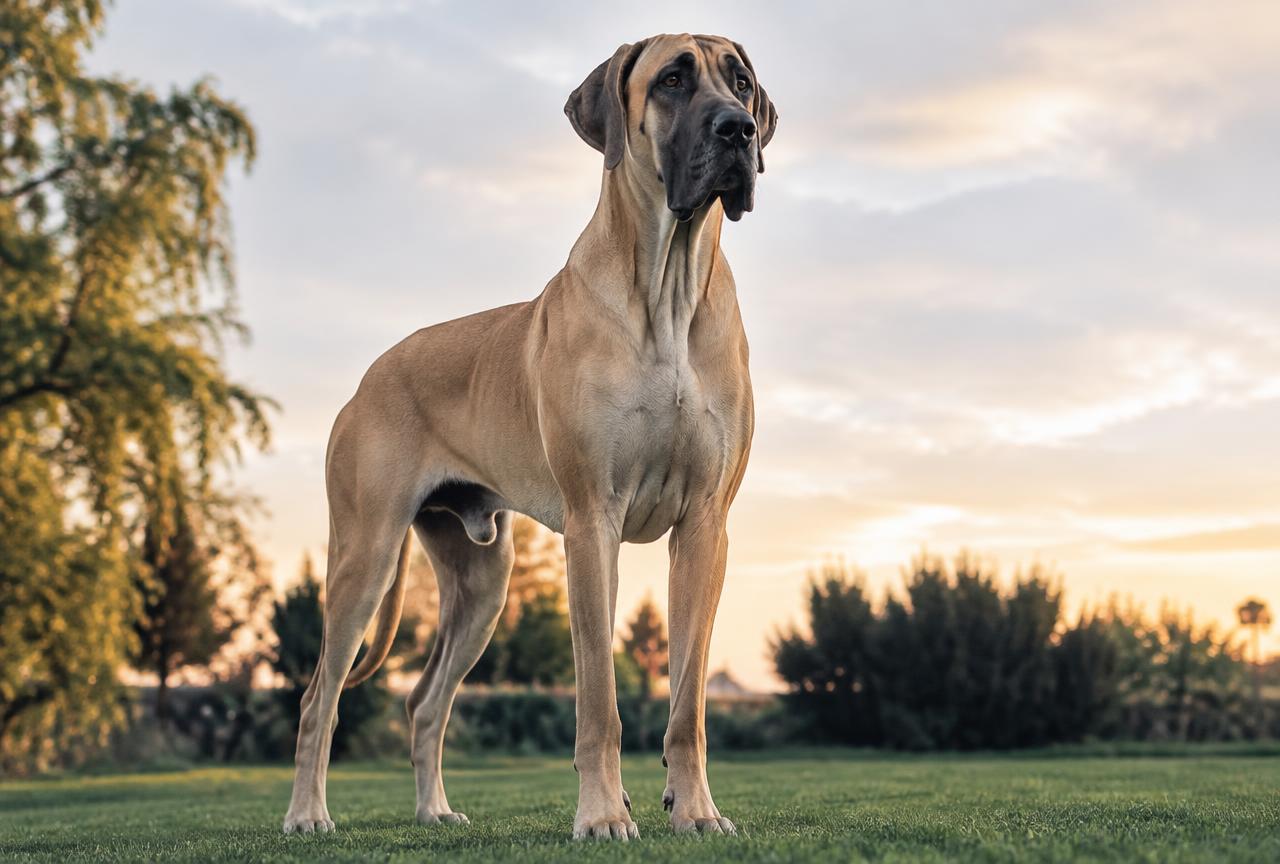
Great Dane
A gentle giant whose enormous size demands patient growth, vigilant bloat awareness and an honest look at lifespan and cost.
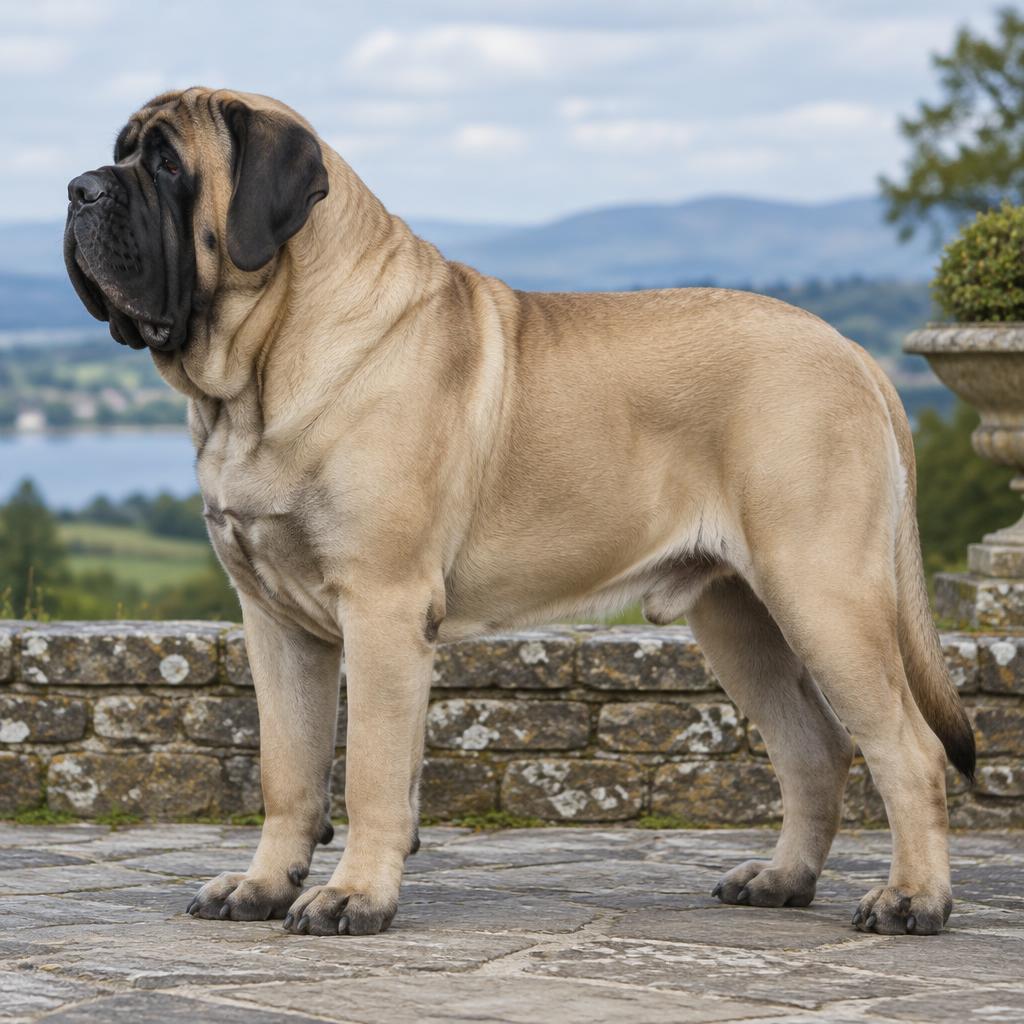
English Mastiff
The gentle giant with the shortest clock and the softest heart.
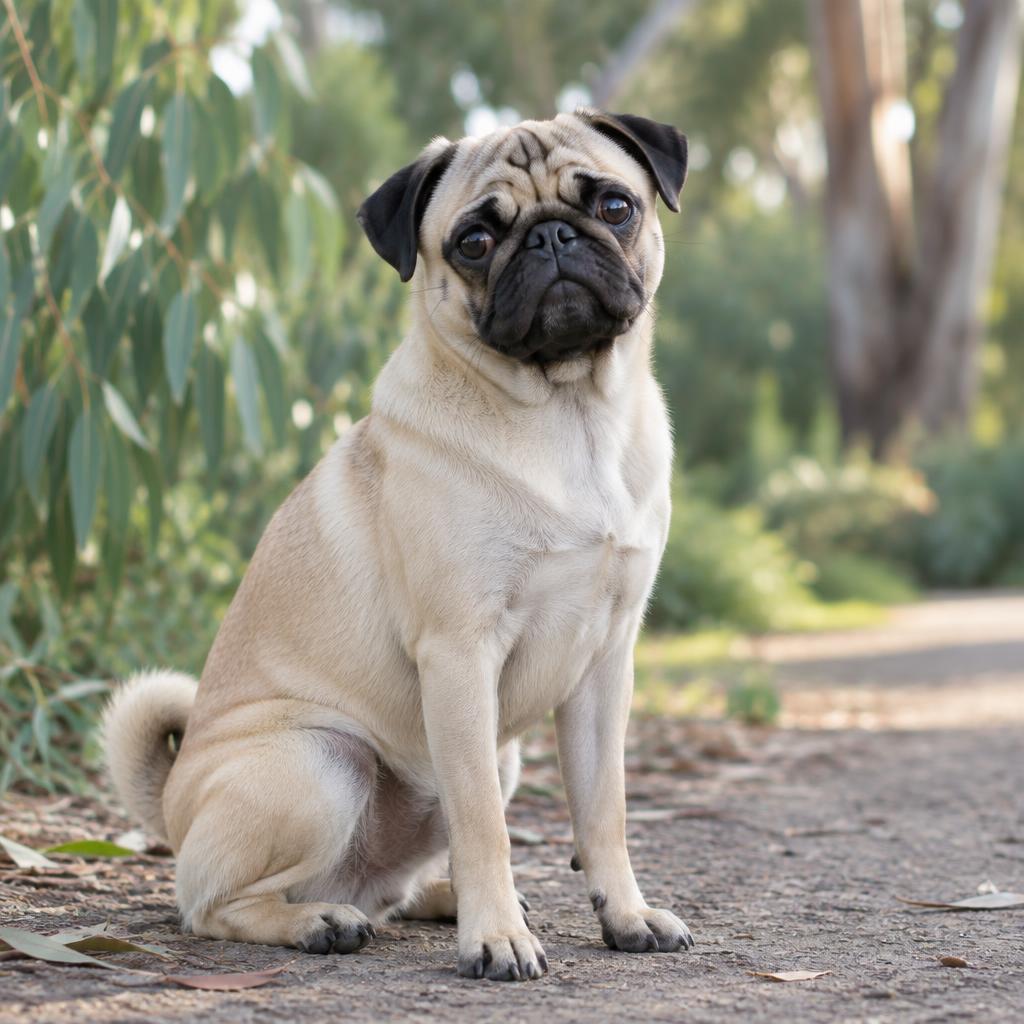
Pug
A charming, people loving companion whose flat face demands honest, careful ownership.