How to Stop a Puppy Biting: A Week-by-Week Plan
Puppy biting is normal, temporary and very trainable. The trick is to teach a softer mouth first, then fewer bites, without ever turning it into a fight.
The SniffScroll desk
Dog care editors
Published 9 October 2026
Reviewed against RVC, BSAVA and PDSA guidance
The short version
- Puppy biting is normal exploratory and play behaviour, and most puppies grow out of the worst of it by five to six months.
- Teach bite inhibition first: a soft mouth matters more than no mouth at all in the early weeks.
- Redirect to a toy within a second, and use short time-outs from play, never shouting, tapping or holding the mouth shut.
- Overtired puppies bite most. Young puppies need 18 to 20 hours of sleep a day, and scheduled naps cut biting sharply.
- Growling or biting over food, toys or resting places is a different problem and needs professional help early.
Knowing how to stop a puppy from biting is the first real training challenge most new owners face, and it usually arrives in week one. Those needle-sharp teeth find hands, sleeves, ankles and the corner of every cushion. The reassuring part is that puppy biting is normal, it is temporary, and the methods that work are gentle, quick to learn and kind to the puppy.
This guide explains why puppies bite, what to do in the moment, and a four-week plan you can follow from the day your puppy comes home.
Why puppies bite in the first place
Puppies bite because their mouth is how they explore, play and communicate, much as human toddlers use their hands. In the litter, puppies spend hours wrestling and mouthing each other, and they learn from their siblings' yelps that a hard bite ends the game. That lesson, called bite inhibition, is still under construction when your puppy leaves its mother at eight weeks.
Several things make biting worse at this age:
- Teething. Baby teeth start falling out from about 12 weeks and adult teeth push through until around six months. Gums are sore and chewing feels good. Our puppy teething guide covers the timeline in detail.
- Tiredness. Overtired puppies bite more, not less.
- Excitement. Fast-moving hands, feet and trouser legs trigger chase and grab play.
- Breed. Gundogs such as Labradors and Golden Retrievers were bred to carry things in their mouths, and herding breeds such as the Border Collie may nip at moving ankles.
| Type of biting | What it looks like | Usual cause | First response |
|---|---|---|---|
| Play mouthing | Loose, wiggly body, soft bites | Normal play | Redirect to a toy |
| Teething chewing | Gnawing on hands, furniture | Sore gums | Offer a cold chew |
| Evening frenzy | Wild zoomies, harder bites | Overtired | Calm nap in crate or pen |
| Ankle nipping | Chasing feet as you walk | Chase instinct | Stop moving, reward calm |
| Guarding bites | Stiff body, growl over items | Resource guarding | Seek professional help |
Teach a soft mouth before no mouth
Bite inhibition comes first because a dog who has learned to control the force of its mouth is far safer for life than one who has simply been stopped from mouthing. In the first few weeks, you are not trying to eliminate biting entirely; you are teaching the puppy that human skin is very sensitive.
When your puppy bites gently during play, carry on. When a bite is hard, make a short, calm sound such as "oops", go still, and pause the game for a few seconds. Resume once the puppy has calmed. Over a couple of weeks you gradually lower the threshold, until any tooth contact with skin ends the game.
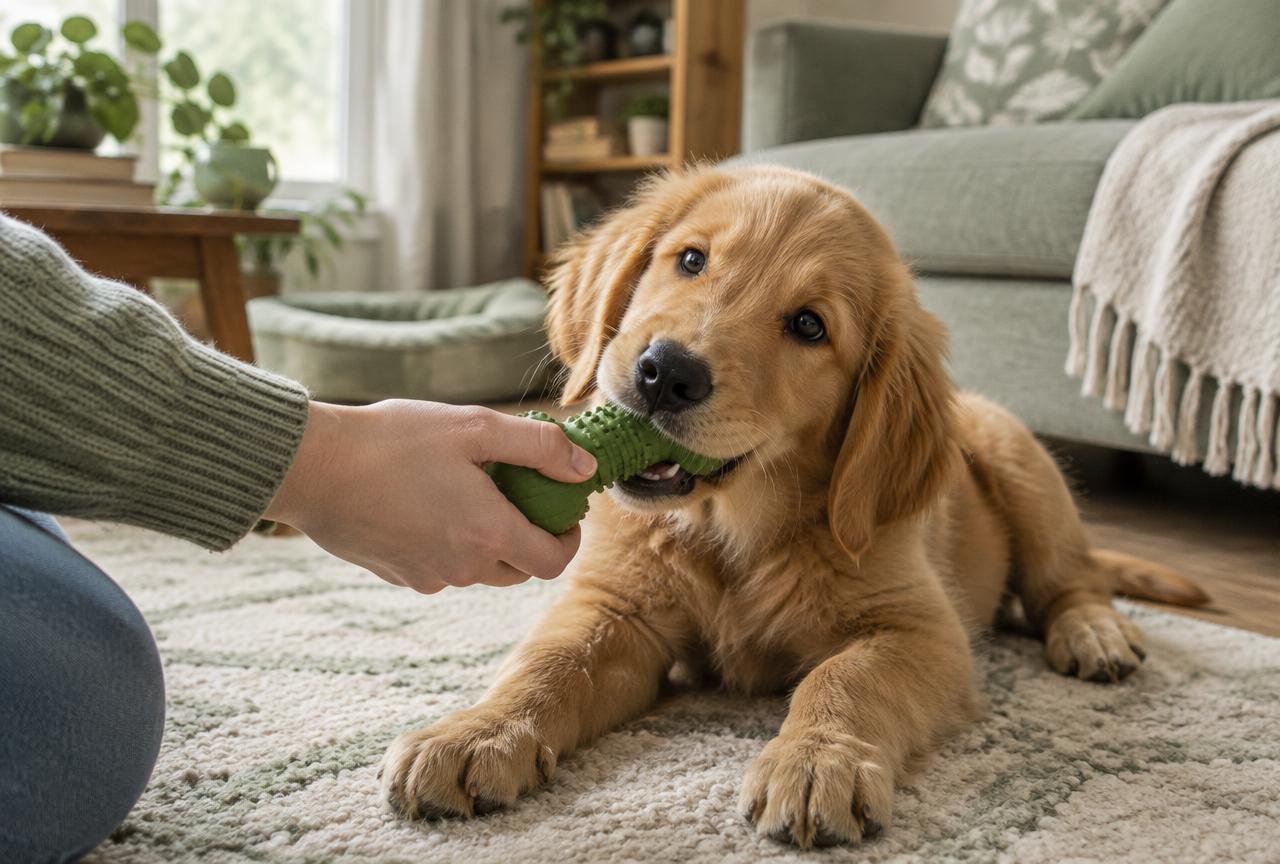
A puppy who learns that a hard bite ends the fun, and that a toy keeps it going, has learned the most important lesson of all: what to do instead.
What to do in the moment
The best moment-to-moment response is to redirect quickly and remove the fun if biting continues. Speed matters more than technique; you have about a second before the puppy links your reaction to what it just did.
- 1Keep a tug toy or soft chew within reach in every room the puppy uses.
- 2When teeth land on skin or clothing, go still and quiet. Moving hands look like prey.
- 3Offer the toy and praise the puppy warmly when it switches to chewing that instead.
- 4If the puppy ignores the toy and keeps biting, stand up, turn away and step out of reach for 20 to 30 seconds. A baby gate makes this easy.
- 5Come back calmly and invite gentle play again.
- 6If biting resumes straight away, the puppy is probably tired. Offer a chew in its crate or pen and let it sleep.
Avoid shouting, tapping the nose, pinning the puppy or holding its mouth shut. Organisations including the RSPCA and the American Veterinary Society of Animal Behavior advise against these methods because they tend to increase arousal or fear and can damage trust.
The sleep factor most owners miss
Many "bitey" puppies are simply short of sleep. Young puppies need around 18 to 20 hours of sleep a day, and they rarely take it without help in a busy household. When they are overtired they become frantic and mouthy, very much like a toddler who fights bedtime.
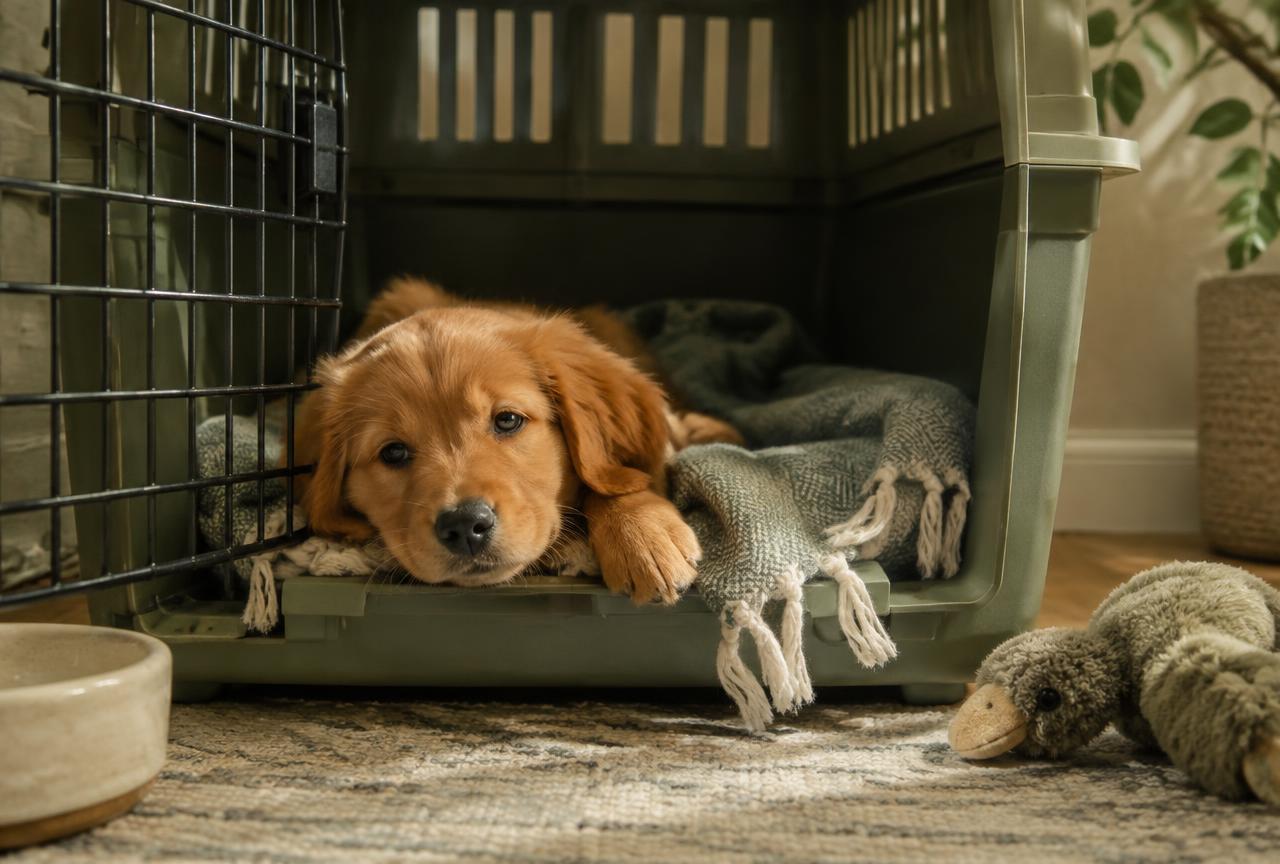
Plan naps into the day: after every play session, meal and walk, give the puppy a quiet period in a crate or puppy pen with a chew. Our crate training plan explains how to make that space a place the puppy chooses.
Your four-week plan
Consistency from everyone in the household turns these steps into progress within a month. Use the planner below to tailor it to when your puppy bites most.
Interactive · bite planner
Build your puppy biting plan
Tell us when the biting happens and we will put together a plan that fits.
Your plan
- Keep a tug toy or chew within reach in every room so you can redirect within a second.
- When teeth touch skin, go still, say a calm 'oops' and offer the toy. If biting continues, step away for 20 to 30 seconds.
- End play sessions before the puppy tips into frenzy; three short games beat one long wild one.
- Aim for 18 to 20 hours of sleep a day at this age; many 'bitey' puppies are simply short of rest.
Normal puppy mouthing
This is ordinary learning behaviour. Consistency from everyone in the house usually brings a clear improvement within two to four weeks.
- 1Week one: set up. Put toys in every room, set up a pen or crate, and agree a single marker word for the whole family. Start scheduled naps.
- 2Week two: soft mouth. Pause play only for hard bites. Reward gentle mouthing with continued play and praise.
- 3Week three: fewer bites. Now pause play for any tooth on skin. Begin short handling sessions where touching paws and ears earns a treat.
- 4Week four: alternatives. Teach a simple "sit" and "leave it", and ask for them before play starts. Reward the puppy for greeting people with all four paws on the floor.
Expect progress, not perfection. Biting often spikes again briefly during peak teething around four to five months.
Biting and children
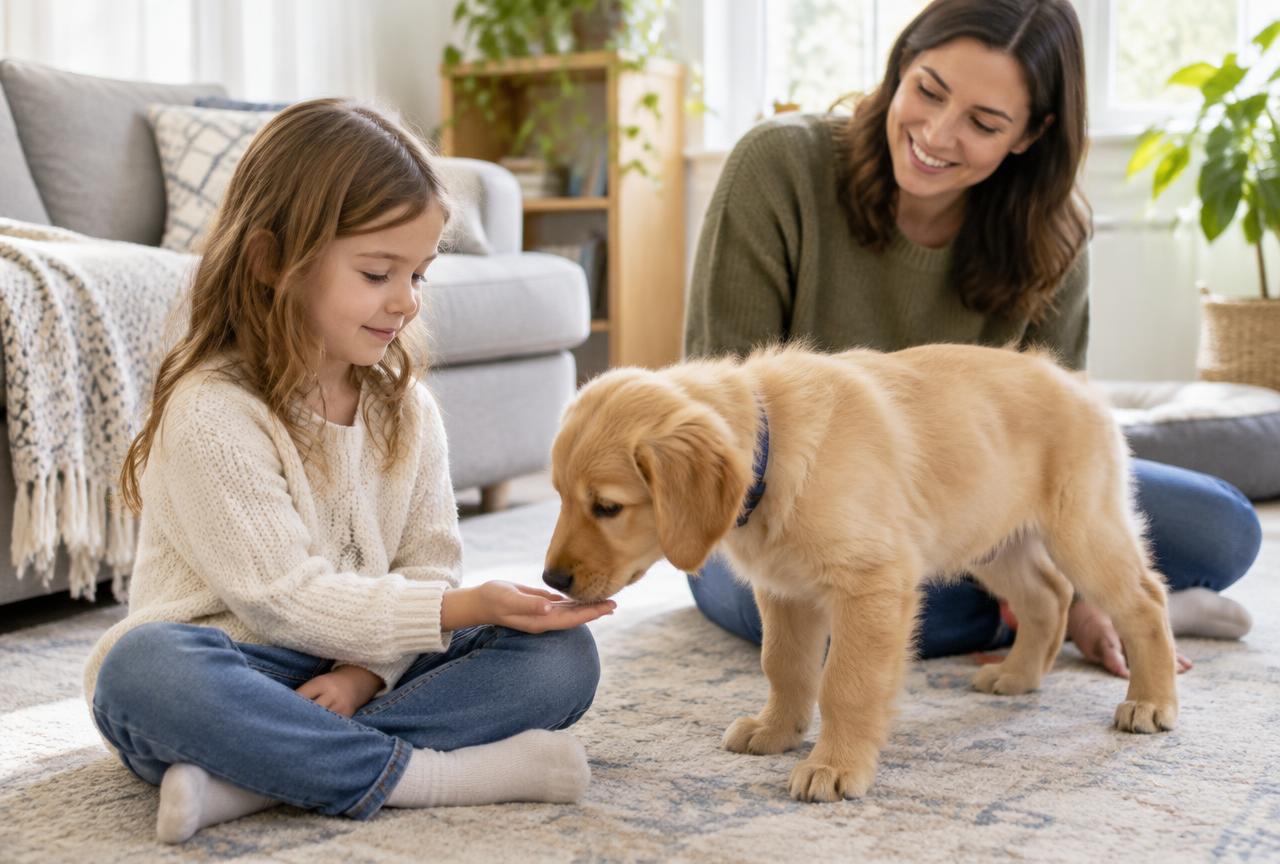
Puppies and children need careful management because both get excited quickly and neither has great self-control. Most bites to children happen during unsupervised play.
- Supervise every interaction, and keep sessions short and calm.
- Teach children to "be a tree": stand still, fold arms and look away if the puppy gets mouthy.
- Avoid chasing games and rough play.
- Give the puppy a safe den that children do not enter.
Reward the calm you want
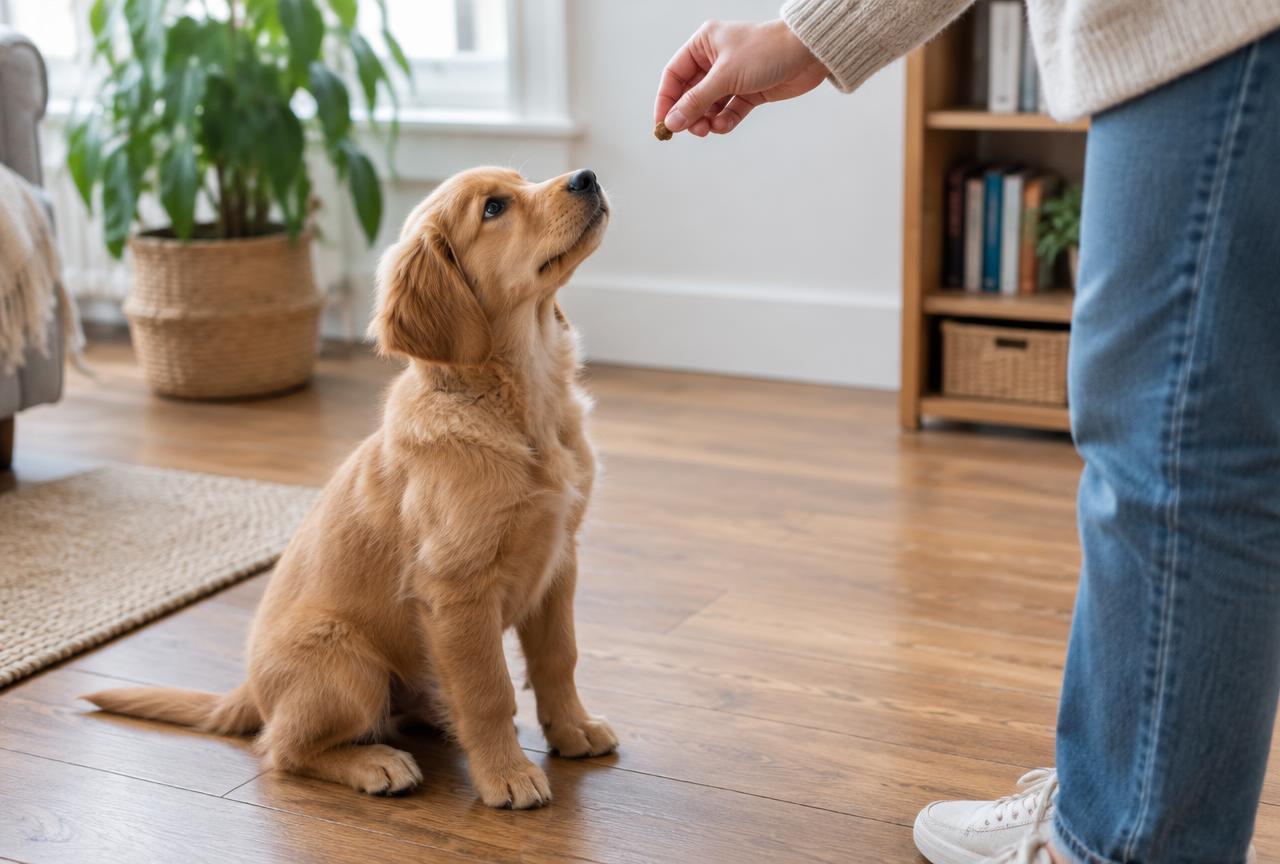
Rewarding calm behaviour is as important as interrupting biting, because puppies repeat what works for them. Catch your puppy lying quietly, chewing an appropriate toy or sitting politely, and reward it with a treat or calm praise.
Count treats as part of the daily food allowance; our portion calculator helps you keep training rewards from turning into extra weight.
When do puppies stop biting?
Most puppies bite and mouth heavily until around four to six months, ease off as adult teeth arrive and the puppy matures, and are largely through it by seven to nine months with consistent training. Some mouthy breeds keep the habit longer. The timeline overlaps with puppy teething, which adds gum discomfort to an already mouthy phase.
| Age | Typical biting | Your focus |
|---|---|---|
| --- | --- | --- |
| 8 to 12 weeks | Frequent, sharp, during play and greetings | Soft-mouth training, plenty of sleep |
| 12 to 16 weeks | Peaks, especially in evenings | Redirection, calm settles, routine |
| 4 to 6 months | Easing; teething discomfort | Chew rotation, cold toys |
| 6 to 9 months | Occasional, during excitement | Impulse control games |
| Over 9 months | Rare in most dogs | Seek help if hard biting continues |
The evening crazies are rarely about your puppy being naughty. They are almost always about your puppy needing a nap.
Why yelping does not work for every puppy
The traditional advice to yelp like a littermate works for some puppies and backfires with others, who find the noise exciting and bite harder. If yelping helps, use a short, soft ouch and pause. If it winds your puppy up, skip it and use calm redirection or a short time out behind a baby gate instead. The same goes for pushing the puppy away with your hands, which many puppies read as rough play.
Games that teach bite control
Structured play gives puppies an outlet for the urge to grab, chase and tug, with rules that build self-control.
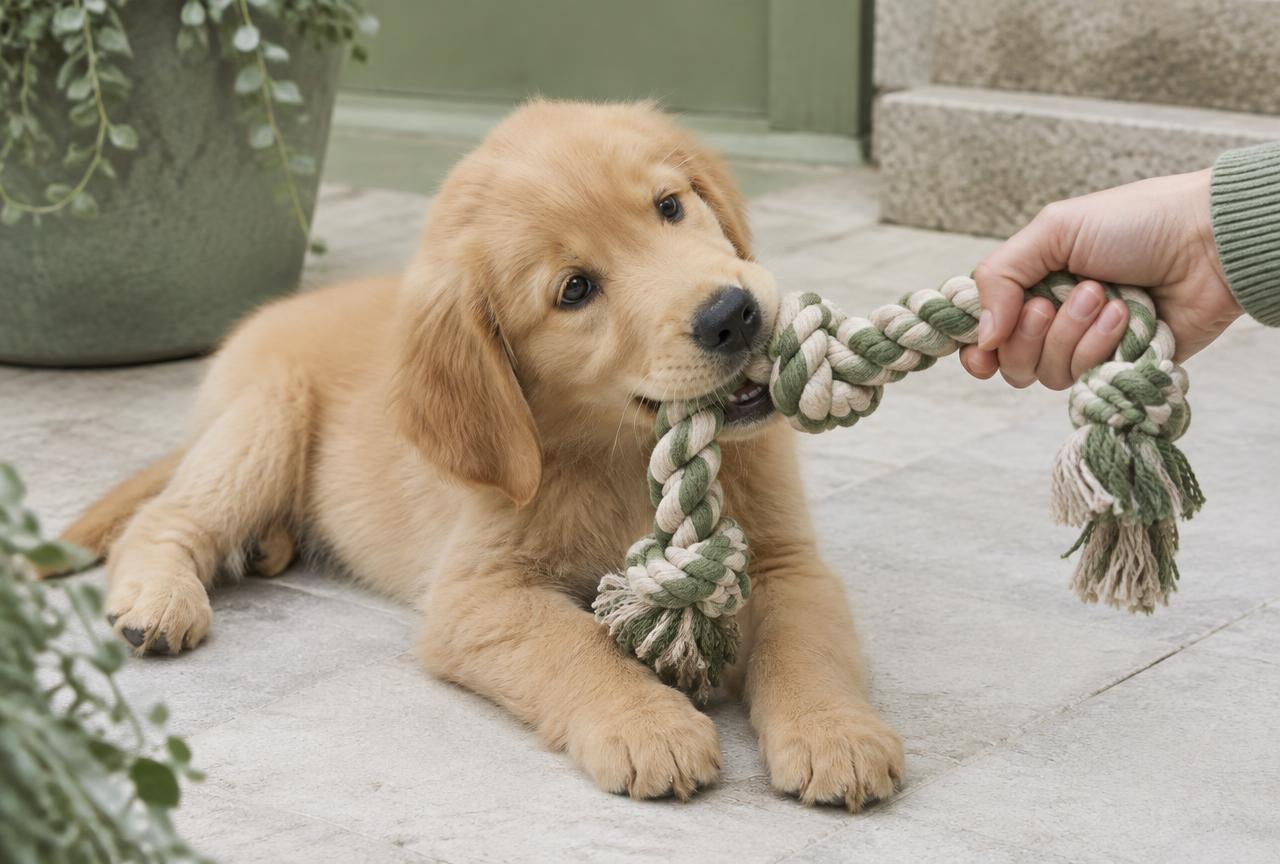
- 1Tug with rules. Use a long tug toy. Play, then say drop and offer a treat. Resume the game as a reward. If teeth touch skin, the game pauses for a few seconds.
- 2Find it. Scatter a handful of kibble on the floor and say find it. Sniffing calms the nervous system and redirects the mouth.
- 3The flirt pole. A toy on a rope at the end of a stick lets your puppy chase and catch something other than ankles. Keep sessions short to protect growing joints.
- 4Settle on a mat. Reward your puppy for lying calmly on a mat, building duration a few seconds at a time.
- 5Hand target. Teach your puppy to touch your palm with their nose. It gives hands a new, gentle meaning.
Puppy biting toolkit checklist
- A long tug toy and a soft plush toy kept within reach in every room
- A puppy pen or baby gate for calm time outs
- A schedule with naps after every hour or so of awake time
- Chews and frozen toys for teething relief
- Treat pouch with small, soft treats
- Clear rules shared with everyone in the house
- Supervised, structured interactions between children and the puppy
Breed and household differences
Gundog breeds such as the Labrador Retriever and Golden Retriever were bred to carry things in their mouths and are often especially mouthy. Herding breeds such as the Border Collie may nip at moving feet, which is instinct rather than aggression. Terriers can be tenacious tuggers. Planning around these instincts, rather than fighting them, saves a lot of frustration.
The verdict, by household
Young children at home: keep puppy and children separated by a gate when you cannot supervise directly, and teach children to stand still and fold their arms if the puppy gets bitey.
Working from home: a schedule with planned naps is your best friend.
First-time owner: expect biting, plan for it and celebrate gradual progress.
Puppy biting hard and often, or growling with stiff body language: ask your vet or an accredited behaviourist for an assessment.
Our guide to how to socialise a puppy pairs well with this plan, and the dog age calculator helps you judge where your puppy is developmentally.
When to see a vet or behaviourist
Most puppy biting is normal, but a few patterns need professional input rather than more waiting.
- Resource guarding: growling, stiffening or biting over food, toys, beds or stolen items.
- Fear biting: biting when cornered, picked up or handled, with a tucked tail and lowered body.
- Biting that hurts badly or breaks skin often, especially after five months.
- Sudden change: a puppy who becomes newly snappy may be in pain. Ask your vet to check teeth, ears and joints.
Look for a qualified behaviourist registered with the Animal Behaviour and Training Council, or ask your vet for a referral. Early help is far more effective than waiting.
The short version
Puppy biting is a phase, and how you respond decides how long it lasts. Teach a soft mouth, redirect fast, protect sleep, reward calm, and keep children supervised. Most puppies are dramatically better within a month, and the dog you end up with will have a gentle mouth for life.
Questions people actually ask
When do puppies stop biting?
Most puppies bite far less by five to six months, once their adult teeth are through and they have learned how to play gently. Consistent training from the first week makes that change faster and more complete. Mouthing that is still frequent and hard after seven months is worth discussing with a reward-based trainer.
How do I stop my puppy biting my hands?
Keep a toy in reach, and the moment teeth touch skin go still, say a calm marker word and offer the toy instead. If biting continues, step away from play for 20 to 30 seconds. Avoid waving hands in the puppy's face during games, which invites more biting.
Is it normal for a puppy to bite and growl when playing?
Yes. Play growling, mouthing and pouncing are normal parts of puppy play, and the body is usually loose and wiggly. Growling over food, toys or a resting place, with a stiff body, is different. That is resource guarding and needs professional help.
Should I tell my puppy off for biting?
No. Shouting, tapping the nose or holding the mouth shut tends to make puppies more excited or more anxious, and can teach them that hands are threatening. Calmly removing the fun, and rewarding the behaviour you want, works better and protects your relationship.
Why does my puppy bite more in the evening?
Evening biting frenzies are usually a sign of an overtired puppy. Like toddlers, puppies get more wound up, not less, when they need sleep. A planned nap in a crate or pen in the late afternoon often fixes the problem.
How do I stop my puppy biting my children?
Supervise every interaction, keep sessions short, and teach children to stand still and fold their arms if the puppy gets mouthy, rather than running or squealing. Give the puppy a safe space children do not enter. Never leave a puppy and young children alone together.
Should I yelp when my puppy bites?
It depends on the puppy. A short, soft ouch followed by a pause helps some puppies learn to be gentler, but others become more excited and bite harder. If yelping winds your puppy up, stop using it. Calmly redirect to a toy or give a brief time out behind a baby gate instead.
Sources
- Puppy biting and mouthing, The Kennel Club
- Puppy biting and mouthing, Dogs Trust
- Puppy play biting, RSPCA
- Position statement on humane dog training, AVSAB
- Puppy biting, PDSA
Breeds mentioned

Labrador Retriever
Britain's most popular family dog: biddable, food driven and built for an active household.

Golden Retriever
A gentle, biddable gundog famed for its patience with children and its glossy golden coat.

Border Collie
The world's most capable herding mind, needing an equally capable owner to match it.
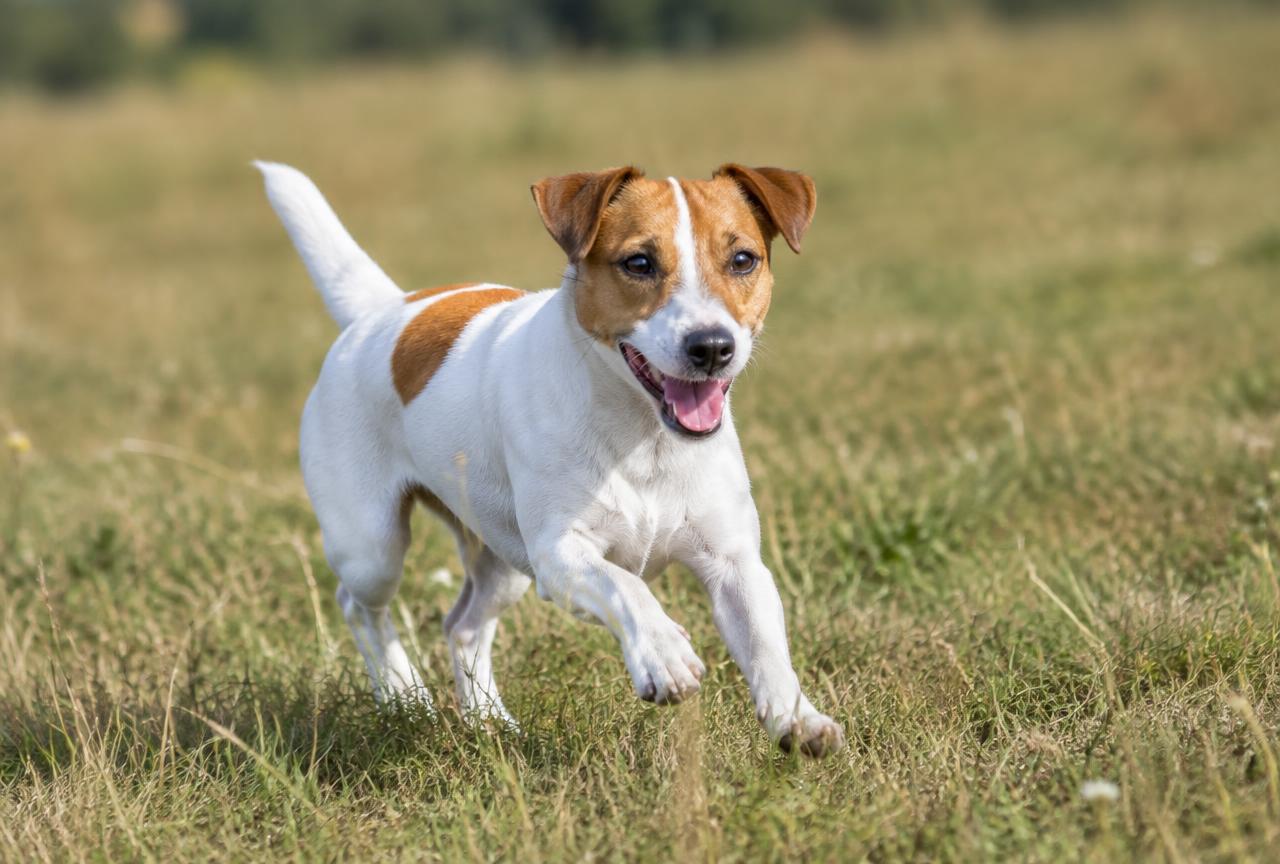
Jack Russell Terrier
A bold, tireless working terrier with huge personality packed into a small frame.
Put it into practice
Read next
How to Stop a Dog Jumping Up at People
Jumping up persists because it works: it gets attention. Remove the reward, reward four paws on the floor, get the whole household consistent, and most dogs change within weeks.