
Can Dogs Eat Apples? Pips, Cores and Portions
Yes, dogs can eat apples, and most of them love the crunch. But the pips and core have to go, and the right portion is smaller than you think.
The SniffScroll desk
Reviewed against PDSA and Kennel Club feeding guidance
Published 4 October 2026 · Updated 9 October 2026
Checked by a practising UK veterinary nurse
The short version
- Apples are safe and healthy for dogs, and most love the crunch.
- Always remove the core and pips: pips carry cyanide compounds, cores are a choking and blockage risk.
- Portions range from one or two slices for a toy dog to half an apple for a giant breed.
- Apple counts toward the 10 percent daily treat allowance.
- Frozen slices make an excellent teething or summer treat.
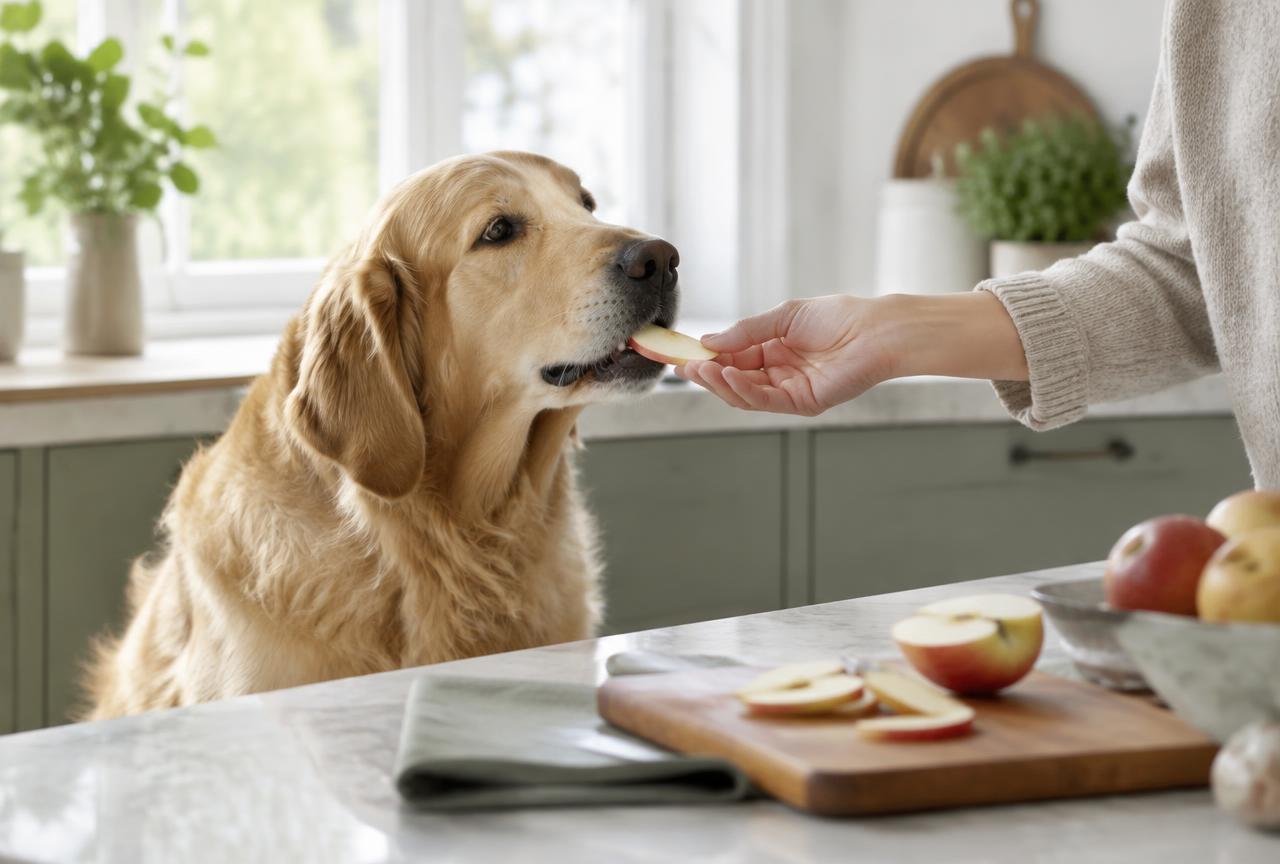
The short answer is yes. Dogs can eat apples, most dogs adore them, and as treats go they are one of the best choices you can make: low calorie, full of fibre, and crunchy enough to feel like a proper event. But two parts of the apple need removing first, and the right portion is smaller than most owners assume.
This guide covers why apples are good for dogs, the pips and core question in detail, sensible portions by size, and the ways to serve them that dogs enjoy most.
Why apples are a good treat
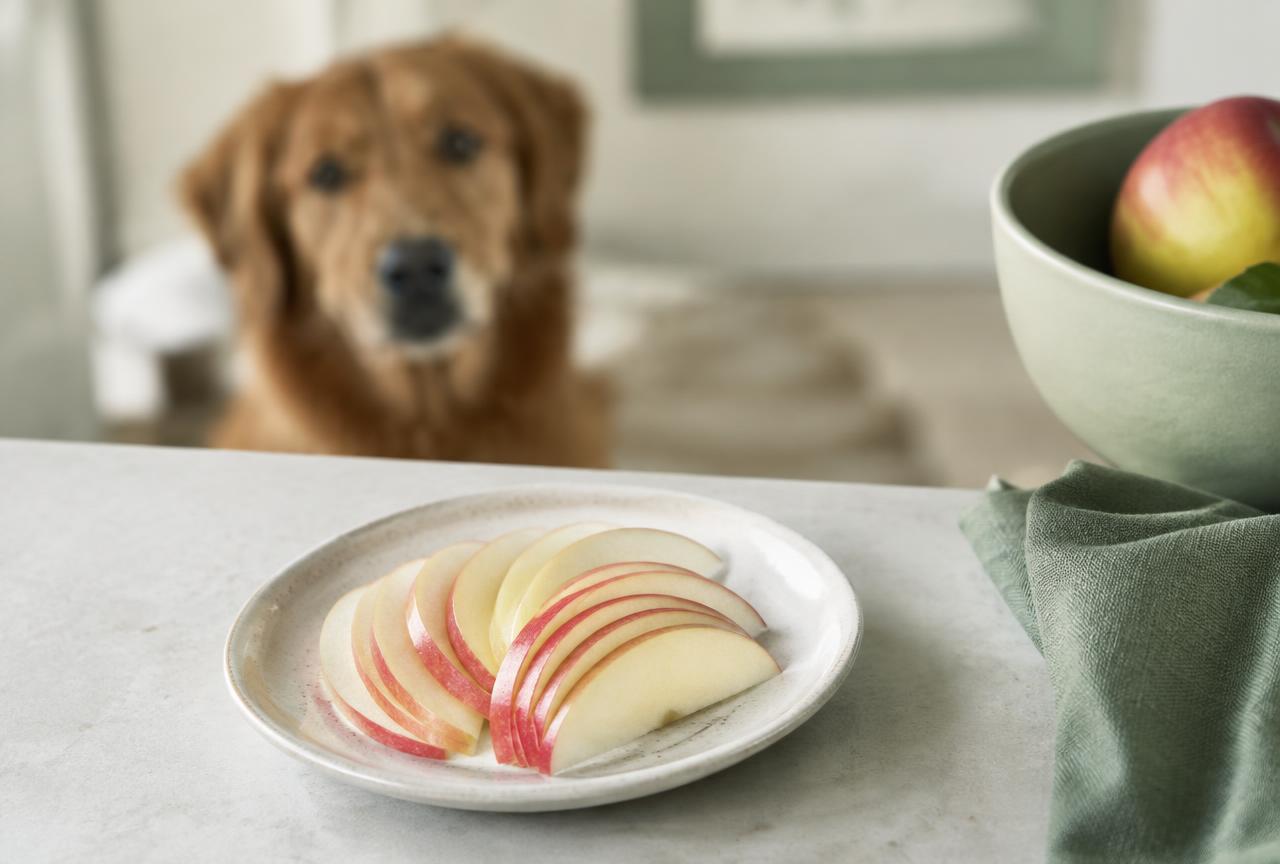
Apples earn their place on the safe list several times over. They are low in calories compared to most treats, around 50 calories for a whole medium apple, which is more than most dogs should have, but it means a few slices barely register. They carry vitamin C, vitamin A and a decent amount of fibre, which suits most digestion. The crunch gives dogs something to work on, and many owners find a cold apple slice a soothing thing for a teething puppy to gnaw.
They are also cheap, available all year, and already in most kitchens. Compared to a processed treat of unknown provenance, a slice of apple is a refreshingly simple thing to hand over.
The parts that have to go
Two parts of the apple do not belong in the bowl, and this is the part of the article worth reading carefully.
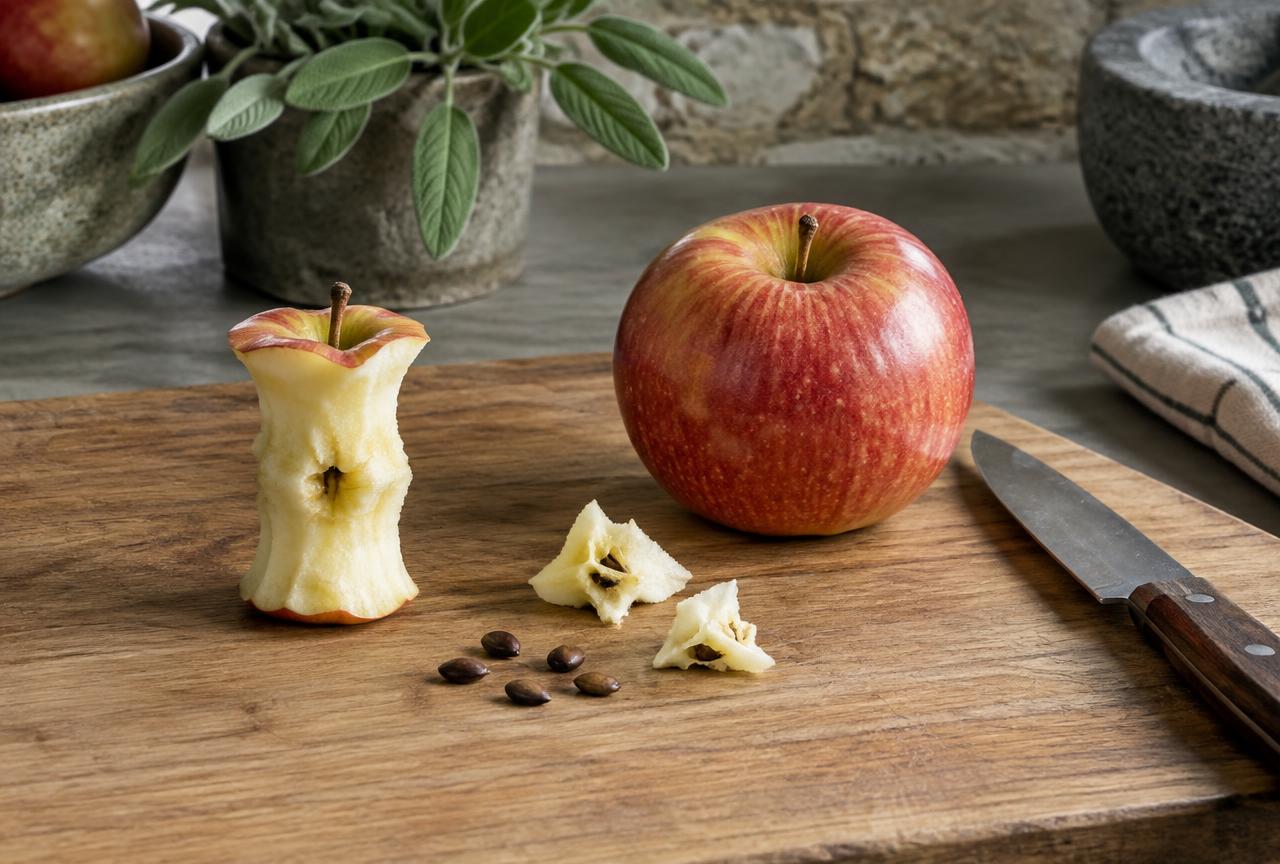
The pips. Apple seeds contain amygdalin, a compound that releases cyanide when chewed and digested. Before you panic: a dog would need to chew and swallow a very large number of pips, from many apples, for a genuine poisoning. A single swallowed pip is not an emergency. But there is no reason to take any risk at all when removing the core takes five seconds, so the rule is simple: pips out, always.
The core. The core is the bigger practical risk. It is tough, fibrous and exactly the right shape to lodge in a throat, particularly for small dogs and for dogs who inhale food rather than chew it. A swallowed core can also cause a gut blockage, which is a surgical problem. Never hand a dog a whole apple to work on, and never toss them the core after you have eaten the rest.
How much apple can a dog have?
The 10 percent rule applies here as it does to every treat: all treats combined, apple included, stay within about a tenth of daily calories. Apple is light enough that the limit is generous for big dogs and surprisingly tight for small ones.
| Dog size | Example weight | Sensible daily apple |
|---|---|---|
| --- | --- | --- |
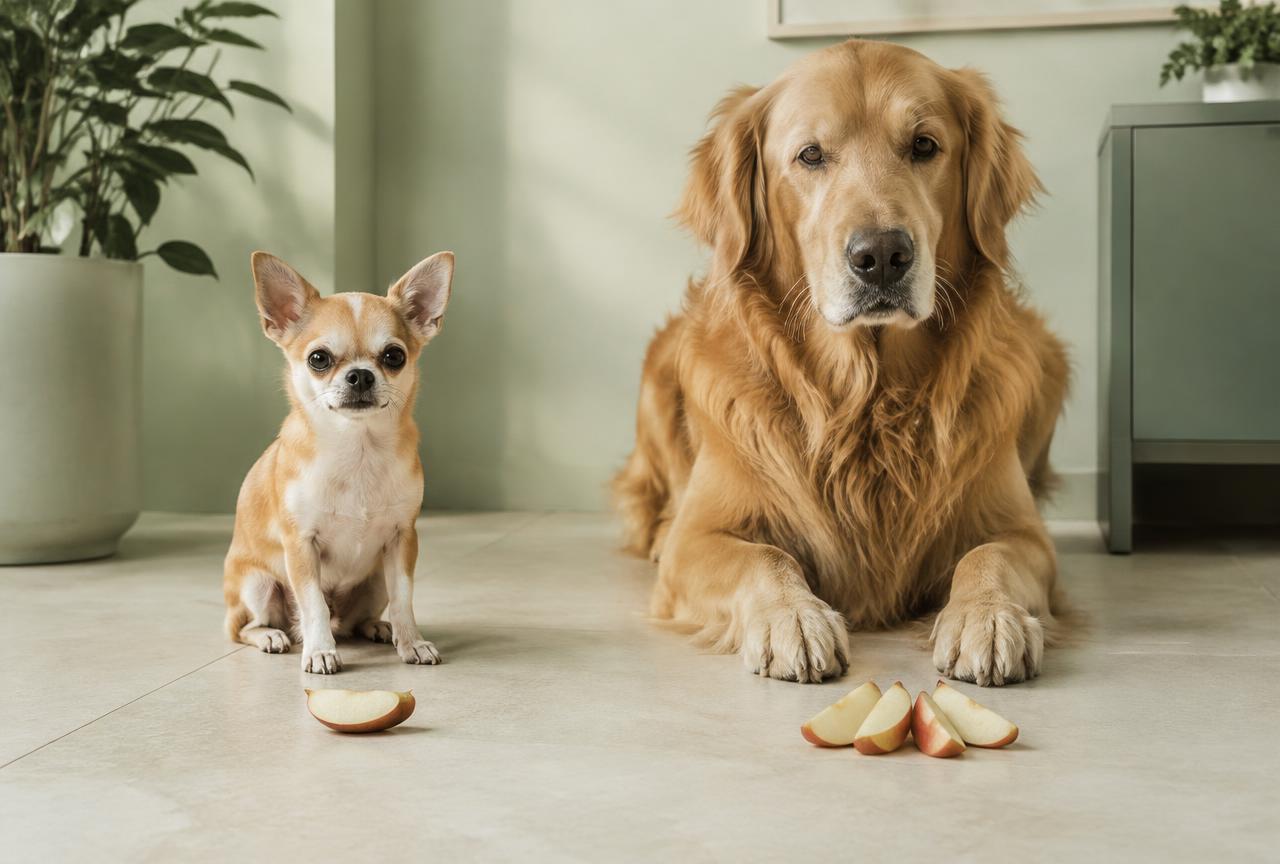
| Toy | 3 kg | 1 to 2 thin slices |
| Small | 7 kg | 2 to 3 thin slices |
| Medium | 15 kg | 4 to 5 slices |
| Large | 30 kg | Up to half an apple |
| Giant | 50 kg | Half an apple, occasionally more |
These are ceilings, not targets. On days with other treats, training rewards, a bit of cheese, a dental chew, the apple allowance shrinks accordingly. And remember that apple is sugary by dog standards: fine in these amounts, but not a free-for-all.
Interactive · apple portion calculator
How much apple can your dog have?
Enter your dog's weight and we will work out a sensible daily slice count using the 10 percent treat rule.
Serving apple safely
- Wash the apple, remove the core and every pip, and cut thin slices or small cubes.
- Introduce apple with a single slice and watch for any tummy upset over the next day.
- Count apple within the 10 percent treat allowance, alongside any other treats that day.
A sensible apple allowance
A 20 kg dog has roughly 106 calories a day for all treats combined. At about 8 calories a thin slice, that is around 12 slices of apple if apple were the only treat, and fewer on days with other snacks.
How to serve apple to a dog
The preparation takes under a minute. Wash the apple, cut it into quarters, remove the core and every pip, then slice or cube to a size that suits your dog. Thin slices for small dogs, chunks for big ones. Peel is fine to leave on; most of the fibre lives there.
A few serving ideas dogs tend to love:
- Frozen slices in summer, or for a teething puppy: the cold soothes gums and slows down the scoffers.
- Grated over dinner as a topper for a dog who needs tempting.
- Smeared with a thin layer of xylitol-free peanut butter for a high-value reward, checking the peanut butter label first.
- Stuffed in a puzzle toy with a few other safe bits to make it last.
Puppies and apples
Puppies can have apple as soon as they are eating solid food, and many take to it enthusiastically. Three adjustments apply. Cut pieces smaller than you think necessary, because puppies are enthusiastic and hopeless chewers at the same time. Start with a single small piece and watch for twenty-four hours, because puppy stomachs are sensitive to anything new. And count it properly within their treat allowance, because a puppy's daily calories are small and every one of them should be working hard.

When apple is not a good idea
A few dogs should skip the apple or have it only with a vet's blessing. Diabetic dogs need their sugars managed tightly, and apple is sugar, however natural. Dogs with chronic tummy trouble may find the fibre too much. And any dog who has reacted badly to apple before, soft stools, wind, itching, has given you the answer already.
Are apple seeds poisonous to dogs?
Apple pips contain amygdalin, a compound that can release cyanide when the seed is crushed or chewed. In practice, a dog swallowing a few whole pips is very unlikely to be poisoned, because the dose is tiny and intact seeds often pass straight through. The concern is repeated exposure, a small dog eating many crushed seeds, or a dog chewing up a whole core. The core itself is the bigger everyday risk: it is fibrous, hard to digest and can lodge in the throat or gut, particularly in small breeds. Removing pips and core every time is the simple answer.
Apples are a good treat. Apple cores are a good reason to call the vet.
Which apples and apple products are safe?
Not everything with apple on the label belongs in a dog bowl.
| Product | Safe? | Notes |
|---|---|---|
| --- | --- | --- |
| Fresh apple, cored and sliced | Yes | Skin on is fine for most dogs; peel for sensitive stomachs |
| Unsweetened apple purée | Yes, small amounts | Check for no added sugar, sweeteners or spices |
| Apple sauce with sugar or xylitol | No | Xylitol is highly toxic to dogs |
| Dried apple rings | Occasionally | Very concentrated sugar; tiny pieces only |
| Apple pie, crumble, cake | No | Butter, sugar, sometimes raisins, nutmeg or chocolate |
| Apple juice | Not recommended | Lots of sugar with none of the fibre |
| Cider, cider vinegar drinks | No | Alcohol is dangerous for dogs |
| Fallen windfalls in the garden | Use caution | Fermenting fruit can contain alcohol and moulds |
Windfalls are a seasonal problem in British gardens. Dogs who gorge on fallen, fermenting apples can develop vomiting, diarrhoea and, rarely, signs of alcohol toxicity. Clear them regularly in autumn.
How much apple, by dog size
The ten per cent rule from the WSAVA and most vets says treats of any kind should make up no more than about a tenth of a dog's daily calories. A medium apple contains roughly 80 to 100 kcal, so portions are smaller than many people expect.
| Dog size | Example breeds | Sensible portion |
|---|---|---|
| --- | --- | --- |
| Toy, under 5 kg | Chihuahua, Yorkshire Terrier | One or two thin slices |
| Small, 5 to 10 kg | Cavalier King Charles Spaniel | Two to three slices |
| Medium, 10 to 25 kg | Cocker Spaniel, Beagle | A quarter of an apple |
| Large, 25 to 40 kg | Labrador Retriever | Up to half an apple |
| Giant, over 40 kg | Great Dane | Half to three quarters of an apple |
Use the portion calculator to find your dog's total daily calories and adjust main meals if apples become a regular treat.
Introducing apple: the five-step plan
- 1Wash the apple to remove residues and dirt.
- 2Remove the core, stalk and every pip.
- 3Cut into thin slices or small cubes, matched to your dog's size.
- 4Offer one piece and watch for 24 hours for loose stools or tummy upset.
- 5If all is well, build to the sensible portion above, no more than a few times a week.
Apple treat checklist
- Core and pips removed every time
- Pieces small enough to avoid choking, especially for gulpers
- No added sugar, sweeteners, spices or pastry
- Windfalls cleared from the garden in autumn
- Treats counted within the ten per cent allowance
- Extra caution for dogs with diabetes, pancreatitis or a sensitive stomach
The verdict, by dog
Healthy adult: a few slices is a fine, low-fat treat.
Puppy: tiny pieces, introduced slowly, once they are settled on solid food.
Overweight dog: apple can replace higher-calorie treats; check the ideal weight tool.
Diabetic dog: ask your vet first; even natural sugars matter.
Dog that ate a whole core: watch closely and call your vet if you see vomiting, gagging, a painful tummy or lack of appetite. For the wider picture, see our guide to what human foods dogs can eat.
The bottom line
Apple is one of the easiest yes answers in dog feeding: wash it, core it, pip it, slice it, and keep it within the treat allowance. The dogs who get into trouble with apples are the ones handed a whole one to demolish, core and all. Five seconds with a knife removes every risk the fruit carries.
Apple myths, checked
| Myth | What the evidence says |
|---|---|
| --- | --- |
| One pip will poison a dog | A few whole pips are very unlikely to cause harm; remove them anyway |
| Apple skin is bad for dogs | Skin is fine for most dogs and adds fibre |
| Apples clean teeth | Crunchy food has minimal effect; brushing is what works |
| More fruit is healthier | Treats beyond ten per cent of calories can unbalance the diet |
Questions people actually ask
Can dogs eat apple skin?
Yes. The skin is safe and carries much of the fibre. Just wash the apple first, and cut the slices thin enough for your dog's size.
Are apple pips poisonous to dogs?
Apple pips contain a compound that releases cyanide, but a dog would need to chew and swallow a very large number for genuine poisoning. One swallowed pip is not an emergency, but there is no reason to take the risk, so remove them every time.
Can dogs eat apple cores?
No. The core is tough, fibrous and a genuine choking and gut-blockage risk, especially for small dogs and fast eaters. Always remove it.
How much apple can I give my dog a day?
Within the 10 percent treat rule: one or two thin slices for a toy dog, up to half an apple for a large or giant breed, and less on days with other treats.
Can puppies eat apples?
Yes, once they are on solid food. Cut pieces small, start with a single piece, and watch for any tummy upset over the next day.
Can diabetic dogs eat apples?
Only with your vet's agreement. Apple is natural sugar, and diabetic dogs need their sugars managed carefully, so treat fruit as something to clear with the vet first.
Are apple seeds poisonous to dogs?
Apple seeds contain amygdalin, which can release cyanide when crushed. A few swallowed whole are very unlikely to harm a dog, but repeated or large exposures can be risky, especially for small dogs. Remove the core and every pip before sharing apple, and call your vet if your dog has eaten many seeds or a whole core.
Can dogs eat apple sauce?
Plain, unsweetened apple purée in small amounts is fine for most dogs. Avoid apple sauce with added sugar, spices or sweeteners, particularly xylitol, which is highly toxic to dogs. Always check the label. Fresh, cored apple slices remain the simplest and healthiest way to share apple.
Sources
- Guidelines on selecting pet foods and treats, WSAVA Global Nutrition Committee
- Fruits and vegetables dogs can eat, American Kennel Club
Breeds mentioned

Golden Retriever
A gentle, biddable gundog famed for its patience with children and its glossy golden coat.

Border Collie
The world's most capable herding mind, needing an equally capable owner to match it.

Cockapoo
An affectionate Cocker Spaniel and Poodle cross where coat, size and energy vary litter to litter, so no two Cockapoos are quite alike.
Put it into practice
Read next
Can Dogs Eat Oatmeal? Cooked, Raw and Flavoured
Plain oatmeal cooked in water is safe for dogs in small servings and its soluble fibre can help mild diarrhoea. Avoid flavoured sachets, raw oats and porridge made with milk or sugar.


