
Can Dogs Eat Pineapple? Fresh, Canned and Dried
Fresh pineapple flesh is a safe, sweet occasional treat for most dogs. The rules: peel it, core it, cube it, keep portions small, and leave the tinned rings in syrup for human desserts.
The SniffScroll desk
Published 10 October 2026
Dr Emily Carter, BVSc MRCVS
The short version
- Fresh pineapple flesh is safe for dogs in small, occasional portions.
- Never serve the skin or the tough central core: both are hard to digest and can cause a blockage.
- Canned pineapple in syrup is too sugary; if you must, choose fruit in its own juice, rinse it and keep the portion tiny.
- Pineapple is sugary and acidic, so a few cubes a couple of times a week is plenty.
- Too much causes loose stools; introduce it slowly.
Yes, dogs can eat pineapple, as long as it is fresh flesh, peeled and cored, cut into cubes and served in small amounts. Pineapple is not toxic to dogs, but it is sugary and acidic, so it belongs firmly in the occasional treat category rather than the daily bowl.
Is pineapple good for dogs?
Pineapple flesh offers vitamin C, B6, manganese, fibre and bromelain, an enzyme that aids protein digestion, but a dog on a complete food does not need any of it, so think of pineapple as a pleasant extra rather than a supplement.
The honest framing: pineapple is a treat with some nutritional upside, not a health food for dogs. Your dog's complete diet already covers every vitamin and mineral they need. What pineapple adds is novelty, hydration and a sweet crunch most dogs enjoy.
That sweetness is also the catch. Pineapple is one of the sugariest common fruits, and its acidity can irritate a sensitive stomach. For a healthy dog of a healthy weight, a few cubes now and then is fine. For a diabetic, overweight or stomach-sensitive dog, ask your vet first or pick a lower-sugar option such as blueberries.
How to prepare pineapple for your dog
Serve only the soft yellow flesh: peel off all the spiky skin, remove the tough central core, and cut the flesh into bite-size cubes matched to your dog's size.
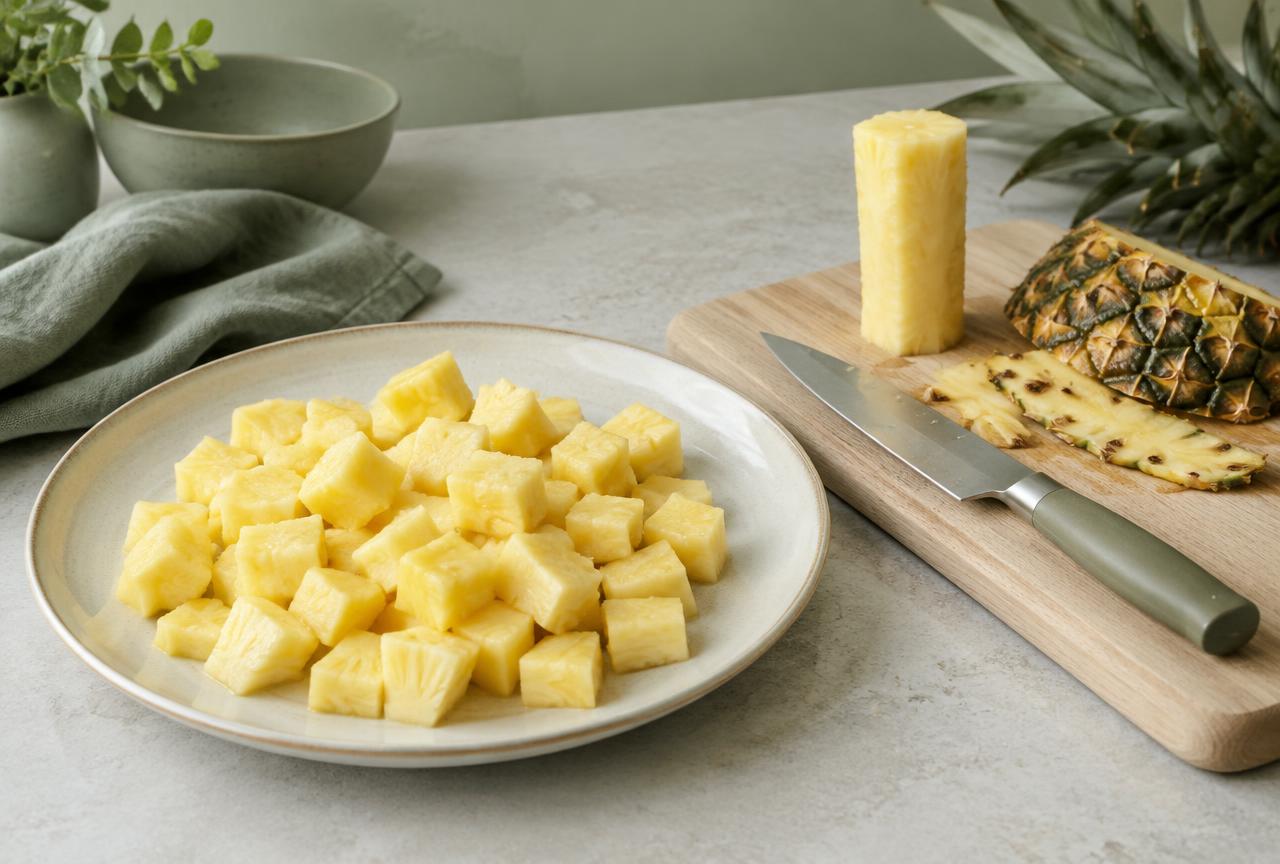
The skin is spiky, fibrous and effectively indigestible. The core is the dense, woody column in the middle, and while it is not toxic, it is tough enough to cause choking or an intestinal blockage, particularly in small dogs. Both belong in the bin, not the bowl.
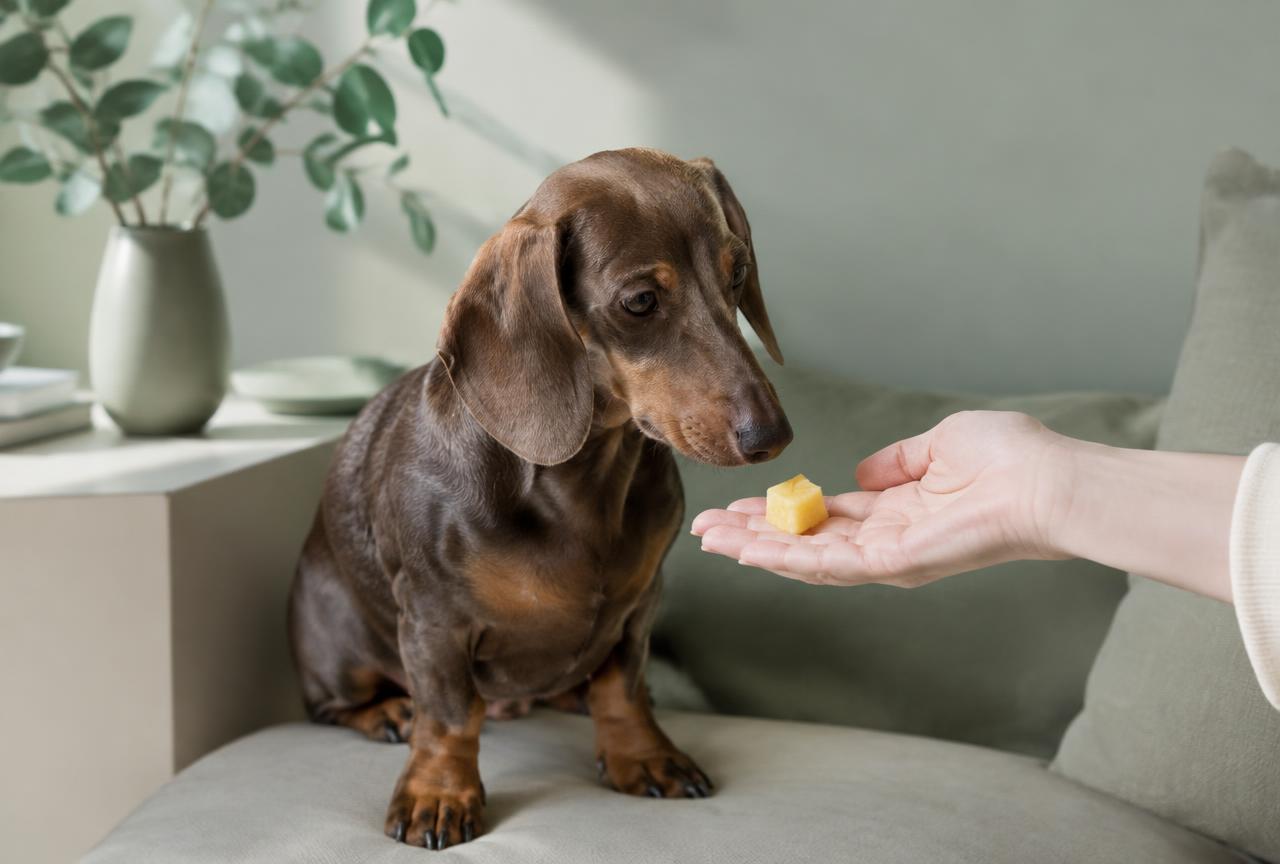
Cube size matters. A French bulldog needs pea-size pieces; a Labrador can manage larger chunks. When in doubt, go smaller: pineapple is soft, but an enthusiastic gulper can still inhale a big cube.
How much pineapple can a dog eat?
Keep pineapple within the 10% treat rule, which in practice means a few cubes, a couple of times a week:
| Dog size | Example weight | Fresh pineapple per serving |
|---|---|---|
| --- | --- | --- |
| Toy | Under 5 kg | 1 to 2 small cubes |
| Small | 5 to 10 kg | 2 to 3 cubes |
| Medium | 10 to 25 kg | 3 to 5 cubes |
| Large | Over 25 kg | 5 to 8 cubes |
More than this and you are likely to see the consequence the next morning: loose, sugary stools. If you are tracking the day's calories properly, our portion calculator shows how much treat room your dog actually has.
With pineapple, the preparation is the safety rule: peel it, core it, cube it, and the rest is just portion control.
Canned, dried and frozen pineapple
Fresh is best; frozen plain pineapple is fine; canned and dried are the versions to be careful with.
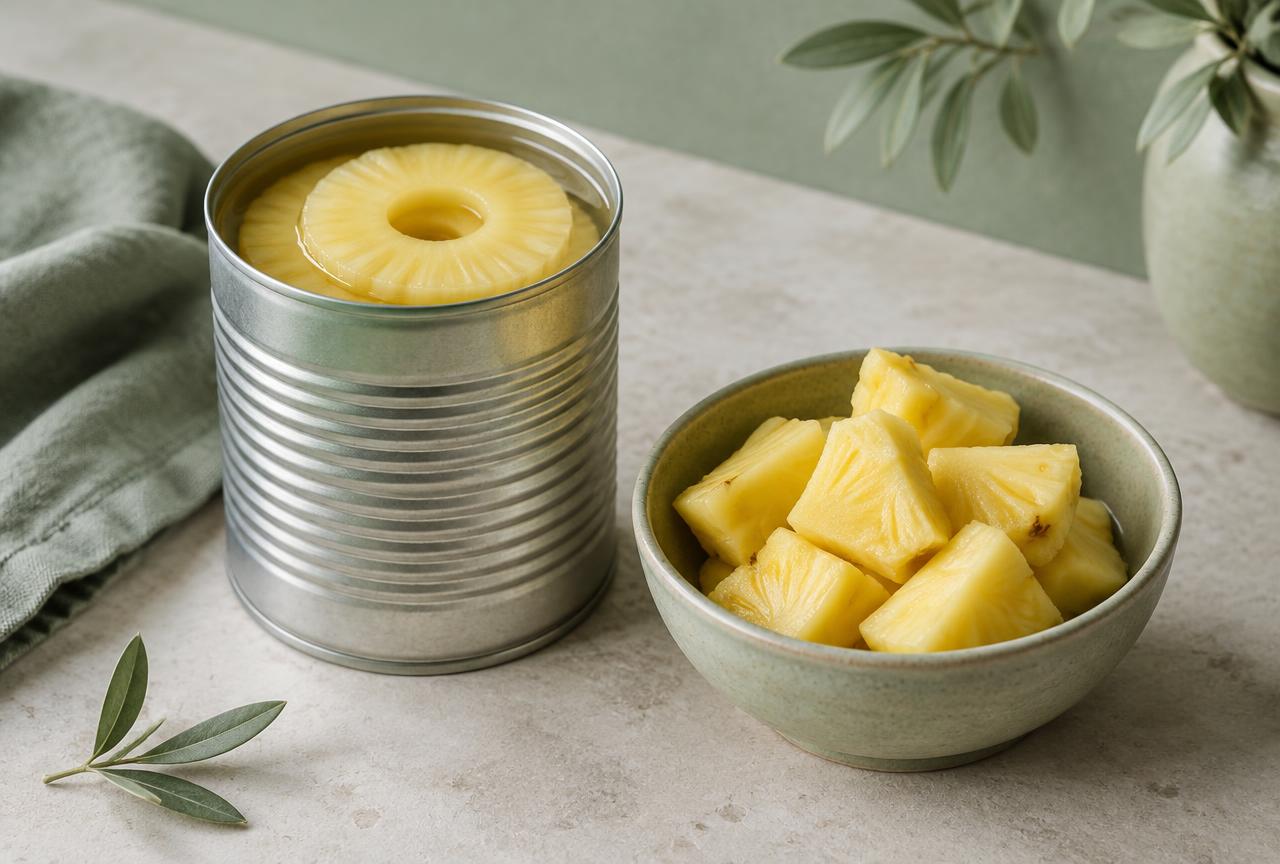
Canned pineapple usually sits in syrup or sweetened juice, which pushes the sugar content far beyond what a dog should have. If canned is the only option, choose rings in their own juice with no added sugar, rinse them under the tap and serve a small piece. Never serve anything labelled sugar-free without checking for xylitol, which is toxic to dogs.
Dried pineapple concentrates the sugar into a chewy sweet and many brands add more on top. It is best skipped entirely.
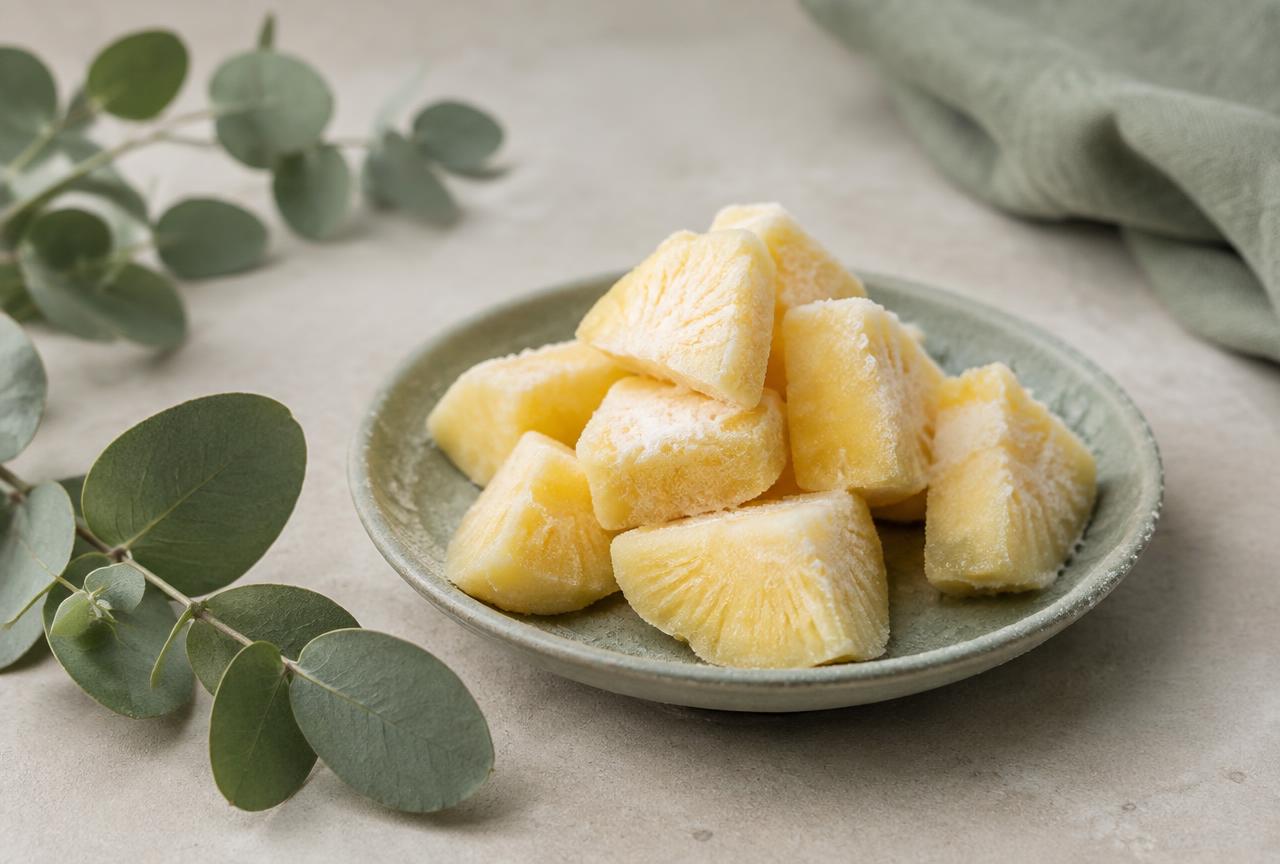
Frozen pineapple cubes, made from fresh flesh with nothing added, are a good warm-weather treat for medium and large dogs. For small dogs and puppies, let the cube soften first or cut it smaller, as frozen fruit is a choking risk in little mouths.
Can puppies eat pineapple?
Puppies can try a small cube of fresh pineapple once weaned, but their stomachs are sensitive, so one cube and a watchful 24 hours is the right introduction.
Puppies do not need fruit, and their nutrition should come from a complete puppy food. A cube of pineapple as an occasional novelty is harmless for a healthy puppy; a habit of sweet fruit is not worth building. If your puppy has any digestive upset, skip the fruit experiments entirely and speak to your vet.
What about the poop-eating myth?
No good evidence supports the popular claim that feeding pineapple stops a dog eating its own faeces.
The theory is that pineapple changes the taste of the stool. In practice, coprophagia has many causes, from boredom and hunger to medical issues, and a fruit topping fixes none of them. If this is a problem in your house, our guide on why dogs eat poop covers what actually works, and a vet visit rules out the medical causes.
Interactive tool
Pineapple serving checker
Dog size and preparation in, safe serving versus skip out.
Your plan
- For a medium dog, a serving is about three to five cubes of fresh pineapple, within the day's 10% treat allowance.
- Pineapple is sugary and acidic, so keep it occasional: a couple of times a week, not daily.
- Introduce it slowly; too much can cause loose stools.
- Frozen cubes make a good summer treat for medium and large dogs; cut smaller for toy breeds.
Fine as an occasional treat
Fresh pineapple flesh is safe in small amounts. The skin, core and sugary canned versions are where the problems live.
When to see a vet
Pineapple flesh is not toxic, so a stolen cube is not an emergency. Call the vet if your dog has eaten the skin or core and shows vomiting, straining, a painful or swollen belly or constipation, if a large amount of flesh causes vomiting or diarrhoea that lasts beyond 24 hours, or if a product may have contained xylitol, in which case call immediately without waiting for symptoms.
Pineapple for dogs with health conditions
Pineapple's sugar and acidity make it a treat that needs more thought than most, and some dogs should skip it altogether.
Diabetic dogs should generally avoid pineapple. Its sugar content is high for a fruit, and even small servings can disturb a carefully managed blood sugar routine. If your diabetic dog loves fruit, ask your vet about lower-sugar options and fixed, counted portions.
Overweight dogs are better served by crunchier, lower-calorie options. A few pineapple cubes will not derail a diet, but carrots and green beans give more chewing satisfaction per calorie. Our ideal weight tool can help you see where treats fit the plan.
Dogs with sensitive stomachs or a history of [pancreatitis](/articles/dog-pancreatitis) should be cautious. Pineapple is not fatty, which is the main pancreatitis concern, but its acidity can irritate a delicate gut, and any rich or unusual treat is a risk in a dog with a fragile history.
Dogs with dental disease may struggle with the fibrous texture. If your dog has sore teeth, skip chewy fruit and see our dental care guide first.
Serving ideas that work
The best way to serve pineapple is the simplest: a few fresh cubes, straight from the fridge, after a walk.
Beyond that, a few ideas owners come back to. Frozen cubes in a puzzle toy or a lick mat spread with a little mashed pineapple keep a dog busy on a hot afternoon. Tiny cubes work as training treats for dogs who find them exciting, though the juice makes pockets sticky. And a spoonful of finely chopped pineapple stirred through a normal meal can tempt a fussy eater, used occasionally rather than daily.
What does not work: dried pineapple rings, tinned fruit cocktail, pineapple upside-down cake, and the glazed gammon garnish. Once pineapple meets sugar, fat or pastry, it stops being a dog treat. The same logic applies across the fruit bowl, as our fruit guide sets out.
Reading your dog's response
Every new food is an experiment of one, and pineapple is no different. After the first serving, watch the next day's stools: firm and normal means the experiment passed; soft or urgent means the portion was too big or pineapple does not suit your dog. Some dogs also find the acidity irritating and will lick their lips or seem mildly unsettled after eating it. There is no prize for persevering. If pineapple does not suit your dog, there are plenty of other safe options, and the treat budget is better spent on one your dog's stomach actually welcomes.
Common questions owners ask about pineapple
Why does my dog love pineapple so much? Sweetness. Dogs have taste receptors for sweet flavours, and pineapple is one of the sweetest fruits going. Enthusiasm is not a sign it is good for them in quantity; it is a sign the portion control is your job, not theirs.
Is pineapple juice safe? Not really. Juice removes the fibre and concentrates the sugar, and shop-bought versions often add more. If your dog licks a spilled drop, no harm done, but do not serve it.
Can dogs eat pineapple leaves or the crown? No. The leaves are tough, spiky and fibrous, and the crown is effectively the same material as the skin. Keep the whole top in the bin.
My dog stole a whole pineapple slice. Should I worry? One slice of fresh flesh in a medium or large dog is most likely to produce a sugary tummy and possibly soft stools the next day. Watch them, offer water, and feed normally. If the slice included skin or core, or your dog is small, phone the vet for advice and watch for the blockage signs listed above.
Fruit treats in the bigger picture
Pineapple is a good moment to repeat the principle behind every food article in this journal: a dog's nutrition should come from a complete dog food, and everything else is garnish. Treats, fruit included, belong inside roughly 10% of the day's calories, which our portion calculator can quantify for your dog. Within that allowance, variety beats volume. A few pineapple cubes one week, strawberries the next, watermelon in summer: the rotation keeps treats interesting, spreads the nutrient profile, and stops any single sugary food from becoming a habit. Dogs do not get bored of their dinner; they get bored of nothing new happening. Fruit is a cheap way to make something new happen.
A note on ripeness and preparation
Serve pineapple ripe and fresh: an unripe pineapple is more acidic and harder on the stomach, and one that has been sitting cut in the fridge for days is past its best for anyone. When you prepare one, cut the dog's cubes first, before the fruit becomes a dessert ingredient. It takes a minute, the cubes keep in a sealed box in the fridge for a day or two, and it removes the temptation to share whatever syrupy version ends up on the human table. If you would not eat the piece yourself because it is fibrous, brown or from near the core, it does not go in the dog's bowl either. That single habit, preparing the dog's portion at the chopping board rather than from your plate, prevents most of the mistakes this article warns about.
The bottom line
Fresh pineapple, peeled, cored and cubed, is a safe occasional treat for most dogs. Keep it to a few cubes a couple of times a week, skip the tinned syrup and the dried version, and never share the skin or core. For more safe sharing ideas, see our guides to fruit for dogs and bananas.
Questions people actually ask
Is pineapple safe for dogs?
Yes, the soft flesh of fresh pineapple is safe for most dogs in small amounts. The skin and core are not safe, and canned pineapple in syrup is too sugary to be a good idea.
How much pineapple can a dog eat?
A few bite-size cubes is plenty: one or two for toy dogs, up to five to eight for large dogs, a couple of times a week. Pineapple is high in sugar and acid, so more than that often means loose stools.
Can dogs eat canned pineapple?
It is best avoided. Canned pineapple in syrup or juice is much sweeter than fresh. If it is the only option, choose rings in their own juice with no added sugar, rinse them well and serve a very small piece.
Can dogs eat pineapple skin or core?
No. The spiky skin and the fibrous central core are difficult to chew and digest and can cause an intestinal blockage. If your dog has eaten skin or core, watch for vomiting, straining or a painful belly and call the vet if any appear.
Can puppies eat pineapple?
Yes, in tiny amounts once weaned: one small cube of fresh flesh, then watch their stools for a day. Puppies have sensitive stomachs, so keep fruit as an occasional extra rather than a habit.
Does pineapple stop dogs eating poop?
The idea that pineapple cures coprophagia is a persistent myth with no good evidence behind it. If your dog eats faeces, read our guide to why dogs eat poop and speak to your vet about the real causes.
Sources
Breeds mentioned

Labrador Retriever
Britain's most popular family dog: biddable, food driven and built for an active household.

Beagle
A merry, sociable scenthound with a powerful nose and a mind of its own outdoors.

French Bulldog
A comic, affectionate companion built for city life, but with health needs that demand a careful breeder.
Put it into practice
Read next
Can Dogs Eat Oatmeal? Cooked, Raw and Flavoured
Plain oatmeal cooked in water is safe for dogs in small servings and its soluble fibre can help mild diarrhoea. Avoid flavoured sachets, raw oats and porridge made with milk or sugar.


