
Can Dogs Eat Blueberries? Portions, Benefits and Serving Ideas
Blueberries are one of the few human foods vets actively approve of. Small, soft and low in sugar, they make an almost ideal training treat, as long as you keep portions sensible and skip the muffin.
The SniffScroll desk
Published 10 October 2026
Dr Emily Carter, BVSc MRCVS
The short version
- Blueberries are safe for dogs and one of the lowest-risk fruits you can share.
- Keep treats, blueberries included, to under 10% of the day's calories: a few berries for small dogs, a small handful for large ones.
- Wash them, and squash or halve them for toy breeds and puppies to remove the choking risk.
- Fresh or frozen is fine; muffins, sweetened yoghurts and anything with xylitol are not.
- Introduce any new food slowly and watch for loose stools.
Yes, dogs can eat blueberries, and they are one of the best fruits you can share. They are small, soft, low in calories and low in sugar compared with most fruit, which is why so many vets and trainers use them as treats. The only real rules are portion size, preparation for small dogs, and avoiding blueberry-flavoured human products.
Are blueberries good for dogs?
Blueberries are a genuinely useful treat: they are rich in antioxidants, fibre and vitamin C, and at roughly one calorie per berry they are easy to fit into any dog's day.
The antioxidant claim is not just marketing. Blueberries are among the most studied fruits in canine nutrition, and research in sled dogs has linked blueberry supplementation with reduced exercise-induced oxidative stress. For the average family dog the benefit is more modest, but the direction is the same: this is a treat that gives something back.
They are also practical. Unlike apple slices or carrot batons, a blueberry needs no peeling, coring or chopping for most dogs. You can keep a box in the fridge, grab five on the way to a training session, and know exactly how many calories you have handed out.
How many blueberries can a dog eat?
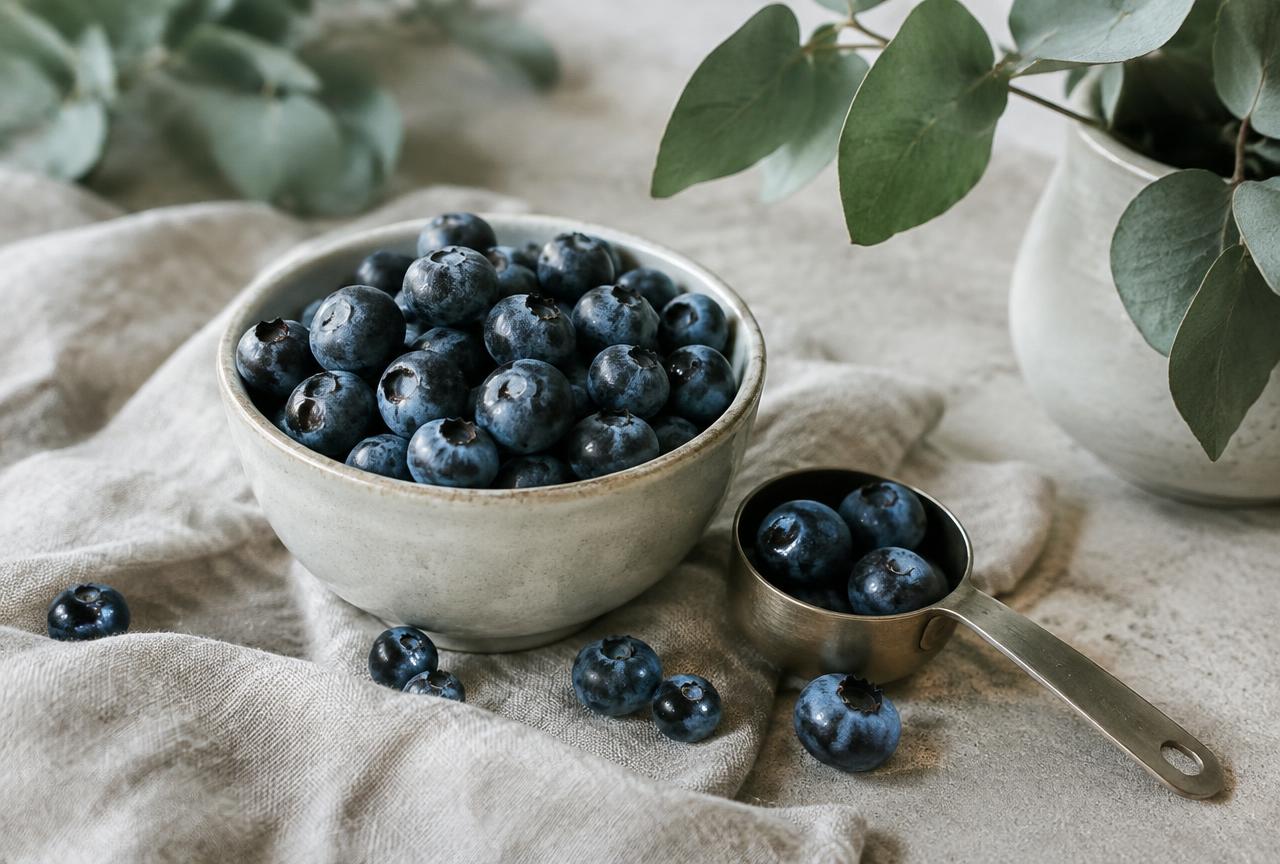
The right portion depends on your dog's size, because treats should stay under 10% of the day's total calories. As a working guide:
| Dog size | Example weight | Blueberries per serving |
|---|---|---|
| --- | --- | --- |
| Toy | Under 5 kg | 2 to 3 |
| Small | 5 to 10 kg | 4 to 6 |
| Medium | 10 to 25 kg | 6 to 10 |
| Large | Over 25 kg | 10 to 15 |
These are per serving, not per hour. A Labrador who has already had a training session full of treats has spent most of the day's allowance, so the blueberries wait until tomorrow. If you are not sure how much room is in the budget, our portion calculator works out the daily calories for your dog's size and activity.
Blueberries are the rare treat where the healthy choice and the easy choice are the same thing.
Fresh, frozen or dried?
Fresh and frozen blueberries are both fine; dried blueberries and blueberry products are where the problems start.
Fresh is the default. Wash the berries, check for mouldy ones, and serve. Most dogs take them straight from the hand, and plenty will hoover them off the floor, which makes them useful for scatter feeding and sniffing games.
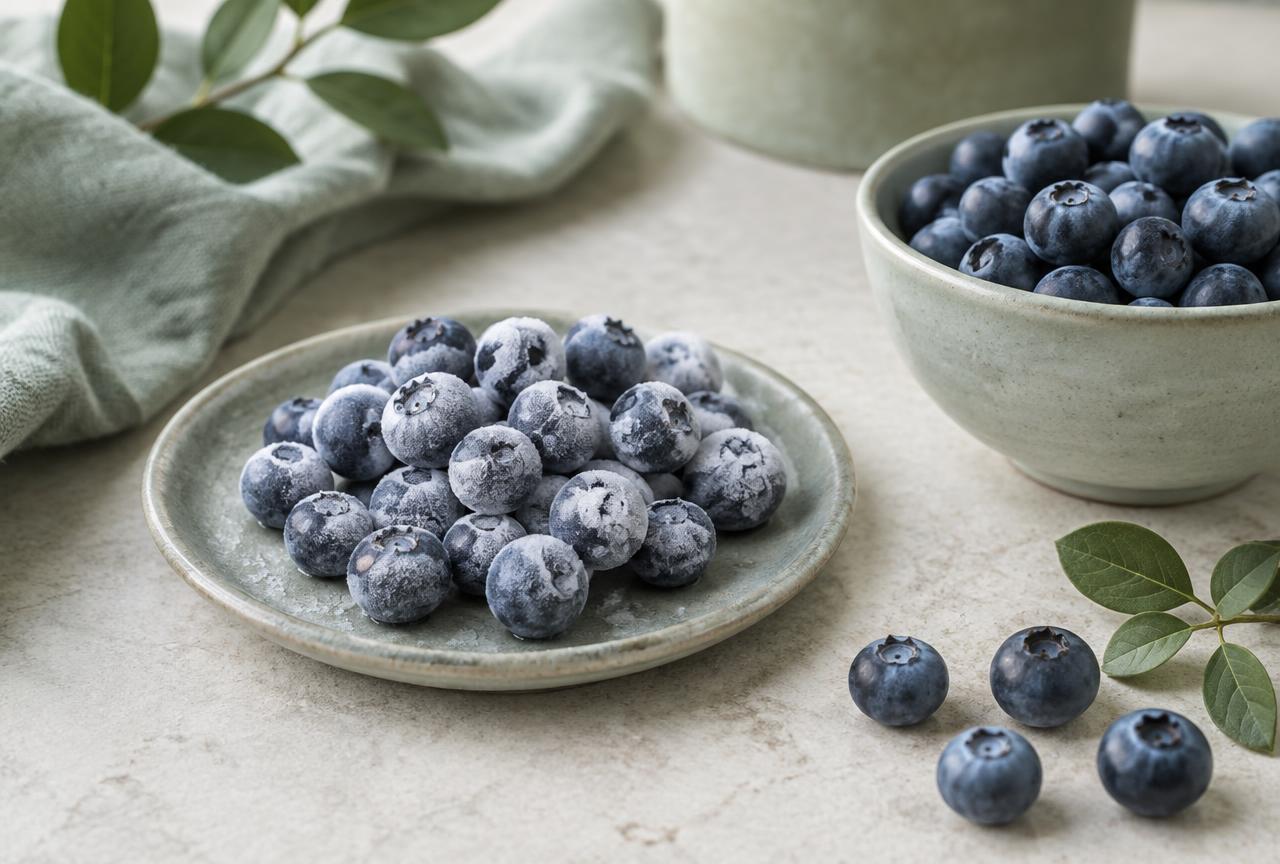
Frozen works well in warm weather and for dogs who eat too fast, because a frozen berry takes longer to finish. For toy breeds and puppies, let them soften for a minute or crush them: a hard frozen berry is a choking risk in a small mouth.
Dried blueberries are best avoided. Drying concentrates the sugar, many brands add more, and a small handful of dried berries is several times the sugar of the same volume fresh. If you do share them, keep it to one or two and check the ingredients list for added sugar or sweeteners first.
Can puppies eat blueberries?
Puppies can eat blueberries from weaning onwards, in very small amounts: one or two squashed berries to start, then watch their stools over the next day.
A puppy's digestive system is still learning its job, so any new food deserves a slow introduction. Squash the berry between your fingers or cut it in half, offer it once, and wait 24 hours before offering more. If the stools stay normal, blueberries can join the treat rotation.

For teething puppies, a slightly softened frozen berry can be soothing on sore gums, in the same way a chilled carrot works. Supervise, keep the pieces appropriate to the puppy's size, and remember that treats for puppies still count towards the day's food.
Blueberry products to avoid
The fruit is safe; what humans do to it often is not. Skip anything baked, sweetened or flavoured.
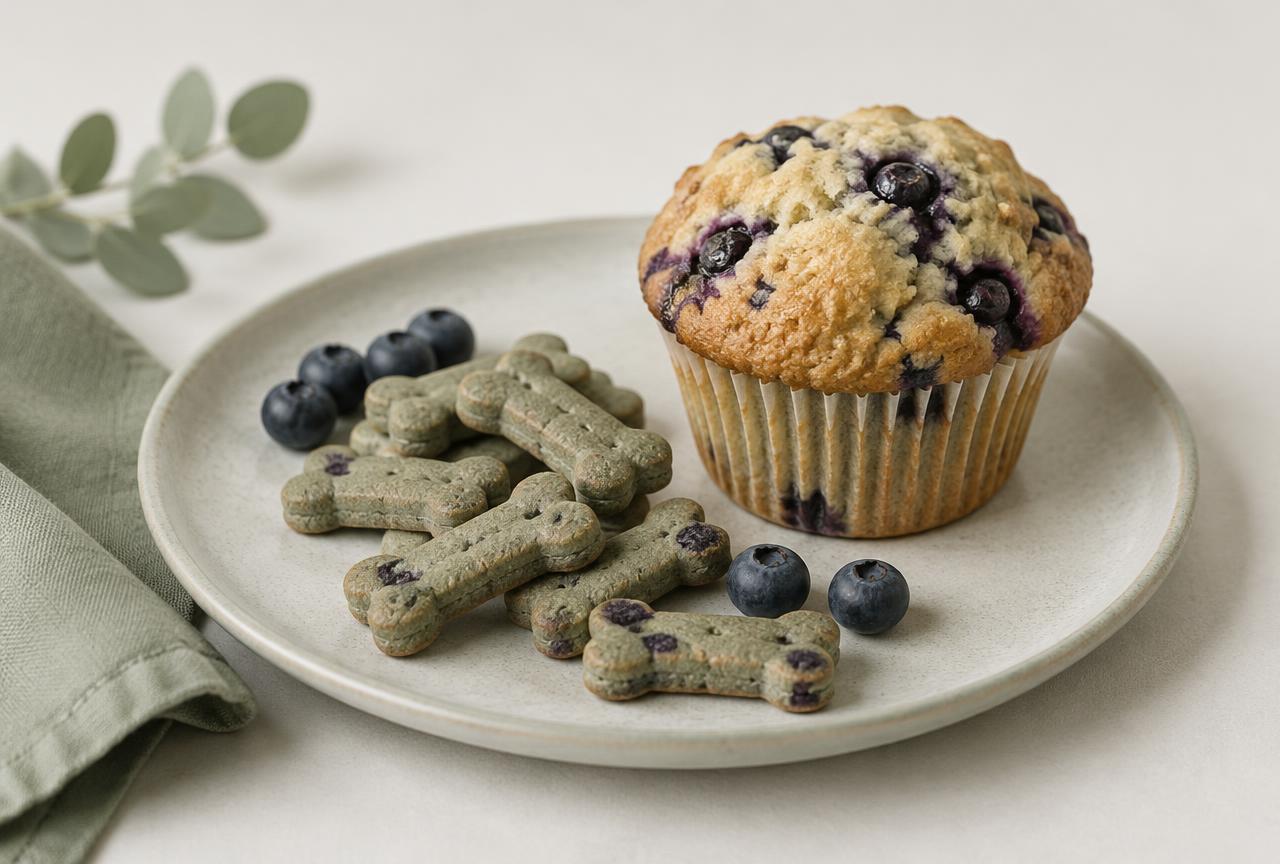
Blueberry muffins, pancakes, jams and pies are loaded with sugar and fat, and some recipes include raisins, which are toxic to dogs. Blueberry yoghurt and smoothie products usually contain added sugar, and sugar-free versions may contain xylitol, which is dangerous to dogs even in small amounts and can cause a rapid, life-threatening drop in blood sugar.
Check the ingredients of any commercial blueberry dog treat too. Some are little more than biscuits with a blueberry picture on the box. If you want your dog to have blueberries, the actual fruit is cheaper and better.
How to serve blueberries: a simple plan
- 1Wash the berries and pick out any soft or mouldy ones.
- 2For toy breeds, puppies and gulpers, squash or halve each berry.
- 3Start with two or three berries, whatever the dog's size, and watch the stools over the next day.
- 4If all is well, settle into the portion for your dog's size, a few times a week.
- 5Count the berries in the day's 10% treat allowance, alongside training treats and any other extras.
- 6Rotate with other safe options such as strawberries and the fruits in our guide to fruit for dogs so no single food dominates.
Interactive tool
Blueberry portion checker
Dog size and frequency in, a safe portion out.
Your plan
- For a medium dog, a serving is about six to ten blueberries, counted within the 10% treat allowance for the day.
- A few times a week suits most dogs and keeps blueberries a novelty rather than a habit.
- Wash them, serve fresh or frozen, and for toy breeds squash or halve them to remove the choking risk.
- Skip blueberry muffins, yoghurts with added sugar and anything sweetened with xylitol, which is dangerous to dogs.
A sensible treat
Blueberries are one of the safest fruits for dogs: low in calories, easy to portion and most dogs love them.
When to see a vet
Blueberries are not toxic, so a stolen berry or two is not an emergency. Call the vet if your dog has eaten a very large amount and has vomiting or diarrhoea that lasts beyond 24 hours, seems lethargic or uncomfortable, or if you suspect the product contained xylitol, raisins or chocolate. With xylitol, do not wait for symptoms: call immediately.
Blueberries for dogs with health conditions
Most healthy dogs can enjoy blueberries freely within the portion guide, but a few situations call for a conversation with your vet first.
Diabetic dogs need consistent, measured carbohydrates, and even low-sugar fruit adds variability. Blueberries are one of the better fruit choices here because their sugar load per berry is tiny, but portions should be fixed, counted and agreed with your vet rather than handed out casually.
Dogs with kidney disease are sometimes placed on restricted diets where every extra food matters. Blueberries are low in phosphorus and protein, which helps, but again the diet plan comes first.
Dogs prone to bladder stones may have fruit restricted depending on the stone type. Your vet or a veterinary nutritionist can tell you whether berries fit your dog's specific plan.
Overweight dogs are the opposite case: blueberries are one of the best swaps available. Replacing a 40-calorie biscuit with ten blueberries cuts the treat calories dramatically while keeping the ritual of treating, which is usually what the dog actually cares about. If weight is a concern, our ideal weight tool and the guide to how much to feed a dog are the right next reads.
Training with blueberries
Blueberries make excellent training rewards because they are small, soft, low-calorie and quick to swallow, which keeps the training rhythm fast.
A good training treat disappears in a second and does not fill the dog up. Blueberries do exactly that, and because each berry is about one calorie, a twenty-rep session barely touches the daily budget. They work especially well for food-motivated breeds such as the Labrador and Beagle, where the treat budget is often the limiting factor in training.
Two practical notes. Blueberries can stain light carpets and furniture, so outdoor or kitchen training is sensible. And some dogs find them boring compared with meat; if yours spits them out, that is information, not defiance. Mix a few berries into a bag of higher-value treats so the dog never knows which is coming, or save blueberries for low-distinction rewards at home.
You can also use them for enrichment: scatter a handful in the garden or across a snuffle mat and let your dog hunt them down. Ten minutes of sniffing tires a dog more gently than ten minutes of running, and it costs almost no calories.
A week of sensible sharing
To make the portion guide concrete, here is how a medium dog's week might look: a handful of blueberries after Monday's walk, a few frozen berries in a puzzle toy on Wednesday, a scatter feed in the garden on Saturday. Three small servings, all inside the treat allowance, all logged mentally alongside any training treats. The dog gets variety and novelty; you get a treat you never have to feel guilty about. That is the whole philosophy: treats are part of the relationship, and the best ones are the ones you can say yes to often.
Common questions owners ask about blueberries
Can blueberries stain my dog's fur? Around the muzzle of a white or pale dog, yes, temporarily. The pigment washes out with a damp cloth and does no harm, but it is worth knowing before you hand a handful to a pale-faced dog on a cream sofa.
Are wild blueberries different? Wild blueberries are smaller and more intensely flavoured, but nutritionally they are the same family and equally safe. If you pick your own, be certain of the plant: dogs should only eat berries you can identify with confidence, and many wild berries are not safe.
Can blueberries help an old dog's brain? Antioxidant-rich diets have shown promise in studies of ageing dogs, and blueberries are often mentioned in that research. It is fair to call them a sensible part of an older dog's treat rotation, but they are not a treatment for cognitive decline. If your senior dog is showing confusion, night waking or house-soiling changes, our guides to night barking and senior care are the place to start, followed by a vet visit.
What about blueberry supplements marketed for dogs? Whole berries are cheaper, safer and better understood than concentrated supplements. Unless your vet has recommended a specific product for a specific reason, the fruit itself is the better buy.
The 10% rule, applied
Every treat discussion on this site comes back to the same anchor: treats and extras should make up no more than about 10% of your dog's daily calories, with the rest coming from a complete dog food. Blueberries make this easy because the maths is friendly. Ten blueberries is roughly ten calories, a rounding error for a 25 kg dog eating 1,000 calories a day, but a meaningful slice of a 4 kg dog's 250-calorie day. That is why the portions scale with size, and why the smallest dogs get the smallest handfuls. If you have never worked out your dog's daily calories, the portion calculator takes thirty seconds and changes how you think about every treat afterwards.
The bottom line
Blueberries are one of the safest, easiest treats you can share with a dog. Wash them, size them to the dog, keep the portions honest and skip the muffin. Few foods tick every box the way this one does.
Questions people actually ask
Can dogs eat blueberries every day?
Yes, a few blueberries a day is fine for most healthy dogs, as long as they sit within the 10% treat allowance and the rest of the diet is a complete dog food. Rotate with other safe fruits and vegetables for variety.
How many blueberries can a dog eat?
As a guide: two to three for toy dogs, four to six for small dogs, six to ten for medium dogs and a small handful for large dogs, per serving. Blueberries are low in calories but the sugar still adds up.
Can puppies eat blueberries?
Yes, from weaning onwards, in tiny amounts. Squash or halve them for small puppies, introduce one or two at a time, and watch their stools over the next day.
Are frozen blueberries safe for dogs?
Yes. Frozen blueberries are a good summer treat and most dogs enjoy the crunch. For toy breeds and puppies, let them soften slightly or crush them first, as hard frozen berries are a choking risk for small mouths.
Can dogs eat blueberry muffins or yoghurt?
No. Muffins are full of sugar and fat, and some sugar-free products contain xylitol, which is highly toxic to dogs. Plain fresh or frozen berries are the only form worth sharing.
What should I do if my dog eats a whole punnet of blueberries?
Stay calm: blueberries are not toxic. A whole punnet is most likely to cause soft stools or an upset stomach for a day. Offer water, feed a lighter meal, and call the vet if vomiting, diarrhoea or lethargy lasts more than 24 hours.
Sources
Breeds mentioned

Labrador Retriever
Britain's most popular family dog: biddable, food driven and built for an active household.

French Bulldog
A comic, affectionate companion built for city life, but with health needs that demand a careful breeder.

Beagle
A merry, sociable scenthound with a powerful nose and a mind of its own outdoors.
Put it into practice
Read next
Can Dogs Eat Oatmeal? Cooked, Raw and Flavoured
Plain oatmeal cooked in water is safe for dogs in small servings and its soluble fibre can help mild diarrhoea. Avoid flavoured sachets, raw oats and porridge made with milk or sugar.


