
Dog Barking at Night: Causes and How to Stop It
A dog barking at 2am feels like a mystery, but it never is. Something is being heard, felt or needed. The fix that works is the one aimed at the actual cause, which is why the first job is detective work, not training.
The SniffScroll desk
Published 10 October 2026
Reviewed against guidance from VCA, PDSA, AKC, Merck and the RSPCA
The short version
- Night barking is a symptom, not a habit: identify the cause before choosing a fix.
- Outside noises (foxes, neighbours, cars) are the most common trigger in adult dogs; masking sound and blocking sightlines helps.
- Puppies bark at night because they need the toilet or reassurance: calm, boring toilet trips and a crate near your bed settle most.
- New night barking in a senior dog warrants a vet check before any training: pain and cognitive decline are common causes.
- Respond the same way every time: quiet check, no chatter, no treats, back to bed.
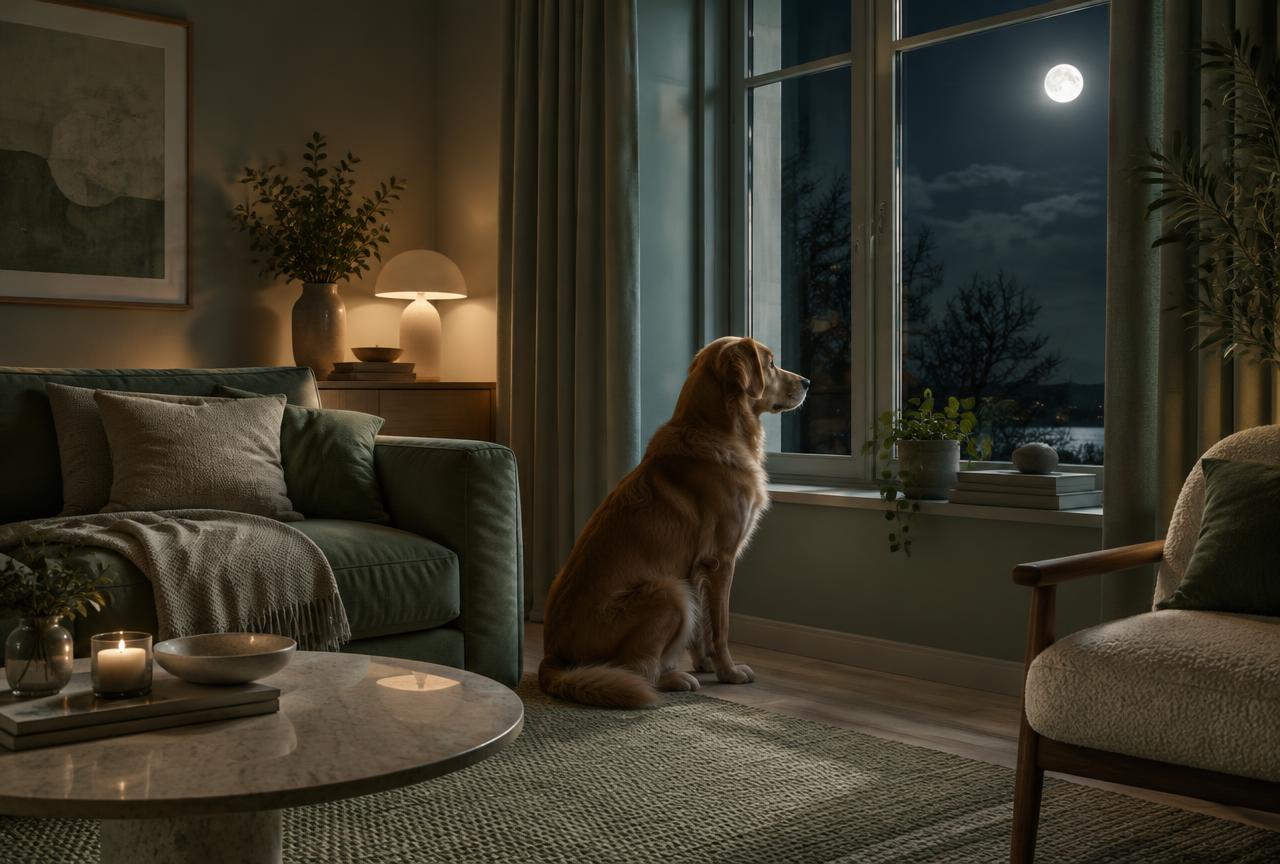
A dog barking at night is a dog responding to something: a sound you cannot hear, a bladder that will not wait, energy that went unspent, or, in an older dog, discomfort or confusion. There is no universal fix because there is no universal cause. The good news is that the detective work is quick, and once you know which of the five causes you are dealing with, the fix is usually straightforward.
Cause one: outside noises and movement
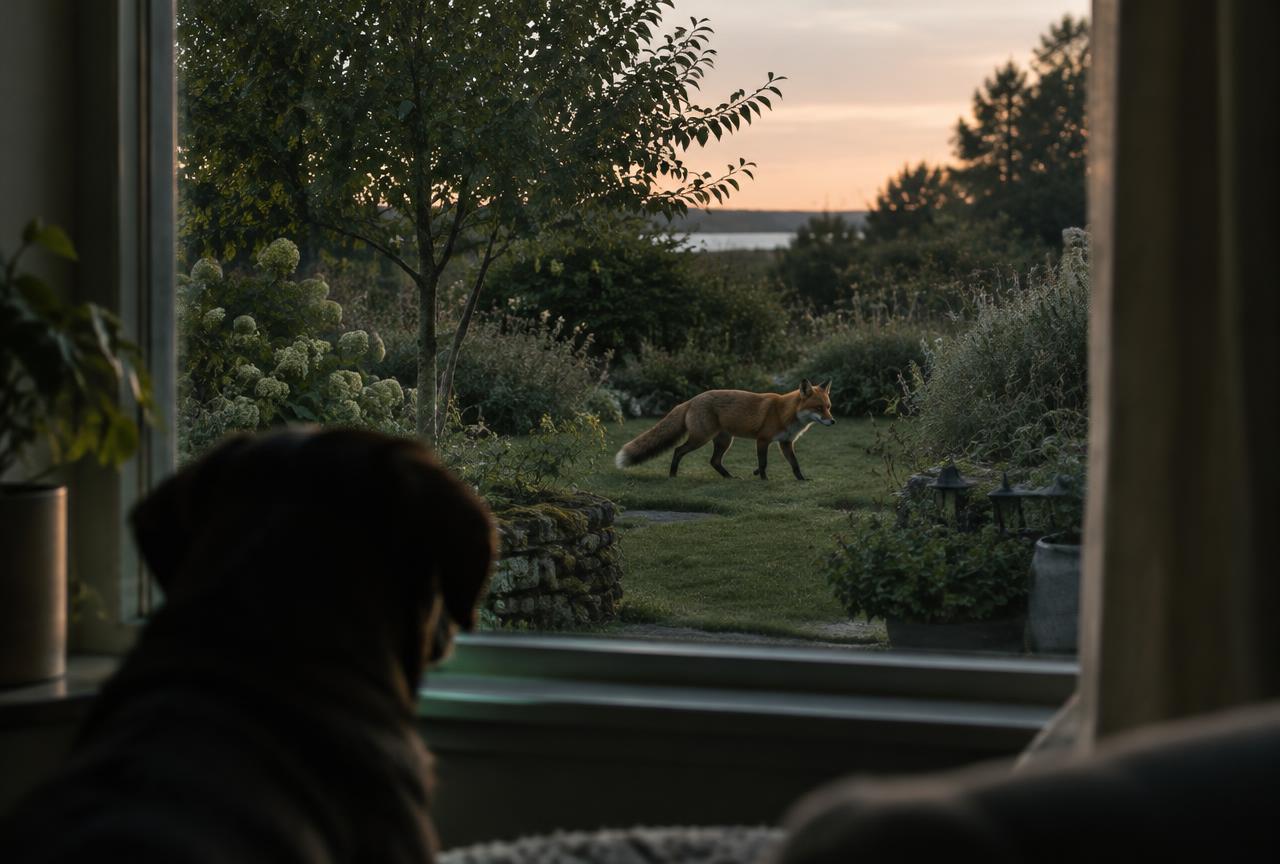
The most common cause in adult dogs, and the one owners are least aware of, is sound. Dogs hear frequencies we miss and at roughly four times our range. The 2am barking fit that seems to come from nowhere is often a fox in the garden, a car door three streets away, or a neighbour's wheelie bin. To a dog, particularly a watchful breed like a German Shepherd or a Border Collie, that is the night shift doing its job.
The fixes are environmental before they are behavioural:
- Mask the sound. A fan or white noise machine near the dog's bed flattens the outside world remarkably well.
- Block the view. Closed curtains or moving the bed away from windows removes the visual triggers, including the fox doing laps of the lawn.
- Move the bed. A dog sleeping against a party wall or by the front door hears everything. An interior room changes the night.
Cause two: leftover energy
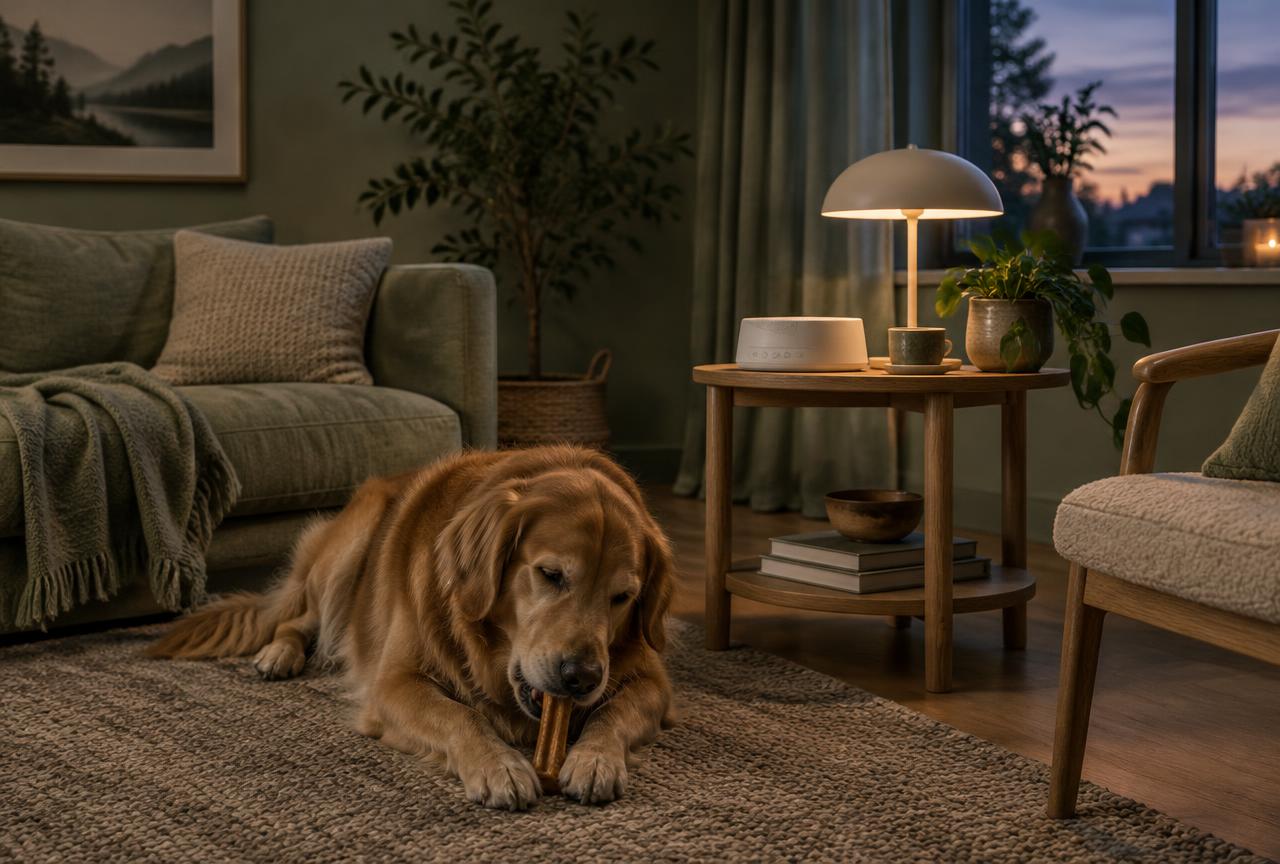
A dog who has pottered in the garden and had one short walk has not spent its day; it has endured it. Under-exercised, under-stimulated dogs sleep lightly and wake ready, and any small sound becomes an event. This is especially true of working and herding breeds, who were built for sixteen-hour days and now get forty-five minutes round the block.
The fix is boring and effective: a proper evening walk, plus ten minutes of something that works the brain, training, scent games or a food puzzle, before bed. Mental work tires a dog faster than physical work alone. A Border Collie who has spent fifteen minutes finding hidden treats will sleep more soundly than after an extra lap of the park.
Cause three: puppies who need the toilet (or you)
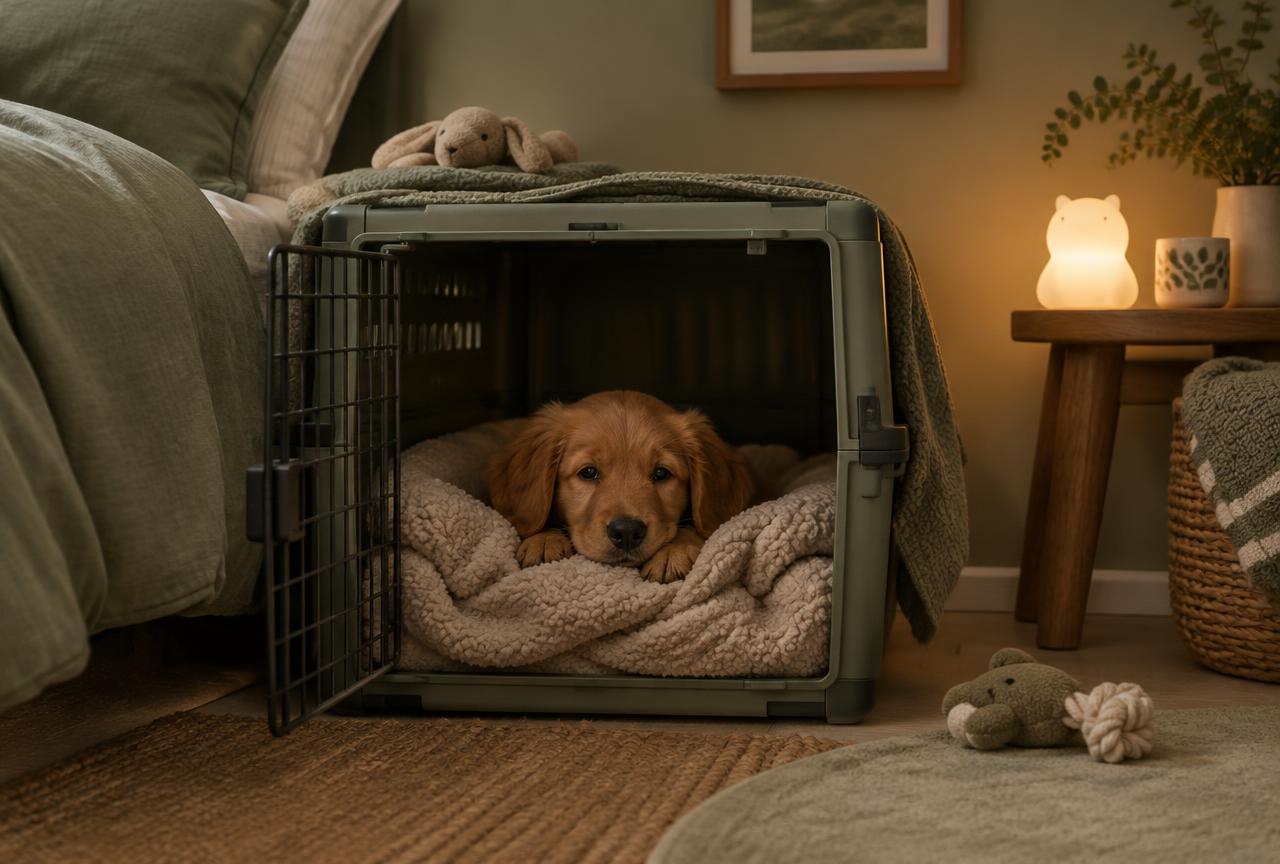
Puppy night barking is not a behaviour problem; it is biology. A young puppy's bladder holds a few hours at most, and a puppy who has just left its litter is sleeping alone for the first time in its life. Expect the noise, plan for it, and it passes.
- 1Sleep the crate beside your bed for the first weeks. Your presence settles most puppies faster than any gadget.
- 2Last toilet trip late, first one early. A final trip right before bed, and set an alarm for one night trip rather than waiting for the howl.
- 3Keep night trips boring. Low light, no talking, no play, no food. Out, toilet, back to bed. Night must never become fun.
- 4Do not punish. A puppy barking from need or loneliness is not being naughty, and punishment teaches fear, not bladder control.
Most puppies sleep through somewhere between four and six months as bladder capacity grows. Our crate training guide covers the settling-in weeks in detail.
Cause four: anxiety and being alone
Some dogs bark at night because the night is when they are left alone, and alone is the problem. The pattern gives it away: barking starts when the house goes quiet, happens at the same time each night, and the dog is velcro-glued to you by day. If that sounds familiar, the night barking is a separation issue wearing a night-time costume, and the fix is gradual alone-time training, not noise management. Our guide to separation anxiety walks through the ladder approach, and the alone-time ladder tool builds the steps for you.
Cause five: the senior dog
New night barking in an older dog is a vet question before it is a training question. The common causes:
- Pain. Arthritis and other aches are worse after lying still, and a dog who cannot get comfortable may bark from discomfort.
- A weaker bladder. Older dogs simply need to go out more often.
- Canine cognitive dysfunction. The dog equivalent of dementia: confusion, reversed sleep-wake cycles, wandering and barking at nothing visible, often worst at night.
A vet can treat or manage all three, and a night light, a predictable bedtime and an easy toilet route help a confused senior enormously. Do not spend weeks training a dog whose problem turns out to be a sore hip.
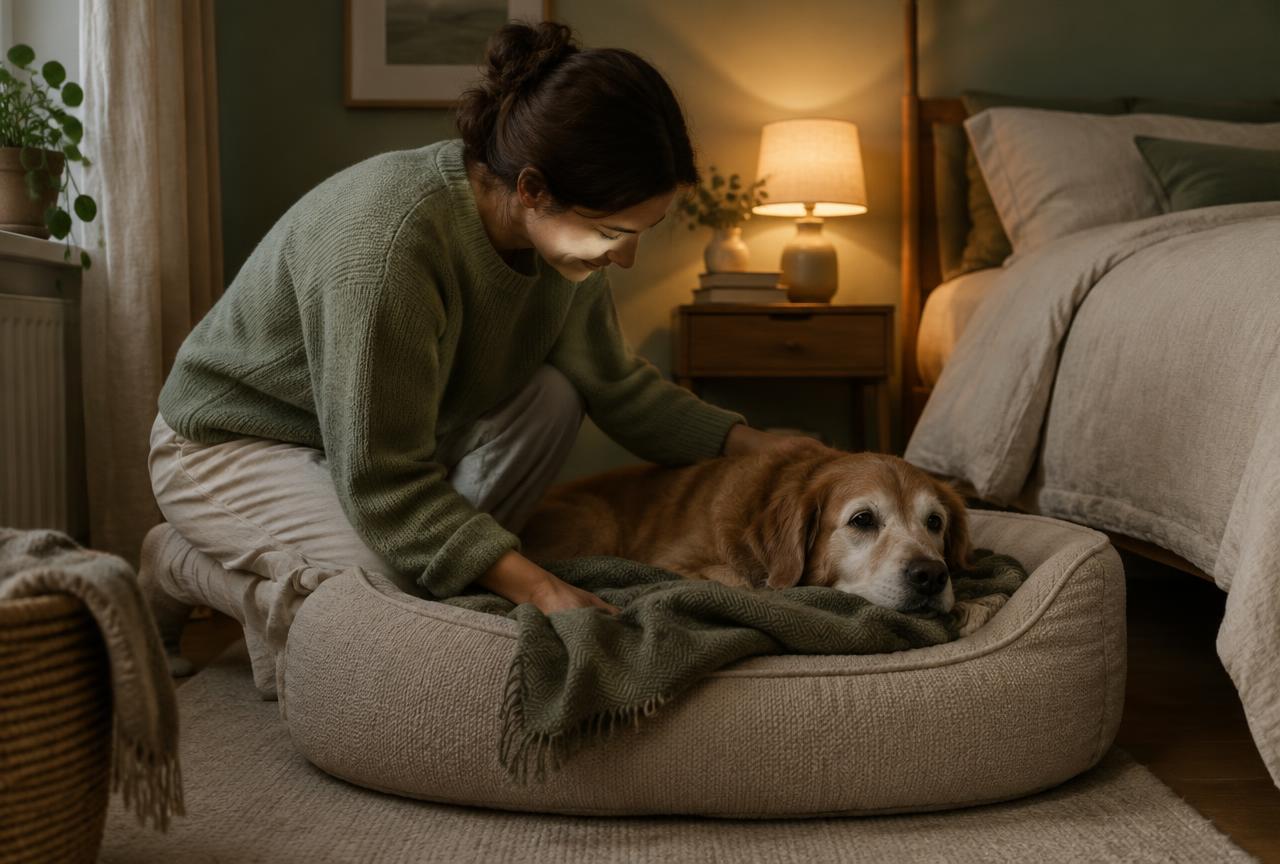
The response protocol: whatever the cause
While you work on the cause, handle the barking itself the same way every night:
- 1Do a quiet check. A real need (toilet, distress) gets met without fuss; a false alarm gets a calm, brief acknowledgement.
- 2No chatter, no treats, no telly. Anything rewarding teaches the dog that barking summons entertainment.
- 3Reward the quiet. Catch your dog settled in the evening and calmly reinforce it. Dogs repeat what works.
- 4Be consistent. One night of giving in resets the clock. Everyone in the house follows the same rules.
For daytime barking, the principles overlap but the triggers differ: our guide on how to stop a dog barking covers the broader picture.
Interactive tool
Night barking decoder
Timing, triggers and age in, likely cause and first steps out.
Your plan
- The pattern points to outside sounds: foxes, neighbours, cars, doors.
- Mask outside sounds with a fan or white noise, close curtains, and move the bed away from windows and party walls.
- Respond to night barking the same way every time: quiet check, no chatter, no treats, back to bed.
- Reward the quiet: catch your dog settled in the evening and calmly reinforce it.
Find the cause before the cure
Night barking is a symptom. Puppies, adults and seniors bark at night for different reasons, and the fix follows the cause.
When to see a vet
Book a vet visit if night barking is new in a senior dog, if it comes with other changes (drinking more, accidents indoors, confusion, appetite shifts), or if your dog seems to be in pain when settling. Also worth a conversation: barking that nothing explains and nothing fixes after a few consistent weeks, because a behaviourist or a medical workup will find what guesswork cannot.
The five causes at a glance
| Cause | Typical pattern | First move |
|---|---|---|
| --- | --- | --- |
| Outside noises | Sudden barking at sounds you barely hear | Mask sound, block sightlines |
| Leftover energy | Restless evenings, light sleep, any sound sets them off | Evening walk plus brain work |
| Puppy needs | Whining and barking in the early hours | Calm, boring toilet trips |
| Anxiety | Starts when the house goes quiet, velcro dog by day | Alone-time training |
| Senior changes | New barking in an old dog, pacing, confusion | Vet check first |
The two-week plan
- 1Nights 1 to 3: gather data. Note the time, duration and anything you can hear or see. A cheap camera or a phone recording overnight is worth more than a week of guessing.
- 2Nights 4 to 7: change the environment. White noise, closed curtains, bed moved from windows and walls, proper evening exercise.
- 3Week 2: consistent responses. Quiet checks only, no rewards for noise, calm reinforcement of settling.
- 4End of week 2: review. Clearly better means keep going. Unchanged means the cause is wrong, and it is time for the vet or a behaviourist.
The verdict, by dog
Young puppy: expect noise, plan toilet trips, crate by the bed, and it resolves with maturity. Adult, noise-triggered: environmental fixes usually work within days. Adult, anxious: weeks of gradual alone-time work, and our separation anxiety guide is the roadmap. Senior, new onset: vet first, always. Any dog, sudden change: new night barking in a dog who slept soundly for years is a symptom, and symptoms get checked.
You cannot train away a need. Meet the need, and the barking has nothing left to say.
Common myths, cleared up
"Let them bark it out." For attention-seeking in a healthy adult, maybe; for a puppy who needs the toilet or a senior in pain, never. "A bark collar fixes night barking." It fixes the noise, not the cause, and punishing a frightened dog makes the fear worse. "Dogs bark at night to annoy the neighbours." Dogs bark because something is heard, needed or felt; spite is not in their repertoire.
Soundproofing and setup: the practical details
You cannot soundproof a house against a dog's hearing, but you can take the edge off the night. A white noise machine or a simple desk fan near the dog's bed raises the floor of the soundscape, so the fox's footsteps stop standing out against silence. Heavy curtains or blinds cut both light and the visual triggers through glass. If the dog sleeps in a room that faces the street or the garden, moving the bed to an interior room or the landing often halves the triggers in one move. Some dogs settle better with a low radio left on, talk stations rather than music, because a human voice is the sound of safety for a social animal. None of this is training; it is stage management, and it works because most night barking is a response to a stimulus, and a stimulus you remove needs no response.
Working with neighbours and thin walls
If you share walls, night barking is a relationship problem as well as a dog problem, and the honest approach works best: tell the neighbours you know, you are working on it, and give it a timeframe. Most people are patient with a problem they can see being addressed. In the meantime, the environmental fixes do double duty: the white noise that masks the fox for the dog also softens the dog for the neighbour. If the barking is severe and the complaint is formal, a qualified behaviourist's involvement is worth having on record, and it genuinely helps: separation-related and noise-related barking both respond to structured programmes.
The bottom line
Night barking always has a cause, and the cause decides the fix: mask the sounds, spend the energy, meet the puppy's needs, train the anxiety away gradually, and take the senior dog to the vet. Two consistent weeks solve most cases, and the cases that survive two consistent weeks are telling you the diagnosis is wrong, not that the dog is.
Keeping a barking diary
Two weeks of notes will tell you more than two months of frustration. Each night, jot the time the barking started, how long it lasted, what you could hear or see, and what you did. Patterns emerge fast: barking at 2am and 4am on fox nights is noise-triggered; barking twenty minutes after lights-out is settling or anxiety; a single early-hours whine from a puppy is a bladder. The diary also measures progress honestly, because improvement is gradual and memory is pessimistic. If you end up at the vet or a behaviourist, the diary is the first thing they will ask for, and having it ready saves a fortnight.
The bottom line
Find the cause, fix the cause, and answer the noise the same calm way every night. Most night barking yields to masked sound, a tired dog and a consistent household within a fortnight. The cases that do not are not stubborn dogs; they are wrong diagnoses, and that is what vets and behaviourists are for.
Questions people actually ask
Why does my dog bark at night for no reason?
There is always a reason; it is just not always audible to you. Dogs hear roughly four times further than we do, and foxes, cats, car doors and distant voices are all bark-worthy to a dog on night watch. If you truly cannot find a trigger, a camera or audio recording overnight usually solves the mystery within a few nights.
Should I ignore my dog barking at night?
It depends on the cause. Ignoring works for attention-seeking barking in a healthy adult dog, but it is the wrong response to a puppy who needs the toilet, a senior in discomfort, or a dog alarmed by a genuine intruder. Do a quiet check first, address any real need without fuss, then be consistent about not rewarding the noise.
Why has my older dog started barking at night?
New night barking in a senior dog is a medical question first. Pain (especially arthritis), needing the toilet more often, and canine cognitive dysfunction (the dog equivalent of dementia) are the common causes. Book a vet check before trying any training fix.
How do I stop my puppy barking at night?
Expect it at first: puppies need night toilet trips and miss their litter. Keep the crate beside your bed, take them out calmly at the first whine with no play or food, and settle them straight back. Most puppies sleep through within a few weeks as their bladder capacity grows.
Do anti-bark collars work for night barking?
They suppress the noise without touching the cause, and spray or shock collars risk turning an anxious dog into a more anxious one. A dog barking from fear or discomfort who is punished for it still feels the fear. Fix the cause; the barking takes care of itself.
How long does it take to stop night barking?
Noise-triggered barking often improves within days once the sound is masked and the dog is properly tired. Anxiety-driven barking takes weeks of gradual work. Puppy night waking resolves as the bladder matures, usually by four to six months. Consistency matters more than any single technique.
Sources
Breeds mentioned



Put it into practice
Read next
Why Do Dogs Roll in Poop? The Instinct Explained
Why dogs roll in the worst smells they can find, what the behaviour is really about, and how to prevent it or at least clean up well afterwards.


