
Can Dogs Eat Strawberries? Portions, Sugar and Serving Ideas
Fresh strawberries are one of the better fruits to share with a dog: low in calories, high in vitamin C and fibre, and sweet enough to feel like a proper treat. The rules are simple: wash, hull, chop, and keep portions small.
The SniffScroll desk
Published 10 October 2026

Reviewed against guidance from VCA, PDSA, AKC, Merck and the RSPCA
The short version
- Dogs can eat strawberries: fresh, washed, hulled and chopped, they are safe for healthy dogs.
- Portion by size: one small berry for a toy dog, up to three or four for a large dog, a few times a week.
- Treats, fruit included, should stay under ten per cent of the day's calories.
- Skip jam, tinned strawberries in syrup and anything with added sugar or sweeteners.
- Introduce slowly and watch for an upset stomach, especially with puppies and sensitive dogs.
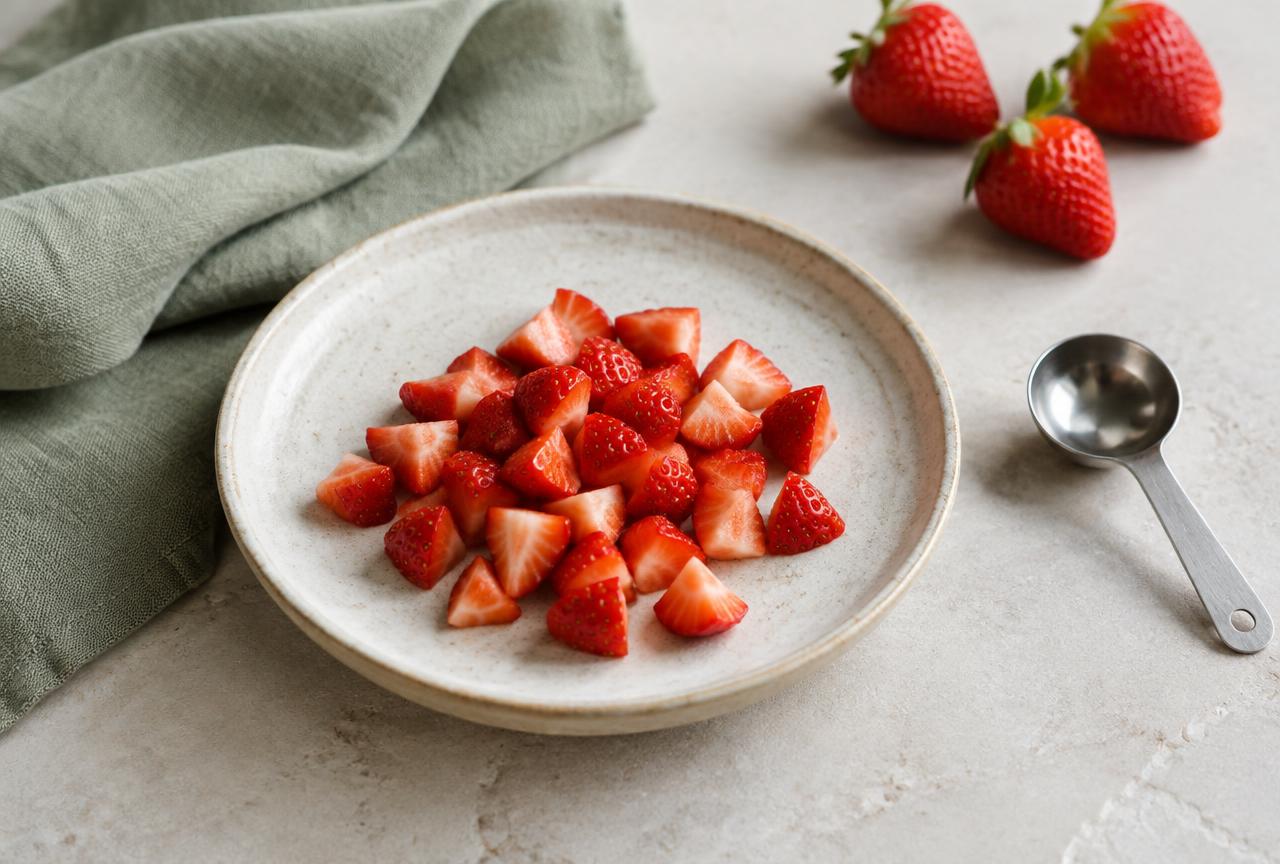
Yes, dogs can eat strawberries. Fresh, ripe strawberries are safe for healthy dogs, and most dogs love them: they are sweet, juicy and soft enough to chew easily. They are also one of the lower-calorie fruits, which makes them a better treat choice than many shop-bought biscuits. The only real rules are preparation and portion: wash them, remove the green tops, chop them to a sensible size, and keep servings small.
Are strawberries good for dogs?
Strawberries are a genuinely reasonable treat, not just a harmless one. They are low in calories (roughly 4 calories per medium berry), high in water, and they bring vitamin C, fibre, antioxidants and a little manganese to the bowl. Dogs make their own vitamin C, so they do not need strawberries for nutrition, but as treats go, a fresh berry beats a fatty table scrap every time.
The catch is sugar. Strawberries are sweet, and sugar is sugar whether it comes from a fruit or a biscuit. For a healthy dog at a healthy weight, a few berries a couple of times a week is nothing to worry about. For an overweight dog, a diabetic dog or a dog prone to pancreatitis, fruit treats need a conversation with your vet first.
How many strawberries can a dog eat?
Portion by size, and count berries in the treat allowance. All treats together, fruit included, should stay under ten per cent of the day's calories.
| Dog size | Example weight | Serving | How often |
|---|---|---|---|
| --- | --- | --- | --- |
| Toy | Under 5 kg | 1 small strawberry, chopped | A few times a week |
| Small | 5 to 10 kg | 1 to 2 strawberries, chopped | A few times a week |
| Medium | 10 to 25 kg | 2 to 3 strawberries, chopped | A few times a week |
| Large | Over 25 kg | 3 to 4 strawberries, chopped | A few times a week |
These are ceilings, not targets. A Labrador who gets strawberries, training treats and a bit of cheese in one day is well past the ten per cent line, and the waistline will show it within months. If your dog is a Labrador Retriever or a Beagle, two breeds famously talented at finding food, measure treats rather than estimating.
How to prepare strawberries for your dog
Preparation takes thirty seconds and removes the only real risks.
- 1Wash. Rinse under running water to remove dirt and any pesticide residue.
- 2Hull. Cut off the green top. It is not toxic, but it is tough, fibrous and can irritate the stomach or catch in a small throat.
- 3Chop. For toy and small dogs, cut berries into quarters or smaller. Whole strawberries are a choking risk for little dogs and for any dog who inhales food.
- 4Serve plain. No sugar, no cream, no chocolate dip. The dog does not know what it is missing.

Frozen strawberries are fine too, and a frozen berry or a mashed strawberry frozen in a toy makes a good summer cooler. Supervise gulpers with hard frozen pieces, and let them thaw slightly for small dogs.
Can puppies eat strawberries?
Puppies can eat strawberries once they are comfortably on solid food, but their digestion is more sensitive than an adult's. Start with a single small piece of soft, chopped berry, then wait a day and watch for loose stool or an unsettled stomach before offering more. Introduce one new food at a time so you know what caused what if something disagrees with them.

For teething puppies, a chilled (not rock-hard frozen) piece of strawberry can soothe sore gums, in the same way a chilled carrot does. Keep the piece big enough that it cannot be swallowed whole, and stay with them while they work on it.
What to avoid: jams, syrups and sweetened products
Fresh and frozen plain strawberries are the whole story. Everything processed is off the menu:
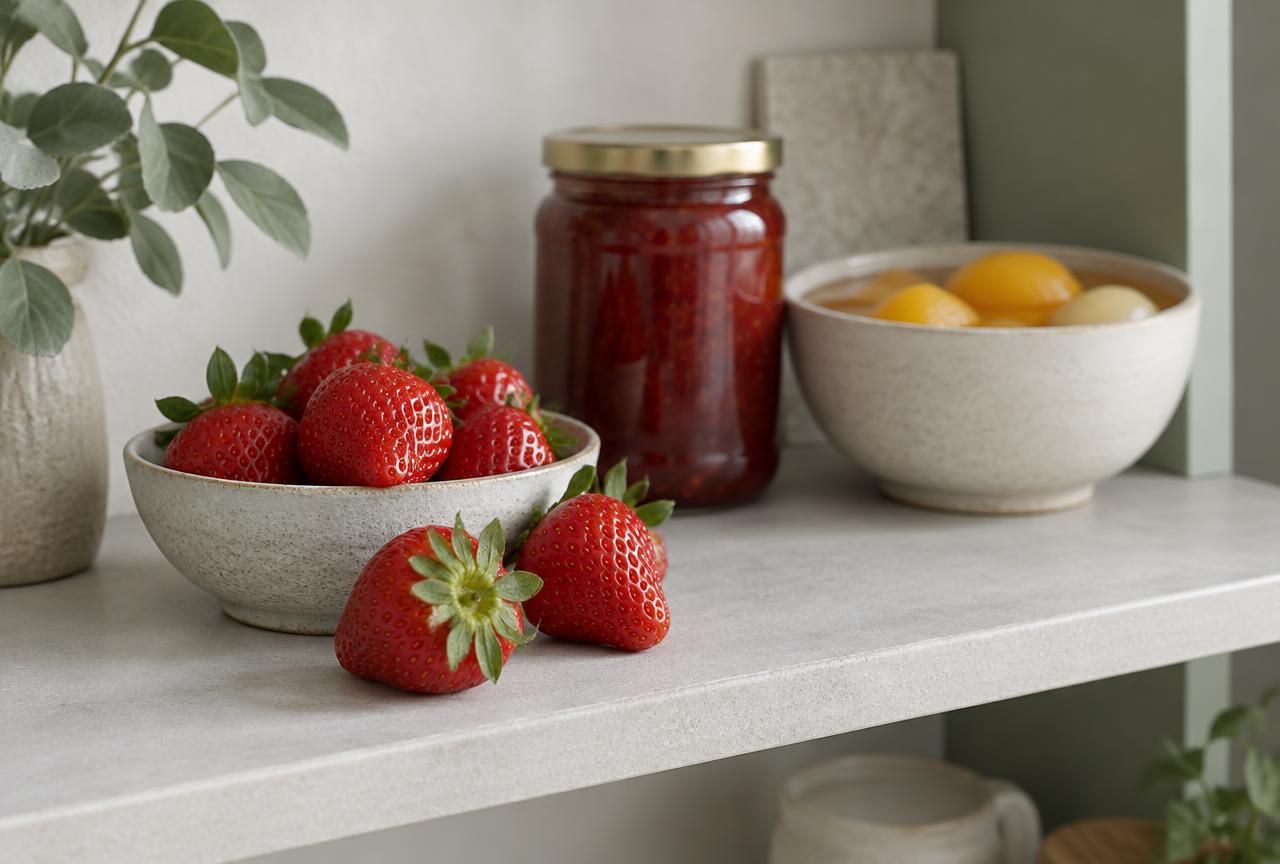
- Jam and preserves. Concentrated sugar, sometimes with xylitol in "sugar-free" versions. Xylitol is extremely toxic to dogs and even small amounts can be life-threatening.
- Tinned strawberries in syrup. A sugar bath with none of the fibre benefit.
- Strawberry-flavoured products. Yoghurts, cakes and sweets made for people often contain sweeteners, chocolate or raisins alongside the strawberry.
- Dried strawberries. Much more concentrated sugar per piece, and some brands add sweeteners.
If your dog gets into a "sugar-free" product of any kind, check the label for xylitol (also listed as birch sugar or E967) and call your vet or a poison line immediately if it is there. Do not wait for symptoms.
Signs strawberries do not suit your dog
Most dogs tolerate strawberries well, but any new food can disagree with an individual dog. After a first serving, watch for:
- Loose stool or diarrhoea within 24 hours
- Vomiting or obvious nausea (lip licking, drooling, restlessness)
- Itching, hives or facial swelling, which would suggest an allergy and needs a vet call
If your dog raids the punnet, the likely outcome is a soft stool and a smug dog. Offer water, keep the next meal light, and call the vet if vomiting or diarrhoea is repeated or lasts beyond a day.
Serving ideas that work
Chopped strawberries over dinner, a berry as a training jackpot, mashed strawberry frozen in a rubber toy, or a few pieces scattered in the grass for a sniffing game: all of these work. The common thread is that the strawberry is the event, not a daily habit. For more fruit options, see our guide to which fruits dogs can eat, and for another popular berry-adjacent treat, can dogs eat bananas. If you are weighing up treats against daily calories, the portion calculator does the maths for your dog's size.
Interactive tool
Strawberry portion checker
Dog size and frequency in, a safe portion out.
Your plan
- For a medium dog, a serving is about two to three strawberries, chopped, a couple of times a week.
- Wash, hull and chop: the leafy top is not toxic, but it is tough and can irritate the stomach.
- Count strawberries in the treat allowance: treats stay under ten per cent of the day's calories.
- Skip jam, tinned strawberries in syrup and anything sweetened: added sugar and sweeteners are not for dogs.
A sensible serving
Fresh strawberries are a safe, low-calorie treat for most dogs. Portion and preparation do the work.
When to see a vet
Strawberries themselves rarely cause a vet visit. Call your vet if your dog has eaten a sweetened strawberry product that might contain xylitol, if vomiting or diarrhoea is repeated or lasts more than 24 hours, or if you see any sign of an allergic reaction: hives, facial swelling or breathing difficulty, which is an emergency. And if your dog is diabetic, overweight or has pancreatitis, ask your vet before fruit becomes a habit.
Strawberries vs other fruits: a quick comparison
| Fruit | Safe for dogs? | Watch out for |
|---|---|---|
| --- | --- | --- |
| Strawberries | Yes | Sugar, portion size, choking on whole berries |
| Blueberries | Yes | Very little: a top-tier dog treat |
| Banana | Yes | Higher sugar and calories, smaller portions |
| Apple | Yes | Core and seeds must come out |
| Grapes and raisins | Never | Toxic: kidney failure, even in small amounts |
| Cherries | No | Pits, stems and leaves contain cyanide compounds |
Strawberries sit comfortably in the "yes, prepared properly" camp. The fruits that matter to memorise are the nevers: grapes and raisins top that list, and no amount is considered safe.
A checklist before you serve
- Fresh or plain frozen, never tinned, dried or in syrup
- Washed under running water
- Green top removed
- Chopped to a size your dog can chew
- Counted in the day's treat allowance
- Introduced alone, so you can spot a reaction
The verdict, by dog
Healthy adult at a good weight: strawberries are a green-light treat, a few times a week. Puppy: yes, tiny amounts, one new food at a time. Overweight dog: berries are actually a decent swap for fatty treats, but clear it with your vet and count every calorie. Diabetic dog or history of pancreatitis: vet first, always. Dog with a sensitive stomach: introduce slowly and stop at the first loose stool.
The best treats are the ones you do not have to think about. Strawberries, washed and chopped, are close to that ideal.
Common myths, cleared up
"Strawberries whiten dogs' teeth." You will read that strawberries contain an enzyme that whitens teeth. The effect, if any, is trivial next to an actual dental routine, and the sugar argues against using fruit as a dental strategy. "Dogs need fruit for vitamins." They do not: a complete dog food covers their needs, and dogs synthesise their own vitamin C. Fruit is a pleasure, not a supplement. "Organic strawberries do not need washing." They do: dirt and handling are the issue as much as sprays.
Growing your own: the garden question
If you grow strawberries, the dog question arrives by itself, usually at nose height. Homegrown berries are fine for dogs on the same rules as shop-bought: ripe, washed, hulled and chopped. The garden adds two considerations. First, what is on the plant: if you use sprays or slug pellets anywhere near the bed, the fruit is not for sharing, and slug pellets themselves are seriously toxic to dogs, so they should never be used where a dog ranges. Second, access: a dog who discovers the strawberry bed will help itself, and a punnet's worth of stolen berries means a day of loose stools. A low raised bed or a simple fence pays for itself in one summer.
Storing and freezing for later
A glut of summer berries freezes well for dog treats. Wash, hull and chop first, freeze the pieces flat on a tray, then bag them: you get single-serve pieces instead of a frozen brick. Frozen pieces keep for months and thaw in minutes. Mashed strawberry, frozen in a rubber toy or an ice cube tray with a little water, is the summer staple. What does not store well is the dog's enthusiasm: introduce the frozen version gradually, because very cold treats can bother sensitive teeth, and some dogs crunch ice-hard pieces fast enough to make you wince.
The bottom line
Strawberries are one of the easiest yeses in the fruit bowl. Wash, hull, chop, serve a few, a few times a week, and skip anything processed. The only dogs who need a different answer are the ones with a medical reason, and for them the vet's answer beats any article, this one included.
A note on treat maths
The ten per cent rule sounds abstract until you put numbers on it. A 20 kg dog on a typical diet eats roughly 1,000 calories a day, which makes the entire treat budget about 100 calories: that is training treats, table scraps, the lot. A medium strawberry is about 4 calories, so three berries use 12 of those 100. The maths is friendly, which is exactly why strawberries are a good choice, but it shows how fast the budget goes when cheese, biscuits and leftovers join in. Weigh the dog monthly, and let the scales arbitrate any disagreement about how generous the treat jar has been.
If your dog refuses them
Some dogs simply do not rate strawberries, and that is fine: no fruit is necessary. Do not sweeten the deal with yoghurt, honey or cream to win them over; the plain berry is the healthy version, and a dog who declines it has other options. Blueberries, apple slices without the core, and carrot batons cover the same ground. The goal is a treat you both feel good about, not a converted critic.
Questions people actually ask
Can dogs eat strawberries every day?
They can, but they should not. Strawberries contain natural sugar, and daily fruit adds up. A few times a week, in small portions, is the sensible rhythm for most dogs. If your dog has diabetes or is overweight, ask your vet before offering fruit at all.
How many strawberries can a dog eat?
As a guide: one small chopped strawberry for a toy dog, one or two for a small dog, two or three for a medium dog and three or four for a large dog, a couple of times a week. Treats of all kinds should stay under ten per cent of daily calories.
Can puppies eat strawberries?
Yes, in very small amounts once they are eating solid food. Offer a tiny piece of soft, chopped strawberry and watch for any stomach upset over the next day. Puppies have sensitive digestion, so introduce one new food at a time.
Are strawberry leaves and tops safe for dogs?
The green tops are not toxic, but they are tough, hard to digest and can irritate the stomach or pose a choking risk for small dogs. Hull the berries before serving.
Can dogs eat strawberry jam or tinned strawberries?
No. Jam and tinned fruit in syrup are loaded with added sugar, and some products contain xylitol, which is highly toxic to dogs. Stick to fresh or frozen plain strawberries.
What should I do if my dog eats too many strawberries?
A punnet raid usually means a loose stool or an upset stomach for a day. Offer water, feed lightly and watch. If there is repeated vomiting, diarrhoea that lasts past 24 hours, or your dog seems unwell, call the vet.
Sources
Breeds mentioned

Labrador Retriever
Britain's most popular family dog: biddable, food driven and built for an active household.

French Bulldog
A comic, affectionate companion built for city life, but with health needs that demand a careful breeder.

Beagle
A merry, sociable scenthound with a powerful nose and a mind of its own outdoors.
Put it into practice
Read next
Can Dogs Eat Oatmeal? Cooked, Raw and Flavoured
Plain oatmeal cooked in water is safe for dogs in small servings and its soluble fibre can help mild diarrhoea. Avoid flavoured sachets, raw oats and porridge made with milk or sugar.


