
Can Dogs Eat Bananas? Portions, Benefits and When to Skip Them
Yes, dogs can eat bananas in small amounts. Here is how much is safe, why the peel stays off the menu, and when to pick a different treat.
The SniffScroll desk
Published 10 October 2026
Reviewed against current veterinary guidance
The short version
- Bananas are not toxic to dogs and most healthy dogs can enjoy a few slices.
- Keep banana within the 10 percent treat allowance: it is sweet and calorie dense.
- Never feed the peel: it is hard to digest and can cause a blockage.
- Introduce slowly and stop if you see soft stools, gas or itching.
- Skip banana for dogs with diabetes or weight problems unless your vet agrees.
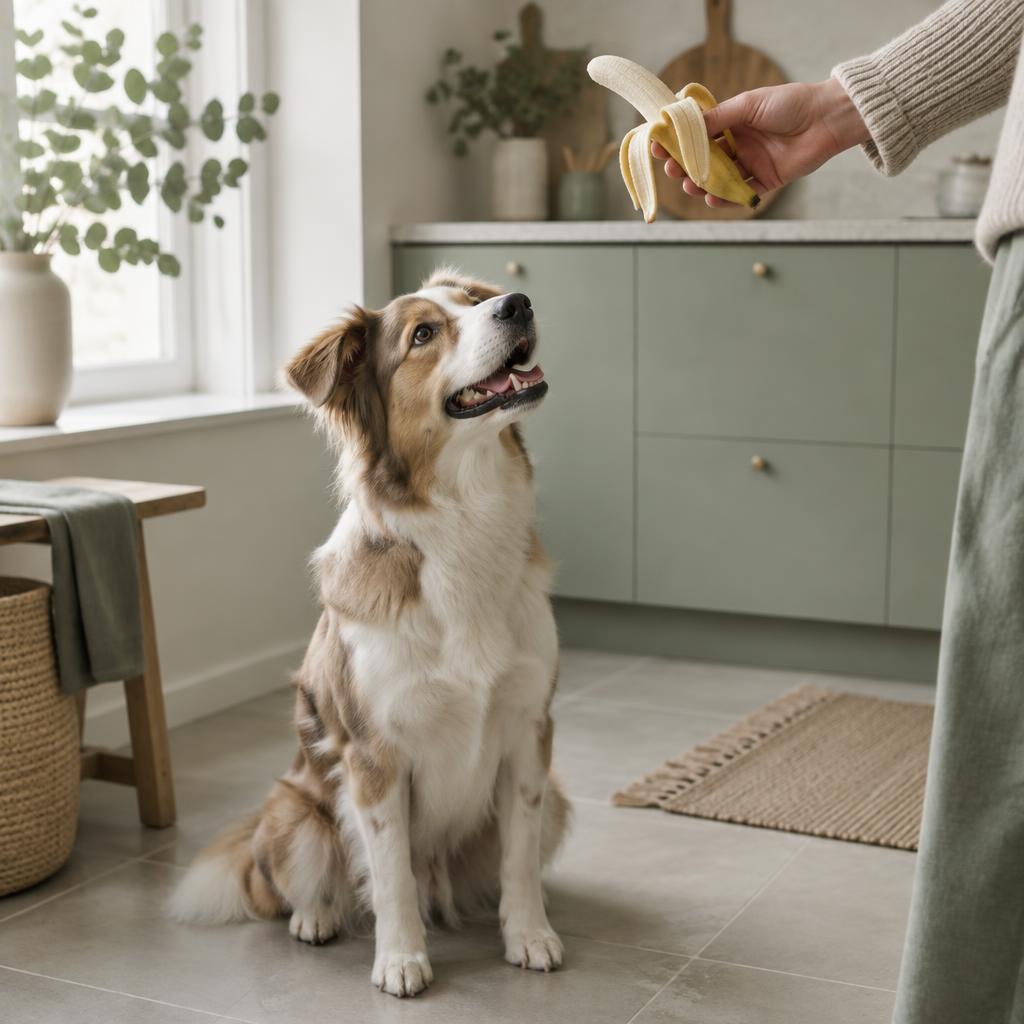
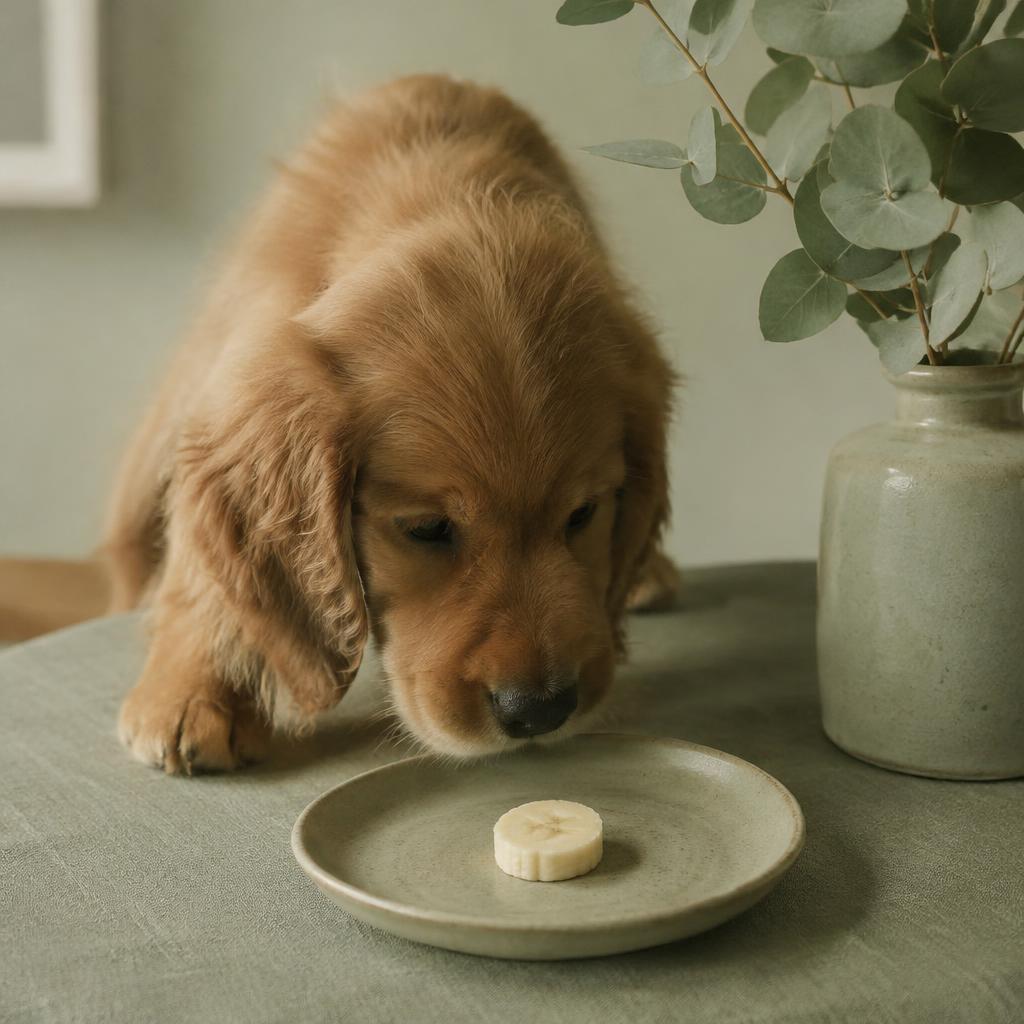
Bananas are one of the most shared human foods in dog households, and the short answer is reassuring: yes, dogs can eat bananas. The flesh is not toxic, most dogs love the taste, and a few slices make a soft, sweet training reward. The caveats are about quantity, sugar and the peel, and this guide covers all three, plus the situations where banana is better left in the fruit bowl.
Are bananas actually good for dogs?
Bananas offer potassium, vitamin B6, vitamin C and fibre, but a dog eating a complete commercial diet already gets everything they need from their food. Banana is a treat, not a supplement. Its real value is practical: it is soft, sweet, easy to cut into small pieces and most dogs find it irresistible, which makes it useful for training and for hiding the occasional tablet.
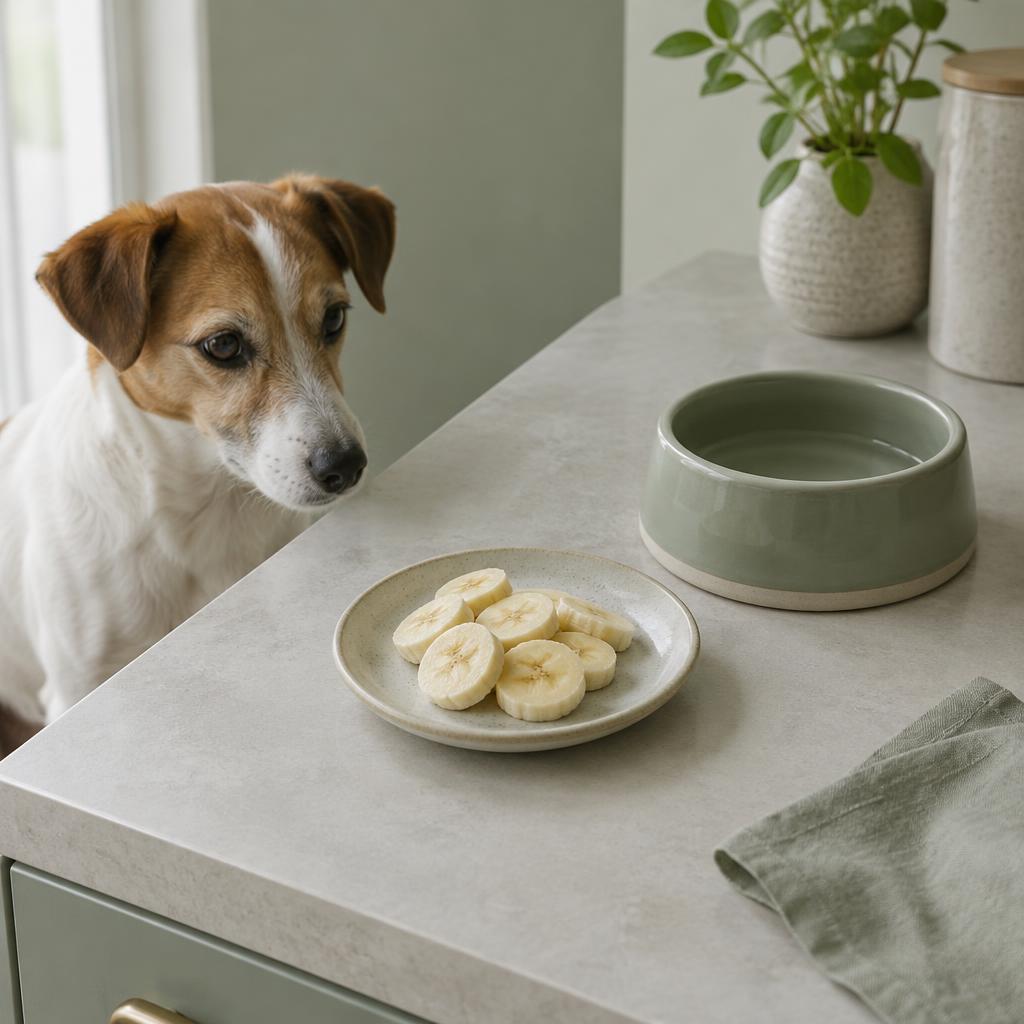
That sweetness is also the catch. A medium banana contains around 14 grams of sugar and about 105 calories. For a 25 kg dog that is a meaningful snack; for a 4 kg toy breed, half a banana can be a tenth of the day's calories in one mouthful. Treats of all kinds, fruit included, should stay under 10 percent of daily calories.
How much banana can a dog eat?
Portion size depends on the dog, not the banana. Use this table as a starting point and adjust for your dog's weight, activity and waistline.
| Dog size | Example weight | Banana serving | How often |
|---|---|---|---|
| --- | --- | --- | --- |
| Toy | Under 5 kg | 1 to 2 thin slices | Once or twice a week |
| Small | 5 to 10 kg | 2 to 3 slices | Two or three times a week |
| Medium | 10 to 25 kg | Up to half a small banana | Two or three times a week |
| Large | Over 25 kg | Up to half a large banana | Two or three times a week |
These are ceilings, not targets. A dog watching their weight, like many a Labrador Retriever, does better with cucumber or green beans most days and banana as an occasional highlight.
The peel rule
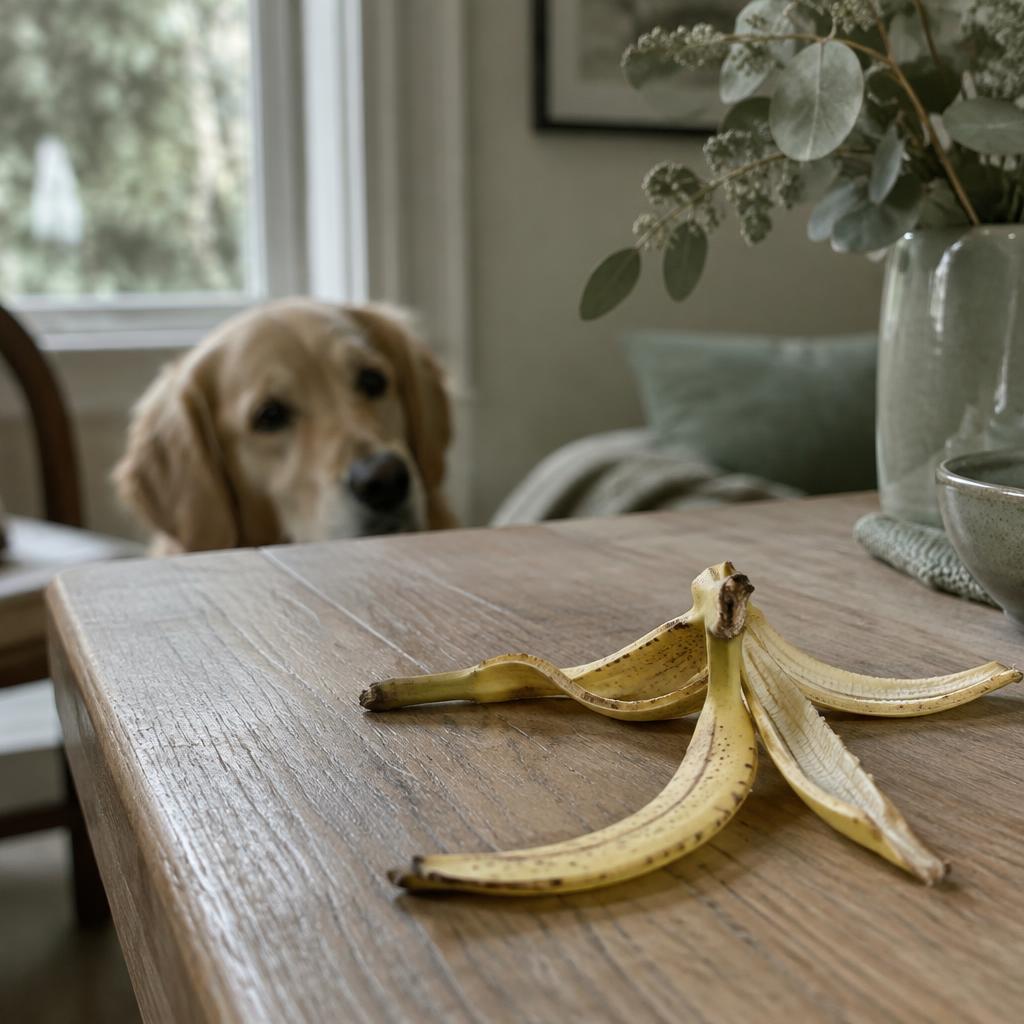
Always peel the banana. The skin is not poisonous, but it is fibrous and very hard to digest. A swallowed peel can sit in the stomach, cause vomiting, or in the worst case form a blockage that needs veterinary attention. Dogs that raid bins are the usual victims, so put peels straight into a covered bin.
If your dog has eaten a peel, watch for vomiting, loss of appetite, straining or lethargy over the next 24 hours and call your vet if any appear.
Banana as a training treat
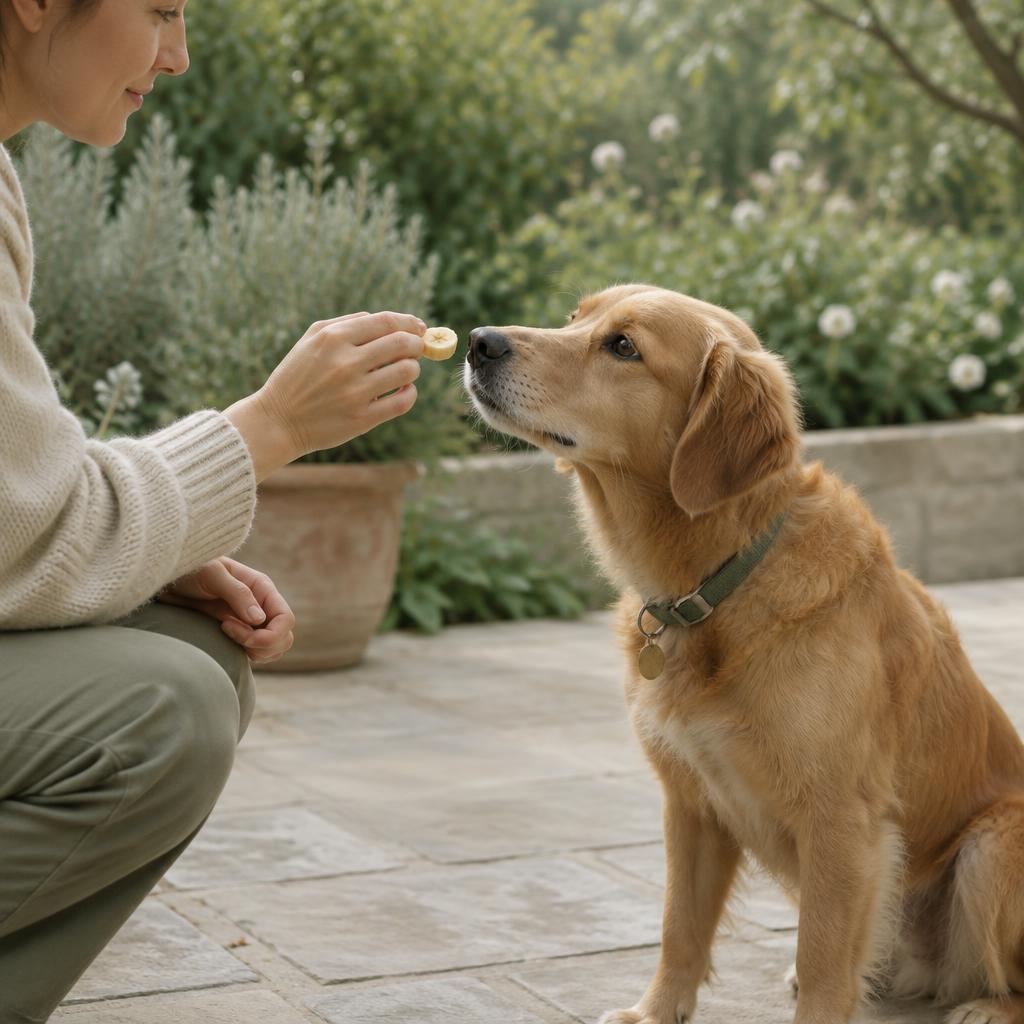
Cut into pea-sized pieces, banana works brilliantly as a high-value reward. It is soft enough to swallow quickly, so it does not break a training rhythm, and it is more exciting than kibble for most dogs. A few tips:
- Cut pieces smaller than you think you need: training rewards should be gone in one gulp.
- Subtract treat calories from the day's food if you train heavily.
- Mash a little banana into a stuffable toy and freeze it for a longer-lasting job.
- Rotate with lower-sugar options so banana stays special.
When banana is the wrong choice
Skip banana, or ask your vet first, if your dog:
- Has diabetes or is on a weight management plan.
- Has had pancreatitis or needs a low-fat, low-sugar diet.
- Gets soft stools or gas after fruit.
- Is a puppy under weaning age.
Flat-faced breeds such as the French Bulldog often have sensitive digestion, so introduce banana one small piece at a time and watch the next day's stools. Our portion calculator can help you see how treat calories fit into the daily total, and the wider fruit picture is covered in our guide to which fruits dogs can eat.
Interactive tool
Banana portion checker
Dog size, frequency and tummy history in, a safe serving out.
Your serving plan
- Up to half a small banana, cut into training-sized pieces.
- Count banana towards the daily treat allowance: treats should stay under 10 percent of daily calories.
- Always peel it: the skin is not toxic but it is tough to digest and can cause a blockage.
- A few times a week is a comfortable rhythm for most healthy dogs.
A sensible treat
Banana is safe for dogs in small amounts. The only real risks are too much sugar, too many calories, and the peel.
A simple way to start
- 1Peel the banana and put the skin in a covered bin.
- 2Cut two or three slices for a medium dog, fewer for a small one.
- 3Offer one piece and wait a day before offering more.
- 4Watch stools and wind over the next 24 hours.
- 5If all is well, keep banana in the treat rotation a few times a week.
Banana is a treat, not a health food. A few slices shared with a wagging tail is exactly the right amount.
Banana versus other fruit treats
Banana sits in the middle of the fruit treat league table: sweeter and more calorie dense than berries or apple slices, but softer and more exciting than most vegetables. If your dog is watching their weight, blueberries, cucumber coins and green beans deliver the crunch-and-reward experience for a fraction of the calories. If your dog needs motivating, banana's smell and softness make it one of the highest-value rewards you can pull from a fruit bowl. The practical approach is a rotation: lower-calorie options for everyday training, banana for the moments that really need to count.
Dried banana, banana chips and banana bread
Fresh banana is the only version worth sharing. Dried banana and banana chips concentrate the sugar into a much smaller package, so a few pieces carry the calories of half a fresh banana, and many shop-bought versions have added sugar or oil on top. Banana bread is firmly off the menu: it contains sugar, butter and often walnuts, raisins or chocolate, and raisins in particular are toxic to dogs. If you want a longer-lasting banana treat, freeze fresh slices or mash a little into a stuffable toy and freeze that instead.
Signs banana does not suit your dog
Most dogs digest a few slices without any drama, but fruit is not for every stomach. Watch for soft stools, extra wind, or itching and ear scratching in the day or two after a first serving. Any of those means banana comes off the rotation and something plainer goes on. Dogs with a history of pancreatitis, diabetes or obesity should only have fruit treats with their vet's agreement, and for them a lower-sugar option is usually the better answer anyway.
Storing and preparing banana for dogs
Ripe bananas are softer, sweeter and easier to digest than green ones, so let the bunch ripen fully before sharing. Slice what you need and keep the rest for the humans: cut banana browns quickly and a dog does not care, but fresh is nicer for everyone. Frozen slices keep for a month in a sealed bag and make a cooling summer treat straight from the freezer. Whatever the form, the rules stay the same: peeled, small pieces, counted in the treat allowance.
Bananas for puppies and seniors
At both ends of life, banana has a particular role. For weaned puppies, a pea-sized piece is a soft, exciting reward that is gentle on baby teeth and easy to swallow mid-training session. Introduce it on its own, not alongside other new foods, so any reaction has an obvious cause. For seniors, banana's softness is the attraction: dogs with worn or missing teeth can manage a ripe slice when crunchier treats have become hard work. Older dogs are also more likely to be on a weight plan or medication, so the portion rules matter more, not less. A slice or two, a couple of times a week, counted in the allowance, keeps banana a pleasure rather than a problem at any age.
Reading your dog's reaction
Every dog is an individual, and the only review that matters is your own dog's. After a first serving, watch the next 24 hours: stools should stay firm, wind should stay at its usual level, and there should be no scratching, ear rubbing or lip licking that suggests the fruit did not agree. If everything is normal, banana can join the treat rotation with confidence. If anything is off, retire it quietly and choose something plainer. There is no prize for persevering with a treat that does not suit; the fruit bowl has plenty of other options, and so does the vegetable drawer.
Treat maths: where banana fits
It helps to see banana in numbers. A 15 kg dog might need around 600 calories a day, which puts the treat ceiling at 60 calories. Half a small banana is roughly 45 of them: one serving is most of the day's treat budget. That is not an argument against banana; it is an argument for planning. On a banana day, the other treats shrink or disappear. On a heavy training day, the training pieces come out of the main ration. Owners who do this simple arithmetic rarely end up with an overweight dog, and owners who do not often cannot work out where the weight came from.
A note on ripeness
Riper is better for dogs. A fully yellow banana with a few brown freckles is softer, sweeter and easier to digest than a firm green one, and the starch in an under-ripe banana is more likely to cause wind. If the bunch on the counter is still green-tipped, wait a day or two; the dog will not mind the delay.
Common mistakes owners make
Three errors account for most banana mishaps. The first is generosity: a whole banana offered with love is several servings at once, and the resulting soft stools get blamed on the fruit rather than the quantity. The second is the peel left in an open bin, which a bored dog will find. The third is sharing banana-flavoured human snacks, muffins, smoothies and breads, which carry sugar, fat and sometimes raisins or xylitol alongside the banana. Stick to the plain fresh fruit, slice it small, and banana stays what it should be: a simple, safe pleasure.
When to see a vet
Call your vet if your dog has eaten a whole banana with the peel, if vomiting or diarrhoea follows a new food and lasts more than 24 hours, or if you see straining, a painful belly or lethargy after any treat. Fruit should never cause more than a happy dance.
The bottom line
Can dogs eat bananas? Yes: peeled, sliced small and shared a few times a week, banana is a safe and much-loved treat for most healthy dogs. Keep portions modest, keep the peel out of reach, and let it be the occasional sweet note in a balanced diet.
Questions people actually ask
Can dogs eat bananas every day?
They can, but they probably should not. Banana is sweet and energy dense, so a daily habit adds up quickly. Two or three small servings a week is a sensible rhythm, with each serving kept to a few slices for a medium dog.
How much banana can a dog eat?
As a guide: toy dogs one or two thin slices, small dogs two or three slices, medium dogs up to half a small banana, and large dogs up to half a large banana. Count it within the daily treat allowance of 10 percent of calories.
Can dogs eat banana peel?
No. The peel is not toxic, but it is very tough to digest and can cause a stomach upset or, in the worst case, an intestinal blockage. Always peel the banana and put the skin straight in a bin the dog cannot raid.
Are bananas good for dogs with upset stomachs?
A small amount of ripe banana is gentle and some owners use it as a bland snack, but it is not a treatment. If your dog has vomiting or diarrhoea that lasts more than a day, speak to your vet rather than self-treating with fruit.
Can puppies eat bananas?
Yes, in tiny amounts. A weaned puppy can have a pea-sized piece as a training reward. Introduce one new food at a time and remember that a puppy's calories are carefully balanced for growth.
Can diabetic dogs eat bananas?
Usually no. Bananas are high in natural sugar, which makes them a poor choice for diabetic dogs. Ask your vet before offering any fruit to a dog with diabetes or a weight management plan.
Sources
Breeds mentioned


Put it into practice
Read next
Can Dogs Eat Oatmeal? Cooked, Raw and Flavoured
Plain oatmeal cooked in water is safe for dogs in small servings and its soluble fibre can help mild diarrhoea. Avoid flavoured sachets, raw oats and porridge made with milk or sugar.


