
Can Dogs Eat Watermelon? Rind, Seeds and Safe Servings
Watermelon is over ninety per cent water, which makes it one of the most refreshing treats you can share on a hot day. The flesh is safe; the rind and seeds are not. Preparation is the whole job.
The SniffScroll desk
Published 10 October 2026

Reviewed against guidance from VCA, PDSA, AKC, Merck and the RSPCA
The short version
- Dogs can eat watermelon flesh: it is safe, hydrating and low in calories.
- Always remove the rind: it is tough to digest and can cause a gut blockage.
- Remove seeds where you can; a few accidentally swallowed are unlikely to cause harm, but a lot can accumulate.
- Serve in cubes, portioned by size, a few times a week at most.
- If your dog has swallowed rind or many seeds, watch for vomiting, straining or a painful belly and call the vet if they appear.
Yes, dogs can eat watermelon. The pink flesh is safe, hydrating and low in calories, which makes it one of the best summer treats you can share. But a watermelon has three parts, and only one of them is for the dog: the flesh. The rind can block a gut, and the seeds can accumulate in one. Serve it cubed and cleaned, and it is a genuinely good treat; hand over a whole slice, and you are relying on luck.
Is watermelon safe for dogs?
The flesh is completely safe for healthy dogs. Watermelon is around 92 per cent water, low in calories (about 46 calories per cup of cubes), and it brings vitamin A, vitamin C, potassium and the antioxidant lycopene. On a hot day, a few cold cubes are a pleasant way to get extra fluid into a dog who does not drink enough.
The sugar content is the only caveat. Watermelon is sweet, and sweet is still sugar. For a healthy dog, a handful of cubes a couple of times a week is fine. For a diabetic or overweight dog, check with your vet before fruit becomes routine.
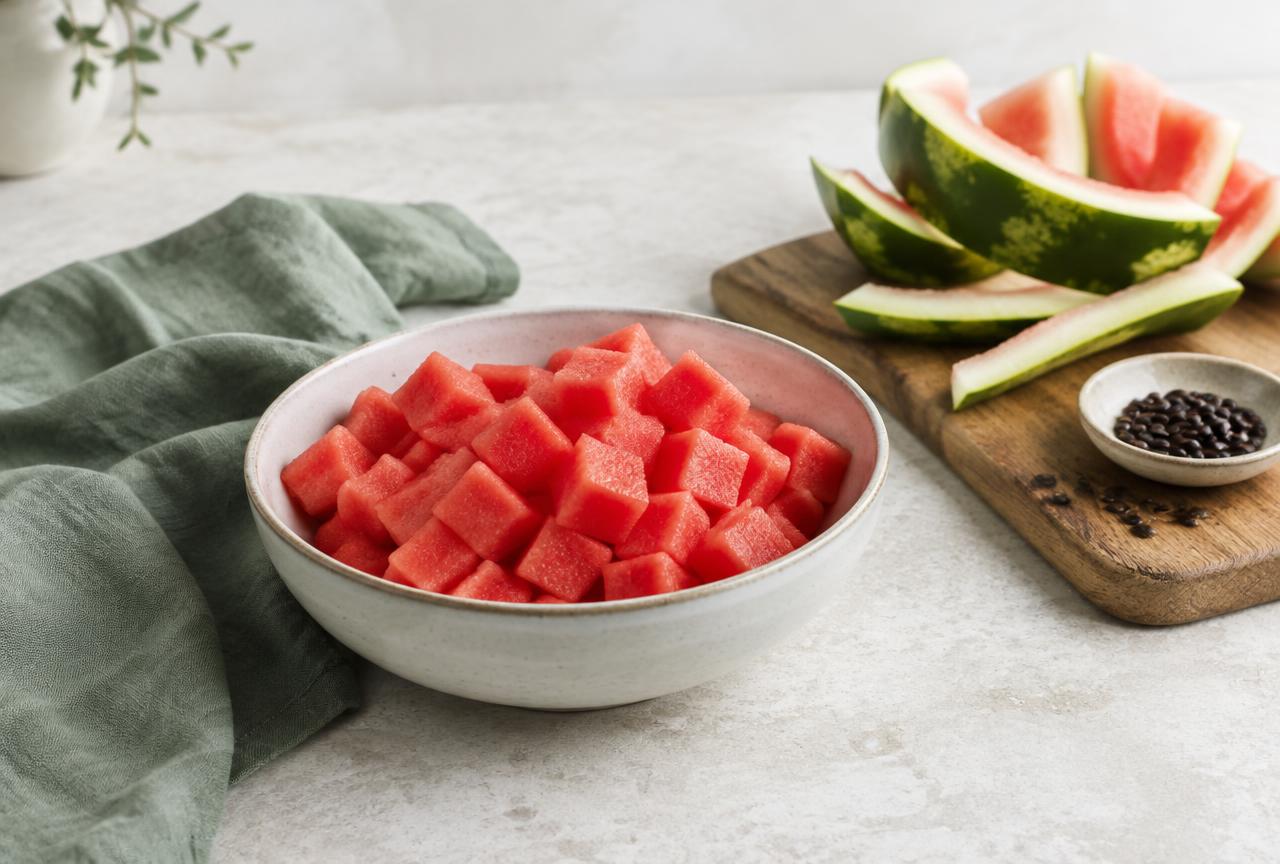
Why the rind is off the menu
The rind is the dangerous part, and it is the part a dog will steal from the bin. It is extremely tough and fibrous: a dog's gut cannot break it down properly, and a swallowed piece can lodge in the intestine and cause a blockage. An intestinal blockage is not a wait-and-see problem; it is a surgical emergency.
Signs of a blockage include repeated vomiting, loss of appetite, straining or producing nothing, a painful or swollen belly, and lethargy. If your dog has eaten rind and shows any of these, call the vet immediately. If a large dog has chewed up one small piece and seems entirely normal, watch closely for 48 hours and keep meals small and easy.
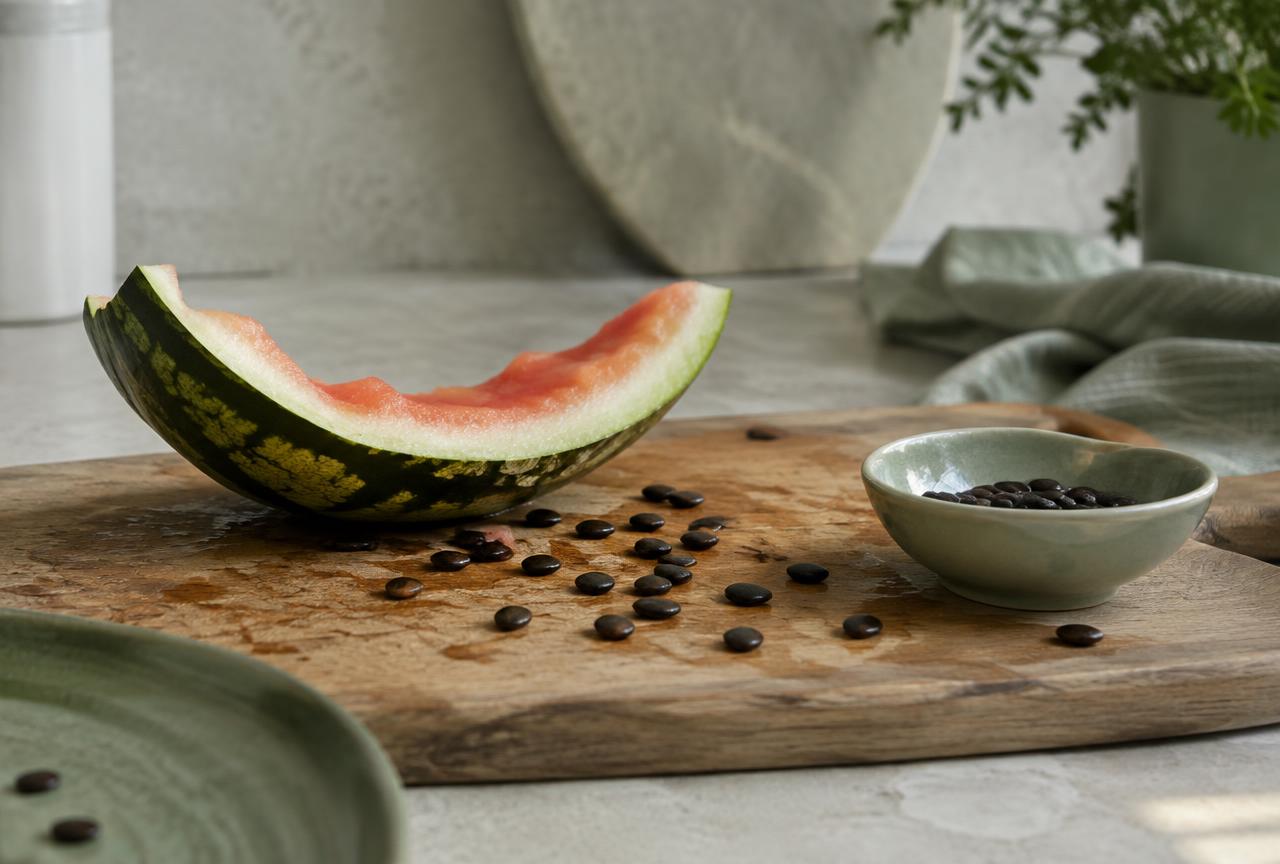
What about the seeds?
Seeds are a lesser risk but a real one. A few black seeds swallowed by accident by a Labrador-sized dog will almost certainly pass through. The problem is accumulation: seeds do not digest, and a lot of them, especially in a small dog, can clump and obstruct the gut.
The easy fix is to buy seedless watermelon, then still give it a quick check for the pale immature seeds, which are softer but worth removing for small dogs. If you are cutting a seeded melon, pick the seeds out as you cube it. It takes a minute and removes the question entirely.
How much watermelon can a dog eat?
Portion by size, and keep watermelon in the treat budget: all treats combined should stay under ten per cent of the day's calories.
| Dog size | Example weight | Serving | How often |
|---|---|---|---|
| --- | --- | --- | --- |
| Toy | Under 5 kg | 2 to 3 small cubes | A couple of times a week |
| Small | 5 to 10 kg | 3 to 4 small cubes | A couple of times a week |
| Medium | 10 to 25 kg | A small handful of cubes | A couple of times a week |
| Large | Over 25 kg | A generous handful of cubes | A couple of times a week |
Too much watermelon in one go usually shows up as loose stool: all that water and sugar moves through quickly. If that happens, serve less next time. Breeds that live for food, like the Golden Retriever and the Labrador Retriever, will lobby hard for more; the answer is still no.
How to serve watermelon to your dog
- 1Cut the flesh away from the rind. Bin the rind somewhere the dog cannot reach it.
- 2Remove the seeds, or start with a seedless melon.
- 3Cube it to a size your dog can chew, not inhale. Small dogs get small cubes.
- 4Serve fresh or frozen. Frozen cubes are a good hot-day treat; supervise gulpers, as hard frozen pieces can be a choking risk.
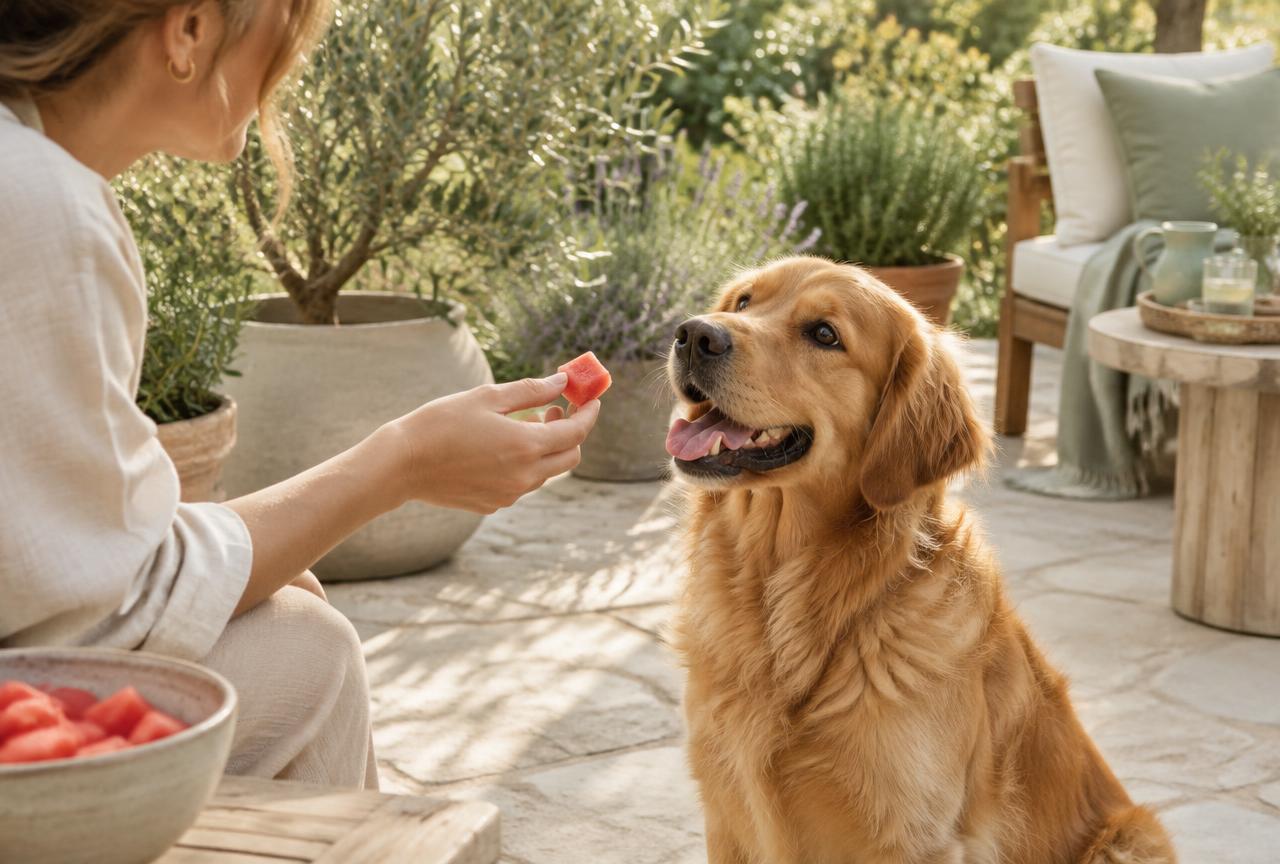
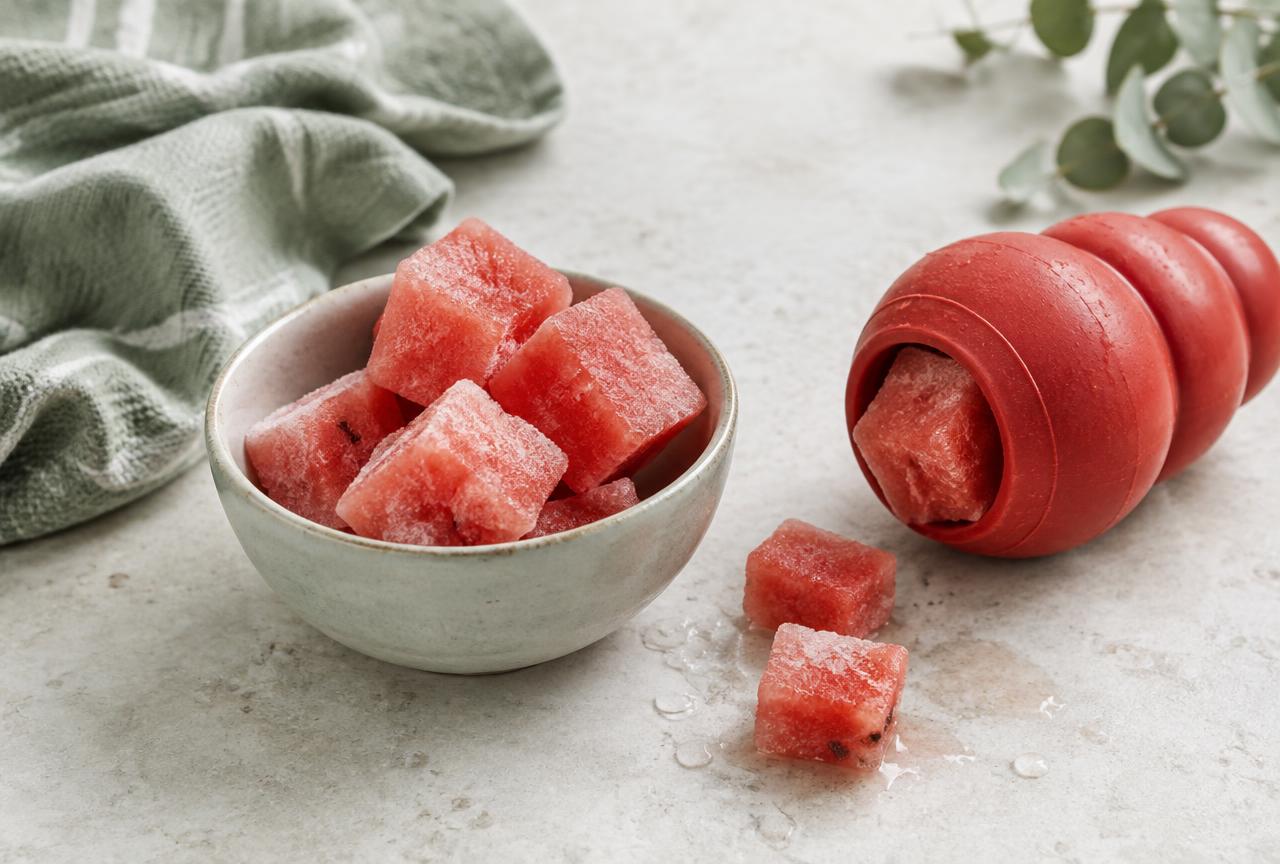
A filled rubber toy with mashed watermelon, frozen, buys twenty minutes of calm on a hot afternoon. Just count it in the day's treats.
Watermelon, heat and hydration: the honest version
Watermelon is a nice hydrating extra, but it is not heat protection. A dog cooling down needs shade, rest and a bowl of fresh water, and watermelon never replaces any of them. If your dog is panting hard, drooling, wobbly or dull in hot weather, that is possible heatstroke: move them somewhere cool, offer water, wet their coat with cool (not ice-cold) water and call a vet. Do not offer food to an overheated dog.
Puppies and watermelon
Puppies can have a small cube of seedless flesh once they are eating solid food. Introduce it alone, not alongside other new foods, and watch for loose stool over the next day. Keep pieces soft and small, and skip frozen cubes for young puppies, whose teeth are still coming through.
For more safe fruit options, see which fruits dogs can eat and can dogs eat apples. To keep treats honest against daily calories, the portion calculator is the quick way to check.
Interactive tool
Watermelon serving checker
Dog size and preparation in, safe serving versus skip out.
Your plan
- For a medium dog, a serving is about a small handful of cubes, a couple of times a week.
- Seedless watermelon still needs the rind removed and a quick check for pale seeds.
- Frozen cubes make a good hot-day treat; supervise, as hard frozen pieces are a choking risk for gulpers.
Ready to serve
Watermelon flesh is safe and hydrating. The rind and seeds are the parts that cause trouble.
When to see a vet
Call the vet the same day if your dog has eaten rind or a large number of seeds, or if you see repeated vomiting, straining, a painful or swollen belly, or loss of appetite after a watermelon raid. Those are blockage signs, and blockages do not resolve on their own. For everyday servings, the rule is simple: flesh only, cubed, a few times a week.
Watermelon vs other summer treats
| Treat | Safe? | Notes |
|---|---|---|
| --- | --- | --- |
| Watermelon flesh, cubed | Yes | Hydrating, low calorie, the summer favourite |
| Frozen watermelon cubes | Yes, supervised | Choking risk for gulpers and small dogs |
| Watermelon rind | No | Blockage risk, the part dogs steal from bins |
| Shop fruit sorbet | No | Sugar, sweeteners, sometimes xylitol |
| Grapes | Never | Toxic at any amount |
A checklist before you serve
- Flesh only: rind cut away completely
- Seedless, or seeds picked out
- Cubed to a chewable size for your dog
- Served plain: no salt, no chilli, no Tajín, no fruit-salad syrup
- Counted in the ten per cent treat allowance
- Rind binned somewhere dog-proof
The verdict, by situation
Hot afternoon, healthy dog: a few cold cubes are one of the best treats going. Puppy: a small soft cube, introduced alone. Overweight dog: watermelon is low calorie, but it is still sugar; your vet sets the fruit budget. Dog who raids the bin for the rind: that is a vet-watch situation for 48 hours, every time. Barbecue season: the dangerous moment is the unattended plate, so give guests a "flesh only, and ask me first" rule.
Watermelon is the rare treat that is mostly water. The preparation is the price of admission: sixty seconds with a knife.
Common myths, cleared up
"Watermelon seeds are poisonous." They are not poisonous; the risk is mechanical, an accumulation of indigestible seeds in a small gut. "Seedless means no seeds at all." Seedless melons still carry soft, pale immature seeds, which are far less risky but worth removing for toy dogs. "Dogs can cool down on watermelon alone." No: water, shade and rest cool a dog. Watermelon is a pleasant extra, and an overheated dog needs a vet, not a snack.
Buying and storing with a dog in the house
A whole watermelon on the worktop is a temptation with a rind problem attached. If your dog is a counter-surfer, store the melon somewhere unreachable until it is cut, and once it is cut, the rind goes straight into a bin the dog cannot open. This is not paranoia: vets see rind blockages every summer, and the story is always the same, the dog got the rind from the bin or the barbecue table. Seedless varieties save the seed-picking job and are worth the small price difference when the melon is partly for the dog. Cut flesh keeps in the fridge for two or three days in a sealed box; after that it ferments, and fermented fruit is its own problem.
Watermelon for hot days, done right
The best use of watermelon is the frozen cube on a hot afternoon. Cube the flesh, freeze flat, and serve a few pieces in a bowl or scattered on the patio for a sniffing game. For a longer occupation, mash the flesh with a little water, freeze it in a rubber toy, and hand it over outside, because it drips. Two cautions apply. Very hard frozen pieces are a choking risk for dogs who gulp rather than chew, so let them soften for a minute for small dogs and gulpers. And no frozen treat, however good, is heatstroke prevention: the dog who is too hot needs shade, water, rest and possibly a vet, not a snack.
The bottom line
Flesh, cubed, seeded, a few times a week: that is the whole watermelon rule. The rind is the one part that can genuinely hurt a dog, and it is the part they most want to steal. Prepare it yourself, bin the rind securely, and watermelon earns its place as the summer treat of choice.
A note on treat maths
Watermelon is about 46 calories per cup of cubes, which is why it earns its summer reputation: a large dog's entire serving might be 30 calories, barely denting a treat budget that runs to 100 calories or more a day for a 20 kg dog. Compare that with a single shop biscuit at 30 to 50 calories and the case makes itself. The same maths is why the rind raids matter more than the servings: the planned treat is tiny, while the stolen rind is a veterinary problem. Keep the preparation deliberate and the bins secure, and the numbers stay friendly.
If your dog refuses it
Not every dog is interested in fruit, and a dog who sniffs a cube and walks away is giving you useful information, not a problem. Do not dress it up with yoghurt or honey to make the sale; the plain cube is the healthy version. Frozen banana slices, blueberries or a chilled carrot cover the same hydrating, low-calorie ground. The treat your dog actually likes, served in a sensible portion, beats the fashionable one left in the bowl.
Sharing at the table
Summer is when the sharing question gets asked most, because the melon is out and the dog is stationed beside it. The safe habit is a simple one: the dog gets its cubes in its own bowl, prepared first, rather than pieces slipped from a plate mid-meal. Table-feeding teaches hovering and begging, and it is how rind and seasoned fruit find their way into a dog. Guests need the rule too, delivered cheerfully and early: flesh only, and ask first. A bowl of prepared cubes near the platter gives everyone something to hand over, which keeps the peace and keeps the dog safe.
Questions people actually ask
Can dogs eat watermelon rind?
No. The rind is very tough and fibrous. Dogs cannot digest it well, and swallowed pieces can cause an intestinal blockage, which is a surgical emergency. Always cut the flesh away from the rind before serving.
Are watermelon seeds bad for dogs?
A few seeds swallowed by accident are unlikely to cause problems in a medium or large dog, but seeds can accumulate in the gut and cause a blockage, especially in small dogs. Choose seedless watermelon or pick the seeds out before serving.
How much watermelon can a dog eat?
A few cubes for a small dog, up to a generous handful for a large dog, a couple of times a week. Watermelon is mostly water and sugar, so it stays a treat: all treats together should be under ten per cent of daily calories.
Can puppies eat watermelon?
Yes, once they are on solid food: a small cube of seedless flesh, introduced slowly. Puppy digestion is sensitive, so offer one new food at a time and watch for loose stool.
Is watermelon good for dogs in hot weather?
It is a useful hydrating treat on hot days, and frozen cubes can help a dog cool down. It never replaces fresh drinking water, and it does not protect against heatstroke: shade, water and rest do that.
My dog ate watermelon rind. What should I do?
One small piece chewed and swallowed by a large dog often passes without trouble. Watch closely for 48 hours: vomiting, loss of appetite, straining, constipation or a painful belly mean call the vet. For a small dog or a large piece, phone your vet straight away for advice.
Sources
Breeds mentioned

Golden Retriever
A gentle, biddable gundog famed for its patience with children and its glossy golden coat.

Labrador Retriever
Britain's most popular family dog: biddable, food driven and built for an active household.

French Bulldog
A comic, affectionate companion built for city life, but with health needs that demand a careful breeder.
Put it into practice
Read next
Can Dogs Eat Oatmeal? Cooked, Raw and Flavoured
Plain oatmeal cooked in water is safe for dogs in small servings and its soluble fibre can help mild diarrhoea. Avoid flavoured sachets, raw oats and porridge made with milk or sugar.


