
Why Do Dogs Eat Poop? Causes and How to Stop It
Coprophagy is revolting to us and surprisingly normal to dogs. Understanding which type you are dealing with is the key to stopping it, and to knowing when it signals a health problem.
The SniffScroll desk
Dog care editors
Published 9 October 2026
Reviewed against RVC, BSAVA and PDSA guidance
The short version
- Eating faeces (coprophagy) is common, especially in puppies, and most dogs grow out of it.
- Mother dogs eating their puppies' faeces is normal, instinctive hygiene behaviour.
- A sudden new habit in an adult dog, especially with weight loss or a bigger appetite, warrants a vet check for malabsorption or parasites.
- The most effective fix is management: pick up immediately, supervise, and teach a solid 'leave it'.
- Punishment backfires; it teaches dogs to eat the evidence faster or in secret.
Of all the things dogs do, eating faeces is the one owners find hardest to forgive. It is also one of the most common behaviour questions vets hear, and the answer usually starts with an uncomfortable truth: to a dog, this is not disgusting at all. It is normal canine behaviour with ancient roots, which is exactly why scolding rarely works.
The veterinary name is coprophagy, and the useful way to think about it is not "how do I stop this vile habit" but "which version of this habit does my dog have".
The normal version: mothers and puppies
Mother dogs eat their puppies' faeces for the first few weeks of life. This is instinctive den hygiene: in the wild, removing scent evidence keeps predators away from the litter. Puppies watch this, and many copy it.
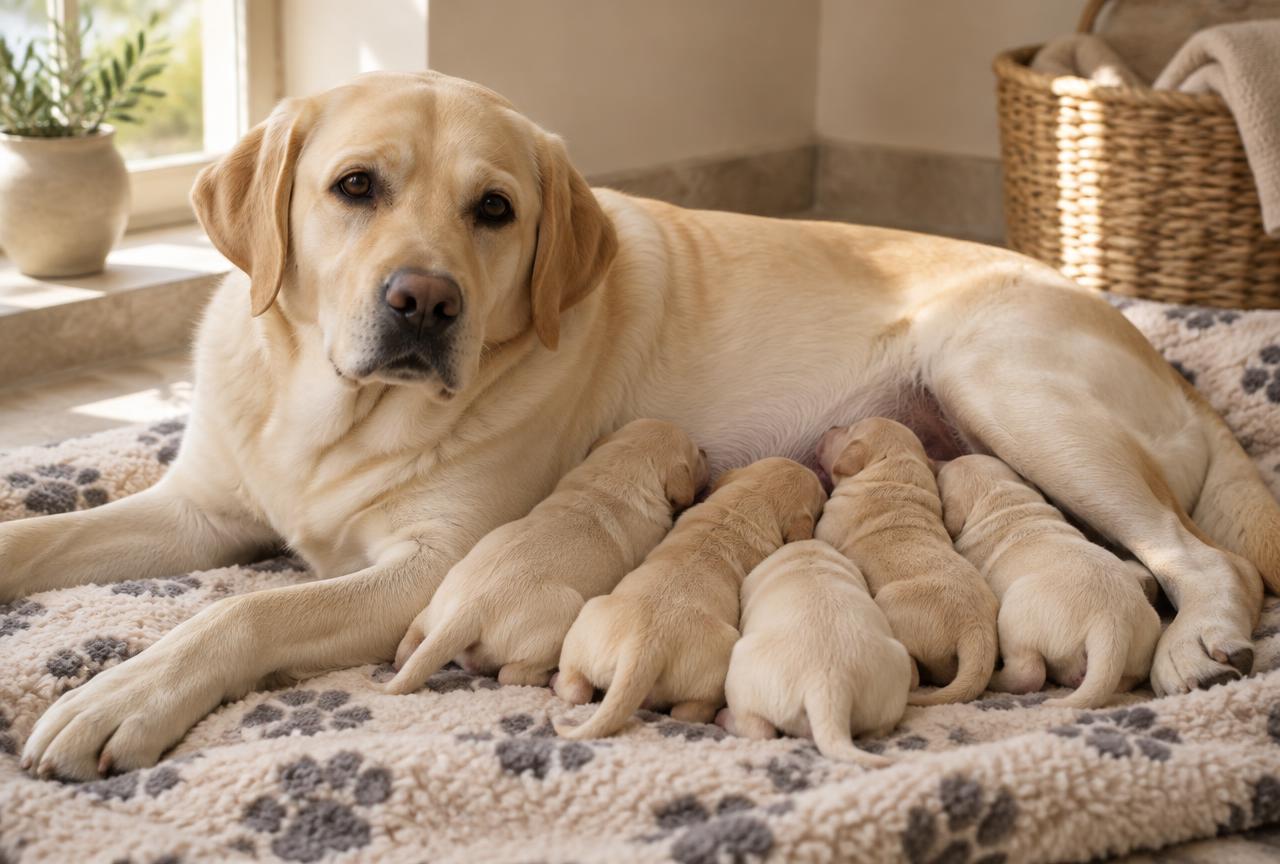
Most puppies who experiment with eating faeces grow out of it by adulthood, particularly if their humans stay calm, clean up quickly, and do not turn it into a thrilling game of chase.
The behavioural reasons
Once puppyhood passes, the common drivers are:
- Boredom or under-stimulation. A dog with empty hours and a full garden will find its own entertainment.
- Attention. If eating poo reliably makes you sprint across the garden shouting, some dogs learn it is an excellent button to press.
- Anxiety or stress, including stress from being punished for toilet accidents indoors.
- Keeping the area clean, the same den instinct, especially in dogs confined to a small space.
- Palatability. Cat, horse and rabbit droppings are rich in undigested protein and fat. To a Beagle or a Labrador, that is not waste; it is a snack.
The medical reasons worth ruling out
Most coprophagy is behavioural, but a sudden new habit in an adult dog deserves a vet conversation first, particularly alongside any of these:
- Weight loss despite a normal or increased appetite
- A ravenous appetite generally
- Loose stools or other digestive signs
- Increased thirst
These combinations can point to malabsorption (the gut is not extracting nutrients properly), intestinal parasites, exocrine pancreatic insufficiency, diabetes or Cushing's disease. None of these are common, but all are treatable, and no amount of training fixes a medical driver. A worming check and possibly a blood test will usually settle the question.
The plan that actually works
Management first, training second, gadgets last:
- 1Pick up immediately. Every single time, before the dog can turn round. This alone resolves many cases within weeks, because the behaviour simply stops being rehearsed.
- 2Supervise garden trips during the retraining period. Boring for you, decisive for the dog.
- 3Teach "leave it" with high-value treats, starting indoors with boring items and working up to the real thing. Reward disengagement generously.
- 4Recall away from the deposit the moment the dog finishes toileting, then reward. You are building a habit of turning to you instead of turning round.
- 5Feed a complete diet on a consistent schedule. A well-fed dog on predictable meals has one less reason to scavenge. The portion calculator helps if you are unsure the ration is right.
- 6Block access to the cat litter tray with a covered tray, a baby gate, or a room the dog cannot enter.
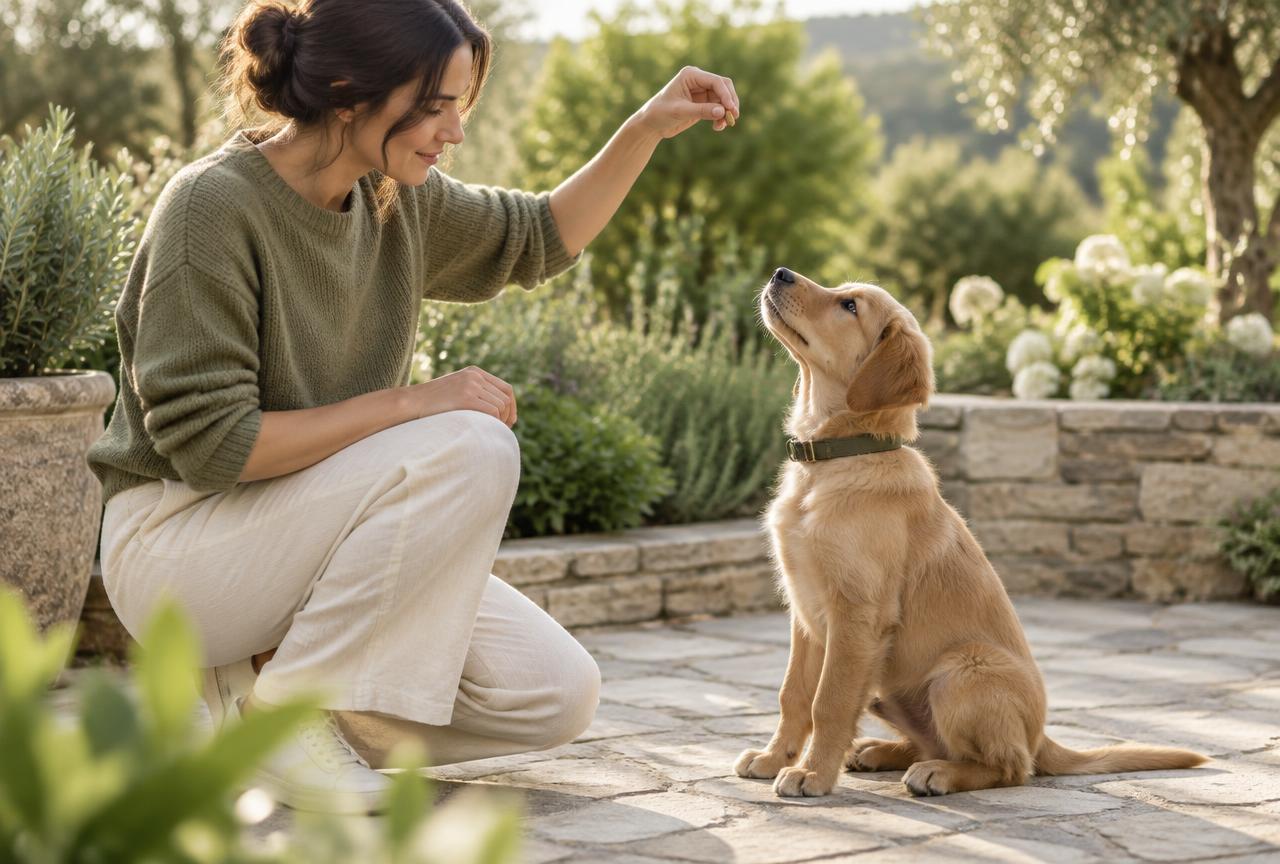
Punishment teaches a dog one thing: eat the evidence faster, and do it where you cannot see.
What about deterrent products?
Products that claim to make faeces taste worse have patchy evidence at best, and they only affect the stool of the dog that consumed the supplement. They do nothing for cat, horse or rabbit droppings. If you want to try one, treat it as a supporting act to management, never the main plan.
Build your plan
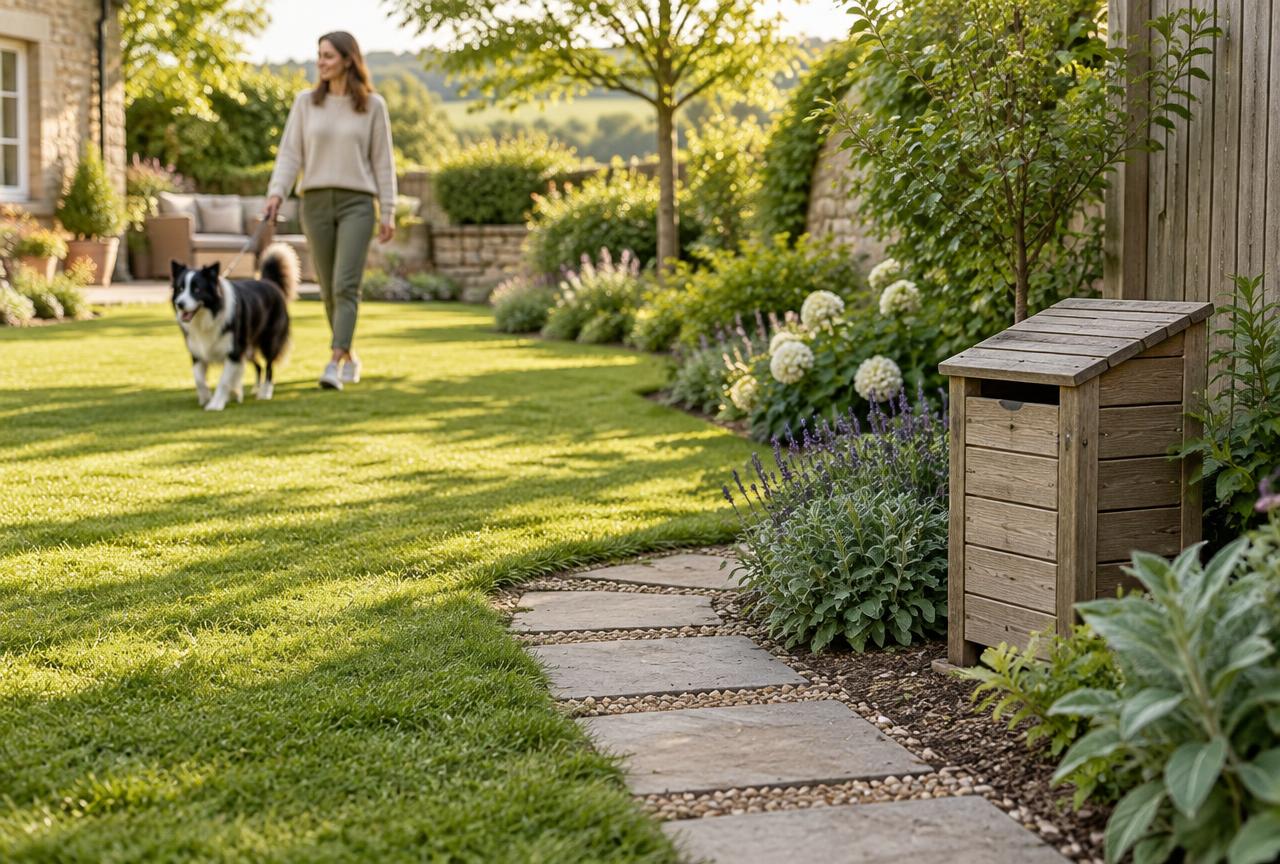
The right starting point depends on whose faeces your dog targets, their age, and whether anything else has changed. The interactive planner below weighs those factors and suggests where to begin, including whether a vet check should come before training.
Interactive · habit fixer
Build your anti-poop-eating plan
Answer a few questions about the habit and we will suggest where to start, and whether a vet visit should come first.
Where to start
- Pick up immediately after every toilet trip, before your dog can turn round.
- A daily garden sweep before letting the dog out removes the opportunity entirely.
Manageable with routine changes
This pattern usually responds to supervision, fast clean-up and reward-based training over a few weeks.
Is coprophagia harmful to dogs?
Mostly it is unpleasant rather than dangerous, but not always. Eating faeces is the textbook route for intestinal parasites such as roundworm, hookworm, whipworm and Giardia, and for bacteria including Campylobacter and Salmonella. A dog that eats its own fresh stools recycles little; a dog that eats other dogs' stools in a busy park, or fox and cat mess in the garden, is sampling the local parasite population.
There are two specific hazards worth naming. The first is medication: faeces from a dog or horse recently treated with certain wormers can carry drug residues, and herding breeds with the MDR1 gene mutation, such as the Border Collie and Australian Shepherd, can be unusually sensitive to ivermectin-type drugs. The second is cat litter. Clumping litter can swell in the gut, and a dog raiding the tray regularly is at genuine risk of an obstruction.
| Type of poo | Main risk | What to do |
|---|---|---|
| --- | --- | --- |
| Own, fresh | Low; habit is the main concern | Clean up promptly, address the cause |
| Other dogs' | Parasites, viruses such as parvovirus | Keep on lead in hotspots, worm regularly |
| Cat litter tray | Parasites, clumping litter blockage | Move the tray out of reach |
| Fox or wildlife | Lungworm, tapeworm, Giardia | Check the garden each morning |
| Horse or livestock | Wormer residues, bacteria | Lead on in fields, especially MDR1 breeds |
The goal is not a dog who never wants to eat poo. It is a dog who never gets the chance long enough for the habit to stick.
Which dogs are most likely to do it?
Research led by Benjamin Hart at UC Davis, published in Veterinary Medicine and Science in 2018, surveyed nearly 3,000 owners and found that dogs eating stools were more often described as greedy eaters, more likely to live in multi-dog homes, and that the behaviour was usually aimed at fresh stools, typically no more than a day or two old. The authors suggested this may be an inherited instinct from wolves keeping the den free of parasite larvae, which mature after a couple of days. They found no reliable effect of diet type or commercial deterrent products.
In practice, the dogs owners write to us about tend to fall into a few groups: young dogs under two, which explore everything with their mouths; food-motivated breeds such as the Labrador Retriever and Beagle; dogs from puppy farms or kennels where faeces were left lying; and older dogs whose appetite has suddenly increased. That last group matters, because a new appetite in a senior dog is a medical question, not a training one.
Training the leave it cue
The single most useful skill for a poo-eater is a reliable leave it. It is taught away from temptation first and only later tested on a walk.
- 1Hold a low-value treat in a closed fist. Let your dog sniff, lick and nudge. The moment they pull back, even slightly, mark with a word such as yes and reward from the other hand with something better.
- 2Repeat until your dog backs off the fist as soon as it appears. Then add the cue leave it just before presenting the hand.
- 3Move the treat to the floor under your foot, then uncovered under your watchful eye. Reward every glance up at you.
- 4Practise on walks with a dropped glove or toy before you ever test it on the real thing.
- 5When you see poo ahead, say leave it early, walk past on a loose lead and pay generously as soon as your dog looks at you.
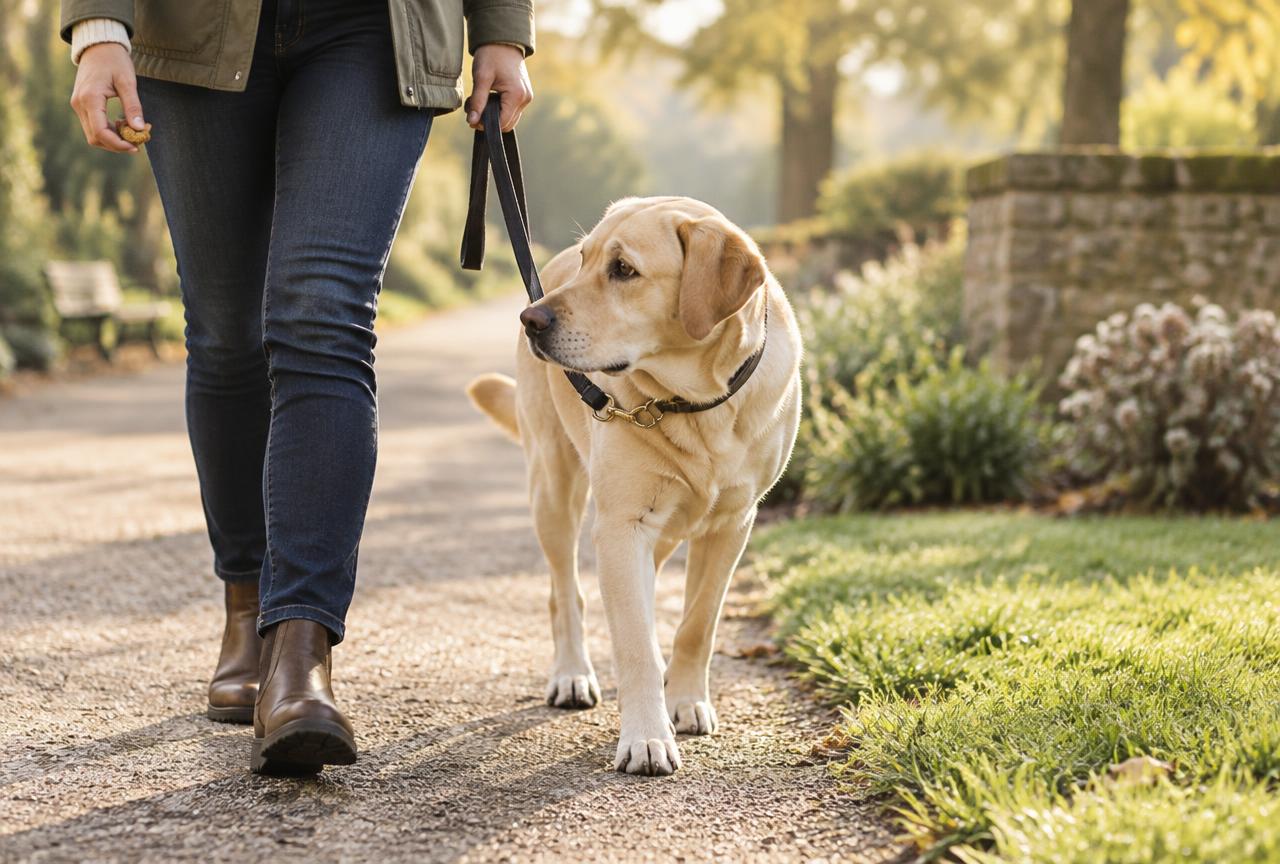
Timing is everything. A dog already chewing has had the reward the behaviour supplies. Spot the patch first, and you win.
Your daily anti-scavenging checklist
- Pick up the garden at least twice a day, and immediately after your dog toilets
- Walk your dog on lead past known hotspots until leave it is solid
- Feed meals at regular times, split into two or three portions rather than one
- Use a puzzle feeder or scatter feeding to occupy a food-driven mind
- Keep the cat litter tray behind a baby gate or in a dog-proof box
- Stay on a regular worming and parasite plan agreed with your vet
- Avoid scolding at the scene, which can teach a dog to eat faster or in secret
- Note any change in appetite, weight or stools and mention it at the next check-up
Use the portion calculator to confirm you are feeding enough. Under-fed dogs on strict diets scavenge more, and a modest correction often softens the habit. For a broader view of what counts as food in your dog's mind, our guide to what human foods dogs can eat is a useful companion.
The verdict, by household
A puppy under six months: expect it, supervise closely, clean up instantly and teach leave it. Most puppies grow out of it.
A multi-dog home: walk dogs out together and pick up immediately; one dog often learns from another.
A rescue from a kennel or puppy farm: be patient. The habit may have been a survival strategy. Management plus enrichment usually wins within a few months.
A senior dog that has just started: book a vet appointment before you start training. A sudden change in appetite can signal disease.
Cats in the house: move the litter tray today. It is the easiest fix on this page.
When to call your vet
Book an appointment if the habit starts suddenly in an adult dog, if it comes with weight loss, a bigger appetite, thirst or digestive signs, or if your dog seems unwell in any other way. Also mention it at the next visit if the habit is established and resistant to management, as a stool check and blood test are cheap ways to close off the medical possibilities.
For everyone else: pick up fast, reward the turn-away, keep the litter tray behind a gate, and take comfort in knowing that this phase, like most dog phases, passes.
Questions people actually ask
Why does my dog eat its own poop?
Common reasons include puppy curiosity, boredom, attention-seeking, anxiety, keeping their area clean (an instinct from den life), or simply finding it palatable. Less commonly it signals a nutritional absorption problem, parasites, or a condition like diabetes or Cushing's disease that increases appetite.
Is it dangerous if my dog eats poop?
Eating their own fresh faeces is usually low risk, though unpleasant. Eating other animals' droppings carries a higher risk of parasites and bacteria. Regular worming and prompt vet advice after any illness following the habit are sensible precautions.
Why do dogs eat cat poop?
Cat faeces are high in protein and fat because cats digest their food less completely, which makes the contents of the litter tray genuinely appealing to dogs. The fix is management: a covered litter tray, a baby gate, or a room the dog cannot reach.
Do puppies grow out of eating poop?
Most do. Coprophagy peaks in puppyhood, partly from curiosity and partly from copying their mother, who cleans the den this way. Consistent supervision, fast clean-up and reward-based training usually resolve it by adulthood.
Do deterrent products that make poop taste bad work?
Results are mixed. Some owners report success with stool-eating deterrent supplements, but studies show limited effectiveness, and they only work on the dog that ate the treated stool. Management and training are more reliable.
Should I punish my dog for eating poop?
No. Punishment tends to make the behaviour worse or more secretive, and can teach the dog to eat faster before you intervene. Reward-based redirection, supervision and removing access are far more effective.
Is it harmful if my dog eats poop?
Usually it is unpleasant rather than dangerous, but it can pass on parasites such as roundworm and Giardia, and bacteria such as Salmonella. Other dogs' stools, fox mess and cat litter carry the most risk. Keep your dog on a regular parasite plan agreed with your vet, clean up promptly and call the vet if vomiting, diarrhoea or lethargy follow.
Should I punish my dog for eating poop?
No. Punishing a dog after the event does not teach them what to do instead, and it can make them eat faster or hide the behaviour. Supervise, clean up quickly, teach a reliable leave it cue and reward your dog for walking past. Management plus positive training works far better than scolding.
Sources
- Why dogs eat poo, Blue Cross
- Coprophagia in dogs, VCA Animal Hospitals
- Why does my dog eat poo?, PDSA
- Coprophagy in dogs, MSD Veterinary Manual
- Canine coprophagia: phenotypic characteristics and a hypothesis, Veterinary Medicine and Science (Hart et al., 2018)
- Worming your dog, PDSA
Breeds mentioned

Beagle
A merry, sociable scenthound with a powerful nose and a mind of its own outdoors.

Labrador Retriever
Britain's most popular family dog: biddable, food driven and built for an active household.
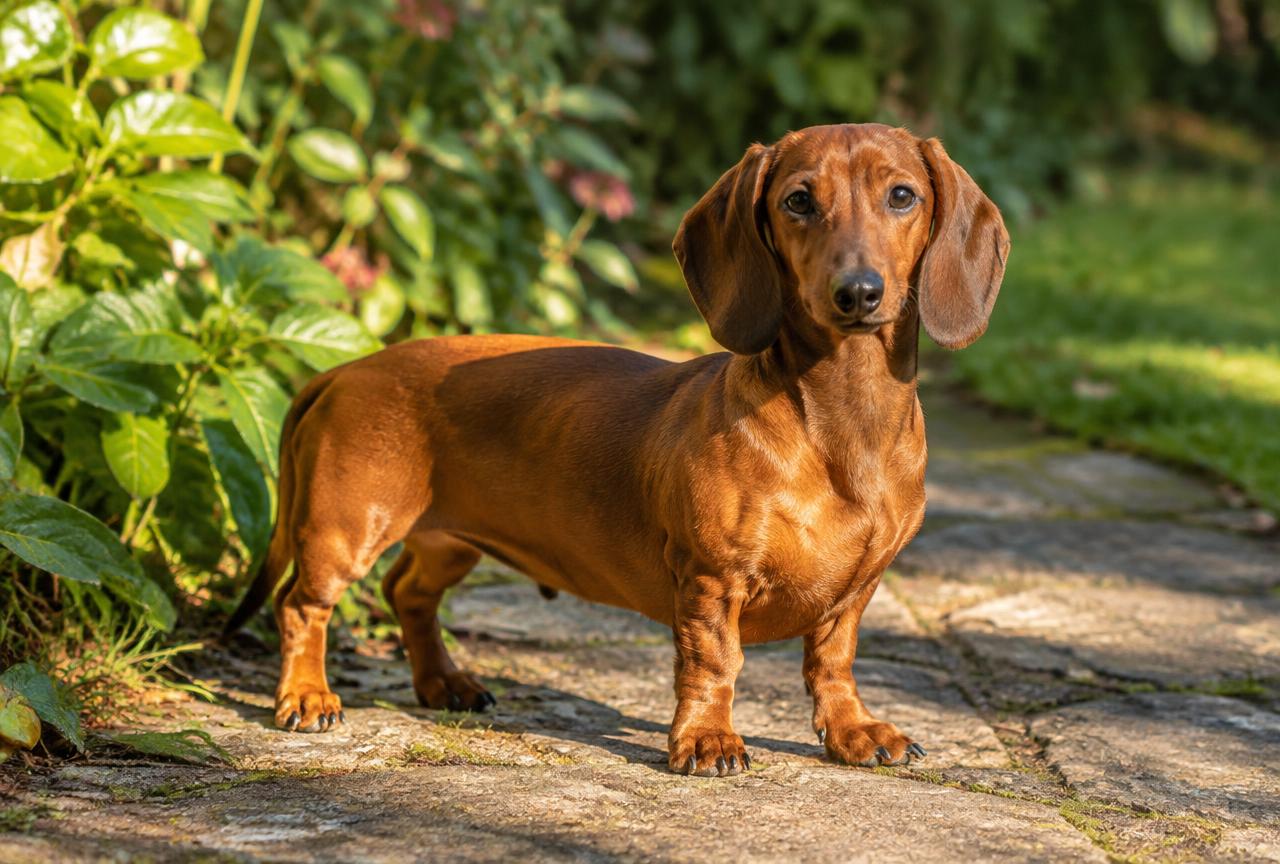
Dachshund
A bold, characterful hunting breed in a long, low body, needing careful back protection for life.
Put it into practice
Read next
Why Do Dogs Roll in Poop? The Instinct Explained
Why dogs roll in the worst smells they can find, what the behaviour is really about, and how to prevent it or at least clean up well afterwards.


