Pastoral group
United States
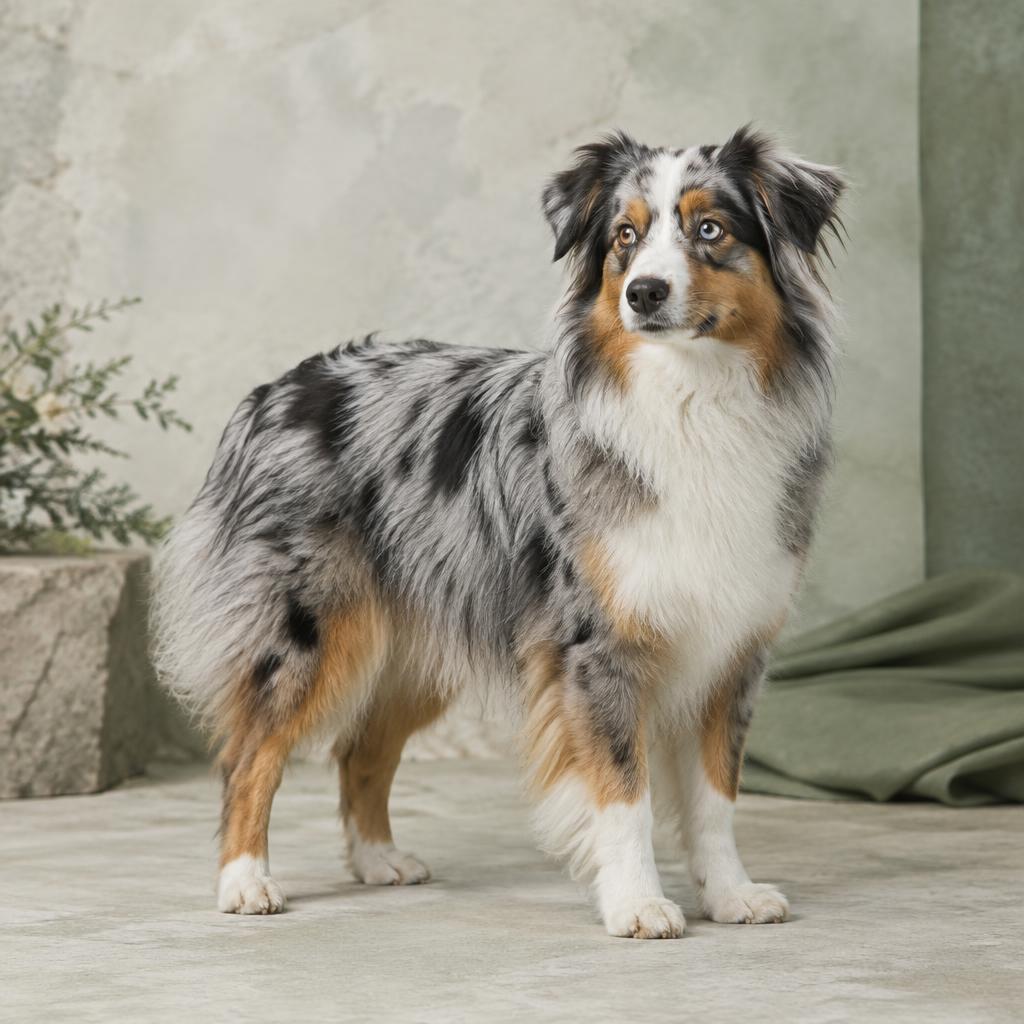
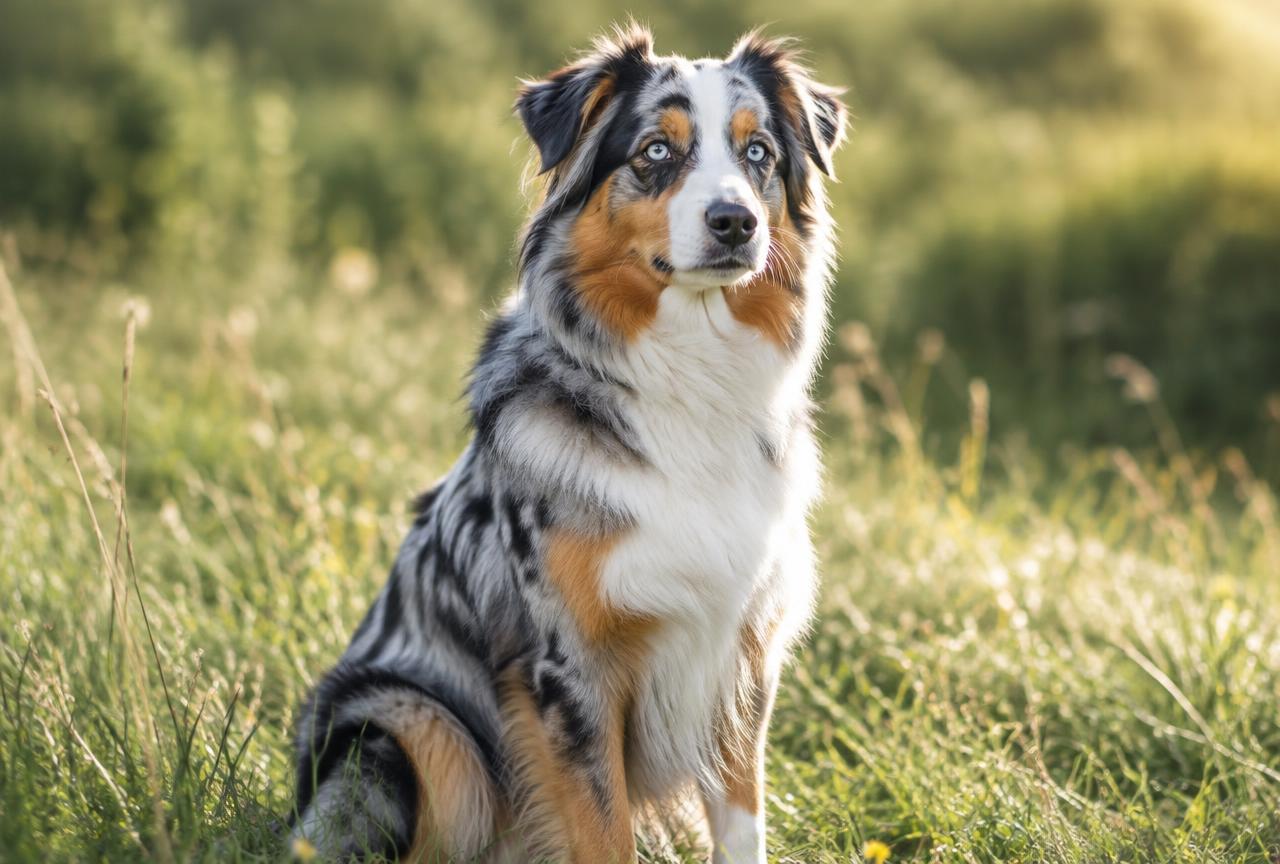
Australian Shepherd
The Australian Shepherd is a high energy pastoral breed that requires a dedicated job and intense mental engagement to be a successful companion.
Reviewed against Kennel Club and breed club health guidance
An intelligent, high energy pastoral dog that requires a dedicated job to thrive.
The short version
- Extremely high energy and intelligence mean they require a daily job or structured activity.
- Herding instincts can lead to nipping at heels, which is herding behaviour rather than aggression.
- MDR1 drug sensitivity is a critical genetic factor that requires testing before certain medications are used.
- They are loyal and affectionate with family but can be reserved or suspicious of strangers without socialisation.
- The breed needs at least 90 minutes of vigorous exercise and mental work daily to prevent destructive habits.
- Weight
- 14 to 30 kg
- Height
- 46 to 58 cm
- Lifespan
- 12 to 15 yrs
- Size
- Medium
- Group
- Pastoral
- Coat
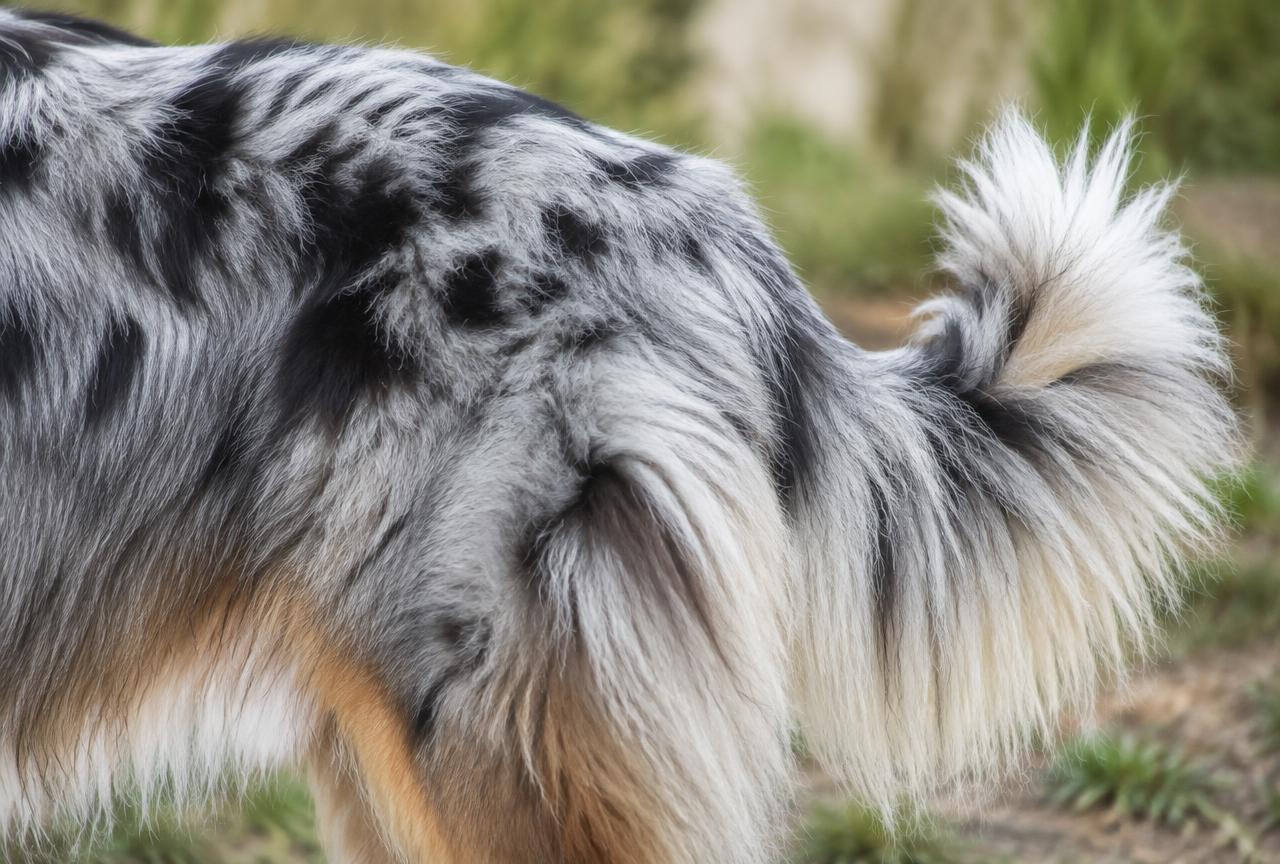
- Medium length, weather resistant double coat
- Grown male
- 20 to 30 kg
- Grown female
- 14 to 25 kg
- Years to full size
- about 1.5
- One-off setup
- €600 to 1200
Get one if…
- Active individuals who enjoy daily hiking or running
- Owners interested in competitive dog sports like agility
- Families who can provide structured training and tasks
- People with the time to commit to significant mental stimulation
- Experienced owners who understand herding breed traits
Think again if…
- Sedentary households with minimal activity levels
- Owners who are away from home for most of the day
- Families expecting a calm dog with no training requirements
- People living in small flats without access to open space
- Owners unwilling to manage high levels of shedding and grooming
Trait profile
Australian Shepherds are high energy workers that need mental stimulation and a clear job to prevent the development of unwanted herding behaviours at home.
Space & setup. While they can adapt to various living situations, a home with a large, secure garden is ideal for satisfying their need for movement.
Allergies. The medium length double coat sheds significantly, particularly during seasonal changes, making it unsuitable for allergy sufferers.
Living with a Australian Shepherd
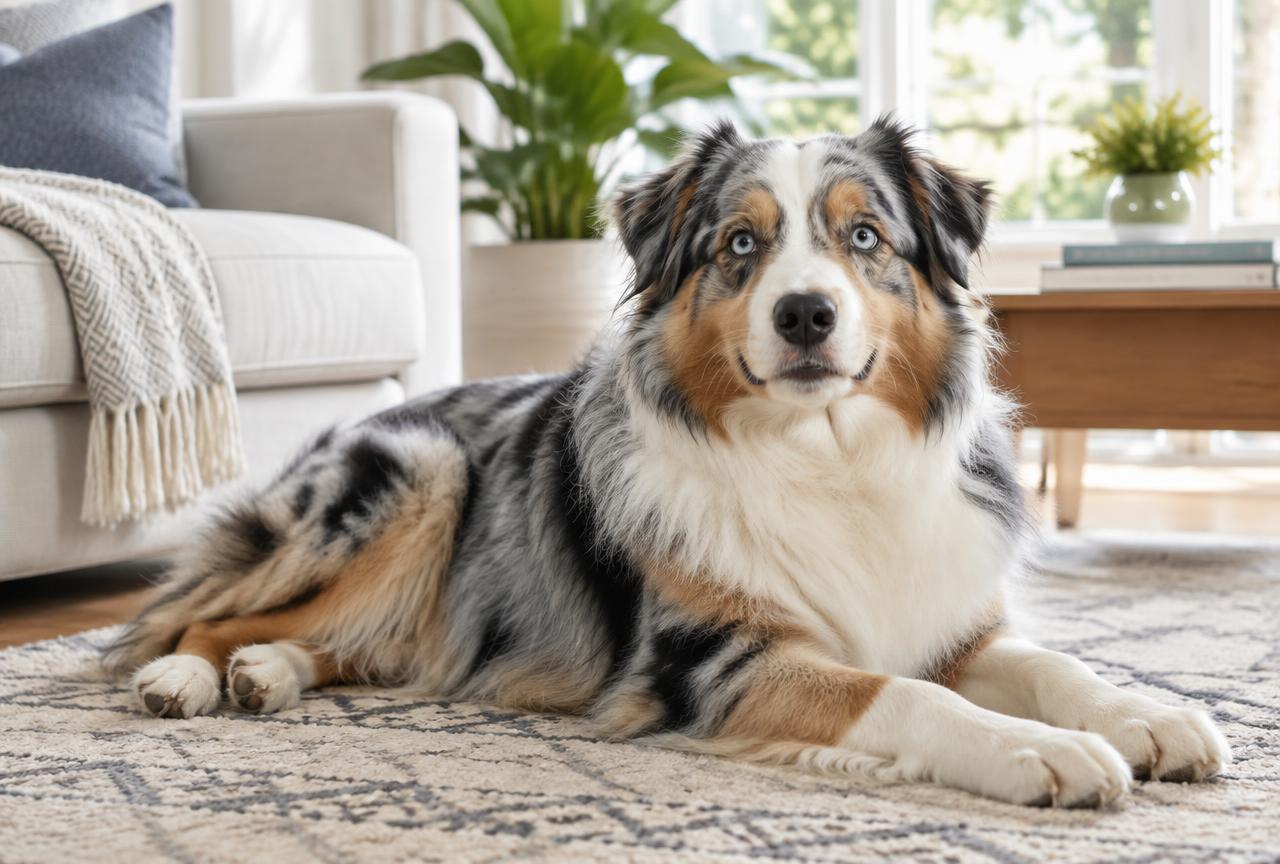
The Australian Shepherd is an agile, versatile herding dog developed in the United States to manage large flocks. Despite its name, the breed is American in origin, prized for its keen intelligence, remarkable stamina and deep loyalty to its handlers. It is a focused worker that excels in dog sports and active households.
The Australian Shepherd is a breed defined by its incredible work ethic and need for mental engagement. Developed in the American West to handle sheep and cattle in demanding environments, this is not a flat dog that will be content with a quick walk around the block and an evening on the sofa. Instead, it is a high intensity athlete that views life through the lens of a job to be done. Owners must understand that without a constructive outlet for this energy, the Australian Shepherd will inevitably find its own employment, often in ways that are inconvenient for a domestic household, such as rearranging furniture or herding family members. This herding instinct is particularly relevant in homes with children. It is common for these dogs to nip at heels or circle running toddlers; while this can be misinterpreted as aggression, it is actually a manifestation of their deep rooted drive to control movement. Proper training and redirecting this behaviour toward toys or structured games is essential from a young age to ensure they understand where their skills are best applied.
Intelligence is the hallmark of the breed, but it is a double edged sword. An Australian Shepherd learns new commands with remarkable speed, often picking up complex tasks in just a few repetitions. However, they are also observant enough to learn how to open doors, manipulate their owners or exploit inconsistencies in house rules. Mental stimulation is therefore just as important as physical exercise. Activities like agility, flyball, obedience trials or advanced trick training are not just hobbies for this breed; they are a necessary part of maintaining a stable temperament. A bored Australian Shepherd is a destructive one, and the mental fatigue provided by a training session is often more effective than a long hike for settling them down in the evening. They thrive on the connection formed during these sessions, viewing their human handlers as partners in a working relationship rather than just providers of food and shelter.
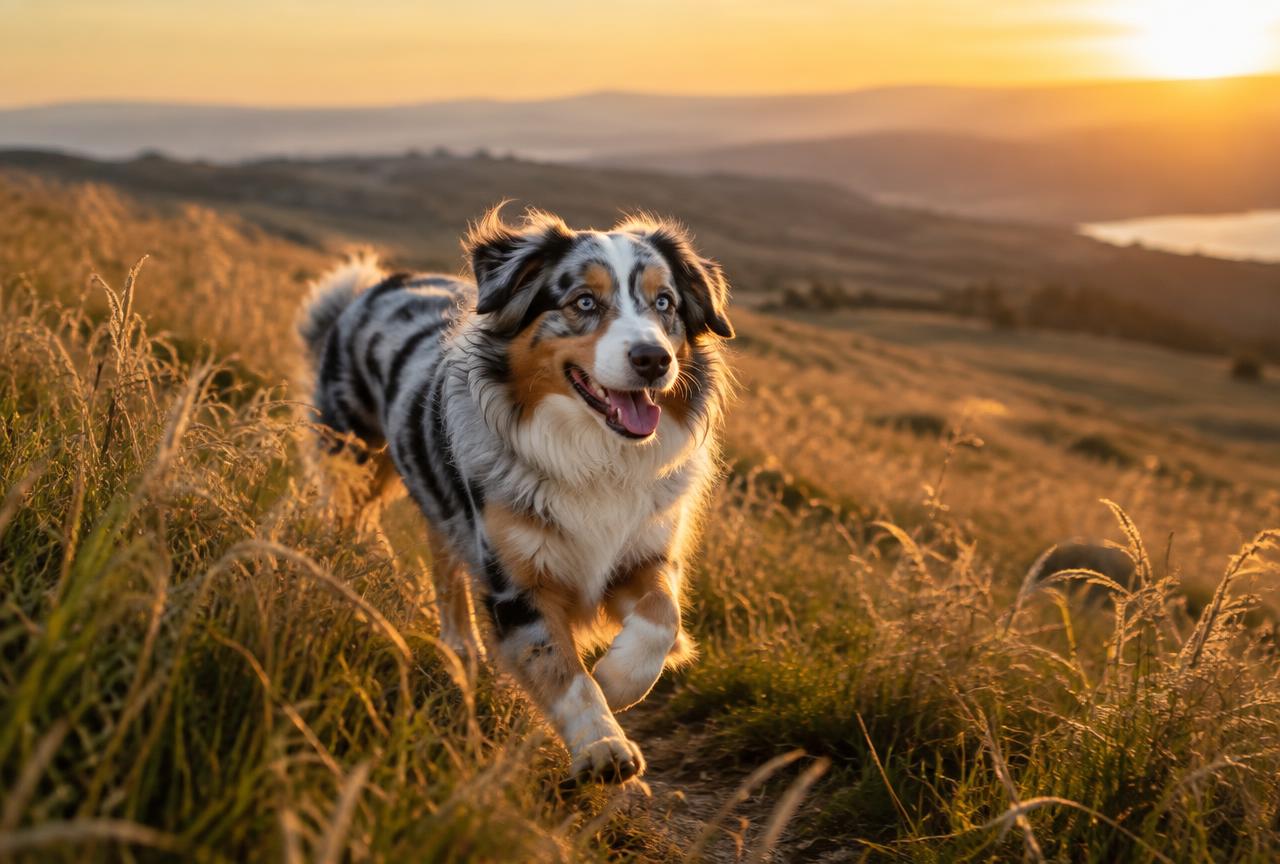
Physical needs are equally demanding, requiring at least 90 minutes of active exercise daily. This should ideally involve more than just walking on a lead. Running, hiking or intense play sessions that involve sudden changes in direction and speed are better suited to their agile frames. Socialisation is also a critical component of their development. While loyal and affectionate with their own family, Australian Shepherds can be naturally reserved or even suspicious of strangers. Early and varied exposure to new people, dogs and environments is necessary to ensure they remain confident and well adjusted in public settings. They are very much one person or one family dogs, and their devotion is absolute once a bond is formed, but they do not typically seek out the attention of everyone they meet on the street.
Health considerations in the breed include several genetic predispositions that every owner should be aware of. One of the most significant is the MDR1 drug sensitivity. A mutation in the Multi-Drug Resistance gene means that certain common medications, including some parasiticides and anaesthetics, can be toxic or even fatal to affected dogs. Testing for this mutation is a simple and vital step before any medical treatment is administered. Additionally, the breed is prone to hip and elbow dysplasia, as well as various eye conditions like cataracts and Collie Eye Anomaly. Responsible breeders will provide certificates showing that the parents have been screened for these issues. Epilepsy is another concern in some lines, making a thorough investigation of a puppy's lineage worthwhile. Because they are such active dogs, minor injuries can also occur if they are pushed too hard during their developmental stages, so care must be taken with jumping and sharp turns until they are fully grown.
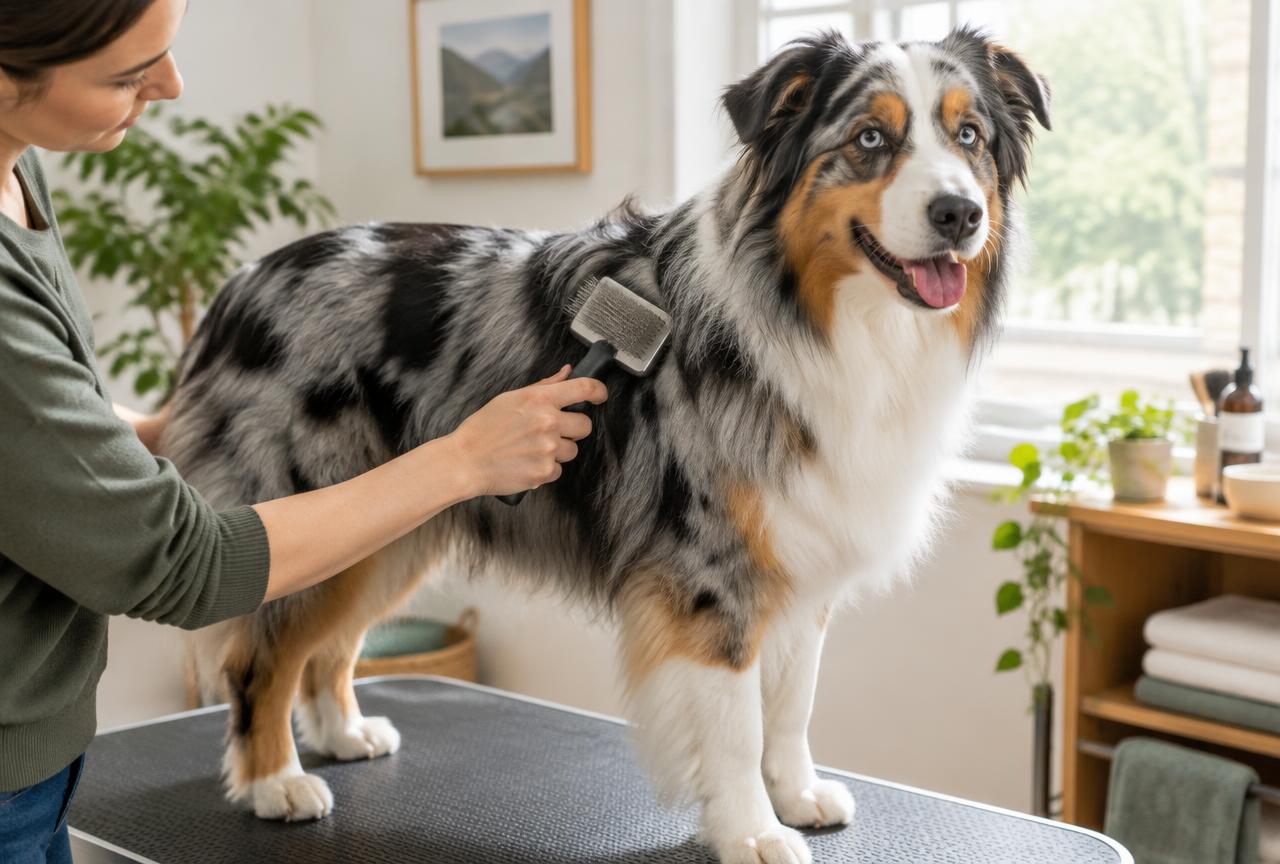
Grooming requirements are moderate but require consistency. The medium length double coat sheds moderately year round, with heavier shedding periods twice a year during the change of seasons. Weekly brushing is usually sufficient to manage loose hair and prevent mats, particularly behind the ears and on the back of the legs where the fur is longer and finer. They do not require frequent bathing unless they have been working in mud or dust, as their coat is naturally somewhat dirt resistant. Overall, the Australian Shepherd is an exceptional companion for the right person. It suits active owners, amateur or professional dog sports enthusiasts and families prepared to invest significant time in training and socialisation. It is a poor match for those with a sedentary lifestyle, households that are empty for long periods or owners who want a low maintenance pet that requires little interaction. When their needs for work and engagement are met, they are among the most capable and devoted dogs in the world, capable of performing almost any task set for them with enthusiasm and precision. Prospective owners should be ready for a dog that is always thinking and always ready for the next challenge.
A brilliant and intense companion for active owners who can provide significant mental and physical work.
Exercise, day to day
- 1Puppies: 5 minutes of low impact exercise per month of age twice daily, avoiding jumping to protect joints.
- 2Adults: at least 90 minutes of vigorous activity including running, hiking or training sessions.
- 3Mental work: daily sessions of advanced obedience, trick training or puzzle solving for 20 to 30 minutes.
- 4Sporting outlets: participation in agility, flyball or herding trials to provide a constructive job.
- 5Off lead time: essential in safe, large areas to allow for full speed movement.
Grooming, realistically
- 1Brush the coat at least twice a week with a slicker brush and undercoat rake.
- 2Check for mats behind the ears and in the feathering on the legs regularly.
- 3Trim the hair around the paws and between the pads to maintain grip and cleanliness.
- 4Bathe every 8 to 12 weeks, as the coat is naturally somewhat dirt repellent.
- 5Clip nails every 3 weeks to prevent discomfort during high speed activity.
What you actually need
- Slicker brush
- Undercoat rake
- Long toothed metal comb
- Dog nail clippers
- Gentle dog shampoo
- Training treats for grooming sessions
Puppy to adult
| Age | Male | Female | What is happening |
|---|---|---|---|
| 8 weeks | 5 to 8 kg | 4 to 7 kg | High energy from the start, begins exploring with intensity. |
| 3 months | 9 to 12 kg | 8 to 11 kg | Rapid learning phase, ideal time to start basic engagement games. |
| 6 months | 15 to 20 kg | 13 to 18 kg | Adolescent energy peaks, requires consistent boundaries and outlets. |
| 9 months | 18 to 24 kg | 16 to 22 kg | Gaining muscle and coordination, continues to need mental work. |
| 12 months | 22 to 28 kg | 18 to 24 kg | Reaching adult height, though filling out continues. |
| 18 months | 25 to 30 kg | 20 to 25 kg | Physical and mental maturity reached. |
Ranges are typical, not targets. Judge condition by ribs and waist, and check with the ideal weight checker.
What to ask a breeder
- Can I see hip and elbow score certificates for both parents?
- Have the parents been tested for the MDR1 mutation?
- Are the parents cleared for cataracts and Collie Eye Anomaly?
- What kind of early socialisation and mental enrichment do the puppies receive?
- How would you describe the energy levels and drive of this particular litter?
- Can I meet the mother and see her temperament in person?
Health watch-list
What to ask a breeder about, and what to watch for over a lifetime. This is orientation, not veterinary advice, anything you notice belongs in front of a vet.
MDR1 Drug Sensitivity
NotableA genetic mutation making certain drugs toxic; testing is essential for all Australian Shepherds.
Hip Dysplasia
NotableInherited malformation of the hip joints; breeding stock should be hip scored to reduce risk.
Elbow Dysplasia
NotableA developmental condition of the elbow joints; BVA/KC screening of parents is recommended.
Cataracts
NotableClouding of the lens leading to vision loss; annual eye examinations can monitor for inherited forms.
Collie Eye Anomaly
UncommonAn inherited disease affecting the development of the eye; DNA testing can identify carriers.
Epilepsy
UncommonNeurological disorder causing seizures; affected dogs require veterinary management and should not be bred.
What it costs to keep one
Realistic running cost
€130 / month
About €1,560 a year, or roughly €21,840 across a 14-year life, before purchase price, neutering and one-off vet events.
Before the puppy arrives. Budget roughly €600 to 1200 for a crate, bed, lead and harness, bowls, puppy classes, first vaccinations and grooming kit sized for this breed. Figures throughout are indicative and vary a good deal between countries.
Interactive · built for this breed
Is a Australian Shepherd right for your home?
Seven honest questions about your space, time and household, checked against this breed's exercise need, coat, sociability and tolerance for time alone.
Fit with your routine
90%
A strong fit
Your routine suits a Australian Shepherd well. Meet adult dogs of the line before you commit.
What to sort out first
- Needs more daily exercise than you have pencilled in.
- Coat needs more brushing or trimming than you have allowed.
Compare more breeds in the matchmaker, or plan meals with the portion calculator.
The verdict, by household
First-time owner
Not recommended for most
Their high intelligence and energy are often too much for those new to dog ownership.
Family with children
A good match with supervision
Excellent with older children, but herding instincts may lead to nipping at younger kids.
Active single or couple
An ideal match
A perfect companion for those who enjoy running, hiking or competitive dog sports.
Owner in a flat
Not recommended
Rarely thrives in a flat unless the owner is exceptionally dedicated to outdoor work.
When to call your vet
- Adverse reactions to common medications like Ivermectin, suggesting MDR1 sensitivity
- Cloudy appearance in the eyes or bumping into objects, indicating potential cataracts
- Lameness or stiffness in the front or back legs, which may point to dysplasia
- Sudden episodes of shaking or loss of consciousness, which could be epilepsy
- Excessive scratching or skin irritation, often related to seasonal allergies
Nothing here is a diagnosis. A swollen, hard belly with retching, collapse, breathing difficulty and sudden hind-leg weakness are emergencies: go straight away.
Australian Shepherd vs the closest alternatives
| Breed | Weight | Energy | Grooming | € / month |
|---|---|---|---|---|
| Australian Shepherd | 14 to 30 kg | 9/10 | 6/10 | €130 |
| Miniature American Shepherd | 9 to 18 kg | 8/10 | 5/10 | €74 |
| German Shepherd | 22 to 40 kg | 9/10 | 5/10 | €153 |
| American Eskimo Dog | 3 to 16 kg | 7/10 | 6/10 | €73 |
Australian Shepherd questions, answered
Do Australian Shepherds need a lot of exercise?
Yes, they are high energy dogs that need at least 90 minutes of vigorous activity daily. This should include running and mental stimulation. Without it, they can become destructive.
Is an Australian Shepherd good with children?
They are loyal to their families, but their herding instinct can lead them to nip at the heels of running children. Supervision and training are necessary to manage this behaviour.
What is the MDR1 mutation in Australian Shepherds?
MDR1 is a genetic mutation that makes the breed sensitive to certain medications, including some worming treatments and anaesthetics. All owners should have their dogs tested for this mutation.
Are Australian Shepherds difficult to train?
They are highly intelligent and learn quickly, which makes them easy to train for experienced owners. However, they can be independent and need clear, consistent leadership and a job to do.
Do Australian Shepherds shed a lot?
Yes, they have a thick double coat that sheds moderately year round and heavily twice a year. Regular brushing is required to manage the hair and prevent matting.
Are Australian Shepherds from Australia?
Despite the name, the breed was actually developed in the United States. It is thought they were named after the Basque shepherds who came to America from Australia.
Can Australian Shepherds live in flats?
It is not recommended. They are active, vocal and need plenty of space. While possible with extreme dedication to exercise, they generally thrive in homes with large gardens.
Sources
- Australian Shepherd breed standard, The Kennel Club
- Australian Shepherd breed information, American Kennel Club
- MDR1 mutation in dogs, VCA Animal Hospitals
- Health schemes and testing, British Veterinary Association
- Australian Shepherd health information, Australian Shepherd Club of America
Put it into practice
Reading that goes with this

Puppies
Crate Training a Puppy: A 14-Day Plan

Care
Dog Years to Human Years: The Real Science

Training
How to Stop a Dog Barking: A Practical Guide

Health
Why Is My Dog Panting So Much? Causes and Warning Signs
Behaviour
Why Do Dogs Eat Grass? What Vets Actually Think

Health
Why Is My Dog Shaking? Causes and When to Worry

Health
Why Do Dogs Lick Their Paws? Causes and Fixes